
Journalist

AJP
swatchsjp@ajunews.com
-
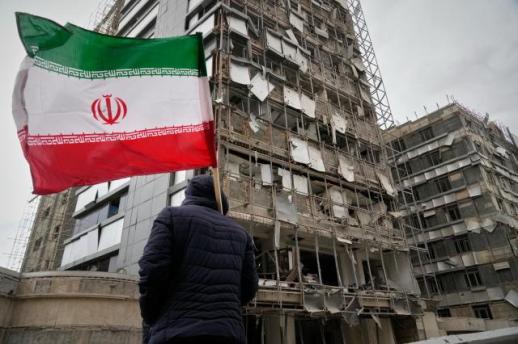 Iranian embassy in South Korea condemns military strikes by US and Israel SEOUL, March 03 (AJP) - The Embassy of Iran in South Korea issued a formal statement on Tuesday strongly denouncing recent military operations by the United States and Israel against Iranian territory. The embassy characterized the air strikes as a criminal act of aggression and a violation of national sovereignty, asserting that Tehran had pursued every available diplomatic avenue to prevent the outbreak of hostilities. The statement follows a large-scale military campaign launched on February 28 by the US and Israel, which targeted various cities across Iran. While the coalition stated the strikes were aimed at military and nuclear infrastructure, the Iranian embassy reported that civilian areas were also hit. According to the embassy, an attack in the city of Minab resulted in the deaths of more than 165 female students. Reports from the Iranian Red Crescent Society and news agencies such as Reuters and The Guardian have corroborated that a girls' elementary school in Minab was struck during the opening salvo of the operation. The embassy emphasized that the military campaign occurred while diplomatic processes between Iran and the US were still underway. The statement noted that Tehran had engaged in negotiations mediated by international partners in early February to fulfill its moral and legal responsibilities and to ensure that no pretext could be used to justify military intervention. In its communication to the South Korean public and media, the embassy stated that the Iranian people have made every possible effort to prevent war. The embassy further noted that because these diplomatic efforts were met with military force, Iran now maintains a firm defensive posture to protect its territorial integrity. The Iranian military is currently invoking Article 51 of the United Nations Charter, which provides for the inherent right of individual or collective self-defense if an armed attack occurs. The embassy stated that Iranian forces are mobilizing all available resources to repel threats and will hold those responsible for the strikes accountable for what it described as war crimes. This stance comes amid reports from the International Institute for Strategic Studies that the initial strikes killed several high-ranking Iranian officials, including Supreme Leader Ali Khamenei. The embassy called on the international community and the South Korean government to condemn the military actions and take effective measures against the participating powers. The statement urged global leaders to uphold the United Nations Charter and ensure that the violation of Iranian sovereignty does not go unpunished. 2026-03-03 16:13:17
 -
 South Korean researchers develop world's most efficient stretchable OLED SEOUL, March 03 (AJP) - A joint research team has developed a new stretchable organic light-emitting diode (OLED) that maintains its brightness even when stretched, overcoming a major technical barrier in the development of flexible electronics. The technology achieved world-record performance levels for brightness and efficiency, significantly improving the prospects for commercializing wearable displays and electronic skin. The Korea Advanced Institute of Science and Technology (KAIST) announced on March 3 that a team led by Professor Cho Him-chan, in collaboration with the University of Chicago and Soochow University, created a hybrid liquid metal cathode. This component allows the display to remain conductive and bright while being pulled or deformed, a task that has historically caused stretchable screens to dim or fail. In conventional stretchable OLEDs, the electrodes often suffer from mechanical instability. When the material is stretched, the electrical connection weakens, leading to a sharp drop in performance. To solve this, the researchers used liquid metal particles thinner than a human hair. By densely packing these particles and rupturing only the top layer, they created a smooth, continuous metal surface that conducts electricity efficiently. The intact particles underneath serve as a cushion, absorbing physical shock and allowing the electrode to stretch like rubber. The resulting display reached a maximum brightness of 17,670 candelas per square meter at 9.5 volts, which is brighter than most high-end smartphone screens. It also recorded a current efficiency of 10.35 candelas per ampere, the highest level reported to date for this type of technology. Even when pulled to its limits, the device showed almost no loss in brightness, addressing the most significant weakness of previous stretchable display prototypes. Testing showed that the OLED remains stable even after being stretched and released multiple times. This durability is essential for practical applications, such as clothing-integrated displays or medical devices that must adhere to the moving surface of human skin or internal organs. The technology is expected to be used in various fields, including soft robotics and bio-interfaced optoelectronics. "We have solved the fundamental material problem that has limited the performance of stretchable displays," Professor Cho Him-chan said. "This hybrid liquid metal cathode technology will be a key foundation for next-generation flexible electronic devices." The study, with Lee Won-bum as the first author, was published in the journal Advanced Materials on December 28, 2025. It was selected as the inside back cover for that issue. (Paper information) Journal: Advanced Materials Title: Hybrid Liquid Metal Cathode Enables High-Performance Intrinsically Stretchable OLEDs DOI: https://doi.org/10.1002/adma.202518254 2026-03-03 15:18:27
 -
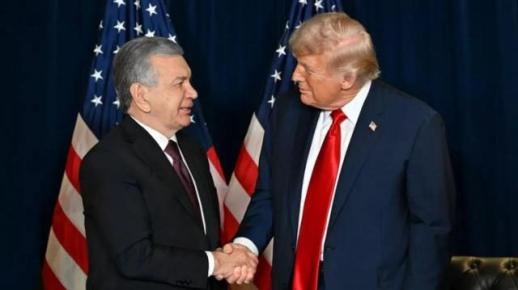 Uzbekistan joins international peace council for Gaza during Washington visit SEOUL, March 03 (AJP) - President Shavkat Mirziyoyev visited Washington from February 17 to February 19 at the invitation of United States President Donald Trump to participate in the inaugural meeting of the Peace Council. The working visit combined high-level political discussions with an extensive economic program, resulting in several agreements designed to strengthen the strategic partnership between Uzbekistan and the United States. The Peace Council is an intergovernmental initiative introduced by President Trump following a Gaza peace plan endorsed by the United Nations Security Council in November 2025. This platform serves as a mechanism to coordinate humanitarian assistance and establish institutional frameworks for the long-term reconstruction and socio-economic recovery of the Gaza Strip. The founding charter was signed in Davos on January 22, 2026, by a group of nations including Jordan, Türkiye, Saudi Arabia, and the United Arab Emirates. Uzbekistan joined the founding members to reaffirm its commitment to peaceful diplomacy and international law. The country has recognized Palestine since 1994 and has provided practical humanitarian support, including 1.5 million dollars through UNRWA in 2023 and the evacuation of 100 wounded Palestinian women and children for medical rehabilitation in late 2023. In 2025, Uzbekistan established a dedicated state fund to provide asylum, healthcare, and education for Palestinian citizens received in the country. At the February 19 meeting in Washington, which included representatives from more than 40 countries, President Trump announced that nine nations—Uzbekistan, Kazakhstan, Azerbaijan, the United Arab Emirates, Morocco, Bahrain, Qatar, Saudi Arabia, and Kuwait—had jointly pledged 7 billion dollars in assistance to Gaza. The United States committed an additional 10 billion dollars to support the council’s operations. During the session, President Mirziyoyev emphasized that any external governance framework for Gaza must rely on internal public support to ensure legitimacy and stability. He confirmed that Uzbekistan is ready to contribute to the construction of residential housing, schools, and healthcare facilities in Gaza to support both humanitarian and development goals. The economic dimension of the visit focused on a portfolio of contracts and projects exceeding 100 billion dollars, originally discussed during the 80th United Nations General Assembly in September 2025. These agreements cover aviation, mining, chemicals, energy, and innovation. Specific projects include cooperation with Denali Exploration Group and Re Element Technologies on rare earth elements, as well as partnerships with Palo Alto Networks regarding artificial intelligence. President Mirziyoyev held meetings with U.S. Secretary of Commerce Howard Lutnick, Eximbank President John Jovanovic, and U.S. Trade Representative Jamieson Greer. A formal agreement establishing a bilateral Investment Platform was signed to facilitate financing for industrial and infrastructure projects. Discussions also addressed Uzbekistan's accession to the World Trade Organization and the development of poultry clusters and agro-industrial cooperation. Trade turnover between the two countries increased 4.7-fold between 2017 and 2025, reaching 1 billion dollars. Exports from Uzbekistan are currently dominated by services, which account for 81 percent of the total, including programming and financial services. Imports from the United States primarily consist of machinery and equipment, representing 59 percent of the trade volume. As of February 2026, 346 enterprises with American capital operate in Uzbekistan. The current economic strategy aims to move beyond trade toward long-term technological partnerships in sectors such as electronics, microelectronics, and pharmaceuticals. This includes potential joint production with companies such as NVIDIA, Intel, and Qualcomm. The visit concluded with the signing of bilateral documents regarding the extraction of critical minerals, financial market reforms, and investment climate improvements. This information was released by the Embassy of Uzbekistan in South Korea on March 3. 2026-03-03 14:56:47
 -
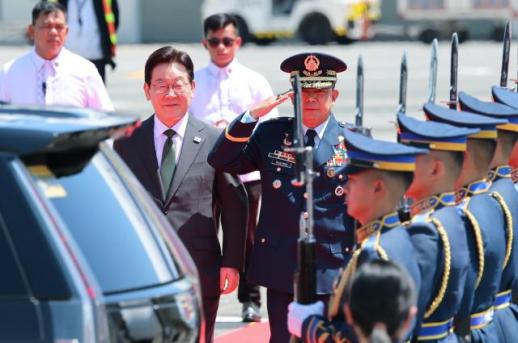 South Korean President Lee arrives in Manila for summit with President Marcos SEOUL, March 03 (AJP) - South Korean President Lee Jae Myung arrived in Manila on Tuesday afternoon for a state visit to the Philippines. The trip coincides with the 77th anniversary of the establishment of diplomatic relations between the two countries. President Lee is scheduled to hold a summit with President Ferdinand Romualdez Marcos Jr., followed by a joint press announcement and a state dinner. This is the second meeting between the two leaders since they met approximately four months ago during the Asia-Pacific Economic Cooperation (APEC) summit in Gyeongju last October. The two presidents are expected to discuss ways to expand future-oriented economic cooperation. Presidential officials said they anticipate new partnerships in sectors such as nuclear power, shipbuilding, and critical minerals. The visit also includes events focused on the shared history of the two nations. The Philippines deployed more troops to the Korean War than any other Asian country, and several stops on the itinerary are dedicated to honoring that service. Before the summit, President Lee visited the monument of Jose Rizal, the Filipino independence activist, to lay a wreath. On March 4, the second day of the visit, he will visit the Libingan ng mga Bayani, or the Cemetery of Heroes, to lay a wreath at the Korean War Memorial and meet with surviving veterans and their families. President Lee will end his visit by attending a business forum with South Korean and Filipino executives. He is also scheduled to hold a luncheon with members of the South Korean community before concluding his four-day Southeast Asian tour. 2026-03-03 14:37:05
 -
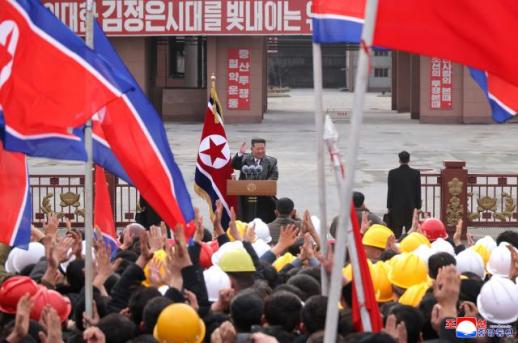 Middle East Crisis – NK condemns attack and likely recalibrate to wage own game SEOUL, March 03 (AJP) - If the U.S.-Israeli strikes that killed Ali Khamenei and the capture of Nicolás Maduro were meant to signal American reach, the leader most coldly calculating their implications would be Kim Jong-un. Pyongyang's Foreign Ministry on Tuesday condemned what it called "illegal aggression" and "hegemonic and gangster-like" behavior by Washington, according to the Korean Central News Agency. The rhetoric was familiar. The strategic takeaway is less so. Unlike Iran or Venezuela, North Korea sits in a different deterrence category. It possesses an operational nuclear arsenal and intercontinental ballistic missiles capable of reaching the U.S. mainland. That reality alone, analysts say, sharply reduces the likelihood that Washington would contemplate a leadership-targeted military option on the peninsula. "North Korea is not like Iran," said Lee Sung-yoon, principal fellow at the Sejong Institute. "North Korea has nuclear weapons and ICBMs, and information about North Korea is so insufficient that it is in a much safer position than Maduro or Khamenei." To Pyongyang, the removal of a non-nuclear state's top leadership through external force assures the United States is willing to use decapitation options if it deems them necessary and Regimes without nuclear deterrence remain vulnerable. The second message is the more powerful one in Pyongyang. Kim has repeatedly declared North Korea's nuclear status "permanent" and "completely and absolutely irreversible," pledging expansion of sea-launched and long-range ballistic systems, AI-enabled unmanned platforms and tactical rocket forces aimed at South Korea. According to the Stockholm International Peace Research Institute, the North is estimated to possess roughly 50 warheads, with fissile material for dozens more. Rather than reopening diplomatic space, the latest strikes could harden Pyongyang's conviction that nuclear capability is the ultimate insurance policy. Yet volatility could broaden the diplomatic theater. Lee argues that the shockwaves from Tehran and Caracas — far from foreclosing talks — could embolden President Donald Trump to pursue a dramatic "grand deal." Trump has previously referred to North Korea as a "nuclear power" during APEC remarks in late 2025 and publicly signaled openness to another meeting. A potential inflection point looms in April, when Trump is scheduled to visit Beijing — a trip that could create space for quiet triangular signaling involving Pyongyang. Kim's recent engagements with Vladimir Putin and Xi Jinping have elevated his diplomatic posture, reinforcing his self-image as a peer rather than a supplicant. "Kim's status has been greatly elevated," Lee said. "By meeting with Trump, he may aim for partial troop withdrawal, arms-control style talks instead of denuclearization, and de facto recognition as a nuclear-armed state." Kim's January address framed the choice starkly: "peaceful coexistence or eternal confrontation." He insisted the future of relations depends "entirely on the attitude of the U.S. side," while leaving open the possibility of talks if Washington ends what Pyongyang calls hostile policies — namely joint U.S.-South Korea military drills and sanctions. 2026-03-03 11:13:37
 -
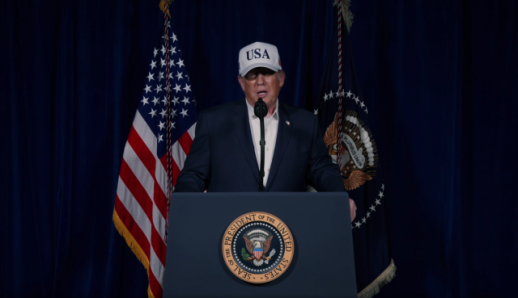 US begins major combat operations against Iran after Israeli strikes on Tehran SEOUL, February 28 (AJP) - United States President Donald Trump announced the start of "major combat operations" against Iran in an eight-minute video posted to Truth Social at approximately 2:30 a.m. Saturday (local time). The move marks a massive military escalation in the Middle East, ending an eight-month period of relative calm following the 12-Day War last June. "The United States military has undertaken a massive and ongoing operation to prevent this very wicked, radical dictatorship from threatening America and our core national security interests," President Trump said in the video speech. He accused the Iranian government of attempting to rebuild its nuclear program and developing long-range missiles. "We are going to destroy their missiles and raze their missile industry to the ground. It will be totally, again, obliterated. We are going to annihilate their navy," he added. The U.S. offensive follows a series of "preventive strikes" launched by the Israeli Ministry of Defense against Tehran. Iranian state television reported explosions and thick smoke rising from the capital's city center, with international media reporting blasts near the office of the 86-year-old Iranian Supreme Leader Ayatollah Seyyed Ali Khamenei. It remains unconfirmed if Khamenei was present, as he has not appeared in public for several days. Following the strikes, Israel ordered a nationwide closure of schools and businesses. President Trump stated the operations also aim to neutralize regional proxies and protect allies. "We are going to ensure that the region's terrorist proxies can no longer destabilize the region or the world, and attack our forces, and no longer use their IEDs—or roadside bombs, as they are sometimes called—to so gravely wound and kill thousands and thousands of people including many Americans," he said. He further emphasized that the mission would "ensure that Iran does not obtain a nuclear weapon." This escalation follows the deployment of the largest assembly of American military assets in the region since the 2003 invasion of Iraq. The buildup includes two aircraft carrier strike groups, led by the USS Abraham Lincoln and the USS Gerald R. Ford, and over 100 fighter jets including F-35s and F-22s. The shift to open combat follows the collapse of diplomatic efforts. Washington had engaged in three rounds of indirect nuclear negotiations with Tehran through intermediaries in Switzerland and Oman, but the talks failed to reach a breakthrough. During the final round in Geneva on February 26, U.S. negotiators reportedly demanded the full dismantling of nuclear facilities at Fordow, Natanz, and Isfahan. The current hostilities follow the 12-Day War of June 2025, which caused significant damage to Iranian nuclear infrastructure and military leadership before a ceasefire was reached on June 24. President Trump characterized the new offensive as a necessary response to renewed Iranian provocations. The Pentagon has not yet released specific details regarding the initial targets of the American strikes. Iranian officials have previously warned that any military action by the United States would be met with a decisive response. 2026-02-28 17:14:50
 -
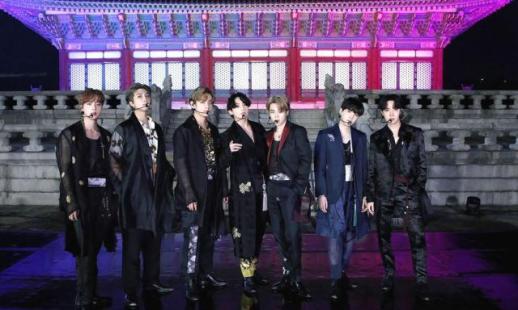 BTS Comeback D-21: BTS to play one-hour comeback set at Gwanghwamun Plaza SEOUL, February 28 (AJP) - BTS will headline a 60-minute performance at Gwanghwamun Plaza next month, featuring a setlist that balances new material with the group's global hits. The free concert, titled "BTS THE COMEBACK LIVE: ARIRANG," is scheduled for Mar. 21 and marks the first time the group will perform tracks from its fifth studio album in nearly four years. HYBE, the agency for BTS, confirmed Saturday that it is finalizing a program to showcase songs from the new album, Arirang, alongside established fan favorites. Agency officials said the one-hour duration was chosen to balance the scale of the production with the logistical demands of a major urban center. The decision aims to prioritize public safety and minimize disruption in the heart of the capital. "The performance time is a matter decided by the company, and we have decided to operate for an appropriate performance time that can be conducted safely and smoothly," HYBE said. The agency added that the Gwanghwamun event is a "performance in a special environment conducted in an outdoor public place, unlike a general concert hall," and that the duration was determined after considering stage operations, visitor safety, and site control plans. The Seoul Metropolitan Government noted that the composition and timing of the performance remain under the sole discretion of HYBE. Demand for the event has already proven historic. The 13,000 reserved seats were claimed instantly when ticketing opened on February 23, with online queues peaking at 100,000 people. Police estimates suggest the actual crowd on the day of the event could reach 260,000 people, potentially filling the corridor from the plaza down to Sungnyemun. To accommodate the expected turnout, organizers are exploring the installation of large screens in the vicinity of Seoul Plaza. The event will also necessitate the closure of Gyeongbokgung Palace, which is set to serve as a backdrop for the global broadcast on Netflix. 2026-02-28 15:00:30
 -
 BTS Comeback D-21: Gyeongbokgung Palace to close for BTS comeback at Gwanghwamun SEOUL, February 28 (AJP) - Gyeongbokgung Palace will deviate from its standard operating schedule and close its gates on a Saturday next month to accommodate a massive live performance by BTS at the adjacent Gwanghwamun Plaza. The Royal Palaces and Tombs Center at the National Heritage Administration announced on February 28 that the landmark will be shuttered on March 21. While the palace typically remains open on weekends and takes its weekly break on Tuesdays, officials cited safety and logistical requirements for the high-profile event. BTS is set to release its fifth studio album, Arirang, on March 20, followed by a televised comeback concert the next evening. The performance, which will be streamed globally on Netflix, is expected to utilize the historic architecture of the palace as a primary backdrop. According to Cultural Heritage Committee minutes, the group's agency plans an opening sequence featuring the members walking through the three arched gates of Gwanghwamun toward a stage installed at the northern end of the plaza. Authorities are bracing for record crowds, with police estimates suggesting up to 260,000 people could descend on the area. Tickets for the performance sold out within minutes of their release on February 23. The scale of the event has prompted a near-total shutdown of cultural activities in the immediate vicinity. The National Museum of Korean Contemporary History will close for the day, while the Sejong Center for the Performing Arts has already canceled or rescheduled several planned musicals, plays, and ballet productions. The National Palace Museum of Korea, located within the palace grounds, is also reviewing a potential closure. National Heritage Administration officials recently met with representatives at the agency for BTS to finalize crowd control and preservation measures for the historic site. 2026-02-28 12:12:23
 -
 Number of single-person households exceed 30% in S. Korea as traditional family structures decline SEOUL, February 28 (AJP) - South Korea's residential landscape has undergone a radical atomization over the last 40 years, with the number of households nearly tripling even as population growth stalled. A report released Saturday by the Korea Institute for Health and Social Affairs reveals that the traditional multi-generational family has been largely replaced by individuals living alone and elderly couples. According to the report, "Trends and Implications of Household Structure Changes Due to Demographic Shifts," South Korea recorded approximately 22.73 million households in 2023. This is a 2.8-fold increase from the 8 million recorded in 1980, far outstripping the 1.4-fold increase in the general population over the same period. This divergence highlights a transition where, despite a shrinking working-age population, the total number of households continues to climb as families fracture into smaller, independent units. The most profound shift is the ascension of the "solo" household. In 1980, people living alone accounted for a mere 4.8 percent of all households. By 2023, that figure surged to 35.47 percent, meaning more than one in three homes is now occupied by a single person. Conversely, the extended family model—once the societal standard—has collapsed, falling to just 11.89 percent of households by 2020. Increasing life expectancy and shifting social norms have also cemented "couple-only" residences as a permanent demographic fixture. While once considered a brief transition before childbirth, these households now frequently consist of aging couples living independently for decades after their children have moved out. The population living in such arrangements skyrocketed from 570,000 in 1980 to 6.36 million in 2020. The report identifies the aging baby boomer generation as the primary engine behind this fragmentation. This trend is further accelerated by an increasing preference for autonomy among young adults in their 20s and rising instances of divorce or widowhood among older women, many of whom choose to maintain separate homes rather than reintegrating into larger family units. This move toward an atomized society has weakened the traditional family safety net, which historically provided a buffer against unemployment, illness, and poverty. The report warns that current housing and welfare systems remain rigidly designed around the nuclear family model of a couple and their children, leaving a policy gap for the growing number of small, isolated households. "South Korea's household changes follow the trends of developed nations, but the speed is unprecedentedly steep," said Woo Hae-bong, a research fellow at the Korea Institute for Health and Social Affairs. "As the fragmentation of households may create new social risks, strategic responses through institutional and policy interventions are necessary beyond simply observing demographic changes." 2026-02-28 10:23:45
 -
 Trump calls for rehearing on tariff ruling as South Korean firms seek massive refunds SEOUL, February 28 (AJP) - U.S. President Donald Trump on Friday (local time) questioned whether the Supreme Court could revisit its decision to strike down his administration's tariff authority, a move that comes as South Korean exporters and other global firms prepare to seek billions of dollars in refunds. Writing on his social media platform Truth Social, Trump expressed frustration with the February 20 ruling, which invalidated reciprocal tariffs he had imposed under the International Emergency Economic Powers Act (IEEPA). He argued the decision would allow countries and companies that have "ripped off" the United States for years to receive an "undeserved windfall" through duty refunds. "Is a Rehearing or Readjudication of this case possible?" Trump wrote, publicly signaling a desire to challenge the 6-3 decision that found the executive branch had exceeded its legal authority. The ruling has sparked immediate interest in South Korea, where industries are assessing the potential for reclaiming duties paid since 2025. According to reports from the South Korean news agency Yonhap and major business outlets, an estimated 6,000 South Korean companies out of 24,000 exporters to the United States could be eligible for refunds. Many of these firms operated under "Delivered Duty Paid" (DDP) terms, meaning the South Korean exporters, rather than the U.S. importers, bore the direct cost of the tariffs. Global media outlets, including Bloomberg and the Wall Street Journal, estimate the total pool of potential refunds to be between 133.5 billion dollars and 175 billion dollars. For South Korean firms, the ruling effectively targets the 15 percent reciprocal tariff previously applied to their goods under the IEEPA. South Korea's Ministry of Trade, Industry and Energy has begun coordinating with local industries to monitor the situation. While the decision increases market uncertainty, the ministry noted that it would provide information regarding refund procedures as they become available. Major South Korean exporters, including Hyundai Motor, Kia, Samsung Electronics, and LG, are expected to review their past tariff payments to determine their eligibility for recovery. Legal experts suggest that a rehearing in the Supreme Court is unlikely under current judicial rules. A petition for a rehearing must be filed within 25 days of a judgment and requires the support of a majority of the justices, including at least one who originally voted with the majority to strike down the tariffs. The Trump administration has already moved to implement replacement measures. These include a 10 percent global tariff under Section 122 of the Trade Act of 1974, which the president has signaled could be raised to 15 percent in the coming months. 2026-02-28 09:28:47