
Journalist

Huan Xiang
swatchsjp@ajunews.com
-
 Trump calls for rehearing on tariff ruling as South Korean firms seek massive refunds SEOUL, February 28 (AJP) - U.S. President Donald Trump on Friday (local time) questioned whether the Supreme Court could revisit its decision to strike down his administration's tariff authority, a move that comes as South Korean exporters and other global firms prepare to seek billions of dollars in refunds. Writing on his social media platform Truth Social, Trump expressed frustration with the February 20 ruling, which invalidated reciprocal tariffs he had imposed under the International Emergency Economic Powers Act (IEEPA). He argued the decision would allow countries and companies that have "ripped off" the United States for years to receive an "undeserved windfall" through duty refunds. "Is a Rehearing or Readjudication of this case possible?" Trump wrote, publicly signaling a desire to challenge the 6-3 decision that found the executive branch had exceeded its legal authority. The ruling has sparked immediate interest in South Korea, where industries are assessing the potential for reclaiming duties paid since 2025. According to reports from the South Korean news agency Yonhap and major business outlets, an estimated 6,000 South Korean companies out of 24,000 exporters to the United States could be eligible for refunds. Many of these firms operated under "Delivered Duty Paid" (DDP) terms, meaning the South Korean exporters, rather than the U.S. importers, bore the direct cost of the tariffs. Global media outlets, including Bloomberg and the Wall Street Journal, estimate the total pool of potential refunds to be between 133.5 billion dollars and 175 billion dollars. For South Korean firms, the ruling effectively targets the 15 percent reciprocal tariff previously applied to their goods under the IEEPA. South Korea's Ministry of Trade, Industry and Energy has begun coordinating with local industries to monitor the situation. While the decision increases market uncertainty, the ministry noted that it would provide information regarding refund procedures as they become available. Major South Korean exporters, including Hyundai Motor, Kia, Samsung Electronics, and LG, are expected to review their past tariff payments to determine their eligibility for recovery. Legal experts suggest that a rehearing in the Supreme Court is unlikely under current judicial rules. A petition for a rehearing must be filed within 25 days of a judgment and requires the support of a majority of the justices, including at least one who originally voted with the majority to strike down the tariffs. The Trump administration has already moved to implement replacement measures. These include a 10 percent global tariff under Section 122 of the Trade Act of 1974, which the president has signaled could be raised to 15 percent in the coming months. 2026-02-28 09:28:47
 -
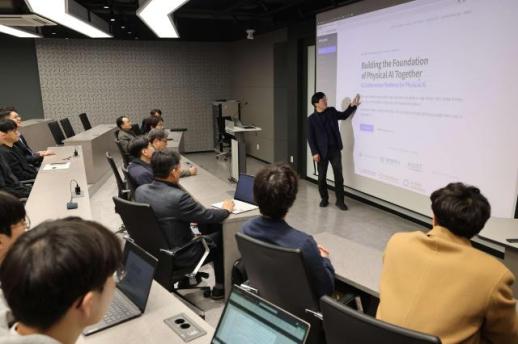 KAIST launches deep tech scale-up valley to drive physical AI implementation SEOUL, February 27 (AJP) - The Korea Advanced Institute of Science and Technology in South Korea announced on February 27 that it held a performance report meeting for the Deep Tech Scale-up Valley project at its main campus in Daejeon. During the event, the university unveiled its implementation strategy for Physical AI, focusing on moving robot technology out of the laboratory and into actual industrial settings. The Deep Tech Scale-up Valley is a joint initiative between South Korea's Ministry of Science and ICT, Daejeon Metropolitan City, and the Korea Advanced Institute of Science and Technology (KAIST). The university has secured 13.65 billion won in funding for a three-year and six-month period starting in 2025. Led by Professor Kim Jung, the project aims to build a robotics innovation ecosystem by commercializing deep tech developed at the institute. A Robot Alliance has been formed to support this goal, including KAIST Holdings, Daejeon Techno Park, the Daejeon Center for Creative Economy and Innovation, Angel Robotics, and YuRobotix. The project operates on a three-pillar system: technology commercialization, deep tech R&D, and commercial scale-up. In its first year, the initiative achieved 23 billion won in technology transfers and investment attraction through Physical AI lectures, startup pitching events, and networking sessions. Physical AI refers to technology that combines robotics with artificial intelligence, allowing machines to perceive, judge, and act autonomously in the real world. While government R&D and corporate investments are increasing, KAIST noted that practical business models remain limited. The report meeting redefined Physical AI as a challenge of industrial structure rather than just a competition of algorithms, emphasizing that commercialization requires the organic integration of research, factories, and the investment ecosystem. Researchers highlighted that applying Physical AI to industry requires meaningful data generated from actual worksites rather than just virtual environments. This involves collaborating with skilled professionals in manufacturing to accumulate data that reflects human physical senses and judgment. Professor Kong Kyoung-chul of the Department of Mechanical Engineering at KAIST emphasized the need for a concrete platform. For AI trained in a virtual environment to function properly in the real world, the accuracy of virtual technology must improve, and physical variables in reality must be managed predictably, Professor Kong Kyoung-chul said. Professor Myung Hyun of the School of Electrical Engineering at KAIST noted that research into Physics-Informed Neural Networks (PINN) is currently active. The completion of Physical AI is possible when hardware researchers who understand physical systems and AI researchers who implement learning structures work together, Professor Myung Hyun said. He added that AI must understand physical laws rather than just processing large volumes of data. KAIST plans to establish a value chain connecting researchers, industrial experts, and corporations to solve actual industrial problems. We must move beyond competing over data volume and consider how to execute AI in the actual physical world, said Professor Kim Jung, Head of the Department of Mechanical Engineering at KAIST. Based on our specific strategies, we will support startups and companies to succeed in commercializing Physical AI. The Deep Tech Scale-up Valley project will proceed with building Physical AI platforms, discovering and investing in startups, establishing testbeds, and expanding cooperation networks with global robotics companies. 2026-02-27 11:07:43
 -
 Kookmin University research team has two papers accepted for CVPR 2026 SEOUL, February 27 (AJP) - A research team led by Professor Lee Seong-won of the Department of Electronics Engineering at Kookmin University has had two papers accepted for the IEEE/CVF Conference on Computer Vision and Pattern Recognition 2026. The IEEE/CVF Conference on Computer Vision and Pattern Recognition (CVPR) is regarded as a premier international academic event in the fields of artificial intelligence and computer vision. Known for its rigorous review process and low acceptance rates, the conference serves as a global stage where leading universities and research institutions share core technological advancements. The research was conducted through a joint collaboration between the team of Professor Lee Seong-won at Kookmin University and the team of Professor Kim Eun-tae at Yonsei University. The two institutions worked together to develop methods that combine theoretical precision with practical scalability. The first paper, titled Rethinking Pose Refinement in 3D Gaussian Splatting under Pose Prior and Geometric Uncertainty, proposes a new optimization framework to address camera pose errors and geometric uncertainties. These issues are central challenges in 3D Gaussian Splatting, a prominent technique for 3D scene reconstruction. By integrating pose priors and geometric uncertainty analysis, the framework enables more stable and precise three-dimensional reconstruction, with potential applications in digital twins, robotics, and immersive content creation. The second paper, titled HypeVPR: Exploring Hyperbolic Space for Perspective to Equirectangular Visual Place Recognition, introduces a method for visual place recognition using hyperbolic space. This approach is designed to overcome representation differences between standard perspective images and equirectangular (omnidirectional) images. The framework maintains robust recognition performance across different camera formats, providing a foundational technology for autonomous driving, drones, and extended reality (XR). CVPR is a conference where computer vision researchers worldwide aspire to present, as it strictly evaluates the originality and completeness of research, Professor Lee Seong-won said. We will continue to strengthen our global competitiveness through research that possesses both theoretical sophistication and practical application. Professor Lee Seong-won added that Kookmin University (KU) intends to focus on creating leading research results and fostering talent in the fields of artificial intelligence and computer vision. 2026-02-27 10:59:32
 -
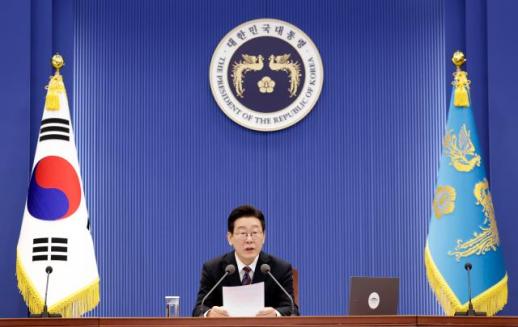 President Lee Jae Myung urges patience in building trust with North Korea SEOUL, February 26 (AJP) - South Korean President Lee Jae Myung stated Thursday that long-standing hostility between the two Koreas cannot be erased with a single measure, responding to North Korean leader Kim Jong-un's speech from a day ago, which characterized Seoul's outreach as a "deception." During a meeting with senior secretaries at the presidential office, President Lee addressed Kim's report at the 9th Congress of the Workers' Party, in which the North Korean leader ruled out further dialogue. President Lee emphasized that trust must be built gradually through persistent effort, eventually leading to a state of mutual understanding and empathy. "Hostile feelings and a mindset of confrontation that have accumulated over a long time cannot be eliminated in an instant through one breakthrough measure," President Lee said. The president's remarks come at a time of deep division within South Korean politics regarding North Korea's policy. While critics have labeled the administration's conciliatory tone as a submissive stance, President Lee argued that the country must move past a history that "rushed toward confrontation and war." He questioned whether previous "insulting or threatening acts" toward the North had effectively protected national interests or state security. President Lee's push for engagement follows a significant deterioration in inter-Korean ties during the previous administration of President Yoon Suk Yeol. Under the Yoon government, the 2018 Comprehensive Military Agreement was suspended, and Pyongyang officially designated South Korea as its "primary foe." President Lee, who assumed office in 2025, has attempted to pivot back toward the de-escalation strategies seen during the Moon Jae-in era, though Pyongyang has so far remained unreceptive. President Lee noted that the process of reconciliation would not be immediate, citing a Korean proverb that one cannot be full with the first spoonful of rice. He stressed that the administration would focus on its own efforts to build trust rather than blaming the other side for the current stalemate. The administration remains committed to seeking communication and cooperation to establish what President Lee described as "structural peace and stability" on the Korean Peninsula. President Lee concluded that consistent effort is the only way to overcome the "hostile two-state" doctrine recently codified by the North. 2026-02-26 15:53:46
 -
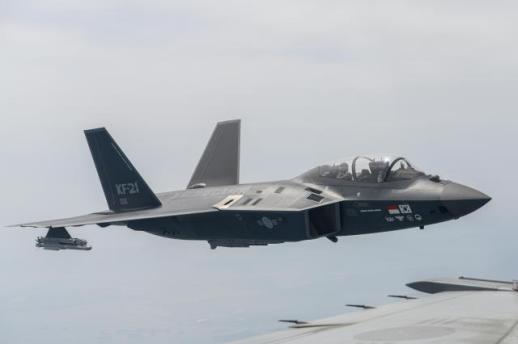 KAI to hold board meeting on new chief amid 'parachuting appointment' controversy SEOUL, February 26 (AJP) - The Korea Aerospace Industries (KAI) is scheduled to hold a board of directors meeting on Thursday to discuss the nomination of a former military official to lead South Korea's aerospace and defense powerhouse. The meeting follows a delay the previous day, when the board postponed tabling the appointment of the new chief executive officer after the company union launched protests against what it termed a "parachuting appointment" from the government. Kim, a former head of the unmanned aerial vehicle division at the Defense Acquisition Program Administration (DAPA), was tapped to lead the company. He graduated from the Air Force Academy and served as an officer for 20 years before joining DAPA as a special recruit. During his tenure at the state arms procurement agency, Kim held various roles including head of defense export support and director of planning and coordination. Kim is expected to bridge his experience in unmanned aerial systems at the Defense Acquisition Program Administration with the strategic goals of South Korea's primary aerospace firm. While at the state arms procurement agency, he oversaw the development and management of drone programs, a sector that KAI is actively expanding as part of its future growth portfolio. His background in defense export support is also viewed as a potential asset for the company as it seeks to market the KF-21 fighter jet and other indigenous platforms to international buyers. The KAI union raised concerns over the transparency of the selection process and Kim's professional suitability. Union officials alleged that the internal recommendation committee was bypassed after narrowing the field to two finalists, with Kim suddenly emerging as the nominee. The union also pointed to Kim's previous experience as an advisor to a presidential campaign as evidence of political influence in the selection. "Internal records show that a candidate recommendation committee was in operation," a KAI union official said. "While the process of narrowing down the candidates to two was underway, a nominee suddenly appeared, bypassing them. If the candidate had come through the normal personnel system, we would have no reason to object." The controversy reflects long-standing friction within KAI regarding the appointment of military officials to top executive posts. While the union stated that military experience itself is not a disqualifier, it argued that previous leaders from the armed forces have struggled to integrate with existing corporate culture and focused excessively on hiring other former military personnel. Union representatives also questioned whether Kim's specific expertise in drones was sufficient to lead the country's primary aerospace manufacturer. Structural issues at KAI contribute to the recurring leadership disputes. Although classified as a private company, its largest shareholder is the state-run Export-Import Bank of Korea, which holds a 26.41 percent stake. This ownership structure allows for significant government influence over management. Historically, seven out of the eight individuals who have served as KAI president came from military or government backgrounds, with only one internal promotion to the top spot. Industry analysts suggest that government intervention is often viewed as a necessity due to the nature of the defense and aerospace sectors. Projects like the KF-21 fighter jet require decades of research and massive capital investment that may not provide immediate commercial returns. Internal assessments suggest that such national strategic projects would be difficult to sustain under a purely profit-driven private management model without state backing. Despite the current friction, industry observers expect the appointment process to proceed ahead of the annual general shareholders' meeting scheduled for March 26. To meet this timeline, KAI would need to finalize the nomination through Thursday's proceedings or a subsequent provisional board meeting to officially name Kim as a candidate for the internal board of directors. The incoming chief executive will face immediate pressure to validate the appointment through tangible results. Key tasks include the successful deployment of the KF-21 to the South Korean Air Force and securing new international export contracts. Observers noted that achieving these milestones will be essential for the new leadership to overcome political controversy and rebuild trust with the internal workforce. 2026-02-26 15:32:23
 -
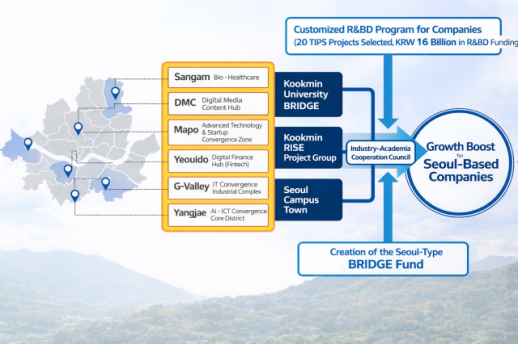 Kookmin University selected for S. Korea's Seoul BRIDGE project to commercialize strategic technologies SEOUL, February 26 (AJP) - Kookmin University announced on Thursday that its Industry-Academic Cooperation Foundation has been selected for the Seoul BRIDGE project. The initiative is a key component of the Regional Innovation System and Education (RISE) framework, a project managed by the Seoul Metropolitan Government to align university research with regional economic needs. Through this selection, Kookmin University will receive 650 million won annually over the next four years, totaling 2.6 billion won in financial support. the university intends to use these funds to commercialize research in five of South Korea's primary strategic sectors: artificial intelligence, bio-health, fintech, robotics, and creative industries. To address the historical gap between campus research and industrial application, the university is forming an industry-academic cooperation council. This group will include researchers, corporate representatives, and field experts to create a steady collaboration pipeline. The goal is to identify technical hurdles faced by startups and small businesses in Seoul and match them with existing university patents or research through a demand-based Research and Business Development (R&BD) system. The university also plans to establish the Seoul BRIDGE Fund. This fund will capture 30 percent of all technology transfer revenue to be reinvested into the program, creating a self-sustaining cycle for future research and development. According to the Seoul Metropolitan Government, Kookmin University was selected based on its strong track record in startup support and technology income. In the most recent JoongAng Ilbo university rankings—a prominent annual evaluation of higher education in South Korea—the school ranked second in industry-academic cooperation income per science professor and first in revenue per startup. These figures reflect the university's transition into a "company-builder" style accelerator that provides investment and post-management support rather than just simple licensing. "The selection for the Seoul BRIDGE project is a turning point that will allow us to connect our research capabilities directly to Seoul's strategic industries," said Son Jin-sik, the head of the Kookmin University Industry-Academic Cooperation Foundation and vice president for planning. "We aim to build a deep-tech startup ecosystem in the northeastern district of Seoul, creating a growth model where the university and the local community thrive together." The program will focus on practical technology applications rather than theoretical research throughout the four-year funding period. 2026-02-26 15:08:07
 -
 South Korean researchers use natural sounds to boost brain health SEOUL, February 26 (AJP) - A research team at Kookmin University has developed a new method to deliver cognitive health benefits through everyday sounds by blending therapeutic frequencies with natural environmental recordings. The study focuses on making 40Hz auditory stimulation, which is known to help prevent Alzheimer's disease, more comfortable for long-term listening by integrating it into local South Korean soundscapes. Professor Namkung Ki-chan and his team at the Kookmin University Techno Design Research Institute published two papers on this cognitive wellness research in the international journals Healthcare and Applied Sciences. Both publications are ranked within the top 40 percent of their respective fields, covering health systems and applied sciences. While 40Hz gamma-band sound stimulation has gained attention for its potential to improve brain health, listening to the raw, repetitive tones often causes ear fatigue and discomfort. To solve this, the researchers recorded natural sounds from locations such as Chuncheon and Uljin in South Korea. They then built a protocol to naturally embed the 40Hz frequency into these environmental soundscapes, ensuring the therapeutic effect remains while the listener hears only the calming sounds of nature. The research combined user experience design with brainwave measurements to ensure the system is practical for daily life. By testing various mixing levels and playback structures, the team identified the best way to keep the 40Hz signal effective without it becoming a distraction. The two studies examined how participants accepted these sounds and used electroencephalogram (EEG) tests to confirm that the brain still recognized the 40Hz stimulation even when hidden within a natural soundscape. The results showed that the redesigned sounds were significantly easier to listen to over long periods while successfully triggering the intended brainwave responses. The project originated from a Soundscape Design course at the Kookmin University Graduate School of Techno Design. Graduate students from the Interaction Design Lab participated as co-authors, handling everything from field recording and sound production to conducting the experiments and drafting the research papers. Professor Namkung Ki-chan stated that the core of the research was taking a frequency that is effective for cognitive health but usually unpleasant to hear and turning it into a sustainable auditory experience using local South Korean soundscapes. He noted that the project is a meaningful example of an academic course leading directly to international research achievements. (Paper information) Journal: Healthcare (JCR Q2) Title: User Experience Design and Implementation of 40Hz Auditory Stimulation for Cognitive Wellness DOI: https://doi.org/10.3390/healthcare13010045 Journal: Applied Sciences (JCR Q2) Title: EEG-based Verification of Soundscape-mediated 40Hz Gamma-band Stimulation DOI: https://doi.org/10.3390/app15010123 2026-02-26 10:23:50
 -
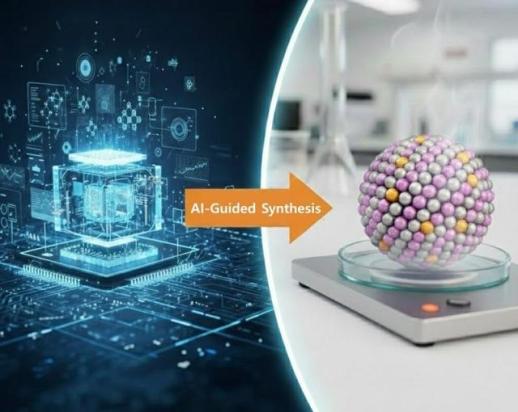 South Korean researchers use AI to design high-efficiency catalysts for hydrogen vehicles SEOUL, February 26 (AJP) - A research team from the Korea Advanced Institute of Science and Technology and Seoul National University has developed a technology that uses artificial intelligence to precisely predict the arrangement of atoms in catalysts. By calculating atomic tendencies before conducting experiments, the researchers identified a way to improve both the performance and durability of the fuel cells that power hydrogen vehicles. Hydrogen fuel cells are often described as the heart of eco-friendly mobility, but they remain expensive and have limited lifespans. Much of this is due to the platinum catalyst, a critical material that generates electricity. Platinum reacts slowly, its performance drops over time, and its high cost drives up the price of hydrogen cars. The South Korean team addressed these issues by using AI to design a more efficient atomic structure for the catalyst. The research focused on platinum-cobalt alloy catalysts. While these alloys are powerful, creating a stable, ordered structure known as an intermetallic compound typically requires extremely high heat. This heating process often causes the tiny particles to clump together or become unstable, which limits their use in real-world fuel cells. To solve this, the team used machine learning simulations to analyze how atoms move and arrange themselves at the atomic level. The AI discovered that introducing a small amount of zinc acts as a mediator. This zinc allows the atoms to settle into their proper positions more easily, creating a more precise and stable structure. In simple terms, the AI found a more efficient path for the atoms to follow, acting like a digital blueprint that was then tested in a laboratory. When the researchers synthesized the zinc-platinum-cobalt catalyst based on these AI predictions, it showed higher activity and better long-term durability than traditional platinum catalysts. This suggests that the AI-guided design can successfully translate from a virtual simulation into a high-performance physical material. The technology is expected to help reduce manufacturing costs and extend the life of fuel cells in various sectors, including passenger cars, long-haul trucks, ships, and energy storage systems. KAIST's Department of Materials Science and Engineering Professor Cho Eun-ae stated that the study used machine learning to predict atomic ordering before realizing it through actual synthesis. She noted that AI-based material design will provide a new paradigm for developing next-generation catalysts. Jang Hyun-woo, a doctoral student at KAIST, and Ryu Jae-hyun, a researcher at Seoul National University (SNU), served as joint first authors for the study. The findings were published in the energy materials journal Advanced Energy Materials on January 15. (Paper information) Journal: Advanced Energy Materials Title: Machine Learning-Guided Design of L1₀-PtCo Intermetallic Catalysts: Zn-Mediated Atomic Ordering DOI: https://doi.org/10.1002/aenm.202505211 2026-02-26 10:07:06
 -
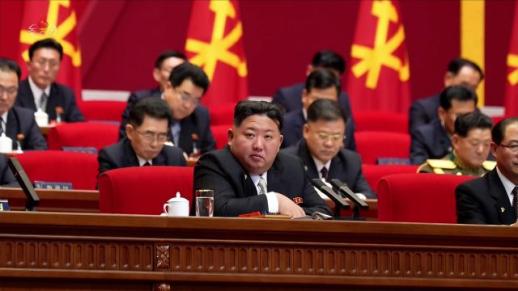 Pyongyang sidelines Seoul while signaling potential for Washington ties SEOUL, February 26 (AJP) - North Korean leader Kim Jong-un stated that there is "no reason not to get along" with the United States if Washington abandons its hostile policy, even as he intensified his rhetoric against South Korea by vowing to permanently exclude the country from the category of "compatriots." North Korea's state media Korean Central News Agency (KCNA) reported Thursday that Kim delivered a summary report during the 9th Congress of the Workers' Party of Korea, which concluded the previous day. Kim noted that the future of relations with the U.S. depends entirely on Washington's willingness to respect North Korea's status as a nuclear-armed state. He stated that Pyongyang is prepared for both "peaceful coexistence or eternal confrontation," placing the responsibility for the next move on the U.S. While maintaining a measure of strategic flexibility toward Washington, Kim took an exceptionally aggressive stance toward South Korea, effectively sidelining Seoul from any future diplomatic roadmap. He characterized the conciliatory approach of the Lee Jae Myung government as a "deception" and repeatedly dismissed the possibility of dialogue. Kim further solidified his "hostile two-state" policy, declaring that South Korea would be "permanently excluded from the category of our fellow countrymen." The North Korean leader warned that any actions by South Korea perceived as a threat to the security environment could trigger the use of physical force, including "preemptive strikes." He claimed that such actions could lead to the "complete collapse" of South Korea, emphasizing that the North has the technical and theoretical means to execute such a response. The timing of these declarations is significant as the Congress of the Workers' Party serves as the highest decision-making body in North Korea. These rare gatherings are used to define the nation's strategic direction and consolidate the leader's authority. By delivering these remarks during the 9th Congress, Kim has effectively codified the "hostile two-state" doctrine into the country's formal political roadmap. The current hostility represents a sharp departure from the inter-Korean relations seen under former President Moon Jae-in. Between 2017 and 2022, the two nations engaged in significant diplomacy, leading to the 2018 Panmunjom Declaration and multiple high-level summits. This period of engagement eventually paved the way for the first-ever meeting between a sitting U.S. president and a North Korean leader. Tensions began to resurface and eventually sour during the administration of President Yoon Suk Yeol, who prioritized military deterrence and strengthened trilateral cooperation with the U.S. and Japan. Under the Yoon government, the 2018 Comprehensive Military Agreement was effectively scrapped, and North Korea officially designated South Korea as its "primary foe" in early 2024. Despite the 2025 election of the Lee Jae-myung administration, which has signaled a preference for de-escalation, Pyongyang indicated that it has no intention of returning to a partnership for unification. Kim described the habit of treating South Korea as a fellow ethnic group as an "erroneous practice" that should no longer be tolerated. Kim concluded the report by signaling a policy of strategic ambiguity. He noted that North Korea's future military and diplomatic maneuvers would remain hidden, suggesting that keeping rivals unable to calculate Pyongyang's next moves would serve as a psychological deterrent. 2026-02-26 09:19:04
 -
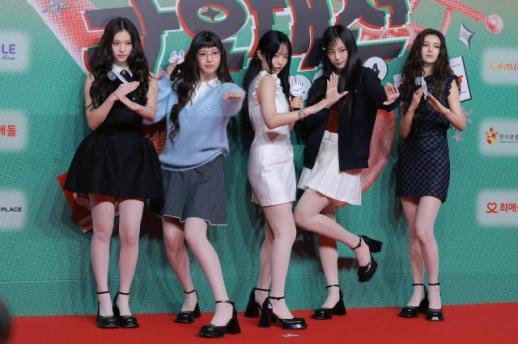 NewJeans' creator proposes settlement to HYBE to resolve NewJeans legal disputes SEOUL, February 25 (AJP) - Min Hee-jin, the CEO of OOAK Records and former head of ADOR, has offered to waive a 25.6 billion won ($18.9 million) legal payout from HYBE in exchange for the termination of all ongoing litigation involving herself and the girl group NewJeans. During a press conference held in Seoul on Wednesday, Min announced her willingness to give up the funds recently awarded to her by a court regarding a put option on her former ADOR shares. Her proposal requires HYBE and its subsidiary, ADOR, to drop all civil and criminal lawsuits against her, the five members of NewJeans, their families, and former staff. The offer arrives as the group attempts to recover from a year of internal conflict that nearly led to its dissolution. In late 2024, the members declared the unilateral termination of their contracts following Min's removal as CEO, resulting in a total suspension of activities and a freeze on brand deals. While the Seoul Central District Court eventually ruled the contracts valid through 2029, the original lineup was fractured when ADOR officially terminated the contract of member Danielle Marsh on December 29, 2025. ADOR cited an "unrecoverable breach of trust" for the expulsion of Danielle, alleging she played a primary role in the group's attempt to break away from the label. The agency claimed the singer engaged in unauthorized activities, including filming a commercial in Southeast Asia and signing luxury brand deals that conflicted with her exclusivity clauses. Consequently, ADOR filed a 43.1 billion won damages lawsuit against Danielle, her family, and Min. Min's proposal also follows a February 23 exclusive report by the entertainment media outlet Dispatch. The report alleged that Min orchestrated the group's departure by meeting with a Japanese investor to secure funding and that she personally drafted the script for the group's November 2024 press conference. Min has dismissed these claims as "fiction." "I am proposing that we immediately stop all ongoing civil and criminal litigation and end all disputes in exchange for me letting go of the 25.6 billion won," Min said during the conference. She emphasized that her decision was motivated by the welfare of the members, stating she could no longer watch the group divided between the stage and the courtroom. While four members, Kim Min-ji, Hanni Pham, Kang Hae-rin, and Lee Hye-in, have already returned to ADOR, Min urged HYBE Chairman Bang Si-hyuk to allow the group to reunite as a quintet. She called on the agency to fulfill its previous promise to support the members and requested that the industry return to a focus on creative output rather than legal battles. Min confirmed her transition to her new label, OOAK Records, noting that the February 25 briefing would be her final public statement regarding the management dispute. HYBE has not yet issued a formal response to the settlement offer. 2026-02-25 15:45:48