
Journalist

Kim Dae-sik
swatchsjp@ajunews.com
-
 Blockchain operator Sign estimates 2026 to be turning point for institutional asset tokenization SEOUL, January 20 (AJP) - Sign, a blockchain infrastructure provider, released a market analysis Tuesday projecting that 2026 will serve as a pivotal year for Real World Asset (RWA) tokenization, forecasting a shift from experimental pilots to full-scale institutional integration. The company stated that the digital asset sector is currently undergoing a structural transition. While recent years have focused on technical proof-of-concepts, Sign’s outlook suggests the coming year will see traditional financial institutions begin utilizing blockchain infrastructure for core operations rather than just speculative investment. In its analysis, Sign highlighted industry data projecting the market for tokenized assets could reach 18.9 trillion U.S. dollars by 2033. The firm attributed this growth potential to increasing regulatory clarity in major jurisdictions and a growing demand for on-chain capital efficiency among asset managers. To support this projected influx of institutional activity, Sign announced it intends to expand its proprietary "Sign Chain." The company positions this Layer 1 blockchain as a specialized network designed to handle the rigorous compliance, identity verification, and data privacy requirements of regulated assets—features often lacking in general-purpose public networks. A central component of the company's 2026 roadmap involves government-level partnerships to establish sovereign digital infrastructure. Sign referenced its ongoing collaboration with the National Bank of the Kyrgyz Republic to develop systems for a Central Bank Digital Currency (CBDC) and the "Digital SOM." The company frames this project as a test case for how blockchain can digitize administrative and financial processes at a national level. The report also identified stablecoins as a critical driver for the 2026 outlook. Sign noted that stablecoin settlement volume recently exceeded 46 trillion dollars, interpreting this as evidence that the market is ready for programmable, on-chain currency solutions that can interface seamlessly with traditional banking systems. Addressing the technical barriers to this adoption, Sign stated it is prioritizing "omnichain" connectivity. This approach aims to allow assets to move fluidly between incompatible blockchain networks, removing the technical silos that have previously fragmented liquidity and deterred institutional users. Company executives indicated that Sign plans to roll out additional tokenization services and infrastructure updates in the coming months to align with these anticipated market shifts. 2026-01-20 11:18:36
 -
 S. Korea, Italy agree to boost cooperation on AI and semiconductors SEOUL, January 19 (AJP) - South Korean President Lee Jae Myung and Italian Prime Minister Giorgia Meloni agreed on Monday to strengthen supply chain stability and industrial ties, focusing on semiconductors and artificial intelligence. During a summit at the presidential Blue House in Seoul, the two leaders oversaw the signing of three memorandums of understanding aimed at deepening cooperation in technology, disaster response, and cultural exchange. The meeting marked the first official visit by an Italian prime minister to South Korea in 19 years. The centerpiece of the summit was an agreement to expand business collaboration in the semiconductor sector. Under the terms of the memorandum, Seoul and Rome committed to sharing supply chain data and linking public and private networks to foster development in AI and other advanced industries. Lee described the partnership as a strategic fit between Italy’s scientific tradition and South Korea’s technological manufacturing base. "If Italy's traditional strengths as a science powerhouse combine with the core DNA of South Korea as a technology powerhouse, the two countries can create significant synergy," Lee said in his opening remarks. He noted that bilateral cooperation was already growing in aerospace and defense, adding that the potential for the relationship felt "limitless." Meloni emphasized that despite the geographic distance, the two nations were aligned on key issues, including critical minerals and energy security. "I have always viewed President Lee's pragmatic approach very positively and respect it," Meloni said. She expressed hope that the visit would establish a framework for regular political dialogue to address international crises. The leaders also discussed expanding cultural and personnel exchanges. Meloni noted South Korea's growing influence in soft power, remarking that her daughter is a fan of K-pop. Other than the technology agreements, the two governments signed a memorandum on civil protection to share policies on disaster management. A separate agreement between South Korea's Korea Heritage Service and the Italian Ministry of Culture established protocols for sharing data on heritage management and preventing the illegal trafficking of cultural properties. Lee also thanked Italy for its historical support, specifically citing the medical units Rome dispatched during the 1950~53 Korean War. 2026-01-19 14:00:50
 -
 S. Korea and Egypt sign declaration to launch economic partnership talks SEOUL, January 18 (AJP) - South Korea and Egypt have officially launched a push for a Comprehensive Economic Partnership Agreement (CEPA), aiming to establish the North African nation as a bridge for South Korean goods entering Europe, Africa, and the Middle East. South Korean Trade Minister Yeo Han-koo signed a joint declaration with his Egyptian counterpart, Hassan El Khatib, in Cairo on Sunday. The Ministry of Trade, Industry and Energy said the agreement formalizes the intent to negotiate a deal that goes beyond simple tariff reduction to include broader economic cooperation. The two nations have been laying the groundwork since 2022, following a memorandum of understanding and a joint feasibility study. The decision to move toward a formal deal was reached during a summit last November. A key focus of Yeo's visit was the potential for South Korean firms to gain preferential access to the U.S. market. During a meeting with Gamal El-Dein, chairman of the Suez Canal Economic Zone, Yeo highlighted the advantages of the Qualifying Industrial Zones (QIZ) agreement. Under this arrangement, goods produced in specific Egyptian zones with a required amount of Israeli input can be exported to the United States duty-free. "By leveraging the QIZ agreement, the Suez Canal Economic Zone can serve as a new production base for South Korean companies to export to the United States under preferential conditions," Yeo said. To facilitate this, Yeo proposed a regular consultative channel between the Korea Trade-Investment Promotion Agency (KOTRA) and the Suez authority. He also inspected the Sokhna Industrial Zone and Sokhna Port—the largest of the special zone's industrial hubs—to check logistics and infrastructure. Yeo later met with representatives of South Korean companies operating in Egypt to discuss regulatory hurdles and financial support. "We intend to proceed with speed from the start of CEPA negotiations to their final conclusion," Yeo said. The ministry stated it would publish an investment guidebook based on the visit to assist firms entering the market. 2026-01-18 17:43:47
 -
 South Korea begins deployment of 'monster' Hyunmoo-5 ballistic missiles SEOUL, January 18 (AJP) - South Korea has begun deploying the Hyunmoo-5, a high-power ballistic missile capable of penetrating deep underground bunkers, to operational units, military sources said Sunday. The weapon, dubbed the "monster missile" for its massive eight-ton warhead, is a centerpiece of Seoul's strategy to neutralize the North Korean leadership in the event of a conflict. According to sources, the rollout to field units began late last year and is scheduled for completion within the term of the Lee Jae-myung administration. The Hyunmoo-5 serves as the core asset for the Korea Massive Punishment and Retaliation (KMPR) plan. This strategy forms one pillar of the nation's "three-axis" defense system, which also includes the "Kill Chain" preemptive strike platform and the Korea Air and Missile Defense (KAMD) system. While the Hyunmoo-5 is now entering service, military authorities are already advancing classified programs for next-generation surface-to-surface missiles. Often referred to unofficially as "Hyunmoo-6" or "Hyunmoo-7," these future systems aim to extend range and enhance warhead penetration capabilities beyond the current arsenal. Defense Minister Ahn Gyu-back, speaking in an interview last October, outlined the strategic logic behind massing such heavy conventional firepower. "We will improve performance in areas such as destructive power and accuracy for high-power missiles like the Hyunmoo-5 and next-generation models," Ahn said. "By securing a sufficient quantity necessary for an overwhelming response, we will realize a 'balance of terror' commensurate with North Korea's nuclear threat." Ahn noted that the sheer kinetic energy of these weapons allows them to serve as a conventional deterrent against nuclear arms. "Missile experts judge that if approximately 15 to 20 high-power missiles impact a target, they exert destructive power exceeding that of a nuclear weapon," Ahn said. "The Hyunmoo-5 is capable of achieving a balance of terror comparable to nuclear weapons." The military reportedly plans to stockpile hundreds of these high-yield missiles to solidify its retaliatory capabilities against Pyongyang's nuclear arsenal. 2026-01-18 17:17:36
 -
 SURVEY: 78% of S. Korean workers fear AI will worsen inequality SEOUL, January 18 (AJP) - An overwhelming majority of South Korean office workers are worried that the spread of artificial intelligence will deepen inequality and widen the wealth gap. Gapjil 119, a civic group campaigning against workplace abuse, released the results Sunday of a survey conducted on 1,000 office workers nationwide. The poll, carried out by Global Research last October, highlights a stark level of anxiety regarding the impact of AI on the labor market. According to the findings, 77.9 percent of respondents said they were concerned that AI adoption would lead to greater inequality in the labor market and a polarization of wealth. Nearly half of the workers surveyed, 48.2 percent, believe AI will eventually replace their own jobs. This anxiety was most acute among younger generations. Workers in their 20s were the most pessimistic, with 58.1 percent predicting their roles would be taken over by technology. This figure dropped slightly with age, with 49.1 percent of those in their 30s, 47.3 percent in their 40s, and 43.2 percent in their 50s expressing similar fears. When asked about the timing of this shift, 41.1 percent of respondents predicted it would happen in "more than five years," while 36.3 percent expected the change to come within "three to five years." These concerns appear grounded in reality, as South Korea has recently recorded the world's fastest growth in AI adoption. According to the "Global AI Adoption Report" released by Microsoft earlier this month, the percentage of the South Korean working-age population using generative AI tools jumped to 30.7 percent in late 2025, up from 25.9 percent just six months prior. This 4.8 percentage point increase was the largest recorded among all nations surveyed, propelling South Korea seven spots up the global rankings to 18th place. The report noted that the country has become the second-largest market for paid ChatGPT subscriptions globally, driven by improved Korean language capabilities in newer models and aggressive government-led digital initiatives. Faced with this rapid shift, the survey pointed to a strong demand for government intervention. A significant 83.3 percent of respondents said social safety nets must be strengthened to prepare for the potential fallout. Additionally, 70 percent supported the idea that companies profiting from AI should be taxed to support the public. "It is urgent to predict the negative impact AI and automation technology will have on jobs and to prepare practical protection mechanisms in advance," said Lee Jin-ah, a labor attorney at Gapjil 119. "Discussions on protecting social members must proceed at the same speed and weight as the development of the technology itself." 2026-01-18 13:02:51
 -
 KAIST proposes global 'bridge' alliance to break US-China grip on AI SEOUL, January 18 (AJP) - A consortium of international researchers has called for a new alliance of mid-sized nations to challenge the overwhelming dominance of the United States and China in artificial intelligence. The Korea Advanced Institute of Science and Technology (KAIST) released a policy report Sunday titled "A Blueprint for Multinational Advanced AI Development." The document, co-authored with scholars from the University of Oxford, Canada's Mila institute, and Germany's RWTH Aachen University, argues that countries like South Korea, the United Kingdom, and Canada must pool their resources to secure technological independence. The report paints a stark picture of the current landscape, noting that approximately 90 percent of the world's AI computing capacity is concentrated in the United States and China. The authors warn that this imbalance effectively blocks other nations from developing "frontier" AI models on their own, forcing them into a state of technological dependency on a handful of superpowers and Big Tech firms. To counter this, the researchers propose a "Bridge Power" coalition. The strategy targets nations that have advanced digital infrastructure and research talent but lack the massive capital and energy resources of the two global hegemons. The report specifically identifies South Korea, Canada, the United Kingdom, Germany, and Singapore as key candidates for this bloc. "In an environment where geopolitical competition is intensifying, solidarity among 'AI Bridge Power' nations is essential to maintain competitiveness and responsible AI development," said Yoshua Bengio, a Turing Award laureate and co-author of the report. The blueprint suggests modeling this cooperation after CERN, the European Organization for Nuclear Research. Instead of particle physics, the proposed body would focus on sharing the heavy burden of AI infrastructure. Member nations would pool computing resources, establish protocols for cross-border data training, and create a shared system for research talent to move freely between countries. According to the report, this approach would allow member nations to build high-level AI models that reflect their own languages and cultural values, rather than relying on systems imported from Silicon Valley or Beijing. Park Kyung-ryul, a KAIST professor who led the initiative, said the proposal offers a "realistic alternative path" for nations caught in the crossfire of the current tech war. He noted that such an alliance could help these countries assert leadership in ethical AI governance by presenting a united front on global challenges. The findings were the result of a collaboration between computer scientists, economists, and legal experts from institutions including the Future Society and the Paris Peace Forum. 2026-01-18 12:00:00
 -
 Luxury hotels and retailers target 'rite rush' as S, Koreans outsource ancestral duties SEOUL, January 18 (AJP) - As the Lunar New Year holiday approaches next month, luxury hotels and major retailers in South Korea are aggressively targeting a niche but rapidly growing market: the "to-go" ancestral rite table. The hospitality industry is capitalizing on a significant cultural shift where families are increasingly willing to pay a premium to outsource the labor-intensive cooking required for the holiday, turning a domestic duty into an affordable service. The ritual, known as "Charye," is a traditional Confucian memorial service held on the morning of the Lunar New Year. Families gather to set a table laden with specific offerings—including meats, fruits, vegetables, and rice cakes—to honor deceased ancestors and seek their blessing for the household's health and prosperity. While deeply rooted in Korean culture, the practice requires days of meticulous cooking and preparation, a responsibility that has traditionally fallen heavily on the women of the household. Recognizing the growing fatigue with these demands, major establishments, including JW Marriott Dongdaemun Square, Fairmont Ambassador Seoul, and The Plaza, have rolled out "Charye To-Go" packages for the upcoming holiday. According to industry reports released Sunday, these sets range in price from approximately 200,000 won ($135) to 600,000 won and offer complete rite tables featuring dozens of required dishes such as "jeon" (pan-fried delicacies), "galbijjim" (braised short ribs), and dried fish, all prepared by professional chefs. The trend has evolved beyond simple convenience to include "star power" marketing. This year, the influence of the hit Netflix cooking competition "Culinary Class Wars" has reached the ritual table, with Mayfield Hotel Seoul launching a premium "Sechan" set overseen by head chef Lee Keum-hee, a contestant from the show's second season. Retailers noted that while sales of these packages dipped slightly after the height of the COVID-19 pandemic, demand has stabilized and is now driven by a loyal customer base seeking to balance tradition with modern lifestyles. This commercialization of the rite is a direct response to the growing economic and social burden of the tradition. Data from the Korea Agro-Fisheries & Food Trade Corporation indicates that South Korean families must spend an average of 380,000 won at supermarkets to prepare a single Charye table, a cost that continues to rise annually due to inflation. This combination of labor intensity and rising food prices has soured public sentiment toward the ritual, leading many to seek alternatives or abandon the practice altogether. A survey conducted by Sungkyunkwan, the country's oldest Confucian institute, revealed that approximately 56 percent of South Koreans plan to stop holding memorial rites entirely. Respondents cited the "burden of food preparation" and the belief that the practice is "outdated" as primary reasons for opting out. For those unwilling to completely abandon their heritage, the hotel-made rite table has emerged as a compromise, allowing families to maintain the ceremonial form without the kitchen stress. 2026-01-18 10:38:48
 -
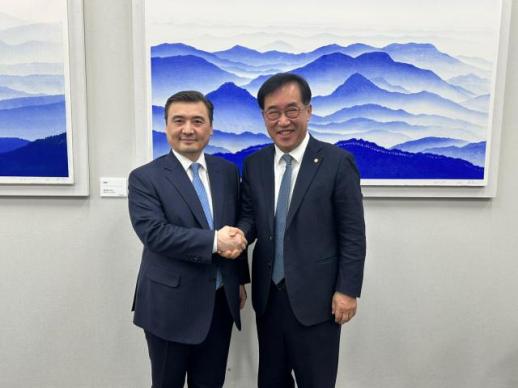 Kazakhstan pushes Alatau Smart City and logistics in Seoul talks SEOUL, January 16 (AJP) - The Kazakh ambassador to South Korea has met with a leading lawmaker to discuss cooperation on logistics and the Alatau Smart City project. The Embassy of Kazakhstan said Thursday that Ambassador Nurgali Arystanov met with Maeng Sung-Kyu, the chair of the National Assembly's Land, Infrastructure and Transport Committee, in Seoul on January 14. The talks focused on transport and logistics, which Kazakh President Kassym-Jomart Tokayev has identified as a national strategic priority. A key subject was the Alatau Smart City development. Both officials noted the importance of a memorandum of understanding signed in December 2025 between Kazakhstan's Ministry of Industry and Construction, the Alatau City Authority, and the Korea Overseas Infrastructure & Urban Development Corporation (KIND). Ambassador Arystanov invited Meng to an upcoming international event in Astana. The two sides also reviewed the growth in tourism and travel between the nations, credited to increased direct flights from Air Astana, SCAT Airlines, Asiana Airlines, and Eastar Jet. 2026-01-16 16:48:38
 -
 Kookmin University researchers turn cancer's hunger against itself to treat drug-resistant tumors SEOUL, January 16 (AJP) - Researchers at Kookmin University have developed a drug delivery platform that bypasses the defenses of hard-to-treat colorectal cancer by exploiting the tumor's own aggressive metabolism. Kookmin University announced on January 15 that the team, led by Professor Kim Ha-rin of the Department of Biopharmaceutical Science, successfully treated KRAS-mutant colorectal cancer in animal models using the new system. The findings were published in the January 2026 issue of the Journal of Controlled Release. KRAS-mutant colorectal cancer is notorious for being difficult to treat. It responds poorly to targeted therapies and immune checkpoint inhibitors because the tumors create an immunosuppressive environment that blocks immune cells from attacking. To break through these defenses, Professor Kim's team engineered a delivery platform that effectively acts as a "Trojan horse." The system takes advantage of the fact that cancer cells consume nutrients much more aggressively than healthy cells. The drug is designed to be absorbed by the hungry tumor cells and accumulates selectively within the cancer tissue. Crucially, the drug remains dormant until the cancer cell begins to die, at which point it activates. When combined with immunotherapy, this selective activation did more than just kill the cancer cells; it remodeled the tumor environment, allowing the immune system to recognize and destroy the tumor. In tests using animal models, the treatment led to a significant increase in the rate of complete tumor disappearance. The researchers also observed a strong "immune memory" effect. When cancer cells were reintroduced to the cured subjects, the immune system immediately recognized and eliminated them, preventing recurrence. "This study proves that we can restore sensitivity to immunotherapy by precisely controlling the timing and location of drug activation within the tumor, rather than simply increasing the dosage," Professor Kim Ha-rin said. "We have presented a strategy to convert refractory cancers into a treatable state using clinically applicable drug combinations." The team expects this design principle to be applicable to other solid tumors that have previously shown low response rates to immunotherapy. 2026-01-16 08:35:33
 -
 Researchers use laser light to sharpen radio telescope images of black holes SEOUL, January 16 (AJP) - A joint research team led by the Korea Advanced Institute of Science and Technology (KAIST) has developed a technology to significantly improve the resolution of radio telescopes using laser optics. By applying an "optical frequency comb" directly to telescope receivers, the researchers aim to capture sharper images of black holes and enhance precision in deep space exploration. KAIST announced on January 15 that the team, led by Professor Kim Jung-won of the Department of Mechanical Engineering, successfully implemented the technology in collaboration with the Korea Astronomy and Space Science Institute (KASI), the Korea Research Institute of Standards and Science (KRISS), and the Max Planck Institute for Radio Astronomy (MPIfR) in Germany. Radio telescopes are designed to capture faint radio signals from space and convert them into images of celestial bodies. To observe distant objects like black holes with high clarity, astronomers use a technique called Very Long Baseline Interferometry (VLBI). This method connects multiple radio telescopes located far apart so they function as a single, massive telescope. For VLBI to work effectively, the signals captured by each telescope must be synchronized with extreme precision. The telescopes must align the "phase" of the received waves as if they were measured against a single, precise ruler. However, conventional electronic reference signals used for this synchronization face limitations. As observation frequencies increase, the electronic reference signals become unstable, introducing noise or "jitter" that makes precise phase calibration difficult. The research team solved this problem by introducing an optical frequency comb—a laser source that acts as a "ruler made of light." Unlike a standard laser that emits a single color (frequency), an optical frequency comb emits hundreds of thousands of precise frequency modes spaced at exact intervals, resembling the teeth of a comb. The team developed a method to transmit this laser light directly into the radio telescope's receiver. This creates a reference signal that is far more stable than traditional electronic methods. "If the existing method was like using a ruler with trembling markings, this new technology is comparable to establishing a standard using a ruler of light that is extremely stable," the researchers explained. This allows distant telescopes to be linked with much higher precision. The technology was validated through test observations at the Korean VLBI Network (KVN) Yonsei Radio Telescope. The team successfully detected stable interference patterns, known as fringes, between telescope signals, proving that precise phase calibration is possible using the optical system. The system has also been installed at the KVN Seoul National University Pyeongchang Radio Telescope for expanded experiments involving multiple observatories. Professor Kim Jung-won said, "This study overcomes the limitations of existing electronic signal generation technology by directly applying the optical frequency comb laser to radio telescopes. It will contribute to increasing the precision of next-generation black hole observations and advancing the fields of frequency metrology and time standards." Beyond astronomy, the researchers anticipate the technology will be applied to other fields requiring precise time and space measurements, such as intercontinental atomic clock comparisons, space geodesy, and the tracking of deep space probes. The research was supported by the National Research Council of Science and Technology (NST), the National Research Foundation of Korea (NRF), and the Institute for Information and Communications Technology Planning and Evaluation (IITP). (Paper information) Journal: Light: Science & Applications (Impact Factor 23.4) Title: Optical frequency comb integration in radio telescopes: advancing signal generation and phase calibration DOI: http://bit.ly/4qYCFi5 2026-01-16 08:22:58