
Journalist

Kim Dae-sik
swatchsjp@ajunews.com
-
 Korean founders told to prioritize profit over growth at Silicon Valley summit SEOUL, January 15 (AJP) - South Korean startup founders hoping to break into the United States market were advised to abandon aggressive growth strategies in favor of proving their "unit economics," as investors at a major industry gathering here warned of a tightened global capital environment. The advice was delivered at the UKF 82 Startup Summit 2026, held from January 9 to 12 at the Fox Theatre in Redwood City. The event drew approximately 4,000 participants, making it the largest gathering of South Korean entrepreneurs and venture capitalists ever held in North America. Speakers at the four-day summit described a distinct shift in investor sentiment compared to the boom years of 2021. Eric Kim, managing partner at Goodwater Capital, noted that the venture capital market in 2026 has moved away from rewarding sheer scale. "Unlike in 2021, the market is now strictly dominated by performance and numbers," Kim said. "The IPO market shrinking to 70 to 80 percent of its peak is evidence of this." Kim urged founders to focus on "unit economics"—the direct revenues and costs associated with a business model—rather than user acquisition at all costs. Despite the stricter financial climate, Silicon Valley investors pointed to South Korea as a critical market for identifying future tech trends. Kim described the country as a "leading indicator" for the global industry, citing high population density and advanced digital infrastructure. He mentioned rapid-growth companies such as Coupang and Viva Republica, the operator of Toss, as examples of South Korean firms that successfully scaled in a competitive environment. "Goodwater Capital currently allocates about 10 to 15 percent of its investments to South Korea," Kim said. "We see it not just as a content creator, but as an investment opportunity where trends often emerge before they hit the global stage." The summit was organized by the United Korean Founders (UKF), a non-profit group that has expanded significantly since its inception. Jeong Sae-ju, co-chair of UKF and executive chairman of Noom, described the organization's origins as a casual social gathering in 2018, where founders met in a living room to share "oden" (fish cake) soup and discuss their struggles in the U.S. market. To acknowledge these roots, organizers set up a networking area at the venue styled after a "pocha," or Korean street food tent, serving fish cakes and spicy rice cakes to attendees. "It started with founders eating oden soup and sharing their struggles," Jeong said. "It has now evolved into an ecosystem where global tech leaders, the government, and VCs collaborate." The South Korean government also used the summit to announce expanded support for startups in the Bay Area. Noh Yong-seok, the 1st Vice Minister of SMEs and Startups, attended the event to inaugurate the new Startup Venture Campus (SVC). The facility is designed to provide office space, housing assistance, and administrative support for early-stage South Korean companies entering the U.S. Noh stated that the government is shifting its focus from indirect support to direct, on-the-ground assistance to help founders connect with local networks. 2026-01-15 09:30:53
 -
 OPINION: Focus on Kazakhstan's agriculture and development of remote areas SEOUL, January 10 (AJP) - President Tokayev Meets with Mayors of Local Governments Last year, President Kassym-Jomart Tokayev addressed a dialogue platform for rural akims (mayors), outlining his vision for the long-term development of remote areas. Kazakhstan’s Political Reforms: Evolution Instead of Shock Change President Kassym-Jomart Tokayev is implementing a large-scale transformation of Kazakhstan’s political system by pursuing an evolutionary path of development based on institutional reform and a carefully calibrated sequence of actions. Since 2019, Kazakhstan has adopted around twenty laws aimed at modernizing its political system. Following a nationwide referendum, constitutional amendments were introduced that redistributed powers among the branches of government. The role of Parliament was strengthened, the accountability of the executive branch was enhanced, and new judicial institutions were established, including the Constitutional Court and cassation courts. A defining feature of these reforms has been their focus on practical outcomes. Democratic mechanisms are viewed not as formal procedures, but as tools for improving the quality and effectiveness of public governance. This approach reflects a clear understanding that political stability and legal predictability are critical to sustainable development. Kazakhstan’s experience demonstrates that profound political transformation is possible without abrupt disruptions, offering an alternative model of reform in an era of global uncertainty. The introduction of direct elections of rural akims has become one of the most significant reforms in Kazakhstan’s system of public administration. This process was implemented gradually over five years, allowing the country to avoid governance disruptions and to adapt institutions to new conditions. More than 2,300 rural akims have been elected nationwide, with an average age of 43. Notably, around one-third of them had no prior experience in public service. The reform has stimulated the development of political parties in the regions and expanded opportunities for independent candidates. According to sociological surveys, the level of trust rural residents place in their akims exceeds 80 percent, indicating increased efficiency and transparency in local governance. By launching democratization at the grassroots level, Kazakhstan is building a sustainable foundation for the further expansion of citizen participation in decision-making processes. Why Rural Development Has Become a Strategic Priority for Kazakhstan The President of Kazakhstan views the development of rural areas as a matter of strategic importance that goes beyond social policy. Rural regions play a key role in ensuring food security, social stability, and balanced territorial development. In recent years, under the personal oversight of President Tokayev, hundreds of healthcare and educational facilities have been built in rural areas, while access to digital infrastructure has been significantly expanded. State support for the agricultural sector has contributed to strong growth in gross agricultural output, which has exceeded 8 trillion tenge (15.73 billion USD). Particular emphasis is placed on increasing the economic self-sufficiency of rural districts, developing cooperation mechanisms, and supporting entrepreneurship. The primary objectives are to create sustainable jobs, reduce regional dependence on budgetary transfers, and improve living standards. Thus, Kazakhstan’s rural policy has become an integral component of its long-term national development strategy. It was within this framework that the decision was made to introduce a system of direct elections of rural akims. Over the past five years, the reform has been implemented in stages. As a result, more than 2,300 rural akims have passed through the electoral process, with only 30 percent coming from the public service system, while the majority represent political parties or were elected as self-nominated candidates. Kazakhstan has demonstrated a progressive approach to democratizing the executive branch to the international community and has empowered citizens to directly manage local affairs. Digitalization and Artificial Intelligence: Why Kazakhstan Is Acting at an Accelerated Pace The President of Kazakhstan has set an ambitious goal: to transform Kazakhstan into a fully digital state within three years. In his address at the dialogue platform of rural akims, President Tokayev emphasized that digitalization is not merely a technological direction, but a strategic factor for the country’s survival and development. He stressed that building a Digital Kazakhstan is impossible without the full integration of rural areas and the agricultural sector. Digital platforms are expected to become key instruments for improving governance efficiency, enhancing the quality of public services, and enabling more accurate allocation of resources. Kazakhstan clearly recognizes the risks of technological lag. Accelerated modernization is therefore viewed as a means of avoiding marginalization in the global knowledge-based economy. The use of digital platforms and artificial intelligence technologies opens new opportunities for improving the efficiency of budget allocation, monitoring agricultural production, forecasting yields and risks, increasing transparency and accountability of local authorities. The President also noted that in recent years a solid infrastructural foundation for rural digitalization has been established. Thousands of rural schools have been connected to high-quality internet, access to digital services is expanding, and the level of self-sufficiency of rural districts continues to grow. These measures create favorable conditions for the introduction of advanced digital solutions in agriculture — from electronic accounting and logistics to online access to public services and educational resources. Special emphasis was placed on the idea that digitalization of rural areas should help narrow the gap in living standards between urban and rural communities. The President underlined that digital technologies have the potential to transform daily life, access to services, and economic opportunities for rural residents. In this context, digitalization is viewed not only as a technological tool, but also as a social instrument aimed at strengthening internal stability and reducing regional disparities. The President’s address directly connects national objectives with global processes. References to large-scale technological initiatives undertaken by leading powers highlight Kazakhstan’s awareness that the technological race is systemic in nature and demands timely and strategic responses. Reforms and Stability: How Kazakhstan Responds to Global Uncertainty Measures to support economic growth, develop the private sector, and expand exports are complemented by political and administrative reforms. This comprehensive approach reflects a clear understanding of the interdependence between economic performance and political stability. At a time of weakening global institutions, Kazakhstan is demonstrating a reform model focused on long-term resilience, business support, and the protection of national interests. New Opportunities for Kazakhstan–Korea Cooperation in Agriculture and Rural Development The ongoing reforms in Kazakhstan’s rural governance, digitalization, and agricultural policy open tangible opportunities for deepening cooperation with the Republic of Korea, particularly in the agro-industrial sector. The combination of strengthened local self-government, increased budgetary autonomy of rural districts, and accelerated digital transformation creates a favorable environment for the introduction of advanced Korean technologies in smart agriculture, agri-processing, irrigation systems, and rural logistics. South Korea’s experience in precision farming, agricultural digital platforms, food processing, and cooperative-based rural development aligns closely with Kazakhstan’s strategic goal of enhancing productivity, value-added production, and export potential in agriculture. These reforms also improve transparency and predictability at the local level, reducing investment risks and enabling Korean companies to engage more actively in regional projects, pilot farms, and joint ventures. As a result, agricultural cooperation can become one of the key pillars of the Kazakhstan–Korea partnership, contributing to food security, sustainable rural growth, and mutually beneficial economic integration. 2026-01-10 22:59:52
 -
![[CES 2026] Tactile technology seeks to preserve Japans endangered craft skills](https://image.ajunews.com//content/image/2026/01/09/20260109081719899487_518_323.jpg) [[CES 2026]] Tactile technology seeks to preserve Japan's endangered craft skills LAS VEGAS, January 08 (AJP)-The art of craftsmanship in Japan has long rested on an exceptional sensitivity to detail — from silverware and precision metalwork to wagashi sweets — refined through the human hand. As Japan’s master artisans age and fewer successors emerge, that legacy is increasingly at risk. A sensor-to-tactile feedback technology called Tacthancer offers a novel response. The technology was demonstrated Thursday (local time) at the booth of DIC Corporation in the North Hall of the Las Vegas Convention Center during CES, presenting a materials-based solution to a challenge long faced by craft and manufacturing industries. The demonstration was led by Ichikawa Atsushi, 38, from Chiba Prefecture. he first asked to slide AJP reporter's index finger across a metal plate with bare skin. The surface felt nearly smooth, with dents and burrs barely perceptible. When the same motion was repeated while wearing a finger cot fitted with Tacthancer, the minute irregularities became immediately pronounced. The device resembles the finger cots commonly used by watchmakers. Beneath its soft outer layer lies a flat internal structure that is more rigid than it appears. Rather than relying on electronics, sensors, or software, the design mechanically amplifies subtle surface variations, translating them into tactile feedback that the fingertip can clearly detect. “Veteran masters in these industries can feel the tiniest scratch marks — invisible to the eye — with their fingertips,” Ichikawa said. “But the community of master craftsmen is aging, and it is extremely difficult for younger workers to acquire this level of sensitivity.” Tacthancer operates without power, requiring no batteries or wiring. According to explanations at the booth, the technology depends entirely on material structure to enhance tactile sensitivity, enabling ultra-fine texture detection through purely passive means. Its simplicity allows it to be worn directly on the finger or integrated into gloves used in industrial environments. Ichikawa said the technology is intended for fields where surface quality has traditionally been judged by human sensation rather than instruments. These include precision metalworking, painting and coating processes, and traditional crafts such as urushi lacquerware, where artisans rely on tactile judgment refined over decades. “This technology can help younger workers carry on a master’s work without requiring many years of training,” he said. At a trade show dominated by automation, robotics, and data-driven inspection systems, the Tacthancer demonstration took a markedly different approach. Rather than replacing skilled judgment or converting touch into digital signals, the device enhances how physical information is conveyed to the human hand — keeping evaluation grounded in sensation. In doing so, it suggests that preserving craftsmanship may not require abandoning tradition for machines, but rethinking how human ability itself can be quietly extended. 2026-01-09 13:08:47
[[CES 2026]] Tactile technology seeks to preserve Japan's endangered craft skills LAS VEGAS, January 08 (AJP)-The art of craftsmanship in Japan has long rested on an exceptional sensitivity to detail — from silverware and precision metalwork to wagashi sweets — refined through the human hand. As Japan’s master artisans age and fewer successors emerge, that legacy is increasingly at risk. A sensor-to-tactile feedback technology called Tacthancer offers a novel response. The technology was demonstrated Thursday (local time) at the booth of DIC Corporation in the North Hall of the Las Vegas Convention Center during CES, presenting a materials-based solution to a challenge long faced by craft and manufacturing industries. The demonstration was led by Ichikawa Atsushi, 38, from Chiba Prefecture. he first asked to slide AJP reporter's index finger across a metal plate with bare skin. The surface felt nearly smooth, with dents and burrs barely perceptible. When the same motion was repeated while wearing a finger cot fitted with Tacthancer, the minute irregularities became immediately pronounced. The device resembles the finger cots commonly used by watchmakers. Beneath its soft outer layer lies a flat internal structure that is more rigid than it appears. Rather than relying on electronics, sensors, or software, the design mechanically amplifies subtle surface variations, translating them into tactile feedback that the fingertip can clearly detect. “Veteran masters in these industries can feel the tiniest scratch marks — invisible to the eye — with their fingertips,” Ichikawa said. “But the community of master craftsmen is aging, and it is extremely difficult for younger workers to acquire this level of sensitivity.” Tacthancer operates without power, requiring no batteries or wiring. According to explanations at the booth, the technology depends entirely on material structure to enhance tactile sensitivity, enabling ultra-fine texture detection through purely passive means. Its simplicity allows it to be worn directly on the finger or integrated into gloves used in industrial environments. Ichikawa said the technology is intended for fields where surface quality has traditionally been judged by human sensation rather than instruments. These include precision metalworking, painting and coating processes, and traditional crafts such as urushi lacquerware, where artisans rely on tactile judgment refined over decades. “This technology can help younger workers carry on a master’s work without requiring many years of training,” he said. At a trade show dominated by automation, robotics, and data-driven inspection systems, the Tacthancer demonstration took a markedly different approach. Rather than replacing skilled judgment or converting touch into digital signals, the device enhances how physical information is conveyed to the human hand — keeping evaluation grounded in sensation. In doing so, it suggests that preserving craftsmanship may not require abandoning tradition for machines, but rethinking how human ability itself can be quietly extended. 2026-01-09 13:08:47 -
 S. Korean startups urged to rethink global scale-up as a process of repetition and trust LAS VEGAS, January 08 (AJP) - “Global-ready is not about translating slides into English,” one Silicon Valley investor said. “It is about proving demand, again and again.” That message shaped discussions on Korean startups’ global expansion at the AJP Global Innovation Growth Summit 2026 (GIGS 2026), held on Jan. 7 (local time) at the Planet Hollywood Hotel in Las Vegas. Investors stressed that success in overseas markets is determined less by technology or vision than by execution, validation, and credibility built over time. The discussion session brought together Silicon Valley investors to explain how global capital evaluates early-stage companies in practice. Tomasz Kolodziejczak, former head of innovation initiatives at Samsung Research, said Korea has no shortage of strong technical talent, but that advantage often weakens outside the domestic market. Global investors, he noted, place greater weight on founders’ execution and decision-making than on sector or technology labels. Business models that work at home frequently need to be abandoned and rebuilt from scratch to fit overseas markets. A sector-level perspective came from healthcare investor Cheryl Campos, former head of the Republic Venture Growth Partnership, who pointed to femtech and silver tech as areas where large populations remain underserved. The challenge, she suggested, is rarely technological. Instead, it lies in weak problem definition and a limited understanding of real customer needs. That focus on fundamentals was reinforced by Mitchell Weinstock, a venture partner at HP Tech Ventures. Being global-ready, he warned, is often misunderstood. Translating pitch materials into English does little on its own. What matters is repeated demand validation, built through sustained customer engagement and constant verification. Investor-founder dynamics also emerged as a key theme. Campos cautioned against approaching venture capital firms from a position of weakness, arguing that startups should present opportunities rather than requests for funding. Overstated market claims or selective disclosure, participants agreed, undermine trust and damage long-term credibility. Across the session, investors consistently framed global expansion not as a single leap driven by ambition, but as a cumulative process shaped by repetition, disciplined execution, and trust earned over time. 2026-01-08 18:45:33
 -
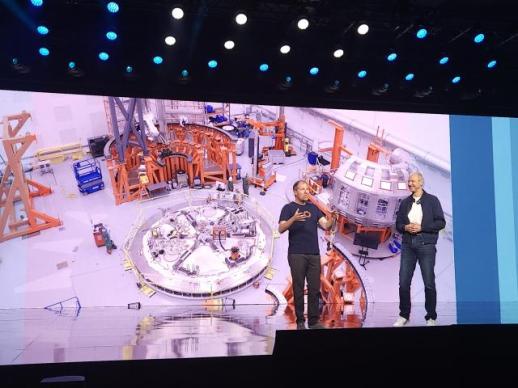 Siemens maps AI-led industrial shift at CES, with fusion reactors highlighting digital twin strategy LAS VEGAS (AJP) - At CES 2026, Siemens outlined a vision for an AI-driven restructuring of global industry, arguing that artificial intelligence is moving beyond software applications to become a foundational element of physical systems across manufacturing, logistics, energy, and infrastructure. At the center of that strategy is digital twin technology, which the company presented as the key mechanism for applying AI safely and reliably in the real world. Siemens framed digital twins not as visualization tools but as operational replicas of physical systems. By integrating design data, operating conditions, physical laws, and real-time sensor information, digital twins allow companies to test and validate thousands of scenarios before assets are built or deployed. According to Siemens, this capability is critical in industries where errors carry high costs or safety risks, and where traditional trial-and-error approaches are impractical. Roland Busch, president and CEO of Siemens, emphasized those constraints during his keynote on Jan. 6 at the Venetian Hotel in Las Vegas. “In the industrial world, AI hallucinations are not acceptable,” Busch said. “AI that enters physical systems is no longer just a feature. It becomes a force with direct real-world impact.” Reliability and safety, he added, are prerequisites for deploying AI at industrial scale, making digital twins a necessary foundation rather than an optional enhancement. The company used nuclear fusion energy as its most prominent example of that approach in practice. Siemens highlighted its collaboration with Commonwealth Fusion Systems, a U.S.-based fusion startup, to demonstrate how digital twins can accelerate development in fields defined by extreme complexity and risk. Fusion reactors require precise coordination among magnets, cooling systems, and power controls, where even small design flaws can have serious consequences. Busch said such systems leave no room for real-world experimentation. “In these environments, trial and error in the physical world is not an option,” he said. Every design choice and operating condition must be validated in a digital twin, where physical behavior can be simulated repeatedly before any hardware is built. Siemens argued that this process shortens research and development timelines while reducing the likelihood of costly or dangerous failures. Siemens positioned the fusion work as a template rather than a one-off case. The same digital twin framework, the company said, can be applied to factories, logistics centers, and power grids. By combining virtual replicas of these systems with AI, operators can anticipate disruptions, optimize performance, and adjust operations in real time. Busch described this shift as a move away from reacting to problems after they occur toward designing systems that act proactively. Partnerships with major technology firms were presented as critical to making that model work at scale. Siemens pointed to its collaborations with NVIDIA and Microsoft as efforts to link AI-accelerated computing, simulation technologies, and industrial AI copilots into a single workflow spanning design, manufacturing, and operations. The company also showcased hands-free, smart-glasses-based guidance for shop-floor workers, positioning it as a way to improve safety and productivity while narrowing skill gaps. At CES 2026, Siemens focused less on individual product announcements than on defining how AI can be embedded into physical systems without compromising safety or reliability. By using fusion reactors as a proving ground for digital twin technology, the company sought to show how AI-driven simulation can reduce risk and compress development cycles in the most demanding industrial environments, before extending that same logic across manufacturing, logistics, energy, and infrastructure. 2026-01-07 15:44:38
 -
 CES 2026: Same day, different podiums: Nvidia and AMD faceoff in AI supercomputing LAS VEGAS — Born in the same Taiwanese city and distantly related by blood, Jensen Huang and Lisa Su took to podiums just hours apart on the same day—at different hotels along the Las Vegas Strip—and delivered rival visions for the future of artificial intelligence computing. The parallel appearances ahead of CES 2026 turned Las Vegas into a split-stage arena, with Nvidia presenting at the Fontainebleau Hotel’s BleuLive Theater and AMD countering from the Venetian. The message from both camps was unmistakable: the AI chip race has moved beyond individual processors into a full-scale contest over who defines the architecture of the modern data center. At Nvidia's press conference, Huang unveiled Vera Rubin, the company’s next-generation AI supercomputing platform, describing it as “one platform for every AI.” His argument was that AI computing has moved beyond software into the physical world—autonomous vehicles, robots, factories—where training, inference, and deployment must be engineered as a single, tightly coordinated system. “The demand for AI computing is going through the roof,” Huang said. “Rubin arrives at exactly the right moment.” Vera Rubin is a rack-scale system integrating GPUs, CPUs, networking, and data-processing components into a unified platform. Nvidia said its flagship Rubin NVL72 configuration can cut inference token costs by up to tenfold compared with its Blackwell platform and reduce by four times the number of GPUs required to train large mixture-of-experts models. Huang emphasized NVIDIA’s annual cadence of new AI architectures and its philosophy of extreme codesign across chips, networking, and software—an approach aimed at maximizing system-level efficiency as AI models grow larger and more complex. Rubin-based systems will be rolled out through partners beginning in the second half of 2026, targeting cloud providers, AI research labs, and enterprise customers running AI at massive scale. AMD counters with Helios and an open-system pitch Across the Strip, AMD responded with Helios, its next-generation AI supercomputing platform, unveiled by Su at a conference at the Venetian. Her framing focused less on vertical integration and more on flexibility as AI expands beyond digital applications into factories, healthcare, robotics, and even space systems. “Physical AI is one of the toughest challenges in technology,” Su said. “It requires systems that can understand their environment, make real-time decisions, and act with precision.” Helios is built around AMD’s Instinct MI450 series GPUs and designed as a rack-level AI system emphasizing large memory capacity, high-bandwidth HBM memory, and open interconnect technologies. AMD positioned Helios for large-scale AI training workloads where memory constraints often become a bottleneck. Su said AMD’s strategy prioritizes openness, allowing customers to expand and customize AI infrastructure without being locked into proprietary architectures. AMD plans to deploy Helios later this year through partnerships with data center operators and enterprise customers, underscoring its push to establish itself as a core platform provider in the AI ecosystem. 2026-01-06 15:06:10
 -
![[CES 2026] NVIDIA CEO unveils Vera Rubin, full-stack AI platform](https://image.ajunews.com//content/image/2026/01/06/20260106104455173367_518_323.jpg) [[CES 2026]] NVIDIA CEO unveils Vera Rubin, full-stack AI platform LAS VEGAS, January 05 (AJP) -Vera Rubin - the next bar-raising AI chip platform from NVIDIA for release in the second half - is designed not as a single product, but as a full-stack platform spanning AI training, inference and deployment across large-scale systems, according to its creator Monday (local time). Unveiling the architecture, Jensen Huang, NVIDIA’s founder and chief executive, said Vera Rubin represents a shift toward platform-level computing aimed at powering end-to-end AI workloads, from model development to real-world deployment at scale. Clad in his signature leather jacket, Hwang introduced the newest product at a press conference held at the BlueLive Theater inside the Fontainebleau Hotel in Las Vegas, ahead of CES 2026 opening. Introducing the system as "One Platform for Every AI," Huang positioned Vera Rubin as a unified foundation designed to support AI training, inference and deployment at scale, rather than as a single chip or product line. Opening his keynote, Huang placed the launch within a broader cycle of technological change. "Every 10 to 15 years, the computer industry resets," he said, pointing to past shifts from PCs to the internet, and from cloud computing to mobile platforms. This time, he argued, the transition is more disruptive. "Two platform shifts are happening at once. Applications are being built on AI, and how we build software has fundamentally changed." Huang stressed that AI is no longer simply another layer in computing. Instead, it is reshaping the entire stack. "You no longer program software. You train it," he said. "You do not run it on CPUs. You run it on GPUs." Unlike traditional applications that rely on precompiled logic, AI systems now generate outputs dynamically, producing tokens and pixels in real time based on context and reasoning. That shift, Huang said, is driving an unprecedented surge in demand for computing power. As models grow larger and reasoning becomes central to performance, both training and inference workloads have expanded sharply. "Models are growing by an order of magnitude every year," he said, noting that test-time scaling has turned inference into a thinking process rather than a single response. "All of this is a computing problem. The faster you compute, the faster you reach the next frontier." Vera Rubin is NVIDIA’s response to that challenge. Named after astronomer Vera Florence Cooper Rubin, the platform is built through what NVIDIA calls extreme codesign, integrating six newly developed chips — including the Vera CPU and Rubin GPU — into a single system. According to NVIDIA, this approach enables large mixture-of-experts models to be trained with roughly 4x fewer GPUs and reduces inference token costs by up to 10x compared with the Blackwell platform. Huang highlighted the platform’s rack-scale architecture as a key departure from earlier designs. The Vera Rubin NVL72 system connects 72 GPUs using sixth-generation NVLink technology, creating internal bandwidth at a scale rarely seen in data centers. "The rack provides more bandwidth than the entire internet," Huang said, underscoring how data movement has become a limiting factor for modern AI systems. Memory was another issue Huang addressed directly. As AI models move toward multi-step reasoning and longer interactions, the amount of context they must retain has outgrown on-chip memory. Vera Rubin introduces a new inference context memory platform powered by BlueField-4 processors, allowing large volumes of key-value cache data to be stored and shared locally. Huang said the goal is to reduce network congestion while maintaining consistent inference performance at scale. Energy efficiency and system reliability were also emphasized. Despite significantly higher compute density, Huang said Vera Rubin systems are cooled using hot water at about 45 degrees Celsius, eliminating the need for energy-intensive chillers. The platform also introduces rack-scale confidential computing, encrypting data across CPUs, GPUs and interconnects to protect proprietary models during training and inference. Throughout the keynote, Huang repeatedly framed NVIDIA’s role as extending beyond chip design. "AI is a full stack," he said. "We are reinventing everything, from chips to infrastructure to models to applications." He added that this approach is intended to support what he described as the next phase of AI deployment, built around large-scale AI factories operated by cloud providers, enterprises and AI labs. NVIDIA said Rubin-based products will be rolled out through partners beginning in the second half of 2026, with cloud providers, AI labs and enterprise customers expected to be among the early adopters. 2026-01-06 11:23:39
[[CES 2026]] NVIDIA CEO unveils Vera Rubin, full-stack AI platform LAS VEGAS, January 05 (AJP) -Vera Rubin - the next bar-raising AI chip platform from NVIDIA for release in the second half - is designed not as a single product, but as a full-stack platform spanning AI training, inference and deployment across large-scale systems, according to its creator Monday (local time). Unveiling the architecture, Jensen Huang, NVIDIA’s founder and chief executive, said Vera Rubin represents a shift toward platform-level computing aimed at powering end-to-end AI workloads, from model development to real-world deployment at scale. Clad in his signature leather jacket, Hwang introduced the newest product at a press conference held at the BlueLive Theater inside the Fontainebleau Hotel in Las Vegas, ahead of CES 2026 opening. Introducing the system as "One Platform for Every AI," Huang positioned Vera Rubin as a unified foundation designed to support AI training, inference and deployment at scale, rather than as a single chip or product line. Opening his keynote, Huang placed the launch within a broader cycle of technological change. "Every 10 to 15 years, the computer industry resets," he said, pointing to past shifts from PCs to the internet, and from cloud computing to mobile platforms. This time, he argued, the transition is more disruptive. "Two platform shifts are happening at once. Applications are being built on AI, and how we build software has fundamentally changed." Huang stressed that AI is no longer simply another layer in computing. Instead, it is reshaping the entire stack. "You no longer program software. You train it," he said. "You do not run it on CPUs. You run it on GPUs." Unlike traditional applications that rely on precompiled logic, AI systems now generate outputs dynamically, producing tokens and pixels in real time based on context and reasoning. That shift, Huang said, is driving an unprecedented surge in demand for computing power. As models grow larger and reasoning becomes central to performance, both training and inference workloads have expanded sharply. "Models are growing by an order of magnitude every year," he said, noting that test-time scaling has turned inference into a thinking process rather than a single response. "All of this is a computing problem. The faster you compute, the faster you reach the next frontier." Vera Rubin is NVIDIA’s response to that challenge. Named after astronomer Vera Florence Cooper Rubin, the platform is built through what NVIDIA calls extreme codesign, integrating six newly developed chips — including the Vera CPU and Rubin GPU — into a single system. According to NVIDIA, this approach enables large mixture-of-experts models to be trained with roughly 4x fewer GPUs and reduces inference token costs by up to 10x compared with the Blackwell platform. Huang highlighted the platform’s rack-scale architecture as a key departure from earlier designs. The Vera Rubin NVL72 system connects 72 GPUs using sixth-generation NVLink technology, creating internal bandwidth at a scale rarely seen in data centers. "The rack provides more bandwidth than the entire internet," Huang said, underscoring how data movement has become a limiting factor for modern AI systems. Memory was another issue Huang addressed directly. As AI models move toward multi-step reasoning and longer interactions, the amount of context they must retain has outgrown on-chip memory. Vera Rubin introduces a new inference context memory platform powered by BlueField-4 processors, allowing large volumes of key-value cache data to be stored and shared locally. Huang said the goal is to reduce network congestion while maintaining consistent inference performance at scale. Energy efficiency and system reliability were also emphasized. Despite significantly higher compute density, Huang said Vera Rubin systems are cooled using hot water at about 45 degrees Celsius, eliminating the need for energy-intensive chillers. The platform also introduces rack-scale confidential computing, encrypting data across CPUs, GPUs and interconnects to protect proprietary models during training and inference. Throughout the keynote, Huang repeatedly framed NVIDIA’s role as extending beyond chip design. "AI is a full stack," he said. "We are reinventing everything, from chips to infrastructure to models to applications." He added that this approach is intended to support what he described as the next phase of AI deployment, built around large-scale AI factories operated by cloud providers, enterprises and AI labs. NVIDIA said Rubin-based products will be rolled out through partners beginning in the second half of 2026, with cloud providers, AI labs and enterprise customers expected to be among the early adopters. 2026-01-06 11:23:39 -
![[CES 2026] NVIDIA CEO Jensen Huang delivers keynote speech](https://image.ajunews.com//content/image/2026/01/06/20260106105551777607_518_323.jpg) [[CES 2026]] NVIDIA CEO Jensen Huang delivers keynote speech Las Vegas, January 5 (AJP) - NVIDIA CEO Jensen Huang delivered the keynote address during an NVIDIA press conference at the Fontainebleau Hotel's BlueLive Theater in Las Vegas on Monday (local time). 2026-01-06 11:09:34
[[CES 2026]] NVIDIA CEO Jensen Huang delivers keynote speech Las Vegas, January 5 (AJP) - NVIDIA CEO Jensen Huang delivered the keynote address during an NVIDIA press conference at the Fontainebleau Hotel's BlueLive Theater in Las Vegas on Monday (local time). 2026-01-06 11:09:34 -
![[CES 2026] China accelerates robotics push as Korea takes platform-focused approach](https://image.ajunews.com//content/image/2026/01/05/20260105122118577491_518_323.jpg) [[CES 2026]] China accelerates robotics push as Korea takes platform-focused approach LAS VEGAS, January 04 (AJP) - As the world’s largest technology exhibition CES 2026 opens on Jan. 6 in Las Vegas, competition around robotics and physical AI is expected to intensify. With artificial intelligence expanding beyond software into hardware, robotics has moved to the center of the show’s technology landscape, and Chinese companies are set to play a more visible role this year. According to the Korea Information and Communication Technology Association (KICTA), about 4,300 companies are participating in CES 2026. Of these, 942 are Chinese firms, accounting for roughly 22 percent of all exhibitors, the second-largest national presence after the United States. South Korea ranks third with 853 participating companies. While the overall numbers remain close, attention is increasingly shifting toward how heavily companies are concentrating on robotics-related exhibits. Chinese firms make up 149 of the 598 exhibitors participating in the robotics category, representing nearly one quarter of the total. Their displays span humanoid robots, embodied robots, and hybrid models that combine bipedal and wheeled mobility. Many Chinese companies are presenting products intended for commercialization rather than concept demonstrations, placing emphasis on practical deployment and near-term use cases. This momentum is closely tied to China’s industrial policy direction. The Chinese government has designated 2025 as the first year of humanoid robot commercialization and has supported the sector through national roadmaps, large-scale investment funds, tax incentives, and policy-based financial programs. CES 2026 provides a venue where these efforts are reflected through product launches and live demonstrations. Interest is also building around individual Chinese robotics companies participating in the show. CES 2026 features firms such as UBTECH and Fourier Intelligence, alongside Unitree, which has gained attention for advancing both quadruped and humanoid robots toward commercialization. Unitree has focused on relatively lower pricing and rapid development cycles, expanding its presence in research and industrial markets overseas. The company is expected to conduct live demonstrations during the exhibition. South Korean companies are approaching the robotics competition from a different angle. Although their overall participation level is comparable to China’s, fewer domestic firms are emphasizing complete robot hardware systems. Instead, strengths are concentrated in AI software, sensors, semiconductors, and key components. While many South Korean companies have received CES Innovation Awards, their robotics presence reflects a more selective and targeted focus. Among major exhibitors, Samsung Electronics is taking a measured approach. Rather than competing through large-scale public demonstrations, the company plans to engage clients and partners through private exhibitions, presenting an integrated technology stack spanning AI data centers, on-device AI, and physical AI. The emphasis is placed on platforms and ecosystems rather than individual robot products. 2026-01-05 12:59:54
[[CES 2026]] China accelerates robotics push as Korea takes platform-focused approach LAS VEGAS, January 04 (AJP) - As the world’s largest technology exhibition CES 2026 opens on Jan. 6 in Las Vegas, competition around robotics and physical AI is expected to intensify. With artificial intelligence expanding beyond software into hardware, robotics has moved to the center of the show’s technology landscape, and Chinese companies are set to play a more visible role this year. According to the Korea Information and Communication Technology Association (KICTA), about 4,300 companies are participating in CES 2026. Of these, 942 are Chinese firms, accounting for roughly 22 percent of all exhibitors, the second-largest national presence after the United States. South Korea ranks third with 853 participating companies. While the overall numbers remain close, attention is increasingly shifting toward how heavily companies are concentrating on robotics-related exhibits. Chinese firms make up 149 of the 598 exhibitors participating in the robotics category, representing nearly one quarter of the total. Their displays span humanoid robots, embodied robots, and hybrid models that combine bipedal and wheeled mobility. Many Chinese companies are presenting products intended for commercialization rather than concept demonstrations, placing emphasis on practical deployment and near-term use cases. This momentum is closely tied to China’s industrial policy direction. The Chinese government has designated 2025 as the first year of humanoid robot commercialization and has supported the sector through national roadmaps, large-scale investment funds, tax incentives, and policy-based financial programs. CES 2026 provides a venue where these efforts are reflected through product launches and live demonstrations. Interest is also building around individual Chinese robotics companies participating in the show. CES 2026 features firms such as UBTECH and Fourier Intelligence, alongside Unitree, which has gained attention for advancing both quadruped and humanoid robots toward commercialization. Unitree has focused on relatively lower pricing and rapid development cycles, expanding its presence in research and industrial markets overseas. The company is expected to conduct live demonstrations during the exhibition. South Korean companies are approaching the robotics competition from a different angle. Although their overall participation level is comparable to China’s, fewer domestic firms are emphasizing complete robot hardware systems. Instead, strengths are concentrated in AI software, sensors, semiconductors, and key components. While many South Korean companies have received CES Innovation Awards, their robotics presence reflects a more selective and targeted focus. Among major exhibitors, Samsung Electronics is taking a measured approach. Rather than competing through large-scale public demonstrations, the company plans to engage clients and partners through private exhibitions, presenting an integrated technology stack spanning AI data centers, on-device AI, and physical AI. The emphasis is placed on platforms and ecosystems rather than individual robot products. 2026-01-05 12:59:54 -
 KAIST researchers develop brain-like AI chip perceiving and thinking instantly SEOUL, December 31 (AJP) - Researchers at the Korea Advanced Institute of Science and Technology have developed a next-generation artificial intelligence semiconductor that integrates sensing, computing, and memory into a single chip. By mimicking the structure of the human eye and brain, the technology allows devices to perceive and process information instantly without the power loss or delays found in traditional computers. The Korea Advanced Institute of Science and Technology (KAIST) announced on December 31, Wednesday, that a research team led by Professor Chon Sang-hun from the School of Electrical Engineering presented six papers at the International Electron Devices Meeting (IEEE IEDM 2025) in San Francisco. The team work on integrated vision sensors was selected as a "Highlight Paper," and their research on highly reliable memory received the "Top Ranked Student Paper" award. Standard AI systems function like a relay race: a camera sensor takes a picture, converts it into numbers, moves those numbers to memory for storage, and then sends them to a processor to be calculated. This constant moving of data back and forth uses a lot of electricity and creates a "lag" in response time. The KAIST team solved this by creating a "full-stack" AI chip where the sensor and the brain-like processing circuits are physically stacked on top of each other in very thin layers. This "in-sensor" technology allows the chip to "see and think" at the same time. Instead of sending raw data elsewhere, the sensor itself performs the calculations. This mimics how the human nervous system processes basic visual features before the information even reaches the deep brain. By eliminating the need to move data between different chips, the system uses significantly less power and reacts much faster, making it ideal for real-time use in mobile devices, drones, and robots. In addition to the sensing technology, the team improved the storage part of the AI chip. They developed a new type of memory called "Next-Generation NAND Flash" that uses a special material to store data more reliably while using lower voltage. This ensures that the AI can store vast amounts of information safely for a long time without draining the battery. Professor Chon Sang-hun stated that this research proves that sensors, computation, and storage—which used to be designed separately—can be combined into one single system and material. He noted that this platform will be expanded for use in "edge AI," which refers to smart devices that need to process complex information locally and instantly without relying on a central server. The research was supported by the Ministry of Science and ICT and the National Research Foundation of Korea. It was conducted in collaboration with Samsung Electronics, Kyungpook National University, and Hanyang University. (Paper information) Journal: IEEE IEDM 2025 Title: Monolithically Integrated Photodiode–Spiking Circuit for Neuromorphic Vision with In-Sensor Feature Extraction DOI: https://iedm25.mapyourshow.com/8_0/sessions/session-details.cfm?scheduleid=255 Title: A Highly Reliable Ferroelectric NAND Cell with Ultra-thin IGZO Charge Trap Layer; Trap Profile Engineering for Endurance and Retention Improvement DOI: https://iedm25.mapyourshow.com/8_0/sessions/session-details.cfm?scheduleid=124 2025-12-31 13:46:54