
Journalist

Kim Dong-woo, Han Jun-gu
swatchsjp@ajunews.com
-
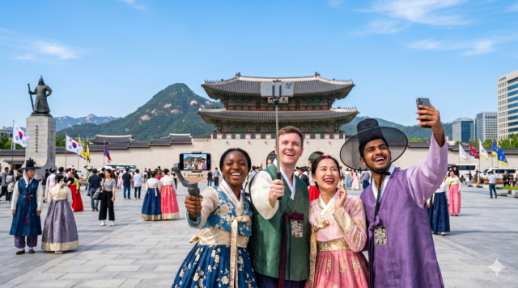 South Korea recruits foreign influencers as Seoul seeks to move beyond K-pop SEOUL, April 15 (AJP) - A group of 120 international content creators is set to fan out across the South Korean provinces this year, part of an aggressive push by the Ministry of Culture, Sports and Tourism to diversify the national brand, the ministry said Wednesday. Starting April 17 in the traditional stronghold of Jeonju, the project marks a calculated attempt to steer global attention away from the neon-lit aesthetics of K-pop and toward the historical substance of the rural interior. This strategic pivot reflects a maturing of the Korean Wave. While music and television dramas remain dominant, the government is betting that sustainable soft power requires a shift toward physical immersion in the country's traditional landscapes and regional traditions. By enlisting foreign residents as digital ambassadors, the ministry is decentralizing its cultural narrative, allowing a more organic view of life outside the capital to reach global social media feeds. The itinerary for the "2026 Senses of K-Culture" program covers six three-day expeditions through November. Participants will visit a shrine in Jeonju before moving to the Hantan River in Pocheon and the mountain retreat of Beopjusa Temple in Boeun for a period of Buddhist temple stays. The autumn schedule includes the fire festivals of Andong and Yeongju, coastal fishing in Dangjin, and the heavily fortified landscape of the demilitarized zone in Goseong and Sokcho. "Through this project, I hope people around the world will discover the diverse local cultures and hidden charms of Korea beyond 'K-pop' and 'K-dramas,'" a ministry policy official said. "The vivid experiences of foreign content creators residing in Korea and collaborations with overseas media will serve as an opportunity to effectively convey the specialness of 'K-culture.'" 2026-04-15 09:22:16
 -
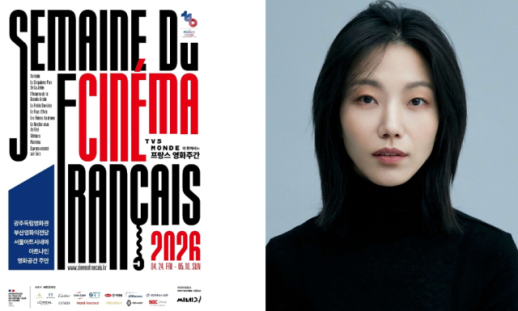 French Cinema Week expands to nationwide scale as diplomatic milestone nears SEOUL, April 15 (AJP) - The French Embassy in Seoul launches its most ambitious cinema showcase to date on April 24, deploying 10 unreleased films across five major South Korean cities to commemorate the 140th anniversary of diplomatic relations between the two nations, the embassy said Tuesday. By expanding the festival footprint to Seoul, Busan, Gwangju, and Incheon, Paris is leveraging its cultural exports to deepen a strategic partnership that has evolved from a nineteenth-century treaty into a modern alliance of technology and art. This iteration of French Cinema Week serves as more than a seasonal festival; it is a calculated disruption of the traditional distribution model that often leaves independent European cinema sidelined in the South Korean commercial market. By securing venues such as the Busan Cinema Center and Seoul Art Cinema, the French government ensures that critically acclaimed works from Cannes, Berlin, and Locarno reach the South Korean public before they enter the standard theatrical window. The scale of the 2026 program reflects a heightened period of bilateral cooperation as Seoul and Paris navigate a complex geopolitical landscape through shared soft power initiatives. Central to this year's mission is the appointment of Kim Shin-rok as the official ambassador for the event. The actress, who gained international recognition through the series Hellbound, embodies the current synergy between the two film industries. Her upcoming appearance in Colony, directed by Yeon Sang-ho, is scheduled for a midnight screening at the 79th Cannes Film Festival, effectively positioning her as a bridge between the gritty realism of contemporary South Korean storytelling and the prestigious platforms of the French Riviera. The curated selection of 10 films provides a diverse cross-section of French society and aesthetic experimentation. The lineup includes Emma Benestan's Animal and Alexis Langlois's Queens of Drama, both carrying restricted ratings that signal a commitment to provocative, adult-oriented narratives. Other titles, such as Stéphane Demoustier's The Great Arch and Hafsia Herzi's The Little Sister, represent the latest wave of French directorial talent emerging in 2024 and 2025. Beyond the screenings, the festival will facilitate direct intellectual exchange through Guest Visit sessions featuring film professionals. These interactions are intended to provide South Korean audiences with specific context regarding the social and political undercurrents of the films, which include Tamara Stepanyan's In the Land of Arto and Hubert Charuel's Meteors. The festival is scheduled to run through May 10. Organizers have partnered with a broad coalition of corporate sponsors, including Renault Korea, Korean Air, and LVMH, to support the logistical demands of a four-city tour. Since its inception in 2021, the event has grown from a niche screening series into a cornerstone of the French cultural calendar in South Korea. Diplomatic relations between the two countries were first established via the Treaty of Friendship, Commerce and Navigation signed in June 1886. According to the National Museum of Korean Contemporary History, this treaty ended South Korea's isolationist policy toward France and laid the groundwork for modern diplomatic exchange. French Cinema Week 2026 is one of several events planned to mark this 140-year history. 2026-04-15 09:11:42
 -
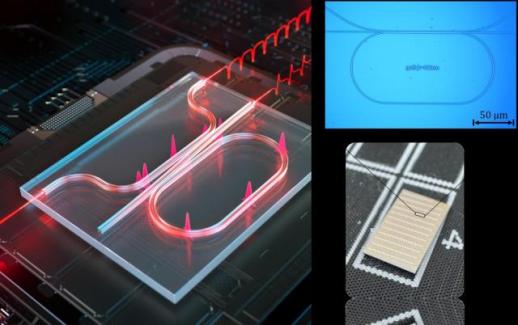 South Korean engineers find better way to use light for AI SEOUL, April 15 (AJP) - Researchers in South Korea have created a new component that makes it easier to control light on a microchip, which could significantly boost the performance of artificial intelligence and quantum computers. The team, representing both the Korea Advanced Institute of Science and Technology and Hanyang University, designed a device that uses light interference to manage signals with much higher accuracy than current methods. The Korea Advanced Institute of Science and Technology said Wednesday. This technology focuses on Photonic Integrated Circuits (PIC), which use light to carry data at high speeds with low energy use. These circuits are essential for running the massive data centers that power AI, but they require very precise control over light waves. Standard devices usually rely on a single channel to move light, which makes it hard to change the shape or timing of the signal. The researchers introduced a dual-path system that allows light waves to interact with each other in a controlled way, effectively letting them program the light. Much of the work for the project was done by Kim Tae-won, an undergraduate student working through a specialized research program at KAIST. He worked alongside Professor Kim Sang-sik and Professor Yoon Jae-woong to prove the concept. "I was able to take the resonator principles I learned in my introductory photonics class and turn them into an actual device design and a published paper," Kim Tae-won said. The team found that this new layout allows for much better frequency conversion, which means they can change the color and properties of light more efficiently. This is expected to help AI accelerators and secure communication systems work faster while using less power. Professor Kim Sang-sik said, "this research goes beyond suggesting a new device by providing a detailed analysis of optical properties that were previously overlooked." He added that the team showed physical limits can be overcome through precise engineering. The findings were published in the journal Laser and Photonics Reviews on March 6, 2026. (Reference Information) Journal/Source: Laser and Photonics Reviews Title: Dual-bus resonator for multi-port spectral engineering Link/DOI: 10.1002/lpor.202502935 2026-04-15 09:01:54
 -
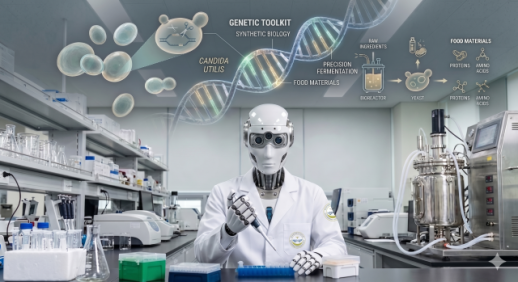 Kookmin University professor selected for national food yeast research project SEOUL, April 14 (AJP) - To address food supply instability caused by climate change, Professor Park Yong-chul was selected for a government-funded core research project to develop precision fermentation technology using food-grade yeast, Kookmin University said Tuesday. The project, titled "Development of a genetic tool kit for the food yeast Candida utilis for precision fermentation and application to food material production," is part of the 2026 Basic Research Program. The initiative is overseen by the Ministry of Science and ICT (MSIT) and the National Research Foundation of Korea (NRF). The Core Research category specifically supports creative individual researchers to help them grow into leaders in their respective fields. Professor Park and his team at the Department of Convergence Bioengineering will use synthetic biology to build a genetic toolkit for Candida utilis. These toolkits consist of biological parts and modules used to modify the yeast's genome. This engineering allows the yeast to produce essential food ingredients, such as proteins and amino acids, more efficiently. The research aims to establish domestic production methods for these materials, reducing South Korea's reliance on imported food resources. By using precision fermentation, the team hopes to create a stable supply chain for various food ingredients that are increasingly threatened by global environmental shifts. The research team has a history of developing microorganism-based technologies to produce health-related materials, including human milk oligosaccharides, glutathione, and terpenes. They are also expanding into the bio-chemical sector, focusing on the production of biodegradable plastics and methods for capturing carbon dioxide using modified yeast strains. The professor has received multiple commendations from the Ministry of Education and the Ministry of Trade, Industry and Energy for his work in CRISPR-based engineering and fermentation. He also serves as the founder of BioCraft, a company dedicated to commercializing yeast technologies developed in the laboratory. 2026-04-14 16:28:01
 -
 KAIST and Microsoft Research develop automated system to fix time-related AI errors SEOUL, April 14 (AJP) - To reduce hallucinations, including time-based errors in large language models (LLMs), a joint team of researchers developed an automated diagnostic system that uses classic database theory to ensure AI provides up-to-date information, the Korea Advanced Institute of Science and Technology said Tuesday. The research addresses a common frustration for users who find that chatbots often provide outdated facts. For example, when asked about a recently appointed government official, an AI might confidently name someone who left the position a year ago. This occurs because the models struggle to track how information changes over time, a problem known as temporal hallucination. Korea Advanced Institute of Science and Technology (KAIST) Professor Hwang Eui-jong and his team worked with Microsoft Research (MSR) to apply temporal database design to AI evaluation. This theory, which has been refined over the last 40 years, allows the new system to automatically generate 13 different types of complex questions based on the chronological flow of data. Previously, humans had to manually write and update test questions to check if an AI was staying current. The new automated framework eliminates this labor-intensive process. When real-world information changes, the system simply updates its internal database to refresh the evaluation criteria and correct the AI's logic. According to the study, the system reduced the cost of building evaluation data by 51 percent. It also improved the detection of time-related errors by an average of 21.7 percent. Rather than just checking if the final answer is right, the system verifies whether the dates and timelines the AI uses to explain itself are actually accurate. The researchers expect the technology to be particularly useful in high-stakes fields such as law and medicine. In these sectors, even a minor misunderstanding of a specific timeframe can lead to serious errors in advice or documentation. "This research shows how classic database theories can solve modern reliability issues in artificial intelligence," Professor Hwang Eui-jong said. He added that turning professional data into evaluation resources will provide a practical foundation for verifying AI performance in specialized industries. The study, which featured PhD student Kim So-yeon as the lead author, will be presented at the International Conference on Learning Representations (ICLR) 2026. MSR researchers Jindong Wang and Xing Xie also participated as co-authors. (Reference Information) Journal/Source: International Conference on Learning Representations (ICLR) 2026 Title: Harnessing Temporal Databases for Systematic Evaluation of Factual Time-Sensitive Question-Answering in Large Language Models Link/DOI: https://arxiv.org/abs/2508.02045 2026-04-14 16:05:49
 -
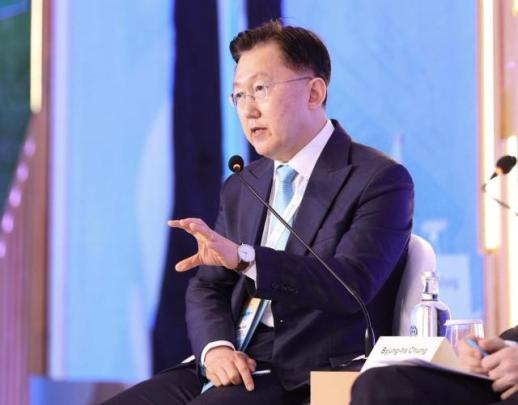 S. Korean special envoy enters Tehran as failed US-Iran talks trap tankers in Hormuz SEOUL, April 13 (AJP) - Special envoy Chung Byung-ha arrived in Tehran on Monday to negotiate the release of 26 South Korean tankers and 173 crew members currently stranded in the Strait of Hormuz. The diplomatic surge follows a direct order from Foreign Minister Cho Hyun as Seoul attempts to bypass the paralysis of international mediation to protect the maritime corridor that provides 70 percent of the crude oil imports of the nation. The arrival of the envoy marks a strategic pivot for Seoul, which has traditionally relied on Washington to secure the Persian Gulf. By launching this high-stakes bilateral channel, South Korea is effectively signaling that it can no longer wait for a global consensus that has evaporated following the collapse of multilateral peace efforts over the weekend. The regional crisis escalated on February 28 when a coalition led by the United States and Israel launched massive strikes against the nuclear and naval infrastructure of Iran. While a fragile ceasefire briefly paused the violence, the Islamabad Talks between Washington and Tehran failed on Sunday after 21 hours of deadlock. The breakdown centered on demands from Tehran for control over the strait and the unfreezing of billions in assets, which the United States flatly rejected, leading to the current effective blockade of the waterway. Chung is scheduled to hold discussions with Foreign Minister Seyed Abbas Araghchi and other senior leaders to establish a safe passage for Korean-linked vessels. These ships, primarily ultra-large crude carriers and liquefied natural gas tankers, are currently frozen in place as insurers and shipping companies treat the passage as a total war zone. This diplomatic initiative draws on a deep, decades-long reservoir of bilateral goodwill that has persisted despite the geopolitical friction of the last decade. The relationship is famously symbolized by the 1977 agreement to rename streets in each capital, resulting in the prominent Teheran-ro in the Gangnam district of Seoul and Seoul Street in Tehran. These landmarks represent a history of economic and cultural exchange that both nations have sought to preserve even as international sanctions complicated official trade. Throughout the era of heightened sanctions, Seoul maintained a functional relationship with Tehran under the surface, often serving as a quiet intermediary for humanitarian concerns. During the height of the COVID-19 pandemic, the South Korean government prioritized the delivery of medical equipment and test kits to Iran, utilizing a specialized humanitarian channel to bypass financial restrictions. This history of cooperation provides the current envoy with a unique level of access that other Western-aligned diplomats currently lack. The visit by the special envoy took place while desperation in Seoul is driven by a dwindling energy clock, with internal reports suggesting that strategic petroleum reserves have fallen to critical levels. The economic security of the country is at stake as long as these vessels remain trapped behind an Iranian naval screen that requires individual coordination for safe passage. In a parallel move, the government has appointed Lee Kyung-chul as the new Special Representative for Middle East Peace to address the broader geopolitical fallout. Lee, a veteran of United Nations Security Council affairs, will focus on long-term stability and the resolution of the Palestinian conflict to prevent the current war from expanding into a permanent regional conflagration. The return of the envoy remains unscheduled as the ministry monitors the progress of the talks and the evolving military posture of the Iranian Revolutionary Guard Corps. Seoul continues to coordinate with the European Union and regional partners to ensure that any breakthrough for its own vessels does not further destabilize the fragile security of the strait. 2026-04-13 16:56:51
 -
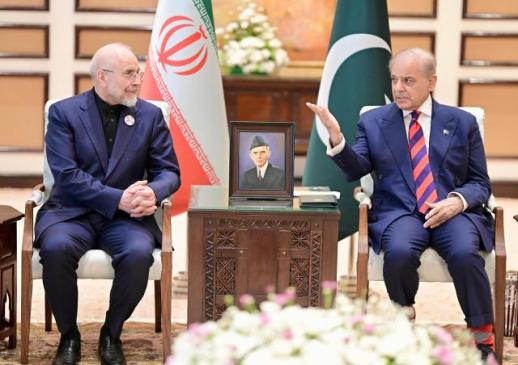 Tehran blames shifting US demands as marathon Islamabad talks fail SEOUL, April 13 (AJP) - Indirect negotiations between Tehran and Washington concluded in Islamabad after a 21-hour marathon session ended without a final agreement. According to a debriefing released on Monday by the Iranian Embassy in South Korea, the discussions represented the highest level of engagement between the two sides in the past year. While the talks were the longest held in twelve months, the Iranian mission detailed a collapse in momentum just as the parties were reportedly "a few steps away" from a breakthrough. The main agenda for the session, which began on April 11, focused on a proposed Iranian framework and various positions held by Washington. Mediated by Pakistan, the delegations addressed a range of high-stakes issues, including regional developments and the security of the Strait of Hormuz. The engagement pitted the Speaker of the Iranian Parliament, Mohammad Bagher Ghalibaf, against Vice President JD Vance in an effort to de-escalate recent military tensions. Foreign Minister Abbas Araghchi stated that "Iran entered the negotiations in good faith with the aim of ending the conflict". However, the embassy statement suggests that the potential "Islamabad Understanding" was derailed by what Araghchi described as "excessive demands, shifting conditions, and threats of blockade". Reflecting on the outcome, Araghchi remarked that "No lessons have been learned. Goodwill begets goodwill; hostility brings hostility". Iranian Foreign Ministry Spokesperson Esmaeil Baghaei noted that reaching a comprehensive agreement in a single session was not realistic given the prevailing atmosphere of distrust. While significant gaps remain on key points, the embassy indicated that Tehran views diplomacy as an ongoing process rather than a single event. Iran has stated it will continue to utilize diplomatic channels to safeguard its national interests and security. 2026-04-13 16:24:42
 -
 Exo starts world tour as 32,000 global fans fill Seoul arena SEOUL, April 13 (AJP) - K-pop boy band Exo members -- Suho, Chanyeol, D.O., Kai, and Sehun -- opened their sixth concert tour in Seoul last Friday. The group performed for 32,000 fans over three days at the KSPO Dome in southern Seoul, marking the band's first concert series in six years and four months. The three-day concert in Seoul proved that the group remains a major force in the K-pop scene despite a long break from the stage. Their last major tour was held in 2019, and this new series, titled "EXO PLANET #6 - EXhOrizon in SEOUL," is designed to show the group and their fans starting a new chapter together. The group performed a variety of their most famous songs, including 'MAMA' and 'Love Shot'. At the end of the final show, which was also streamed online to fans around the world, the members shared their feelings about returning to live performance. "I had worries since it was a performance after a long time, but seeing you smile gave me strength. EXO-L is like the four seasons of spring, summer, fall, and winter to us. Thank you for loving us without change for 14 years," the members said. "We said if forever exists, it would be our story, and it was possible thanks to all of you who kept that place until now. I want to be on stage with you for the rest of my life." The tour will now move to 14 different regions. The group is scheduled to perform in Ho Chi Minh on April 25. In May, they will visit Nagoya, Taipei, Bangkok, and Macau. The schedule continues in June with stops in Osaka, Jakarta, Hong Kong, and Kuala Lumpur, followed by performances in Manila, Tokyo, Kaohsiung, and Singapore in July. 2026-04-13 14:08:06
 -
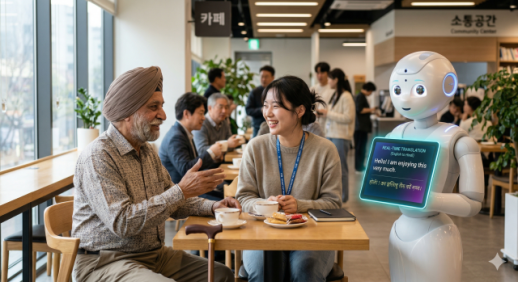 Sookmyung University highlights human-centered AI research at global conferences SEOUL, April 13 (AJP) - The Empathic AI Women's Engineering Talent Training Team at Sookmyung Women's University in South Korea is presenting a series of research papers at major international computer science conferences. As part of the Brain Korea 21 program, the team is developing human-centered artificial intelligence designed to address social isolation and communication barriers. Professor Kim Byung-Gyu leads the multidisciplinary group, which conducts research on emotion recognition, generative AI, and human-computer interaction. His group will present a multimodal emotion recognition model called EmoXFormer at the IEEE International Conference on Pattern Recognition (ICPR) 2026. This technology integrates different signals to identify human emotions more accurately. In the field of virtual reality, a group led by Professor Dong Suh Yeon presented two papers at the IEEE International Conference on Pervasive and Ubiquitous Computing (UbiComp) 2025. Their work involves a method to measure heart rates using the area around the ear when a user's face is obscured by a headset. This allows for stable emotion recognition even when a user is moving. Professor Kim Sangyeon and his team are focusing on digital accessibility for the elderly. At the ACM Conference on Human Factors in Computing Systems (CHI) 2026, they will introduce an AI-based tool that helps older users identify digital buttons and icons more easily through color and spatial cues. Other researchers on the team have focused on cybersecurity and data systems. Professor Jeong Seonghoon developed a model to detect evolving cyber threats for the IEEE/IFIP International Conference on Dependable Systems and Networks (DSN) 2026. Professor Choi Yoonhyuk also presented research on improving recommendation systems at various conferences, including AAAI 2026 and WSDM 2025. "We are expanding the practical applications of empathic AI through these diverse research achievements," said Professor Kim Byung-Gyu. "Based on our global research capabilities, we plan to contribute to fostering talent who will solve social problems and lead the AI industry in the future." 2026-04-13 10:17:58
 -
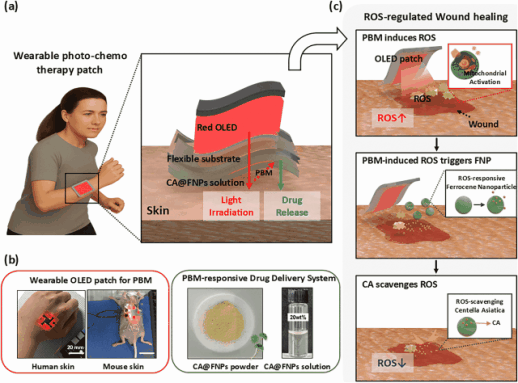 S. Korean researchers develop smart OLED patch to accelerate wound healing speed SEOUL, April 13 (AJP) - A research team in South Korea has developed a wearable electronic patch that can speed up the skin wound-healing process by about 200 percent using organic light-emitting diodes (OLEDs), compared to conventional wound treatment methods. The Korea Advanced Institute of Science and Technology (KAIST) said Monday that a joint research group led by Professor Choi Kyung-cheol successfully created the self-regulating platform that uses light to control the release of medicine onto a skin wound. The project included researchers from the Korea Institute of Ceramic Engineering and Technology (KICET) and Chungbuk National University. Traditional wound care often relies on ointments or light therapy, but it can be difficult to maintain the correct dosage. Too much medication can cause side effects, while light therapy, known as photobiomodulation (PBM), loses its effectiveness if the light intensity is not properly balanced. The new patch solves those problems by using light to create reactive oxygen species (ROS) in the body. These molecules act as a biological switch that tells the patch when to release medication. As the light intensity changes, the amount of medicine released adjusts automatically to match the wound's needs. The device is designed as a thin, flexible patch that sticks directly to the skin, even on curved areas of the body. It operates at a steady temperature of about 31 degrees Celsius (87.8 degrees Fahrenheit), which eliminates the risk of low-temperature burns during long-term use. Testing showed the patch can function reliably for more than 400 hours. During animal trials, wounds treated with the smart patch showed a 67 percent recovery rate after 14 days. In comparison, a control group that used conventional techniques showed only a 35 percent recovery rate. The researchers found that the patch not only accelerated the healing process but also helped skin grow back with a healthy barrier of protective proteins. The patch delivers a specialized extract from Centella asiatica, a plant often called tiger grass, which is a common ingredient in skin repair treatments. By combining the regenerative power of 630-nanometer red light with precise drug delivery, the system ensures the medicine is only used when necessary. "This research moves beyond simply applying light therapy to using light as a tool to control the treatment itself," Professor Choi Kyung-cheol said. The team plans to expand the technology into an intelligent platform that can react to a patient's specific condition to treat various diseases and injuries. Ph.D. candidate Yeon Hye-jeong served as the lead author of the study, which was featured as the cover story for the March issue of the journal Materials Horizons. The project was supported by KAIST President Lee Kwang-hyung, KICET President Yoon Jong-seok, and Acting President Park Yu-sik of Chungbuk National University. (Reference Information) Journal/Source: Materials Horizons Title: A self-regulating wearable OLED patch for accelerated wound healing via photobiomodulation-triggered drug delivery Link/DOI: https://doi.org/10.1039/D5MH02129D 2026-04-13 09:28:16