
Journalist

Park Sae-jin, Han Jun-gu
swatchsjp@ajunews.com
-
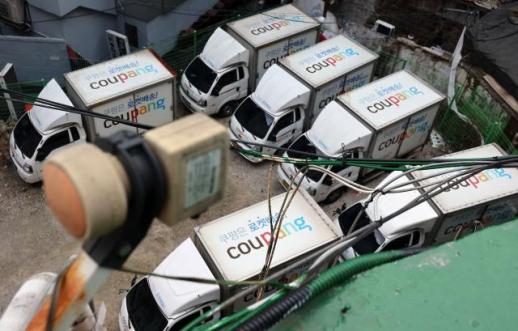 Dispute deepens as US investors seek probe into 'discriminatory' actions against Coupang SEOUL, January 23 (AJP) - The dispute between Coupang and South Korean regulators appears to have turned into a potential diplomatic issue after the e-commerce giant's U.S. investors urged the Trump administration to investigate Seoul over alleged unfair trade practices. Greenoaks Capital and Altimeter Capital, the two largest shareholders of the New York-listed company, filed a petition on Thursday, requesting the Office of the U.S. Trade Representative (USTR) launch an investigation under Section 301 of the Trade Act of 1974. Simultaneously, the two submitted a Notice of Intent to initiate arbitration against the South Korean government under the investor-state dispute settlement (ISDS) provisions of the Korea-United States Free Trade Agreement (KORUS FTA). The dual filings are seen as a bold move in the investors' strategy. By citing Section 301, a powerful trade tool that allows a U.S. president to impose retaliatory tariffs, the shareholders are seeking to leverage U.S. President Donald Trump's "America First" mantra to pressure Seoul. The USTR must decide within 45 days whether to launch a formal investigation. In a joint petition, the investors alleged that the South Korean government is engaging in "discriminatory and expropriatory" actions against Coupang following a data breach detected in November last year. Greenoaks and Altimeter argued that the aggressive regulatory probes, which include threats to suspend the company's business license, are politically motivated attacks intended to dismantle a successful American firm. "A multi-year pattern of selective government enforcement and escalating regulatory pressure singling out Coupang, marked by extraordinary investigations, audits, and on-site inspections that appear to far exceed the regulatory scrutiny imposed on domestic Korean and Chinese competitors," the joint petition stated. Greenoaks and Altimeter added that the South Korean government's actions against Coupang appear intended to "target, disable, and destroy an innovative American competitor," urging the USTR to consider retaliatory duties on South Korean exports if the alleged harassment continues. The investors also claim that by targeting Coupang, the South Korean government is inadvertently aiding Chinese e-commerce platforms compete for market share in the country, citing remarks by South Korean President Lee Jae-myung and Fair Trade Commission Chairman Joo Byung-ki as evidence of hostility toward the U.S.-backed company. South Korean officials have moved quickly to reject these claims, insisting the investigation is a legitimate response to a security breach that exposed the personal data of nearly 34 million citizens. Prime Minister Kim Min-seok, currently visiting the United States, personally addressed the controversy during a lunch with U.S. lawmakers in Washington, D.C., on Friday. "There is absolutely no discrimination against Coupang," Kim told the legislators. "The trust between South Korea and the U.S. is deep enough that there is no need to worry about discriminatory treatment." Kim drew a parallel to the "Georgia incident" involving Korean workers in the U.S., noting that Seoul did not view that event as national discrimination. He explained that the government is not taking measures against Coupang simply because it is an American company, seeking to draw a line under suspicions raised by the U.S. tech sector. This follows earlier diplomatic efforts by Trade Minister Yeo Han-koo, who reportedly met with U.S. Trade Representative Jamieson Greer in Washington last week to clarify Seoul's position. The diplomatic maneuvering comes amid intense domestic scrutiny of Coupang. Public sentiment has plunged following a series of parliamentary hearings in which interim CEO Harold Rogers was criticized for his "audacious" behavior. Rogers, who reportedly refused to use official interpretation services or provide contact information during questioning, fled the country on January 13 just before a travel ban could be imposed. Fueling public anger is further controversy over the company's compensation plan for the data breach. Distributed starting January 15, the package offers 50,000 won ($35) in purchase vouchers, but consumers have criticized the offer as a "marketing tactic." Users note that the vouchers are largely limited to Coupang's luxury and travel subsidiaries rather than its core delivery service. The South Korean government has formed a joint task force involving the Ministry of Justice and the Ministry of Trade, Industry and Energy to prepare for the potential arbitration and the USTR's decision on the petition. 2026-01-23 10:32:41
 -
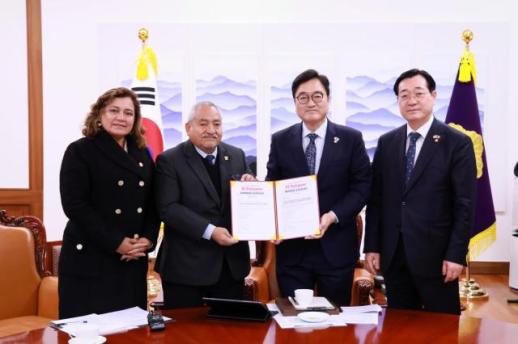 Peru designates April 1 as 'Korea Friendship Day' during parliamentary visit to Seoul SEOUL, January 22 (AJP) - A delegation of Peruvian lawmakers visited Seoul last week to strengthen diplomatic ties, presenting a newly approved law that designates April 1 as "Korea Friendship Day" to recognize the contributions of the South Korean community to Peru. Congressman Víctor Seferino Flores Ruiz, president of the Peru–Korea Parliamentary Friendship League, and Congresswoman Silvia María Monteza Facho led the official visit from January 11 to 17. The trip focused on enhancing the parliamentary relationship between Peru and South Korea. During a meeting with South Korean National Assembly Speaker Woo Won-shik, Flores presented a physical copy of Law No. 32519, which was recently passed by the Peruvian Congress. The law establishes the commemorative day to acknowledge the role South Koreans have played in Peru's sustainable development. Flores also submitted a draft Joint Declaration proposing regular meetings between the parliamentary friendship groups of both nations to institutionalize their cooperation. Speaker Woo expressed appreciation for the designation of the friendship day and noted the South Korean legislature's own efforts to promote the inclusion of migrant populations. The Peruvian delegation also held talks with National Assembly member Min Hong-chul, president of the Korea–Peru Parliamentary Friendship League. The discussions covered legislative cooperation and the broader bilateral relationship, which was elevated to a Comprehensive Strategic Partnership in 2012. Min highlighted the strong cooperation between the two nations, particularly in the defense sector, and recalled his own official visit to Peru in 2025 where the friendship leagues held a joint working meeting. As part of the itinerary, the visiting lawmakers paid tribute at the War Memorial of Korea and visited the United Nations Hall. Peru is recognized there as one of the 39 nations that provided material support to South Korea during the Korean War, demonstrating solidarity before the formal establishment of diplomatic relations in 1963. The visit underscored the commitment of both nations to deepen political dialogue and celebrate more than six decades of diplomatic engagement. 2026-01-22 16:31:22
 -
 Simple structural change in drug molecules offers new path for Alzheimer's treatment SEOUL, January 22 (AJP) - Researchers in South Korea have discovered that simply rearranging the structure of a potential drug molecule without changing its ingredients can significantly alter its effectiveness against Alzheimer's disease. A team led by the Korea Advanced Institute of Science and Technology (KAIST) announced on Wednesday that this strategy allows a single compound to simultaneously tackle multiple causes of dementia, offering a potential breakthrough for a disease that has proven difficult to treat with conventional methods. Alzheimer's disease is a complex condition driven by several interacting factors rather than a single cause. These factors include the accumulation of amyloid beta plaques in the brain, metal ions, and reactive oxygen species. When metal ions interact with amyloid beta, they can increase toxicity and accelerate brain cell damage. Conventional treatment approaches have typically focused on targeting just one of these elements, which limits their overall effectiveness in stopping the disease's progression. To overcome this limitation, the research team focused on a chemical concept known as "positional isomerism." This involves taking a molecule and, instead of adding new chemical ingredients, simply moving its existing components to different positions on the molecular structure. The researchers synthesized three variants of a molecule with the exact same chemical composition but slightly different structural arrangements. They found that even these minute changes drastically affected how the molecule interacted with the harmful elements associated with Alzheimer's. One specific structural arrangement demonstrated the ability to control reactive oxygen species, amyloid beta, and metal-amyloid complexes all at once. By modifying the "placement" of the molecule's components, the team successfully altered its chemical reactivity. In tests involving mouse models bred with Alzheimer's genes, this optimized compound effectively reduced nerve cell damage in the hippocampus, the region of the brain responsible for memory. It also decreased the accumulation of amyloid plaques. Consequently, the treated mice showed significant improvements in memory and cognitive function that had previously been impaired. "This study demonstrates that simply adjusting the structural arrangement without changing the molecular composition allows us to simultaneously target multiple causes of Alzheimer's disease," said Professor Lim Mi-hee of the Department of Chemistry at KAIST. "It presents the possibility of a new treatment strategy that can more precisely control diseases with complex, intertwined causes." The research was conducted in collaboration with Professor Kim Min-keun of Chonnam National University and Dr. Lee Cheol-ho and Dr. Kim Kyung-sim from the Korea Research Institute of Bioscience and Biotechnology (KRIBB). Na Chan-ju and Lee Ji-min, integrated master's and doctoral students at KAIST, served as co-first authors. The study was supported by the National Research Foundation of South Korea and KRIBB. The findings were published in the January 14 issue of the Journal of the American Chemical Society. (Paper information) Journal: Journal of the American Chemical Society (Impact Factor: 15.7) Title: Positional Isomerism Tunes Molecular Reactivities and Mechanisms toward Pathological Targets in Dementia DOI: 10.1021/jacs.5c14323 2026-01-22 16:14:34
 -
 New catalyst design boosts hydrogen efficiency while cutting costs SEOUL, January 21 (AJP) - Researchers in South Korea have developed a new structure for catalysts that significantly reduces the amount of expensive precious metals required for hydrogen production and fuel cells. A team led by Professor Cho Eun-ae from the Department of Materials Science and Engineering at the Korea Advanced Institute of Science and Technology (KAIST) announced on January 21 that they have successfully created ultra-thin nanosheets that outperform traditional particle-based catalysts. Catalysts are essential for splitting water to create hydrogen and for generating electricity in fuel cells. However, the industry relies heavily on iridium and platinum, rare metals that are prohibitively expensive and prone to degradation over time. Current commercial catalysts use these metals in the form of small particles, which often clump together, reducing their effectiveness and limiting their lifespan. To address this, the research team abandoned the traditional granular form in favor of a sheet-like structure. By flattening the catalyst material into ultra-thin layers—thousands of times thinner than a human hair—the researchers created a structure that exposes much more surface area to the chemical reaction. This allows the system to generate more hydrogen or electricity using a smaller amount of precious metal. The new structure also solved a longstanding engineering challenge regarding support materials. Titanium oxide is a durable and inexpensive material, but it is rarely used to support catalysts because it does not conduct electricity well. The researchers found that when the new nanosheets are layered over titanium oxide, the sheets themselves connect to form a conductive path. This allows the stable titanium oxide to support the catalyst without impeding the flow of electricity. When applied to water electrolysis for hydrogen production, the new iridium nanosheet catalyst improved production speed by 38 percent compared to commercial catalysts. It achieved this performance while reducing the amount of iridium used by 65 percent. The system remained stable for over 1,000 hours under high-load conditions similar to industrial settings. The team applied the same design strategy to fuel cells using a platinum-copper alloy. The resulting catalyst demonstrated high durability and efficiency. In fuel cell tests, the platinum-copper nanosheets showed a 13-fold increase in performance per mass of platinum compared to commercial options. The fuel cell performance increased by roughly 2.3 times. Furthermore, the catalyst maintained 65 percent of its initial performance even after a rigorous durability test of 50,000 cycles, proving it to be far more durable than existing alternatives. This was achieved while reducing platinum usage by 60 percent. "We have presented a new catalyst structure that can simultaneously improve hydrogen production and fuel cell performance while using significantly less expensive precious metals," said Professor Cho Eun-ae. "This research will be a turning point in lowering the cost of hydrogen energy and accelerating commercialization." The research was supported by the Energy Human Resources Development Program of the Korea Institute of Energy Technology Evaluation and Planning, and the Nano and Material Technology Development Program of the National Research Foundation of Korea. (Paper information) Journal: ACS Nano (Impact Factor: 16.0) Title: Ultrathin Iridium Nanosheets on Titanium Oxide for High-Efficiency and Durable Proton Exchange Membrane Water Electrolysis DOI: https://doi.org/10.1021/acsnano.5c15659 (Paper information) Journal: Nano Letters (Impact Factor: 9.6) Title: Ultrathin PtCu Nanosheets: A New Frontier in Highly Efficient and Durable Catalysts for the Oxygen Reduction Reaction DOI: https://doi.org/10.1021/acs.nanolett.5c04848 2026-01-21 14:43:32
 -
 Seoul honors Turkish General Tahsin Yazıcı as first global war hero under new program SEOUL, January 21 (AJP) - The Ministry of Patriots and Veterans Affairs held a ceremony on Tuesday to honor Brigadier General Tahsin Yazıcı, the Korean War commander of the Turkish Brigade, as the "Korean War Hero of the Month" for January 2026. The Turkish Brigade, known by the code name "North Star" (Kuzey Yıldızı), arrived in the port city of Busan on October 17, 1950. Attached to the U.S. IX Corps, the brigade quickly earned a reputation for ferocity and resilience. Turkish soldiers were particularly noted for their effectiveness in close-quarters combat and their willingness to hold defensive lines against numerically superior forces, playing a pivotal role in protecting United Nations flanks during critical withdrawals. Yazıcı was selected as the first international recipient of the ministry's newly expanded recognition program. While the "Korean War Hero of the Month" initiative has operated since 2011, it previously focused primarily on domestic veterans. Starting in January 2026, the ministry broadened the scope to select two individuals each month—one from the South Korean military and one from United Nations forces—to better publicize the contributions of the international community. The commemoration took place at the Turkish Embassy in Seoul, where Vice Minister of Patriots and Veterans Affairs Kang Yun-jin presented a memorial plaque to Turkish Ambassador to South Korea Salih Murat Tamer. During the ceremony, Vice Minister Kang emphasized that the recognition carried weight beyond a single commander. "While we are honoring General Yazıcı as the hero for January, this is intended to express our gratitude to the entire Turkish contingent that fought in the Korean War, not just one individual," Kang said. "The government will never forget the sacrifices of the Turkish veterans." Military historians credit Yazıcı with a critical delaying action against Chinese forces during the Battle of Wawon (Kunuri) in November 1950. When the U.S. 8th Army faced encirclement by a large-scale Chinese offensive in South Pyongan Province, Yazıcı made the independent decision—despite a lack of communication with higher command—to establish a defensive line. This action prevented the destruction of the allied flank and allowed U.S. forces to withdraw to safety. His leadership was further demonstrated during the Battle of Kumyangjang-ni in January 1951. In the area of present-day Yongin, Gyeonggi Province, the Turkish Brigade engaged in hand-to-hand combat using bayonets to defeat a Chinese force estimated to be three times their size. The victory is widely regarded as a psychological turning point that dispelled the "invincible" image of the Chinese military among UN troops. In his address, Kang highlighted the humanitarian legacy left by Yazıcı and his troops, specifically the establishment of the "Ankara School" and orphanage in Suwon in 1952. "Even as the war was nearing its end, they created the Ankara School to care for and educate children, sharing beautiful humanity," Kang said. "It makes me realize where the term 'blood brothers' truly comes from." Kang also announced a new bilateral initiative discussed with Ambassador Tamer. The ministry plans to collaborate with the Turkish government to formally review and preserve historical records related to the Ankara School, ensuring the story depicted in the movie "Ayla" is preserved. Ambassador Tamer stated that the relationship between the two nations has evolved beyond a temporary military alliance into a "brotherhood" built on shared sacrifice. "The friendship between Türkiye and the Republic of Korea goes beyond military cooperation established on the battlefields," Tamer said. "It has transformed into a strong, multi-dimensional strategic partnership built on sacrifice, resilience, and shared ideals." Born in Monastir in 1892, Yazıcı was a veteran of World War I and the Turkish War of Independence. Before his deployment to South Korea, he was a pioneer in the Turkish military who established the army's first armored tank unit in 1934. He was known among his troops for his "fatherly compassion" and his willingness to remain on the firing line during combat. Yazıcı retired as a major general in 1952 and served as a member of the Turkish parliament before his death in 1971. 2026-01-21 08:29:14
 -
 Uzbekistan president calls for results-oriented diplomatic shift SEOUL, January 20 (AJP) - Uzbek President Shavkat Mirziyoyev called for a fundamental restructuring of the country's diplomatic missions on January 15, urging ambassadors to pivot from traditional political representation to aggressive economic advocacy and the protection of citizens abroad. Speaking at an expanded meeting of the Ministry of Foreign Affairs, Mirziyoyev said the shifting geopolitical landscape and increasing threats to state sovereignty require a "new generation" of diplomats capable of delivering concrete outcomes rather than just managing relations. "In the current environment, an ambassador is not just a person who conducts political dialogue," Mirziyoyev said. "An ambassador is a state representative who attracts investment and technologies, opens new export markets, launches transport and logistics corridors... and, most importantly, protects the rights of our citizens." The president emphasized that future performance evaluations for heads of diplomatic missions will rely on specific key performance indicators. These include the volume of export revenues generated from their host countries, the growth of tourist flows to Uzbekistan, and the effective organization of legal labor migration. Reviewing the previous year, Mirziyoyev noted that 2025 was productive for Uzbekistan's foreign policy. Foreign trade turnover exceeded $80 billion for the first time, with exports reaching $33.5 billion and foreign investment topping $43 billion. The country also established strategic partnerships with 11 additional nations, bringing the total to 19. Despite these figures, the president criticized the underutilization of existing potential. He pointed to the failure to secure available international funding, estimating that better coordination between ministries and embassies could have attracted an additional $200 million to $300 million in grants last year. Mirziyoyev also highlighted the negative impact of rising logistics costs on the competitiveness of domestic products. He instructed diplomats to work on diversifying transit routes and optimizing supply chains, particularly to reduce transportation costs for goods entering European markets. The meeting also addressed the welfare of Uzbek citizens working abroad. Mirziyoyev directed embassy staff to abandon "office diplomacy" and establish direct dialogue with compatriots, ensuring qualified legal assistance is available for labor migrants. To formalize these shifts, the president announced the need to update the Concept of Foreign Policy of the Republic of Uzbekistan. The revised document will reflect long-term goals in economic diplomacy, security, transport logistics, and climate issues. "The time has come for a new generation of diplomats – those who achieve concrete results and firmly defend the interests of Uzbekistan in the international arena," Mirziyoyev said. To recognize effective service under these new standards, the president proposed the establishment of a new state award, the title of "Honored Diplomat of the Republic of Uzbekistan." 2026-01-20 17:39:48
 -
 Blockchain operator Sign estimates 2026 to be turning point for institutional asset tokenization SEOUL, January 20 (AJP) - Sign, a blockchain infrastructure provider, released a market analysis Tuesday projecting that 2026 will serve as a pivotal year for Real World Asset (RWA) tokenization, forecasting a shift from experimental pilots to full-scale institutional integration. The company stated that the digital asset sector is currently undergoing a structural transition. While recent years have focused on technical proof-of-concepts, Sign’s outlook suggests the coming year will see traditional financial institutions begin utilizing blockchain infrastructure for core operations rather than just speculative investment. In its analysis, Sign highlighted industry data projecting the market for tokenized assets could reach 18.9 trillion U.S. dollars by 2033. The firm attributed this growth potential to increasing regulatory clarity in major jurisdictions and a growing demand for on-chain capital efficiency among asset managers. To support this projected influx of institutional activity, Sign announced it intends to expand its proprietary "Sign Chain." The company positions this Layer 1 blockchain as a specialized network designed to handle the rigorous compliance, identity verification, and data privacy requirements of regulated assets—features often lacking in general-purpose public networks. A central component of the company's 2026 roadmap involves government-level partnerships to establish sovereign digital infrastructure. Sign referenced its ongoing collaboration with the National Bank of the Kyrgyz Republic to develop systems for a Central Bank Digital Currency (CBDC) and the "Digital SOM." The company frames this project as a test case for how blockchain can digitize administrative and financial processes at a national level. The report also identified stablecoins as a critical driver for the 2026 outlook. Sign noted that stablecoin settlement volume recently exceeded 46 trillion dollars, interpreting this as evidence that the market is ready for programmable, on-chain currency solutions that can interface seamlessly with traditional banking systems. Addressing the technical barriers to this adoption, Sign stated it is prioritizing "omnichain" connectivity. This approach aims to allow assets to move fluidly between incompatible blockchain networks, removing the technical silos that have previously fragmented liquidity and deterred institutional users. Company executives indicated that Sign plans to roll out additional tokenization services and infrastructure updates in the coming months to align with these anticipated market shifts. 2026-01-20 11:18:36
 -
 S. Korea, Italy agree to boost cooperation on AI and semiconductors SEOUL, January 19 (AJP) - South Korean President Lee Jae Myung and Italian Prime Minister Giorgia Meloni agreed on Monday to strengthen supply chain stability and industrial ties, focusing on semiconductors and artificial intelligence. During a summit at the presidential Blue House in Seoul, the two leaders oversaw the signing of three memorandums of understanding aimed at deepening cooperation in technology, disaster response, and cultural exchange. The meeting marked the first official visit by an Italian prime minister to South Korea in 19 years. The centerpiece of the summit was an agreement to expand business collaboration in the semiconductor sector. Under the terms of the memorandum, Seoul and Rome committed to sharing supply chain data and linking public and private networks to foster development in AI and other advanced industries. Lee described the partnership as a strategic fit between Italy’s scientific tradition and South Korea’s technological manufacturing base. "If Italy's traditional strengths as a science powerhouse combine with the core DNA of South Korea as a technology powerhouse, the two countries can create significant synergy," Lee said in his opening remarks. He noted that bilateral cooperation was already growing in aerospace and defense, adding that the potential for the relationship felt "limitless." Meloni emphasized that despite the geographic distance, the two nations were aligned on key issues, including critical minerals and energy security. "I have always viewed President Lee's pragmatic approach very positively and respect it," Meloni said. She expressed hope that the visit would establish a framework for regular political dialogue to address international crises. The leaders also discussed expanding cultural and personnel exchanges. Meloni noted South Korea's growing influence in soft power, remarking that her daughter is a fan of K-pop. Other than the technology agreements, the two governments signed a memorandum on civil protection to share policies on disaster management. A separate agreement between South Korea's Korea Heritage Service and the Italian Ministry of Culture established protocols for sharing data on heritage management and preventing the illegal trafficking of cultural properties. Lee also thanked Italy for its historical support, specifically citing the medical units Rome dispatched during the 1950~53 Korean War. 2026-01-19 14:00:50
 -
 S. Korea and Egypt sign declaration to launch economic partnership talks SEOUL, January 18 (AJP) - South Korea and Egypt have officially launched a push for a Comprehensive Economic Partnership Agreement (CEPA), aiming to establish the North African nation as a bridge for South Korean goods entering Europe, Africa, and the Middle East. South Korean Trade Minister Yeo Han-koo signed a joint declaration with his Egyptian counterpart, Hassan El Khatib, in Cairo on Sunday. The Ministry of Trade, Industry and Energy said the agreement formalizes the intent to negotiate a deal that goes beyond simple tariff reduction to include broader economic cooperation. The two nations have been laying the groundwork since 2022, following a memorandum of understanding and a joint feasibility study. The decision to move toward a formal deal was reached during a summit last November. A key focus of Yeo's visit was the potential for South Korean firms to gain preferential access to the U.S. market. During a meeting with Gamal El-Dein, chairman of the Suez Canal Economic Zone, Yeo highlighted the advantages of the Qualifying Industrial Zones (QIZ) agreement. Under this arrangement, goods produced in specific Egyptian zones with a required amount of Israeli input can be exported to the United States duty-free. "By leveraging the QIZ agreement, the Suez Canal Economic Zone can serve as a new production base for South Korean companies to export to the United States under preferential conditions," Yeo said. To facilitate this, Yeo proposed a regular consultative channel between the Korea Trade-Investment Promotion Agency (KOTRA) and the Suez authority. He also inspected the Sokhna Industrial Zone and Sokhna Port—the largest of the special zone's industrial hubs—to check logistics and infrastructure. Yeo later met with representatives of South Korean companies operating in Egypt to discuss regulatory hurdles and financial support. "We intend to proceed with speed from the start of CEPA negotiations to their final conclusion," Yeo said. The ministry stated it would publish an investment guidebook based on the visit to assist firms entering the market. 2026-01-18 17:43:47
 -
 South Korea begins deployment of 'monster' Hyunmoo-5 ballistic missiles SEOUL, January 18 (AJP) - South Korea has begun deploying the Hyunmoo-5, a high-power ballistic missile capable of penetrating deep underground bunkers, to operational units, military sources said Sunday. The weapon, dubbed the "monster missile" for its massive eight-ton warhead, is a centerpiece of Seoul's strategy to neutralize the North Korean leadership in the event of a conflict. According to sources, the rollout to field units began late last year and is scheduled for completion within the term of the Lee Jae-myung administration. The Hyunmoo-5 serves as the core asset for the Korea Massive Punishment and Retaliation (KMPR) plan. This strategy forms one pillar of the nation's "three-axis" defense system, which also includes the "Kill Chain" preemptive strike platform and the Korea Air and Missile Defense (KAMD) system. While the Hyunmoo-5 is now entering service, military authorities are already advancing classified programs for next-generation surface-to-surface missiles. Often referred to unofficially as "Hyunmoo-6" or "Hyunmoo-7," these future systems aim to extend range and enhance warhead penetration capabilities beyond the current arsenal. Defense Minister Ahn Gyu-back, speaking in an interview last October, outlined the strategic logic behind massing such heavy conventional firepower. "We will improve performance in areas such as destructive power and accuracy for high-power missiles like the Hyunmoo-5 and next-generation models," Ahn said. "By securing a sufficient quantity necessary for an overwhelming response, we will realize a 'balance of terror' commensurate with North Korea's nuclear threat." Ahn noted that the sheer kinetic energy of these weapons allows them to serve as a conventional deterrent against nuclear arms. "Missile experts judge that if approximately 15 to 20 high-power missiles impact a target, they exert destructive power exceeding that of a nuclear weapon," Ahn said. "The Hyunmoo-5 is capable of achieving a balance of terror comparable to nuclear weapons." The military reportedly plans to stockpile hundreds of these high-yield missiles to solidify its retaliatory capabilities against Pyongyang's nuclear arsenal. 2026-01-18 17:17:36