

Journalist

Park Sae-jin, Han Jun-gu
swatchsjp@ajunews.com
-
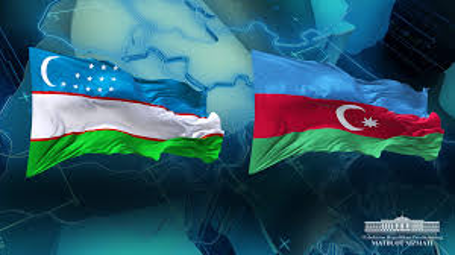 Uzbekistan and Azerbaijan expand bilateral trade and transport networks SEOUL, May 18 (AJP) - Bilateral trade and transport volumes between Uzbekistan and Azerbaijan are surging following the introduction of a free trade regime between the two nations, the Embassy of Uzbekistan in Seoul said Monday. Total trade turnover reached 80.1 million dollars in the first quarter of 2026, marking a 42.5 percent increase from the same period last year. The economic expansion is driven by established intergovernmental platforms, including a joint commission that held its 14th meeting in Baku in June 2025. These institutional ties, alongside a regional business council established in 2020 and upcoming regional forums, have facilitated a diversification of goods and strengthened logistics chains connecting the two economies. Full-year trade turnover for 2025 totaled 307.3 million dollars, representing a 14.6 percent rise from the previous year. Exports from Uzbekistan to Azerbaijan grew by 7.8 percent to 227.3 million dollars, while imports from Azerbaijan surged 39.3 percent to 80 million dollars. Uzbekistan expanded its exports across 230 product categories last year, observing strong growth in tobacco products, copper wire, grapes, nuts, household appliances, and petroleum products. The country also introduced 116 new export categories valued at 7.8 million dollars, while importing industrial resources like sugar, aluminum, and metal pipes from Azerbaijan. This trade growth relies on expanding logistics infrastructure across rail, road, and air networks. Total cargo transportation volume between the two countries reached 154,300 tons in 2025, an increase of 28.3 percent, with transit cargo operations growing 1.4 times over the same period. The logistical expansion has accelerated into the current year, with first-quarter cargo volumes in 2026 rising by 88 percent to reach 58,700 tons. The two nations currently maintain transport connectivity through 14 regular weekly flights operating on the route between Tashkent and Baku. 2026-05-18 14:21:07
 -
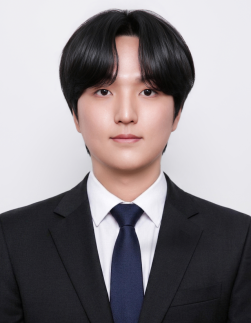 Kookmin University undergraduate's AI paper accepted at ICML 2026 SEOUL, May 18 (AJP) - An undergraduate student in South Korea has authored a research paper on artificial intelligence that has been accepted for presentation at the 43rd International Conference on Machine Learning, Kookmin University said Monday. Kim Min-woo, a senior in the university's software program, is the first author of the paper titled "Memory as Dynamics: Learning Reliability-Guided Predictive Models for Online Video Perception." The research introduces a framework for online video perception that interprets memory as a dynamic system rather than a static storage unit. By applying a reliability-guided predictive model, the system processes temporal information within video sequences to improve accuracy and efficiency. The model dynamically estimates the reliability of each video frame and incorporates this assessment into its memory updates and predictions. This process allows the system to maintain stable recognition performance even when the video feed contains noise or visual obstructions. The method demonstrated improved performance across various online video benchmarks when compared to existing techniques. The framework has potential applications in fields that rely on real-time visual recognition, including autonomous driving, robotics and intelligent video understanding. Kim's research was supported by the National Research Foundation of South Korea (NRF) and the Institute of Information and Communications Technology Planning and Evaluation (IITP). "I wanted to untangle the relationship between memory and prediction from a new perspective," Kim said. "It is very meaningful that the research I conducted during my undergraduate studies has been recognized for its achievements at a world-class academic conference. I want to continue practical AI research that can contribute to solving real-world problems." 2026-05-18 14:08:56
 -
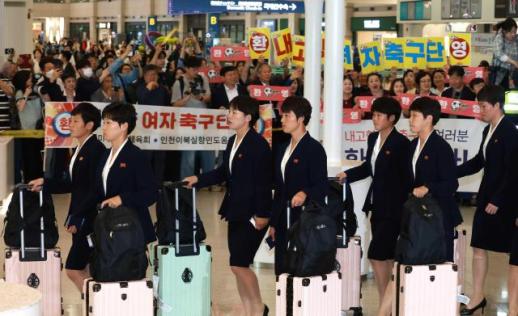 ASIA DEEP INSIGHT: Could soccer match mend divide between two Koreas? As Pyongyang rewrites its constitution to erase the prospect of reunification, a women's soccer tournament in Suwon serves as the final point of contact between two hostile states. At 2:20 p.m. on Sunday, 27 players and 12 staff members wearing matching tracksuits disembarked an Air China flight at Incheon International Airport. They collected their luggage, cleared customs, and boarded buses bound for the Gyeonggi provincial capital. The arrival of a visiting club for the Asian Football Confederation Women’s Champions League semifinals would typically disappear into the routine logistical hum of the South Korean transit system. But the Naegohyang Women’s F.C. had just traveled from Pyongyang via Beijing, traversing a geopolitical boundary that has never been more heavily militarized. When they step onto the pitch against Suwon F.C. Women on Wednesday, it will mark the first time a North Korean sports delegation has entered the South in eight years. The fixture is entirely devoid of diplomatic optimism. We are observing an isolated autocracy that has systematically eradicated every other form of contact with Seoul—severing telecommunications, rewriting its fundamental laws, and detonating physical monuments to peace. Pyongyang has dispatched a soccer team across a border it no longer recognizes as a temporary division, treating it instead as a permanent frontier. The playing field in Suwon south of Seoul is the final operational coordinate where the two Koreas interact. To comprehend the structural friction of this week’s tournament, the rapid dismantling of the inter-Korean apparatus must be examined first. The current communications blackout was initiated on April 7, 2023. At nine in the morning on a Friday, Pyongyang ceased answering the daily administrative calls on the inter-Korean joint liaison office and the military communication lines. These networks were designed to coordinate logistics and prevent accidental naval skirmishes in the volatile West Sea. The receivers in Freedom House have remained dead ever since. That silence preceded a profound doctrinal shift. By early 2024, Kim Jong-un discarded the state doctrine of peaceful reunification that had governed North Korean policy for decades, formally declaring South Korea a principal enemy. The rhetoric materialized into immediate physical action. Pyongyang demolished the Arch of Reunification—a towering stone monument erected by his father in the capital—and began laying thousands of fresh landmines along the Demilitarized Zone. The regime shifted its posture from managing a divided peninsula to fortifying a hardened national border. In March 2026, the Supreme People’s Assembly codified this rupture into the highest law of the land. The legislature scrubbed the concepts of ethnic unity and reconciliation from the North Korean constitution. They formally defined their territorial boundaries, legally designating the Republic of Korea as a foreign adversary rather than a separated brother. The regime even petitioned the International Civil Aviation Organization to terminate the inter-Korean air traffic control network, an administrative link that had previously survived severe military standoffs and nuclear tests. This structural severance makes the presence of the Naegohyang squad at the Suwon Sports Complex jarringly anachronistic. In previous decades, sports diplomacy functioned as the vanguard of a broader geopolitical thaw. When a unified Korean team won gold at the World Table Tennis Championships in Chiba in 1991, or when athletes marched together behind a pale blue Unification Flag at the Sydney Olympics in 2000, both capitals nominally subscribed to the prospect of eventual unity. Even the hastily assembled women's ice hockey team at the Pyeongchang Winter Olympics eight years ago provided the diplomatic cover required for a series of historic summits between Pyongyang, Seoul, and Washington. Today, there is no broader thaw on the horizon. The diplomatic utility of the Suwon match is negligible. President Lee Jae Myung’s repeated offers to restore basic dialogue and resume humanitarian aid have been met with total indifference. North Korea has no intention of utilizing 90 minutes of soccer to restart nuclear negotiations or arrange a border summit. For Mr. Kim, international sports offer a highly specific utility. Fielding a competitive women’s team allows Pyongyang to project normalcy, discipline, and national prestige on the global stage without compromising its hardened borders or exposing its citizens to the corrosive influence of South Korean economic realities. For South Korea, playing the host presents a complex administrative and political burden. It forces a democratic society—currently managing intense regional security anxieties, currency fluctuations against the dollar, and the ongoing pressure to maintain semiconductor sovereignty in a fractured global market—to accommodate representatives of a regime that openly targets its infrastructure. The host nation must adhere to the polite fictions of international sporting protocol, offering training facilities, logistics, and heavy security details to a state that refuses to pick up a telephone to de-escalate live military tensions. The stadium in Suwon will be filled with security personnel, government observers, and global media, all monitoring a fixture governed by strict, mutually agreed-upon laws. The athletes themselves are deployed simply to win a soccer match. They are tasked with navigating an environment where every technical foul, substitution, and post-match handshake will be analyzed for political signaling. The Naegohyang players spent days training in isolation near their embassy in Beijing before securing passage to Seoul, highlighting the convoluted logistics required to move civilians across a sealed perimeter. They operate within a performative contradiction, executing a tactical game plan while their respective defense ministries prepare for worst-case scenarios along the 38th parallel. When the referee blows the whistle to initiate the semifinal, it will trigger a brief, localized suspension of the geopolitical reality that defines the Korean Peninsula. For an hour and a half on a manicured patch of grass, the two hostile states will subject themselves to the exact same set of rules—only to walk off the pitch, board their respective buses, and return to a reality where the concept of a shared existence has been entirely erased. 2026-05-18 13:19:38
 -
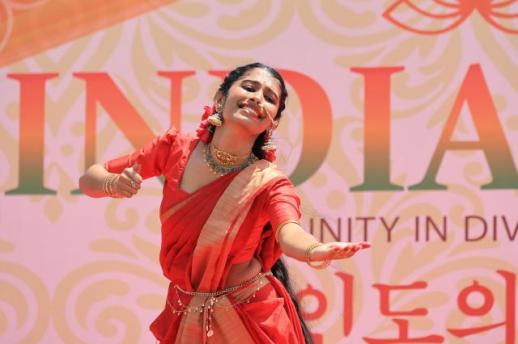 India Day Celebrated at Yeouido Hangang Park with Dance and Cuisine On May 16, under a clear blue sky and the bright sun of early summer, the aroma of rich curry, tandoori chicken, and masala wafted through Yeouido Hangang Park. Families gathered under the shade of trees, sharing spiced dishes while enjoying leisurely conversations. The park transformed into a vibrant 'Mini India' for the first India Day festival, with attendees dressed in colorful saris and lively music filling the air. Organized by the Indian Embassy and the Indian Cultural Center in Korea, this large outdoor festival is not just a one-time event. It is a tangible outcome of the agreement made during President Lee Jae-myung's state visit to India last month, aimed at enhancing cultural exchanges between the two nations. The event showcased the ongoing efforts of both countries to strengthen their special strategic partnership through cultural dialogue. The event attracted over 1,500 visitors from diverse backgrounds, showcasing the 'Unity in Diversity' of India's 28 states and 8 union territories. Attendees marveled at marble crafts from Rajasthan, watched artisans weave pashmina shawls from Kashmir, and explored local specialties. The Indian Coffee Board presented five varieties of GI-certified Arabica coffee, while the Marine Products Export Development Authority (MPEDA) showcased a variety of agricultural and seafood products, tantalizing the taste buds of festival-goers. Long lines formed at food trucks as attendees eagerly awaited to sample street foods from different regions. Cultural exchange proved to be a powerful force that transcends borders and language barriers. Park Nam-seok, 40, from Gangseo-gu, attended the festival with his family after being invited by his son’s Indian friend, Swapran. “I didn’t have high expectations for the first year, but it’s larger and more organized than I thought. It’s a great festival for kids,” he said, smiling. “I tried Indian food for the first time, and it’s really delicious.” Naina, 38, originally from Bengaluru and now living in Korea, brought her American friends along. “I wanted them to experience Indian dance and food firsthand,” she said. “I’m proud to showcase India’s rich culture and cuisine, and seeing my foreign friends enjoy it makes this first event a great success.” As the afternoon heat intensified, Indian Ambassador to Korea Gaurang Lal Das delivered a speech that resonated with the attendees. He remarked, “Like the Ganges River, which has witnessed thousands of years of civilization, today, two great stories meet at the Han River, which has seen Korea’s recovery and transformation.” He declared that Yeouido Hangang Park had transformed into 'Han Ganga Park' for the day. He emphasized the power of culture to unite people in ways that politics cannot, clearly articulating the Korean phrase “We understand each other.” Kwak Young-gil, chairman of Aju News Corporation, followed with a forward-looking vision, stating, “India is one of the world’s oldest civilizations and a dynamic nation leading the AI era. Now, our two countries are opening a new era of cooperation beyond culture, into AI, semiconductors, content, and youth exchanges.” The vision of 'youth exchange' was further highlighted during the awards ceremony for the 'Korea-India Cultural Innovation Contest' (essay and video). Ambassador Das personally awarded the grand prize in the AI video category to Kim Dong-hee. The essay category winner, Sonali Ray, who submitted 'One Frame, Two Worlds,' was represented on stage by Deputy Ambassador Nishi Kant Singh, while Im Kyu-jin, president of Aju News Corporation, presented the award with a bright smile. The elegant performances by the Odissi dance troupe, the RAAS Dance Company, and K-pop group Blackswan drew the loudest cheers from the audience as the sun began to set over the Han River. However, the true finale of the festival began just after sunset. As DJ Paresh Mundade's upbeat beats filled the air, over a hundred participants of different nationalities, ages, and languages eagerly left their mats to join a massive dance party under the fading light. Koreans, Indians, and attendees from around the world danced joyfully together. As Ambassador Das noted, music needs no translation, and smiles exchanged between people require no interpretation. The evening of May 16, with the flowing waters of the Han and the exotic aroma of curry, perfectly blended with the lively Bollywood beats, created a world where hearts truly connected.* This article has been translated by AI. 2026-05-18 08:08:38
 -
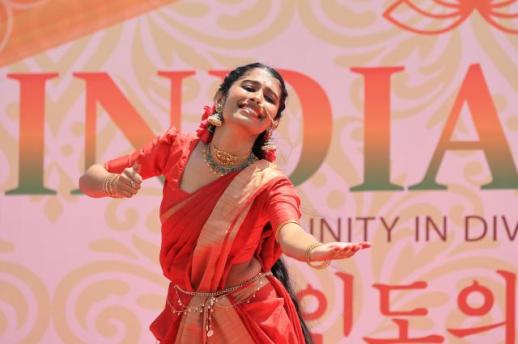 First 'India Day' transforms Seoul riverfront into 'Mini India' SEOUL, May 17 (AJP) - On Saturday, May 16, the weekend breeze off the Han River carried the heavy scents of cumin, masala, and roasting curries. Under a cloudless early-summer sky, Mulbit Square at Yeouido Hangang Park was temporarily remade into a "Mini India." More than 1,500 people navigated the sprawling outdoor festival, where visitors in bright saris mingled alongside families setting up pop-up tents and picnic mats under the trees. Hosted by the Embassy of India and the Swami Vivekananda Cultural Centre, the inaugural "India Day" was pitched as a cultural showcase, but its roots are diplomatic. The event was launched to support an agreement expanding bilateral exchanges, brokered last month during South Korean President Lee Jae Myung's state visit to India to strengthen the nations' Special Strategic Partnership. Organized around a "Unity in Diversity" theme, booths highlighted regional specialties from India's 28 states and eight union territories. The displays ranged from Rajasthan marble crafts to a live handloom demonstration by a Pashmina weaver from Jammu and Kashmir. For food, the Coffee Board of India poured five varieties of GI-tagged Arabica, while the Marine Products Export Development Authority served traditional Kerala seafood curries. Nearby, long lines snaked away from food trucks hawking regional street snacks. For many locals, the draw was simply a new weekend experience. Park Nam-seok, a 40-year-old resident of Gangseo-gu, came after his son was invited by an Indian friend, Swapran. "I didn't expect much since it's the first year, but the festival turned out to be much bigger and better organized than I imagined. It's a great event to come to with children," Park said. "It was my first time trying Indian food, and it was honestly really delicious." The festival also served as a gathering point for expats eager to share their heritage. Naina, a 38-year-old from Bengaluru currently living in South Korea, brought a group of American friends along. "I actually invited my American friends to come with me today. I wanted them to really feel Indian culture by eating the food and watching the dances in person," she said. "This event really lets us show how rich India is, both culturally and in terms of cuisine. I see so many foreigners here, and they all look like they're having a good time. For a first-time event, I would say it's definitely a success." The afternoon's formal programming bridged the cultural and the official. Indian Ambassador to South Korea Gaurangalal Das addressed the crowd, drawing a parallel between the Han River and his home country's most famous waterway. "The Han River has witnessed Korea's remarkable journey of resilience and transformation. Just as Ganga in India has witnessed thousands of years of civilization, culture, and human connection," the ambassador said. Using the Korean phrase "ma-eum-i tong-han-da (hearts are connected)" to describe hearts connecting, he added that "festivals like this remind us that culture has the power to bring people together in ways that rich politics, high politics cannot." AJU News Corporation Chairman Kwak Young-gil followed, outlining the economic ties binding the two nations. "India is one of the world's oldest civilizations, yet also one of the youngest and most dynamic nations leading the age of AI and advanced technology," Kwak said. "Today, our two countries are entering a new era together — an era of cooperation in AI, semiconductors, culture, content, and youth exchange." That focus on youth and tech was front and center during the Korea-India Culture & Innovation Contest awards. Ambassador Das handed the AI Video category's Grand Prize and a Korea Creative Content Agency award to Kim Dong-hee for "Flying Higher Together." AJU News Corporation President Lim Kwu-jin presented the Essay category's Grand Prize for "One Frame, Two Worlds" to Sonali Ray. With Ray currently in India, Deputy Chief of Mission Nishi Kant Singh accepted the plaque on her behalf. As the afternoon wore on, the crowd watched traditional Odissi dancers, the RAAS Dance Company, and K-pop group Blackswan. When the sun dipped below the horizon, ending the formal schedule, DJ Paresh Mundade took over the stage. Roughly a hundred attendees immediately abandoned their picnic mats and rushed the front, closing out the festival with a spontaneous dance party. 2026-05-17 16:20:32
 -
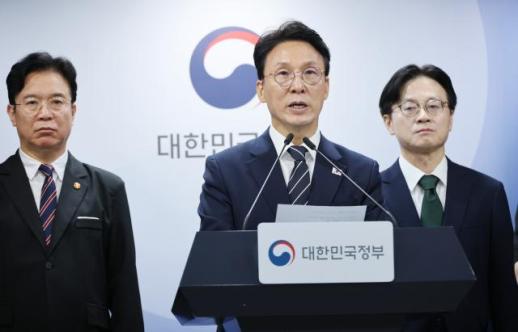 South Korean government threatens emergency mediation to stop Samsung strike SEOUL, May 17 (AJP) - The South Korean government officially raised the possibility of invoking emergency mediation powers for the first time to avert a looming general strike at Samsung Electronics. Prime Minister Kim Min-seok issued a public statement on Sunday, warning that the state would use all available legal measures if the walkout severely damages the national economy. The announcement puts maximum pressure on both management and labor ahead of a critical post-mediation meeting scheduled for May 18 at the National Labor Relations Commission. This session represents the final opportunity for both sides to reach an agreement before the planned strike begins. During his address at the Central Government Complex in Seoul, Kim emphasized the heavy responsibility resting on the negotiators. He stated that if the Samsung Electronics strike threatens to inflict massive damage on the national economy, the government will be forced to consider all options, including emergency mediation, to protect public interests. Labor Minister Kim Young-hoon attended the briefing alongside the prime minister. As the labor minister, he holds the exclusive legal authority to invoke the emergency mediation order. Under South Korean labor law, an emergency mediation order can suspend any planned strike for a mandatory thirty-day period if the labor action jeopardizes daily public life or threatens the national economy. During this freeze, the National Labor Relations Commission conducts mandatory arbitration, and it can enforce a binding settlement if an agreement cannot be reached voluntarily. The government previously maintained that it was too early to review such a drastic measure, preferring that the two sides resolve the dispute independently. However, state officials shifted their stance as industry warnings grew over potential direct and indirect economic losses reaching one hundred trillion won. Major labor organizations strongly condemned the government's announcement. The Korean Confederation of Trade Unions released a statement opposing any attempts to restrict the constitutional rights of workers using economic logic, while the Federation of Korean Trade Unions criticized the potential application of emergency mediation as an inappropriate restriction on the right to strike. The high-stakes meeting on May 18 was secured after Kim Young-hoon held consecutive meetings with union leaders and management on May 15 and May 16. In a minor breakthrough, management agreed to replace its chief negotiator, Vice President Kim Hyung-ro, while the union accepted a request to let him attend the session without speaking. The Samsung Electronics union has scheduled an eighteen-day general strike from May 21 to June 7, with labor leaders expecting up to fifty thousand members to participate. The union is demanding a fixed performance bonus equal to fifteen percent of the company's operating profit, while management proposes maintaining the current system alongside uncapped special rewards. 2026-05-17 15:28:08
 -
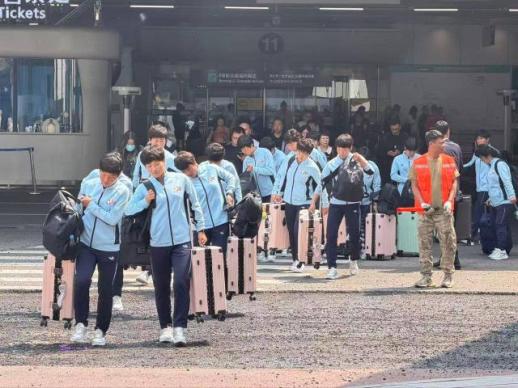 N. Korean women's football team arrives in S. Korea ahead of historic inter-Korean clash SEOUL, May 17 (AJP) - A North Korean women's football team arrived in South Korea on Sunday to compete in the Asian Football Confederation Women's Champions League semifinals, setting the stage for a rare and highly anticipated inter-Korean match. The Naegohyang Women's FC delegation, consisting of 27 players and 12 staff members, landed at Incheon International Airport at approximately 2:20 p.m., according to South Korea's Ministry of Unification. The team is scheduled to face off against South Korea's Suwon FC Women on Wednesday, May 20, at 7:00 p.m. The semifinal clash will take place at the Suwon Sports Complex. The North Korean arrival marks the first time a sports delegation from the North has visited South Korea in eight years, ending a drought that dates back to the International Table Tennis Federation World Tour Grand Finals in December 2018. In the realm of women's football, it is the first visit by a North Korean team in 12 years, following the 2014 Incheon Asian Games. The four-team tournament in Suwon will feature another major international matchup on Wednesday, with Australia's Melbourne City FC taking on Japan's Tokyo Verdy Beleza at 2:00 p.m. The finals and third-place matches are scheduled for May 23. The North Korean squad began their journey to the tournament on the morning of May 12, taking an Air Koryo flight from Pyongyang to Beijing. After holding training sessions near the North Korean Embassy in the Chinese capital, the team completed their journey to South Korea via an Air China flight on Sunday. 2026-05-17 15:07:54
 -
 President Lee warns proxy revenge is serious crime SEOUL, May 16 (AJP) - South Korean President Lee Jae Myung warned through a social media post on Friday that both requesting and carrying out private revenge through third parties constitutes a serious criminal offense. The statement addresses a growing trend of illegal retaliation services coordinated through encrypted messaging platforms. The direct warning from the president signals an intensified government crackdown on digital-age vigilantism. Lee emphasized that modern states must maintain a monopoly on justice to prevent the breakdown of public order. "Private revenge proxy is a serious crime for both the person who requests it and the person who receives the request," the president wrote in a post on the social media platform X. The former human rights lawyer cautioned citizens against engaging in such schemes over minor personal grievances. "Should you ruin your life over something you think is trivial?" he asked. Lee noted that self-governed retribution has no place in contemporary society. He stated that in a modern civilized country, private disputes must be resolved according to the legal order. The president shared an excerpt from a security report detailing a suspected proxy revenge crime in the western port city of Incheon. Police are currently investigating the incident, which reportedly took place early Wednesday at an apartment complex. The report indicates that these crimes have proliferated since the first recorded instance in the southern city of Daegu in August 2025. Criminals typically use the messaging application Telegram to solicit and organize the acts. South Korean authorities have documented 69 such cases to date. Police have arrested 50 individuals in connection with 60 of the recorded incidents. 2026-05-16 08:00:32
 -
 South Korea's labor minister to meet Samsung management to avert strike SEOUL, May 16 (AJP) - In a bid to mediate a labor dispute that threatens an unprecedented general strike of Samsung Electronics workers, South Korean Labor Minister Kim Young-hoon is scheduled to meet with Samsung executives as early as Saturday. The move follows a high-level meeting between the minister and union leadership to discuss demands that could fundamentally reshape the company's compensation structure. The National Samsung Electronics Union plans to launch an 18-day strike from May 21 to June 7. Union officials expect approximately 50,000 members to participate in what would be the largest labor action in the history of the world's top memory chip maker. Minister Kim Young-hoon met with Choi Seung-ho, the chairman of the Samsung Electronics branch of the Samsung Group Supra-Enterprise Labor Union, on Friday to hear worker grievances. The union requested the government's help in replacing the company's lead negotiator, Vice President Kim Hyung-ro, and pushing for a substantial shift in management's bargaining position. Labor representatives have criticized Vice President Kim Hyung-ro for allegedly lacking a deep understanding of the semiconductor industry. They specifically pointed to his previous comments regarding the company's projected operating profit reaching 200 trillion won as evidence that he is unfit to lead the negotiations. The core of the deadlock is the union's demand for a fixed performance bonus equal to 15 percent of the company's operating profit. They are also seeking the institutionalization of a system that removes the existing upper limits on performance-based payouts. Samsung management has proposed maintaining the current bonus system while offering uncapped special rewards to allow for more flexible compensation. Despite several rounds of talks, the two sides have remained on parallel tracks without reaching a compromise. According to the Samsung Electronics corporate history, the company maintained a strict non-union policy for more than 50 years until it was officially abolished in 2020. This current escalation is viewed as a critical test for the company's evolving labor relations framework. 2026-05-16 07:24:18
 -
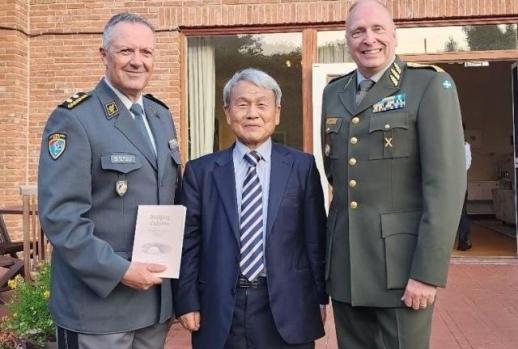 Veteran columnist publishes book on South Korean cultural diplomacy SEOUL, May 16 (AJP) - Veteran South Korean columnist Choe Chong-dae has published a collection of essays spanning nearly half a century of international dialogue, chronicling South Korea's evolving global presence. The book, titled "Bridging Cultures: The Korea Times Columns of a Citizen Diplomat (1979~2025)", captures his experiences as a cultural advocate and lifelong researcher since he began writing in 1979. The volume explores diplomatic history, democratization and South Korean studies through the perspective of a participant-observer. Scholars Alok Kumar and Frank M. Tedesco, who contributed forewords to the collection, described the work as a valuable resource for understanding modern South Korean history and diplomacy. Choe's devotion to South Korean cultural identity was partly inspired by his late father, Choe Nam-ju, a pioneer of South Korean archaeology. The elder Choe participated in the excavation of the ancient Silla Golden Crown alongside the Swedish crown prince, who later became King Gustaf VI Adolf. This early connection to Sweden foreshadowed Choe's own diplomatic recognition decades later. In 2010, Swedish King Carl XVI Gustaf awarded Choe the Royal Order of the Polar Star for his contributions to international relations and cultural exchange. Throughout his career, Choe has examined diplomatic relations between South Korea and numerous European nations, including Belgium, Greece, Germany and Poland. He has also focused extensively on globalizing the heritage of Gyeongju, writing about artifacts such as the Seokguram Grotto and the Divine Bell of King Seongdeok to introduce South Korean history to international readers. Beyond his media columns, Choe has pursued academic research and translation. He published a paper on humanistic egalitarianism in Donghak, South Korea's native religion, in the 2023 volume of the Transactions of the Royal Asiatic Society Korea, which included accessible English translations of its major scriptures. The new book also features his essay "Greece and Korea: A Living Dialogue Between Civilizations," originally published by AJP Press in November 2025. A 2007 column about Queen Margrethe II was also previously featured on an unofficial Danish royal message board. Following the book's release, Choe presented copies of the collection to Bruno Jans and Loukas Tsokos. The handover took place during the Europe Day 2026 reception at the Four Seasons Hotel Seoul on May 8, 2026. 2026-05-16 06:56:27