


Latest by
-
 AI K-pop group SweeTeez to releases new single 'Line & View' SEOUL, June 24 (AJP) - AI-generated K-pop girl group SweeTeez will roll out its new single "Line & View" on major streaming platforms Wednesday at noon. The single contains two tracks: the title track "Line & View" and "Where You Went, Cloud." Built around synth-pop and future bass, the title track explores repeated encounters and separations between people kept apart by distance and time. The second song deals with remembrance and the cycle of life. A music video released June 17 shows the group's five virtual members performing choreography, with AI used to render their facial expressions, lip movements and dance sequences. SweeTeez is presented as a five-member multinational group formed through "PRODUCE9," an AI audition project involving 99 virtual trainees. Its members are Yena from South Korea, Chinese American member Sophie, Aileen from Malaysia and Japanese members Riri and Yuzuki. The group recently appeared in the SBS documentary special "Life of AI," which examined how virtual idols are created and how AI could shape the future of South Korea's music industry. 2026-06-24 11:24:18
 -
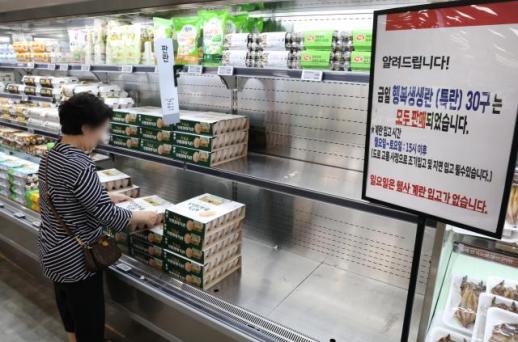 Rising Egg Prices Highlight Need for Balanced Price Policies Recent surges in egg prices are increasing the financial burden on consumers. Eggs are a staple food item for many households, and rising prices affect not just this single commodity but also the overall cost of living that citizens experience. Moreover, eggs are essential raw materials in various industries, including baking, dining, and processed foods, raising concerns that price hikes could trigger a chain reaction of increases across the food sector. Inflation impacts consumers most directly at the dinner table. In the current climate of high prices and economic slowdown, many people find it increasingly difficult to purchase even basic ingredients for their meals. This reality underscores why the government must prioritize price stability as a key policy objective. The reasons behind the rising egg prices are multifaceted. Concerns over supply disruptions due to avian influenza (AI), rising feed costs, increased labor and logistics expenses, and decreased productivity from extreme weather conditions all contribute to the issue. These structural factors cannot be easily explained by problems in the distribution phase or the pricing decisions of individual businesses. Therefore, the government needs a comprehensive approach that goes beyond short-term fixes and examines the entire supply chain. First and foremost, efforts must focus on stabilizing egg supply. This includes enhancing biosecurity support for producing farms and considering measures to alleviate feed cost burdens. Expanding import volumes or adjusting tariffs for a certain period could also help address supply shortages. Additionally, a thorough review of the distribution process is necessary to ensure there are no unreasonable price distortions, thereby increasing market transparency. However, it is crucial to recognize that artificial price controls that contradict market principles are not a viable solution. Simply suppressing price increases from food companies due to rising costs does not address the root of the problem. Pressuring businesses to refrain from raising prices amid rising raw material, labor, and logistics costs ignores the realities they face. In fact, many food companies have restrained price increases in recent years despite significant cost burdens, considering the impact on consumers. If cost increases persist over time, it could lead to declining profitability for companies, reduced investment, and job cuts. Ultimately, weakened corporate competitiveness will harm both consumers and the national economy. Historically, there have been numerous instances where the government has publicly pressured companies to refrain from raising prices under the guise of price stability. While such measures may temporarily delay price increases, their long-term effectiveness in stabilizing prices is limited. Critics argue that this approach only exacerbates the burden on businesses and distorts the market. Price stability should be achieved through supply expansion, cost reduction, and improved market efficiency, not through administrative directives. Therefore, the government should not view consumers and businesses as opposing forces. Reducing household burdens and creating a sustainable business environment are not conflicting goals but rather objectives that should be pursued together. A balanced policy is needed that provides stable production conditions for farmers, expands institutional support to alleviate cost burdens for the food industry, and ensures that consumers benefit from price stability. Ensuring price stability is one of the government's fundamental responsibilities. If the government cannot stabilize the price of a dozen eggs, public trust in economic policies will inevitably wane. The sharp rise in egg prices should not be dismissed as a temporary phenomenon but recognized as a warning sign for the economy of ordinary citizens. The government must implement effective measures to expand supply, improve distribution structures, and alleviate production costs to quell inflationary pressures promptly. A sustainable price policy that benefits both consumers and businesses is essential for protecting the livelihoods of everyday people and revitalizing the economy.* This article has been translated by AI. 2026-06-24 11:24:00
 -
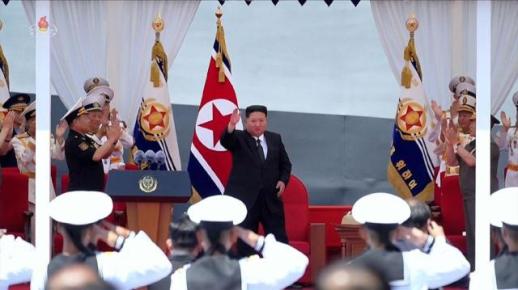 North Korea deploys new destroyer amid push for naval buildup SEOUL, June 24 (AJP) - North Korea has deployed a new 5,000-ton destroyer ready for combat, state media reported on Wednesday. According to the state-run Korean Central News Agency, the reclusive country's leader Kim Jong-un attended a commissioning ceremony for the Choe Hyon held in Nampo the previous day, expressing expectations that his country's naval capabilities would be strengthened to what he described as "admirable beyond imagination." The Choe Hyon, named after a comrade of regime founder Kim Il Sung during his days as a partisan fighter, went through several tests in recent months after the "new-type multi-mission" destroyer, which is believed to be capable of carrying nuclear weapons, was first unveiled in April last year. KCNA quoted Kim as saying that the tests with "satisfying results" confirmed the destroyer's combat capabilities as the "most perfect." Kim urged the country to push ahead with plans to build at least two warships of the Choe Hyon class or higher each year over the next five years, along with frigates and special-purpose vessels armed with underwater weapons. He also stressed that building modern naval bases had become an "urgent and essential task." "The Choe Hyon appears to be an offensive destroyer heavily armed with various missiles, rather than an Aegis ship capable of defending against layered attacks," said Yang Moo-jin, a professor at the University of North Korean Studies. But he added that further analysis is needed to determine how well it could withstand modern warfare involving precision strikes and drone attacks. 2026-06-24 11:20:46
 -
 U.S. Official: Anthropic's Mythos Detects Government System Vulnerabilities in Hours Anthropic's advanced artificial intelligence (AI) model has reportedly identified security vulnerabilities in sensitive U.S. government networks. On June 23, an anonymous U.S. official told the Associated Press that Anthropic's AI model, Mythos, detected vulnerabilities in high-security U.S. government computer systems during testing. The official explained that Anthropic conducted tests using the Mythos model in collaboration with U.S. intelligence agencies, and the model identified some vulnerabilities within hours. However, they clarified that this does not imply that Mythos could exploit those vulnerabilities in the same timeframe. This testing was part of Anthropic's 'Project Glasswing,' aimed at protecting critical software from risks to public safety, national security, and the economy, with participation from major tech companies and related entities. Earlier, Senator Mark Warner, a Democrat, mentioned the related tests during a Senate Banking, Housing, and Urban Affairs Committee hearing on June 11. Warner stated, "This tool breached nearly all classified systems. It did so in hours, not weeks." This report comes amid ongoing tensions between Anthropic and the Trump administration. Earlier this month, the Trump administration issued guidelines preventing foreign nationals from accessing Anthropic's latest AI models, 'Fable5' and 'Mythos5,' leading the company to suspend access for all customers to those models. However, Anthropic maintains that potential security concerns raised by the company do not justify the government's actions. There has also been pushback from the cybersecurity industry. Over 100 experts and executives from companies like Adobe and NVIDIA sent a letter to the government, arguing that while Mythos excels at detecting software flaws and vulnerabilities, it is not unique in this capability and called for the withdrawal of the guidelines. They pointed out that restricting strong defensive measures in light of rapidly advancing cyber capabilities from U.S. adversaries poses significant risks.* This article has been translated by AI. 2026-06-24 11:20:00
 -
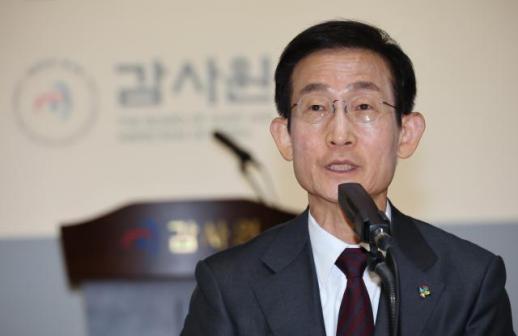 Kim Ho-cheol: Election Management Issues Prompt Accounting Review Kim Ho-cheol, the head of the Board of Audit and Inspection, announced on June 24 that the agency has begun collecting materials for an accounting review related to the Central Election Management Commission's issues, including a shortage of ballots. During a press conference at the Board's headquarters, Kim stated, "There is significant public concern and high anxiety regarding the infringement of voting rights in an election that is unacceptable. We have initiated material collection to define the scope and duration of the audit, and we expect to conduct an on-site audit around July." He explained, "While we cannot conduct direct oversight of the Election Commission due to the Constitutional Court's decision, we have a constitutional and legal obligation to perform accounting audits on constitutional institutions. We will select audit items based on the facts we uncover during our material collection." Regarding specific audit items, Kim noted, "There have been various issues identified through previous accounting audits, such as expenditures for purposes other than election costs, inadequate accounting for election expenses, and improper purchases and long-term storage of election equipment and supplies. We anticipate being able to provide meaningful results related to accounting execution and financial management that the public is curious about." In his opening remarks at the press conference, Kim also pledged to strengthen accounting audits on constitutional institutions that are weakly monitored by external controls. He further stated that the Board would focus on activities to address climate and environmental crises, local corruption, and financial leaks. Kim emphasized, "We will shift the paradigm of auditing to enhance the benefits for the ultimate consumers, the citizens. If public officials inadvertently deviate from regulations but achieve public interest outcomes that benefit citizens, we will not hold them accountable." Reflecting on the achievements of the past six months, Kim said, "We have done our best to reflect on past mistakes and institutionalize measures to prevent their recurrence. We have abolished policy audits and strengthened the pre-control system of the Audit Committee over the Secretariat." He added, "We have dismantled the Special Investigation Bureau, which was at the center of controversy, and completely redesigned it into an Anti-Corruption Investigation Bureau specialized in its original mission of personnel oversight and corruption prevention." Kim concluded, "The reform of the Board of Audit and Inspection will be initially completed through the activities of the National Assembly's investigation task force and the reflection of the Audit Act into legislation, and I will continue to refine it with a commitment to renewal throughout my term. The Board will be reborn as an entity that alleviates public inconvenience and difficulties while revitalizing the public service."* This article has been translated by AI. 2026-06-24 11:20:00
 -
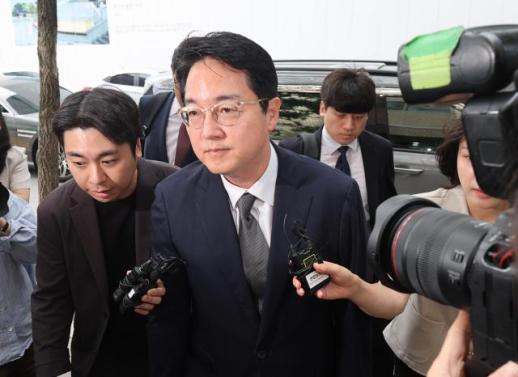 Former Prosecutor General Shim Woo-jung Appears for Special Investigation Shim Woo-jung, the former Prosecutor General, appeared for questioning on June 24 as part of a special investigation team probing allegations of involvement in a rebellion during the martial law declared on December 3, 2024. Shim arrived at the special investigation office in Gwacheon with a stern expression. He did not respond to reporters' questions about whether he directed prosecutors to be dispatched to the martial law command or what instructions he received from former Justice Minister Park Sung-jae as he entered the office. The special investigation team is currently questioning Shim as a suspect regarding serious charges related to rebellion. Shim is accused of considering the dispatch of prosecutors to the joint investigation headquarters following instructions from Park on the day martial law was declared. Before the declaration of martial law, Park visited the presidential office in Yongsan and returned to the Ministry of Justice after a Cabinet meeting to convene a meeting with senior officials. According to the investigation, Park instructed ten officials, including the heads of various departments at the Ministry of Justice, to consider dispatching prosecutors to the joint investigation headquarters and also called for a travel ban team. After the meeting, it was revealed that Park spoke with Shim three times between 11 p.m. on the day of the martial law declaration and the early hours of the following day. The court that previously handled Park's trial also indicated during the proceedings that there were suspicions regarding Shim's involvement in the rebellion. On June 22, the 33rd Criminal Division of the Seoul Central District Court, presided over by Judge Lee Jin-gwan, sentenced Park to 25 years in prison for charges including rebellion-related duties, stating that Park had instructed Shim to dispatch personnel, and Shim ensured compliance from the relevant departments. According to the Prosecutors' Office Act, the Minister of Justice must consult with the Prosecutor General before dispatching prosecutors to external agencies. The court determined that there was sufficient likelihood that Park directed Shim to assist with personnel dispatch. Previously, the special investigation team led by Jo Eun-seok dismissed allegations against Shim regarding his involvement in the martial law, but the new special investigation team believes there is enough evidence to warrant further investigation. Given the various allegations, the special investigation team is expected to conduct a comprehensive inquiry into the issues raised against Shim. Additionally, Shim faces charges of abuse of power related to the alleged cover-up of stock manipulation involving Deutsche Motors and the Dior bag scandal linked to Kim Geon-hee. The special investigation team is also investigating former senior prosecutors, including Lee Chang-soo, the former head of the Seoul Central District Prosecutors' Office, Jo Sang-won, the former deputy chief prosecutor, and Choi Jae-hoon, the former head of the anti-corruption investigation division, for their involvement in the dismissals of cases under Shim's direction.* This article has been translated by AI. 2026-06-24 11:20:00
 -
 Samsung and SK Hynix Face Bubble Concerns Amid AI Semiconductor Boom The KOSPI index has been experiencing significant fluctuations, heightening market anxiety. In particular, the surge in stock prices for Samsung Electronics and SK Hynix, fueled by the AI semiconductor boom, has raised concerns about a potential bubble. The market has seen daily shifts in market capitalization amounting to tens of trillions of won, prompting questions about whether prices have risen too high and if it might be time to realize profits.While it is easy to overlook certain aspects when focusing solely on stock price movements, it is essential to remember that stock prices ultimately reflect corporate value. To determine whether a bubble exists, one must first assess the companies' ability to generate profits rather than just their stock prices. A frequently cited reason for bubble concerns is the overwhelming market capitalization of Samsung Electronics and SK Hynix, which recently surpassed 50% of the total KOSPI market capitalization, effectively controlling the domestic stock market.Other figures must also be considered. According to projections from the securities industry, the combined operating profit of Samsung Electronics and SK Hynix is estimated to be between 600 trillion and 630 trillion won this year. As of the first quarter, these two companies accounted for 76% of the total operating profit of all KOSPI-listed companies. This indicates that it is not unusual for their market capitalization share to increase based on performance. The rise in stock prices reflects actual profit-generating capabilities rather than mere investor expectations.Traditionally, memory semiconductors have been classified as a typical cyclical industry, responding to demand from smartphones and PCs. Investors have made decisions based on the cycles of boom and bust.However, with the intensification of competition in generative AI and data centers, High Bandwidth Memory (HBM) has become an essential infrastructure for the AI industry. Global tech giants, including NVIDIA, are pouring substantial funds into expanding AI server capacity. As AI models grow larger, the demand for high-performance memory also increases. This is not merely a recovery in market conditions; a new demand market is forming. This is why securities firms are continuously raising their performance forecasts for Samsung Electronics and SK Hynix, with KB Securities predicting that Samsung Electronics will achieve an operating profit of 1,471 trillion won from 2026 to 2028.However, not all perspectives are optimistic. U.S. semiconductor regulations, China's technological advancements, and the potential for a global economic slowdown could all serve as variables. If competition in the HBM market intensifies, the profitability may fall short of expectations. Stock prices could also experience significant corrections at times.Nonetheless, the possibility of corrections and bubble concerns are different issues. A bubble refers to a situation where prices rise abnormally, regardless of performance. Many analysts believe that the growth in performance of Samsung Electronics and SK Hynix is outpacing the speed of their stock price increases. Compared to global AI companies like NVIDIA, their price-to-earnings ratios (PER) remain relatively low, which is why there are analyses suggesting they are still undervalued among domestic and international institutional investors.It is difficult to discuss bubbles solely based on market capitalization share. Rather, it is a natural outcome that the semiconductor industry, a key beneficiary in the AI era, drives the stock market due to its performance. It is essential to examine whether Samsung Electronics and SK Hynix, which account for 60-70% of the total operating profit of the KOSPI, are receiving a fair evaluation.If there are concerns about excessive dependence on these two companies, the solution is clear: new industries and companies must be developed that can generate similar profits and value. The market moves based on profits, not expectations. 2026-06-24 11:16:00
 -
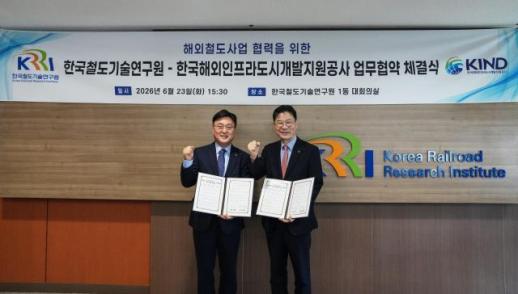 KIND and Korea Railroad Research Institute Collaborate on International Rail Projects Korea Overseas Infrastructure and Urban Development Corporation (KIND) and the Korea Railroad Research Institute have established a cooperative framework to expand their presence in the international rail market. On June 23, KIND announced that it signed a memorandum of understanding (MOU) with the Korea Railroad Research Institute at the Korea Railroad Research Institute's conference room in Uiwang, Gyeonggi Province, to collaborate on international rail projects. The agreement aims to enhance the contract competitiveness of domestic companies and support their overseas expansion amid the growing public-private partnership (PPP) projects in the international rail market. Under the MOU, the two organizations plan to collaborate in various areas, including sharing information on international rail project markets, building a collaborative network, providing consulting related to overseas rail projects, and conducting joint research. Prior to the signing, a business exchange meeting was held where both organizations shared updates on their international project initiatives and discussed future strategic cooperation plans. Kim Bok-hwan, President of KIND, stated, "Combining KIND's experience in overseas investment and development with the Korea Railroad Research Institute's advanced rail technology will significantly enhance our companies' competitiveness in the fierce international rail market. We will continue to work closely to ensure this MOU leads to tangible outcomes in discovering international rail projects and visible achievements for domestic companies abroad." Additionally, KIND participated in the 'Global Contract Plus Meeting' held by the Ministry of Economy and Finance's Export Plus Support Team on June 22 at the Korea Export-Import Bank in Yeouido, Seoul. The meeting addressed strategies for expanding overseas contracts in promising sectors such as eco-friendly and digital technologies in response to geopolitical uncertainties in the Middle East.* This article has been translated by AI. 2026-06-24 11:12:00
 -
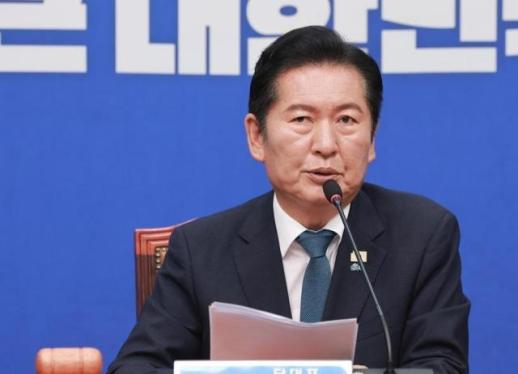 Factional Tensions Emerge as Jeong Cheong-rae Resigns as Party Leader Jeong Cheong-rae, a member of the Democratic Party, resigned from his leadership position on June 24, amid rising factional tensions during his final Supreme Council meeting. The pro-Myeong faction pressured for non-candidacy, while the pro-Cheong faction urged respect for the party leader. During the Supreme Council meeting held at the National Assembly, Jeong announced his resignation. His decision is interpreted as a hint at a potential re-election bid ahead of the party convention scheduled for August 17. Candidates are expected to resign to participate in the election preparation committee and election management committee, making his resignation anticipated. The Democratic Party plans to hold a party affairs committee meeting on June 26 to discuss related matters. Supreme Council member Kang Deuk-gu remarked during the meeting, "The party leader has faced a challenging year," but expressed disappointment over the lack of discussion with council members regarding the merger issue and by-election strategies. He stated, "The sovereignty of party members should not be concentrated in the hands of a few," and announced he would not run for the Supreme Council election, taking responsibility for the local election results. Previously, Supreme Council member Hwang Myeong-seon had also indicated his intention not to run, putting pressure on Jeong. Kang added, "The public did not vote for the Democratic Party in this local election; they voted for President Lee. The ruling party's leadership should focus on successful governance rather than competing with the president." In response, pro-Cheong faction member Moon Jeong-bok countered, stating, "President Lee is the captain of South Korea, and Jeong Cheong-rae is the captain of the Democratic Party." After the council members concluded their remarks, Jeong expressed his resignation, stating, "Jeong Cheong-rae and President Lee are eternal political partners. I, Jeong Cheong-rae, will be the one to protect President Lee until the end." This statement is seen as an effort to resolve factional conflicts and rally support ahead of the party convention. Meanwhile, with Jeong's resignation, Han Byeong-do has assumed the role of acting floor leader.* This article has been translated by AI. 2026-06-24 11:12:00
 -
 Croatia Secures First Win at 2026 North American World Cup with Victory Over Panama Croatia, which finished third in the 2022 FIFA World Cup in Qatar, secured its first victory in the group stage of the 2026 North American World Cup. On June 24, Croatia defeated Panama 1-0 in their second match of Group L at Toronto Stadium in Canada. After losing 4-2 to England in their opening match, Croatia improved to 1 win and 1 loss (3 points), moving up to third place in the group. Croatia will face Ghana in their final group match on June 28, which will determine their advancement to the knockout stage. In contrast, Panama, which lost 1-0 to Ghana in their first match, was eliminated from the group stage after their defeat to Croatia, finishing at the bottom of the group with two losses. Even if they win their final match against England, they cannot surpass Ghana in second place or Croatia in third due to the head-to-head rule. Croatia struggled to break through Panama's packed defense in the first half, failing to record a single shot on target. Croatian coach Zlatko Dalic made a tactical change at the start of the second half, bringing in forwards Ante Budimir and Andrej Kramaric to boost the attack. The substitution paid off in the 54th minute. Josip Stanisic delivered a precise cross from the right side of the penalty area, and Budimir, making a run, scored with a left-footed shot just nine minutes after coming on. Following the goal, Croatia's goalkeeper Dominik Livakovic made several crucial saves to keep Panama at bay. Thanks to Livakovic's outstanding performance, Croatia held on to their lead and secured a valuable three points. Meanwhile, Croatia's veteran midfielder Luka Modric marked his 200th international match during this game. After the match, he celebrated the milestone with his teammates.* This article has been translated by AI. 2026-06-24 11:12:00