

Journalist

Park Sae-jin
swatchsjp@ajupress.com
-
 Opposition leader slams South Korean president on election day SEOUL, June 03 (AJP) - South Korea's main opposition leader Jang Dong-hyeok launched a sharp election-day attack against President Lee Jae Myung on Wednesday, accusing him of illegal campaigning and severe economic mismanagement. Speaking during a final election committee meeting at the National Assembly, the conservative leader urged voters to cast their ballots as an act of constitutional self-defense against the government. The address underscored the bitter polarization surrounding the nationwide local elections and parliamentary by-elections, which serve as a critical midterm referendum on the one-year-old presidency. A strong showing for the opposition could block the administrative momentum of the ruling Democratic Party of Korea, while a loss threatens to trigger immediate internal disputes over political accountability. Jang asserted that the president committed serious legal violations that warrant impeachment. The former prosecutor specifically claimed that Lee allegedly displayed a marked ballot to television cameras. The opposition leadership also linked the political standoff to broader economic anxieties, arguing that the administration prioritized political survival over public livelihoods. The former prosecutor warned that unchecked government policies would worsen financial conditions, creating what he described as a difficult environment of high interest rates, high inflation, and volatile exchange rates. Pointing to the high voter turnout reported throughout the day, the People Power Party interpreted the long lines at polling stations as a sign of public dissatisfaction. Jang told supporters that staying away from the polls was equivalent to surrendering personal property, wages, and fundamental freedoms. People Power Party chief spokesperson Park Sung-hoon stated that voters intent on protecting their daily routines would continue to drive participation until the polls closed. 2026-06-03 15:30:39
 -
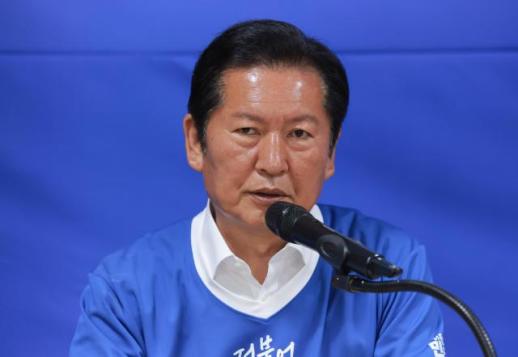 Ruling party leader urges voter turnout citing historical one-vote margins SEOUL, June 03 (AJP) - The ruling Democratic Party of Korea leader Jung Chung-rae urged citizens on Wednesday to participate in the nationwide local elections, emphasizing that a single ballot carries the weight of South Korea's democratic history and can directly determine narrow races. Speaking at a central election committee meeting at the National Assembly in Seoul, Jung highlighted the statistical reality of close contests to combat voter apathy. He noted that the past six local elections have seen 13 races decided by exactly one vote, while seven other contests ended in a dead heat that required the winner to be determined by the candidate's age. "My single vote changes the elected official, regional policies, and the future of the community," Jung said on the morning of election day. "This is not just an empty phrase politicians say during every election." The party leader framed the act of voting as a hard-won democratic right, tracing South Korea's political development from its inaugural 1948 general elections through the March 15 protests against rigged elections and the 1987 June Democratic Struggle against military dictatorship. Jung asked supporters to head to the polling stations with the mindset that their preferred candidate is trailing by exactly one vote. "Show who the owner of South Korea is through voting, and please choose the path the country will take," he said. 2026-06-03 14:55:57
 -
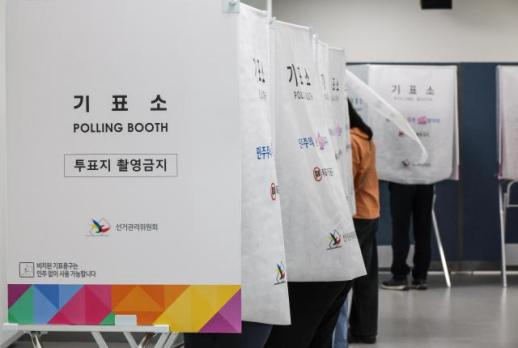 South Korea counts local election votes to decide political control SEOUL, June 03 (AJP) - South Koreans turned out in large numbers for nationwide local elections on Wednesday, setting up a high-stakes verdict on the one-year-old administration of President Lee Jae-myung. Voting proceeded smoothly across 14,288 polling stations before ballot boxes were transferred to designated counting centers. The election serves as a critical midterm referendum that could either grant the ruling Democratic Party of Korea total control over local and national governance or allow the opposition People Power Party to stall the administration's legislative agenda. The ruling party campaigned on a platform to judge insurrection forces, while the opposition focused on judging the government. A victory for the ruling party provides strong momentum for its second year in office, while a loss threatens to trigger severe internal party disputes over political accountability. Data from the National Election Commission showed that voter turnout reached 48.9 percent by 2 p.m., marking an 8.2 percentage point increase from the local elections four years ago. More than 21.8 million of the country's 44.6 million eligible voters cast ballots, including those from a two-day early voting period that recorded a 23.51 percent turnout. The election commission expects the general outline of the winners to emerge around midnight as officials count ballots across 258 centers nationwide. While clear victories may be determined by midnight, highly competitive races and concurrent parliamentary by-elections in key battlegrounds like Seoul and Busan are expected to remain unclear until 3 a.m. or 4 a.m. on Thursday. Total counting times are expected to exceed the seven hours and 40 minutes recorded during the 2022 local elections due to a mandatory manual verification process introduced during the 2024 general elections. "In the past, we used a machine to sort the ballots and then had individuals verify them using a counter, but this time a manual inspection step has been added where the number of ballots is counted one by one by hand, which will cause the counting process to take longer," an election commission official told Yonhap News. Regional data showed Jeonnam province recorded the highest voter turnout at 58.0 percent, followed by Gangwon province at 54.5 percent and Jeonbuk province at 54.2 percent. The capital city of Seoul recorded a 49.4 percent turnout, while the southwestern city of Gwangju saw the lowest participation rate in the country at 45.3 percent. The highest final turnout for a South Korean local election remains the 68.4 percent recorded during the inaugural nationwide vote in 1995. Only two local elections in the country's history have surpassed the 60 percent participation mark. 2026-06-03 14:44:09
 -
 South Korean local election turnout reaches 48.9 percent SEOUL, June 03 (AJP) - Over 21.8 million people cast their ballots in South Korea's ninth nationwide local elections by 2:00 p.m. on election day. This pushed overall voter turnout to 48.9 percent, signaling potentially historic final participation levels. The mid-afternoon figure is 8.2 percentage points higher than the turnout recorded at the same time during the previous local elections four years ago. It also sits 2.1 percentage points above the 2018 elections, suggesting the final tally could exceed that year's 60.2 percent total. Surpassing the 60 percent threshold is rare, having happened only twice before in South Korean local election history. The National Election Commission reported that 21,832,984 of the country's 44,649,908 eligible voters had participated by the 2:00 p.m. count. This total includes mail-in votes and ballots from early voting held on May 29 and 30, which saw a 23.51 percent turnout. Jeonnam recorded the highest regional turnout at 58.0 percent, followed by Gangwon at 54.5 percent and Jeonbuk at 54.2 percent. The lowest participation was in Gwangju at 45.3 percent, trailing Gyeonggi at 46.0 percent and Incheon at 46.3 percent. Voter turnout in the capital city of Seoul stood at 49.4 percent. Polls remain open until 6 p.m., with voters required to present identification at their registered local precincts. The election commission calculates these hourly updates using data gathered from 256 district and municipal offices. The highest final turnout for a South Korean local election remains 68.4 percent, recorded during the first nationwide vote in 1995. 2026-06-03 14:35:18
 -
 OPINION: The Strait of Hormuz Legal Aspects of the New Arrangements in Light of Aggression and Fundamental Change of Circumstances Prelude For a long period, maritime navigation through the Strait of Hormuz did not proceed on the basis of exercising an asserted right, but rather within the framework of an interaction founded upon comity and mutual good faith. Over years, the Islamic Republic of Iran, as the coastal State, facilitated the passage of vessels through a continuous and peaceful practice. However, this practice was never to be understood as an acceptance of a binding legal obligation or as a relinquishment of the coastal State’s sovereignty and sovereign rights over its own waterway. Nevertheless, today, due to a fundamental change of circumstances and the substantial transformation of security, the continuation of such unilateral comity is no longer possible, and the adoption of appropriate measures based on respect for the sovereign rights of the coastal State has become an inevitable necessity. Indeed, the Strait of Hormuz has long been regarded as a sensitive and strategic waterway—a status that has now been redefined in light of the repeated acts of aggression by the Zionist regime, the United States, and certain neighboring States in the region. Some neighboring States, by placing their territory at the disposal of aggressors for commission of acts of aggression against the Islamic Republic of Iran, have become complicit in such aggression. This conduct itself constitutes an act of aggression as defined by General Assembly Resolution 3314 (XXIX) and, consequently, those States have assumed the heavy burden of responsibility for this act, which is a manifest violation of the Charter of the United Nations and the peremptory norm of “prohibition of aggression”. As a result of this aggression and these hostile acts, the security and safety of the region, and in particular of the Strait of Hormuz, have suffered severe and widespread harm. It must not be forgotten that the aggressor and its regional military bases were supplied and equipped, inter alia, through that same strait. Therefore, preventing the recurrence of such internationally wrongful acts is an undeniable imperative. In the wake of the intensification of such acts, the circumstances have fundamentally changed, giving rise to a new and irreversible situation. In this situation, the Government of the Islamic Republic of Iran, as the coastal State, finds itself compelled to adopt practical and proportionate measures to manage the developments that have expanded into the maritime zones. These measures are taken with a view to preventing further risks from being imposed on vessels and seafarers in the Persian Gulf, the Strait of Hormuz, and the Gulf of Oman. Fundamental Change of Circumstances Since the commencement of acts of aggression against the Islamic Republic of Iran, the security environment of the Persian Gulf and the Strait of Hormuz has undergone significant transformations and has thereby become subject to a fundamental change of circumstances. In the current situation, the underlying circumstances governing the legal regime of the Strait, namely the existence of a minimum level of regional stability and security necessary to guarantee safe passage, have been severely undermined as a result of repeated threats and actions that violate Article 2 (4) of the Charter of the United Nations. One of the most significant factors that has disrupted the prior order is the persistent disregard for a peremptory norm of international law: the norm that prohibits any act of aggression. In addition to this, despite repeated violations of international law, the United Nations Security Council, as the primary body responsible for the maintenance of international peace and security, has remained practically incapable of condemning the aggressor and has consequently failed to discharge its primary responsibility to ensure international peace and security and to restore stability to the region. Accordingly, under the international law of the sea, the regime of passage through straits used for international navigation cannot be applied in a security vacuum. The coastal State’s obligation to facilitate passage is conditional upon the existence of circumstances in which the safety of navigation and maritime public order have not been seriously disrupted. In a situation where persistent military threats pose real dangers and transform the operational environment, the adoption of necessary measures based on the doctrine of fundamental change of circumstances is unavoidable. On this basis, the set of current measures and practices must be regarded as an adjustment of rights and obligations to adapt to the circumstances, in light of the fundamental change of circumstances, measures undertaken with the aim of establishing a balance between the security requirements of the coastal State and the continued safe passage of international navigation. Sovereignty over the territorial sea Under the international law of the sea, the sovereignty of coastal States over their territorial sea, including over that part which lies within an international strait, and the exercise of rights and jurisdiction derived from such sovereignty, constitutes a fundamental and well-established principle. Consequently, the arrangements for managing passage through the Strait of Hormuz are governed within the framework of the domestic laws of Iran and Oman, as well as customary and treaty-based rules and principles, including the 1958 Geneva Conventions, the relevant provisions of the 1982 United Nations Convention on the Law of the Sea, the principles of the Charter of the United Nations, and international judicial precedents (including the judgments of the International Court of Justice in the Corfu Channel and Oil Platforms cases). Within this framework, one essential principle is of particular importance: no right under international law, including the right of passage, may be exercised in such a way as to result in a threat, military aggression, or violation of the security of the coastal State. Accordingly, mere reliance on classical concepts is insufficient to address the exigencies of the current unprecedented situation and does not adequately meet the requirements of security and sovereignty. This situation is also premised upon the peremptory norm prohibiting the threat or use of force, as embodied in Article 2(4) of the Charter of the United Nations and recognized in international judicial precedents and the judgments of the International Court of Justice as an intransgressible rule. In the case concerning Military and Paramilitary Activities in and against Nicaragua (Nicaragua v. United States of America), the findings of the International Court of Justice clearly indicate that any foreign military presence or action that endangers the security or sovereignty of another State, even indirectly, is contrary to that principle. Furthermore, Article 2 of the 1982 United Nations Convention on the Law of the Sea affirms the sovereignty of the coastal State over its territorial sea, seabed, and subsoil, and grants no authorization for the stationing of foreign forces. Article 30 of the same Convention confirms the right to require any military ship that fails to comply with the laws and regulations of the coastal State to leave the territorial sea immediately. Moreover, the San Remo Manual on International Law Applicable to Armed Conflicts at Sea emphasizes the right of coastal States to restrict foreign military presence in order to preserve the neutrality of regional States and the security of the waterway. While preventing the reproduction of aggressive and interventionist patterns that have led to instability and insecurity, this approach establishes a balance between the freedom of navigation and the security rights of the coastal State as affirmed in established international judicial practice. Historic sovereignty over the Strait of Hormuz In formulating the arrangements for managing passage through the Strait of Hormuz, it is essential to emphasize the historic sovereignty of Iran and Oman over this waterway. This finding has been affirmed by various arbitral tribunals. Accordingly, the longstanding historic sovereignty of Iran over the Strait of Hormuz, which existed for centuries prior to the Convention and has been continuously exercised, remains valid. In the case of Qatar v. Bahrain, the International Court of Justice, upon examining historic rights in the Persian Gulf, took the view that the continuous exercise of sovereignty and historical activities by coastal States constitutes a valid basis for the recognition of a “historic title” over maritime areas. Given the similar geographic and historical situation of the Strait of Hormuz, this judicial precedent directly confirms the historic sovereignty of Iran and Oman over the strait. Both the 1958 Geneva Convention on the Territorial Sea and the Contiguous Zone and the 1982 United Nations Convention on the Law of the Sea recognize the full sovereignty of the coastal State over its territorial sea and preserve the historic rights of coastal States in gulfs and semi-enclosed waterways. Therefore, in light of the continuous and historic exercise of sovereignty by Iran and Oman over the Strait of Hormuz over many centuries, this strait possesses a historic title. Hierarchy of applicable rules In this regard, the rules governing this matter must be examined at three distinct but interrelated levels, given that each level possesses a higher rank and a more fundamental character, and rules at lower levels cannot be interpreted or applied in conflict with the principles of higher levels. The first level relates to the fundamental principles of international law, including peremptory norms (jus cogens), that is the prohibition of aggression, and those enshrined in the United Nations Charter including prohibition of threat or use of force (Article 2(4)) and the inherent right of self-defence (Article 51). These principles stand at the apex of the hierarchy of international legal norms and establish the framework and limitations for all other rules. The second level refers to international humanitarian law (the law of armed conflict), which governs conduct in armed hostilities and determines which conducts are permissible and which are prohibited in situations of armed conflict. This level of rules complements in hierarchical manner, the fundamental principles of the first level. At the third level, the law of the sea applies as a specialized body of law. The rules governing the regimes of passage through international straits, the rights of coastal States over their territorial sea, and other provisions of the 1982 United Nations Convention on the Law of the Sea cannot be applied in a vacuum or by disregarding the higher levels. In other words, the law of the sea must not be analyzed separately from the “root causes” that have shaped the current situation (including aggression, continuous military threats, and the inability of the Security Council to maintain peace), nor separately from the fundamental principles of international law; otherwise, this branch of law would become a tool for justifying aggression and disregarding the sovereign rights of coastal States. With respect to the third level, it must be noted that the Islamic Republic of Iran has not acceded to the 1958 Convention on the Territorial Sea and the Contiguous Zone, nor to the United Nations Convention on the Law of the Sea (UNCLOS). Therefore, Iran is not bound by their provisions, except insofar as they have become part of customary international law. The regime of “transit passage” set forth in the 1982 Convention does not meet the established criteria of customary international law. The conclusions of the International Law Commission’s 2018 work on the identification of customary international law contain key elements generally considered for determining whether a practice has become customary. Two of these conclusions are particularly relevant: first, under Conclusion 5, “State practice consists of conduct of the State, whether in the exercise of its executive, legislative, judicial or other functions”. Second, Conclusion 15 provides that “Where a State has objected to a rule of customary international law while that rule was in the process of formation, the rule is not opposable to the State concerned for so long as it maintains its objection”. Through its continuous and persistent objection to the regime of “transit passage” provided for in Articles 37 to 44 of the 1982 Convention, Iran has not recognized these rules as binding under customary international law. In this regard, Iran’s consistent legislative and diplomatic practice since 1982 has established its position as a persistent objector to the binding nature of these rules and has challenged the opinio juris necessary for the formation of a customary norm. The first notable document registered in the United Nations Treaty Series is Iran’s interpretative declaration made at the time of signing the Convention, in which it explicitly stated that certain provisions, including the regime of “transit passage” in Part III (Articles 37 to 44), do not represent established customary international law. Iran’s Maritime Law of 1963 (1342), its 2012 (1391) amendment, and Iran’s Law on Maritime Zones of the Persian Gulf and the Gulf of Oman of 1993 (1372) are further evidence of this practice. The latter law makes no reference to transit passage and thus does not recognize that regime; rather, it establishes specific regulatory provisions for the strait, including the requirement to obtain prior authorization for the passage of warships, submarines, and vessels carrying dangerous or environmentally harmful substances. Consequently, the applicable legal framework for passage through the Strait of Hormuz, in the absence of a binding treaty obligation and in the absence of a customary rule of “transit passage”, is the customary right of “innocent passage” through straits used for international navigation, as recognized by the International Court of Justice in the Corfu Channel case (1949). Within this framework, the coastal State has the right to regulate passage, collect fees for maritime services, require prior notification or authorization for the passage of warships, and adopt necessary measures for the protection of its security. The measures taken by the Islamic Republic of Iran are consistent with this customary framework. Accordingly, any legal analysis of the situation in the Strait of Hormuz that proceeds directly to the specific provisions of the law of the sea without first examining peremptory norms, the fundamental principles of the Charter, and international humanitarian law is not only incomplete but also misleading. The law of the sea does not operate in a vacuum and cannot be used as a shield to justify aggression, extra-regional military presence, or the disregard of the historic and contemporary sovereign rights of coastal States. 2026-06-02 16:10:44
 -
 Former BIGBANG member T.O.P announces free Yokohama fan meeting SEOUL, June 02 (AJP) - K-pop boy band BIGBANG's former member T.O.P will hold a free solo fan meeting for 10,000 attendees in Yokohama, Japan, next month, the rapper's agency said Tuesday. The event accelerates the 38-year-old's independent activities following the release of his first solo studio album earlier this year. Topspott Pictures announced that the event will take place on July 9 at the Pia Arena MM. The agency stated that the large-scale gathering will be offered completely free of charge, but attendance is exclusively restricted to official paid membership holders in Japan. The management company noted that the artist is planning a diverse range of activities to reconnect directly with his international supporters. "T.O.P is preparing various programs for local fans who have waited a long time to communicate," Topspott Pictures said in a statement. The upcoming Japanese showcase follows the April release of his first full-length studio album, Another Dimension. The album and the arena fan meeting mark a significant public return for the artist, who spent a long period with limited public communication before establishing his standalone footprint. Choi Seung-hyun debuted in 2006 as the lead rapper of BigBang, a highly successful South Korean group formed by YG Entertainment, one of South Korea's entertainment powerhouses. He officially announced his departure from the group to focus on his solo career in May 2023. 2026-06-02 14:25:38
 -
 Police forward Gangnam Style rapper Psy to prosecution over illegal drug prescriptions SEOUL, June 02 (AJP) - South Korean police have referred Gangnam Style rapper Park Jae-sang, globally known as Psy, to prosecutors on charges of violating medical laws by using his staff to illegally obtain highly regulated prescription drugs. The case highlights South Korea's strict enforcement of regulations governing psychotropic medications. The 48-year-old singer is accused of bypassing mandatory face-to-face medical consultations to secure sleeping pills and anxiety medication over a multi-year period. Authorities at the Seodaemun Police Station near central Seoul announced Tuesday that they transferred Park, a university hospital professor and management personnel to the prosecution on May 29. A total of six individuals face charges stemming from an investigation that began last summer following an informant tip. From 2022 until last year, Park allegedly received prescriptions for Xanax and Stilnox from a university hospital in Seoul without meeting a doctor in person. He then dispatched his managers and other third parties to collect the medications from the pharmacy. Under South Korean medical law, only physicians who conduct direct patient examinations are authorized to issue prescriptions. The legal framework also strictly dictates that only the examined patient is permitted to collect the prescribed medication. Xanax and Stilnox are psychotropic drugs primarily used to treat sleep disorders, anxiety and depression. Due to their high potential for addiction and dependency, medical protocols dictate that direct in-person consultations and prescriptions are mandatory. 2026-06-02 11:13:05
 -
 Researchers discover natural substance capable of slowing down cancer cell growth SEOUL, June 02 (AJP) - Scientists from South Korea and the United States have discovered that a natural substance produced when the body breaks down dietary fats can directly block a key protein responsible for cancer cell growth, the Korea Advanced Institute of Science and Technology said Tuesday. The joint study, led by Korea Advanced Institute of Science and Technology (KAIST) Professor Kim Se-yoon and Korea University Professor Byun Young-joo, identified that a fat byproduct called 13-HODE acts as a natural brake on the mTOR protein. The mTOR protein regulates normal cell growth and energy use, but it becomes abnormally hyperactive in cancer cells, driving rapid tumor growth and spread. The human body creates the 13-HODE molecule when an enzyme called ALOX15 processes linoleic acid, an essential fatty acid commonly found in plant oils. Using computer simulations and mass spectrometry, the research team found that 13-HODE physically attaches itself to the active part of the mTOR protein, completely shutting down its ability to function. Researchers noted that 13-HODE levels are severely depleted in breast and colon cancer cells because the tumors suppress the ALOX15 enzyme needed to make it. During laboratory tests, artificially increasing the production of both the enzyme and the fat byproduct successfully lowered mTOR activity and stopped cancer cells from multiplying. "This research is meaningful in that it reveals a fat metabolite produced within the human body can directly inhibit mTOR, a core protein in cancer growth," Professor Kim Se-yoon said. "It could be utilized not only for new anticancer treatment strategies using fat metabolism in the future but also for developing treatments to regulate mTOR overactivity seen in inflammation and aging processes." Professor Byun Young-joo said the research identified the interaction between a protein and a fatty acid metabolite at the molecular level through the convergence of biology and pharmacy. "It will serve as an important foundation for the development of innovative new drugs in the future," Byun said. Professor Jie Chen of the University of Illinois, a leading researcher in the mTOR field, evaluated the findings in a journal preview, describing the work as an exceptional discovery that presents a new breakthrough in controlling cancer cells. The research involved collaboration with scientists from Gachon University College of Medicine and the University of Maryland School of Pharmacy. The study, co-authored by Dr. Park Seung-ju and doctoral student Kim Se-ra of KAIST, was published as a cover paper in the journal Cell Chemical Biology on May 21, 2026. (Reference Information) Journal/Source: Cell Chemical Biology Title: Mechanism by which a linoleic acid metabolite suppresses cancer cell growth by inhibiting mTOR Link/DOI: https://doi.org/10.1016/j.chembiol.2026.04.004 2026-06-02 10:56:34
 -
![[WNMC 2026] Arthur Gregg Sulzberger: Original Reporting Cannot Be Replaced by AI](https://image.ajunews.com//content/image/2026/06/02/20260602091028915936_518_323.jpg) [[WNMC 2026]] Arthur Gregg Sulzberger: 'Original Reporting Cannot Be Replaced by AI' "The important facts that people know ultimately come from original reporting by the press." Arthur Gregg Sulzberger, Chairman and Publisher of The New York Times, addressed the World News Media Congress (WNMC 2026) in Marseille, France, on June 1, emphasizing the crisis and role of journalism in the age of generative artificial intelligence (AI) during a 40-minute speech. He criticized AI companies for unauthorized use of content and copyright infringement while stressing the need for journalism to strengthen its original reporting to survive. Sulzberger's speech resonated with the audience of over 1,300 journalists and media executives, eliciting applause multiple times. BBC journalist Ros Atkins, who moderated the session, described it as "one of the most powerful speeches I've heard from journalists recently." The keynote address, titled "AI Journalism and the Uncertain Future of the Public Square," focused more on the value of journalism and survival strategies than on criticizing AI technology itself. Sulzberger stated, "The New York Times is not an organization that has rejected technological innovation. We have long collaborated with tech companies and are currently using AI responsibly and ethically." He added, "Avoiding powerful new technologies is a shortcut to failure," and described AI as a technology that can have many positive impacts on the world. However, he pointed out serious issues with the current growth model of the AI industry. Sulzberger explained that the AI industry operates based on four elements: talent, computing infrastructure, energy, and data. He noted that AI companies invest tens of millions to hundreds of millions of dollars to secure top engineers and spend enormous amounts on data centers, semiconductors, and energy, yet apply a different standard to data. "AI companies are taking data without consent or compensation," he said, adding that much of what they call data is actually copyrighted material such as news articles, books, music, and films. He emphasized, "Even OpenAI acknowledges that today's major AI models cannot learn without copyrighted material, and ultimately, the success of AI models depends on the datasets they use." Sulzberger repeatedly highlighted that media content is a core resource for the AI industry. He shared that The New York Times produced approximately 500,000 pieces of content, including articles, photos, videos, and podcasts last year, investing over $2 billion in the process. He also mentioned that the organization has reporters in all 50 U.S. states and 155 countries worldwide. "The information uncovered by reporters in the field, witness testimonies, confidential documents, expert analyses, photos, and videos enrich public records," he said. "The important facts that people know ultimately come from these original reports." He added, "AI can analyze and reconstruct publicly available information, but it cannot conduct reporting activities that discover or verify new facts," emphasizing that AI also relies on information produced by journalism. Sulzberger also addressed the issues of errors and distortions exhibited by recent AI services. He stated, "AI is often vulnerable in expressing uncertainty, frequently delivering incorrect information with a tone of certainty. Unlike news organizations, AI companies do not correct or take responsibility for misinformation." A more significant concern is that AI is beginning to replace the direct relationship between news organizations and readers. Sulzberger noted, "In the past, search platforms connected users to news sites, but AI only provides answers, causing users to stop visiting original sources. This could further weaken the revenue structure and reader base of the news industry." He referenced research indicating that AI services send significantly less traffic to news organizations than traditional search services, warning, "If the connection with readers weakens following a decline in advertising revenue, the news industry will face a more significant crisis." Sulzberger cautioned that AI could have serious implications for the public square as well. He remarked, "It is becoming increasingly difficult to know what is true and where information comes from. While it is problematic for people to believe falsehoods, it is even more dangerous when they stop believing the truth." He added, "As a result, people disengage from the public sphere, and social trust diminishes. Research shows that in communities where local journalism has disappeared, civic participation declines and corruption increases." To address this crisis, Sulzberger proposed four actions for journalism. First, he emphasized the importance of copyright protection, stating, "Intellectual property rights must be upheld for the future of the news industry. We must make it clear that theft is wrong, based on simple ethical principles." Second, he advised careful contracting with AI companies, urging news organizations to scrutinize whether fair compensation is provided and whether they can maintain control over content usage, even when entering licensing agreements. Third, he called for legislative action, advocating for stronger copyright protections, transparency in AI training data, and enhanced accountability for AI companies. Fourth, he stressed the need for solidarity within the journalism industry, stating, "AI companies are engaging in lobbying and promotional activities with their vast financial resources. The only way for the journalism industry to respond is to act together." At the same time, he urged journalism to adapt. Sulzberger stated, "We must use AI in the right way, actively leveraging technology to enhance the quality of journalism and strengthen business models." He also emphasized the need to reduce dependence on platforms and become brands that connect directly with readers. "To survive in a world mediated by AI, we need differentiated journalism that readers will seek out intentionally," he said, adding, "There is no other place to provide this reporting for readers or AI." At the conclusion of his speech, Sulzberger asserted, "Information has value. Journalism has value." He remarked, "The internet is already overflowing with bots and low-quality content, making it increasingly difficult to discern what is true. News organizations must be a reliable alternative amid this confusion." As his 40-minute address concluded, the audience of over 1,300 journalists responded with applause. Sulzberger's message about the anxieties and challenges surrounding the future of journalism in the AI era, and the need to uphold the value of original reporting, resonated with journalists from around the world. He ended by stating, "The future of our news organizations and the health of the public square depend on how we respond now." 2026-06-02 09:24:00
[[WNMC 2026]] Arthur Gregg Sulzberger: 'Original Reporting Cannot Be Replaced by AI' "The important facts that people know ultimately come from original reporting by the press." Arthur Gregg Sulzberger, Chairman and Publisher of The New York Times, addressed the World News Media Congress (WNMC 2026) in Marseille, France, on June 1, emphasizing the crisis and role of journalism in the age of generative artificial intelligence (AI) during a 40-minute speech. He criticized AI companies for unauthorized use of content and copyright infringement while stressing the need for journalism to strengthen its original reporting to survive. Sulzberger's speech resonated with the audience of over 1,300 journalists and media executives, eliciting applause multiple times. BBC journalist Ros Atkins, who moderated the session, described it as "one of the most powerful speeches I've heard from journalists recently." The keynote address, titled "AI Journalism and the Uncertain Future of the Public Square," focused more on the value of journalism and survival strategies than on criticizing AI technology itself. Sulzberger stated, "The New York Times is not an organization that has rejected technological innovation. We have long collaborated with tech companies and are currently using AI responsibly and ethically." He added, "Avoiding powerful new technologies is a shortcut to failure," and described AI as a technology that can have many positive impacts on the world. However, he pointed out serious issues with the current growth model of the AI industry. Sulzberger explained that the AI industry operates based on four elements: talent, computing infrastructure, energy, and data. He noted that AI companies invest tens of millions to hundreds of millions of dollars to secure top engineers and spend enormous amounts on data centers, semiconductors, and energy, yet apply a different standard to data. "AI companies are taking data without consent or compensation," he said, adding that much of what they call data is actually copyrighted material such as news articles, books, music, and films. He emphasized, "Even OpenAI acknowledges that today's major AI models cannot learn without copyrighted material, and ultimately, the success of AI models depends on the datasets they use." Sulzberger repeatedly highlighted that media content is a core resource for the AI industry. He shared that The New York Times produced approximately 500,000 pieces of content, including articles, photos, videos, and podcasts last year, investing over $2 billion in the process. He also mentioned that the organization has reporters in all 50 U.S. states and 155 countries worldwide. "The information uncovered by reporters in the field, witness testimonies, confidential documents, expert analyses, photos, and videos enrich public records," he said. "The important facts that people know ultimately come from these original reports." He added, "AI can analyze and reconstruct publicly available information, but it cannot conduct reporting activities that discover or verify new facts," emphasizing that AI also relies on information produced by journalism. Sulzberger also addressed the issues of errors and distortions exhibited by recent AI services. He stated, "AI is often vulnerable in expressing uncertainty, frequently delivering incorrect information with a tone of certainty. Unlike news organizations, AI companies do not correct or take responsibility for misinformation." A more significant concern is that AI is beginning to replace the direct relationship between news organizations and readers. Sulzberger noted, "In the past, search platforms connected users to news sites, but AI only provides answers, causing users to stop visiting original sources. This could further weaken the revenue structure and reader base of the news industry." He referenced research indicating that AI services send significantly less traffic to news organizations than traditional search services, warning, "If the connection with readers weakens following a decline in advertising revenue, the news industry will face a more significant crisis." Sulzberger cautioned that AI could have serious implications for the public square as well. He remarked, "It is becoming increasingly difficult to know what is true and where information comes from. While it is problematic for people to believe falsehoods, it is even more dangerous when they stop believing the truth." He added, "As a result, people disengage from the public sphere, and social trust diminishes. Research shows that in communities where local journalism has disappeared, civic participation declines and corruption increases." To address this crisis, Sulzberger proposed four actions for journalism. First, he emphasized the importance of copyright protection, stating, "Intellectual property rights must be upheld for the future of the news industry. We must make it clear that theft is wrong, based on simple ethical principles." Second, he advised careful contracting with AI companies, urging news organizations to scrutinize whether fair compensation is provided and whether they can maintain control over content usage, even when entering licensing agreements. Third, he called for legislative action, advocating for stronger copyright protections, transparency in AI training data, and enhanced accountability for AI companies. Fourth, he stressed the need for solidarity within the journalism industry, stating, "AI companies are engaging in lobbying and promotional activities with their vast financial resources. The only way for the journalism industry to respond is to act together." At the same time, he urged journalism to adapt. Sulzberger stated, "We must use AI in the right way, actively leveraging technology to enhance the quality of journalism and strengthen business models." He also emphasized the need to reduce dependence on platforms and become brands that connect directly with readers. "To survive in a world mediated by AI, we need differentiated journalism that readers will seek out intentionally," he said, adding, "There is no other place to provide this reporting for readers or AI." At the conclusion of his speech, Sulzberger asserted, "Information has value. Journalism has value." He remarked, "The internet is already overflowing with bots and low-quality content, making it increasingly difficult to discern what is true. News organizations must be a reliable alternative amid this confusion." As his 40-minute address concluded, the audience of over 1,300 journalists responded with applause. Sulzberger's message about the anxieties and challenges surrounding the future of journalism in the AI era, and the need to uphold the value of original reporting, resonated with journalists from around the world. He ended by stating, "The future of our news organizations and the health of the public square depend on how we respond now." 2026-06-02 09:24:00 -
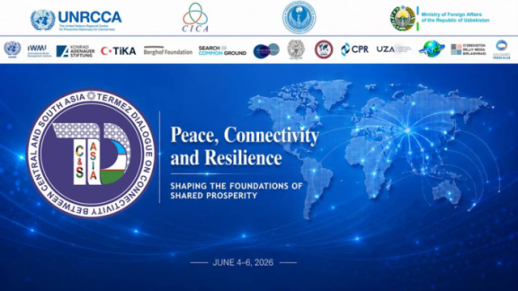 Uzbekistan formalizes Termez Dialogue to anchor South Asian trade integration SEOUL, June 01 (AJP) - Uzbekistan is establishing the Termez Dialogue as a permanent interregional forum to anchor its expanding economic integration with South Asian consumer markets. The institutionalization marks a structural shift in Eurasian supply chains, transforming neighboring Afghanistan from a source of geopolitical instability into a primary commercial transit bridge. The policy evolution moves the region away from isolated cross-border trade toward a comprehensive model of economic interdependence. This integration is backed by a rapid surge in bilateral commerce, infrastructure development, and targeted regulatory easing along the southern border. Overall trade turnover between Uzbekistan and South Asian nations expanded 3.2 times over a nine-year period from 2016 to 2025, reaching 3.5 billion dollars. According to data from Ziyoda Rizaeva at the Center for Economic Research and Reforms, Uzbek exports to the region tripled to two billion dollars, while imports grew 4.1 times to 1.5 billion dollars. Food products formed the largest component of Uzbek exports to the region, totaling 976.4 million dollars or 48.1 percent of the total. Mineral oils followed at 368 million dollars, transport services accounted for 277.8 million dollars, industrial goods reached 140.5 million dollars, and chemical products stood at 134.9 million dollars. Chemical products led the import categories from South Asian countries at 477.6 million dollars, representing 32.2 percent of inbound trade. The remaining imports consisted of 391.4 million dollars in food products, 309.1 million dollars in machinery and equipment, 99 million dollars in miscellaneous products, and 67 million dollars in finished goods. Afghanistan secured the largest share of this regional trade in 2025, with total turnover reaching 1.7 billion dollars, or 47.7 percent of the total. Uzbekistan maintained a highly favorable trade balance with Kabul, sending 712.7 million dollars in food exports, which accounted for 75.5 percent of all Uzbek food shipments to South Asia. India ranked as the second-largest trading partner with bilateral trade reaching 1.3 billion dollars in 2025, representing 37.5 percent of the regional market. Pakistan occupied the third position at 445.9 million dollars, with Uzbekistan exporting 260.2 million dollars in food products and importing 45.3 million dollars in chemical goods from Islamabad. Capital flows between the blocks have risen alongside physical trade, yielding 1.3 billion dollars in foreign direct investment and loans from South Asia over the nine-year period. Nearly 40 percent of that total arrived in 2025 alone, with India contributing 586.7 million dollars and Afghanistan providing 519.2 million dollars. The southern border city of Termez serves as the physical and logistical anchor for this entire integration strategy. The Termez Cargo Center international logistics hub has operated since 2016 at the intersection of Afghanistan, Tajikistan, and Turkmenistan, acting as a major corridor for United Nations humanitarian assistance. Commercial capacity scaled up significantly with the launch of the Airitom International Trade Center in 2024 near the Afghan border. The 36-hectare complex features a dedicated free trade zone with simplified business conditions, a visa-free entry regime, and permission for unrestricted transactions in foreign currencies. The Airitom facility currently hosts more than 3,000 individual retail outlets and provides approximately 5,500 local jobs. Since its opening, the trading center has attracted more than 440,000 visitors while generating 1.2 billion dollars in annual export volume. 2026-06-01 18:00:07