

Journalist

Park Sae-jin
swatchsjp@ajupress.com
-
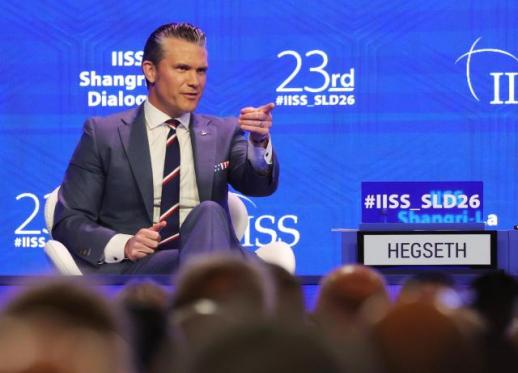 ASIA DEEP INSIGHT: US Defense Chief speech in Singapore brings tough choices for Seoul The world is changing fast, and the recent defense meeting in Singapore proved it. United States Defense Secretary Pete Hegseth spoke at the Shangri-La Dialogue, and his words carry a heavy message. For South Korea, sitting right between major global powers, his speech is a loud wake up call. The days of relying on a system where America promises to protect everyone without asking for much in return are officially over. Washington wants friends to pay more and do much more on their own. This new demand forces South Korea to look closely at how it protects itself, spends its money, and deals with China. Hegseth made it very clear that the United States is shifting its focus. The focus is no longer on keeping peace purely out of goodness. The focus is on finding partners who will share the heavy lifting and the heavy costs. This means every country that relies on the United States must completely change how it thinks about the future. To understand what this means for citizens in Seoul, we need to look at what Hegseth said about China. He pointed out that Beijing is building up its military forces at a historic speed. He warned that this rapid growth could change the balance of power in the Pacific Ocean forever. If one country becomes too strong and takes over the neighborhood, it could threaten the safety and wealth of everyone else. Hegseth said clearly that the United States and its friends cannot let this happen. He asked allied nations to increase defense spending immediately to match this growing challenge. But he also noted relations between Washington and Beijing are somewhat better right now, following a meeting between President Donald Trump and President Xi Jinping. That important meeting in Beijing did not change the big picture, but it did change the temperature. The two leaders agreed to keep their militaries talking, which helps prevent accidental wars. However, the deep competition between the two giant nations remains exactly the same. They still view each other as main rivals. For South Korea, this ongoing situation is incredibly difficult to manage. On one hand, the United States is South Korea's most important friend and protector. The two countries have shared a military alliance for decades. On the other hand, China is South Korea's biggest trading partner. South Korean businesses sell millions of products to China every single year, supporting countless jobs back home. If South Korea follows Hegseth's strict advice and spends massive amounts of money to specifically push back against China, Beijing might get very angry. We have seen this happen before. When South Korea allowed the United States to place a missile defense system on its land to watch North Korea, China punished South Korean businesses severely. Popular stores closed overnight, and tourism stopped completely. Therefore, South Korea must be very careful. It wants to keep its strong bond with Washington, but it simply cannot afford to destroy its economic relationship with Beijing. It is like walking on a thin tightrope high in the air with no safety net below to catch you if you fall. Another massive problem Hegseth brought up is the serious issue of weapons and supplies. Right now, the United States is involved in a severe conflict with Iran in the Middle East. This war started in late February and has used up a shocking amount of American military supplies. This fighting has rattled global markets and caused energy prices to jump, which hurts countries like South Korea that need to buy fuel overseas. But the biggest worry is weapons. The most important supplies are advanced missiles used to shoot down enemy attacks. These systems are complicated to build and cost about twelve million dollars for every single shot fired. Because they are being used so fast in the Middle East, the United States is running out of them at an alarming rate. Experts say it will take two or three years just to replace the weapons that have already been fired. This creates a very dangerous gap in global security that affects everyone. This news is truly terrifying for South Korea. South Korea lives right next door to North Korea, a country with many missiles and a long history of making sudden threats. For a long time, South Korea felt safe because it knew the United States had enough weapons stored up to protect it. But if American factories cannot build missiles fast enough to fight a war in the Middle East and keep Asia safe at the exact same time, South Korea finds itself in great danger. This empty weapon storage problem shows a cold and difficult reality. The United States is still the strongest country in the world, but its resources are stretched thin across the globe. It simply cannot fight everywhere all at once anymore. If North Korea decides to cause trouble right now, taking advantage of the distraction, will the United States have enough weapons left over to help? The answer is no longer a guaranteed yes, and that uncertainty is frightening. Hegseth basically admitted this hard truth when he said America needs partners, not protectorates. A protectorate is a weaker country that relies entirely on a stronger country for safety and does not contribute much. A partner is someone who pulls their own weight and helps out. Hegseth stated very clearly in Singapore that the era of the United States paying for the defense of rich nations is completely over. He said there can be no more free riding on American money. For South Korea, a wealthy and successful modern nation, this means Washington expects a much bigger check very soon. The United States currently keeps thousands of soldiers in South Korea to help keep the peace. Every few years, Seoul and Washington sit down to argue about how much money South Korea should pay to help keep those soldiers there. Hegseth's speech tells us that the next argument over money will be the hardest and most painful one yet. The current American government looks at alliances almost like business deals. If the deal does not make strict financial sense to them, they might just walk away. They want to see a solid return on their investment. We already see this unpredictable behavior happening in Europe. The American government has confused its European friends by saying it will move troops around, take some away from Germany, and maybe send some to Poland, based on who is paying enough money and following the rules. South Korea cannot assume that the American soldiers currently stationed on its soil will stay there forever no matter what happens. If Seoul does not agree to pay more, or if Washington decides those troops are needed somewhere else, South Korea could quickly find itself completely alone. This is exactly why the country must start thinking differently about its own survival right now. It cannot just write a bigger check every year and hope everything stays exactly the same. Then there is the very sensitive issue of Taiwan, which Hegseth also talked about at length. Taiwan is an island near China, and China firmly believes Taiwan belongs to it. Taiwan operates like its own country with its own government, and it wants to stay that way. This intense disagreement is probably the most dangerous flashpoint in the entire world today. President Xi Jinping recently warned President Trump face to face that if the Taiwan situation is handled badly, it could lead to devastating fighting. Trump seems to understand this great danger. He recently told Taiwan not to officially declare independence, trying hard to keep things calm and quiet for now. Hegseth told the crowd in Singapore that the United States still supports Taiwan, but he added a very interesting twist. He said President Trump himself will make the final decision on whether to sell a huge fourteen billion dollar package of weapons to Taiwan. This statement means Washington is currently using weapons sales as a bargaining chip in its big game with China. For South Korea, the extreme tension around Taiwan is a matter of life and death, even if South Korea is never directly involved in the fight itself. The oceans sitting right around Taiwan are some of the busiest and most important shipping lanes on the planet. Almost all of the oil and gas that South Korea desperately needs to keep its factories running comes on huge ships that sail right past Taiwan. Furthermore, many of the valuable products South Korea sells to the rest of the world leave on container ships that travel through those exact same waters. If a war breaks out over Taiwan, those shipping lanes will close immediately and completely. The South Korean economy would crash in a matter of days because it relies heavily on trade. Even worse, if the United States military gets pulled into a fierce fight over Taiwan, the American forces based in South Korea might be sent away to help fight the battle. Because the overall risks are so incredibly high, South Korea has to do everything in its power to make sure peace continues in the Taiwan Strait for as long as possible. But as Hegseth's speech clearly shows, South Korea cannot simply trust Washington to handle the problem smoothly all the time. The current American government's approach is highly unpredictable. Sometimes it acts very tough and loud, and sometimes it pulls back quietly to make a sudden deal behind closed doors. South Korea desperately needs a long term strategy that protects its own national interests, no matter what mood Washington is in on any given day. So, what exactly should South Korea do right now to prepare for this changing world? First and foremost, the country must speed up the process of building its own advanced weapons. The terrible news about the severe shortage of American missiles should act as a massive warning sign for the defense department. South Korea already has very smart engineers and incredibly strong manufacturing companies. It already builds excellent tanks, fast ships, and modern airplanes. Now, it must focus heavily on building its own missile defense systems as fast as possible. If the United States runs out of interceptor missiles, South Korea must have its own ready to fire into the sky. True self reliance is an absolute necessity for survival today. Secondly, South Korea must quickly learn how to negotiate in this harsh new business like environment. When Washington demands more money for its troops next time, Seoul should not just say yes or complain and say no. It needs to offer different kinds of value to make the partnership stronger. For example, South Korean factories could offer to help build the exact weapons that the United States is currently running out of. By helping to fix the giant American supply chain problem, South Korea becomes a truly valuable partner to Washington, not just a customer paying a high bill. Thirdly, South Korea has to manage its delicate relationship with China very carefully and quietly. Even though the United States is loudly pushing for a united front against Beijing, South Korea cannot simply join a block that seeks to isolate China completely. It must keep talking directly to Chinese leaders. It must explain clearly that South Korea's military moves are only meant to defend against North Korea, not to threaten China in any way. By keeping the lines of communication wide open, South Korea can try to prevent dangerous misunderstandings and protect its vital trade relationship. This difficult task requires skillful diplomats who know exactly how to speak softly while building military strength quietly in the background. Furthermore, South Korea should reach out to other friendly countries in the region that are feeling the exact same pressures right now. Countries like Japan and Australia are watching the wild changes in Washington and the rapid rise of China with deep concern. If these middle powers work together, they can share the heavy burden of keeping the region safe. The old way of doing things in global politics was simple to understand. The big powers made the rules, and smaller powers followed them in exchange for safety. What Hegseth said at the Shangri La Dialogue proves this old world is gone. The United States is tired of carrying the whole load. It wants to look after its own interests first. South Korea has spent decades building a truly powerful society. It is no longer a weak nation. The simple truth remains perfectly clear. No one else is going to guarantee South Korea's future. The country must forge its own path forward in a messy world where old friends expect a lot more and old rivals are growing bolder. 2026-06-01 17:08:16
 -
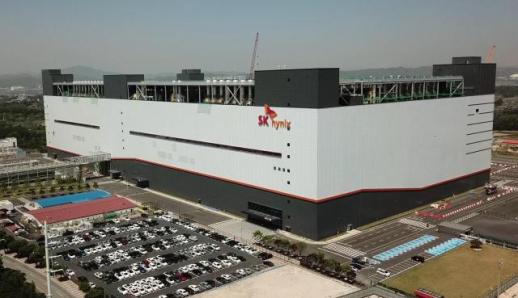 SK hynix reports no production disruption after minor spark at Cheongju plant SEOUL, June 01 (AJP) - SK Hynix confirms no production disruption after minor pipe spark at Cheongju plant SK Hynix reported zero disruptions to semiconductor production following a minor spark at its Cheongju plant in South Korea, despite the incident triggering the evacuation of 3,600 employees. The company stated that no major injuries occurred during the maintenance work and manufacturing operations remain fully intact. The incident began at 10:32 a.m. on the 1st in a sixth-floor gas room connecting the M15 and M15X facilities at the Cheongju 4 campus. A slight spark during pipe maintenance caused a fire and a toxic hydrogen fluoride gas leak, which reached a concentration of 5 ppm. Sprinklers immediately activated and extinguished the fire. Ten employees were working at the scene when the incident occurred. Five workers experienced stinging eyes, while two others showed no symptoms. All seven individuals were transported to an affiliated in-house hospital for precautionary medical checkups due to their proximity to the leak. Immediately after the gas was detected, SK Hynix evacuated all personnel from the two factory buildings. "We are operating environmental purification equipment to carry out disaster prevention work," an SK Hynix official said. Employees will return to work once air quality measurements and safety inspections are complete. The company emphasized that the root cause was a minor pipe spark and that all medical evaluations were strictly preventative. "There is no major impact, factory disruption, or production volume issue," the official said. 2026-06-01 15:11:26
 -
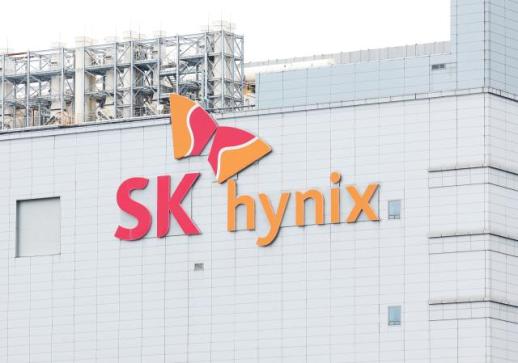 Fire and toxic gas leak at SK hynix plant force 3,600 workers to evacuate SEOUL, June 01 (AJP) - A fire and subsequent toxic gas leak at an SK Hynix factory in Cheongju, South Korea, prompted the evacuation of 3,600 employees on Monday morning. Seven workers were transported to an affiliated hospital after exposure to the chemicals, though the company reported no disruption to overall production, firefighters said. The incident began at 10:32 a.m. (0132 GMT) in a sixth-floor gas room connecting the M15 and M15X facilities at the company's Cheongju 4 Campus. Sprinklers immediately extinguished the fire, but toxic hydrogen fluoride spread inside the enclosed room, reaching a concentration of 5 ppm. Ten people were working at the scene when the incident occurred. Five workers complained of stinging eyes, and two others who showed no specific symptoms were also sent to the hospital for precautionary medical checkups due to their proximity to the leak. According to the rescuers, fires were put out immediately after the gas was detected. SK Hynix evacuated all personnel from the M15 and M15X buildings as a preventative safety measure. 2026-06-01 13:27:28
 -
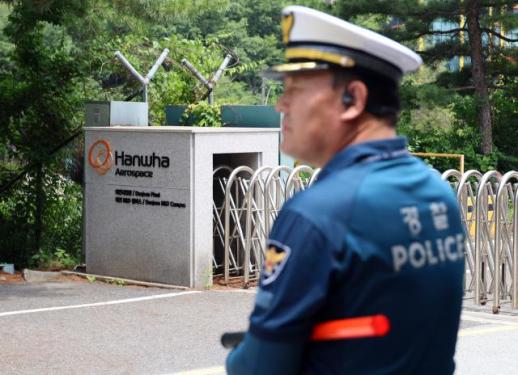 Update: Five killed in South Korea's Hanwha Aerospace factory explosion SEOUL, June 01 (AJP) - An explosion at a Hanwha Aerospace factory in South Korea killed at least five people and injured two on Monday morning, according to police and rescuers. The blast prompted an emergency response as rescue workers continue to search for three unaccounted individuals. The incident occurred at 10:59 a.m. (0159 GMT) at the company's plant in Oesam, located in Daejeon's Yuseong District. Emergency dispatchers received about 30 simultaneous calls from people in the area who reported they "heard an explosion" and that "a lot of smoke is coming out" from the site. Fire authorities issued a Level 1 emergency response at 11:17 a.m. and are currently working to extinguish the resulting fire. Initial statements from the police reported four dead and two injured, but official on-site confirmations currently stand at five fatalities and two injured, with possibilities of more unfound victims at the site. Authorities suspect the blast originated on the first floor of the factory, though the exact trigger remains unknown. Police and fire officials will launch a joint investigation to determine the cause of the incident and confirm the final casualty toll as soon as the flames are fully suppressed. Hanwha Group and Hanwha Aerospace issued a joint statement later in the day, expressing condolences over the deaths and apologizing to the public. “We are deeply saddened and devastated by the deaths of five precious employees in the accident that occurred this morning at Hanwha Aerospace’s Daejeon plant,” the companies said. “Hanwha Group and Hanwha Aerospace express our deepest condolences.” They also said they would provide full support for the treatment of injured workers and cooperate with fire and police authorities in handling the aftermath. A Hanwha Aerospace official said the statement was issued jointly at the group level, rather than only by Hanwha Aerospace, given the gravity of the accident. Hanwha Aerospace said CEO Son Jae-il convened an emergency meeting at the company’s Seoul headquarters immediately after the accident and headed to the site afterward. The company has also set up an emergency response headquarters at the scene to work with relevant authorities. Ga Jae-woong, head of Hanwha Aerospace’s Daejeon plant, told reporters at the site in Yuseong District that the fire occurred during a process to clean propellant used for launch vehicles. “The fire broke out during a process to clean launch vehicle propellant,” Ga said. “Various tools are used in the process of cleaning explosive materials, and the accident appears to have occurred while those tools were being cleaned.” He said the cleaning process was not considered particularly dangerous because explosive materials are generally thought to lose their risk when they come into contact with water. “We need to determine exactly what caused it,” Ga said. “At this point, it is difficult to estimate the exact cause of the explosion, and we will know only after examining the site.” The Daejeon plant is considered one of Hanwha Aerospace’s key facilities for aerospace, defense and space-related equipment. The site handles work related to large propulsion systems, propellant mixing and filling, and tactical surface-to-surface weapons systems. The plant has faced scrutiny in the past over safety management. After a 2018 explosion that left nine people dead or injured, a special labor inspection found hundreds of legal violations. 2026-06-01 12:25:32
 -
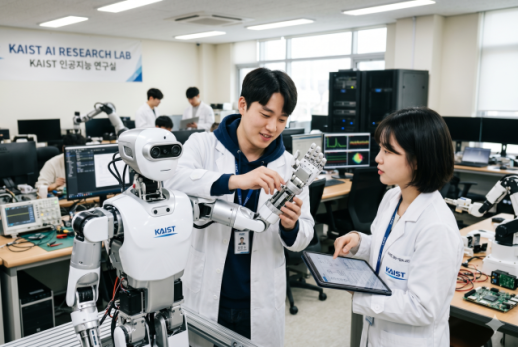 KAIST unveils mid-to-long-term strategy for artificial intelligence talent SEOUL, June 01 (AJP) - The Korea Advanced Institute of Science and Technology outlined its mid-to-long-term strategy for nurturing artificial intelligence professionals and launched an international advisory board during a vision proclamation ceremony held at its main campus on Monday, the prominent institute said. The event shared the institution's direction for educational innovation, industry cooperation, and the establishment of a responsible artificial intelligence ecosystem. A key part of the ceremony was the appointment of the KAIST College of AI Advisory Board, which includes international experts such as Professor Yoshua Bengio of the University of Montreal and Professor Cho Kyung-hyun of New York University. Domestic participants represent major South Korean technology companies and research organizations, including the Korea Institute of Science and Technology (KIST), Samsung Electronics, SK Telecom, Naver Cloud, and Hyundai Motor Company. The advisory board will provide strategic guidance on education, research, and global cooperation. As part of a special innovation session, undergraduate student representatives presented proposals on new possibilities for university education. This reflects the college's approach to treating students as active participants in designing future research cultures rather than passive recipients. During his keynote speech, Deputy Prime Minister and Minister of Science and ICT Bae Kyung-hoon emphasized the need for rapid adaptation. "In order to preemptively respond to the period of great transition where AI moves beyond the stage of generation to the stage of execution, investment in AI talent is the most urgent," Bae said. "We will build South Korea's differentiated AI education system through active communication with students, who are the consumers of education." KAIST College of AI Dean Yoon Kuk-jin presented the institution's primary strategies following the keynote. "The KAIST College of AI intends to become an educational and research platform that expands human intellectual capacity alongside AI and designs new knowledge and the future, rather than an organization that simply teaches AI technology," Yoon said. "We will use this vision proclamation ceremony as an opportunity to grow into a hub leading world-class AI talent training, challenging research, industrial and social problem solving, and the establishment of a responsible AI ecosystem." KAIST President Lee Kwang-hyung highlighted the broader impact of the technology on modern infrastructure. "AI is now becoming a core driving force leading changes in science, technology, industry, and society as a whole, beyond technology in specific fields," Lee said. "We will actively support the KAIST College of AI so that it can grow into an open platform that leads AI talent training and research innovation in South Korea and cooperates with the world." 2026-06-01 10:53:14
 -
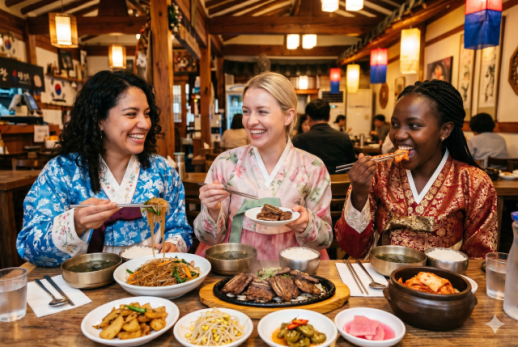 South Korea targets Honduras, Latvia and Kenya to diversify food exports SEOUL, June 01 (AJP) - The Korea International Trade Association has identified Honduras, Latvia and Kenya as strategic target markets to reduce South Korea's heavy reliance on the United States, China and Japan for food exports. The strategy aims to leverage the global popularity of South Korean culture to open new trade channels and sustain long-term growth. South Korean food exports have grown at an annual rate of 5.8 percent since 2015, surpassing 9 billion dollars in 2024. However, more than 50 percent of the export volume over the past decade remained concentrated in just three nations, prompting industry calls for immediate market diversification. The association published its findings Monday in a report outlining export competitiveness and market expansion strategies. Researchers selected the three countries based on surging local interest in South Korean culture, noting they all met strict criteria for cultural fan club growth and consumer goods import increases between 2021 and 2023. The report recommended specific product categories and localized approaches for each emerging market. For Honduras, researchers highlighted snacks such as sweets and ice cream, advising companies to launch sweet, large-capacity products and focus on hypermarket promotions to capture a growing youth demographic and urban population. In Latvia, which recorded the highest food import openness among 14 candidate nations, the association projected strong demand for mild sauces and dressings. The report suggested an integrated marketing campaign spanning YouTube, Google and expanding offline retail networks like hypermarkets and convenience stores. Kenya was identified as a target market for processed rice foods, including tteokbokki and rice crackers. The country offers a rapidly expanding consumer base, improved mobile payment infrastructure and an active e-commerce sector where platforms like TikTok and WhatsApp can drive localized sales. Across all three markets, the association urged exporters to strictly comply with local ingredient labeling rules and eco-friendly regulations driven by environmental, social and corporate governance standards. "Export channel diversification is the key that will determine the competitiveness of K-food going forward," said Kim Moo-hyun, chief researcher at the association. "Our companies should actively utilize services from related organizations, and the government must also strengthen communication with local regulatory authorities centered on diplomatic missions, acting as one team." To support these expansion efforts, the trade association plans to publish five strategic reports on consumer goods exports this year. The organization will also host business-to-business exhibitions linking South Korean companies with local buyers in Ho Chi Minh City and Paris in June, Jakarta in September, and Los Angeles in October. 2026-06-01 09:53:11
 -
 Diplomats Enchanted by the Blend of History and Modernity at Seoul Walking Event On May 31, diplomats from various countries participated in the '2026 Seoul Foreign Palace Walking Event,' organized by Aju Economy News. The event began at Gwanghwamun Square in the heart of Seoul and featured a route that included Gyeongbokgung Palace, Changgyeonggung Palace, and Jogyesa Temple, captivating participants with the unique scenery created by the blend of past and present. Jacques Plis, Luxembourg's ambassador to South Korea, expressed his admiration for the sight of the historic palace surrounded by skyscrapers. "This event has changed my impression of Seoul. Walking through the historical spaces of Seoul along a well-planned route made me feel more deeply connected to Korean history," he said. "The ancient palace in the city seamlessly connects the past and present. This event serves as a wonderful bridge linking Korea's historical legacy, its current state, and its future." Rai Mulendema Hamwina, the deputy chief of mission at the Zambian Embassy, noted that it was his first time representing an African nation at the event. He expressed amazement at the sight of people walking in traditional hanbok attire and the impressive traditional Korean architecture. "Even after hundreds of years, the buildings are maintained as if they were built yesterday. Where else in the world can you find such unique palaces? The architectural techniques of the past are simply astonishing," he remarked.* This article has been translated by AI. 2026-05-31 17:54:00
 -
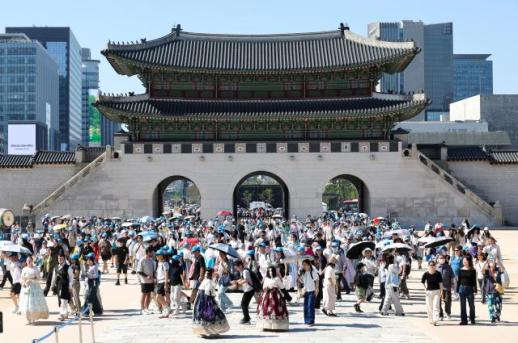 Thousands explore South Korean palaces during central Seoul walking event SEOUL, May 31 (AJP) - More than 2,000 people walked through the historic royal palaces of central Seoul on Sunday to experience South Korean traditional culture. The event aimed to showcase the harmony between the capital city's modern landscape and its historical sites. The 2026 Seoul Foreigner Palace Walking Contest, hosted by Aju News Corporation, brought together about 1,200 foreign nationals and 800 local citizens. The seven-kilometer circular route started at Gwanghwamun Plaza and guided participants through Gyeongbokgung, Changdeokgung and Changgyeonggung palaces before passing Jogyesa temple. Organizers expanded the event this year to include K-culture photo zones and cultural performances. Participants tried on traditional royal garments and interacted with setups replicating a royal clinic and historical palace guards. Lim Kwu-jin, president of Aju News Corporation, said the event serves as a meaningful time for people from various countries to naturally mingle with the history and culture of Seoul. "The palaces are Seoul's most precious cultural heritage and symbolic spaces that show the history and dignity of South Korea," Lim said. The event drew attendees from countries including China, Japan, the United States, France, India, Vietnam and Mexico. Several foreign diplomats participated in the trek and noted the visual impact of the preserved architecture. Jacques Flies, the Ambassador of Luxembourg to South Korea, said the curated walk gave him a deeper connection to the country's history. "I especially liked seeing the old palaces surrounded by the modern city," Flies said. "It creates a very nice bridge between the past and the present, and actually between the history of South Korea and the current state and future of South Korea." Wray Mulendema Hamweene, minister counsellor at the Embassy of Zambia in South Korea, highlighted the structural longevity of the traditional buildings. "Today, I had the opportunity to appreciate South Korea's rich culture," Hamweene said. "The many people wearing hanbok in the palace were very impressive." "Where else in the world can you find palaces like these? They are truly unique," Hamweene said. "Although these palaces were built hundreds of years ago, they look as if they were built only yesterday. The architectural technology of the past is truly astonishing." 2026-05-31 13:57:43
 -
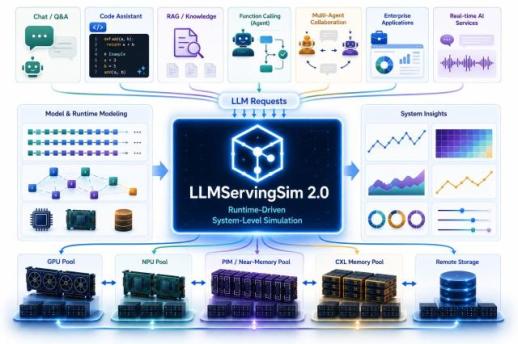 South Korean researchers develop virtual simulator for AI servers SEOUL, May 29 (AJP) - Researchers at the Korea Advanced Institute of Science and Technology in South Korea have developed a virtual platform to test the performance of large artificial intelligence server setups without building physical systems, the prominent research institute said Friday. Created by a team led by Professor Park Jong-se at the Korea Advanced Institute of Science and Technology (KAIST) School of Computing, the software is called LLMServingSim 2.0. It models the complex hardware and software interactions needed to run large language models. The tool allows developers to experiment with different designs and verify performance before buying expensive server equipment. Running large artificial intelligence models usually requires thousands of servers. Testing new chips or system layouts in the real world takes a lot of time and money. The new simulator solves this by copying tasks like data processing, request sorting, and memory use on a regular computer. The technology goes beyond traditional graphics processing units to support newer chips. Users can test neural processing units and memory chips that handle calculations directly within a virtual data center. This helps researchers see if a certain chip will speed up processing, use less power, and stay stable across huge server networks. It can also analyze setups where different server resources are physically separated but connected over a network. The research was led by master's students Cho Jae-hong and Choi Hyun-min. It won the best paper award at the IEEE International Symposium on Performance Analysis of Systems and Software (ISPASS) 2026. The simulation tool has been released to the public as open-source software so businesses and schools can use it freely. "AI service competitiveness is determined not only by the model itself but also by the infrastructure technology that operates it stably and efficiently," Park said. "I hope this simulator will serve as an important foundation for researchers and the industry to develop next-generation AI infrastructure more quickly and efficiently." (Reference Information) Journal/Source: IEEE International Symposium on Performance Analysis of Systems and Software (ISPASS) 2026 Title: LLMServingSim 2.0: A Unified Simulator for Heterogeneous and Disaggregated LLM Serving Infrastructure Link/DOI: 10.1109/ISPASS69572.2026.00012 2026-05-29 15:54:20
 -
 Kookmin University selected to lead state-funded artificial intelligence material research hub SEOUL, May 29 (AJP) - A research team from South Korea's Kookmin University has been selected to lead a state-funded research hub focused on developing artificial intelligence-based materials for next-generation displays, the prominent University said Thursday. The initiative is part of the 2026 Nano and Material Development Project Material HUB, organized by the Ministry of Science and ICT (MSIT) and supported by the National Research Foundation of Korea (NRF). Under the direction of principal investigator Professor Kim Young-hoon, the university will collaborate with the Korea Institute of Industrial Technology (KITECH), Daegu Gyeongbuk Institute of Science and Technology (DGIST), Chungbuk National University (CBNU), Sungkyunkwan University (SKKU) and the Korea Photonics Technology Institute (KOPTI). The project focuses on building a metal-halide color conversion material data hub and developing intelligent design technologies for materials and manufacturing processes. The research team will use an artificial intelligence closed-loop system and a high-throughput screening platform to reverse-engineer ultra-thin perovskite materials for augmented and virtual reality metaverse displays. By establishing a data-driven integration system, the researchers aim to optimize the synthesis of luminescent materials for high brightness and color purity while shortening the development time for new materials. The government-led Material HUB initiative uses data and artificial intelligence across the entire material research cycle, from exploratory design to performance implementation, to secure essential new materials early. The Kookmin University team, which includes professors Do Young-rag, Jung Jun-young, Jeon Ho-je and Cho Ki-sub, previously developed reverse-engineering technologies for high-efficiency perovskite materials and is currently expanding its focus to eco-friendly, lead-free alternatives. The team recently published related findings on chemical reaction predictions and next-generation displays in academic journals, including Nature, Advanced Materials and Nature Communications. 2026-05-29 14:48:31