


Latest by
-
 Germany to Face Curaçao in Unique World Cup Matchup Four-time World Cup champion Germany will face Curaçao, a Caribbean island nation with a population of approximately 150,000, in their opening match of the 2026 FIFA North America World Cup. The match is set for 1 p.m. ET on June 14 (2 a.m. KST on June 15) in Houston, Texas, as part of Group E, which also includes Côte d'Ivoire and Ecuador. This matchup is considered one of the most unique in the early stages of the tournament. Germany has a storied history, having won the World Cup in 1954, 1974, 1990, and 2014. In contrast, Curaçao is making its debut on the World Cup stage. Curaçao is a constituent country of the Kingdom of the Netherlands located in the southern Caribbean. According to World Bank estimates, its population in 2024 is projected to be 155,967, making it the smallest team by both population and area to qualify for the World Cup. The previous record was held by Iceland, which had a population of about 320,000 during the 2018 World Cup in Russia. The team's coach, Dick Advocaat, is a 78-year-old Dutch national who previously managed the South Korean national team in 2005 and led them during the 2006 World Cup in Germany. Ahead of the match against Germany, Advocaat expressed, "We have nothing to lose." Germany is also under pressure, having been eliminated in the group stage of both the 2018 World Cup in Russia and the 2022 World Cup in Qatar after winning the tournament in 2014. They are looking to restore their honor in this tournament. While Germany is clearly favored based on overall strength, for Curaçao, facing Germany is a historic moment. The sight of a team from an island nation with a population of 150,000 competing against a four-time World Cup champion is expected to be one of the dramatic matchups created by the expanded format featuring 48 teams.* This article has been translated by AI. 2026-06-14 17:03:00
 -
 The four tigers are back, and AI is their new factory SEOUL, June 14 (AJP) -For two decades, Asia's economic hierarchy appeared settled. China was the factory of the world. Silicon Valley owned innovation. Europe consumed. Japan aged. And the original Four Asian Tigers — South Korea, Taiwan, Hong Kong and Singapore — were widely regarded as mature economies whose most consequential chapters were behind them. Then came artificial intelligence, and the entire map shifted. The greatest beneficiaries of the AI era are not, as many assumed, the companies engineering chatbots or writing code. They are the nations that manufacture the physical substrate on which artificial intelligence runs. In that race, two economies stand apart: South Korea and Taiwan. The evidence is unambiguous. South Korea's KOSPI has become one of the most remarkable stock market stories in recent memory. The benchmark index closed 2024 at 2,399. By the end of 2025 it had climbed to 4,214. As of June 12th, it had surged past 8,100 — more than tripling in under eighteen months. Taiwan's equity markets have traced a nearly identical arc, rising from 23,035 at year-end 2024 to above 44,000 this month. Meanwhile, Chinese markets have remained largely stagnant, and Hong Kong continues to contend with structural headwinds that show little sign of easing. The divergence reflects something far deeper than investor sentiment. Artificial intelligence is catalyzing a new industrial revolution — and it rhymes with an earlier one. The original Tiger miracle was forged from ships, steel, automobiles and consumer electronics. The AI boom is being built on semiconductors, high-bandwidth memory, data centers, power infrastructure and advanced precision manufacturing. Industrial capacity, once again, is destiny. No country illustrates this more dramatically than South Korea. First-quarter GDP expanded 3.8 percent year-over-year, among the strongest performances in the developed world. Driving that growth is a semiconductor industry that has become, for the AI age, what oil is to Saudi Arabia. In May alone, South Korea's information and communications technology exports reached a record $47.8 billion — up 128.9 percent from a year earlier. ICT products now account for 54.5 percent of all Korean exports, meaning more than one in every two dollars the country earns abroad flows from technology. Semiconductors led the surge. Chip exports reached an unprecedented $37.2 billion in May, soaring 169 percent year-over-year as AI investment pushed memory prices sharply higher. Computer and storage exports rose 259 percent, powered by insatiable demand for AI servers and solid-state drives. The ICT sector generated a record trade surplus of $32.1 billion — the first time it has ever crossed the $30 billion threshold. This is not merely an export cycle. It is a transformation of national wealth. The wealth effect is now extending far beyond the semiconductor industry itself. Rising chip profits have boosted corporate tax collections, while surging equity trading has lifted securities transaction tax revenue. National tax receipts climbed 15.4 percent year-on-year in the first four months of 2026 to 164.1 trillion won, putting the government on track for as much as 10 trillion to 20 trillion won in additional revenue above budget forecasts. In effect, the AI boom is no longer simply enriching shareholders of Samsung Electronics and SK hynix. It is strengthening government finances, lifting household wealth through equities and pensions, and generating a national income windfall reminiscent of the export-led growth years that first gave rise to the Asian Tiger economies. The world has, with remarkable speed, concentrated the most critical layer of the AI supply chain into two countries. Taiwan Semiconductor Manufacturing Co. produces the overwhelming majority of the world's advanced AI processors. South Korea's Samsung Electronics and SK hynix dominate the high-bandwidth memory chips required to run them. Every significant AI model in existence — from ChatGPT to Gemini to Claude — ultimately depends on hardware produced in these two economies. There is no obvious substitute, and no near-term alternative. Nvidia's Jensen Huang appeared to grasp this clearly during his five-day visit to Seoul last week. Meeting with leaders from Samsung, SK hynix, SK Group, Naver, LG and Hyundai, Huang spoke not of individual products but of an entire ecosystem coming into alignment. "Korea is in a unique place at a very special moment," he said. His argument was precise: AI comprises five layers — energy, chips, infrastructure, models and applications. Most countries participate in one or two. Korea, increasingly, participates in all five. SK Telecom is building gigawatt-scale AI cloud infrastructure. Naver is constructing large-scale AI data centers. Samsung and SK Hynix dominate memory. LG and Naver are developing sovereign AI models. Hyundai, LG and Doosan are embedding AI into robotics and industrial automation. The conclusion, implicit in Huang's framing, is that Korea may be the rare nation capable of assembling the entire AI stack on its own soil. Taiwan offers a parallel story — perhaps an even more concentrated one. TSMC's command of advanced foundry production has made the island one of the most strategically consequential pieces of real estate in the modern world economy, generating double-digit growth, record corporate earnings and a wealth effect without recent precedent among developed economies. The contrast with China is instructive. Beijing has built formidable domestic AI capabilities and remains the world's preeminent manufacturing nation by volume. Yet much of the value created by the global AI boom has accrued to the producers of advanced chips rather than their users. Export controls have further accelerated the bifurcation of technology ecosystems, deepening the strategic indispensability of Korean and Taiwanese suppliers in ways that would have seemed improbable a decade ago. What is emerging is a structural shift, not a cycle. For years, the received wisdom held that the future belonged to software and platforms — that algorithms were the scarce resource and factories were commodities. AI is exposing the limits of that assumption. The future may yet belong to the countries that never abandoned their faith in making things: in energy, materials, precision engineering and supply chains that the world cannot easily replicate or replace. The Four Asian Tigers once reshaped the global economy through the sheer discipline of export-led industrialization. Six decades on, two of them are doing it again — not by repeating the past, but by occupying the commanding heights of the next industrial era. Only this time, what flows from their factories is not steel or silicon in the conventional sense. It is, in the most literal way imaginable, the infrastructure of intelligence itself. 2026-06-14 16:48:06
 -
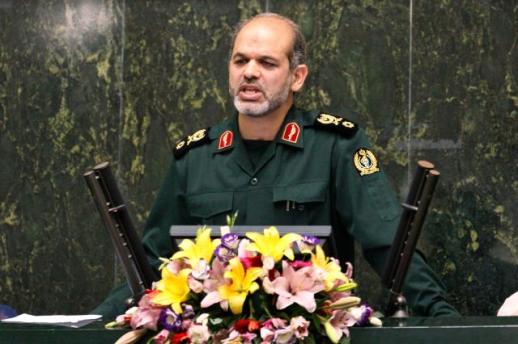 New IRGC Commander Emerges as Key Factor in US-Iran Ceasefire Negotiations Amid the final stages of ceasefire negotiations between the United States and Iran, Ahmad Vahidi, the newly appointed commander of the Islamic Revolutionary Guard Corps (IRGC), has emerged as a significant variable in the discussions. According to the Wall Street Journal on June 13, Vahidi is advocating for Iran to maintain its demands during negotiations with the U.S., asserting that the country should not back down until its conditions are met. Vahidi was appointed following the death of his predecessor in an airstrike by the U.S. and Israel. Since taking command, he has reportedly clashed with relatively moderate political figures, including Iranian President Masoud Pezeshkian and Foreign Minister Abbas Araghchi, consistently pushing for hardline positions at critical junctures. The Wall Street Journal noted that the IRGC and its affiliates are viewed as the primary obstacles to a U.S.-Iran agreement, with Vahidi emerging as the most influential figure among Iran's hardliners. In fact, Vahidi is said to have successfully persuaded Iran's Supreme National Security Council to approve an attack on Israeli territory, marking the first such assault since the ceasefire. Sources indicate that Vahidi has also linked the Lebanon front to the U.S. negotiations, insisting that Israel must cease its attacks on the pro-Iranian militant group Hezbollah in Lebanon for an agreement with the U.S. to be feasible. Vahidi and other hardliners believe that Iran must restore its military deterrence to gain leverage at the negotiating table. He has pressured the negotiating team to ensure the protection of Iran's missile capabilities and access to frozen funds abroad, arguing that military spending should not be restricted. A founding member of the IRGC, Vahidi previously served as the first commander of the Quds Force, the elite unit of the IRGC. He has since held various positions, including Minister of Defense and Minister of Interior, expanding his influence in Iran's security and military sectors. Vahidi has been sanctioned by the U.S. for his involvement in Iran's missile, drone, and nuclear programs, and he led the violent suppression of anti-government protests during his tenure as Minister of Interior in 2022.* This article has been translated by AI. 2026-06-14 16:45:00
 -
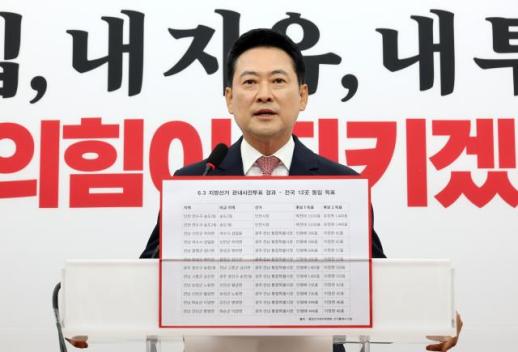 Jang Dong-hyuk: Rejecting Special Investigation is a 'Confession of Complicity' Jang Dong-hyuk, leader of the People Power Party, criticized the government and ruling party on June 14, stating that "rejecting a special investigation related to the June 3 local elections is a 'confession of complicity.'" He urged that the investigation should be entrusted to a special prosecutor recommended by the People Power Party, warning that the refusal of such an investigation could trigger the downfall of the administration. In a post on Facebook targeting the Democratic Party, Jang remarked, "They can create unnecessary 'political special investigations' at will, yet they resist the necessary ones." He highlighted issues such as the infringement of voting rights due to ballot shortages, simultaneous voting and counting, multiple instances of twin voting, and errors in the counting process, including missing, duplicate, and incorrect entries. He stated, "The public is not only outraged by the deprivation of their voting rights but is also questioning whether their votes were counted correctly," emphasizing that this is not an investigation that can be handled by a joint investigation team. Jang further questioned, "What is the reason for rejecting a special investigation when the entire nation is calling for the truth to be uncovered?" He asserted, "If they refuse the special investigation, there can only be one reason: Lee Jae-myung, the Democratic Party, and the election commission are complicit and have more to hide." As Jang intensifies his offensive against the ruling party, voices within his party are calling for a focus on addressing the issue of voting rights violations. Jeong Hee-yong, Secretary General of the People Power Party, expressed on Facebook that "the internal conflicts beginning with attempts to undermine the party leader will push aside the reform tasks demanded by the public and the opposition's fundamental role of checking the ruling party." He added, "Now is the time to restore the damaged voting rights of the people and to stand firmly against the abuse of power, fulfilling the public's mandate for a proper opposition role to protect democracy in South Korea."* This article has been translated by AI. 2026-06-14 16:39:00
 -
 Korean Lawmakers Discuss Leadership Challenges Amid Internal Party Strife Less than a week into his tenure, Jeong Jeom-sik's leadership is already facing scrutiny. The party's youth faction, Alternative and Future, has officially called for the resignation of party leader Jang Dong-hyuk and requested a general meeting to consolidate opinions. The upcoming negotiations with the opposition party are further complicating Jeong's calculations. According to political sources on June 14, Jeong has indicated to Alternative and Future that he plans to hold a general meeting ahead of the scheduled plenary session on June 17-18. Earlier, representatives from Alternative and Future met with Jeong on June 11, urging him to convene the meeting by June 16 at the latest. If the general meeting is held as requested, it is expected that lawmakers will openly evaluate Jang's leadership. The non-mainstream faction, led by Alternative and Future, is anticipated to publicly pressure Jang regarding his position. Should a consensus be reached at the meeting, Jang's standing will likely diminish. However, the response from lawmakers aligned with the mainstream faction could escalate internal party conflicts further. Jeong, classified as part of the mainstream faction, holds the key to mediating these tensions. He has emphasized the importance of 'unity' and 'collective wisdom through general meetings' since taking office, suggesting that he will respect the views of the non-mainstream faction. The challenge lies in the fact that both factions are firmly entrenched in their positions, making it difficult to find common ground. Jeong's task is to unify two factions that cannot even agree on the outcomes of the June 3 local elections. Political analysts warn that if Jeong fails in this mediation effort, Jang Dong-hyuk's leadership could collapse, or the party could fracture. The People Power Party's rules state that if four or more of the elected top committee members or youth committee members resign, an emergency response committee must be activated. In this context, youth committee member Woo Jae-jun stated on June 11 that while he does not favor a scenario where the leadership collapses due to resignations, "we may have to utilize that system. It remains as a last resort." Meanwhile, Jeong is also preparing for negotiations with the ruling Democratic Party. Immediate issues requiring discussion with the ruling party include the standing committees, the investigation into election irregularities, and the confirmation hearings for the Prime Minister. Some observers suggest that Jeong is navigating a complex situation akin to playing multiple games of Go simultaneously. 2026-06-14 16:15:00
 -
 Growing Global Vaccine Market Strengthens Domestic Pharmaceutical Companies The global vaccine market continues to grow, prompting domestic pharmaceutical companies to diversify their market strategies. In addition to expanding overseas supply chains, they are focusing on developing next-generation vaccines and securing global quality certifications to strengthen their positions. According to Global Market Insights, the global vaccine market is expected to grow from $78.9 billion (approximately 120 trillion won) in 2025 to $145.8 billion (approximately 223 trillion won) by 2034. Factors driving this growth include the rise of infectious diseases, an increase in the population of children in developing countries, and a growing emphasis on vaccinations due to aging populations. GC Pharma recently unveiled its messenger RNA (mRNA) vaccine development strategy at the 'Seoul Pandemic X Summit 2026.' The company is currently developing two COVID-19 vaccine candidates, 'GC4002B' and 'GC4006A.' GC4002B is in the preclinical stage, while GC4006A completed its first dose administration in a Phase 1 clinical trial earlier this year. The application of mRNA technology is expanding beyond infectious disease response to include cancer and rare diseases. The lipid nanoparticle (LNP) technology for safely delivering mRNA to cells is also considered a key component. Once a platform is established, new vaccines can be developed within months by simply replacing the antigens. A GC Pharma representative stated, "We aim to establish vaccine sovereignty and are working towards entering Phase 2 clinical trials within this year." SK Bioscience has signed a licensing agreement with the U.S. Centers for Disease Control and Prevention (CDC) to develop an injectable rotavirus vaccine and has begun process development. This initiative aims to overcome the limitations of existing oral rotavirus vaccines, which show over 85% efficacy in developed countries but drop below 50% in low- and middle-income countries. Once development is complete, the vaccine will undergo clinical trials and regulatory approval before commercialization. The company is also accelerating its expansion into the Latin American market. Recently, it signed a contract with Colombia's state-owned pharmaceutical company, VECOL, for vaccine technology transfer and local production collaboration. The initial technology transfer product will be the varicella vaccine 'SkyVaricella.' After establishing a local production system, the company is considering expanding its collaboration to additional vaccine products. SK Bioscience plans to broaden its presence in the public procurement market. Following its successful bid for the Pan American Health Organization's (PAHO) varicella vaccine in 2022, the company has been designated as a supplier for UNICEF's 2026 influenza vaccine. An industry insider remarked, "The vaccine business is expanding into areas such as platform technology acquisition, local production, and entry into the global procurement market. As the vaccine market grows, the role of domestic companies is also increasing." 2026-06-14 16:15:00
 -
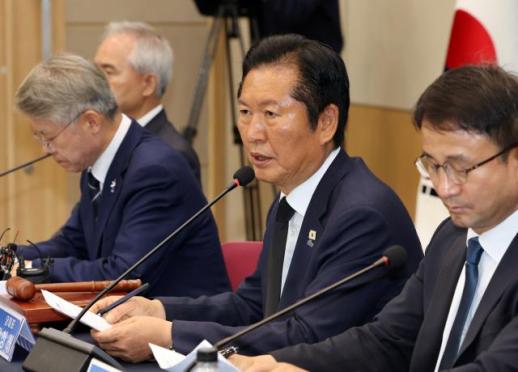 Rift Reignites in Democratic Party After National Convention Date Set The Democratic Party has decided to hold its national convention on August 17 in Daejeon, reigniting internal conflicts within the party. Some lawmakers are targeting leader Jeong Cheong-rae, pressuring him to ensure the next party leader can lead the success of the Lee Jae-myung administration, especially following the party's loss in the Seoul mayoral election during the June 3 local elections. On the same day the convention date was confirmed, several Democratic lawmakers voiced their concerns about Jeong's potential candidacy. Lawmaker Jo Gye-won criticized Jeong on Facebook, stating, "Jeong has not only failed to resolve internal conflicts but has also lost elections that should have been won. It is a painful situation where even the re-election of the government is uncertain. Despite this, he is fixated on challenging for the party leadership again." Jo further urged Jeong to stop using divisive language within the party, suggesting he should openly declare, "I have different views from President Lee Jae-myung, so I will align with the party's core values," to clarify his stance. Lawmaker Kim Yong-min echoed these sentiments, stating, "There is a growing sense of crisis due to division and conflict. The role of the party leader is crucial during such times." He added that the new leader must swiftly achieve complete conflict resolution, social reform, and political reform to unify the party and ensure the success of the Lee Jae-myung administration. Lawmaker Lee Geon-tae questioned the current leadership's focus, asking, "Is the leadership concentrating on party competition rather than evaluating and reflecting on the election? Does Jeong believe that discussing the one-person, one-vote system and supplementary investigative powers will help his re-election?" He called for the current leadership to step down, stating, "It is neither fair nor sensible for the current leadership, which should be evaluating the election, to manage the upcoming national convention." In response, Supreme Council member Park Gyu-hwan remarked, "They are trying to turn this election defeat into a scapegoat for accountability. The government and the ruling party are one body. If the party leader should resign, shouldn't the entire cabinet resign as well?" Park also criticized the pressure on Jeong to resign for the sake of a fair election, stating, "Is it appropriate to demand resignation from a party leader who has not even expressed intent to run for re-election? As President Yoon said, we must uphold our principles."* This article has been translated by AI. 2026-06-14 16:06:00
 -
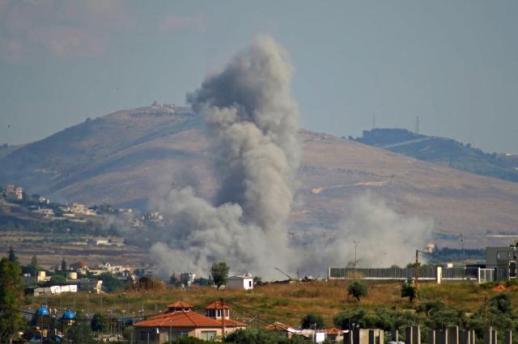 Israel Expands Airstrikes in Lebanon Targeting Hezbollah Amid U.S.-Iran Ceasefire Talks Amid speculation that a U.S.-Iran memorandum of understanding (MOU) could include a ceasefire on the Lebanon front, Israel has continued its airstrikes targeting Hezbollah in southern Lebanon. On June 13, local time, the Israeli military issued evacuation orders to residents of 20 villages in southern Lebanon before launching a large-scale airstrike against the Iran-aligned militant group Hezbollah. The airstrikes resulted in casualties, including the mayor of the southern Lebanese town of Alihan. Lebanon's National News Agency (NNA) reported that Israeli forces attacked several areas, including Tyre, Jezzine, and Nabatiyeh, with churches also being targeted. The Israeli military stated it struck over 70 Hezbollah facilities in southern Lebanon within the past 24 hours. In response, Hezbollah claimed to have attacked 19 Israeli military outposts, indicating ongoing clashes between the two sides. These hostilities come as the U.S. and Iran are engaged in discussions about a ceasefire MOU that may encompass the Lebanon front. Iran has maintained that any agreement with the U.S. must include a ceasefire in Lebanon. Abbas Araghchi, Iran's foreign minister, emphasized in a recent state TV interview that the unsigned MOU would address solutions for all fronts, including the Lebanon conflict. However, Israel has made it clear that it will not back down. Israeli Defense Minister Yoav Gallant stated that the country would not withdraw from occupied territories in Lebanon, asserting that the Israeli military would respond to both immediate and distant threats.* This article has been translated by AI. 2026-06-14 16:03:00
 -
 Jamsil elections protest swells as Seoul election authorities face probe SEOUL, June 14 (AJP) -Protests demanding a rerun of South Korea's June 3 local elections swelled back to hundreds over the weekend as investigators moved closer to questioning election officials over the ballot paper shortage scandal that has triggered the country's biggest election-related demonstrations in years. The demonstrations around Seoul's Olympic Handball Gymnasium in Jamsil, which served as a vote-counting center, entered their 10th day Sunday, with police increasingly preparing for a prolonged standoff rather than a quick resolution. According to unofficial police estimates, around 600 protesters remained at the site as of 10 a.m. Sunday. Attendance had peaked at roughly 19,000 people on Saturday evening, after thinning during weekday working hours. The protests began after ballot paper shortages disrupted voting at 26 polling stations, primarily in Seoul, during the June 3 local elections. National flags lined the protest area, while a growing number of demonstrators erected tents and makeshift shelters around entrances to the Olympic Park complex. One notable feature of the latest weekend rallies has been the return of younger participants in their 20s and 30s, some of whom insist the issue transcends traditional ideological divisions. "This is not a matter of left versus right," read signs carried by some protesters, reflecting an effort to broaden the movement beyond conventional conservative circles. The absence of a formal organizer has complicated the authorities' response. Unlike an earlier three-day blockade of a polling station in Jamsil, the current demonstration site is located away from residential neighborhoods, generating relatively few noise complaints. With vote counting already completed, police also have limited legal grounds to restrict the gatherings on election administration grounds. Police said peaceful demonstrations would be allowed to continue while individual illegal acts would be handled separately as authorities predict the protests won't likely end quickly. The next flashpoint could come Monday when sports organizations affected by the blockade of the handball arena plan to hold a press conference demanding access to the facility. Some groups are expected to attempt entry with police assistance. Authorities are also investigating allegations that protesters searched the belongings of youth national handball players and assaulted a television journalist covering the demonstrations. Meanwhile, a joint team of prosecutors and police is preparing to launch formal questioning of election officials after completing a search of National Election Commission (NEC) servers. According to legal sources, investigators finished analyzing and securing data from NEC servers on Saturday, including internal messaging records and approval documents related to ballot production decisions. The investigation centers on how the commission reduced ballot printing volumes to 50 percent of the expected voter base and whether warning signs were ignored before shortages emerged at polling stations. Investigators are expected to first summon working-level officials from election offices in Songpa, Seocho, Gangnam, Gwangjin and Dongjak districts, where shortages were most severe, before moving up the chain of command. Former NEC Chairman Roh Tae-ak, who resigned after publicly apologizing for the crisis, is expected to face questioning at a later stage. The joint task force is examining whether election officials improperly exercised authority or failed to fulfill their duties during the planning and response process. Search warrants executed earlier this week cited suspected violations of the Public Official Election Act, dereliction of duty and breach of trust. Investigators are particularly focused on whether internal objections were raised during decision-making and whether senior officials influenced the reduction in ballot printing despite foreseeable risks. The probe is expected to intensify next week as prosecutors and police complete the transfer and analysis of seized materials and begin witness interviews. 2026-06-14 15:52:51
 -
 Australia Defeats Turkey 2-0 in World Cup Opener, First Group Stage Win in 20 Years Australia secured a solid victory over Turkey, showcasing strong defense and counterattacks in their opening match.On June 14, Australia defeated Turkey 2-0 in the first match of Group D at the 2026 FIFA North America World Cup, held at BC Place in Vancouver, British Columbia.With this win, Australia earned three points, placing them second in Group D behind the United States, which won 4-1 against Paraguay the previous day. Both teams have the same points, but Australia trails in goal difference. This marks Australia's first group stage win in a World Cup opener in 20 years, since the 2006 tournament in Germany.Conversely, Turkey, making its first World Cup appearance in 24 years, suffered a loss in their opening match. Despite recording 30 shots, with 8 on target, Turkey could not break through Australia's defense.From the start, Australia employed a 5-4-1 formation, keeping a low line to thwart Turkey's advances. Turkey created an early opportunity in the 7th minute when Arda Güler penetrated the penalty area and took a shot.Australia took the lead in the 27th minute. Goalkeeper Patrick Beach saved Güler's shot and quickly initiated a counterattack. Nestor Irankunda received a pass from Paul O'Conner and scored with a low, powerful right-footed shot from the left side of the penalty area.Turkey continued to press for an equalizer, with Abdulkadir Bardakcı's long-range shot hitting the post in the 30th minute after being saved by Beach. Güler's shot in the 42nd minute also missed the target.The second half saw little change in momentum. Turkey increased possession and continued to attack, but Australia maintained its two-line defense. In the 64th minute, Cameron Burgess cleared a ball with his head inside the penalty area, and in the 66th minute, Aiden O'Neill blocked Güler's shot with his body.Australia struck again in the 75th minute with a counterattack. Corner Metcalf capitalized on a midfield mistake by Turkey's Ismael Yuksek, advancing into the penalty area and scoring with a left-footed shot into the bottom right corner.Turkey sought to reduce the deficit with headers from Kerem Aktürkoğlu in the 77th minute and a long-range shot from Hakan Çalhanoğlu in the 85th minute, but both attempts were thwarted by Beach's saves. Ultimately, Turkey failed to score and left the match without any points.* This article has been translated by AI. 2026-06-14 15:51:00