
Journalist

Soo-young Jang
swimming@ajunews.com
-
 South Korean Won Opens Sharply Lower as U.S.-Iran Talks Stall, Oil Jumps The South Korean won opened sharply weaker against the U.S. dollar on Tuesday as uncertainty over a second round of U.S.-Iran cease-fire talks pushed oil prices higher and boosted demand for safe-haven assets. As of 9:10 a.m. in Seoul, the won was trading at 1,477.4 per dollar. It opened at 1,479.5, up 11.0 won from the previous session’s close. Markets have refocused on the risk of supply disruptions as doubts grow over whether the two sides can even hold a second round of talks, with the cease-fire set to expire in a day, the report said. Overnight, Brent crude futures for June delivery settled at $98.48 a barrel, up 3.14% from the previous session. U.S. West Texas Intermediate for June rose 2.57% to $89.67 a barrel. U.S. stocks also fell. The Dow Jones Industrial Average closed down 293.18 points, or 0.59%, at 49,149.38. The S&P 500 dropped 45.13 points, or 0.63%, to 7,064.01, and the Nasdaq fell 144.43 points, or 0.59%, to 24,259.96. Min Kyeong-won, an economist at Woori Bank, said the exchange rate was likely to rise as investors focus less on a cease-fire extension and more on concerns that failed negotiations could prolong the closure of the Strait of Hormuz. He said President Donald Trump has said the cease-fire would be extended until talks with Iran conclude, but worries about disruptions to global crude supply have resurfaced because a Pakistan meeting was called off and the Strait of Hormuz remains blocked.* This article has been translated by AI. 2026-04-22 09:51:16
 -
 South Korea’s March Producer Prices Rise 1.6% as Oil Products Jump 31.9% A sharp rise in international oil prices driven by the war in the Middle East pushed South Korea’s producer prices higher for a seventh straight month. The Bank of Korea said on the 22nd that the producer price index for March came to 125.24, up 1.6% from the previous month. It was the biggest monthly increase since April 2022, when the index also rose 1.6%. Producer prices have increased each month from September last year through March. By category, agricultural, forestry and fishery products fell 3.3% from February, led by declines in agricultural products (-5.0%) and livestock products (-1.6%). Manufacturing products rose 3.5% on higher oil prices. Coal and petroleum products surged 31.9%, the steepest increase since December 1997 (57.7%). Prices for electricity, gas, water and waste edged down 0.1% as industrial city gas fell 3.0%. Services were unchanged: restaurant and lodging services rose 0.1%, while transportation services slipped 0.2%. Among major items, naphtha jumped 68.0% from February and diesel rose 20.8%. Computer memory devices climbed 101.4%, and DRAM increased 18.9%. DRAM prices were up 261.4% from a year earlier. The domestic supply price index rose 2.3% in March from the previous month, driven by gains in raw materials (5.1%) and intermediate goods (2.8%). Domestic shipments of raw materials fell 2.0%, but imports rose 7.3%. For intermediate goods, domestic shipments and imports increased 2.4% and 4.9%, respectively. The total output price index rose 4.7% from February as manufacturing products increased 7.9%. Exports and domestic shipments of manufacturing products rose 14.6% and 3.5%, respectively. The central bank said the Middle East war’s inflationary impact is expected to extend into April. Lee Moon-hee, head of the BOK’s price statistics team, said that after international oil prices surged in March, the average price so far in April has fallen from the previous month’s average. Still, he said the impact of raw material prices that rose before March is expected to spread gradually and add upward pressure to producer prices.* This article has been translated by AI. 2026-04-22 06:05:37
 -
 Korean Firms Shift From Investment to Debt Repayment as Rate Volatility Rises Korean companies are taking a more defensive stance, choosing to repay debt rather than invest for future growth. With Middle East-driven geopolitical risks adding to interest-rate volatility, corporate profitability and financing conditions have worsened at the same time. Economists warn that a pullback by businesses could slow growth and add downward pressure across the broader economy. Companies repay debt instead of tapping the bond market early in the year According to the Bank of Korea on April 21, the corporate bond market posted net redemptions of 6.4 trillion won from January through March. That marked a shift from net issuance in the same period in 2024 and 2025. Early in the year typically brings an “early-year effect,” when companies issue bonds to secure funding for annual business plans, helped by fresh allocations from institutional investors and relatively favorable borrowing terms. This year, however, companies focused on paying down debt even during the usual funding window, underscoring heightened caution. The backdrop has been unpredictable external risks. Government bond yields have continued to rise this year, while war in the Middle East has pushed up international oil prices and the exchange rate, adding to cost pressures. Markets have also priced in the possibility that the central bank could raise its policy rate to curb inflation, sending sovereign yields sharply higher. In March, the three-year government bond yield climbed to 3.617%, a move that appeared to reflect expectations of at least two rate hikes. As uncertainty has grown, companies have been prioritizing “survival” — cutting interest costs and building cash — over expansion financed by borrowing. The concern is that this caution could weigh on the broader economy. If corporate investment falls, hiring could weaken, which could then reduce household spending and further hurt domestic demand. Restarting growth momentum once it cools can take significant time and cost. Business sentiment weakens, raising risk of a negative investment cycle Business indicators are already reflecting unease. The Bank of Korea said the all-industry Corporate Business Sentiment Index, or CBSI, for March slipped 0.1 point from the previous month to 94.1. The CBSI is calculated from key Business Survey Index components — five for manufacturing and four for nonmanufacturing — with 100 as the baseline; readings above 100 indicate optimism and below 100 pessimism. April outlook readings, when the spillover from the Middle East war is expected to become more pronounced, deteriorated further. The April CBSI outlook fell 3.0 points month over month to 95.9 for manufacturing and dropped 5.6 points to 91.2 for nonmanufacturing. The declines were the steepest since January last year, following the “emergency martial law incident” in December 2024, when manufacturing fell 3.8 points and nonmanufacturing dropped 9.7 points. Measures of profitability also weakened. The profitability BSI for March fell 3 points from the previous month to 73, and the next-month outlook (70) plunged 9 points. Sentiment on funding conditions also worsened: the funding conditions BSI edged down 1 point in March to 79, while the April outlook came in at 77, down 3 points from the prior outlook reading of 80. Such pressure on profits and funding is likely to translate into weaker investment. The facilities investment execution BSI slipped from 95 for March’s outlook to 94 for April, signaling companies may scale back capacity expansion or new projects. The Bank of Korea has previously said Korea’s slowing growth is rooted in weak corporate investment. Lee Jong-ung, deputy head of the BOK’s survey and research team, said, “The slowdown in growth after the economic crisis stemmed from weak investment due to deteriorating corporate profitability and the failure of self-correcting mechanisms to function smoothly,” adding, “Weak corporate investment is driven less by financing constraints than by a fundamental decline in profitability.”* This article has been translated by AI. 2026-04-22 06:03:18
 -
 New Bank of Korea Gov. Shin Hyun-song Faces Inflation Risks and Growth Headwinds Shin Hyun-song officially took office as Bank of Korea governor on April 21, beginning a four-year term after a contentious confirmation hearing process. He assumes the post as concerns rise over stubborn inflation and weakening growth. In his inaugural address, Shin said he would pursue “price stability and financial stability through cautious and flexible monetary policy,” signaling a calibrated approach as external conditions shift rapidly. The central bank has said it expects this year’s economic growth to fall below 2.0%, while consumer inflation is likely to exceed its previous forecast of 2.2% by a significant margin. Geopolitical uncertainty in the Middle East has pushed up international oil prices, adding to cost pressures. Shin said supply shocks tied to the Middle East war have “further increased uncertainty” over the paths of inflation and growth, with upward pressure on prices and downward pressure on activity rising at the same time. Markets have often labeled Shin a “pragmatic hawk,” leaning toward the possibility of rate increases. Shin rejected a simple hawk-dove divide, saying it is better to read broader economic conditions, assess how the financial system and the real economy interact, and respond flexibly. Still, he suggested policy action could be needed if inflation risks intensify. At a National Assembly confirmation hearing on April 15, Shin said that if Middle East risks persist and spill over into core inflation or inflation expectations, producing second-round effects, “monetary policy must be used.” On financial stability, Shin called for a broader lens as boundaries blur between banks and nonbanks and between domestic and overseas markets. He said relying only on traditional soundness indicators makes it harder to detect risks, and urged greater use of market price indicators to strengthen early-warning functions, better access to information on the nonbank sector, and expanded analysis to include off-balance-sheet transactions and nontraditional financial products. Shin also outlined priorities for internationalizing the won and advancing digital finance. He cited 24-hour foreign exchange trading and building an offshore won settlement system as tasks to develop currency infrastructure in line with South Korea’s economic standing. He also said the second phase of “Project Hangang” will aim to expand the use of a central bank digital currency and deposit tokens. He indicated the bank will continue to speak out on structural issues highlighted by his predecessor, Lee Chang-yong. Shin said demographic change, widening inequality, and problems tied to real estate and household debt are key variables shaping the environment for monetary policy, adding that the central bank’s in-depth research and policy recommendations should help point the economy in a desirable direction.* This article has been translated by AI. 2026-04-21 17:56:27
 -
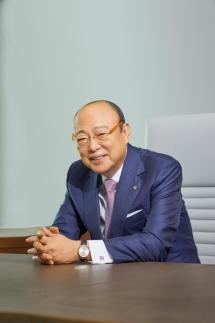 Defense-strong Hanwha head Kim Seung-youn most well-paid business owner in Korea SEOUL, March 19 (AJP) -Reflecting the rise of Korean defense power, Kim Seung-youn, the owner of defense-heavy Hanwha Group, ranked as the most well-paid conglomerate head in 2025 with his compensation package topping 20 billion won. According to Hanwha Corp.’s annual report filed on Wednesday, Kim received 5.04 billion won from Hanwha Corp. last year. He also received 5.04 billion won each from Hanwha Aerospace and Hanwha Systems, 5.041 billion won from Hanwha Solutions, and 4.68 billion won from Hanwha Vision. His total compensation from the five affiliates reached 24.841 billion won, up 77.7 percent from 13.98 billion won a year earlier. Hanwha Group said the compensation reflected Kim’s role in identifying future growth engines, advising on new businesses including mergers and acquisitions, and supporting operations through his global network. Kim’s eldest son, Hanwha Group Vice Chairman Kim Dong-kwan, received 8.096 billion won, down 12 percent from a year earlier. His pay included 2.69 billion won each from Hanwha Corp. and Hanwha Aerospace, and 2.716 billion won from Hanwha Solutions. CJ Group Chairman Lee Jae-hyun ranked second with about 17.7 billion won from CJ Corp. and CJ CheilJedang. Hyundai Motor Group Chairman Chung Eui-sun was third with 17.461 billion won, including 9.001 billion won from Hyundai Motor, 5.4 billion won from Kia, and 3.06 billion won from Hyundai Mobis. Chung’s total rose 51.6 percent from a year earlier as he began receiving compensation from Kia for the first time. Hyosung Group Chairman Cho Hyun-joon earned 15.7 billion won, while Lotte Group Chairman Shin Dong-bin received 14.9 billion won. Cho’s pay rose 64.8 percent from 9.183 billion won in 2024, while Shin’s total could increase to around 18 billion won once additional disclosures from Hotel Lotte and Lotte Property & Development are released. Hanjin Group Chairman Cho Won-tae received 14.578 billion won from affiliates including Korean Air, Hanjin KAL, Asiana Airlines and Jin Air. SK Group Chairman Chey Tae-won earned 8.25 billion won. LG Group Chairman Koo Kwang-mo received 7.127 billion won from LG Corp., including 4.793 billion won in salary and 2.334 billion won in bonuses. Samsung Electronics Chairman Lee Jae-yong has continued to work without pay since 2017. Shinsegae Group Chairman Chung Yong-jin received 5.85 billion won from E-Mart. When severance pay is included, Poongsan Group Chairman Ryu Jin ranked first with 46.645 billion won, including 38.8 billion won in severance following his resignation as CEO of Poongsan Holdings. 2026-03-19 07:45:18
 -
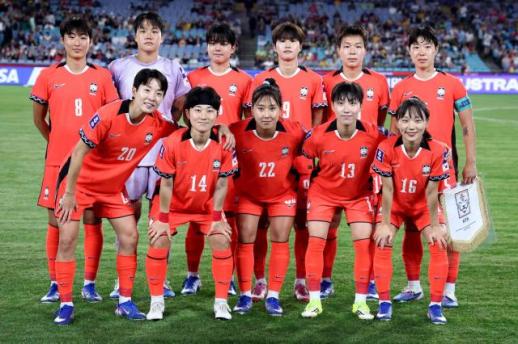 South Korea women routed 4-1 by Japan in AFC Asian Cup semifinals South Korea’s first bid to reach the top of Asia ended against Japan. The South Korea women’s national team, coached by Shin Sang-woo, lost 4-1 to Japan on March 18 in the 2026 Asian Football Confederation (AFC) Women’s Asian Cup semifinal at Stadium Australia in Sydney, despite a goal by Kang Chae-rim of Montreal. South Korea’s best finish at the tournament remains runner-up at the 2022 edition in India. Japan, ranked No. 8 in the world by FIFA and the highest-ranked team in Asia, outclassed No. 21 South Korea. The loss left South Korea with a 4-12-20 record against Japan and extended its winless run to 10 matches (four draws, six losses) since a 2-1 victory at the 2015 East Asian Cup. Japan has scored 28 goals and conceded once in five matches at this tournament. Shin left Ji So-yun (Suwon FC) on the bench and set up in a defensive 5-4-1 formation. Jeon Yu-gyeong (Molde FK) led the line, with Park Su-jeong (AC Milan), Kim Shin-ji (Rangers WFC), Jeong Min-young (Ottawa) and Moon Eun-ju (Hwacheon KSPO) in midfield. The back five featured Noh Jin-young (Mungyeong Sangmu), Ko Yu-jin (Incheon Hyundai Steel) and Kim Hye-ri centrally, with Jang Seul-gi (Gyeongju KHNP) and Chu Hyo-joo (Ottawa) as wingbacks. Goalkeeper Kim Min-jeong (Hyundai Steel) started. Japan broke through in the 15th minute when Kim Shin-ji lost possession to Nagano Fuka and Riko Ueki finished the move. Maika Hamano made it 2-0 in the 25th after a run down the right and a tight-angle shot. South Korea replaced Jeon with Son Hwa-yeon in the 41st, and two minutes later Japan thought it had scored again through Aoba Fujino, but the goal was disallowed for a handball in the buildup. Moon was injured and Ji came on in stoppage time of the first half. Japan had 12 shots before the break to South Korea’s three, and South Korea did not register a shot on target. South Korea brought on Kang for Chu at the start of the second half, but Japan kept pressing. Ueki’s header hit the crossbar in the 63rd minute, and South Korea’s first corner kick came in the 67th without producing a goal. After South Korea substituted Park Hye-jeong and Choi Yu-ri for Kim Shin-ji and Jeong Min-young in the 72nd, Japan struck again: Saki Kumagai headed in from a corner in the 75th. South Korea pulled one back in the 78th when Kang took a pass from Park Su-jeong and scored with a right-footed turning shot. It was Japan’s first goal conceded of the tournament. Japan restored its three-goal lead in the 86th when Remina Chiba scored to seal the result. Japan will play host Australia, which beat defending champion China 2-1 the day before, in the final on March 21 at the same venue.* This article has been translated by AI. 2026-03-18 20:24:00
 -
 Hanwha Investment Keeps Hold on LG H&H, Cuts Target Price to 230,000 Won Hanwha Investment & Securities on Wednesday advised a cautious approach to LG Household & Health Care until its sales decline reverses, keeping its “hold” rating. It cut its target price to 230,000 won from 300,000 won. Analyst Han Yu Jeong said the company’s consolidated operating profit for the fourth quarter of 2025 was minus 72.7 billion won, far below the consensus estimate of 4.2 billion won, citing weakness across its Beauty, HDB and Refreshment divisions. On news of LG H&H’s acquisition of Torriden, Han said buying a Korean indie brand could be aimed at rebuilding the Beauty business, but added that further deals are not a priority given weak results from past M&A, including Boinca, The Crème Shop and AVON. “Reorganizing the current brand portfolio, channels, SKUs and fixed-cost structure to normalize profitability should come first,” he said. Han said labor and marketing costs reflected in 2025 are unlikely to be one-off items, and that restructuring-related expenses are likely to continue at least through the end of 2026. He added that Hanwha does not expect a return to normal profit levels through 2026 and therefore shifted the target-price valuation base to 2027 results.* This article has been translated by AI. 2026-01-29 08:45:00
 -
 South Korea to Require English Disclosures for All KOSPI-Listed Companies Starting Next March Starting in May, the number of listed companies required to file disclosures in English will jump to 265 from 111. Disclosure items will expand and some deadlines will be shortened. To raise the KOSPI market’s international standing, South Korea will also move up the start of mandatory English disclosures for all KOSPI-listed companies to next March, more than a year earlier than planned. The Financial Services Commission said it approved revisions to the “Regulations on Issuance and Disclosure of Securities” and the Korea Exchange’s disclosure rules for the KOSPI, KOSDAQ and KONEX markets at a regular meeting on Tuesday. Under the revisions, companies subject to mandatory English disclosures will increase from 111 in the current first phase to 265 in the second phase. The first phase, introduced in 2024, applied to listed companies with assets of at least 10 trillion won and foreign ownership of at least 5%, or assets of at least 2 trillion won and foreign ownership of at least 30%. From May, the second phase will cover all KOSPI-listed companies with assets of at least 2 trillion won. The list of items that must be disclosed in English will also grow. In addition to shareholder meeting results, companies must file in English all 55 categories of major management matters related to business and investment activities, as well as fair disclosures and inquiry disclosures. For KOSPI-listed companies with assets of at least 10 trillion won, the deadline will be shortened from “within three business days after filing the Korean-language disclosure” to, in principle, same-day disclosure. The third phase, which makes English disclosures mandatory for all KOSPI-listed companies, will begin next March instead of May 2028. That would expand the coverage to 848 companies. The commission said the move reflects “the KOSPI market’s status as South Korea’s flagship market and strong interest from global investors.” Starting in March, companies will also be required to disclose shareholder vote tallies. Until now, they disclosed only whether each agenda item passed. Under the revisions, companies must disclose, on the day of the meeting, the voting results for each item, including the percentages for votes in favor, against and abstentions. In regular filings such as annual reports, they must provide not only percentages but also the number of shares. Executive compensation disclosures will also become more detailed starting in May, after criticism that current disclosures do not clearly show the link between company performance and pay and make it hard to understand how compensation is calculated. Companies will add total shareholder return and operating profit for the past three years to executive pay disclosures. They must also provide specific reasons and calculation standards for each component of compensation. Because stock-based compensation for executives has been disclosed separately from pay, it has been difficult to gauge total compensation. Going forward, companies must disclose restricted stock and other stock-based awards together with total executive compensation and detailed, individual compensation information. They must also include the cash-equivalent value of unrealized stock-based compensation.* This article has been translated by AI. 2026-01-28 18:03:34
 -
 South Korea to Launch Public Growth Fund in June, Begins Design Talks South Korea’s Public Participation Growth Fund is expected to be launched and sold around June. The Financial Services Commission said it held its first task force meeting on Tuesday to discuss the fund’s product structure and management plan. The policy fund is designed to let ordinary investors make long-term investments in advanced strategic industries through a publicly offered fund. The public fund will spread money across multiple sub-funds managed by private investment professionals. Key targets are expected to include companies tied to advanced strategic industries such as semiconductors and secondary batteries, as well as related infrastructure firms. The goal is to raise 600 billion won a year, totaling 3 trillion won over five years. Participants agreed the tax benefits are more generous than those offered by existing policy funds, including an income deduction of up to 40% depending on the investment amount and a separate 9% tax rate on dividend income. They also said product design should balance the policy goal of long-term investment in advanced strategic industries with fund returns. The task force plans further talks on the main investment targets and allocation ratios, incentives and performance reviews to encourage managers to run the fund in line with its purpose, and criteria for selecting sub-fund managers. The commission said it plans to finalize and announce the product structure in March, then select managers for the public fund and sub-funds before launching the product for retail investors around June.* This article has been translated by AI. 2026-01-28 16:30:19
 -
 Retail investors struggle overseas as brokerages reap record fees SEOUL, December 19 (AJP) - Nearly half of South Korean retail investors trading overseas stocks are losing money, with average profits per account falling sharply from a year earlier, the country’s financial watchdog said on Friday. The Financial Supervisory Service (FSS) said that as of the end of August, 49.3 percent of individual investors’ overseas stock trading accounts were in loss-making territory. Average profit per account dropped to about 500,000 won, down from 4.2 million won a year earlier. The FSS conducted on-site inspections of major securities firms and asset managers, including six brokerages with the highest overseas stock trading volumes and two leading managers of overseas equity funds, to assess investor protection and risk management practices related to overseas investing. Retail investors have also recorded persistent losses in overseas derivatives trading regardless of market conditions, the watchdog said. From January through October, losses totaled 373.5 billion won, compared with 360.9 billion won in the same period a year earlier. At the same time, brokerages have seen a surge in revenue from overseas trading. The top 12 securities firms by overseas stock trading volume posted record overseas stock brokerage commission revenue of 1.95 trillion won from January through November. Foreign-exchange fee income rose to 452.6 billion won, up 53.63 percent from a year earlier. 2025-12-19 10:39:40