
Journalist

Yujin Kim
ujeans@ajunews.com
-
 South Korea to Expand LPG Butane Fuel Tax Cut to 25% Starting Next Month The government will expand fuel tax cuts on liquefied petroleum gas (LPG) butane used mainly by lower-income households, anticipating that international LPG price swings tied to the Middle East war will be more fully reflected starting next month. Deputy Prime Minister and Minister of the Ministry of Finance and Economy Koo Yun-cheol announced the plan on the 23rd at a meeting of the interagency task force on special management of cost-of-living prices, releasing a set of measures for items under special monitoring. The government has operated a public suggestion channel since February to gather views on price pressures. It received 117 proposals, with respondents citing food, energy and housing as the biggest burdens, in that order. Reflecting those suggestions, the government said it is implementing steps including tougher penalties for unfair pricing. Starting next month, it will widen fuel tax cuts for LPG expected to rise in price. The tax cut on butane, widely used by lower-income households for small trucks and other vehicles, will increase to 25% from 10%. The government expects savings of 31 won per liter. The cut will run from the first day of next month through June 30. After international oil prices rose following the Middle East war and gasoline prices topped 2,000 won per liter, the government said it has tempered price increases since last month’s 13th by introducing a maximum price system for petroleum products and expanding fuel tax cuts. A fourth maximum price, scheduled to be announced on the 24th, will be set by considering international oil trends along with market impact and the public’s burden, it said. The government also moved to stabilize prices for key food items. It will provide 32 billion won in discounts for agricultural, livestock and fisheries products through June, and will strengthen efforts to curb grocery costs through tariff-rate quotas and import diversification. It will apply tariff-rate quotas to 22 food inputs, including processed egg products, coffee and cocoa beans, and will encourage alternative packaging by easing packaging-material regulations. It plans to wrap up collusion cases involving eggs, flour and starch syrup in the first half of this year. For raw materials and consumer goods with supply concerns, including naphtha and urea and urea solution, the government said it is responding with measures such as bans on hoarding and emergency supply-demand adjustments. Naphtha prices remain elevated compared with levels before the Middle East war, it said. The government has secured 2.1 million tons of naphtha from Oman and Saudi Arabia and will begin bringing it in sequentially from the end of this month. Urea and urea-solution inventories remain relatively stable, but retail prices for vehicle urea solution have edged up, the government said. To address urea shortages at some companies, it will preemptively release public stockpiles and pursue a program to support the price gap for vehicle urea. The government also issued a notice banning hoarding of syringes after finished-product shipment prices jumped 20% due to supply concerns and higher raw material costs. It formed 35 inspection teams to check for hoarding and other violations and to stabilize distribution, it said. Measures were also announced for service items such as private academy fees and telecom bills. Authorities found 2,763 cases of overcharging, including excessive tuition and other fees, and imposed a total of 1.04 billion won in fines. The government said it will create a new penalty to recover unjust gains and raise whistleblower rewards tenfold. Household telecom burdens are easing overall, but some users limit usage due to concerns about extra charges after using up included data or voice minutes, the government said. It will include a bill-protection option in all data plans and provide additional voice and text allowances for those 65 and older. With jet fuel prices surging due to the Middle East war, fuel surcharges on domestic and international routes have risen at South Korean airlines, the government said. To prevent airline difficulties from being passed on to consumers, it will seek to defer financial-improvement measures and also pursue deferrals for airport facility-use fees and slot recoveries. 2026-04-23 09:07:22
 -
 South Korea’s February Births Rise 13.6% for 20th Straight Month, but Population Still Shrinks South Korea’s number of births in February rose 13.6% from a year earlier, extending an increase to 20 straight months, according to the National Data Center. Births increased in every province and major city, and the total fertility rate moved closer to 1.0. Still, the country’s overall population continued to decline for the 76th consecutive month. In its “February 2026 Population Trends” report released Tuesday, the agency said 22,898 babies were born in February, up 2,747 (13.6%) from the same month a year earlier. Births have been rising for 20 months since July 2024, when they increased 7.8%. The total fertility rate — the average number of children a woman is expected to have over her lifetime — was 0.93, up 0.10 from a year earlier. Births rose year over year in all provinces and major cities. By birth order, the share of first-born children rose 1.2 percentage points from a year earlier, while the shares of second-born and third-or-higher births fell 0.5 and 0.6 points, respectively. Deaths totaled 29,172 in February, down 1,069 (-3.5%) from a year earlier. Deaths increased in five provinces and major cities, including Busan and North Chungcheong, and decreased in 12, including Seoul and Daegu. With deaths exceeding births, the natural population change was minus 6,275. Natural decrease has continued for 76 consecutive months since November 2019, when it was minus 1,685. Marriages, often seen as a leading indicator for births, totaled 18,557, down 811 (-4.2%) from a year earlier. Divorces fell to 6,197, down 1,149 (-15.6%). In the first quarter, the number of people who moved was 1.792 million, up 2.3% (40,000) from a year earlier. The migration rate rose 0.3 percentage points to 14.3%. Net migration by province and major city showed net inflows in seven areas, led by Gyeonggi (11,946), Seoul (3,955) and Incheon (3,740). Ten areas posted net outflows, including South Gyeongsang (-5,707), Gwangju (-3,973) and North Gyeongsang (-3,480). By age, movers were most concentrated in their 20s (453,000) and 30s (378,000). Migration rates were highest among people in their 20s (32.6%) and 30s (23.0%). Last month, 609,000 people moved, up 11.0% from March 2025. The March migration rate — movers per 100 people — was 14.1%, up 1.4 percentage points from a year earlier. Moves within the same province or major city accounted for 61.2%, while moves between provinces and major cities made up 38.8%. From a year earlier, within-area moves rose 9.1% and between-area moves increased 14.5%. Net migration in March showed net inflows in seven areas, including Gyeonggi (2,165), Incheon (1,586) and North Chungcheong (1,533). Net outflows were recorded in South Gyeongsang (-1,648), Gwangju (-1,547) and Ulsan (-1,143). * This article has been translated by AI. 2026-04-22 12:03:00
 -
 KDI: Oil Price Cap Cut March Inflation Up to 0.8 Points, Keeping Rise Below 3% The government’s cap on petroleum product prices lowered consumer inflation last month by as much as 0.8 percentage points, helping keep the rate from topping 3%, according to a study by a state-run research institute. The Korea Development Institute also found that fuel-tax cuts contributed to lower prices, but warned that low-income households could feel the impact of high oil prices more acutely and may need stronger support. In an emergency brief released Tuesday by KDI’s Middle East war response task force, the institute estimated the first round of the price cap reduced March consumer inflation by 0.4 to 0.8 percentage points. KDI said the timing of the cap’s impact varied depending on how quickly international crude prices feed into retail gas station prices. Under longer assumed lags, the initial effect was smaller and then grew over time. In its analysis of the fuel-tax cut, KDI said most of the reduction was passed through to lower gasoline prices, reflecting a structural feature in which the gasoline supply curve is close to flat. Based on the fourth week of March, the final week the first cap was applied, KDI estimated the price-cut effect at about 460 won per liter for regular gasoline, 916 won for automotive diesel and 552 won for indoor kerosene. It projected that the fuel-tax cut, expected to be reflected more fully starting in April, would lower inflation by about 0.2 percentage points. KDI said disruptions in the global energy supply chain drove the oil-price surge and could add downside pressure to the broader economy. Given South Korea’s high trade openness and heavy reliance on energy imports, an oil shock can quickly raise firms’ production costs and constrain households’ real income and consumption, potentially slowing growth. Still, KDI said its review of consumption trends in March after the outbreak of the Middle East war found no statistically significant slowdown. Comparing credit card spending in January through March with the same period over the past three years, total card spending remained broadly in line with past levels even after the war began. KDI also detected a slight decline in overall mobility as high oil prices persisted. The total number of mobile movers, a proxy tied to broad economic activity including consumption and production, gradually edged down after the war’s outbreak, showing a modest decrease. As support measures expand to address high oil prices, KDI said policymakers should closely examine energy spending patterns by household type. Using the National Data Policy Committee’s analysis of the past three years of household trend surveys, KDI said the share of energy spending relative to current income for the lowest income quintile (bottom 20%) was more than three times that of the highest quintile, suggesting low-income households may feel oil shocks more strongly. In a summer-only analysis of the relationship between Dubai crude prices and energy spending shares, KDI said the share of housing and utility costs rose significantly more in the first quintile than in the fifth, while the share of transportation fuel costs increased significantly more in the second and third quintiles than in the fifth. The results suggest low-income households are more exposed through cooling and cooking energy, while the second and third quintiles, with higher shares of working households, are more exposed through vehicle fuel costs. KDI said if high oil prices persist, the summer burden of housing and utility costs could rise disproportionately for low-income households, underscoring the need for tailored energy support by household characteristics. Senior Research Fellow Lee Young-wook said, “We need to close blind spots in support for damage from high oil prices and establish an energy support system tailored to household characteristics.” He added that, considering the heavier summer housing and utility burden for low-income households, authorities should review measures such as distributing heat-wave necessities through the Just Dream Center and providing emergency energy support linked to heat-wave alerts.* This article has been translated by AI. 2026-04-22 10:04:25
 -
 Korea’s SME Tech Market Expands as AI Bridge Between Public and Private Sectors To speed artificial intelligence adoption in both the public and private sectors and strengthen cooperation, South Korea’s finance authorities on April 21 brought together public agencies and small and midsize companies for direct consultations. The Ministry of Finance and Economy held the “2026 SME Technology Market AI Forum” at the Sejong Convention Center. About 200 companies took part, including public institutions, firms certified by the technology market and AI suppliers. Vice Minister Heo Jang said the SME Technology Market has been “a leading cooperation platform” linking capable smaller firms with the public procurement market. With AI now central to national competitiveness in an era of “AI transformation,” he said, the platform should expand into AI and “take the next step forward.” The event also highlighted the launch of an expanded “Public Institutions AI Utilization Council,” bringing together participating agencies by five key fields, centered on previously selected AI-leading institutions. Organizers said the move underscored the public sector’s intent to lead in adopting AI while sharing and spreading innovation cases. The AI companion forum was held in three parts. Outside the opening ceremony in the second part, the morning and afternoon sessions ran one-on-one matching between AI suppliers and public institutions and certified firms, totaling about 400 consultations to connect on-the-ground demand with needed technologies. In an AI seminar that followed, invited experts delivered a trend briefing on AI’s past, present and future; introduced public-sector AI support programs; presented strong growth cases from small businesses that adopted AI; and staged a live showcase of physical AI being used by public institutions. The ministry said the forum helped link public-sector AI demand with private-sector capabilities and would support wider public use of AI, accelerating AI transition among small and midsize companies. Heo said the newly launched council should help build an AI ecosystem where the public and private sectors grow together. He also called for developing a “Technology Market AI dedicated section” into a practical venue that identifies strong AI technologies and leads to real-world application, adding that the ministry would provide policy and institutional support. 2026-04-21 15:04:12
 -
 Budget Office, Finance Ministry Review Conditions for 2027 Budget, Keep Expansionary Fiscal Stance The government plans to maintain an expansionary fiscal stance as external economic uncertainty grows, including the war in the Middle East, to cushion spillover effects on the real economy. Officials also agreed that sustained, proactive fiscal policy will be important to address structural challenges such as an industrial shift driven by artificial intelligence and demographic change. The Ministry of Planning and Budget and the Ministry of Finance and Economy on 21 held a meeting at the Government Complex Sejong to review overall conditions for drafting the 2027 budget. The session brought together bureau and division directors in charge of budget, taxation, the national treasury and macroeconomic policy to assess domestic and global economic trends and fiscal conditions and to explore directions for fiscal management in 2027 amid widening uncertainty, including the Middle East conflict. Participants focused on how external shocks could affect trade, inflation, corporate management and household finances. They shared the view that energy shocks such as high oil prices could weigh on the economy into next year, underscoring the need for a continued fiscal role. They also agreed on the importance of sustainable, proactive fiscal policy in responding to structural issues including AI-driven industrial change, demographic shifts, regional decline, polarization and carbon neutrality. They also reviewed revenue conditions for next year, focusing on trends in major tax bases such as corporate performance, asset markets and private consumption. With uncertainty rising, they agreed that more precise revenue forecasting is essential and said they would actively use the revenue forecasting committee established this year to maintain close communication. To strengthen accountability and effectiveness in fiscal management, officials discussed tightening links between budget drafting and the settlement of accounts. Under the current schedule, the settlement process for the previous year is completed after September, when the government finishes drafting its budget proposal, making it difficult to reflect findings such as weak performance or poor execution in the next budget. They agreed to continue in-depth discussions on ways to strengthen feedback between settlement and budgeting, including shortening the settlement timeline so identified institutional fixes and execution problems can be systematically incorporated during budget preparation. Participants reaffirmed the need for close coordination between the two ministries across budget, tax, treasury and macroeconomic policy. Park Chang-hwan, the budget chief review officer at the planning and budget ministry, said, "When economic uncertainty is high, revenue and spending, countercyclical responses and support for structural reform must work together, so a standing cooperation system is more important than anything else." Going forward, the two ministries plan to frequently share their assessments of the economic outlook and revenue conditions and to maintain close coordination in major policy processes, including drafting the 2027 budget proposal and preparing the medium-term fiscal management plan. 2026-04-21 11:34:28
 -
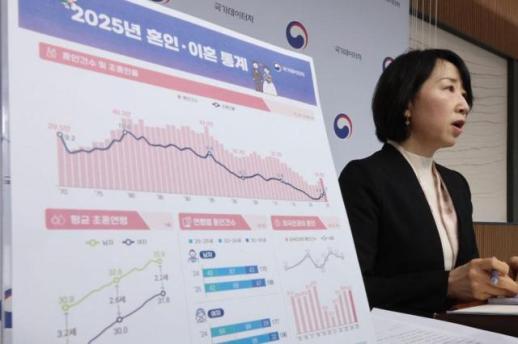 Young newlyweds drive marriage rates to rise for third straight year SEOUL, March 19 (AJP) - Some 240,000 couples tied the knot last year, up 8.1 percent or 18,000 couples from a year earlier, seeing a rise for a third straight year since 2025, the Ministry of Data and Statistics said Thursday. The figure is also the highest in seven years, up from 239,200 in 2019, recovering to pre-pandemic levels after dipping to around 200,000. Of the total 240,000 couples, some 82.6 percent were first-time marriages for both spouses, while 9 percent were remarriages for both. Among men, 87.5 percent were first-time grooms and 12.3 percent were remarrying, while among women, 85.9 percent were marrying for the first time and 13.6 percent were remarrying. The average age at first marriage was 33.9 for men and 31.6 for women, up 1.3 years and 1.7 years respectively, compared to a decade ago. Among first-marriage couples, cases in which the wife was older accounted for 20.2 percent, up 0.3 percentage points. Marriages involving a foreign spouse totaled 21,000, down 0.3 percent. Marriages with foreign women accounted for 16,000, while those with foreign men stood at 5,000. Among foreign wives, those from Japan and Laos increased, while marriages with women from Viet Nam and Thailand declined. Among foreign husbands, those from Japan and Canada rose, while marriages with men from China and the U.S. fell. With marriages rising across all regions except North Jeolla Province, Gyeonggi Province saw the highest number of marriages, followed by Seoul and Incheon. Marriages were most common in December, followed by May and July, while June and September saw the fewest. Meanwhile, divorces totaled 88,000, down by about 3,000 from 2024. Divorces were most common among couples married for 30 years or more, followed by those married for five to nine years and for four years or less. By age, divorce rates were highest among men in their late 40s and women in their early 40s. The ministry attributed the rise to a sharp increase in marriages among people in their early 30s. "The number of marriages have risen significantly, driven largely by those in their late 20s to early 40s, with the biggest surge among people in their early 30s," said Park Hyun-jung, a ministry official. 2026-03-19 15:50:01
 -
 South Korea on alert as nearly 200 sailors remain in Persian Gulf SEOUL, March 9 (AJP) - Some 183 South Korean sailors are confirmed in the Persian Gulf, with the government here stepping up efforts to ensure their safety amid the ongoing conflict in the Middle East. After a meeting chaired by Vice Minister and Acting Minister Kim Seong-beom, the Ministry of Oceans and Fisheries said on Monday that about 146 sailors are aboard 26 South Korean-flagged ships, while 37 are on foreign-flagged vessels as of last Sunday. No South Korean sailors have left the ships or asked to do so, though crew numbers may continue to change as sailors board and disembark. According to the ministry, all these South Korean vessels have at least one month's worth of essential supplies, with additional goods available through local agents in the Middle East, except at certain ports. The ministry said it is working with relevant ministries and South Korean diplomatic missions in the Middle East to monitor the situation and provide daily updates to ensure the sailors' safe return if the conflict continues. Kim said the ministry will "carefully prepare measures to ensure sailors' safety in case the situation is prolonged," urging officials to remain on alert and ready to respond to any emergencies until the situation ends. 2026-03-09 15:44:02
 -
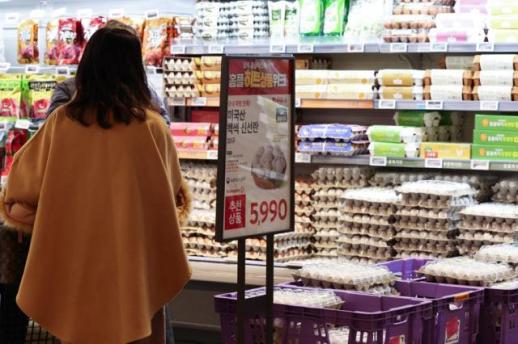 Household spending shrinks amid soaring inflation SEOUL, February 26 (AJP) - Consumer spending fell last year for the first time since the coronavirus pandemic, as high inflation led consumers to tighten their wallets, the Ministry of Data and Statistics said on Thursday. Spending dropped sharply on areas related to quality of life, such as clothing and recreational activities. Education-related expenditures also fell amid a shrinking school-age population. According to the ministry, the average monthly household spending was 2.94 million Korean won, up 1.7 percent from a year earlier, but real consumption, adjusted for inflation, actually fell 0.4 percent. By category, households appeared to prioritize essentials while cutting back on discretionary spending, with declines most pronounced in household goods and services (-6.1 percent), food and beverages (-1.1 percent), and clothing (-2.1 percent). Spending on recreational and leisure activities including travel and books, as well as indulgences like tobacco and alcohol, also declined. Notably, in a country where parents are highly enthusiastic about academic achievement, spending on children's education fell 4.9 percent. The ministry attributed the decline to rising costs of private crammers, with the shrinking school-age population also playing a role. Consumption weakened among most middle-income households. Spending among the top 20 percent of earners rose 6.1 percent, while spending in lower income brackets declined. "The decline in education spending appears to reflect a shrinking school-age population, resulting in the overall drop in consumption," said Seo Ji-hyun, a ministry official. 2026-02-26 15:28:49
 -
 Older mothers on the rise due to later marriages SEOUL, February 5 (AJP) - The number of women giving birth in their late 30s and 40s is on the rise, as more and more tie the knot later in life, the Ministry of Data and Statistics said on Thursday. Childbirths among women in their late 30s increased for 11 consecutive months last year, rising an average of 5.1 percent from January through November, compared with the same period in 2024. Births to women in their 40s showed a similar trend. Over the same period, childbirths among women in their early 30s slowed, declining for three months in the second half of the year. The trend is widely attributed to later marriages, which are delaying women's first births. The average age at first marriage for women rose to 31.6 in 2024, up from 30.0 in 2015. "With more women marrying later in life, the age of first-time mothers has been rising," the ministry said. 2026-02-05 10:33:27
 -
 Seoul sees lowest population outflow last year as fewer move to outskirts SEOUL, February 4 (AJP) - Fewer people moved to the outskirts of Seoul last year, with the capital seeing the lowest outflow in about 35 years. According to data released by the Korean Statistical Information Service (KOSIS) on Wednesday, some 27,000 residents left Seoul last year, down from 35,000 in 2022, 31,000 in 2023, and 45,000 in 2024. The figure was the lowest since 1990, when Seoul first recorded a decline in relevant statistics. KOSIS attributed the drop to an increase in available homes in Seoul, even as the overall housing supply fell across the country. Those who left Seoul mostly relocated elsewhere in the Seoul metropolitan region, with the largest number or about 41,000, moving to Gyeonggi Province. Although fewer residents are leaving, KOSIS said Seoul is unlikely to see an inflow soon because of high housing and living costs. 2026-02-04 10:22:30