

Journalist

Yujin Kim and Seo Hye Seung
ujeans@ajunews.com
-
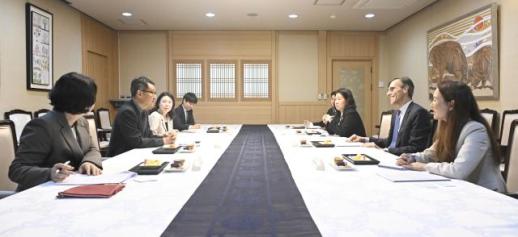 Korean Finance Ministry Strengthens Cooperation with EBRD on AI Hub The South Korean finance ministry and the European Bank for Reconstruction and Development (EBRD) are enhancing their collaboration to establish an artificial intelligence (AI) hub. They also agreed to expand the participation of Korean companies in EBRD investment projects. On May 22, Heo Jang, Deputy Minister of Finance, held a meeting with Greg Guyett, EBRD's First Vice President, at the Government Complex in Seoul. Earlier, on May 18, Deputy Prime Minister Koo Yun-cheol and EBRD President Odile Renaud-Basso signed a memorandum of understanding in London to express their intent to cooperate on the establishment of the Korea-EBRD AI hub. As a result, the 'AI K-Hub' will be responsible for integrating AI into EBRD's development cooperation projects in developing countries. During the meeting, both sides exchanged views on the next steps following the memorandum of understanding. Heo emphasized the need to strengthen cooperation between the South Korean government and EBRD staff to expedite the establishment of the Korea-EBRD AI hub. He also requested continued support and interest from Guyett. The discussion also covered EBRD's energy policies and green transition initiatives. Heo urged EBRD to facilitate the participation of Korean companies in investment projects related to power infrastructure. Finally, Heo requested that EBRD increase its support and interest in expanding opportunities for Korean professionals. In response, Guyett remarked, "Korean talent is a valuable asset for EBRD and contributes significantly to strengthening our international talent base."* This article has been translated by AI. 2026-05-23 17:51:26
 -
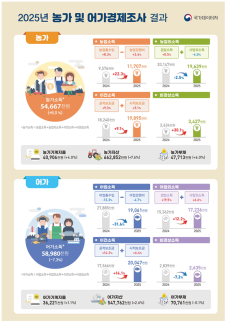 Farm Income Rebounds in 2025, While Fisheries Income Declines After a decline, farm income successfully rebounded last year, while fisheries income decreased, reflecting mixed trends. Despite a record high seafood export of $3.33 billion last year, it did not significantly impact fisheries income. The National Data Agency released the "2025 Farm and Fisheries Economic Survey Results" on May 22. The average annual income for farms was reported at 54.67 million won, an 8.0% increase from the previous year. While agricultural income, transfer income, and non-regular income saw increases, income from non-agricultural sources declined. Excluding agricultural management costs, the average agricultural income rose by 22.3% to 11.71 million won. Total agricultural income increased by 8.3% to 39.91 million won, driven by rises in crop income (1.1%) and livestock income (28.5%). Agricultural management costs also rose by 3.4% to 28.21 million won, attributed to increases in material costs (2.8%), labor costs (10.8%), and other expenses (2.6%). While income from side businesses increased by 0.5%, income from non-business activities fell by 4.0%, leading to an overall decline of 2.5% in total non-agricultural income, which stood at 19.64 million won. Transfer income rose by 9.1% to 19.89 million won, and non-regular income increased by 30.1% to 3.43 million won. Farmers reported average expenditures of 40.91 million won in 2025, with consumer spending rising by 3.3% to 32.14 million won and non-consumer spending increasing by 6.9% to 8.76 million won. As of the end of last year, the average assets of farms were valued at 662.85 million won, with fixed assets at 550.22 million won and current assets at 112.63 million won. Farmers carried an average debt of 47.71 million won, a 6.0% increase from the previous year. Additionally, larger farm sizes correlated with higher income, though debt levels also increased. Farmers under 50 years old, as well as those aged 50-59 and 60-69, reported incomes, expenditures, assets, and debts above the average, while those over 70 had figures below the average. In contrast, fisheries income, which reached a record high in 2024, shrank by 7.3%. The decline in aquaculture appears to have significantly impacted overall income. The average annual income for fisheries was reported at 58.98 million won, down 7.3% from the previous year. While income from non-fishing activities and transfer income increased, fishing income and non-regular income saw substantial declines, pulling down total income. In 2025, fishing income fell by 31.6% to 19.06 million won. Total fisheries income decreased by 13.3% to 76.11 million won, while fishing management costs decreased by 4.7% to 57.05 million won. Fisheries reported average expenditures of 36.22 million won last year, with consumer spending at 27.89 million won and non-consumer spending at 8.33 million won. The average assets of fisheries increased by 2.6% from 2024, reaching 547.76 million won, with fixed assets at 419.14 million won and current assets at 128.63 million won. As of the end of last year, the average debt for fisheries was 70.76 million won, a slight decrease of 0.1% from the previous year. Similar to farms, fisheries operated by managers under 50 years old, as well as those aged 50-59 and 60-69, reported higher income, expenditures, and assets than the average, while those over 70 fell below the average.* This article has been translated by AI. 2026-05-23 16:42:00
 -
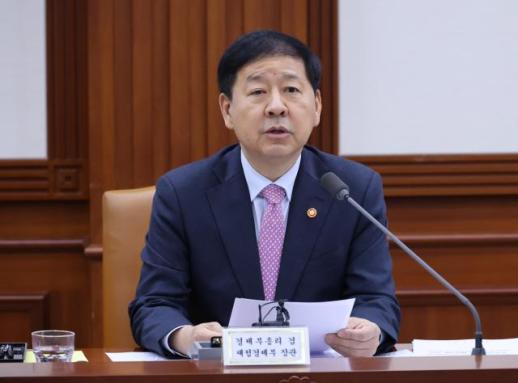 Deputy Prime Minister Koo Yoon-cheol Announces Expansion of Entrepreneurship Support Koo Yoon-cheol, Deputy Prime Minister and Minister of Economy and Finance, stated on May 22 that the government will continue to implement measures to alleviate the burden on citizens in preparation for the post-war period. He announced plans to double the scale of the second phase of the "Everyone's Entrepreneurship" project. Koo made these remarks during a meeting at the Government Seoul Complex that combined the Emergency Economic Headquarters, the Economic Ministers' Meeting, and the National Entrepreneurship Strategy Meeting. From May 1 to 20, exports increased by 64.8% compared to the same period last year, indicating a positive trend. Additionally, the consumer sentiment index for May has shown an upward turn for the first time in three months. However, due to ongoing economic uncertainties stemming from the prolonged conflict in the Middle East, the government plans to continue monitoring supply chain impacts and extend fuel tax reductions to ease the burden on citizens. Koo emphasized the need for structural reforms to boost potential growth rates and address polarization, stating, "We will accelerate various policies that citizens can feel in their daily lives." The meeting also focused on the "Everyone's Entrepreneurship" project, which is led by the Ministry of SMEs and Startups. This initiative supports anyone with an idea to start a business by providing funding and resources. Previously, the government held a competition for the first phase of the Everyone's Entrepreneurship project, attracting 63,000 applicants. In the coming month, about 5,000 successful candidates will be selected for close mentoring, startup funding, and support for utilizing artificial intelligence (AI) solutions, with 2 million won allocated for each. Among these, 1,100 individuals will receive preferential guarantees of up to 500 million won and business funding of up to 20 million won. The final winner will be determined through regional and national auditions. Koo announced that the second phase of the Everyone's Entrepreneurship project will expand to 10,000 participants, starting in July, and will introduce new categories for universities, youth, and global leagues to foster broader competition. The meeting also included discussions on transitioning to a preventive personal data management system and plans for the early expansion of public incineration facilities. The management system for high-risk personal data will be closely monitored, with recommendations for improvements based on risk levels. Personal data processors will be categorized into high, medium, and low-risk groups based on industry, data processing scale, and characteristics. Companies that actively invest in personal data protection will be offered incentives, such as reduced fines. Small businesses will receive subscription-based consulting services, and efforts will be made to enhance the personal data protection ecosystem through professional training. Additionally, the government plans to reduce the typical 12-year timeline for public incineration facility projects to a maximum of 3.5 years. Instead of forming a separate site selection committee for expansions on the same site, approvals will be granted through local resident support committees. Koo stated, "We will simplify administrative procedures, including exemptions from local government investment reviews, and conduct environmental impact assessments and various permits concurrently with facility design to shorten construction periods."* This article has been translated by AI. 2026-05-23 14:48:51
 -
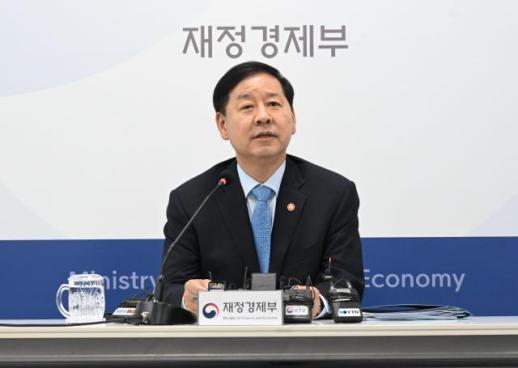 Korea to Become Hub for AI Collaboration with UN and MDBs, Says Deputy Prime Minister Koo Yun-cheol, Deputy Prime Minister and Minister of Economy and Finance, stated on May 21 that South Korea can serve as a connection hub for collaboration between UN agencies and multilateral development banks (MDBs) in the field of artificial intelligence (AI). Speaking at the Global AI Hub Vision Declaration ceremony held at the Grand Hyatt in Seoul, Koo noted that international cooperation in AI is currently fragmented among various organizations, and there is a lack of collaborative frameworks. He also pointed out that while various AI pilot projects are being attempted, there are limitations in their actual dissemination to developing countries. Koo explained that South Korea can play a mediating role to overcome these limitations and facilitate smooth cooperation between international organizations and MDBs. In South Korea, the World Bank's Global AI and Digital Knowledge Center is already in operation, and efforts are underway to establish AI collaboration hubs with the Asian Development Bank (ADB), Inter-American Development Bank (IDB), European Bank for Reconstruction and Development (EBRD), and Central American Bank for Economic Integration (CABEI). The Ministry of Economy and Finance aims to consolidate these MDB AI collaboration hubs into a global AI hub, thereby establishing a global AI cooperation network. Koo elaborated, "If the global AI hub develops public AI solutions in areas such as health, labor, disaster, and migration, MDBs can play a role in linking these solutions to development projects in developing countries, facilitating their actual implementation." Koo emphasized that even if the global AI hub is located in South Korea, it is intended for people around the world. He stressed that a foundational global AI society should be built through cooperation among nations rather than competition. He added, "The South Korean government will continue to work with the international community to ensure that the benefits of AI are not confined to certain countries or groups but are distributed to all people worldwide." Koo also outlined a vision for South Korean AI companies and research institutions to participate in solving global challenges by sharing AI technologies and practical experiences. South Korea has been gaining experience in building various public infrastructures integrated with AI, such as water resource management, which is expected to be beneficial in the process of AI collaboration with international organizations and MDBs. Koo concluded, "The connection between the global AI hub and MDBs will go beyond simple inter-agency cooperation, becoming a new model for development cooperation that spreads AI as a global public good and serves as a cooperative hub for supporting AI in developing countries."* This article has been translated by AI. 2026-05-21 16:24:28
 -
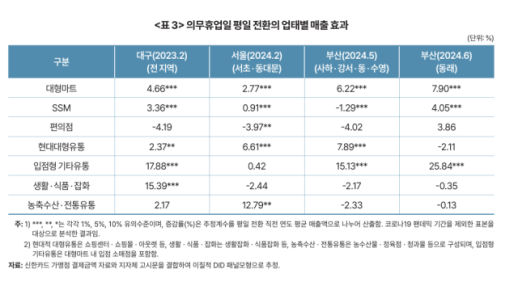 Increased Consumer Spending at Large Supermarkets on Weekends Calls for Policies Linking Traditional Markets A recent study by the Korea Development Institute (KDI) indicates that the controversial shift of mandatory closing days for large supermarkets to weekdays has positively influenced consumer sentiment and has not adversely affected sales at traditional markets. On May 21, KDI released a report titled "The Direction of Retail Policy Suggested by the Transition of Mandatory Closing Days to Weekdays." The institute compiled data on the adjustment of mandatory closing days across local governments and analyzed monthly credit card transaction data from Shinhan Card between 2015 and 2024. Sales at large supermarkets increased from 26.4 trillion won in 2006 to 39.5 trillion won in 2014, but then began to decline, dropping to 28.3 trillion won in 2023. The number of stores also grew from 2006 to 2012, but the growth rate has since slowed, with a recent trend of decline. This reflects a shift in the operational model of large supermarkets from expansion to structural adjustment. In this context, Daegu became the first city to change its mandatory closing day to Monday in 2023. Following this, other cities such as Cheongju, Seoul, Busan, and Gyeonggi have also mandated that large supermarkets close on weekdays. The government has announced plans to transition mandatory closing days to weekdays in 2024, creating an environment that allows for more flexible decision-making regarding closing days. The number of cities and districts that have made this transition increased from eight in February 2023 to about 30 by February 2025, with the number of large supermarkets affected rising from 18 to 67. Notably, the increase has been particularly pronounced since mid-2024. The analysis revealed that sales at large supermarkets increased across major regions, including Daegu, Busan, and Seoul. Specifically, sales rose by 4.7% in Daegu, 2.8% in Seoul (Seocho and Dongdaemun), and between 6.2% and 7.9% in Busan. This increase suggests a partial recovery in consumer spending that had been constrained by previous weekend operating restrictions. Lee Jin-guk, a senior researcher at KDI, stated, "Dual-income households or families with children find it difficult to shop at large supermarkets unless it’s on the weekend. The transition to weekdays has expanded consumer convenience, allowing shopping on weekends, which has contributed to the increase in sales at large supermarkets." Sales increases were also confirmed at semi-large stores (SSM), which are directly affected by the mandatory closing day regulations. In Daegu, sales rose by approximately 3.4%, while in Busan's Dongnae District, the increase was 4.1%. Furthermore, the analysis found that weekend operations at large supermarkets did not lead to a decrease in sales at traditional markets. KDI interprets this as evidence that traditional markets operate as independent retail channels, competing only in certain areas rather than being direct substitutes for large supermarkets. However, in regions where there is a high degree of substitution between offline stores or where online shopping is not prevalent, the increase in large supermarket sales could potentially lead to a decline in traditional market sales. Since the transition to weekdays for mandatory closing days, online payment amounts have decreased by 2.9%. This suggests that improved access to offline retail, including large supermarkets, has led to a shift in some consumer spending from online to offline. KDI believes that rather than negatively impacting traditional markets, the weekend operations of large supermarkets can stimulate consumer linkage effects, and thus policies should be developed to connect the two sectors. The senior researcher noted, "In areas like Seocho and Dongdaemun in Seoul, where many traditional markets exist, the weekend operations of large supermarkets appear to draw consumers to nearby traditional markets, creating linked consumption. Instead of merely restricting large supermarket operations, it may be more effective to develop strategies that integrate visitors to large supermarkets with traditional markets for mutual benefit."* This article has been translated by AI. 2026-05-21 13:52:41
 -
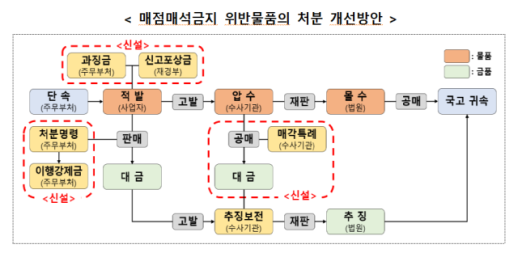 Government Introduces Fines for Price Stability Violations, Extends Fuel Tax Cuts The government has announced measures to enhance the effectiveness of price stability initiatives. To address the limitations of existing legal sanctions against violations such as hoarding, the Price Stability Act will be amended to introduce monetary penalties. Additionally, the government will extend fuel tax cuts for gasoline by 15% and diesel by 25% for two more months, until the end of July, in response to rising international oil prices. Koo Yoon-cheol, Deputy Prime Minister and Minister of Economy and Finance, convened a task force on special management of living costs and the 268th External Economic Ministers' Meeting on May 21 to unveil these measures. Previously, the government had implemented maximum price controls on petroleum products, emergency supply adjustments, and a ban on hoarding to address supply shortages. However, there were no legal means to compel sales in cases of hoarding violations, and significant time was required to supply goods to the market. To rectify this, the government is establishing measures to deprive illegal profits through monetary sanctions. A Ministry of Economy and Finance official stated, "We will impose administrative penalties such as compliance fines and surcharges for violations of price stability measures, and we will introduce special provisions for sales to improve the distribution speed of goods in short supply and recover illegal profits." The amendment to the Price Stability Act will impose monetary penalties exceeding unjust gains. Surcharges will be levied for violations of emergency supply adjustments and the hoarding prohibition to recover economic benefits. A reward system for reporting violations will also be introduced to encourage whistleblowing. To quickly resolve supply shortages, rapid distribution enforcement measures will be implemented. If violations of government measures are detected, a disposal order will be issued, and failure to comply will result in compliance fines. New regulations will also allow for the sale of confiscated goods when urgent supply is needed. With the amendment of the enforcement decree of the Price Stability Act, the authority to crack down on hoarding violations at the import and customs stages will be delegated from the relevant minister to the Commissioner of the Korea Customs Service. In cases of disposal of violating goods, the police will actively utilize pre-indictment confiscation to recover the value during the investigation stage. A Ministry of Economy and Finance official noted, "We will apply the revised enforcement decree of the Price Stability Act starting this month and will push for amendments to the Price Stability Act in August." As international oil prices continue to soar, the government will extend the fuel tax cuts until July 31, maintaining a reduction of 15% for gasoline and 25% for diesel, particularly benefiting essential diesel used in industries and logistics. However, the specific end date for the fuel tax cuts has not yet been determined. The government plans to implement the revised enforcement decree of the Transportation, Energy, and Environment Tax Act following approval at the Cabinet meeting. The Ministry of Economy and Finance anticipates that the inflation rate for May will remain around 2%. A ministry official commented, "There have been no significant fluctuations in petroleum product prices, and no unusual factors have been identified in agricultural and marine products. It seems likely that prices will rise less than in April."* This article has been translated by AI. 2026-05-21 08:04:13
 -
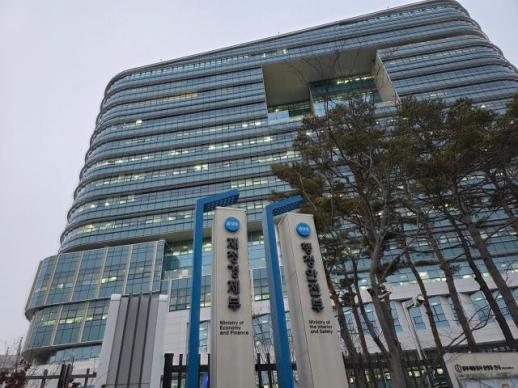 Deputy Minister Heo Jang Calls for Strengthening Corporate Cooperation through Supply Chain Financing Program 허장 재정경제부 2차관은 19일 "공급망안정화기금의 상생금융 프로그램으로 기업 간 안정적 협력관계를 다져 위기 대응 능력을 강화해야 한다"고 말했다. Heo Jang, Deputy Minister of the Ministry of Economy and Finance, stated on May 19 that the Supply Chain Stabilization Fund's cooperative financing program should be utilized to strengthen stable partnerships among companies and enhance their crisis response capabilities. During a signing ceremony for the Supply Chain Stabilization Fund's cooperation agreement held at the Korea Export-Import Bank, Heo met with representatives from major companies to discuss ways to strengthen the supply chain ecosystem and improve its structure. He emphasized, "This signing ceremony marks the starting point for solidifying the domestic supply chain ecosystem through the cooperative financing program of the Supply Chain Stabilization Fund. We must strengthen the collaboration among large, medium-sized, and small enterprises across the entire supply chain, including import, production, and distribution, to enhance our ability to respond to supply chain uncertainties." In March, the government established the 'Supply Chain Cooperative Financing Program' through the Supply Chain Stabilization Fund. This program aims to facilitate the flow of funds between large purchasing companies and small suppliers, thereby increasing liquidity across the supply chain. The Ministry of Economy and Finance plans to strengthen the domestic supply chain based on cooperative financing. The signing ceremony aims to enhance collaboration in critical sectors such as secondary batteries and nuclear power, where the value chain of large and small enterprises is vital. The Korea Export-Import Bank will play a role in providing financial support related to the supply and purchase of raw materials under this program. Participating large companies are required to recommend their collaborating small and medium-sized enterprises. Additionally, the bank will offer a preferential interest rate of up to 2.4 percentage points to collaborating small and medium-sized enterprises and increase the loan limit by 10% compared to the current level. In line with the government's regional development policy, an additional 0.2 percentage point interest rate reduction (within the 2.4 percentage point limit) will be applied to medium-sized and small enterprises located outside the capital region. Participants remarked, "In light of the ongoing supply chain instability due to recent events in the Middle East, timely financial support through the fund has enabled us to establish a stable supply system. We will strive for further cooperative efforts with small and medium-sized partners following today's signing ceremony."* This article has been translated by AI. 2026-05-19 12:36:50
 -
 Government to Offer Up to 40% Discount on Stocked Seafood Amid Seasonal Price Fluctuations The government will supply stocked seafood at prices discounted by up to 30-40% as the fishing season begins and production declines. According to the Ministry of Oceans and Fisheries on May 19, the entry into the fishing season in May is likely to increase price volatility for seafood. To stabilize prices, the ministry plans to release up to 8,000 tons of stocked seafood into the market from May 20 to July 15. Typically, seafood production decreases during the fishing season. The National Fisheries Research Institute reported that in May of last year, production of mackerel, horse mackerel, squid, anchovy, hairtail, and croaker all fell below average levels. The government’s stocked seafood will be available through traditional markets, supermarkets, online and offline wholesale markets, and business-to-business transactions. Consumers can expect to purchase items at prices 30-40% lower than usual. Products such as mackerel fillets, cut pollock, and dried squid will be offered as processed goods, providing consumers with a variety of choices. The supply will include 5,500 tons of pollock, 1,000 tons of mackerel, 900 tons of squid, and 600 tons of hairtail, marking the largest government supply during the fishing season. The ministry prioritized items that have seen price increases or unstable supply and demand. Future market supply will be adjusted based on price fluctuations during the supply period. Minister of Oceans and Fisheries Hwang Jong-woo stated, "We decided to supply stocked seafood considering high prices, the onset of the fishing season, and seafood supply trends." He added, "We hope this supply allows consumers to enjoy quality seafood at reasonable prices, and we will closely monitor seafood prices for stability until fishing resumes."* This article has been translated by AI. 2026-05-19 12:19:21
 -
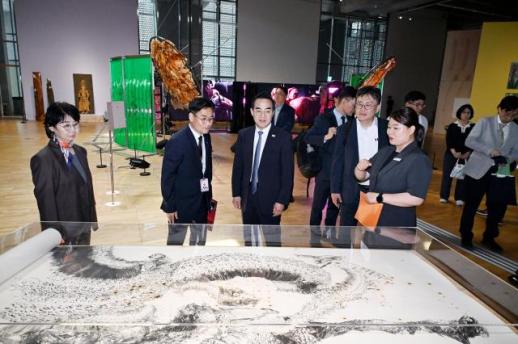 Minister Park Hong-keun Pledges Support for 5·18 Veterans and Families Park Hong-keun, Minister of the Ministry of Planning and Budget, stated on May 18 that he will intensify efforts to support veterans and families of the May 18 Democratic Uprising throughout their lives. After attending the 46th anniversary ceremony of the May 18 incident in Gwangju, Minister Park visited the May 18 Memorial Culture Center and held a meeting with representatives of veterans' organizations. During the meeting, leaders of the veterans' organizations proposed the construction of a central headquarters and effective promotion of May 18 memorial projects. Currently, the May 18 organization is the only legal veterans' group without a central headquarters, and representatives agreed on the necessity of establishing one for stable operations. In response, Minister Park said, "We will actively consider the construction of a central headquarters and pay more attention to support across all areas of life, including economic assistance, medical services, education, and employment." He also promised to review the voices raised during the meeting with relevant departments and incorporate them into next year's budget proposal. Later that afternoon, Minister Park visited the National Asia Culture Center and the restoration site of the former Jeonnam Provincial Office to gather opinions from local artists and cultural stakeholders. He revealed plans to enhance the symbolic significance and accessibility of the culture center through new projects, including the 'Space of Light' initiative. Minister Park expressed his appreciation for the completion of the restoration project of the former Jeonnam Provincial Office, a site of democratic history, stating, "I find it meaningful that we are opening an exhibition hall today. We must continue to support it to faithfully reflect its historical value and significance." He praised the culture center for establishing itself as a leading multi-cultural facility in the country, fulfilling functions from performances to exhibitions, creation, and cultural exchanges. He emphasized that the role of the culture center is becoming increasingly important for the development of local culture and the expansion of cultural enjoyment among the public.* This article has been translated by AI. 2026-05-18 21:13:42
 -
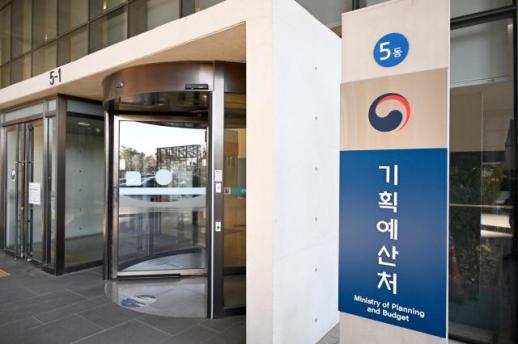 Government Launches Major Spending Restructuring to Enhance Budget Efficiency The South Korean government has initiated its largest-ever spending restructuring effort to reduce unnecessary financial expenditures. This move includes mandates for each ministry to implement spending restructuring at the project level, reinforcing the commitment to enhance fiscal efficiency. On May 18, the Ministry of Strategy and Finance notified various ministries of the results from the "Integrated Financial Project Evaluation" conducted over the past four months since January. As a result of this restructuring, 901 project budgets are set to be reduced or consolidated. This evaluation differs from previous self-assessments conducted by individual ministries. To enhance objectivity and reliability while alleviating the evaluation burden on ministries, 153 external experts were engaged to form a "Private Expert Evaluation Group." Out of 2,487 projects evaluated, 901 (36.2%) were identified for budget reductions or consolidations. Only 89 projects (3.6%) were deemed to be proceeding normally, while 1,497 projects (60.2%) were classified as needing improvement. The sector with the largest budget reductions is transportation and land, with 54 projects (17.3262 trillion won) facing cuts or consolidation. This is followed by disaster safety with 84 projects (8.6024 trillion won) and defense, diplomacy, and unification with 46 projects (3.7149 trillion won). Unlike previous self-assessments, ministries are now required to implement spending restructuring at the project level. If they fail to meet the restructuring targets by September, they must submit a justification for the unimplemented changes to the Open Budget portal for public disclosure. The Ministry anticipates that these restructuring efforts could lead to a total of 77 trillion won in budget adjustments. The Ministry plans to link the results of this integrated evaluation to the formulation of next year's government budget. Projects that receive poor performance ratings will see budget requests from ministries reduced accordingly. Projects identified for improvement must have their necessary adjustments reflected in a performance management improvement plan, which is to be submitted next month. Projects that demonstrate excellent performance will be rewarded. The evaluation group will select up to 50 outstanding projects, which will be exempt from evaluation in the following year. In July, a public vote will determine which projects are perceived to have high satisfaction and impact, with rewards for the project managers. By the end of this month, ministries must submit their budget requests for 2027, reflecting the evaluation results to the Ministry of Strategy and Finance. The report on the integrated evaluation results will be made public on the Open Budget portal next month. A Ministry official stated, "To strengthen the integrity of the integrated evaluation system, we will comprehensively address the improvement tasks raised during the evaluation process and the challenges faced by ministries, aiming to implement system improvements in the second half of the year." Woosuk Jin, head of the evaluation group and a professor at Myongji University, noted, "Compared to previous self-assessments, only 3.6% of projects were rated as normal, indicating a stricter evaluation. The differences in spending restructuring rankings among ministries suggest that further management will be necessary going forward."* This article has been translated by AI. 2026-05-18 18:57:32