

Journalist

Yujin Kim and Seo Hye Seung
ujeans@ajunews.com
-
 Ministry of Oceans and Fisheries to Enhance Port Security with Increased Funding The Ministry of Oceans and Fisheries is taking steps to enhance port security by securing additional personnel and improving security facilities and equipment. To support this initiative, the ministry has decided to raise the cap on port facility security fees for the first time in 16 years. According to the ministry, starting July 1, the cap on port facility security fees will increase by 68% compared to the previous year. Facility owners will collect a certain fee from shipping companies, cargo owners, and passengers to cover the costs of hiring security personnel and installing security facilities and equipment. When the basis for collecting security fees was established in 2010, the cap was set at around 10% of the costs incurred for security to alleviate the burden on logistics expenses. Since then, incidents such as cyberattacks on port facilities and illegal drone activities have increased, yet the existing security fees were lower than those at major overseas ports. For instance, the fees at Busan Port were 4.6 times lower than those in China and 70 times lower than in the Netherlands. Concerns about the inadequacy of the port security system were also raised during the confirmation hearing for Minister of Oceans and Fisheries Hwang Jong-woo. In response, the ministry conducted a study on the security costs of major port facilities nationwide starting in 2022 to raise the security fee cap. Based on the research findings, the ministry established the final increase criteria through consultations with stakeholders and financial authorities. As a result, the security fee, which was previously 3 won per ton of vessel weight, will rise to 5 won, while the fee for each passenger, which was 120 won, is expected to increase to 200 won. However, fees for empty containers and transshipments will be exempt. Kim Hye-jung, director of the Shipping and Logistics Bureau at the Ministry of Oceans and Fisheries, stated, "The increase in the cap on security fees is expected to provide a more secure management of ports, which are critical national facilities. We also plan to carefully assess the impact on port cargo volumes."* This article has been translated by AI. 2026-05-18 17:27:57
 -
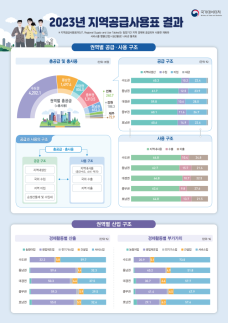 Half of Regional Production Concentrated in Capital Area as Semiconductor Ties Strengthen The capital area accounts for 48.6% of the total supply and use of goods and services in South Korea, highlighting its central role in the national economy. A recent study found that Seoul, which is service-oriented, and Gyeonggi Province, which focuses on manufacturing, form a closely complementary industrial structure. Additionally, Chungcheongnam-do and Gyeonggi-do are increasingly interconnected through the semiconductor industry. On May 18, the National Data Office unveiled the "2023 Regional Supply and Use Table," which details the goods and services supplied and consumed in the regional economy over a specific period. This table illustrates the flow of supply chains, showing where products produced in specific regions are primarily consumed. As of 2023, the total output of regional production was 5,646.6 trillion won, with the capital area contributing the highest share at 48.6%. Gyeonggi Province led in exports at 25.8% and imports at 23.7%, while Seoul, Gyeonggi, and Chungcheongnam-do were the top regions for inter-regional exports. During the survey period, the southeastern region accounted for 16.7% of total supply and use, emerging as an export-oriented area centered around Ulsan and Gyeongsangnam-do, exporting machinery, transportation equipment, and petrochemical products. The central region, excluding the capital area, ranked third in total supply and use, identified as a key manufacturing hub. It recorded the highest volume of goods entering and leaving the region, with electrical, electronic, and precision instruments, as well as petrochemical products from Chungcheongnam-do and Chungcheongbuk-do, moving throughout the domestic supply chain. Lim Kyung-eun, head of the Economic Statistics Planning Division at the Data Office, stated, "The flow of goods is actively occurring between regions with a high manufacturing share centered around Gyeonggi Province. In terms of services, the flow is concentrated in Seoul and Gyeonggi, while in non-capital areas, exports are made from regional hubs to surrounding areas." The share of regional production compared to total supply was highest in Seoul at 68.4%, followed by Jeju at 65.3% and Gyeonggi at 64.4%. Ulsan, Jeollanam-do, and Chungcheongnam-do ranked highest in imports, particularly for raw materials like crude oil. Analysis of regional specialization revealed that Gangwon Province excels in mining, Jeju in agriculture and fisheries, and Sejong in public administration. By region, the capital area leads in information and communication technology, while the southeastern region excels in machinery, transportation equipment, and other sectors. Trade patterns indicate that Seoul has a high volume of exports to other regions, while Ulsan's exports drive a net outflow, resulting in a trade surplus of 106.3 trillion won for the capital area and 12.1 trillion won for the southeastern region.* This article has been translated by AI. 2026-05-18 13:57:24
 -
 Government Plans Major Overhaul of Real Estate Tax System The South Korean government is expected to announce a significant reform of the real estate tax system in July, moving beyond merely reducing special exemptions to a phase of normalization. The policy focus is shifting toward a resident-centered approach and addressing market distortions, which is likely to result in a general reduction of various tax benefits. According to the Ministry of Economy and Finance on May 17, the long-term holding special deduction (장특공) for capital gains tax is among the first items under review in this reform. Currently, homeowners with one property can receive a deduction of up to 80% based on the length of ownership (40% per year) and the duration of residence (40% per year). Deputy Prime Minister and Minister of Economy and Finance Ku Yun-cheol stated on May 8 that the real estate market is transitioning from a previous overheating phase to one focused on actual residency, indicating a commitment to policy reform. As a result, the government is reportedly considering increasing the weight of residency duration in calculating the long-term holding deduction. Previously, long-term ownership alone qualified for tax benefits, but the new approach would adjust the deduction based on actual residency. This means that the duration of actual residence will become a key factor in taxation, rather than merely the period of property ownership. Additionally, tax benefits for housing rental businesses, introduced to stabilize the rental market, are also likely to be revised. In particular, the exemption from increased capital gains tax for landlords in designated adjustment areas is a major target for reform. Critics have long argued that the rental business system has allowed multiple property owners to reduce their tax burden while expanding their assets. Consequently, the government is reportedly considering reducing existing benefits or allowing them to expire. Property taxes, including comprehensive real estate taxes, remain a sensitive issue. While the current trend maintains a focus on reducing tax burdens, ongoing criticism highlights a lack of equity in asset taxation. Raising property taxes could encourage multiple property owners to list their properties for sale, but there are concerns that this could also increase the housing cost burden on low-income residents through rent hikes. Maintaining the current tax structure could stabilize the market and reduce tax resistance, but it may also exacerbate asset polarization and weaken the tax base, potentially leading to ongoing debates about so-called "tax cuts for the wealthy." On the other hand, strengthening tax burdens could enhance equity in taxation and encourage an increase in property supply, but it also carries the risk of driving up rental prices. However, some experts argue that tax reforms alone may not be sufficient to stabilize real estate prices. Yoon Ji-hae, head of the Real Estate R114 Research Lab, noted, "It has not been sufficiently proven that taxes directly control real estate prices," suggesting that lowering transaction taxes might be a more effective approach to stimulate market activity. She added, "Realistically, the likelihood of a homeowner returning to being a non-owner is low," and indicated that those eligible for the long-term holding deduction are likely to purchase another property in a different area even if they sell their current one.* This article has been translated by AI. 2026-05-18 06:09:59
 -
 Major Countries and Developing Nations Must Unite to Address Global Imbalances To address global imbalances, there is a growing call to enhance the roles of international organizations responsible for analysis and monitoring. The South Korean government proposed at the G20 Deputy Finance Ministers' meeting that both major and developing countries must work together to mitigate negative spillover effects. According to the Ministry of Economy and Finance, the third G20 Deputy Finance Ministers and Central Bank Deputy Governors meeting took place from May 14 to 15 in Florida, USA. Moon Ji-sung, the ministry's Director of International Economic Affairs, served as the chief representative, presenting South Korea's policies and positions on key issues. The G20 Deputy Finance Ministers' meeting is an event where finance officials from the G20 member countries gather to discuss global financial agendas. To tackle the deepening global imbalances, participating countries agreed on the need for orderly policy formulation. They reaffirmed the importance of organizations such as the International Monetary Fund (IMF) and the Organisation for Economic Co-operation and Development (OECD) in enhancing analysis and monitoring of imbalances. Currently, the Ministry of Economy and Finance co-chairs the G20 Global Imbalances Study Group with Australia. Director Moon emphasized that addressing the imbalance issue requires simultaneous efforts from surplus and deficit countries, including major economies like the United States, China, and the European Union, as well as developing nations, to minimize negative spillover effects. Discussions also covered the economic impacts of the Middle East conflict, national policy responses, and cooperation among vulnerable countries. The ministry highlighted South Korea's emergency economic response and suggested that practical solutions be developed at the G20 level to stabilize supply chains and enhance economic resilience. In the financial sector session, the ministry introduced policies aimed at improving financial regulations for productive finance and monitoring cross-border transactions of virtual assets through amendments to foreign exchange laws. Member countries showed interest in South Korea's tailored economic and financial education programs for different life stages. To promote economic growth, member countries shared examples of policies they are implementing, including regulatory reforms and the creation of innovation ecosystems. There was a consensus on South Korea's government-wide efforts for regulatory innovation and the rationalization of regulations in emerging industries such as artificial intelligence (AI) and autonomous driving.* This article has been translated by AI. 2026-05-17 13:52:08
 -
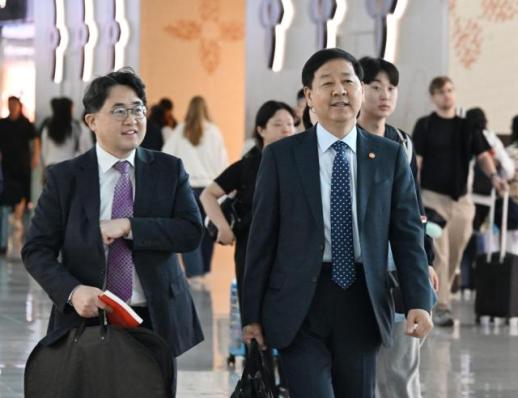 Deputy Prime Minister Koo Yoon-cheol Promotes South Korean Economy in Europe Koo Yoon-cheol, Deputy Prime Minister and Minister of Economy and Finance, is traveling to Europe to showcase South Korea's economic resilience and advancements in capital markets. According to the Ministry of Economy and Finance, Koo departed for the UK on the morning of May 17 to participate in the Investment Briefing (IR) for the South Korean economy. During his trip, he will conduct IR sessions for global investment institutions, hold meetings with major financial firms, and attend the G7 Finance Ministers and Central Bank Governors Meeting. This year, France holds the G7 presidency, and the meeting will take place in Paris on May 19. The agenda includes discussions on global imbalances and building mutually beneficial international partnerships, along with a working lunch for finance ministers and central bank governors from major economies. The meeting is expected to address the need to resolve current account imbalances between countries and explore ways to enhance the effectiveness of international development cooperation. Koo plans to emphasize that addressing complex crises, such as those arising from conflicts in the Middle East, requires collective efforts rather than actions from a single nation. He intends to share South Korea's emergency economic response strategies and plans to stimulate domestic demand and investment. Additionally, he will express his views on global economic issues as a bridge between the G7 and emerging economies. Koo will also strengthen ties with G7 member countries through meetings with UK Chancellor of the Exchequer Rachel Reeves, Canadian Finance Minister François-Philippe Champagne, and German Vice Chancellor and Finance Minister Lars Klingbeil. Before the meeting, Koo will conduct an IR session for major global investment institutions in London on May 18. He previously responded to suggestions at a recent meeting of the Treasury Market Advisory Committee, stating that he would implement timely market stabilization measures to enhance IR efforts targeting investors from Asia and other regions. Koo aims to attract investment by highlighting South Korea's strong global competitiveness, advancements in capital markets, and key policy directions for achieving a hyper-innovative economy. On the same day, he will meet with top executives from major global financial firms, including HSBC and Schroders, to discuss the state of the global economy and international financial markets. He will also meet with Odile Renaud-Basso, President of the European Bank for Reconstruction and Development, to explore how to support developing countries through development cooperation projects that incorporate artificial intelligence (AI). 2026-05-17 11:09:54
 -
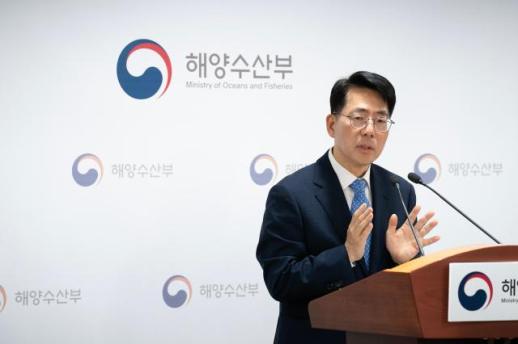 Minister Hwang Jong-woo Advocates for Regional Development and Arctic Route Expansion Hwang Jong-woo, the Minister of Oceans and Fisheries, stated on May 14 that revitalizing local economies and fostering growth from within regions are essential for future development, emphasizing that the promotion of maritime capital is a key task with a high likelihood of success. During his first press conference since taking office at the ministry's Busan headquarters, Hwang outlined key issues and plans for priority projects. He assessed that simply relocating HMM is insufficient to complete the vision of 'Maritime Capital Busan.' He stressed the need for comprehensive measures to create living conditions for young people to prevent brain drain. Hwang highlighted that the government's focus on developing the Arctic route aims to stimulate the economy and create jobs. "If the Arctic route opens, we can develop Busan into a logistics hub for Northeast Asia, creating numerous jobs," Hwang said. He emphasized the importance of proactively securing operational data and cargo in preparation for an era of regular Arctic route operations. The Ministry of Oceans and Fisheries plans to conduct trial operations for the Arctic route around September. Currently, the shipping company Panstar is supporting these trial operations, and preparations for a formal agreement are underway. Questions also arose regarding responses to the blockade of the Hormuz Strait due to the U.S.-Iran conflict. Hwang expressed caution about predicting the recovery of the international shipping route through Hormuz. However, he noted, "If the blockade is lifted, there are options such as utilizing the coast of Oman. A vessel loaded with crude oil has already unloaded at Yanbu Port, and three more are en route to Korea. For the time being, we can bring in crude oil via the Red Sea." Regarding the proposed tolls for passage through the Hormuz Strait, Hwang voiced his opposition, stating, "Tolls would violate international law. Ensuring free movement is a regulation of the International Maritime Organization (IMO) and an international agreement, so imposing tolls is inappropriate." As of now, there are 158 South Korean crew members confirmed to be inside the Hormuz Strait. The ministry is maintaining regular communication with them to alleviate any inconveniences and is providing counseling to address mental stress. Hwang projected that the 'roadmap for the relocation of public institutions under the ministry,' which was promised to be released in January, would gain momentum after the elections. The ministry, along with local governments and public institutions in Busan, is in discussions for the relocation, but the process is taking time as they review support measures. Hwang stated, "I believe that with the emergence of new local leaders after the elections, we can gain more momentum. Coordination is also needed regarding the second phase of public institution relocations, but the ministry is committed to relocating its subordinate agencies even before the second phase begins."* This article has been translated by AI. 2026-05-15 11:15:00
 -
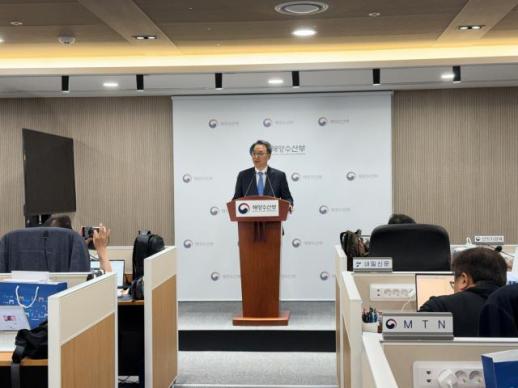 Incheon Maritime Museum Celebrates Second Anniversary with Focus on Marine Culture The National Incheon Maritime Museum has attracted 850,000 visitors since its opening two years ago, establishing itself as a leading museum in the Seoul metropolitan area. On May 14, Woo Dong-sik, the museum's director, held a press conference at the Ministry of Oceans and Fisheries in Busan, stating, "We will do our best to introduce marine culture to the public." Woo explained that the museum was created to educate residents of the metropolitan area, where more than half of the country's population lives but has limited access to the sea and knowledge of the marine industry, through marine artifacts, history, and heritage. Currently, there are two specialized maritime museums in South Korea, located in Busan and Incheon. Woo highlighted the difference in exhibition focus between the two: while the Busan Maritime Museum primarily showcases marine civilization, the Incheon museum centers on maritime exchange history and marine industry. According to recent data, 48% of the Incheon Maritime Museum's visitors are from the Incheon area, followed by 28% from Gyeonggi Province, 15% from Seoul, and about 10% from other regions. Notably, family visitors, including children, account for 70% of total attendance. In response to this demographic, the museum has established a children's section on the first floor, featuring a hands-on program titled "Little Navigator's Adventure." Additionally, it is collaborating with local artists to develop marine education programs that reflect regional characteristics. Woo has set a goal of reaching 4 million cumulative visitors by 2029. He also plans to host an annual special exhibition on maritime trade, showcasing a series on global marine civilizations. Regarding plans to attract foreign visitors, Woo noted that tourists arriving in Incheon typically head directly to Seoul. He mentioned that the museum is considering strategies to draw tourists in collaboration with relevant organizations such as the Incheon Tourism Organization and Incheon Port Authority. However, he acknowledged that accessibility remains a challenge. To address this, the Incheon Maritime Museum plans to analyze visitor numbers and behaviors through a pilot shuttle bus service, with the possibility of expanding operations in the future. Woo also introduced an upcoming special exhibition on Greece, scheduled for August. This exhibition follows a visit from the Greek Minister of Culture in 2024 and will focus on maritime exchanges between Greece and Korea. "Currently, 50-60% of the ships ordered by Greek shipowners are being built in Korean shipyards," Woo said, adding that the exhibition will feature five sub-themes showcasing Greece's national treasures.* This article has been translated by AI. 2026-05-15 03:07:57
 -
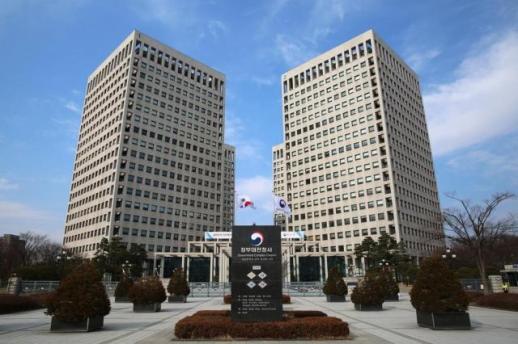 Public Procurement Agency Aims to Elevate Private Sector Innovations to Global Unicorns The Procurement Agency is ramping up support for procurement policies to help innovative private companies become global unicorns. On May 14, the agency visited robotics and biotechnology innovation companies in Incheon to explore ways to support private innovation through public procurement. Procurement Agency Commissioner Baek Seung-bo visited the company Sheko, which participates in the agency's export-leading pilot purchase program, to observe a product demonstration and discuss regulatory improvements and market expansion strategies. Sheko's "AI-based Water Purification Robot" is capable of recovering and filtering pollutants floating on the surface of oceans and rivers. The product was recognized for its performance through domestic trials with organizations like the Korea Marine Environment Corporation and Saudi Arabia's ARAMCO as part of the agency's pilot purchase program for innovative products in 2023. This year, the company is negotiating export contracts with several countries, including the United States and Singapore. "The core of innovative procurement is to validate creative products from private companies in the public market and grow them into global unicorns, with Sheko being a prime example," Baek said. He added, "We will strive to ensure that K-procurement products become the standard in the global market by utilizing overseas verification support and the innovative product pilot purchase system." Before the site visit, the agency held a "Public Procurement Guide Performance Sharing Conference" at the Incheon Regional Procurement Agency auditorium. The event shared success stories from three novice companies that faced challenges entering the public procurement market and facilitated discussions with seven promising companies currently receiving consulting support. The Procurement Agency plans to expand its public procurement consulting services based on this conference. It aims to assist companies in entering the procurement market and achieving results through tailored support. The agency previously introduced the Public Procurement Guide Consulting System in 2024 and designated 34 consulting specialists to operate the program. Additionally, a meeting with MZ generation employees was held that day. Baek stated, "We will make the voices and ideas of employees from the field and the MZ generation a core driving force of our policies."* This article has been translated by AI. 2026-05-14 14:52:56
 -
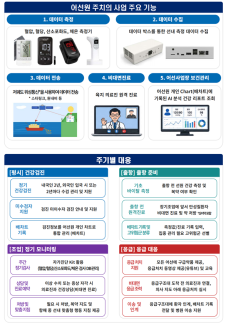 Pilot Program Launched to Provide Onboard Medical Care for Fishermen # A crew member, identified as A, was found unconscious but breathing in the engine room while returning from a fishing trip in the 35th maritime area. He was transported to a nearby hospital 45 minutes after being discovered, but despite CPR efforts, he was pronounced dead due to respiratory failure. # Another crew member, B, suffered a finger amputation during fishing operations and requested assistance from the captain, who notified rescue services. Following their guidance, B preserved the severed part and was transported to a nearby hospital for surgery. To address the healthcare needs of fishermen who suffer injuries or health deteriorations while at sea, the Ministry of Oceans and Fisheries is launching a pilot program for an "onboard doctor" service. This initiative will run until the end of the year for deep-sea fishing workers. On May 14, the ministry announced that it will sign a memorandum of understanding with representatives from eight organizations on May 15 to kick off the pilot program. The Ministry of Oceans and Fisheries will oversee the initiative, with administrative support from Jeju Province. The Korea Maritime Traffic Safety Authority and the National Federation of Fisheries Cooperatives will execute the program, while the Foundation for Cooperation between Large, Medium, and Small Enterprises and the Incheon Port Authority, Yeosu Gwangyang Port Authority, and HK InnoN will provide financial support. The "onboard doctor" program aims to support health management for those engaged in fishing activities far from land, where access to medical care is limited. The Jeju area is located more than 640 kilometers from the mainland, with travel times of three to four days. Fishing trips can last over 45 days. This pilot program is designed to manage the health of fishermen throughout the entire fishing cycle, including pre-departure, during operations, and in emergencies. As part of the program, fishermen will receive support for routine health check-ups, management of results, and assistance for those who have not undergone examinations. They will also benefit from remote consultations and prescriptions for chronic conditions, as well as pre-departure health checks for long fishing trips. Additionally, regular health assessments will be conducted during fishing periods, and if any abnormal results are found, doctors will provide consultations. Emergency care and management will also be available for trauma and other urgent cases. The ministry plans to utilize advanced technologies such as artificial intelligence and low-orbit satellite communications to implement this program. Initially, over 100 fishing vessels operating in the waters near Jeju, with around 1,000 fishermen, will be included in the pilot program, which will run from May 15 to December. The ministry will evaluate the results to consider potential expansions. Choi Hyun-ho, head of the Fisheries Policy Office at the Ministry of Oceans and Fisheries, stated, "This program is a systematic health management measure aimed at saving the lives of fishermen and preventing risks. We will also closely examine the health management of foreign fishermen who may fall into gaps in care through this pilot program."* This article has been translated by AI. 2026-05-14 12:22:50
 -
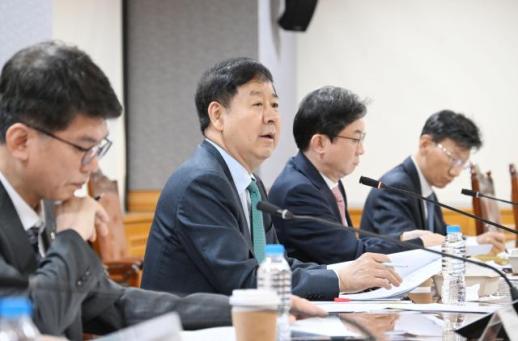 Samsung Strike Could Impact South Korean Economy, Government Warns 정부는 삼성전자의 파업이 현실화 될 경우 한국경제의 성장 뿐 아니라 수출, 금융시장 등 전방위적인 타격이 발생할 것으로 보고 문제 해결에 속도를 내야 한다는 입장을 밝혔다. Koo Yoon-cheol, Deputy Prime Minister and Minister of Economy and Finance, chaired a joint "Market Situation Inspection Meeting" at the Bankers Association in Seoul, where he reviewed recent trends in the financial and foreign exchange markets and assessed risk factors. The meeting included Bank of Korea Governor Shin Hyun-song, Financial Services Commission Chairman Lee Ok-won, and Financial Supervisory Service Chairman Lee Chan-jin. During the meeting, participants discussed the potential impact of a strike at Samsung Electronics on the South Korean economy. They expressed concerns that such a strike could pose significant risks to growth, exports, and the financial market. The attendees emphasized the need for prompt and principled negotiations between labor and management to resolve the issue before a strike occurs. The participants noted that the South Korean economy is showing stronger growth than previously expected, driven by robust semiconductor performance, while the fundamentals of the macroeconomy and the financial and foreign exchange markets remain solid. However, they also acknowledged ongoing uncertainties due to conflicts in the Middle East, which have contributed to rising government bond yields and exchange rates, indicating persistent volatility in the financial and foreign exchange markets. Amid these risk factors, there were concerns about increased stock selling by foreign investors and speculative trading offshore, which have heightened volatility in the foreign exchange market compared to the fundamentals of the South Korean economy. Nevertheless, some participants suggested that if external uncertainties, such as the Middle East conflicts, are resolved, the foreign exchange market could stabilize in the near future. They pointed out that favorable conditions, including healthy foreign liquidity and recent institutional improvements like the inclusion in the World Government Bond Index (WGBI), the National Pension Service's new framework, and the return of domestic market accounts (RIA), contribute to supply and demand stability. Additionally, the historically high current account surplus is seen as a supportive factor for market stability. Overall, the stock and bond markets are showing generally positive trends. The KOSPI index recently reached the upper 7,000s, marking a significant leap in market capitalization. Participants stressed the importance of continuously improving the capital market structure to elevate South Korea to a leading global market. The bond market has risen due to expectations of domestic economic growth stemming from strong first-quarter GDP performance. Furthermore, the structural demand for Korean government bonds has improved with foreign capital inflows following WGBI inclusion, allowing for stable management of the bond market.* This article has been translated by AI. 2026-05-14 11:53:30