

Journalist

Yujin Kim and Seo Hye Seung
ujeans@ajunews.com
-
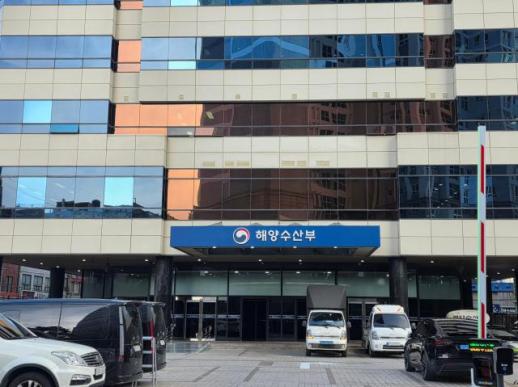 South Korea to Provide 3.1 Billion Won in Aid to Fish Farmers Hit by Cold-Water Losses The government has provided 3.1 billion won in support to fishing households that suffered losses from abnormal weather and other natural events. The Ministry of Oceans and Fisheries said Sunday that it provided disaster relief payments and loans to affected households on April 30 to help with recovery. Low water temperature refers to a sharp drop in sea-surface temperatures during winter cold snaps. Farmed species are vulnerable because their immunity weakens, while feed intake and digestion decline, raising the risk of die-offs. To limit damage from low temperatures this year, the ministry provided 1.5 billion won to aquaculture households that carried out emergency releases. It also paid 1.4 billion won in disaster relief to oyster farms that were damaged last year by abnormal water temperatures. In addition, 200 million won in support was applied retroactively to fishing households harmed by disasters that occurred before revisions to the Framework Act on the Management of Disasters and Safety took effect. The ministry said it will assess the scale of losses and extend repayment deadlines for existing fisheries policy loans accordingly. It will also reduce interest on policy loans for one year for damage rates of at least 30% but less than 50%, and for two years for damage rates of 50% or more. Fishers seeking support can apply through the National Federation of Fisheries Cooperatives and Suhyup Bank. Choi Hyeon-ho, director general for fisheries policy at the ministry, said the government will pay recovery funds as quickly as possible to help stabilize management at fishing operations. He said the ministry will continue working with local governments and other related agencies to minimize damage from natural disasters.* This article has been translated by AI. 2026-05-03 11:45:15
 -
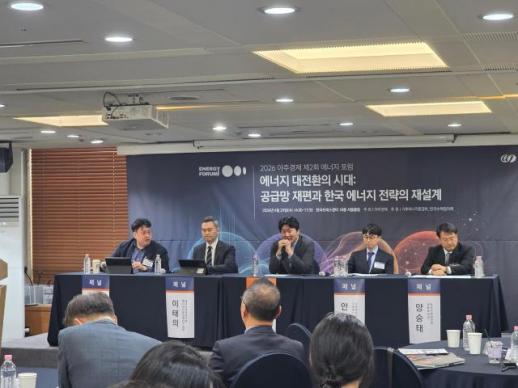 Experts urge balanced renewables-nuclear energy mix as supply chain risks grow Global geopolitical shifts and rising supply-chain risks are reshaping energy supply lines, prompting experts to call for a clear energy-mix strategy to secure South Korea’s stable power supply. Ajou Economy held the “2026 Ajou Economy Energy Forum” at the Press Center on the 29th and hosted a panel discussion on “Energy Mix Strategy for South Korea in the Era of Energy Security.” The session was moderated by Kim Hyeong-jun, a professor at KAIST’s Moon Soul Graduate School of Future Strategy. Panelists were Andre, a senior official in the Climate and Energy Policy Division at the Ministry of Climate, Energy and Environment; Lee Tae-ui, head of the Energy Security Policy Research Office at the Korea Energy Economics Institute; Yang Seung-tae, head of the Fuel Department at Korea Hydro & Nuclear Power; and Choi Deok-hwan, head of external cooperation at the Korea Wind Industry Association. Yang said nuclear power does not conflict with renewable energy, describing it as baseload generation that supports the national grid as renewables expand. He also said nuclear power’s cost advantages should be reflected in energy-mix policy. “Nuclear power produced about 31% to 32% of the nation’s electricity with an investment of 1.2 trillion won last year, and it is economical and highly resilient even if uranium prices rise,” Yang said. “We should make good use of nuclear power’s strengths to address issues such as renewables and transmission networks and move forward.” Andre pointed to expanding global supply-chain risks and urged policies that incorporate on-the-ground input to strengthen energy security. “After announcing the 2040 NDC last November, the recent Middle East war has brought a new perspective and many concerns about energy security,” he said. “To change the existing energy system, we need to consider not only production, consumption and distribution, but also the market tariff structure.” He added that the forum’s detailed discussions underscored the need for complex, multi-track solutions. Lee said countries must move quickly, warning that greenhouse gases already in the atmosphere will linger for centuries even if emissions are reduced. “The greenhouse gases on Earth have been here since 100 years ago,” Lee said. “Even if we cut emissions starting now, it could take hundreds of years for the greenhouse gases themselves to decline.” He added that cutting carbon emissions is difficult and requires major effort and time, and said countries should work aggressively to meet their Nationally Determined Contributions. Choi said economic hurdles must be overcome to maximize renewable energy use, warning that when regulatory deposits shrink, discussion of practical issues such as emissions permits and carbon reductions can fade. “When economic problems arise, the reality is that tools to respond to climate change, such as carbon reduction, are weakened,” Choi said. “Scope 3 greenhouse gases are not even being tracked in the current situation.” Choi also called for incentives for companies investing in renewables. “Right now, only state-run power generation companies are investing in renewables to score well in management evaluations,” he said. “We need to think about how to manage and revitalize this. Strengthening tax credits for companies that purchase renewable energy could also be an alternative.”* This article has been translated by AI. 2026-04-29 17:32:45
 -
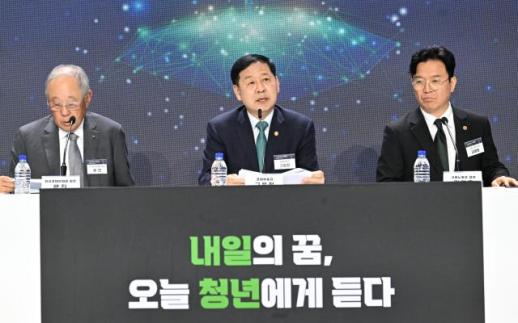 South Korea Unveils Youth New Deal to Expand Training and Help 100,000 Find Jobs Unemployed young people total 171, and the youth employment rate stood at 43.5% in the first quarter, underscoring a prolonged hiring slump for people in their 20s and 30s. The government said it drew on feedback from young people to craft a “Youth New Deal implementation plan” built around three tracks — advancement, experience and recovery — to support entry into the workforce. The government announced the plan on the 29th at a public-private Youth New Deal briefing chaired by Deputy Prime Minister and Minister of Economy and Finance Koo Yun-cheol, in a joint release with related ministries. Under the advancement track, the government will provide job training and education programs to 19,000 young people through private companies and universities. It will also launch the “K-New Deal Academy,” a 10,000-person program designed and run directly by private companies that hire, offering training for jobs in areas such as artificial intelligence and semiconductors, as well as youth-preferred fields including finance and content. Companies will also run voluntary programs such as psychological and career counseling and workplace adjustment support. Young people facing barriers to employment, including long-term unemployment, will be given priority in selection. Companies and participants outside the Seoul metropolitan area will receive preferential support for training costs and participation allowances. Short, intensive university courses previously limited to enrolled students will be linked to a “Youth Advancement Talent Boot Camp” and opened to 4,000 job-seeking young people who are not currently students. Two tracks — advanced-talent and practical-talent — will offer level-based curricula tailored from non-majors to majors. The experience track will expand work-experience programs by 22,000 slots and centrally manage participation records to support practical, job-relevant career building. In the public sector, the government will newly hire 9,500 staff to verify the status of delinquent national taxes and non-tax revenues and pursue tailored collection by debtor type. It will also hire 4,000 workers for a comprehensive farmland survey, including building databases to curb farmland speculation and track ownership and use. New programs will allow 2,500 young people to gain experience in social solidarity economy organizations — including social enterprises, village enterprises and cooperatives — in areas such as care, culture and the environment. The government also plans to expand public-institution youth internships by 3,000 from last year. In the private sector, the government will create or expand job-linked courses in youth-preferred fields such as tourism, content, culture and arts, and digital. It will also increase existing private work-experience programs by 1,500, focusing on in-demand internship-type placements and environmental, social and governance support roles. Participation records in Youth New Deal programs will be integrated and issued through an online platform, Employment 24, so they can be recognized as official experience in the job market. Under the recovery track, the government will run a close-support program covering the full cycle from counseling and daily-life recovery to job training and employment. It will expand Youth Future Centers that provide tailored services from four to 17 locations, and increase by 1,000 the Youth Challenge Support Program for young people who have given up job searching. Additional recovery programs — including parent and family relationship education and economic camps — will be offered to a total of 11,000 participants. To support job searches and hiring, the government will also redesign and upgrade youth employment support infrastructure. It will create a youth-focused track within the National Employment Support System and expand support, including job-search promotion allowances, to 30,000 more people. The government will broaden eligibility for the Youth Job Leap Subsidy — which pays up to 7.2 million won each to youth-hiring companies and to young workers who stay long term — from mid-sized firms in non-metropolitan industrial complexes to all mid-sized firms outside the Seoul metropolitan area. It will also expand low-interest loan support for young small business owners or small business owners who hire young people. A ministry official said the plan is expected to provide employment-related services to about 100,000 young people. “The government will prepare the programs without disruption so young people can quickly benefit from these measures,” the official said.* This article has been translated by AI. 2026-04-29 16:36:47
 -
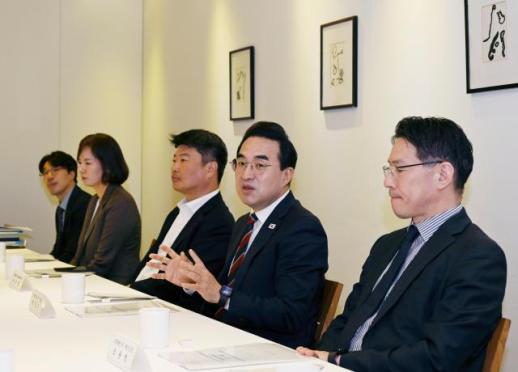 Budget Minister Park Hong-geun Pledges Constant Dialogue With Private Fiscal Advisers Park Hong-geun, minister of the Ministry of Planning and Budget, said on the 29th that he will strengthen communication between the government and the private sector by building a standing communication system for the Fiscal Policy Advisory Council. Park held a luncheon meeting that day with the council’s private-sector members to discuss policy issues broadly. He shared key points from a town hall meeting held the previous day and stressed the importance of government-private sector communication and cooperation. “The Fiscal Policy Advisory Council has played a central role as a channel for government-private communication in key national fiscal decisions,” Park said, thanking members for their work and dedication, which he said helped improve the quality of fiscal policy. He also called for more active engagement, saying that with policy conditions changing faster and more widely than ever, holding only two to four regular meetings a year could limit the government’s ability to reflect diverse policy needs raised in the field in a timely way. He said closer government-private communication is needed more than ever. In response, Park said the council plans to move beyond a regular-meeting format and establish an always-on communication system. He added that after the luncheon, the ministry plans to open and operate a group chat to enable ongoing exchanges. Private-sector members who attended freely discussed a range of views on overall fiscal policy, including institutional improvements and priority investment directions. Park said the government will closely review issues raised at the meeting as well as suggestions later posted in the group chat and reflect them in major policies, including the 2027 budget proposal. * This article has been translated by AI. 2026-04-29 15:36:11
 -
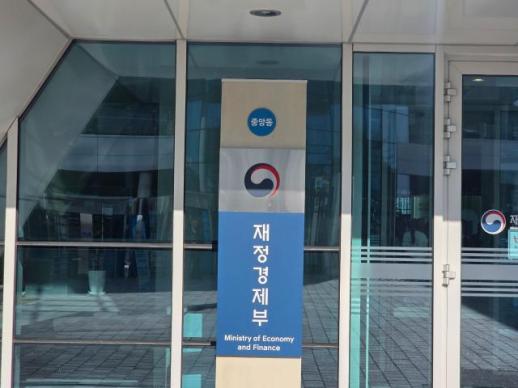 South Korea to Select New Supply Chain Stabilization Lead Firms, Offer Fund Support The government will begin procedures to select new private-sector “lead firms” for 2026 that play a key role in stabilizing South Korea’s domestic supply chains. The Ministry of Economy and Finance said on the 29th that lead firms are companies or business groups recognized by relevant ministries as contributing to supply chain stability by introducing, producing or providing items and services tied to economic security under the Framework Act on Supporting Supply Chain Stabilization for Economic Security. Since the law took effect in 2024, a total of 187 lead firms have been designated. The designation period is generally three years from the initial selection date. The government plans to jointly announce the selection plan for one month starting on the 30th and complete the process by June. Companies or business groups seeking designation must submit a “supply chain stabilization plan” to the relevant ministry by next month’s 29th for review, detailing their business, links to economic security items, plans to diversify sourcing and other stabilization measures, as well as financial status and implementation capacity. With the situation in the Middle East dragging on, the ministry said stable procurement of economic security items and services has become more important. The government plans to prioritize firms that propose measures such as diversifying import sources, expanding production bases at home and abroad, developing import-substitution technologies, and increasing stockpiles. Final designees will receive benefits including preferential interest rates as priority recipients of support from the Supply Chain Stabilization Fund. Lee Seung-wook, the ministry’s director general for economic supply chain planning, said recent developments in the Middle East have exposed weak points and bottlenecks in domestic supply chains, making structural improvements for stabilization and diversification more important. He said the government will maintain close communication and consultations with lead firms, which he described as central to domestic supply chain stability. * This article has been translated by AI. 2026-04-29 15:03:18
 -
 South Korea’s Oceans Ministry to Pay $100,000 in Bonuses for Busan Move, UN Ocean Summit Bid South Korea’s Ministry of Oceans and Fisheries will pay a total of 100 million won in special performance bonuses to civil servants credited with visible achievements, including the ministry’s relocation to Busan and winning the right to host the first UN ocean conference in Asia. The ministry said Tuesday it will hold its first special performance bonus awards ceremony for 2026 on Wednesday. A ministry review committee decided to award a combined 100 million won to 39 employees who carried out eight high-performing assignments. The Busan relocation task force, led by Director General Kim Seong-won and including Director Kim Han-ul, was recognized for overseeing the entire process — selecting a temporary office site, drawing up the relocation plan, moving the organization and staff, and supporting settlement conditions — and completing the move of about 800 employees and their families in about six months. Director Seo Jin-hee and Deputy Director Lee Chan-mi were credited with securing South Korea’s bid to host the fourth UN Ocean Conference, the largest and highest-level international meeting in the ocean sector. The conference is scheduled for June 2028 and would be the first held in Asia, the ministry said. Director Lee Jeong-ro and Deputy Director Lee Eun-jae were recognized for building an LTE-class high-speed internet environment about 50 times faster than existing shipboard internet, improving working conditions and welfare on board. The ministry said they reached an agreement to support high-speed internet service for 300 national essential vessels and designated international vessels starting in February. Other initiatives selected for special recognition included lifting restrictions on nighttime fishing in coastal waters off Incheon and improving navigation aids by repurposing unused lighthouses. Minister Hwang Jong-woo said the achievements were meaningful because they produced changes the public and people in the field can feel. He said the ministry will continue working to identify and improve issues so policies lead to better quality of life.* This article has been translated by AI. 2026-04-29 11:03:56
 -
 South Korea’s Finance Ministry Holds Talks on Creating a Korean-Style Sovereign Wealth Fund The government, which plans to draw up a plan in the first half of this year to launch a Korean-style sovereign wealth fund, convened a meeting Tuesday to gather views from related organizations. Min Gyeong-seol, director general for innovative growth at the Ministry of Finance and Economy, held a roundtable at the Korea Fiscal Information Service with promising companies in strategic industries and officials from the Financial Services Commission, the Korea Development Bank and other agencies to discuss the direction for establishing the fund. Participating companies shared their experiences and difficulties in raising investment during growth stages, saying large-scale, long-term investment conditions are needed for promising strategic-industry firms to develop into globally competitive companies. Participants said the government has helped build a startup ecosystem through various policy funds and policy financing, but noted that most have been structured as funds premised on liquidation, limiting their role as patient capital. They expressed expectations for a sovereign wealth fund that would not require liquidation. The Financial Services Commission, the Korea Development Bank and other agencies agreed that if existing policy financing and investment tools work in a complementary way with a Korean-style sovereign wealth fund, they could generate synergy in fostering strategic industries, supporting overseas expansion and building stable supply chains. They offered a range of policy suggestions on how to set up the fund. Min said the fund would be “a new investment tool” that would grow as a long-term, stable partner through equity investments in promising strategic-industry companies, and “accumulate the resulting gains as national wealth to share with future generations.” He said the ministry will reflect views raised at the meeting to prepare an establishment plan within the first half of the year and proceed with follow-up steps, including submitting legislation to the National Assembly soon.* This article has been translated by AI. 2026-04-29 10:33:21
 -
 South Korea to Offer Unsecured Credit Guarantees to Shippers Hit by Mideast War The Ministry of Oceans and Fisheries and the Korea Ocean Business Corp. said they will roll out a liquidity support package, including a new unsecured credit guarantee, to ease financial strain on South Korean shipping companies as the war in the Middle East drags on. Since the outbreak of the war, 26 South Korean vessels have been waiting after being blocked from transiting the Strait of Hormuz. The ships have faced higher costs from insurance surcharges, fuel expenses and increased hazard pay for crews. Business conditions have also worsened, with some cargo owners abandoning shipments despite rising freight rates, raising concerns about a cash crunch for carriers. In response, the ministry and KOBC will newly provide unsecured credit guarantees to South Korean carriers affected by the war. The program, launched with approval from the oceans minister to address an urgent economic and social crisis, allows carriers to raise short-term operating funds without providing collateral. Support is capped at 2.5 billion won per company, and the guarantee applies to short-term loans with maturities of up to one year, extendable up to five years. The agencies also revamped their emergency management stabilization funding to cut the time needed to provide support by up to three weeks. Instead of setting up a project entity to indirectly purchase corporate bonds, KOBC will buy the bonds directly. The change is also expected to reduce costs such as various fees. Under the revised stabilization funding, support is capped at 3 billion won per carrier, with a one-year maturity that can be extended once for one additional year. Carriers can also seek the existing stabilization funding program, which provides up to 100 billion won per company, if needed. The package also extends repayment periods for principal and interest on existing financial products nearing maturity and temporarily raises the loan-to-value ratio for ship-mortgage loans to 70% to 90% from 60% to 80%. Officials said this should help carriers secure additional liquidity using their vessel assets. KOBC said it began posting detailed guidance on its website and accepting applications for the unsecured credit guarantee and other support measures starting Tuesday. The ministry said it secured 1.4 billion won in the first 2026 supplementary budget to help cover insurance surcharges for small and midsize carriers operating in the Strait of Hormuz, with applications to be accepted through KOBC starting in early May. Oceans Minister Hwang Jong-woo said, "The government will provide comprehensive support so our shipping companies struggling due to the Middle East war do not face funding difficulties," adding it will do its best to keep export-import logistics networks running and prevent disruption to the national economy. KOBC President Ahn Byung-gil said uncertainty in the shipping industry has surged due to the war and that the program will help ease temporary liquidity strains and bolster stability across the sector.* This article has been translated by AI. 2026-04-28 17:29:35
 -
 South Korea Launches WAVE Strategy Council to Link Shipbuilding and Shipping South Korea’s oceans and industry ministries and private-sector partners on Monday launched a joint cooperation framework aimed at strengthening competitiveness by more closely linking the shipbuilding and shipping industries. The Ministry of Oceans and Fisheries and the Ministry of Trade, Industry and Energy held a launch ceremony in Seoul for the Shipbuilding-Shipping Mutual Growth Strategic Council. Attendees included the two ministers, officials from Korea Gas Corp., the Korea Offshore & Shipbuilding Association and the Korea Shipowners’ Association, and executives from major domestic shipbuilders and shipping companies, totaling about 100 people. The ministries said major competitors have been expanding domestic orders by tying their shipping and shipbuilding sectors together, while South Korea has lagged in coordination despite ranking second in global ship orders and fourth in shipping capacity. With geopolitical risks rising, including the war in the Middle East, they said it has become more important to build a maritime supply chain that connects ships built at home with transport by Korean-flagged vessels. Centered on the two industry associations and joined by government, industry and academia, the council announced its W.A.V.E. strategy. It calls for securing world-leading “super-gap” technologies; building an industrywide alliance across shipbuilding and shipping; expanding the Korean-flag fleet while ensuring work for domestic shipyards; and creating a shared innovation ecosystem that supports regional economies. Within the council, the industries agreed to quickly identify detailed tasks under the four pillars and draw up concrete execution plans by year’s end. The council will run standing expert task forces on issues including technology development, demonstrations, orders, finance and regulatory reform, and will link policy proposals to quarterly meetings. The government and industry also reaffirmed plans to build a “one-team” structure in which shipbuilding and shipping move under a single industrial strategy, including joint work on technology development, demonstrations and fleet expansion. The two ministries said they will pursue regulatory improvements, budget support, demonstration infrastructure and links to regional industrial bases. The ministries said they are jointly operating the Autonomous Ship M.AX Alliance and plan to push ahead in earnest this year with a 600 billion won project to develop fully autonomous, artificial intelligence-based ship technology, reflecting corporate demand. They also said they will support future growth areas such as eco-friendly ships powered by ammonia or electricity and the localization of liquefied natural gas cargo tanks, with the oceans ministry focusing on identifying demonstration demand and the industry ministry backing core technology development. The ministries said they will also discuss expanding cooperation to shipping and ports under the Korea-U.S. shipbuilding cooperation project known as MASGA. Oceans Minister Hwang Jong-woo said shipping and shipbuilding have developed as “key partners” supporting the national economy and import-export logistics. “The launch of this strategic council will be an important opportunity for the two industries to be reborn as a strong public-private ‘one team’ and further enhance global competitiveness,” he said, adding the ministry will strengthen cooperation with the industry ministry in areas including autonomous ship technology development and energy security. Industry Minister Kim Jeong-gwan said the move was significant because it activates an “execution-oriented” cooperation system that jointly designs and advances demand, technology, demonstrations and institutional improvements beyond the level of separate industries. “Based on the W.A.V.E. strategy, I hope shipbuilding and shipping will ride the coming wave of prosperity and leap forward together,” he said.* This article has been translated by AI. 2026-04-28 16:33:19
 -
 Deputy Prime Minister Koo Yun-cheol Meets AMCHAM Chief to Discuss Korea’s Global Finance Hub Push Koo Yun-cheol, deputy prime minister and minister of finance and economy, met Monday with James Kim, chairman of the American Chamber of Commerce in Korea, to discuss policy directions for South Korea’s push to become a global financial hub. The meeting at the Government Complex Seoul included Koo and the ministry’s international economic affairs chief. AMCHAM attendees included Jeffrey Jones, chairman of the Future of Korea Partnership Foundation, among others. Kim said that as Singapore and Hong Kong strengthen their competitiveness as financial centers, South Korea also needs to bolster the competitiveness of its financial industry to further expand the foundation for attracting global investment. He said he hopes to work closely with the ministry to strengthen market competitiveness and improve the investment environment. Kim also presented Koo with AMCHAM’s recently published report, “Strategy for Advancing Korea as a Financial Hub.” The report includes recommendations for South Korea’s bid to become a global financial hub, including creating a regulatory environment aligned with global standards and building a predictable supervisory system to help expand investment by global companies. Koo said the report contains a range of policy recommendations to strengthen the competitiveness of South Korea’s financial industry and would be a useful reference. He said the government is continuing efforts to advance capital markets, improve the structure of the foreign exchange market and innovate financial regulation. “The Korean government is making an all-out effort to position the capital market as a core platform for economic growth and to modernize it in line with global standards,” Koo said. He added that the government will steadily carry out tasks in the previously announced MSCI roadmap so South Korea’s capital market can be recognized with a fair “Korea premium.” Koo said the government will closely consult with relevant agencies on views raised during the meeting and actively reflect needed items in future institutional improvements. * This article has been translated by AI. 2026-04-28 15:04:28