
Journalist

Hong Seung-wan
veryhong@ajunews.com
-
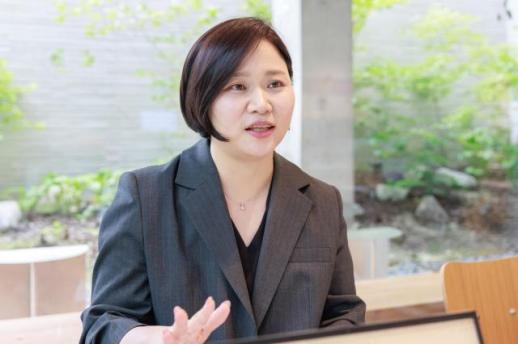 Tea Brand T’ference Says Average Monthly Sales Quadrupled After OliveBetter Debut "We hope a cup of T’ference tea becomes an experience that lifts everyday life up a notch," said Choi Tae-sook, head of Naturian, in an interview May 4 at the brand’s Gangnam store in Seoul. Choi said she wants T’ference to establish itself as a wellness item that improves modern consumers’ quality of life. Naturian operates the natural cosmetics brand ISOI. After entering the natural cosmetics market in 2009, the company launched the tea-focused brand T’ference in 2021. The name combines “tea” and “difference,” reflecting its aim to offer something distinctive even in a single cup. Choi pointed to “purple tea” as T’ference’s key ingredient. She said it is rich in anthocyanins, an antioxidant, and could be used not only in topical cosmetics but also as a drink. She said the company launched T’ference after seeing growth potential in the wellness market, including products that support balance in body, mind and daily life. T’ference’s signature purple tea has a violet hue. Choi said the leaves are grown at an altitude of 1,800 meters in Kenya, adding that the plant changes from green to purple as it withstands intense sunlight, giving the tea its name. At launch, T’ference positioned itself as a premium tea brand targeting “style-conscious women in their 30s.” It sought department store placements, but the process was difficult because Korean department stores favored imported tea brands. The company used pop-up stores to gauge consumer response and expand opportunities, and has opened in locations including Hyundai Department Store’s Trade Center branch and JW Marriott Seoul. Choi said growth accelerated after the brand entered CJ Olive Young. She said T’ference developed a powdered kombucha aimed at customers in their 20s who prefer powdered tea, adding British-made vitamins and 19 types of probiotics. The product helped the brand enter Olive Young in August last year, and it became popular enough to win an Olive Young Awards honor that year, she said. Choi said sales gained further momentum in January after Olive Young opened OliveBetter, a specialized store in Seoul’s Gwanghwamun area that brings together health supplements, inner beauty and wellness products. She said she had high expectations because OliveBetter could pull together a wellness market that had been fragmented. Since T’ference entered OliveBetter in January, its average monthly sales have risen more than fourfold compared with the previous five months, she said. Choi also said a rise in foreign customers visiting Olive Young has helped expand T’ference’s global visibility. In February, T’ference began selling hyaluronic kombucha on the Japanese e-commerce platform Qoo10 Japan, and last month it began selling purple tea there as well. The company plans to widen consumer engagement through OliveBetter. Choi said T’ference will operate a tea bar at the OliveBetter Gwanghwamun store from June to August, and will dispatch staff so visitors can sample products and hear explanations. T’ference is also continuing support for its sourcing region as it expands its business. The company said it supports a water purification project to improve drinking-water conditions in Kenya, where purple tea is produced, with each purple tea product sold funding purified water for one Kenyan child to drink and wash for a day. 2026-05-06 06:03:27
 -
 Lotte Chilsung Beverage Q1 Operating Profit Jumps 91% on Milkis, Saero Growth Lotte Chilsung Beverage said its first-quarter operating profit surged 91% from a year earlier, as beverage exports and overseas subsidiaries expanded despite weak domestic demand and pressure from a strong exchange rate. Growth in soju and ready-to-drink products also supported results in its liquor business. The company said Monday that first-quarter operating profit on a consolidated basis totaled 47.8 billion won, up 91% from the same period a year earlier. Revenue rose 4.6% to 952.5 billion won. In beverages, revenue increased 1.5% to 414.2 billion won, while operating profit climbed 62% to 21.1 billion won. The company cited a tougher external environment and higher business costs, but said sales rose across most major categories, including carbonated drinks, juice, coffee, energy drinks, sparkling water and sports drinks. Energy drink sales rose 8.7% from a year earlier, and sports drink sales increased 11.5%. Beverage exports also grew. Sales of products including Milkis, Let’s Be and aloe juice increased in more than 50 countries, including the United States, Russia, Europe and Southeast Asia, lifting export performance 13.4% from a year earlier. In the liquor business, revenue rose 0.7% to 194.2 billion won and operating profit increased 9.6% to 15.6 billion won. The company said consumer sentiment weakened amid Middle East-driven geopolitical risks, high inflation and shifting drinking trends, but soju, cheongju and RTD products supported performance. Soju sales rose 2.6%, led by Saero, which underwent its first renewal since launch. Cheongju sales increased 2.7% as demand for smaller-size alcoholic beverages grew, with Subok One Cup driving gains. RTD sales jumped 74.4% on rising interest in fruit-flavored sparkling alcoholic drinks and an expanded lineup. Growth was also strong in the global segment, which includes overseas subsidiaries in the Philippines, Pakistan and Myanmar. First-quarter revenue in the segment rose 11.1% to 378.3 billion won, and operating profit increased by 13.7 billion won to 14.3 billion won. The global segment’s share of total revenue expanded to about 46%. Lotte Chilsung Beverage said it will continue focusing this year on improving profitability at its overseas subsidiaries. It also plans to expand production capacity to strengthen competitiveness in fast-growing emerging markets and meet rising global demand for products including Milkis, Let’s Be, Saero and Soonhari. A company official said it will keep prioritizing profitability to raise corporate value and build a foundation for sustainable growth. Separately, Chief Executive Officer Park Yoon-ki said at the company’s 59th annual shareholders meeting in March that it would pursue management efficiency, restructure its domestic business portfolio and strengthen overseas operations to meet its business plan, while moving ahead with mid- to long-term strategies for future growth.* This article has been translated by AI. 2026-05-04 15:52:10
 -
 KT&G Named to Dow Jones Sustainability World Index for Second Straight Year KT&G said it was included for a second consecutive year in the top-tier “World Index” of the Dow Jones Best-in-Class Indices (DJBIC), a global ESG (environmental, social and governance) assessment that recognizes leading sustainability performance. The company said Monday it was also included in the Dow Jones “Asia Pacific” and “Korea” indices. DJBIC is an annual sustainability evaluation published by S&P Global, and is used by global investors as a benchmark for responsible investment. The World Index includes only the top 10% of companies for ESG performance among roughly 2,500 firms with the largest global market capitalization, KT&G said. It said it was ranked No. 1 within its industry group after receiving high marks across governance, environmental and social categories. KT&G said it earned the highest score in governance-related items including board independence, diversity policies and having an ESG governance structure. In the environmental category, it cited recognition for climate-change response and water-resource management based on its “2030 Green Impact” environmental management vision. In the social category, it said it scored highly for efforts such as implementing human-rights management. “This World Index inclusion is the result of the global capital market objectively recognizing our continued efforts to advance ESG management,” said Shim Young-a, head of ESG management at KT&G. “We will continue to strengthen execution of ESG management in step with enhancing our core business competitiveness and establish ourselves as a trusted company.” KT&G said it is also strengthening its compliance and ethics management system. In January, it elevated its compliance management center to a compliance management office to enhance companywide compliance and ethics oversight. It also designates June 2 each year as “KT&G Corporate Ethics Day” and shares ethics messages with employees. * This article has been translated by AI. 2026-05-04 13:48:31
 -
 Homeplus Dropped From Shinhan Bank Employee Loan Program as Restructuring Drags On Homeplus, which is undergoing corporate restructuring, has been removed from Shinhan Bank’s list of companies eligible for its “Elite Loan,” a credit-loan product for employees of top-rated firms, industry sources said. The prolonged process is now affecting workers’ personal banking, beyond store operations and dealings with suppliers. According to the retail industry on the 3rd, Homeplus was recently dropped from the Elite Loan program. The product offers preferential loan limits and rates to employees at selected companies. As a result, Homeplus workers were told they may have difficulty extending existing loans under the same terms when their loans mature, the sources said. A Shinhan Bank official said employees were informed that extensions under the product would be difficult at maturity. The official added that being removed from the list does not mean the bank will demand immediate repayment or push borrowers to refinance right away. The bank can extend loans for up to three years, the official said, after which it guides customers to general credit-loan products. In the financial sector, the company’s drawn-out restructuring and delayed wage payments are seen as factors behind the change. Homeplus has delayed wage payments since December last year, and employees have not received last month’s pay. Although its controlling shareholder, MBK Partners, injected 100 billion won in emergency debtor-in-possession financing, most of it was used to cover unpaid wages and outstanding payments. One Homeplus employee said health insurance premiums have been unpaid since last year, making it hard even to get a loan, and repeated wage delays have fueled internal concerns that timely pay will remain difficult. The union, however, said securing funds to restore normal operations should come first, even if it means giving up wages. The Homeplus General Union said wages should be forgone to ensure the money is used entirely to normalize operations and supply goods, adding that all available resources — including workers’ wages, proceeds from the Homeplus Express sale and DIP funds — should be focused on restoring operations. Separately, the Seoul Bankruptcy Court extended the deadline to approve Homeplus’ rehabilitation plan by two months, from the 4th of this month to July 3. The court cited the pending main contract for the sale of Homeplus Express, the company’s supermarket business unit, to NS Shopping under Harim Group. An industry official said proceeds from the Express sale and whether additional operating funds can be secured will be key variables in the restructuring. * This article has been translated by AI. 2026-05-03 16:18:17
 -
 S. Korean appeals court dismisses inmates' COVID-19 lawsuit against government SEOUL, April 25 (AJP) - A South Korean appellate court has dismissed a damages lawsuit filed by inmates against the government over a massive COVID-19 outbreak at a Seoul detention center in 2020. A Seoul Central District Court appellate panel upheld a lower court's ruling against 33 inmates and their families who sued the state and then-Justice Minister Choo Mi-ae, Yonhap News Agency reported Saturday. The plaintiffs had argued that the government and correctional authorities were liable for the cluster infections at the Seoul Eastern Detention Center due to negligent virus containment measures. However, the court found no direct epidemiological link between an initial outbreak among prison staff in November 2020 and a larger, subsequent wave among inmates in December. "The similarity between the viruses in the first and second waves was low," the court stated. "It is reasonable to view the routes of virus introduction as different." The court also rejected the plaintiffs' claims that the facility exacerbated the spread by failing to strictly separate close contacts based on transmission routes. The judges noted that the detention center had implemented clear separation standards between confirmed and non-confirmed individuals, adding that tracing exact transmission routes for each case was "quite difficult" given the time and space constraints at the time. 2026-04-25 17:42:19
 -
Appeals court rejects COVID-19 damages suit by Seoul detention center inmates, families Inmates and their families who sued the South Korean government over a COVID-19 outbreak at Seoul Eastern Detention Center in 2020 have also lost on appeal. According to Yonhap News Agency on Friday, the Seoul Central District Court’s Civil Appeals Division 5-1 recently ruled against 33 inmates and family members who sought damages from the state and Choo Mi-ae, the justice minister at the time who oversaw correctional facilities, upholding the lower court’s decision. The panel said it did not see a link between a first wave of infections centered on staff that began Nov. 17, 2020, and a second wave centered on inmates that continued after Dec. 7 that year. The court said it was difficult to conclude the inmate cluster stemmed from the earlier staff outbreak. “The similarity between the viruses in the first and second outbreaks is low, and testing conducted during the first outbreak showed a low positivity rate among inmates,” the court said, adding that it was reasonable to view the routes of introduction as different. The court also rejected the plaintiffs’ claim that infections spread because close contacts were not separated by transmission route. It said the detention center distinguished close contacts using a clear standard of confirmed versus unconfirmed cases, and that identifying each confirmed patient’s route of infection would have been very difficult given time and space constraints. * This article has been translated by AI. 2026-04-25 14:39:16
-
 South Korea’s Kim Min-seok hails Pearl Abyss’ ‘Crimson Desert’ as milestone for K-games Prime Minister Kim Min-seok congratulated Pearl Abyss on its game “Crimson Desert” surpassing 5 million copies sold just 26 days after release. According to Yonhap News Agency on the 25th, Kim wrote the message on social media the previous evening while sharing an article about the sales milestone. Kim said the title won over players worldwide with a “living game world” built with the developer’s own technology, lifelike graphics and active communication with users. He added that it opened “a new chapter” for K-content by naturally incorporating Korean elements such as taekwondo and Korean food. Kim also said the government would help promote the game industry. Calling it “an important turning point” showing the domestic game industry can expand to platforms including consoles, Kim said the government would “actively support” the sector with a sense of responsibility. He said he would work to create conditions for K-games to shine as a pillar of K-content. “Crimson Desert” was released on March 20 and sold 2 million copies worldwide on its first day, setting a record for the fastest and highest sales for a Korean-made packaged game. It topped 3 million copies on day four, surpassed 4 million on day 12 on April 1, and reached 5 million as of April 15, its 26th day on the market. * This article has been translated by AI. 2026-04-25 14:24:16
 -
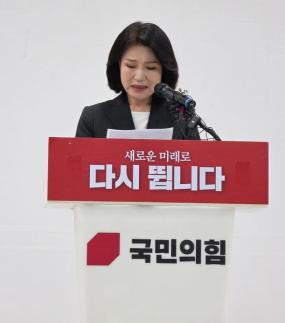 Lee Jin-sook Drops Out of Daegu Mayor’s Race After PPP Cutoff Lee Jin-sook, a former chair of the Korea Communications Commission who was cut from the People Power Party’s primary for Daegu mayor, said April 25 she will not run in the June 3 local election. With Rep. Joo Ho-young also having declared he will not run, the party’s internal turmoil over the Daegu race appeared to ease. Speaking at a news conference at the People Power Party’s Daegu office, Lee said, “Today, I am stepping down from the position of preliminary candidate for Daegu mayor.” She added, “When the People Power Party’s Daegu mayoral candidate is chosen tomorrow (26th), I will do my best to help that person defeat the Democratic Party candidate. I will help protect Daegu from the reckless Democratic Party government.” Lee again called the party nomination committee’s decision to cut her unfair, but said she would not run as an independent. “I also had the desire to leave the party and run as an independent to receive the judgment and choice of citizens,” she said. But she said she was held back by concerns that “if even Daegu is handed over to the left, what will happen to the Republic of Korea,” adding that she feared Daegu, a conservative stronghold, could be overtaken by “socialist populism.” Asked whether she might run in a possible parliamentary by-election that could arise from the Daegu mayoral contest, Lee did not answer directly. “As I said in my statement, I have only one 마음 — to protect Daegu as the last bastion of liberal democracy,” she said. Asked whether she had further meetings with party leader Jang Dong-hyuk or other members of the nomination committee, Lee said Jang met her before leaving for the United States and that they met again recently to discuss the Daegu situation. “We discussed how to protect Daegu, and there was also common ground,” she said. * This article has been translated by AI. 2026-04-25 13:51:17
 -
 U.S. Envoys Head to Pakistan for Possible Iran Peace Talks; Tehran Denies Meeting Planned As the United States and Iran issue conflicting messages about whether peace talks will resume, reports say delegations from both sides could make contact in Pakistan as soon as this weekend. Yonhap News Agency reported that The New York Times, citing two senior Iranian officials, said Iranian Foreign Minister Abbas Araghchi is expected to meet U.S. Middle East envoy Steve Witkoff and President Donald Trump’s eldest son-in-law, Jared Kushner, in Pakistan this weekend. The officials said Araghchi traveled to Islamabad carrying a written response to a U.S. proposal for peace talks. They said Iran has publicly maintained it would not hold talks until the U.S. blockade of the Strait of Hormuz is lifted, but has privately explored ways to restart negotiations through intermediaries including Pakistan. Araghchi arrived in Islamabad on April 25 local time. The Washington Post also reported the talks would resume this weekend. A U.S. official told the newspaper that Witkoff and Kushner had received confirmation from Iran about restarting talks, saying, “Otherwise they wouldn’t be going.” The U.S. government also officially confirmed plans to send Witkoff and Kushner to Pakistan. The White House said it “expects positive progress” from the visit. Trump suggested talks could advance, saying Iran “will come up with a proposal.” Reports differ on timing. The Associated Press said a meeting was set for Saturday, April 25, while Axios, citing multiple sources, reported it could be held Monday, April 27. Iran’s official position, however, diverged from the U.S. account. Iranian Foreign Ministry spokesman Esmail Baghaei wrote on X that “no meeting between Iran and the United States is planned.” He said Araghchi’s Islamabad trip was to meet senior Pakistani leaders and to support Pakistan’s continuing efforts to end the U.S.-led war and restore regional stability. * This article has been translated by AI. 2026-04-25 10:57:17
 -
 US Sanctions China’s Hengli Group Over Purchases of Iranian Oil The United States has added China’s major refining company Hengli Group to its sanctions list over imports of Iranian oil. According to Yonhap, the U.S. Treasury and State departments said on April 24 (local time) they were sanctioning Hengli Group for buying Iranian oil. The Treasury Department’s Office of Foreign Assets Control said Hengli is among the largest customers, purchasing Iranian oil worth tens of billions of dollars. Treasury said it determined that Hengli and other Chinese refiners, by importing sanctioned Iranian oil, were providing economic support to Iran’s government, including Iran’s military. Hengli is known to have refining facilities in the northeastern port city of Dalian with capacity to process about 400,000 barrels of crude oil a day. Treasury also targeted a shipping network involved in transporting Iranian oil. It added about 40 shipping companies and vessels to the sanctions list for operating a “shadow fleet” that moves Iranian oil while evading sanctions. Under the measures, U.S.-based assets of the designated companies and vessels will be frozen and property interests blocked. Entities in which they directly or indirectly own 50% or more are also covered. Sanctions may also be imposed on institutions that conduct transactions involving funds, goods or services with them. Separately, Treasury said it froze $344 million worth of cryptocurrency believed to be linked to Iran. Treasury Secretary Scott Bessent said on X that OFAC is imposing sanctions on “multiple wallets” tied to Iran, adding the action would “systematically degrade Tehran’s ability to generate and move funds back home.” He also said the department would track funds Tehran is “desperately” trying to move abroad and target all financial lifelines connected to the government. CNN reported that the cryptocurrency freeze was carried out through Tether, the issuer of the world’s largest stablecoin, USDT, based on information provided by Treasury. * This article has been translated by AI. 2026-04-25 09:57:16