
Journalist

Park Jung-eun
veryhong@ajunews.com
-
 Coupang Denies Reports It Lobbied U.S. to Pressure South Korea Coupang on Thursday denied recent reports that it was pressuring the South Korean government through lobbying of the U.S. administration and Congress, calling the claims untrue. In a reference note, the company said assertions that there were discussions related to security were "clearly false." It said its lobbying has covered economic cooperation between the two countries, including expanding investment and trade involving South Korea, Taiwan and Japan, and broadening professional visa opportunities for South Koreans, and that it did not include any security-related issues. Coupang added that it is focused on communication with the United States and other countries to promote AI innovation, investment and job creation, and to expand cross-border commerce. Separately, a filing under the U.S. Lobbying Disclosure Act showed Coupang Inc. spent $1.09 million on lobbying in the first quarter (January to March) this year. Coupang said companies in the United States and major South Korean firms conduct legal lobbying, adding that major U.S. companies spend three to four times more than Coupang and that its spending is also lower than that of major South Korean conglomerates. * This article has been translated by AI. 2026-04-24 15:22:46
 -
 Lotte, Shinsegae expand Vietnam export channels for South Korean small businesses With President Lee Jae-myung on a state visit to Vietnam, Lotte and Shinsegae moved to help South Korean small and midsize companies enter the Vietnamese market, widening overseas sales channels for K-brands. According to the industry on April 24, the Korea Trade-Investment Promotion Agency, known as KOTRA, held a Korea-Vietnam Business Partnership event the previous day at the National Convention Center in Hanoi. The event, arranged to coincide with Lee’s visit, featured consultations between South Korean companies and Vietnamese buyers, along with product showcases. Lotte Home Shopping hosted a showcase and export consultations aimed at helping South Korean small businesses expand into Vietnam. Using its home-shopping model, the company produced a mobile live broadcast from the showcase studio in collaboration with a local influencer. The broadcast featured products from small businesses including Gravity, a functional anti-hair-loss shampoo brand, and Romams, a premium diaper brand. Lotte Home Shopping streamed the program on Southeast Asian e-commerce platform Shopee and TikTok Live, while also selling products in real time. Viewership reached 52,000. Lotte Home Shopping said on-site meetings with distribution buyers led to talks on placement in local retail channels and export and exclusive distribution agreements. Chief Executive Kim Jae-gyeom said the company achieved “meaningful results” through the showcase and export consultations in Vietnam and pledged continued support for small businesses’ overseas expansion to strengthen the global competitiveness of K-brands. Shinsegae Department Store focused on supporting exports of K-beauty brands to Vietnam. It opened a “Shinsegae Hyper Ground” showcase at the venue, introducing South Korean beauty brands to local businesspeople and buyers. Eight K-beauty companies, including Kundal and Ire Recipe, took part. Shinsegae said it selected brands it viewed as competitive in Vietnam, considering local climate, consumer preferences and product functions. Participants also discussed market-entry strategies and the possibility of jointly planning products. Shinsegae Group’s online fashion platform W Concept also joined, presenting six brands including Botero and Tonywack to promote K-fashion. Industry Minister Kim Jeong-gwan and KOTRA President Kang Kyung-sung visited the venue and toured the showcase with Shinsegae Department Store CEO Park Joo-hyung. Park said Shinsegae this year will continue supporting competitive small businesses, alongside government assistance, so K-brands can expand into global markets including the United States, Taiwan and Japan. The Korea-Vietnam Business Forum held in connection with Lee’s state visit drew about 500 people from public institutions and the business community, including 109 companies in the South Korean economic delegation. Attendees included Samsung Electronics Chairman Lee Jae-yong; SK Group Chairman Chey Tae-won, who also heads the Korea Chamber of Commerce and Industry; LG Group Chairman Koo Kwang-mo; Lotte Group Chairman Shin Dong-bin; POSCO Holdings Chairman Jang In-hwa; HD Hyundai Vice Chairman Chung Ki-sun; GS Chairman Huh Tae-soo; and Hyosung Chairman Cho Hyun-joon. * This article has been translated by AI. 2026-04-24 11:12:40
 -
 Musinsa Opens Seongsu Mega Store With First Permanent Beauty Shop, Taking On Olive Young In Seoul’s Seongsu-dong neighborhood, where CJ Olive Young stores are clustered, fashion platform Musinsa has opened a supersized complex anchored by its first permanent offline beauty shop. The new Musinsa Mega Store Seongsu is a seven-minute walk from Olive Young N Seongsu, billed as the chain’s largest store nationwide. Musinsa is bundling beauty, food and hands-on experiences as it seeks a bigger presence in the offline beauty market. The store, shown during a media tour on April 23, a day before its opening, spans five levels from basement 1 to the fourth floor. Each floor is organized by concept — including Musinsa Girls, Musinsa Young and Musinsa Work & Formal — with separate zones for the shoe specialty area Musinsa KICKS and the bags-and-hats section Musinsa Bag & Cap Club. The layout is designed so shoppers can outfit themselves head to toe within the store. The basement includes a coin karaoke area branded “Musingsa,” built as a large glass capsule that can fit four adults at once. A camera inside allows visitors to record themselves singing. Musinsa applied for the “Musingsa” trademark in July last year and has now brought it into a physical space. The unusual addition reflects Seongsu-dong’s experience-driven retail scene. The most prominent addition is the second-floor beauty zone, a 483-square-meter (about 146-pyeong) space that serves as Musinsa’s first permanent offline beauty store. About 700 beauty brands are carried. Shelves are packed with skin care and hair products, and a dedicated mask-pack display fills an entire section. The merchandising appears to reflect rising foreign tourism in Seongsu-dong and demand for Korean mask packs among visitors. With three Olive Young stores nearby, Musinsa is also emphasizing differentiation. A section called the “Only Musinsa Beauty Zone” groups products sold exclusively through Musinsa Beauty. A Musinsa official said shoppers can find brands recently added to Musinsa Beauty, including the Chinese color cosmetics brand Flower Knows. The area is also designed in red, contrasting with Olive Young’s signature green. The top floor is a new food-and-beverage area called “Food Garden.” Past the entrance, visitors pass Norway’s coffee brand Fuglen, then find a lineup that includes a garaetteok tteokbokki specialty shop, pizza and dessert brands. The setup resembles food halls in large malls or department stores, aimed at keeping shoppers on site longer after they finish shopping. Musinsa’s mega store opening is expected to accelerate its beauty expansion and intensify competition with Olive Young in the Seongsu area. Musinsa created a beauty purchasing organization in the first quarter of this year and hired specialized staff. A Musinsa official said the company plans to continue hiring in the second quarter and expand the beauty team, adding that it aims to “cement its position as an unprecedented fashion-and-beauty hub in Seongsu.” * This article has been translated by AI. 2026-04-24 06:06:31
 -
 Lotte Speeds Turnaround as Jamsil Hub Tops 5 Trillion Won and Southeast Asia Grows Lotte Group’s food, retail and hotel affiliates are leading a recovery in results, the company said. In South Korea, “Lotte Town Jamsil” posted a record by topping 5 trillion won in annual sales for the first time. Overseas, growth has continued mainly in food and retail operations in India, Vietnam and Indonesia. The chemicals business, which has faced a prolonged slump, is accelerating restructuring to protect profitability. Lotte said Thursday that its retail affiliates are continuing to expand in Southeast Asia. A key example is Lotte Mall West Lake Hanoi, which opened in 2023. Since opening, it has maintained double-digit sales growth and has surpassed 600 billion won in cumulative sales. Lotte Mart is also stepping up its push in Southeast Asia. It operates 63 stores in the region, including 15 in Vietnam and 48 in Indonesia. The company said it has stabilized its hypermarket business locally and is continuing to grow by focusing on groceries and daily necessities. Food affiliates are adding momentum. Lotte Wellfood has stood out in India, with the effect of launching the merged Lotte India entity reflected in results. Sales last year rose 10% from a year earlier, and the company expects growth to continue this year. Lotte Chilsung Beverage is also strengthening its push in key overseas markets to support an improving earnings trend. At home, growth at Lotte Town Jamsil has been notable. The complex, which includes Lotte Department Store, Lotte Hotel and Lotte World, exceeded 5 trillion won in annual sales last year for the first time. Lotte said seasonal large-scale events and differentiated content helped draw more than 60 million visitors over the year. A central driver has been Lotte Department Store’s Jamsil branch. The store posted more than 3 trillion won in sales last year, matching 2024 and marking a second straight year above 3 trillion won. From 2021 through last year, its average annual growth rate was about 15%. The hotel and duty-free businesses have also shown signs of recovery. Lotte Hotel said sales and operating profit improved across all regions last year, helped by a rebound in global travel demand and an increase in foreign tourists. Lotte Duty Free recorded profits for four consecutive quarters last year and returned to profitability on a full-year basis. It recently reopened its store in the DF1 zone at Incheon International Airport and expects an annual sales boost of more than 600 billion won. The chemicals business is moving faster on restructuring to improve its fundamentals. Lotte Chemical is participating in petrochemical restructuring, including integrating naphtha cracking centers at Daesan and Yeosu. It is also pursuing a spinoff of business divisions at its Daesan plant and a merger with HD Hyundai Chemical. A company official said, “We will also work to improve profitability by shifting the business toward high value-added areas.” * This article has been translated by AI. 2026-04-23 14:23:56
 -
 Harim skips preliminary bid, emerges as preferred bidder for Homeplus Express Harim Group has jumped into the final bidding for Homeplus Express after skipping the preliminary round and has been named the preferred bidder, industry officials said. The move is widely seen as part of a broader shift in Harim’s distribution strategy. According to the industry on the 22nd, Homeplus, which is undergoing corporate rehabilitation proceedings, selected NS Home Shopping, an affiliate of Harim Group, as the preferred negotiating partner for the sale of its corporate supermarket (SSM) unit, Homeplus Express. A preferred bidder is the candidate that offers the most favorable terms in a competitive process and is granted an exclusive period to negotiate. Homeplus has said it aims to move quickly toward a final contract, though due diligence and further reviews remain. Harim did not submit a letter of intent in last month’s preliminary bidding, appearing to step back. It entered late in the final round, however, after weighing price and business viability and concluding it had a strong chance, the officials said. If Harim completes the acquisition, it would secure a nationwide network of about 300 stores, potentially strengthening links with its existing food businesses, including meat processing, home meal replacements and fresh foods. NS Home Shopping previously operated an SSM chain, NS Mart, before selling it to E-Mart in 2012; the deal would mark its return to the SSM business after 14 years. The potential purchase also aligns with Harim Chairman Kim Hong-kuk’s emphasis on “fresh” food. At the NS Food Festa in Iksan, North Jeolla Province, in September last year, Kim said, “For consumers in the Seoul metropolitan area to experience the freshest food, we need logistics centers within the city.” Of Express’ 293 stores, 223 have quick-commerce capabilities, and 76% of all locations are seen as able to serve as urban logistics hubs, the officials said. Harim could use the network to support its fresh-food supply chain and instant-delivery infrastructure. Some in the market also expect logistics efficiency gains if the stores are linked with Harim Group’s Yangjae urban advanced logistics center being built in Seoul’s Seocho district. The market has estimated the sale price at around the 200 billion won range. Given Harim Holdings’ operating cash flow of about 1.1411 trillion won last year, the funding burden is expected to be relatively limited, the officials said. NS Home Shopping has taken a cautious stance, noting talks are still underway. “Our participation is a strategic decision to strengthen competitiveness across online and offline channels,” a company official said. “We also expect to create mutual synergies by offering existing Express tenants new growth opportunities through our online and mobile channels.” The official added, “If the acquisition is completed, we will combine the strengths of both sides to build integrated omnichannel competitiveness.” 2026-04-22 15:40:11
 -
 NS Home Shopping Named Preferred Bidder for Homeplus Express Acquisition NS Home Shopping, an affiliate of Harim Group, has been named the preferred bidder in the final round to acquire Homeplus Express, the corporate supermarket business of Homeplus, which is undergoing corporate rehabilitation proceedings. Homeplus said April 21 that it designated NS Home Shopping as the preferred bidder after the public tender for Homeplus Express closed that day. It said it plans to quickly wrap up negotiations on details and sign a final contract. NS Home Shopping said it participated in the final bidding and is awaiting the result. A preferred bidder is the company that offers the most favorable terms among multiple candidates in a competitive process and receives priority negotiating rights for a set period. Selection does not guarantee the deal will be completed. A preliminary bid held March 31 was reported to have drawn interest from MGC Global, the operator of Mega MGC Coffee, among others, though it has not been confirmed whether those firms joined the final round. Multiple bidders participated in the final bidding, establishing effective competition, according to reports. Harim Group is a major conglomerate ranked around the top 30 in South Korea, with total assets nearing 17 trillion won. Homeplus is expected to move faster to secure liquidity through the sale of its Express unit. * This article has been translated by AI. 2026-04-21 19:39:17
 -
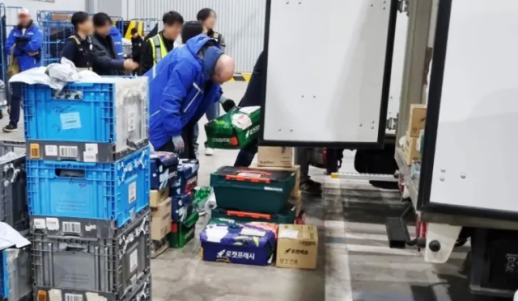 Coupang's interim chief volunteers for overnight delivery SEOUL, March 13 (AJP) - Harold Rogers, Coupang's interim chief in South Korea, volunteered to participate in a dawn delivery at its logistics center on the outskirts of Seoul early Friday. Rogers visited the center near Seongnam in Gyeonggi Province, where he helped load goods and deliver orders alongside workers. His visit became known after photos were posted on social media by a person believed to be a staffer, and the e-commerce giant confirmed that Rogers visited the site to inspect its dawn-delivery operations and encourage workers. The visit is widely seen as a preliminary inspection ahead of a planned visit by lawmakers slated for next week. Rogers previously said he would take part in a delivery run when asked by lawmakers during a hearing at the National Assembly, shortly after the company's massive data leak was discovered late last year. 2026-03-13 16:31:25
 -
 E-Mart posts sharp profit rebound in 2025 on cost cuts, pricing power SEOUL, February 11 (AJP) - South Korea’s largest retailer E-Mart reported a sharp improvement in profitability last year despite inflationary pressures and sluggish consumer spending. In a regulatory filing Wednesday, the company said consolidated revenue for 2025 slipped 0.2 percent from a year earlier to 28.97 trillion won ($21.7 billion), while operating profit surged 584.8 percent to 322.5 billion won. E-Mart attributed the turnaround largely to cost savings achieved through integrated purchasing, which strengthened price competitiveness and helped draw more shoppers. The company said price-focused promotions that consumers could directly feel helped increase store traffic and sales. For instance, its flagship discount event, “Whale Eat Festa,” attracted 23 million participants last year, with sales during the campaign rising 28.1 percent compared with the same period a year earlier. The company said three Starfield Market stores reopened after renovations last year, recording stronger traffic and sales. Visitor numbers at the Ilsan branch rose 61.3 percent after reopening, while sales climbed 74 percent. Customer traffic increased 7.3 percent at Dongtan and 32.4 percent at Gyeongsan, with sales rising 16.5 percent and 19.3 percent, respectively. Warehouse club chain Traders also posted growth, with annual gross sales rising 8.5 percent to 3.85 trillion won and operating profit climbing 39.9 percent to 129.3 billion won. Other offline affiliates also delivered solid results. Shinsegae Property reported revenue rising 27.2 percent to 470.8 billion won on stronger Starfield mall operations and development projects, while operating profit increased by 96.7 billion won to 174 billion won. * This article, published by Aju Business Daily, was translated by AI and edited by AJP. 2026-02-11 16:12:28
 -
 Coupang reasserts itself as US tech company amid claims of unfair treatment SEOUL, January 25 (AJP) - E-commerce giant Coupang stressed once again that it is a U.S. company. The top of its browser tab briefly displayed "Coupang: US Tech Company Redefining Global Commerce" on Saturday before returning to the previous version, though some web browsers were still displaying it. The tab now again displays its previous promotional message in Korean, highlighting its fast "rocket" delivery service as well as membership benefits and discounts. The move came just a day after Prime Minister Kim Min-seok, who is currently visiting the U.S., met with U.S. Vice President JD Vance at the White House in Washington. During the meeting, Vance reportedly asked about details of the difficulties Coupang faces that may be caused by regulatory differences. Kim tried to clarify the misunderstanding, saying there was no discrimination against Coupang in the investigation into its massive data breach, dismissing allegations of "unfair treatment" raised by two American investors. Greenoaks and Altimeter Capital, the two largest U.S. shareholders of the New York-listed company, requested earlier in the week that the Office of the U.S. Trade Representative (USTR) launch an investigation into the South Korean government's handling of Coupang. Coupang's emphasis on being a "U.S. tech company" is widely interpreted as a strategic move to distance itself from regulatory obligations and other legal responsibilities in South Korea. But criticism may still be hard to avoid because Coupang has previously emphasized that it is a "South Korean company." In July 2019, Coupang said it was founded and grew in South Korea, runs most of its business here, and pays annual labor costs totaling 1 trillion won (about US$850 million) to South Koreans. 2026-01-25 10:38:36
 -
 Homeplus confirms closures of additional stores amid liquidity strain SEOUL, January 23 (AJP) - South Korea’s retail chain Homeplus has confirmed the closure of additional stores as the company undergoes court-led rehabilitation, raising fresh concerns about its financial condition. Industry sources said on Friday that Homeplus informed staff in an internal notice the previous day of plans to shut its Jamsil store in Seoul and its Sungui store in Incheon. A Homeplus official said the timing of the closures has yet to be set, adding that both outlets are leased locations affected by lease expirations and ongoing operating losses. Homeplus has said its cash flow has continued to deteriorate since entering rehabilitation proceedings. In August last year, the company announced plans to close 15 loss-making leased stores after failing to secure rent reductions, though it later suspended the move on the condition that transaction terms would be eased. The latest closures add to a growing list of store shutdowns. Homeplus recently said it would halt operations at seven locations around the country. In December, it closed five stores. A further five stores are also scheduled to close on Jan. 31. Under a rehabilitation plan submitted to the court, Homeplus plans to shut 41 loss-making stores over the next six years. Concerns among employees have also grown after wages for January were not paid due to the company’s cash shortage. Homeplus has applied for an emergency debtor-in-possession loan of 300 billion won ($205 million), with 100 billion won each expected from private equity owner MBK Partners, its largest creditor Meritz, and state-run Korea Development Bank. MBK has indicated it will participate in the financing, but it remains unclear whether the remaining funds will be secured. “If the emergency operating loan is provided, we will use it as a catalyst for rehabilitation to overcome the liquidity crisis and carry out our structural reform plan without disruption to improve business viability,” Homeplus said in a statement. * This article, published by Aju Business Daily, was translated by AI and edited by AJP. 2026-01-23 13:57:42