


Latest by
-
 Pakistan's Role in US-Iran Peace Talks Raises Questions About Economic Benefits Pakistan is asserting its presence on the international stage by leading recent peace negotiations between the United States and Iran in Switzerland. However, opinions are divided on whether this diplomatic role will translate into economic benefits for the country. Reuters reported on June 23 that while Pakistan's involvement in the negotiations could serve as a diplomatic asset, it is unlikely to yield significant economic gains. Experts suggest that economic development stems more from internal reforms than from available funds. Alongside Qatar, Pakistan coordinated the negotiations between the US and Iran, drawing attention for its efforts. Iran, which achieved significant outcomes in the talks, including the release of frozen funds, extended a warm welcome to Pakistan. According to Al Jazeera, on June 23, Iranian President Masoud Pezeshkian traveled directly to Islamabad. During a press conference, he emphasized the need to elevate the relationship between Iran and Pakistan to a level befitting their status in the Islamic world, stating, "We can create a successful cooperation model based on solidarity and brotherhood," as reported by the Pakistani daily Dawn. Pakistani officials, including President Asif Ali Zardari, Prime Minister Shehbaz Sharif, and Foreign Minister Ishaq Dar, gathered to welcome President Pezeshkian at Nur Khan Air Base near Islamabad. As a mediator, Pakistan received a warm reception in the US as well. US Vice President JD Vance reportedly embraced General Asim Munir, the powerful chief of the Pakistani military, during the post-war negotiations at the Bürgenstock resort in Switzerland, asking, "How have you been?" On June 24, Al Jazeera reported that Vance humorously remarked during his speech at the Swiss negotiation venue, "I have two very important people in my life—one is my Indian wife (Usha Vance) and the other is my Pakistani friend, Munir." Despite this diplomatic stature, Pakistan's economic situation remains precarious. With a population of 250 million, the country faces significant challenges, including economic inequality, a narrow tax base, and repeated International Monetary Fund (IMF) bailouts, as noted by Reuters. The formalization of the underground economy is also a major issue. Last year, only 1.3% of Pakistanis filed income tax returns, and just 7.7% of adults owned debit or credit cards. Moreover, the United Arab Emirates (UAE), a Middle Eastern Islamic nation that had previously maintained friendly relations with Pakistan, has recently expelled many Pakistani workers, causing economic repercussions. The New York Times reported that in one region of northwestern Pakistan, 900 individuals were expelled and returned home within weeks. The newspaper attributed the UAE's displeasure to Pakistan's failure to strongly condemn Iran's missile and drone attacks, which have caused significant damage to the UAE. In April, the UAE recalled a $3.5 billion loan to Pakistan, equivalent to one-fifth of the country's foreign reserves. Fortunately, Saudi Arabia deposited an additional $3 billion into Pakistan's central bank, preventing a deeper crisis. Over 2 million Pakistanis reside in the UAE, and they sent home $8 billion last year. Bloomberg noted that Pakistan's role as a mediator in the ongoing conflict could help it escape the shadow of wealthier regional competitor India and potentially attract foreign capital. Al Jazeera also suggested that the recent easing of US sanctions might revive discussions on Pakistan's long-desired pipeline project with Iran. Domestically, there are calls for economic reforms rather than merely relying on the "crumbs" from mediation efforts. Dawn columnist Khurram Hussain pointed out, "Whether Iran remembers us favorably or whether the US offers generous rewards is beyond our control. However, domestic economic issues cannot be resolved by a grateful neighbor or a benevolent benefactor."* This article has been translated by AI. 2026-06-25 05:04:00
 -
 Korea's National Soccer Team Aims for Round of 32 at World Cup The South Korean national soccer team stands on the brink of making history by qualifying for the knockout stage of the FIFA World Cup for the second consecutive tournament. Under the guidance of coach Hong Myung-bo, the team will face South Africa in their final group match on June 25 at 10 a.m. KST at the Estadio BBVA in Monterrey, Mexico. Currently sitting in second place in Group A with one win and one loss (3 points), South Korea can secure advancement to the Round of 32 with just a draw against fourth-place South Africa (1 draw, 1 loss; 1 point). If they qualify, it will mark only the fourth time in history that South Korea has progressed past the group stage and the first time they have reached the knockout rounds in consecutive tournaments. A victory would also represent the first two wins for South Korea in an away World Cup and the first for a Korean coach. However, optimism must be tempered. To achieve their goal, the team must overcome three significant challenges: extreme heat, strict officiating, and a historical jinx against African teams. The climate in Monterrey is particularly daunting, as it is the second hottest city among the tournament venues, with temperatures expected to feel like 40 degrees Celsius due to high humidity (50-70%) during the match, which kicks off at 7 p.m. local time on June 24. This could lead to severe fatigue and diminished focus in the second half. Coach Hong expressed confidence during a press conference on June 24, stating, "The players are accustomed to Korea's hot and humid summers. We have prepared for the climate with high-altitude training, so it shouldn't significantly impact our performance." The officiating by Argentine referee Facundo Tello also poses a potential challenge. Known for his strict rulings, Tello has previously issued red cards to ten players in his domestic league and handed out five yellow cards in the recent Canada-Bosnia and Herzegovina match. Players Lee Kang-in, Baek Seung-ho, and Lee Gi-hyeok, who each carry a yellow card, must maintain their composure against South Africa to avoid missing the Round of 32. In terms of FIFA rankings, South Korea (ranked 23rd) holds a significant advantage over South Africa (61st). However, historical performance against African teams raises concerns; South Korea has only one win, one draw, and two losses against African nations in World Cup history, with their last victory dating back to the 2006 World Cup against Togo. On a positive note, South Korea has won its last two group stage matches in World Cup history, demonstrating strength in final group matches (3 wins, 2 draws, 5 losses overall). KBSN analyst Kim Dae-gil remarked in a phone interview on June 24, "The match against South Africa is essentially a one-off game, so scoring first is crucial. If the game remains 0-0 for too long, it could become unfavorable for us. If we concede late in the second half, we might not have a chance to recover, putting us at risk of elimination. African teams tend to gain momentum after scoring first, so we need to take the initiative and score early to control the game."* This article has been translated by AI. 2026-06-25 00:04:00
 -
 Trump: Iran Not Charging Fees for Strait of Hormuz Passage President Donald Trump announced on June 24 that Iran has informed the United States it will not charge any fees for passage through the Strait of Hormuz.According to Yonhap News Agency, Trump shared this information on his social media platform, Truth Social, stating, "Despite the fake news from troublemaking sources, Iran has told the U.S. that there are 'no tolls, insurance fees, or any other kind of charges' for passage through the Strait of Hormuz."He warned, "If this notification is false, subsequent negotiations will end immediately."Trump also emphasized that the U.S. has never provided money to Iran or released frozen funds abroad. He claimed that some of the Iranian funds under U.S. control would go to American farmers and ranchers."Iran is in desperate need of food," Trump added, stating, "We will only purchase it (food) from the U.S. for them."* This article has been translated by AI. 2026-06-24 21:52:00
 -
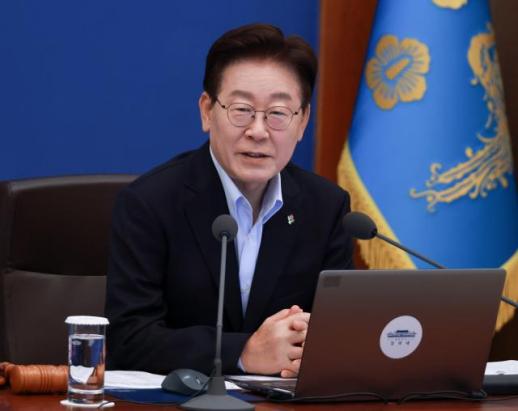 President Lee Calls for Support for Sewol Ferry Disaster Survivors President Lee Jae-myung expressed his deep sorrow on June 24 following the news of the recent passing of a survivor from the Sewol ferry disaster. He stated that the government will explore national-level support measures for the survivors.According to Yonhap News, President Lee wrote on Facebook, "It is difficult to even imagine what kind of feelings they have endured for the past 12 years," and pledged to consider all possible government actions to assist.He noted, "While time is said to heal all wounds, healing does not happen automatically," adding that a society that suppresses pain without adequate mourning will inevitably face problems.The president emphasized the need to listen more attentively to the voices of survivors and bereaved families, vowing to fulfill the government's responsibilities that have not been sufficiently addressed. He also stated that any acts of mockery or insult towards victims and their families will be thoroughly investigated and met with strict consequences.Addressing the survivors, President Lee urged them not to burden themselves with the expectation of living extraordinary lives in place of those who have passed. He encouraged them to let go of their guilt and to cherish the small joys in life with their loved ones. He concluded by expressing his regret that, as the President of South Korea, he has allowed the nation to remain stuck in the events of April 16, 2014, for the past 12 years.* This article has been translated by AI. 2026-06-24 21:40:00
 -
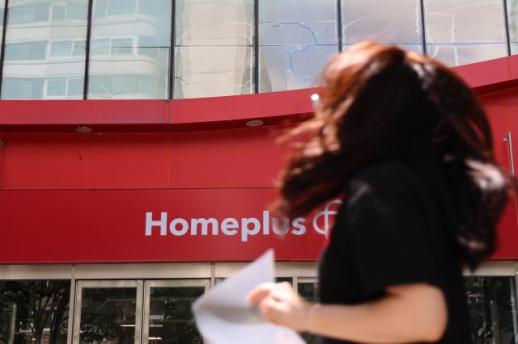 Homeplus Appeals to Government to Prevent Bankruptcy Amid Financial Crisis Homeplus and its labor union have urged the government to intervene and prevent the company from going bankrupt. According to Yonhap News on June 24, Homeplus issued a joint statement with the labor union, stating, "Since entering rehabilitation procedures in March of last year, we have been making efforts to reduce our store footprint and sell our supermarket division, but we are now facing a dire financial crisis due to depleted operating funds." To avert bankruptcy, they have requested an emergency operating loan of 200 billion won from their largest creditor, Meritz Financial Group, with the majority shareholder, MBK Partners, agreeing to provide a joint guarantee for 100 billion won. However, they claim that Meritz Financial Group has refused to provide support. Homeplus and the labor union warned, "If funds are not secured by the 30th, it will be difficult to avoid bankruptcy," adding that Meritz, which has secured 64 stores as collateral, would recover over 1.8 trillion won through auctioning off the properties to recoup the loan principal and overdue interest. They emphasized, "Meritz Financial Group stands to gain more from Homeplus's bankruptcy than its survival, which would cause irreversible damage to employees, suppliers, and general creditors." The Homeplus labor union also called on the government and the rehabilitation court to fulfill their roles. They stated, "If the state and the rehabilitation court do not do their part, it will only assist speculative capital in profiting at our expense," demanding a response from the Blue House. In response, Meritz stated that the 100 billion won loan is already available for disbursement and reiterated that guarantees from both MBK and Chairman Kim Byung-joo are necessary. Meritz added in a statement, "We have already deposited 100 billion won into an escrow account to save Homeplus and urge Chairman Kim and MBK to demonstrate their commitment through actual financial contributions." Meanwhile, the Seoul Rehabilitation Court sent a notice to Homeplus's creditors and labor union the previous day, requesting a funding plan of 200 billion won by the 30th.* This article has been translated by AI. 2026-06-24 21:28:00
 -
 Park Dong-hoon: From Middle School Dropout to $100 Million Advertising Mogul EBS's 'Neighbor Millionaire' highlights the life of Park Dong-hoon, who built a $100 million advertising company from humble beginnings as a middle school dropout and ragpicker. In the episode airing on June 24, the story of Park, known as the 'Chungmuro Success Story' after 40 years in the advertising industry, will be revealed. Starting with just 2 million won, Park grew his one-man operation into a company with 100 employees. After reaching the peak of his career in advertising, he is now taking on new challenges by creating seven street art museums in the Chungmuro area. The broadcast will showcase Park's projects that transformed overlooked spaces, including areas littered with trash and leftover land from road construction, into cultural spaces. When Park's home was visited by Seo Jang-hoon and Jang Ye-won, they were astonished by a massive 103-inch TV in the center of his living room. The TV commands attention with its impressive size. Park explained that only 200 of these TVs were produced worldwide, with each sold to a celebrity representing their country. He revealed that the first buyer in South Korea was actor Bae Yong-joon, stating, "I bought it after Bae Yong-joon put it up for sale when he moved." In the kitchen, Park also demonstrated his '7-Minute Cooking' skills, expressing a desire to be recognized for his discerning palate. Initially skeptical, Seo Jang-hoon was impressed after tasting the finished dish, exclaiming, "I had no expectations, but this is really delicious." The episode will also delve into Park's past, revealing the struggles behind his glamorous success. He confessed that he once deleted all his daughters' phone numbers. Having lived alone with his grandmother in the Jiri Mountain area of South Gyeongsang Province, Park moved to Seoul after middle school to pursue high school. However, due to financial difficulties, he dropped out and survived by collecting discarded items from the streets. His experience of having to forgo education due to a lack of funds motivated him to ensure that he would fully support his two daughters' education. After they graduated from college, he decided to cut off financial support and contact, believing that once their education was complete, he would become a good friend rather than just a father. However, a significant event a few years ago challenged his long-held beliefs, prompting him to reach out to his daughters again. The details of this turning point will be revealed in the broadcast. 'Neighbor Millionaire' airs today, June 24, at 9:55 PM.* This article has been translated by AI. 2026-06-24 21:24:00
 -
 Hanwha Galleria Acquires Sunhwa Building for 213.5 Billion Won Hanwha Galleria announced on June 24 that it has signed a memorandum of understanding (MOU) to acquire the Sunhwa Building and six other parcels of land located at 89 Seosomun-ro, Jung-gu, Seoul, from Hanyang Academy and two other parties.According to the Financial Supervisory Service's electronic disclosure system, the planned acquisition amount is 213.5 billion won, which represents 10.6% of the company's total consolidated assets as of the end of last year. The MOU grants Hanwha Galleria the exclusive negotiation rights for the purchase of the building and land.The company believes that the asset's central location in Seoul enhances its future utilization potential. Hanwha Galleria is currently exploring various options for the property, including securing office space. Due diligence is underway, with plans to finalize the contract in the second half of the year.However, the company clarified that while it has secured exclusive negotiation rights through the MOU, no specific details have been finalized yet. Further announcements will be made once the specifics are determined.In related news, Hanwha Galleria reported a consolidated revenue of 126.1 billion won for the first quarter of this year, a decrease of 2.4% compared to the same period last year. Conversely, operating profit surged to 12.3 billion won, marking a 550.8% increase during the same timeframe.* This article has been translated by AI. 2026-06-24 20:32:00
 -
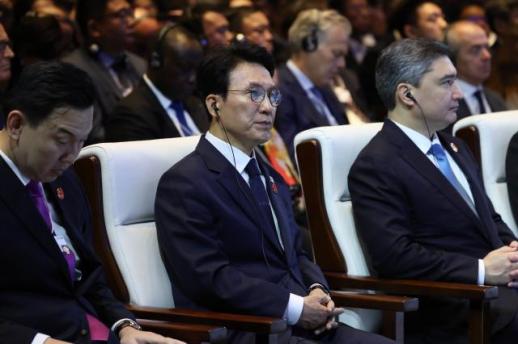 Prime Minister Kim Min-seok Aims for Global AI Leadership Prime Minister Kim Min-seok announced on June 24 that South Korea aims to become a global leader in artificial intelligence (AI). He expressed a desire for the country to achieve top status in the physical AI sector, particularly when combined with manufacturing capabilities. According to Yonhap News Agency, Kim made these remarks during a special speech at the Summer World Economic Forum (WEF) held at the Dalian International Convention Center in China. He noted, "South Korea has traditional manufacturing strengths that can be leveraged in the physical AI field." Kim assessed that South Korea is facing simultaneous demands for an AI transformation and an energy transition. He emphasized that "AI cannot be completed with algorithms alone," stating that the country must develop infrastructure, including semiconductors, data centers, communication networks, and power grids, as well as AI applications and security systems. He highlighted South Korea's unique strengths in these areas. Regarding the social disparities arising from the AI transition, Kim pointed out that South Korean semiconductor companies have recently seen significant profits, raising the question of how to distribute these gains. He acknowledged that there are currently no clear answers and that this is an ongoing concern. He added, "I believe it is our policy obligation to experiment with linking the outcomes of AI transformation to basic income, providing various insights to the international community regarding its advantages and disadvantages." In conclusion, Kim stated, "South Korea aims to expand global cooperation for innovation and create an environment where businesses, investors, and researchers can grow together, contributing to human prosperity through AI. When your bold challenges combine with Korea's capabilities, large-scale innovation and prosperity will follow."* This article has been translated by AI. 2026-06-24 20:16:00
 -
 Shin Hae-sun at the Tom Ford Beauty Taormina Orange photo call SEOUL, June 24 (AJP) - Actress Shin Hae-sun poses at the Tom Ford Beauty Taormina Orange launch photo call. 2026-06-24 20:15:36
 -
 Jihyo at the Tom Ford Beauty Taormina Orange photo call SEOUL, June 24 (AJP) - TWICE member Jihyo poses at the Tom Ford Beauty Taormina Orange launch photo call. 2026-06-24 20:14:20