

Journalist

Kim Dae-jong
-
 Yoon Suk Yeol Nominates Han Seung-sook as New Prime Minister South Korean President Yoon Suk Yeol has nominated Han Seung-sook, the Minister of SMEs and Startups, as the new Prime Minister. Han, who has previously served as the CEO of Naver and as Minister, has played a significant role in the development of South Korea's digital industry. Her appointment as the second-highest official in the government carries multiple implications, particularly given the current global context.The world is currently undergoing a major industrial transformation centered around artificial intelligence (AI). The United States and China have entered a national-level competition for AI dominance, with intensifying rivalries in semiconductors, data centers, power grids, and robotics. South Korea can no longer rely solely on the traditional formula of growth through manufacturing and exports. There is an urgent need for a new growth strategy and industrial innovation centered on AI.In this regard, Han brings valuable strengths. She began her career as an ordinary office worker and rose to become the CEO of a leading digital platform company. Having experienced the rapidly changing digital industry firsthand, she understands how technological innovation and market changes impact national competitiveness. Her dual experience in both the corporate sector and government is also seen as an advantage.Han's achievements during her tenure as Minister of SMEs and Startups are noteworthy. Her efforts to expand exports for small businesses, revitalize the startup ecosystem, and enhance venture investment have been recognized as crucial for creating new growth engines for the economy. Addressing the limitations of growth centered on large corporations and enhancing the competitiveness of small businesses and startups remain vital national tasks.However, expectations alone are not enough. The role of Prime Minister is fundamentally different from that of a corporate executive or a minister. The Prime Minister must coordinate not only economic policies but also diplomacy, security, social issues, welfare, and education. Political leadership is necessary to persuade and mediate among various ministries and social groups with conflicting interests. Even as AI and digital innovation are national priorities, issues such as inflation, employment, housing, and education remain pressing concerns for citizens.Thus, what Han needs is a balance alongside the speed of innovation. While promoting the AI industry and digital transformation, she must create policies that allow industries, labor, metropolitan areas, and rural regions, as well as large and small enterprises, to grow together. It is also crucial to ensure that the benefits of growth do not concentrate solely on specific industries or social classes.The South Korean economy is facing new opportunities with the increase in semiconductor exports and the growth of the AI industry. However, true success will not be limited to the growth of a few companies. The benefits of growth must extend to small businesses, micro-enterprises, traditional industries, and local economies for citizens to genuinely feel the impact of growth. The Prime Minister's role is pivotal in this regard.Han's task is to lead South Korea to become a leading nation in the AI era while ensuring that all citizens share in the fruits of growth. If she can harmoniously combine the innovative DNA of entrepreneurs with the public service ethos of officials, this appointment could mark the beginning of a new era of growth.Meanwhile, the contributions of Kim Min-seok, who has served as the first Prime Minister under the Yoon administration for the past year, should also be acknowledged. His efforts to manage complex political, economic, and social challenges have laid a crucial foundation for the stability of the new government. The baton has now been passed to Han Seung-sook. 2026-06-07 14:21:00
 -
 U.S. Media Predicts Hong Myung-bo's South Korea to Finish Second in Group A at World Cup U.S. media has predicted that the South Korean national soccer team, led by coach Hong Myung-bo, will finish the group stage of the 2026 FIFA North America World Cup with one win and two draws, placing second in Group A. On June 6, ESPN reported, based on predictions from the DTAI Sports Analysis Institute's supercomputer at Belgium's Catholic University of Leuven, the expected results for the 48 teams participating in the tournament. According to the forecast, South Korea, grouped with Mexico, the Czech Republic, and South Africa, is expected to achieve one win and two draws (5 points), finishing second behind Mexico (2 wins, 1 draw; 7 points). The probability of advancing to the knockout stage is estimated at 77%. The predicted results for the group stage matches include a 1-1 draw against the Czech Republic on June 12, another 1-1 draw against host nation Mexico on June 19, and a 2-1 victory over South Africa in the final match on June 25. ESPN analyzed Group A, stating, "Mexico, a strong favorite to finish first, will play all its matches at home. The difference between playing at home and away is as significant as having Lionel Messi in his prime for Argentina or not." It added that South Korea and the Czech Republic do not possess players with the same level of talent as their past golden generations, while South Africa is considered one of the weakest teams in the tournament. After advancing from the group stage, South Korea is projected to reach the Round of 32. The media predicts that South Korea, finishing second in its group, will face Canada, the second-place team in Group B and the host nation, and will be eliminated with a 2-1 loss. Meanwhile, the final is expected to feature a matchup between Spain and defending champion Argentina, with Spain predicted to win 2-1 and lift the trophy. Notably, both ESPN and other major data analysis firms, including Opta, have identified Spain as the leading contender for the championship in this tournament.* This article has been translated by AI. 2026-06-07 14:18:00
 -
 Why the South Korean Won Remains Weak Despite Semiconductor Success One of the most intriguing aspects of South Korea's economy in 2026 is the strange divergence between the KOSPI index and the won-dollar exchange rate. South Korea is currently regarded as the biggest beneficiary of the semiconductor supercycle. With the AI revolution in full swing, the world's largest AI companies are eagerly purchasing Korean HBM and memory semiconductors. Samsung Electronics and SK Hynix have reported record earnings, and both companies have joined the $1 trillion market capitalization club. The country's current account surplus has reached an all-time high, and the KOSPI has entered a historic upward phase.Despite this, the won has not escaped a level of weakness akin to that seen during financial crises. This phenomenon is difficult to understand from a common-sense perspective. Typically, when exports increase and current account surpluses expand, corporate profits surge, leading to a stronger currency. Japan and Germany have experienced this, as has South Korea in the past.However, South Korea is currently exhibiting the opposite trend. While AI semiconductor exports are at an all-time high, the won is fluctuating around 1,500 per dollar. The economy is booming, yet the exchange rate reflects a crisis-like situation.This is the point that the Financial Times has highlighted. In a recent in-depth analysis, the FT described the weakness of the South Korean won as a "fundamental puzzle." Brad Setser, a senior fellow at the Council on Foreign Relations, also noted that it is difficult to explain why one of the biggest beneficiaries of the surge in semiconductor demand is still trading at crisis-level exchange rates.Indeed, the question raised by the FT is crucial. One of the most pressing questions for the South Korean economy is this: Why is the won not strengthening despite selling the world's best semiconductors?The FT identifies two key reasons for this situation.The first is the phenomenon of global capital rebalancing. Since last fall, the South Korean stock market has seen explosive growth. Amid expectations for the AI semiconductor supercycle, the entire market surged, particularly driven by Samsung Electronics and SK Hynix. The issue is that this rise has been too rapid. Global funds are wary of excessive concentration in specific countries or stocks. When a stock exceeds its weight in global indices like MSCI, funds must sell some shares for risk management.According to the FT, foreign investors have sold a record $79 billion worth of South Korean stocks this year. This is not due to a downturn in the South Korean economy; rather, it is because the economy has improved too much. As the KOSPI surged, it exceeded global asset allocation benchmarks, leading to a flood of portfolio adjustments.Foreign investors who sold stocks convert their won into dollars to repatriate their funds. This naturally exerts downward pressure on the won. A paradoxical situation has emerged where the stronger the South Korean economy becomes, the weaker the won appears in the short term.The second reason, which the FT considers even more significant, is the so-called "DRAM dollar" phenomenon.Setser likens South Korea's situation to the petrodollars of Middle Eastern oil-exporting countries. In the past, these countries earned vast amounts of dollars from oil exports but often reinvested that money in U.S. financial markets rather than bringing it back home. This created a unique cyclical structure in international finance.Setser believes a similar situation is occurring in South Korea today. Samsung Electronics and SK Hynix are generating substantial dollars from AI semiconductor sales. However, unlike in the past, they are not bringing all of these dollars back to the country. Instead, they are holding a significant portion in foreign currency for investments in U.S. data centers, overseas research and development, global mergers and acquisitions, and the expansion of overseas production facilities.Previously, when export companies earned dollars, they would convert them to won and bring them back to the domestic market. This process increased demand for the won and lowered the exchange rate. However, today’s global companies operate differently. They use the dollars earned abroad directly overseas. As a result, even when a current account surplus occurs, it does not translate into a stronger won.This is the "DRAM dollar" phenomenon mentioned by the FT.As AI semiconductor exports increase, the dollars that remain overseas also grow. While the South Korean economy records a surplus, the won does not strengthen. This represents a new phenomenon that is difficult to explain using traditional economic textbooks.Additionally, the ongoing conflict in the Middle East is also impacting the situation. Rising international oil prices due to the Iran conflict increase South Korea's energy import burden. Furthermore, the won has a high correlation with the yen, which has also been experiencing weakness recently. These external factors are further amplifying the downward pressure on the won.However, as the FT points out, the current weakness of the won shows a significant disconnect from economic fundamentals. The current account is at an all-time high, semiconductor companies are earning record profits, and the growth outlook for the South Korean economy is being revised upward. Yet, the won remains at crisis-level lows, indicating that the market is grappling with an imbalance that could be corrected at any moment.When will the won begin its recovery? Many experts predict a potential strengthening of the won in the future.Investment professionals cited by the FT share a common view that the current exchange rate levels are unlikely to be sustainable in the long term. The reason is straightforward: the economic fundamentals are too strong.South Korea is currently the biggest beneficiary of the AI semiconductor supercycle. As long as investments in generative AI and data centers continue, the demand for HBM and memory semiconductors is likely to structurally increase. Profits for Samsung Electronics and SK Hynix are also expected to remain high for the foreseeable future.More importantly, there is the expectation surrounding the exchange rate. If companies believe the won will continue to weaken, they will hold onto their dollars. However, at some point, if signals of a strengthening won emerge, the situation could change dramatically. There could be a sudden movement to repatriate dollars that were previously held abroad.This is the aspect the FT has highlighted. Once a transition to a stronger won begins, there could be a surge in dollar repatriation by large corporations like Samsung Electronics and SK Hynix, potentially leading to a self-reinforcing cycle that further strengthens the won.This could create a reverse domino effect. Currently, the weakness of the won encourages dollar holdings, but the moment the direction shifts, there could be a simultaneous surge in dollar selling and won buying.The Taiwanese dollar is in a similar situation. As AI semiconductor exporting countries, both South Korea and Taiwan are currently viewed as having currencies that are excessively undervalued compared to their economic fundamentals. Therefore, it is not out of the question that both the won and the Taiwanese dollar could enter a strengthening phase within the next few years.It is now time to change the structure of the exchange rate. Financial authorities are also closely monitoring this phenomenon.The Bank of Korea recently assessed that the won is excessively weak compared to economic fundamentals and stated that it could take decisive action if necessary. However, short-term market interventions have their limits. More importantly, structural responses are needed.First, systems must be established to ensure that profits earned abroad are linked to domestic investment and employment.Second, the capital market must continue to be advanced so that global investors can view the South Korean market more long-term.Third, the internationalization of the won and the opening of the foreign exchange market must be expanded to enhance the won's status.Fourth, strategies are needed to connect the boom in AI semiconductor exports to the overall national economy through investments in data centers, power grids, and AI infrastructure.Ultimately, the current weakness of the won may not signal a crisis but rather a transitional phenomenon as South Korea's economy enters a new phase. In the past, South Korea was a country that earned dollars through exports. Today, it has become a nation that operates dollars as a global asset within the core supply chain of the global AI industry.The "DRAM dollar" phenomenon mentioned by the FT may be another sign that the South Korean economy is transitioning to a developed-country structure. The key challenge is to ensure that this massive boom in AI semiconductors translates into national competitiveness and improved income for citizens, which is a more pressing task than simply achieving a stronger won.* This article has been translated by AI. 2026-06-07 14:12:00
 -
 GC Green Cross Introduces AI Chatbot to Enhance Drug Regulation Efficiency GC Green Cross is leveraging artificial intelligence (AI) to enhance the efficiency of its drug regulation processes. The company recently announced the launch of its AI chatbot, RegulAItor, designed to assist with key tasks such as approval strategy formulation and document review, amidst a growing trend of AI adoption across the pharmaceutical industry.The RegulAItor chatbot utilizes data from U.S. Food and Drug Administration (FDA) guidelines and internal approval documents. It classifies types of approval changes and analyzes similar cases and submission trends to help formulate optimal regulatory strategies. Previously, staff had to manually review extensive regulatory documents and internal materials, but the use of AI significantly reduces the time spent on research and review.A notable feature of this system is its operation within a secure internal data environment. By applying Retrieval-Augmented Generation (RAG) technology, it generates responses only within a pre-established data scope, preventing external information from entering the system and minimizing the 'hallucination' issues often associated with generative AI.According to the company, this is the first instance of a domestically developed AI chatbot specifically tailored for approval change management being applied in actual operations within the South Korean pharmaceutical industry.Lee Jae-woo, head of the development division at GC Green Cross, stated, "The significance lies in systematizing the experience and data accumulated during the FDA approval process as organizational assets. In the future, we expect to enhance both the speed and accuracy of regulatory responses."In the pharmaceutical and biopharmaceutical sectors, the use of AI is rapidly expanding across the entire value chain, including research and development (R&D), clinical trials, production, and regulatory approval.Celltrion is enhancing development efficiency by implementing AI for antibody design and process optimization, while SK Biopharm is applying AI to drug candidate discovery and clinical data analysis to boost research productivity.An industry insider predicted, "The expansion of AI applications will accelerate further into regulatory responses and quality management areas."* This article has been translated by AI. 2026-06-07 14:09:00
 -
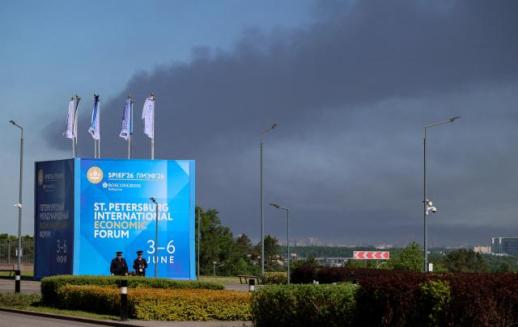 Ukraine Launches Large-Scale Drone Attack on St. Petersburg Amid Economic Forum Ukrainian forces launched a large-scale drone attack targeting St. Petersburg, Russia's second-largest city, and nearby military facilities. According to reports from the Wall Street Journal and others, the attack occurred on the morning of June 6, local time, focusing on Russian military installations in the St. Petersburg area. Ukrainian President Volodymyr Zelensky announced via X (formerly Twitter) that the strikes hit the Kronstadt Naval Base west of St. Petersburg, an armory, and an oil depot in the Krasnodar region. "It is time to end the war, but the Russian leader wants to continue fighting," Zelensky stated, urging an end to life-threatening attacks. Smoke was seen rising near St. Petersburg, where an economic forum was taking place. Russian authorities reported damage to infrastructure and injuries from the attack, but no fatalities. Alexander Beglov, the mayor of St. Petersburg, issued an indoor evacuation order for citizens, the first since Russia's invasion of Ukraine in 2022. Russia claimed to have shot down 376 Ukrainian drones overnight. In contrast, Ukraine reported that Russia launched 272 long-range attack drones, of which 249 were intercepted. Earlier, President Zelensky sent an open letter to Russian President Vladimir Putin, proposing a face-to-face meeting to negotiate an end to the war. However, during the St. Petersburg forum, Putin effectively rejected this proposal, indicating that military operations would continue. He emphasized that the war would end only when Russia's objectives were achieved. In response, Zelensky criticized Putin, stating, "Russia has once again chosen war," and asserted that the Russian leader does not wish for peace.* This article has been translated by AI. 2026-06-07 14:06:00
 -
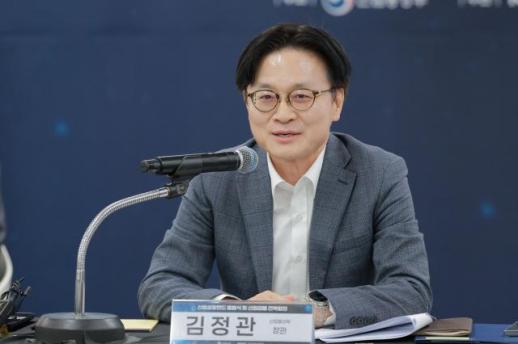 Minister Kim Jung-kwan Visits Kazakhstan, Middle East, and Czech Republic to Strengthen Energy and Industrial Cooperation Minister of Trade, Industry and Energy Kim Jung-kwan will embark on a diplomatic tour from June 7 to 18, starting in Kazakhstan and continuing to three Middle Eastern countries—Saudi Arabia, Qatar, and the United Arab Emirates (UAE)—before concluding in the Czech Republic. The aim is to enhance resource diplomacy and cooperation in advanced industries. According to the Ministry of Trade, Industry and Energy, Kim will hold the 11th Korea-Kazakhstan Joint Committee on Trade, Economy, and Science and Technology in Astana from June 7 to 9. The discussions will focus on expanding cooperation in energy, resources, digital technology, and eco-friendly sectors. Following the official European tour of the President, Kim will visit Saudi Arabia, Qatar, and the UAE as a follow-up to the President's special envoy's trip to the Middle East from June 13 to 16. He plans to meet with senior officials, including ministers from the resource and industrial sectors, to discuss securing stable supply chains for key resources such as crude oil and LNG. Additionally, he will address tailored industrial cooperation that encompasses manufacturing infrastructure and advanced industries in each country. Kim will conclude his trip with a visit to the Czech Republic on June 17 and 18 to review the implementation of the nuclear power project. He will chair the second meeting of the 'Dukovany Project Implementation Monitoring Committee,' which was established in February, to assess the progress and future plans of the Dukovany nuclear power plant construction project led by Korea Hydro & Nuclear Power. He will also participate in events promoting Korea-Czech nuclear partnerships and visit a robotics testbed at the Czech Technical University in Prague to discuss expanding bilateral cooperation in various fields. Kim stated, "In light of the ongoing uncertainties due to conflicts in the Middle East, the importance of securing stable energy and resources has increased significantly. Through my visits to Kazakhstan and the Middle East, I aim to discuss supply strategies for crude oil and LNG, strengthen cooperation in critical minerals, plants, and nuclear power, and support our companies in establishing a foothold overseas." * This article has been translated by AI. 2026-06-07 13:51:00
 -
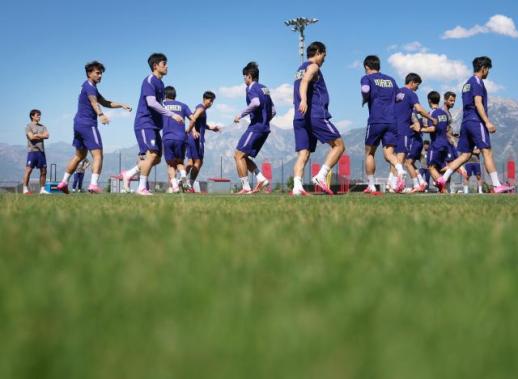
 South Korean footballers hold 1st training session in Mexico ahead of World Cup opener SEOUL, June 7 (AJP) - With this year's World Cup set to kick off later this week, South Korean footballers held their first training session in Mexico on Saturday, drawing hundreds of fans there. They will play their first three group-stage matches in the expanded 48-team quadrennial tournament co-hosted by Canada, Mexico, and the U.S. The warm-up session took place in Zapopan, near Guadalajara, just a day after their arrival in Mexico, following three weeks of preparation in Utah, which was considered an ideal training location due to its similar altitude to Mexico, during which they also played two friendly matches against Trinidad and Tobago and El Salvador. South Korea, grouped with Mexico and South Africa, will face Czechia, better known as the Czech Republic, in its opening group-stage match scheduled for Thursday. "Having two friendlies helped us figure out what we need to work on," Hong said at a press conference. "The key is to refine our strategies over the remaining days. Since weather conditions here are different from those in Utah, we have to make adjustments. There isn't enough time to do many things, so we have to focus on a few priorities," he added. South Korea, ranked 25th in the latest FIFA rankings, may have the edge over 41st-ranked Czechia, but Hong said the European side will still be a tough opponent. 2026-06-07 13:48:53
 -
 Pakistan to Deliver Letter to Iran's Supreme Leader Amid Peace Talks Amid a stalemate in U.S.-Iran peace negotiations, efforts by mediating countries are underway to revive dialogue. According to reports from Iranian state news agency IRNA and DPA, Pakistan's Interior Minister Mohsin Naqvi arrived in Tehran on the evening of June 6. Iran's semi-official ISNA news agency reported that Naqvi is expected to deliver a letter from Pakistan Army Chief Asim Munir to Iran's Supreme Leader Ayatollah Seyyed Mojtaba Khamenei. Munir has been a key figure in facilitating the U.S.-Iran peace talks held in Islamabad and is known to have direct communication with U.S. President Donald Trump. As Naqvi is considered close to Munir, there are expectations that he will convey messages aimed at promoting dialogue between Iran and the U.S. Naqvi first met with Iran's Interior Minister Eskandar Momeni. He is also scheduled to meet with high-ranking Iranian officials, including President Masoud Pezeshkian and Foreign Minister Abbas Araghchi. In related developments, Lebanese Army Commander Rudolf Haikal is also reported to be heading to Pakistan. Reuters noted that while the Lebanese side did not disclose specific reasons for the visit, it appears to be at the invitation of Pakistan. Iran has set a ceasefire between Israel and the Lebanese militant group Hezbollah as a precondition for peace negotiations with the U.S. Conversely, Lebanon has stated that the ceasefire issue should be addressed separately from U.S.-Iran negotiations, raising the possibility of Pakistan mediating on this matter. However, Iran and the U.S. continue to exchange limited attacks while maintaining an official ceasefire. On June 6, the Islamic Revolutionary Guard Corps (IRGC) announced that it fired upon four oil tankers attempting to pass through the Strait of Hormuz without permission. In retaliation, the U.S. shot down a suicide drone launched by Iran targeting the tankers and struck Iranian coastal bases.* This article has been translated by AI. 2026-06-07 13:42:00
 -
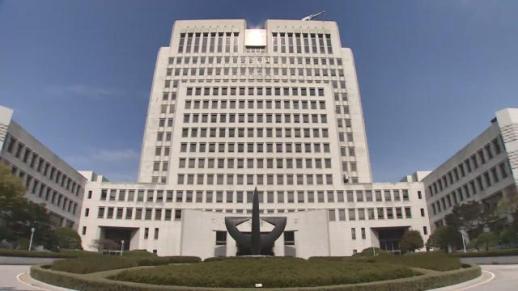 Supreme Court Rules Military Personnel Must Complete Sexual Violence Treatment Programs if Status is Set to Change According to the legal community on June 7, the Supreme Court's first division, led by Justice Cheon Dae-yeop, ruled that a military service member facing a loss of status due to a confirmed sentence must be ordered to complete a sexual violence treatment program, despite not being subject to such orders under the probation law's special provisions.The case involved A, a current non-commissioned officer, who was prosecuted for sexually assaulting B, the wife of a junior soldier, in 2020.Both the first and second trials found A guilty and imposed a fine of 8 million won. However, they did not issue a treatment order, citing special circumstances under Article 56 and Article 64, Section 1 of the probation law, which precludes such orders for active military personnel.Article 56 of the probation law states that the law does not apply to individuals subject to military court law, while Article 64, Section 1 allows for the application of Article 56's provisions to those subject to community service or educational orders, creating special provisions for military personnel.These special provisions consider the unique nature of military command and the need to protect the authority of commanders. This legal principle also applies to treatment orders under Article 16 of the Sexual Violence Punishment Act.However, the Supreme Court stated, "The lower court's judgment misunderstood the legal principles regarding the special circumstances that prevent the imposition of treatment orders under Article 56 of the probation law and Article 16, Section 2 of the Sexual Violence Punishment Act, affecting the verdict."The court explained, "Probation and treatment orders are executed after a judgment is finalized. Even if a person is classified as a 'military law subject' at the time of sentencing, if their status is set to change due to the finalization of the criminal judgment, the execution of probation or treatment orders will occur after the loss of that status."It further noted, "Considering the legislative intent of the special provisions, when determining whether to impose probation or treatment orders, it should not be assumed that such individuals fall under the category of 'military law subjects.' Therefore, the court can impose probation or treatment orders regardless of the special provisions when sentencing leads to a loss of status."The court concluded that since A was found guilty of sexual assault and fined 8 million won, he would automatically lose his status as an active military member under the former Military Personnel Act. Thus, the fact that he was considered a military law subject at the time of sentencing does not qualify as a 'special circumstance' under Article 16, Section 2 of the Sexual Violence Punishment Act.The former Military Personnel Act stipulates that individuals sentenced to a fine of 1 million won or more for sexual violence crimes under Article 2 of the Sexual Violence Punishment Act cannot be appointed as officers, non-commissioned officers, or warrant officers if the sentence is finalized within three years. It also states that individuals who fall under any disqualifying conditions in Article 10, Section 2 of the former Military Personnel Act will be dismissed.* This article has been translated by AI. 2026-06-07 13:21:00
 -
 Lotte Wellfood Opens 'Dwaeji Bar Bakery' Pop-Up in Seoul Lotte Wellfood's popular ice cream brand, Dwaeji Bar, is expanding its universe through a temporary pop-up store. The company announced on June 7 that it will operate the 'Dwaeji Bar Bakery since 1983' pop-up store near Sharosu-gil in the Bongcheon-dong area of Seoul until June 21. This pop-up is themed around the recently launched 'Dwaeji Bar Bread,' bringing the unique concept of an ice cream brand opening a bakery to life in an offline setting. Celebrating its 43rd anniversary this year, Dwaeji Bar aims to provide a brand experience that resonates across generations by incorporating a 'newtro' (new retro) sentiment into the pop-up. The entire space is infused with the world of the brand's character, Dwaejangnim, effectively conveying the history of Dwaeji Bar and the story behind the development of Dwaeji Bar Bread. Various interactive experiences are available for consumers. Visitors can participate in a 'Custom Dwaeji Bar Bread' event, where they draw toppings from a machine and receive those toppings along with the Dwaeji Bar Bread. Additionally, they can engage in a decorating experience using chocolate pens on the surface of monaka snacks, allowing them to join the ongoing 'Dwaeji Bar Bread Decorating Contest' on social media. This event is seen as a continuation of Lotte Wellfood's recent focus on experiential pop-up marketing. The company has been expanding its outreach to younger consumers with recent pop-ups such as the 'Crunchy Stress Relief Academy' in Daechi-dong and the 'Xylitol Pop-Up Store' in Seongsu-dong. A Lotte Wellfood representative stated, "We planned this pop-up store to present the beloved Dwaeji Bar in a fresh and fun way to younger generations. We will continue to offer marketing that allows people to discover unique joys within familiar experiences."* This article has been translated by AI. 2026-06-07 13:15:00