

Journalist

박선태
-
 NVIDIA CEO Jensen Huang Visits South Korea, Highlights Robotics Investment Opportunities Jensen Huang, CEO of NVIDIA, returned to South Korea after seven months, stating that the country has many important clients and that he is planning significant collaborations with local partners.Huang arrived at Gimpo Airport around 1:30 PM on June 5 and spoke with reporters outside the airport, emphasizing the importance of the South Korean market. He noted, "Our partners in Korea are doing very well, and last year's performance was excellent. We are currently engaged in many projects, and next year is expected to be a major market, which is why I am here to strengthen our partnerships."He added, "We are building critical AI infrastructure, including DRAM and HBM (high-bandwidth memory) chips, and we are very busy launching our Vera Rubin products."Regarding his schedule in South Korea, Huang mentioned, "I have a very packed agenda, and I expect to meet with various companies, including Hyundai, LG, SK, Samsung, and Naver." He also hinted, "I have brought some exciting news with me."Huang expressed his enthusiasm for a planned dinner featuring Korean barbecue, saying, "I really enjoy Korean barbecue. Fried chicken and samgyetang (ginseng chicken soup) are also delicious."On the topic of recent developments in PC chip production, he remarked, "PCs have evolved significantly over the past 40 years, and now AI agent systems are going to be integrated into PCs. I find this very interesting."Huang praised South Korea's manufacturing and robotics capabilities, stating, "NVIDIA has an R&D center in Korea, which is an excellent place with skilled professionals in AI and robotics. There are various opportunities here, including manufacturing capabilities and semiconductor technology." He added, "We are already employing many people in Korea."He concluded by stating, "There are many areas to invest in Korea, with robotics being the next major field. The combination of Korea's excellent manufacturing capabilities, along with semiconductors and AI, presents many opportunities in the robotics sector." 2026-06-05 14:27:00
 -
 South Koreans travel more abroad in Q1 while online shopping spending drops SEOUL, June 5 (AJP) - South Koreans' overseas card spending topped US$6 billion in the first months of this year, the Bank of Korea (BOK) said on Friday. Their total overseas card spending stood at US$6.1 billion in the first quarter, almost the same as $6.11 billion in the previous quarter but up 14.2 percent from a year earlier. Although the number of South Koreans traveling abroad increased over the period, spending remained almost unchanged, according to the BOK. Purchases through overseas online shopping malls fell to $1.35 billion from $1.55 billion, while the number of South Korean departures rose to 8.33 million from 7.89 million. Card spending by foreigners in South Korea totaled $3.57 billion in the first quarter, down 5.4 percent from the previous quarter but up 30.2 percent from a year earlier. Foreign tourist arrivals to South Korea hit a first-quarter record of 4.76 million, but spending fell from the previous quarter. 2026-06-05 14:26:36
 -
 NVIDIA CEO Jensen Huang Visits Korea, Promises Surprise Gift Jensen Huang, CEO of NVIDIA, visited South Korea on June 5, stating, "I have brought a lot of business for Korea" and hinted at a surprise gift. According to Yonhap News, Huang arrived at Gimpo International Airport in the afternoon and told reporters, "There is a surprise gift prepared for Korea," but he declined to specify when it would be revealed, joking, "If I tell you, it wouldn’t be a surprise." This marks Huang's first visit to Korea in about seven months, following his last trip in October. He expressed his desire to thank all partners and clients in Korea, saying, "We are doing very important work, and the AI development is accelerating." Huang noted, "We achieved significant results last year, and the Korean market is doing very well. The second half of this year will be much larger than the first half, and next year will be a very big year." During his stay, Huang is expected to meet with leaders of major domestic companies to discuss collaboration on AI semiconductors, high-bandwidth memory (HBM), physical AI, robotics, and AI infrastructure. As NVIDIA expands its business beyond AI semiconductors into data centers, robotics, and autonomous driving, the scope of collaboration with South Korean companies is anticipated to broaden. When asked if he planned to enjoy Korean barbecue that evening, Huang replied, "I really love Korean barbecue. I also really like chicken, and samgyetang is the best. Everything is delicious." 2026-06-05 14:18:00
 -
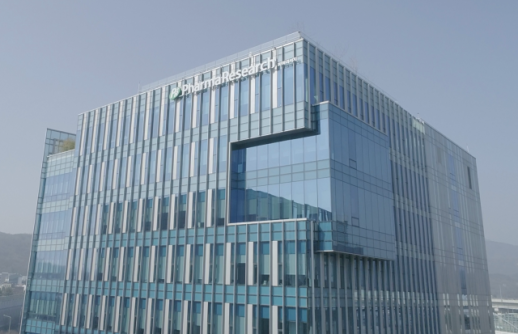 PharmaResearch Strengthens Medical Aesthetic Market with Rejuran PharmaResearch is solidifying its position in the medical aesthetic market with its skin booster, Rejuran. This injectable product utilizes polynucleotide (PN) derived from salmon reproductive cells. As demand for skin regeneration procedures remains steady, the company is combining its clinic-based repeat treatment structure with its cosmetics business to sustain growth. According to industry reports, PharmaResearch recorded a consolidated revenue of 146.1 billion won and an operating profit of 57.3 billion won in the first quarter of this year. These figures represent increases of 25% and 28%, respectively, compared to the same period last year. Analysts attribute this growth to rising domestic demand for medical devices, expansion in the cosmetics sector, and increased global exports. Notably, export revenue in the first quarter reached 58.8 billion won, a 30% increase year-on-year. Rejuran's competitive edge lies in its revenue structure based on repeat treatments. While the treatment cycles for some products, such as Sculptra and Juvederm, typically occur once a year, Rejuran sees demand for treatments more than twice a year. This consistency allows clinics to maintain a steady influx of returning patients, making it a staple in their treatment portfolios. As the medical aesthetic market continues to grow, competition in South Korea is intensifying. With sustained demand and increasing interest in Korean beauty medical services, the market is expanding. Kim Hyun-seok, a researcher at Hyundai Motor Securities, noted that concerns are rising regarding PharmaResearch's market dominance due to the launch of extracellular matrix (ECM) skin booster products by domestic competitors and aggressive capacity expansions. PharmaResearch is also broadening its reach in the global market. The company has seen a continued increase in medical device exports, particularly in Europe, with first-quarter exports totaling 21.1 billion won. It is strengthening its presence through global conferences and networking with medical professionals, focusing on key European countries. Additionally, PharmaResearch is extending its medical device-based brand into consumer goods, creating a structure where treatment experiences lead to cosmetic purchases. In the first quarter, cosmetics sales reached 42.2 billion won, marking a 51% increase year-on-year, the highest growth rate among all business divisions. This strategy reduces marketing cost burdens while maintaining profitability through a repeat revenue structure linked to medical device treatments. An industry insider remarked, "Korean medical aesthetic products are gaining recognition in overseas markets for their high price competitiveness relative to quality. Products like Rejuran, which secure both a clinic network and brand awareness, are likely to maintain their competitiveness in the global market."* This article has been translated by AI. 2026-06-05 14:12:00
 -
 TSMC Secures Additional Land in Arizona to Meet AI Chip Demand TSMC has secured additional land at its Arizona facility to respond to the growing demand for artificial intelligence (AI) semiconductors. While this move aims to expand its production base in the U.S., the company acknowledged that it may not be able to meet all U.S. customer demands in the short term. On June 4, TSMC Chairman and CEO C.C. Wei spoke with reporters following the company's annual shareholder meeting in Hsinchu, Taiwan. He stated, "The two sites we have already secured in Arizona are sufficient for our expansion plans in the U.S. over the next decade." In January, TSMC completed the acquisition of its second site in Arizona. This allows the company to gradually increase its production facilities using both the existing and newly acquired land. TSMC explained that this move is intended to address strong AI-related demand and to create room for expanding its production base in Arizona. The company is investing a total of $165 billion (approximately 255 trillion won) in Arizona. The first factory began mass production of 4-nanometer chips in the fourth quarter of last year, while the second factory aims to start production of 3-nanometer chips in the second half of 2027. A third factory is planned to handle advanced processes below 2 nanometers. However, securing land does not immediately translate to increased supply. Wei noted, "Customer demand is very high, and TSMC is working hard to avoid becoming a bottleneck in the supply chain, but there are limits to the quantities we can support." He added, "It will take a long time to fully meet U.S. customer demand with domestic production alone." There are also constraints on expansion. Wei mentioned that achieving the existing goal of deploying 30% of U.S. production capacity for chips below 2 nanometers is becoming increasingly difficult due to delays in environmental permits and a shortage of construction workers. Wei clarified that the expansion in the U.S. does not replace Taiwan's core competitiveness. He stated, "Taiwan will maintain a significant advantage in the AI industry, as research and development for advanced processes and initial mass production will still begin in Taiwan." In response to Samsung Electronics' claim that it would catch up to TSMC in the foundry sector within ten years, Wei countered, "There is no way they will catch up in a few years." He emphasized that an ecosystem encompassing backend processes, testing, assembly, and electronics manufacturing has been established around TSMC in Taiwan.* This article has been translated by AI. 2026-06-05 14:12:00
 -
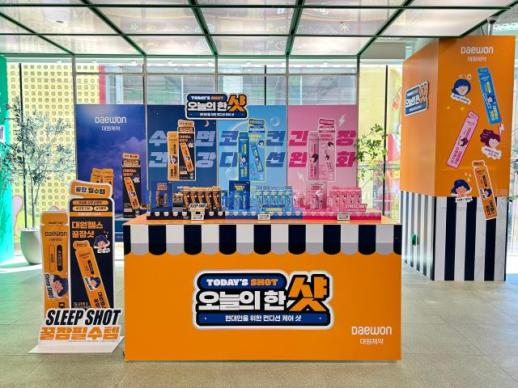 Daewon Pharmaceutical Strengthens 'Channel-Customized' Health Supplement Strategy Daewon Pharmaceutical is revamping its health supplement brand, Daewon Health, to accelerate its expansion in the consumer healthcare (CHC) sector. The company is targeting the market by varying its product offerings and marketing strategies based on consumer touchpoints such as home shopping, health and beauty stores, and online platforms. According to Daewon Pharmaceutical, the company is focusing on a 'channel-customized portfolio' for its health supplement business. This marks a shift from the previous approach of supplying generic products across multiple distribution channels to a more segmented strategy tailored to the characteristics and purchasing motivations of consumers in each channel. This strategic shift reflects changes in consumer patterns within the health supplement market. The Korea Health Supplement Association reports that over the past five years, the market has rapidly transitioned from family-oriented consumption to individual health concerns. As health supplements become a regular part of daily management, the consumer base and purchasing motivations are becoming more diverse. Competition in the market has intensified. According to the Ministry of Food and Drug Safety, the number of specialized health supplement distributors has surged from about 3,200 in 2019 to over 5,630 this year, a 73% increase. This indicates that differentiation through generic products alone has become increasingly challenging. In response to market changes, Daewon Pharmaceutical has refined its product strategies by channel. In the home shopping sector, the company is enhancing its lineup of traditional health supplements focused on high potency and large volumes, targeting middle-aged consumers who prioritize brand trust and functionality. Its flagship high-potency albumin product, 'Albumin King,' sold out during its first home shopping broadcast and has achieved 13 consecutive sellouts. Following this success, offline purchase inquiries have increased, leading to expanded sales channels in major department stores nationwide. Conversely, in health and beauty stores like Olive Young, the company is focusing on convenient products aimed at younger consumers. It is promoting easy-to-consume items such as 'Honey Sleep Shot,' 'Stress Shot,' and 'Nose Relief Shot' to broaden consumer engagement. Last month, it also operated a pop-up store centered around these products. For online channels, Daewon plans to expand its portfolio of small-packaged products and customized offerings focused on specific functionalities to meet segmented consumer demands. A company representative stated, "The direction Daewon Health is focusing on is diversifying product lineups tailored to the characteristics of each distribution channel. We are developing and operating channel-customized products by analyzing channel characteristics and consumer lifestyles." The representative added, "Our core strategy is to expand consumer touchpoints by dualizing the structures of home shopping, offline, and online commerce channels." The brand strategy has also been revamped. Since entering the health supplement market in 2017 with its probiotics brand 'Jang Daewon,' Daewon Pharmaceutical has expanded its product range and rebranded to 'Daewon Health' last year. This rebranding aims to enhance consumer recognition and provide a more intuitive brand identity. Based on this strategy, the company plans to rapidly grow its health supplement business. During a recent investor relations meeting, Daewon set ambitious revenue targets, aiming to increase Daewon Health's sales from 8.7 billion won last year to 40 billion won this year, 70 billion won by 2027, and 100 billion won by 2028. A Daewon representative remarked, "As health concerns become increasingly segmented, we are continuously expanding our product range to address these needs. We are focusing on providing products in optimized forms at the moments consumers need them, rather than simply increasing quantity."* This article has been translated by AI. 2026-06-05 14:09:00
 -
 KT to Simplify Pricing Plans, Launches 18 Unified Plans for 5G and LTE in July KT is set to unify its pricing structure for 5G and LTE services, introducing an option that allows customers to continue using data at reduced speeds even after their data allowance is exhausted. On June 5, KT announced that it will launch 18 new unified pricing plans on July 1, replacing the existing 105 plans for 5G and LTE. The new structure simplifies the selection process, allowing customers to choose plans based on the same criteria regardless of device type or network. Current subscribers can retain their existing plans. The new offerings will include a fully unlimited data option called 'Choice' and a tiered data option named 'Basic.' A key feature of this overhaul is the introduction of a 'Data Assurance Option' (QoS) across all plans. The Basic 110GB plan will offer speeds of up to 5 Mbps, while plans with more than 14GB will provide speeds of up to 1 Mbps. For lower-tier plans with less than 10GB, speeds will be capped at 400 Kbps after the data allowance is used. The Choice plan will provide unlimited data without speed restrictions. KT will also automatically apply age-specific benefits, known as 'Bonus Benefits,' without requiring separate applications. Customers will receive double data upon turning 13 through the 'School Bonus,' and those aged 18 and older will receive the 'Y Bonus.' Seniors will automatically receive the '65+ Bonus' at age 65 and the '75+ Bonus' at age 75. Benefits for vulnerable groups will also be expanded. Seniors aged 65 and older using low-cost LTE plans will receive basic voice and text services for over 20,000 won per month, while those paying over 10,000 won will receive 30 minutes of voice calls and 50 text messages. Military personnel will receive additional data during their service, and welfare recipients, including people with disabilities, will have access to video and additional calls for up to 600 minutes. Kim Young-gul, Senior Vice President of KT's Customer Business Division, stated, "This restructuring of our pricing plans was designed to alleviate the difficulties customers face in choosing options. We will continue to expand tailored benefits that reflect life cycles and usage patterns."* This article has been translated by AI. 2026-06-05 14:09:00
 -
 Daishin Balance No. 20 SPAC Soars 86% on First Day of KOSDAQ Listing Daishin Balance No. 20 SPAC is experiencing a significant surge on its first day of trading on the KOSDAQ, far exceeding its initial public offering price. As of 1:42 PM on June 5, the SPAC's shares were trading at 3,735 won, up 1,735 won (86.75%) from the IPO price of 2,000 won. The stock price even soared to 6,710 won early in the session. A SPAC, or Special Purpose Acquisition Company, is established to facilitate the listing of private companies. It must merge with a private company within three years, or it will be automatically delisted. Market analysts attribute the stock's rise to heightened investor interest in newly listed companies, along with expectations of future mergers with growth-oriented industries. Daishin Balance No. 20 SPAC plans to pursue mergers with companies in future growth sectors, including renewable energy, biopharmaceuticals and medical devices, secondary batteries, LED applications, green transportation systems, carbon reduction energy, advanced water treatment, digital content, gaming, entertainment, robotics, new materials, nanotechnology, high-value food industries, automotive parts manufacturing, and IT semiconductors. In related news, Daishin Balance No. 18 SPAC was listed on the KOSDAQ in January after merging with GF-I, a next-generation smart safety systems company.* This article has been translated by AI. 2026-06-05 14:03:00
 -
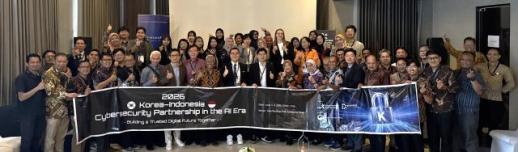 KISA Enhances Cybersecurity Cooperation with Indonesia Amid AI Era The Korea Internet & Security Agency (KISA) hosted a business cooperation event in Jakarta, Indonesia, to strengthen partnerships between cybersecurity companies and institutions from both countries, focusing on the local security market in the telecommunications and finance sectors. KISA announced on June 5 that it co-hosted the '2026 AI Era Korea-Indonesia Cybersecurity Partnership Day' with the Indonesian Telecommunications Association (APJII) on June 3-4 in Jakarta. The event, supported by the Ministry of Science and ICT, saw participation from 10 domestic cybersecurity companies and over 120 representatives from local institutions and businesses in Indonesia. Since establishing a local strategic base in Indonesia in 2016, KISA has been supporting the overseas expansion of domestic companies. In April, the two governments signed a memorandum of understanding to enhance cooperation in the ICT sector, including cybersecurity. The event was divided into two sectors: telecommunications and finance. Five companies from the telecommunications sector, including △Pylon Link △Raonsecure △NPKore △Winning Eye △LSWare, and five from the finance sector, including △Quadminer △MarkAny △Igloo Corporation △P&P Secure △Wiz Korea, participated. During the seminar, representatives from Indonesia's Financial Services Authority, Ministry of Communication and Informatics, and National Cyber and Crypto Agency presented the country's cybersecurity policy directions and key security issues. Domestic companies showcased security solutions tailored to local demand and explored specific market entry possibilities during subsequent one-on-one business meetings. KISA President Lee Sang-jung stated, "As we transition into the AI era, the importance of cybersecurity for critical infrastructure such as telecommunications and finance is increasing. We aim to assist cybersecurity companies in entering the global market and expand international cybersecurity cooperation through demand-based collaboration and public-private partnerships." * This article has been translated by AI. 2026-06-05 14:03:00
 -
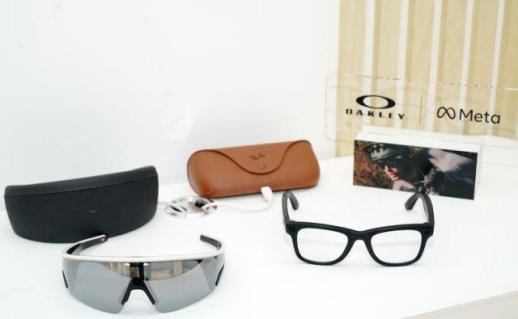 Meta Integrates Facial Recognition into Smart Glasses App Amid Consent Concerns Meta has reportedly embedded facial recognition features into its smart glasses app, although it is not yet available for general users. The app contains code that recognizes faces and cross-references them with the user's contacts. According to a report from the technology publication Wired on June 4, Meta has added facial recognition system code to its AI app, which connects with Ray-Ban and Oakley smart glasses, through several updates this year. The app, essential for utilizing the smart glasses' main features, has surpassed 50 million downloads. Wired identified the internal name of the feature as 'NameTag.' It works by recognizing a person's face captured by the smart glasses' camera and sending a notification to the wearer if the face matches a contact stored on their phone. The publication reported that three AI models for finding, cropping, and converting faces into biometric data have already been distributed from Meta's servers to users' phones. External security researchers have also replicated the app's analysis results. The main issue at stake is notification and consent. While Meta stated in April that it would approach the introduction of facial recognition features cautiously, Wired pointed out that key components have been included in the app since at least January. Meta maintains that the feature has not yet been released and that no final decision has been made. A spokesperson told Wired, "We are exploring facial recognition-related features, and if we do implement them, we will do so transparently." They also emphasized that they are not creating a centralized facial database. Privacy organizations are pushing back. Over 70 groups, including the American Civil Liberties Union (ACLU) and the Electronic Privacy Information Center (EPIC), have previously demanded that Meta abandon the facial recognition feature for smart glasses. They argue that allowing smart glasses users to identify others in public without consent could increase risks of stalking, harassment, and surveillance.* This article has been translated by AI. 2026-06-05 13:48:00