

Journalist

박선태
-
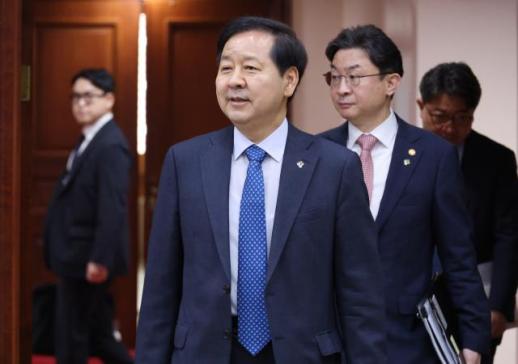 Government Accelerates $395.9 Million Data Center Project in Jangseong The South Korean government is accelerating the development of a high-tech data center project in Jangseong, Jeollanam-do, as part of its seventh Regional Revitalization Investment Fund initiative. The plan includes streamlining local financial investment review processes to expedite contributions from local governments and establish essential AI infrastructure promptly. On June 5, Deputy Prime Minister and Minister of Finance and Economy Koo Yun-cheol chaired a meeting at the Government Seoul Building, where he announced measures to expedite the seventh Regional Revitalization Investment Fund project. This initiative involves the construction and operation of a data center in the Nam-myeon area of Jangseong, located within the Gwangju Research and Development Special Zone. The data center will have a power capacity of 26 megawatts (MW), with an IT load of 16.7 MW, providing server space for cloud service providers and offering ancillary services such as power supply and climate control. This key project, which has been pursued by Jangseong County and private entities since 2023, aims to expand its power capacity to 60 MW in the future, establishing it as a hub for AI development. The total project cost is estimated at 395.9 billion won, funded through 100 billion won in equity and 295.9 billion won in project financing loans. Jeollanam-do and Jangseong County plan to contribute a total of 8 billion won, with Jeollanam-do investing 4.8 billion won and Jangseong County 3.2 billion won. The project was selected for investment by Korea Growth Investment Corporation in November 2022, and construction began in February 2023 following project financing agreements. As of late April, the project was 9.21% complete. It is expected to be completed by December 2027, followed by a three-month stabilization period before commencing full operations in March 2028. To ensure timely completion of the data center, the government has decided to expedite the special purpose corporation (SPC) investment procedures for Jeollanam-do and Jangseong County. This will involve applying a special track that exempts local financial investment reviews, streamlining the related processes following approval from the Economic Relations Ministers' Meeting. The government anticipates that this project will help alleviate the concentration of AI infrastructure in the Seoul metropolitan area and promote the digital transformation of regional industries. Upon completion, it is expected to generate approximately 800 billion won in production effects and create around 3,000 jobs, contributing to the revitalization of the local economy. The Regional Revitalization Investment Fund is a program designed to attract private investment for regional projects, based on a master fund established by the government and policy finance institutions. To date, eight projects have been selected across various regions and sectors, with an estimated total project cost of around 3.6 trillion won.* This article has been translated by AI. 2026-06-05 08:12:00
 -
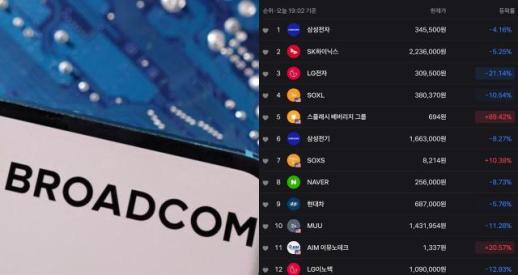 Broadcom Shares Plunge Despite Strong Earnings Report Broadcom, a leading beneficiary in the AI semiconductor sector, is facing investor confusion as its stock plummeted despite exceeding market expectations with its earnings report. Some analysts interpreted comments from Broadcom's CEO as a warning about an AI bubble, but a closer look at the conference call reveals a more optimistic tone. Hock Tan, Broadcom's CEO, stated during the recent earnings call, "We continue to see strong demand for AI infrastructure from hyperscale customers," maintaining a positive outlook on the AI market. He added, "Demand for AI remains very strong," highlighting explosive demand in AI networking equipment and AI accelerators. Broadcom's AI-related business is thriving, with AI revenue surpassing $10 billion this quarter, a 143% increase year-over-year, exceeding market forecasts. The ongoing competition for AI infrastructure has led to increased orders from major tech clients. However, investors were disappointed not by the results but by the expectations. While Broadcom presented a positive outlook for its AI business, it did not provide the aggressive upward guidance Wall Street had anticipated. Investors had hoped for an increase in AI revenue guidance and long-term growth projections, but the company maintained its existing forecasts. Ultimately, the market seemed to demand not just a "good performance" but a "perfect performance." Recently, stocks of AI semiconductor companies like NVIDIA, Broadcom, and AMD surged on expectations of an AI supercycle, leading investors to seek not just growth but a series of surprises that significantly exceed market expectations. Following Broadcom's earnings announcement, some market analysts noted, "The issue lies not with the company but with Wall Street's overly high expectations." In online investment communities, reactions included comments like, "Broadcom stated there are no issues, but the market inflated expectations on its own and was disappointed." This Broadcom shock is interpreted as a reflection of how high market expectations have risen for AI-related stocks, rather than concerns about a slowdown in the AI industry. While demand for AI remains robust, the key variable determining stock prices will be how well companies can meet investors' growth expectations moving forward. 2026-06-05 08:09:00
 -
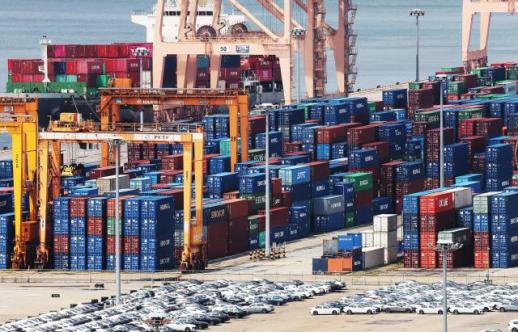 April Current Account Surplus Reaches $28.3 Billion, Second Highest on Record In April, South Korea recorded a current account surplus of 43 trillion won, driven by a booming semiconductor industry, marking the second highest surplus on record. According to preliminary statistics released by the Bank of Korea on June 5, the current account surplus for April was $28.29 billion, marking the 36th consecutive month of surplus, the second longest streak since the 2000s. In terms of categories, the goods account surplus reached $33.88 billion, the second largest ever recorded. The previous record was set in March at $35.68 billion. Exports totaled $90.59 billion, a 54.5% increase compared to the same month last year, ranking as the second highest ever. The information technology (IT) sector, particularly semiconductors and computer peripherals, continued to perform strongly, while non-IT items also saw growth due to rising oil prices. By category, exports of computer peripherals surged by 411.3%, while semiconductors increased by 171.4%, and information and communication devices rose by 123.2%. Other increases were seen in ships (49.9%), petroleum products (39.4%), and chemical products (10.7%). However, exports of passenger cars (-7.2%) and machinery and precision instruments (-2.1%) declined. Regionally, exports to Southeast Asia (74.2%), China (62.6%), the United States (54.0%), and Japan (28.4%) showed strong growth. In contrast, exports to the Middle East fell by 24.9%. Imports also rose by 16.1% to $56.7 billion. The increase was influenced by rising oil prices due to the ongoing conflict between the U.S. and Iran, as well as a significant rise in imports of capital goods, including semiconductors and equipment. Imports of capital goods increased by 27.7%, driven by semiconductor manufacturing equipment (55.5%), semiconductors (52.8%), and information and communication devices (23.8%). Raw material imports also rose by 12.3%, led by coal (26.7%), chemical products (21.3%), and crude oil (13.1%). The services account recorded a deficit of $2.42 billion. This deficit was a 0.3% decrease compared to April of last year (-$2.7 billion) but significantly larger than the previous month (-$1.31 billion). Within the services account, the travel balance showed a deficit of $30 million. This marked a slight shift from a surplus of $140 million in March, although the number of arrivals in April exceeded 2 million, indicating a significant improvement compared to the same month last year. The primary income account shifted from a surplus of $3.59 billion in March to a deficit of $2.53 billion in April. This seasonal deficit was attributed to concentrated dividend payments and an increase in major companies' dividend payouts. The financial account recorded a net increase of $25.46 billion in assets over liabilities. Direct investment saw an increase of $6.24 billion in domestic investments abroad, while foreign investments in South Korea decreased by $1.36 billion. In securities investment, domestic investments abroad surged by $8.22 billion, primarily in stocks, as the U.S. stock market rebounded, leading to increased net purchases by other financial institutions. Foreign investments in South Korea also rose by $3.51 billion, shifting from a decrease the previous month to an increase, primarily in stocks. Notably, foreign stock investments recorded a record sell-off of $29.33 billion in March, but this decreased to $1.24 billion in April. This improvement in foreign investor sentiment was attributed to easing tensions in the Middle East and strong earnings reports from domestic semiconductor companies.* This article has been translated by AI. 2026-06-05 08:03:00
 -
 Special Health Checkups for Female Farmers Expanded to Age 80; Safety Checklist Required for Foreign Workers The South Korean government is expanding special health checkups for female farmers to include those up to 80 years old, starting this year, in an effort to reduce safety accidents in the agricultural sector. Additionally, farms employing foreign workers will be required to submit a safety checklist to improve workplace safety conditions. The Ministry of Agriculture, Food and Rural Affairs announced these measures during an emergency economic meeting held at the Government Seoul Complex on June 5. The government's decision comes in response to the persistently high rate of safety accidents in agriculture, which resulted in 297 fatalities in 2024 alone. That year, the total number of deaths and injuries in the agricultural sector reached 297 and 50,852, respectively. To address this issue, the government aims to reduce the number of deaths and injuries in agriculture by 25% by 2030 compared to 2024 levels, targeting a decrease of 77 deaths and 12,700 injuries. In light of inadequate safety standards for high-risk machinery, the government plans to enhance the safety of agricultural equipment. This includes allowing the conversion of existing walk-behind tractors to handle-type models and considering subsidies for scrapping outdated machinery. Furthermore, the installation of protective structures and safety belt alarms will be mandated for forklifts and excavators. To improve safety in livestock facilities, the government will support the acquisition of safety equipment, including ventilation fans, respiratory masks, pulleys for pump replacements, and skylights through joint purchasing initiatives. Regular and mandatory inspections of safety facilities and equipment at high-risk sites, such as manure treatment facilities, will also be implemented. Recognizing the vulnerability of female farmers and foreign workers to heat-related illnesses and agricultural accidents, the government will extend special health checkups for female farmers from age 70 to 80. Starting in the first half of this year, foreign workers and their assigned farms will be required to submit a safety checklist during visa applications to better manage vulnerable farms. The government plans to finalize and announce detailed implementation tasks for these measures within this month. Additionally, it will review the progress of 18 improvement tasks across five key areas of the comprehensive safety management plan twice a year. 2026-06-05 08:03:00
 -
 Michelle Steel's Nomination as U.S. Ambassador to South Korea Advances Michelle Steel's nomination as the U.S. Ambassador to South Korea has passed the Senate Foreign Relations Committee. This comes about two months after President Donald Trump nominated her in April. The nomination still requires approval from the full Senate before she can officially take office. According to the U.S. government-funded international broadcaster Voice of America (VOA), the Senate Foreign Relations Committee voted 14 to 8 in favor of Steel's nomination on June 4. The U.S. Ambassador to South Korea is officially appointed after passing both the committee review and the full Senate vote. If Steel's nomination is confirmed by the Senate, she will become the second Korean American to hold the position, following former Ambassador Sung Kim. Steel, a Korean American born in Seoul, previously served as a U.S. Representative from California. During her confirmation hearing before the Senate Foreign Relations Committee on May 20, she emphasized strengthening the U.S.-South Korea alliance and addressing issues related to American companies' access to the South Korean market. Trade issues between the U.S. and South Korea were also discussed during the confirmation process. According to Reuters, Steel stated that she would verify the sources and plans for the $350 billion investment commitment from South Korea to the U.S. She also expressed her intention to address non-tariff barriers in the agricultural and digital services sectors. The position of U.S. Ambassador to South Korea has been vacant for nearly 1 year and 5 months since former Ambassador Philip Goldberg left in January of last year. If confirmed by the full Senate, Steel will become the first U.S. Ambassador to South Korea under the Trump administration's second term.* This article has been translated by AI. 2026-06-05 07:39:00
 -
 Trump Announces Final Negotiations to End Iran War, Dismisses House Resolution Donald Trump, President of the United States, stated that "final negotiations to end the Iran War are underway." He criticized the House of Representatives for passing a resolution that limits his authority regarding the Iran conflict, calling it a "meaningless vote." While emphasizing the potential for negotiations, he also indicated that military action could resume if U.S. forces suffer casualties. According to ABC News, President Trump remarked on June 4 that negotiations with Iran are at a critical stage. He noted that the House's resolution to restrict his war powers emerged during these final negotiations aimed at concluding the conflict with Iran. He suggested that congressional oversight does not aid the negotiation process. Earlier, the House passed a resolution by a vote of 215 to 208, which prevents the President from continuing military action against Iran without congressional approval. The resolution received support from Democratic lawmakers and four Republican members. President Trump criticized the Republican lawmakers who voted in favor of the resolution, labeling them as "showmen." He also directed his comments at Democrats, implying that they wish for the U.S. to fail. The White House maintains that the resolution infringes upon the President's diplomatic and military authority. Trump also expressed that he would not be overly reliant on negotiations. He stated that whether through a formal agreement or military means, the U.S. would emerge victorious. This conveys a message that while negotiations are ongoing, the U.S. will assert its dominance. However, he specified that the conditions for resuming military conflict would be limited to instances of U.S. casualties. Trump indicated that if Iran were to kill American troops, that would provide justification for renewed hostilities. He also left open the possibility of a meeting with Iran's supreme leader. When asked if he would consider meeting with Iranian officials, Trump replied, "If an agreement is reached, I would consider a meeting." He did not provide specifics regarding the format or the parties involved in such negotiations. Additionally, Trump addressed the issue of Iran's nuclear materials, stating that the U.S. does not necessarily need a formal agreement to secure Iran's enriched uranium. However, he noted that the nuclear materials are "effectively sealed" and that there is no immediate need for action.* This article has been translated by AI. 2026-06-05 07:33:00
 -
 Kioxia Surpasses Toyota, Nvidia Dominates Apple as Semiconductor Sector Reshapes Market Caps in Korea, U.S., and Japan ◆ Ajou Economics Major News ▷ Kioxia Surpasses Toyota, Nvidia Dominates Apple… Semiconductor Sector Reshapes Market Caps in Korea, U.S., and Japan - The semiconductor sector is gaining prominence in the Korean stock market as the benefits of artificial intelligence (AI) concentrate in this industry. Samsung Electronics, once viewed primarily as a smartphone-centric IT company, has emerged as a key beneficiary of the expanding demand for memory semiconductors in the AI era. - SK Hynix's transformation is even more dramatic. As a key supplier of high-bandwidth memory (HBM) for Nvidia, it is now considered one of the biggest beneficiaries in the AI landscape. Analysts note that the company has shifted from being heavily influenced by the DRAM market to becoming a central player in AI infrastructure expansion. - While Samsung Electronics and SK Hynix lead the Korean market, Nvidia effectively dominates in the U.S. Recently, Nvidia's market capitalization surpassed $5.2 trillion, making it the world's most valuable company. - In Japan, AI is also shaking up the stock market landscape. Kioxia Holdings, a NAND flash memory manufacturer, is at the forefront. Toyota, a symbol of Japanese manufacturing and previously the top company by market cap, is facing challenges as Kioxia's stock price has surged recently. - Kioxia's shares rose over 7% during trading, pushing its market capitalization above 45 trillion yen at one point, allowing it to surpass Toyota and become the second-largest publicly traded company in Japan. ◆ Major Reports: Unwinding Supply and Demand in Consumer Goods, Finance, and Materials - The previous day, the KOSDAQ materials sector was hot. In the past month, the sectors with increased market capitalization on KOSDAQ include semiconductors, machinery, and IT hardware, as AI's influence spreads while biotechnology takes a breather. - Recently, supply chain stocks in the U.S. and Japan have shown strength, but domestic stocks were previously weighed down by a concentration of demand in large-cap semiconductors, leading to a rebound on this day. - Expectations for post-election KOSDAQ revitalization policies and the implementation of the National Growth Fund were also reflected, with recent three-month net purchases by foreign investors and pension funds concentrated in IT hardware and banking sectors. ◆ Major Announcements After Market Close (June 4) ▷ Shinhan Securities decided to retire about 1 trillion won in treasury shares, stating it aims to enhance shareholder value. ▷ OSP announced a stock split of 0.5 shares per share. ▷ TSI Scientific announced a 3 billion won capital increase through a third-party allocation. ▷ Kolon Mobility Group acquired shares of AutoHub Selca for 61.7 billion won. ◆ Fund Trends (as of June 2, excluding ETFs) ▷ Domestic Equity: -307.7 billion won ▷ Overseas Equity: -22.9 billion won ◆ Key Schedule for Today (June 5) ▷ South Korea: Current Account (April) ▷ Eurozone: GDP Growth Rate (Q1) ▷ U.S.: Employment Report (May), Consumer Credit (April)* This article has been translated by AI. 2026-06-05 07:30:00
 -
 Zelensky Proposes Direct Talks with Putin to Discuss Peace Volodymyr Zelensky, the President of Ukraine, has proposed direct talks with Russian President Vladimir Putin, calling for a comprehensive ceasefire during negotiations. This proposal highlights the need for direct discussions between the parties involved as U.S. attention shifts to issues in Iran. On June 4, Zelensky stated in an open letter that "peace can only be achieved through direct engagement between Ukraine and Russia." He criticized the notion of waiting for the European conflict to regain U.S. focus, suggesting that it is a mistake to simply wait. He mentioned Switzerland or Turkey as potential venues for the talks. Russia confirmed receipt of the letter. The Kremlin stated that "President Putin is expected to be briefed on the letter." During a meeting with foreign journalists in St. Petersburg, Putin expressed his willingness to reach an agreement with Ukraine but emphasized that "certain compromises are necessary." However, Russia reiterated its stance on key issues. Putin questioned whether Zelensky has the legal authority to represent Ukraine and maintained that Russia's intention to control the entire Donbas region remains unchanged. He also suggested that the European Union could persuade Zelensky to cede the territory. In his open letter, Zelensky specifically addressed the critical region of Donetsk within Donbas, criticizing Putin for repeatedly delaying deadlines to occupy parts of Ukraine. He asserted, "You will not be able to occupy it." U.S. President Donald Trump reacted positively to the prospect of a meeting between the two leaders, stating, "It would be good if the two met," and added, "It needs to end." While he refrained from detailing what compromises might be necessary, he noted that both sides should be willing to make certain concessions. Russia has also expressed dissatisfaction with the U.S. role as a mediator. Russian Foreign Minister Sergey Lavrov claimed that the U.S. position on Ukraine is no different from that of its European allies, stating, "Biden's war has become Trump's war." Zelensky's proposal aims to revive stalled peace negotiations. However, with Russia dismissing the ceasefire request and raising concerns about the Donbas territory and Zelensky's representation, the potential for agreement remains limited.* This article has been translated by AI. 2026-06-05 07:18:00
 -
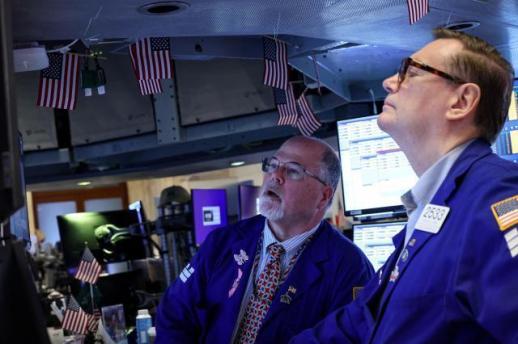 Dow Hits Record High as AI Semiconductor Stocks Retreat The New York Stock Exchange closed mixed on June 4, with the Dow Jones Industrial Average reaching a record high, while semiconductor stocks faced pressure from profit-taking. The Dow rose 874.86 points, or 1.7%, to finish at 51,561.93. The Standard & Poor's 500 index gained 30.63 points, or 0.4%, closing at 7,584.31. In contrast, the tech-heavy Nasdaq composite fell 23.02 points, or 0.1%, to end at 26,830.96. Market activity shifted focus from large tech stocks to financial and healthcare sectors. A nearly 3% drop in international oil prices and declining U.S. Treasury yields helped restore some investor confidence in risk assets. Financial and healthcare stocks boosted the indices, while the Russell 2000 index, which tracks smaller companies, rose 1.4%. However, AI semiconductor stocks faced profit-taking pressure. Broadcom's shares plummeted over 12% after the company reported second-quarter revenues that fell short of market expectations and did not raise its AI revenue forecast for 2027. This decline affected major semiconductor stocks like AMD, Micron, and Qualcomm, which had recently seen rapid price increases due to AI optimism. Stocks that failed to meet performance expectations faced significant selling pressure. Macro indicators showed signs of economic slowdown. The number of new unemployment claims in the U.S. rose to 225,000, the highest level in four months. Additionally, the first-quarter non-farm productivity growth rate was revised down from 0.8% to 0.3%. However, the slowdown in the labor market was interpreted more as a signal for the Federal Reserve's interest rate trajectory rather than an immediate warning of a severe economic downturn. Expectations of easing tensions in the Middle East supported the market. Reports of a ceasefire agreement between Israel and Lebanon led Brent crude to drop to $95.03 per barrel, while West Texas Intermediate (WTI) fell to $93.04. The decline in oil prices contributed to easing inflationary pressures. Overall, the trading session was far from a broad rally in risk assets. While the Dow and S&P 500 gained, the Nasdaq was weighed down by weakness in semiconductor stocks. The market now looks ahead to the employment report and the Federal Reserve's interest rate decisions, as well as the performance expectations for AI-related stocks.* This article has been translated by AI. 2026-06-05 06:42:00
 -
 40% of Top Apps in Apple App Store Feature AI, Payment Growth Quadruples Apple's App Store is seeing a rapid increase in apps featuring artificial intelligence (AI) capabilities. The demand for generative AI is translating into higher payments for smartphone apps, contributing to the growth of the App Store. On June 4, Apple reported that more than 40 of the top 100 apps by payment volume last year included consumer-facing AI features. The payment growth rate for these apps was four times higher than that of top apps without AI functionalities. AI capabilities are not limited to chatbot applications. Apple noted that "AI features are spreading across a wide range of consumer apps, including document creation, image generation, productivity, search, and education." This indicates that AI is not only creating a separate app market but also driving payment expansion within existing apps. The overall App Store ecosystem has also grown. Citing research from an analytics group, Apple revealed that the App Store generated $1.4 trillion in developer payments and revenue last year, an increase of about $100 billion from the previous year's $1.3 trillion. By category, physical goods and services accounted for the largest share at $1.1 trillion. Digital goods and services totaled $149 billion, while in-app advertising reached $151 billion. However, not all of this revenue is attributed to Apple. The company stated that developers did not pay a commission on more than 90% of the payments and revenue generated within the App Store ecosystem. This highlights that the App Store serves as a platform connecting not only app sales but also external transactions in shopping, travel, delivery, and advertising. This announcement comes amid ongoing assessments that Apple's own AI services are lagging behind competitors. Instead of promoting its own AI apps, Apple is emphasizing its role in facilitating the distribution and payment flow of consumer AI services through the App Store.* This article has been translated by AI. 2026-06-05 06:36:00