

In April, South Korea recorded a current account surplus of 43 trillion won, driven by a booming semiconductor industry, marking the second highest surplus on record.
According to preliminary statistics released by the Bank of Korea on June 5, the current account surplus for April was $28.29 billion, marking the 36th consecutive month of surplus, the second longest streak since the 2000s.
In terms of categories, the goods account surplus reached $33.88 billion, the second largest ever recorded. The previous record was set in March at $35.68 billion.
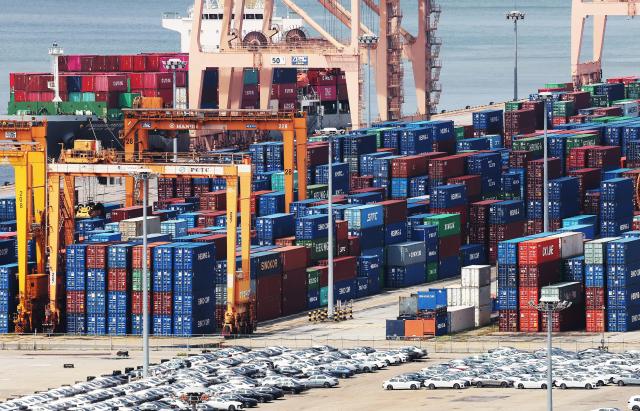
Exports totaled $90.59 billion, a 54.5% increase compared to the same month last year, ranking as the second highest ever. The information technology (IT) sector, particularly semiconductors and computer peripherals, continued to perform strongly, while non-IT items also saw growth due to rising oil prices.
By category, exports of computer peripherals surged by 411.3%, while semiconductors increased by 171.4%, and information and communication devices rose by 123.2%. Other increases were seen in ships (49.9%), petroleum products (39.4%), and chemical products (10.7%). However, exports of passenger cars (-7.2%) and machinery and precision instruments (-2.1%) declined.
Regionally, exports to Southeast Asia (74.2%), China (62.6%), the United States (54.0%), and Japan (28.4%) showed strong growth. In contrast, exports to the Middle East fell by 24.9%.
Imports also rose by 16.1% to $56.7 billion. The increase was influenced by rising oil prices due to the ongoing conflict between the U.S. and Iran, as well as a significant rise in imports of capital goods, including semiconductors and equipment.
Imports of capital goods increased by 27.7%, driven by semiconductor manufacturing equipment (55.5%), semiconductors (52.8%), and information and communication devices (23.8%). Raw material imports also rose by 12.3%, led by coal (26.7%), chemical products (21.3%), and crude oil (13.1%).
The services account recorded a deficit of $2.42 billion. This deficit was a 0.3% decrease compared to April of last year (-$2.7 billion) but significantly larger than the previous month (-$1.31 billion).
Within the services account, the travel balance showed a deficit of $30 million. This marked a slight shift from a surplus of $140 million in March, although the number of arrivals in April exceeded 2 million, indicating a significant improvement compared to the same month last year.
The primary income account shifted from a surplus of $3.59 billion in March to a deficit of $2.53 billion in April. This seasonal deficit was attributed to concentrated dividend payments and an increase in major companies' dividend payouts.
The financial account recorded a net increase of $25.46 billion in assets over liabilities. Direct investment saw an increase of $6.24 billion in domestic investments abroad, while foreign investments in South Korea decreased by $1.36 billion.
In securities investment, domestic investments abroad surged by $8.22 billion, primarily in stocks, as the U.S. stock market rebounded, leading to increased net purchases by other financial institutions. Foreign investments in South Korea also rose by $3.51 billion, shifting from a decrease the previous month to an increase, primarily in stocks.
Notably, foreign stock investments recorded a record sell-off of $29.33 billion in March, but this decreased to $1.24 billion in April. This improvement in foreign investor sentiment was attributed to easing tensions in the Middle East and strong earnings reports from domestic semiconductor companies.
* This article has been translated by AI.

Copyright ⓒ Aju Press All rights reserved.