

Journalist

박선태
-
 South Korea signs free trade deal with Serbia SEOUL, June 5 (AJP) - South Korea has signed a comprehensive economic partnership agreement (CEPA), a broader form of free-trade agreement, with Serbia, the Ministry of Trade, Industry and Resources said on Friday. The agreement, which comes after about two years of negotiations, was signed in Belgrade by South Korean Trade Minister Yeo Han-koo and his Serbian counterpart Jagoda Lazarević. The broader deal goes beyond tariff reductions to include economic and supply-chain cooperation, opening new opportunities for exports and access to critical minerals used in batteries and other strategic industries. Despite its relatively small population of seven million, Serbia has become an increasingly important manufacturing hub in Southeast Europe. It also holds significant reserves of lithium, copper, zinc and other minerals used in batteries and other high-tech industries. Under the agreement, the two countries will eliminate tariffs on more than 90 percent of traded goods, covering over 96 percent of import value. It is expected to particularly benefit South Korean technology exporters, as Serbia, which is not part of the World Trade Organization's Information Technology Agreement (ITA), has agreed to eliminate tariffs of up to 25 percent on semiconductors and electronic products. South Korean automakers are also set to benefit, with tariffs on all automotive parts to be removed immediately and market access expanded for electric and hybrid vehicles. Broader access to the Serbian market will be available, with tariffs to be removed on South Korean exports including instant noodles, roasted seaweed, ginseng, cosmetics, pharmaceuticals and defense-related goods. Beyond trade, the agreement is expected to strengthen supply chains for advanced industries. Tariffs on Serbian raw materials, including lithium, cobalt, nickel, graphite and rare-earth elements, will be eliminated either immediately or phased out within five years, supporting South Korea's battery and advanced manufacturing sectors. It would improve business efficiency, with imported goods cleared within 48 hours of arrival and express shipments processed within six hours. It also includes measures to strengthen intellectual property protection, including efforts to curb online infringement. "The agreement marks a major step forward in economic cooperation between South Korea and Serbia," Yeo said. "It creates a platform for collaboration not only in trade but also in supply chains, energy, critical minerals and future industries such as AI and biotechnology." 2026-06-05 17:10:38
 -
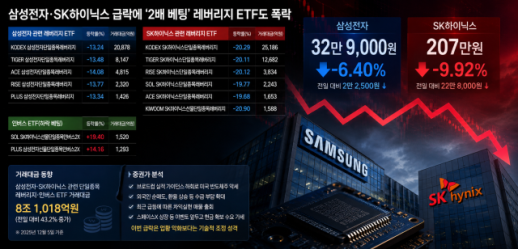 Investors Suffer Losses as Samsung and SK Hynix Stocks Plummet Samsung Electronics and SK Hynix saw significant declines, leading investors in single-stock leveraged exchange-traded funds (ETFs) to incur substantial losses. On June 5, the Korea Exchange reported that Samsung Electronics closed at 329,000 won, down 22,500 won (6.40%) from the previous trading day. SK Hynix also fell by 228,000 won (9.92%), ending at 2,070,000 won. The drop in these leading stocks caused related leveraged products to plummet as well. The KODEX Samsung Electronics Single-Stock Leverage ETF fell 13.24% to close at 25,565 won. Other products, including TIGER Samsung Electronics Single-Stock Leverage (-13.48%), ACE Samsung Electronics Single-Stock Leverage (-14.08%), RISE Samsung Electronics Single-Stock Leverage (-13.77%), and PLUS Samsung Electronics Single-Stock Leverage (-13.34%), also recorded declines exceeding 10%. The losses were even steeper for SK Hynix-related leveraged products. The KODEX SK Hynix Single-Stock Leverage ETF plummeted 20.29%, while TIGER SK Hynix Single-Stock Leverage (-20.11%), RISE SK Hynix Single-Stock Leverage (-20.12%), SOL SK Hynix Single-Stock Leverage (-19.77%), and ACE SK Hynix Single-Stock Leverage (-19.68%) all experienced declines around 20%. The KIWOOM SK Hynix Futures Single-Stock Leverage ETF recorded the largest drop among major products, falling 20.90%. In contrast, inverse products betting against the decline showed strength. The SOL SK Hynix Futures Single-Stock Inverse 2X rose 19.40%, and the PLUS Samsung Electronics Futures Single-Stock Inverse 2X increased by 14.16%. Investor trading activity was intense, with the trading volume for Samsung Electronics and SK Hynix-related single-stock leveraged and inverse ETFs reaching 8.1018 trillion won. This marked a 43.2% increase from the previous day's 5.6579 trillion won and was the highest level since June 2, when volatility in semiconductor stocks surged to 11.7 trillion won. Notably, trading volume for the KODEX SK Hynix Single-Stock Leverage ETF surged to 2.5186 trillion won, nearly doubling from the previous day, while the TIGER SK Hynix Single-Stock Leverage ETF saw 1.2682 trillion won in transactions. The KODEX Samsung Electronics Single-Stock Leverage ETF also reached a trading volume of 2.0878 trillion won, indicating a concentration of investor activity. Analysts suggest that both bargain buying and stop-loss orders contributed to the surge in trading. Market analysts attribute the decline in semiconductor stocks to a combination of shock from Broadcom's guidance and profit-taking. Han Ji-young, a researcher at Kiwoom Securities, stated, "Broadcom's revenue guidance fell short of market expectations, leading to a downturn in U.S. semiconductor stocks. Foreign selling and rising exchange rates added to the supply burden. The recent rapid increase in stock prices also led to profit-taking after the market had already priced in expectations surrounding NVIDIA CEO Jensen Huang's visit to South Korea." Lee Kyung-min, a researcher at Daishin Securities, noted, "Broadcom's AI revenue guidance was below expectations, dampening semiconductor investment sentiment, and profit-taking from the recent surge in stock prices was concentrated. Additionally, the demand for cash ahead of major events like the SpaceX IPO contributed to panic selling." However, analysts do not view this decline as a sign of worsening market conditions. One researcher commented, "This drop is more of a technical adjustment due to the rapid pace of index increases and heightened concentration rather than a fundamental decline. Since profit momentum is still improving, we should consider this volatility as a process of stabilization." They added, "It is also possible that patterns of reducing losses will re-emerge after this sharp drop, and from a valuation perspective, the attractiveness of entering the KOSPI centered on semiconductors is increasing again."* This article has been translated by AI. 2026-06-05 17:03:00
 -
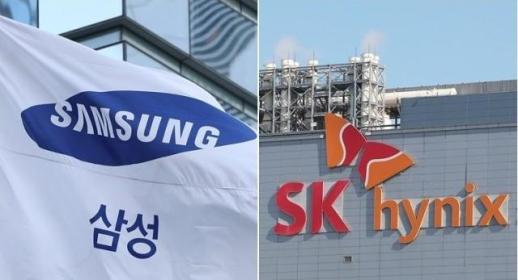 Broadcom Shock Hits Semiconductor Giants Samsung and SK Hynix The decline in U.S. semiconductor stocks has dealt a significant blow to the South Korean market. Following Broadcom's disappointing revenue forecast for AI semiconductors, investor sentiment weakened, leading to substantial drops for both Samsung Electronics and SK Hynix. On June 5, the Korea Exchange reported that Samsung Electronics closed at 329,000 won, down 6.40% from the previous trading day. The stock opened at 333,500 won and fell to as low as 325,000 won during the day, before recovering slightly by the close. SK Hynix also saw a significant decline, finishing at 2,070,000 won, down 9.92% from the previous session. The stock opened at 2,142,000 won and dropped to 2,070,000 won during trading. The sharp decline in major semiconductor stocks is attributed to the recent correction in U.S. semiconductor shares. On the previous night, New York stocks saw Broadcom drop by 12.59%, Micron Technology by 7.74%, SanDisk by 3.92%, and Western Digital by 3.13%. Broadcom's forecast for third-quarter AI semiconductor revenue was set at $16 billion, falling short of market expectations of $17.2 billion, which significantly dampened investor sentiment. Analysts believe this correction is more a result of weakened investor sentiment and profit-taking rather than a fundamental deterioration. Lee Kyung-min, a researcher at Daishin Securities, stated, "Broadcom's guidance of $16 billion for third-quarter AI revenue was below the expected $17.2 billion, leading to a decline in investor sentiment for the semiconductor sector. This prompted profit-taking in domestic semiconductor stocks, resulting in an overall downturn." He added, "Additionally, a decrease in risk appetite and global liquidity outflows, such as the SpaceX IPO, contributed to panic selling, causing the sector to decline collectively."* This article has been translated by AI. 2026-06-05 16:57:00
 -
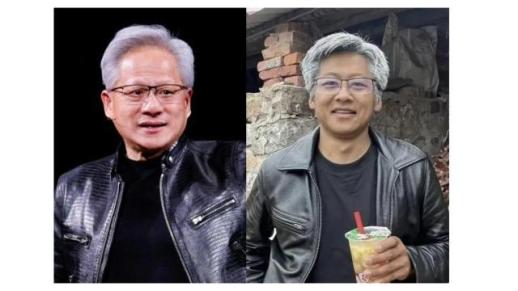 Chinese Youth Goes Viral for Imitating NVIDIA CEO Jensen Huang A young man from rural China has gone viral online for his impersonation of NVIDIA CEO Jensen Huang. According to the South China Morning Post on June 2, 28-year-old Yang Yang from a village in Dandong, Liaoning Province, posted a video mimicking Huang that garnered explosive reactions. Dressed in a cheap leather jacket and glasses, with flour sprinkled in his hair to replicate Huang's look, Yang's video quickly spread, earning him tens of thousands of followers in about two weeks. Investing around 50,000 won (approximately $40), he transformed into Huang, mimicking his eating and drinking habits while holding a model of a graphics card, bringing laughter to viewers. His impersonation videos have each received millions of views, with some reaching up to 15 million views, sparking significant interest. While CEOs were once primarily remembered for corporate performance, product launches, and stock trends, Jensen Huang has emerged as a key figure in the AI semiconductor market and a character in popular culture. Meanwhile, Jensen Huang arrived at Gimpo Airport around 1 p.m. on June 5. His first schedule in South Korea included a visit to the T1 Base Camp PC Bang near Hongdae, where he met with League of Legends esports players, including Faker (Lee Sang-hyeok), Doran (Choi Hyun-jun), Owner (Moon Hyun-jun), Phase (Kim Soo-hwan), and Keria (Ryu Min-seok). T1 Base Camp is a PC bang operated by T1. The atmosphere was filled with cheers from fans welcoming Huang, who also took time to pose for photos and sign autographs for those gathered at the PC bang. Later that day, Huang is scheduled to meet with SK Group Chairman Chey Tae-won, LG Group Chairman Koo Kwang-mo, and Naver Chairman Lee Hae-jin at a Korean barbecue restaurant called "Hyungnim Jeoyo" in the Mapo district of Seoul. 2026-06-05 16:57:00
 -
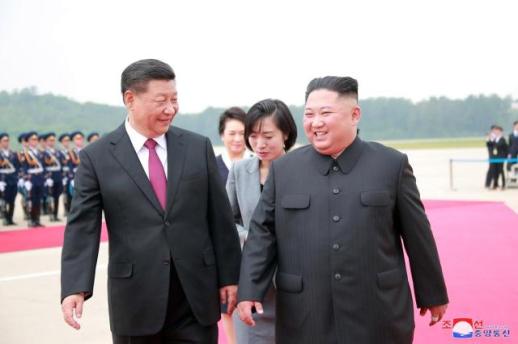 Xi Jinping to Visit North Korea for the First Time in Seven Years Chinese President Xi Jinping will make a state visit to North Korea on June 8-9, marking his first trip to the country in seven years and his second since Kim Jong Un took power. This visit comes amid escalating U.S.-China strategic competition and closer ties between North Korea and Russia. Analysts view it as a reaffirmation of the traditional friendship between China and North Korea, while also showcasing China's role as a key player in addressing issues on the Korean Peninsula. According to Yonhap News on June 5, the International Liaison Department of the Chinese Communist Party announced that Xi is visiting at the invitation of Kim. North Korea's state media, KCNA, reported the same. This meeting will occur about nine months after the two leaders last met during the 80th anniversary celebrations of China's victory in the war against Japan in Beijing last September. The visit coincides with the 65th anniversary of the China-North Korea Mutual Aid and Cooperation Treaty. Historically, both nations have used significant anniversaries to highlight their relationship, and this summit is expected to serve as a platform to reinforce their traditional alliance and strategic cooperation. Notably, this is Xi's first overseas trip of the year, which underscores the strategic importance of China-North Korea relations in his foreign policy. After refraining from international travel since attending the APEC summit in South Korea last year, Xi's choice of North Korea as his first destination signals the significance of this relationship in China's diplomatic agenda. This year, Xi has held meetings with South Korean President Lee Jae-myung, U.S. President Donald Trump, and Russian President Vladimir Putin. By meeting with Kim, he will have engaged with all major stakeholders concerning the Korean Peninsula. This has led to interpretations that China is positioning itself as a mediator in the region, seeking to expand its diplomatic influence. The situation on the Korean Peninsula has changed significantly since 2019. North Korea is now solidifying its status as a nuclear power, rejecting denuclearization. On June 4, KCNA reported that Kim inspected a new nuclear material production facility and held important discussions to strengthen the country's nuclear capabilities. This activity, revealed just before Xi's visit, is seen as a reaffirmation of North Korea's commitment to maintaining its nuclear status. While China officially upholds the principle of denuclearization on the Korean Peninsula, it has recently shifted its focus toward easing sanctions and expanding economic cooperation with North Korea. During last month's U.S.-China summit, denuclearization was mentioned as a common goal, but a joint statement from the China-Russia summit emphasized opposition to sanctions against North Korea instead. Experts believe that economic cooperation will be a key agenda item during the upcoming summit, alongside nuclear issues. There is a strong possibility that discussions will include the expansion of trade between China and North Korea, as well as cooperation in tourism, railways, healthcare, and Chinese investment in North Korea. Some analysts suggest that this visit could symbolize a strategic collaboration among North Korea, China, and Russia in opposition to a U.S.-centric international order. With military cooperation between North Korea and Russia strengthening, China may be looking to recalibrate its relationship with North Korea and actively reshape the Northeast Asian order. Ultimately, Xi's visit to Pyongyang carries implications beyond a mere friendly gesture. It is expected to serve as a diplomatic stage where China seeks to assert its influence and secure a leading role in addressing the complex issues surrounding North Korea's nuclear ambitions, sanctions, and the broader geopolitical dynamics involving the U.S. and Russia.* This article has been translated by AI. 2026-06-05 16:54:00
 -
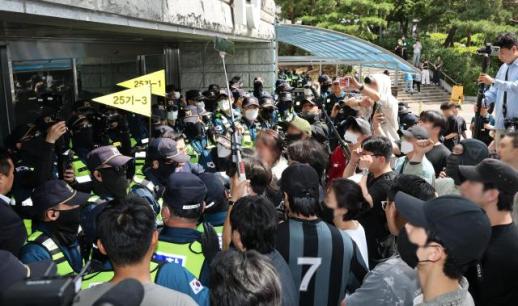
 Election Commission Chair Resigns Amid Ballot Shortage Crisis In the wake of ongoing controversy over a ballot shortage during the June 3 local elections, Na Tae-ak, the Chair of the National Election Commission, has resigned, taking responsibility for the crisis. On June 5, Na announced his resignation during a public apology at the commission's office in Gwacheon, Gyeonggi Province, stating, "I feel a deep sense of responsibility for all that has transpired and will step down from my position as Chair of the National Election Commission." He added, "The high level of public interest and active expression of will regarding local governance has been undermined by the ballot shortage. As the Chair, I feel a profound sense of despair and an immense responsibility for the erosion of public trust in election management, which has led to skepticism about the electoral process." Na emphasized, "There is no excuse for the occurrence of an event that infringes upon the precious right of citizens to participate in elections. I will establish an investigation committee as quickly as possible to identify the fundamental causes and issues surrounding the ballot shortage and to develop measures to prevent its recurrence, ensuring that all findings are transparently disclosed." He also pledged that the investigation committee would be composed entirely of external experts to ensure objectivity and thoroughness. Na committed to fully cooperating with any National Assembly inquiries regarding the commission's responsibilities in this matter, stating, "If there are responsibilities to be taken after the results are revealed, I will not evade them." Following Na's announcement, the commission plans to swiftly establish an investigation committee made up of external experts to determine the causes of the crisis and propose preventive measures. Na, who was appointed as Chair of the National Election Commission in May 2022 following the retirement of former Supreme Court Justice Na Jeong-hee, will leave office after approximately four years, failing to complete his six-year term. On the election day of June 3, unprecedented scenes unfolded as voters were unable to cast their ballots due to a shortage of ballots at polling stations in areas such as Gangnam, Gwangjin, and Songpa districts in Seoul. Some voters, exhausted from long waits, chose to abandon their attempts to vote, raising questions about the commission's response. Notably, far-right civic groups, including history lecturer Jeon Han-gil and former Prime Minister Hwang Kyo-ahn, who have long claimed electoral fraud, have been staging protests at polling stations in Songpa and the commission's office in Gwacheon. Additionally, the second polling station in Jamsil 7-dong, Songpa, which had been blocked by protesters, finally had two ballot boxes removed for counting after police deployed 1,000 riot officers over a period of two nights and three days. 2026-06-05 16:54:00
 -
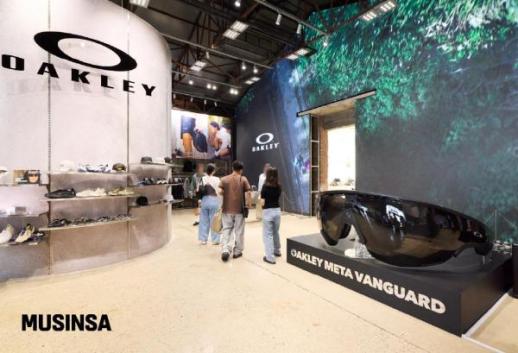 Oakley Meta Pop-Up Store Opens in Seoul's Musinsa Store Seongsu Musinsa announced on June 5 that it will host a pop-up store for the Oakley Meta, a next-generation artificial intelligence (AI) glasses developed in collaboration with Meta, at its Seongsu location in Seoul. The pop-up store will be open until June 18.The Oakley Meta combines the design of the sports eyewear brand Oakley with Meta's AI technology, making it suitable for both sports activities and everyday use.Visitors to the pop-up store can experience two products: the Oakley Meta Vanguard and the Oakley Meta Houston. The Oakley Meta Vanguard is tailored for sports environments, providing real-time workout data by connecting with Garmin devices and Strava. It also features 122-degree ultra-wide 3K UHD hands-free recording and is rated IP67 for water and dust resistance.The Oakley Meta Houston focuses on everyday use, supporting voice commands for Meta AI interaction, open-ear speaker functionality, a battery life of up to 48 hours, and the option for prescription lenses.Guests can participate in programs that offer AI-based voice interaction and simulated sports environments. An Oakley representative stated, "We will continue to explore various combinations of sports, lifestyle, and technology."A Musinsa representative added, "We hope many consumers will experience the convenience and innovative lifestyle offered by next-generation tech wearables through this pop-up store."According to market research firm Counterpoint Research, Meta currently holds over 70% market share in the global smart glasses sector.* This article has been translated by AI. 2026-06-05 16:51:00
 -
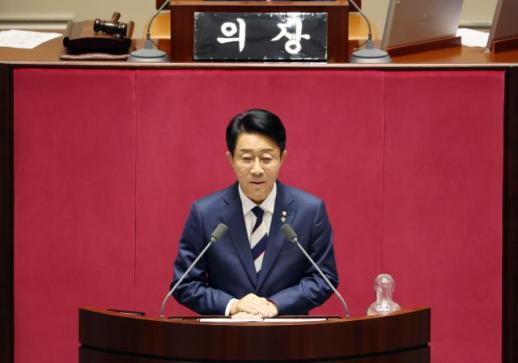 Six-term DP lawmaker Cho Jeong-sik elected National Assembly speaker SEOUL, June 5 (AJP) - Cho Jeong-sik, a six-term lawmaker of the ruling Democratic Party (DP), was elected on Friday as National Assembly speaker for the second half of the year. Cho won 267 of 276 votes cast during a parliamentary plenary session to assume the independent and impartial role. It follows his selection as the DP's candidate for the role after winning a majority in an internal party vote on May 13. His two-year term as speaker will run through May 2028. The veteran lawmaker entered parliament after winning a seat in Siheung, Gyeonggi Province, in the 2004 general elections and has since won six consecutive terms. During the first half of the 20th National Assembly, he served as chair of the Land, Infrastructure and Transport Committee. As vice speakers, Nam In-soon, a four-term DP lawmaker, and Park Deok-heum, a four-term lawmaker from the People Power Party (PPP), were also elected. Nam became the third woman in South Korean history to serve as National Assembly vice speaker. She worked as a women's labor activist for 30 years before entering parliament through proportional representation in the 19th National Assembly. She has since represented Seoul's Songpa district for three consecutive terms from the 20th to the 22nd National Assembly. She is currently the DP's only lawmaker representing one of Seoul's upscale districts of Gangnam, Seocho and Songpa. During the first half of the 20th National Assembly, she served as chair of the Gender Equality and Family Committee. Park is a former businessman who founded and served as CEO of a construction company before entering politics. He was first elected to the National Assembly in the 2012 general election and has since won four consecutive terms representing North Chungcheong Province. During the second half of the 21st National Assembly, he served as chair of the Intelligence Committee. By convention in South Korea, the largest party in parliament takes the National Assembly speakership, while the ruling and opposition parties each hold one vice speakership. Following the election of the Assembly leadership, the rival parties are expected to begin negotiations over the allocation of standing committee chairmanships and other parliamentary posts. 2026-06-05 16:46:15
 -
 Legal Battles Escalate Ahead of KDDX Contractor Selection As the competition for the KDDX project nears its conclusion, a series of lawsuits have intensified the confusion surrounding the selection process. HD Hyundai Heavy Industries has filed a lawsuit claiming that the penalties for security incidents, which will apply until December of this year, are unjust. The outcome of this legal battle is expected to influence the awarding of the KDDX detailed design and lead ship construction contract. According to legal sources on June 5, the Seoul Central District Court's Civil Division 50, led by Judge Lee Sang-hoon, held a hearing on June 1 regarding HD Hyundai Heavy Industries' request for an injunction against the application of penalties. During the hearing, HD Hyundai Heavy Industries argued, "Even if the cases involve different sentencing dates, penalties should be applied based on the initial sentencing date for three years." In contrast, the government contended that while nine individuals were indicted together, the cases of the eight who were sentenced earlier and the one sentenced later should be treated as separate incidents. Hanwha Ocean, which participated in the lawsuit, also requested the court to dismiss HD Hyundai Heavy Industries' motion, stating, "The actions involved multiple perpetrators, with different times, locations, and objects, making them distinct crimes." The disagreement between HD Hyundai Heavy Industries and the government, along with Hanwha Ocean, stems from the ongoing bidding for the KDDX detailed design and lead ship construction project. In 2013, HD Hyundai Heavy Industries illegally obtained 12 classified military documents related to the KDDX concept design from Hanwha Ocean (then Daewoo Shipbuilding & Marine Engineering) and shared them through the company's internal network. On November 8, 2022, eight individuals were convicted in this case. The illegally obtained materials included classified documents such as the KDDX concept design first review materials, the current status of the Changbogo-III concept design, a revised basic strategy for the Changbogo-III project, and the final report on performance improvement research for the Changbogo-I. As a result, security penalties are set to apply until November 2025 for defense project bids. However, after one individual received a partial acquittal in the first trial, the prosecution appealed, leading to a guilty verdict being confirmed in the second trial on December 2023. Consequently, the Defense Acquisition Program Administration announced that security penalties would be applied until December of this year, three years from the initial ruling. With the competition between HD Hyundai Heavy Industries and Hanwha Ocean for the KDDX detailed design and lead ship construction project, the application of security penalties could significantly favor Hanwha Ocean, given the nature of defense contracts where even a slight score difference can determine the contractor. In response, HD Hyundai Heavy Industries has argued that the Defense Acquisition Program Administration has unjustly extended security penalties without legal grounds, prompting the current injunction request. The court's decision on this injunction is expected to be announced by early next week, considering the timeline for the KDDX project. The KDDX project began with a concept design initiative in 2012. After a competitive bidding process, Hanwha Ocean secured the contract with a score difference of 21.264 points. In contrast, the basic design contract was awarded to HD Hyundai Heavy Industries, which edged out Hanwha Ocean by a mere 0.056 points before the prosecution indicted the employees involved in the leak in September 2020. Despite receiving a guilty verdict in the technology theft case, HD Hyundai Heavy Industries retained its position and role as the contractor for the basic design. An industry insider remarked, "The systematic illegal acquisition of military secrets and their storage and sharing on unapproved servers is a serious offense. The ruling clearly identifies which company benefited from the stolen technology." Following these illegal activities, Hanwha Ocean argued that HD Hyundai Heavy Industries should not be awarded a sole contract for the detailed design phase. After extensive discussions, the Defense Acquisition Program Administration ultimately decided to proceed with a competitive bidding process for the detailed design and lead ship construction project. In the context of expanding U.S.-Korea shipbuilding and defense cooperation, industry experts emphasize the need for clear government and judicial guidance regarding the KDDX military secrets theft case to avoid further confusion in the maritime defense sector. In the U.S., the principle of not exposing military secrets during defense projects is paramount. For instance, the U.S. imposes strict penalties on companies if any misconduct involving military secrets occurs with the knowledge or approval of executives, shareholders, partners, or employees. Particularly in cases involving criminal charges, companies are often barred from entering contracts due to a lack of integrity in their business dealings. 2026-06-05 16:42:00
 -
 Legal Battle Looms Over Voting Paper Shortage in Local Elections A historic shortage of voting papers during the June 3 local elections is set to escalate into a legal battle. A constitutional petition has been filed alleging violations of voters' rights, while defeated candidates are preparing lawsuits to invalidate the election and seek state compensation, indicating a broad legal confrontation ahead. According to legal sources on June 5, the Constitutional Court has accepted a petition filed by a citizen against the National Election Commission (NEC) regarding the constitutionality of the voting paper shortage. The petitioner claims that the NEC's failure to provide sufficient ballots infringed upon the fundamental right to vote. Additionally, attorney Do Tae-woo, who previously represented the defense during President Yoon Suk Yeol's impeachment trial, has announced plans to file a constitutional petition and a request for a provisional injunction against the NEC. The Constitutional Court will first review whether the petition meets legal requirements with a designated panel of three judges. If deemed valid, the case will be referred to the full panel of nine judges for further deliberation. Civic groups have also swiftly filed criminal complaints. On June 3, the Citizens' Livelihood Countermeasures Committee reported NEC Chairman Noh Tae-ak and Secretary-General Heo Cheol-hoon, among other senior officials, to the Seoul Metropolitan Police for neglect of duty and abuse of power. The police plan to begin investigations with witness interviews starting June 8. As the situation develops into a legal dispute, legal experts suggest that proving criminal intent may be challenging unless clear evidence is presented. The most contentious legal issue will likely arise from lawsuits filed by defeated candidates. The NEC has stated that there will be no re-voting or re-elections due to this incident. However, under the Public Election Act, candidates or parties can file for election invalidation or disqualification lawsuits within two weeks of the election date. The critical question remains whether the shortage of ballots had a tangible impact on the election results. Attorney Jeong Byeong-sil, an expert in election law, noted, "A shortage of ballots alone does not automatically invalidate an election. The specifics and extent of the violation, as well as the number of voters who left without voting, will be key issues that could affect the outcome of the election." Jeong added that since Oh Se-hoon, affiliated with the People Power Party, was elected, it seems unlikely that the party would continue to demand a halt to the counting process. However, for city councilors or district councilors, if they believe their election outcomes were affected, they may still pursue separate lawsuits for election invalidation or disqualification. In contrast, the situation could change for local council elections where outcomes are determined by narrow margins. If the number of voters who could not cast their ballots exceeds the vote difference, it could be argued that the irregularity affected the election results. Furthermore, there is a possibility that a similar case from the 2021 Berlin local elections, where a shortage of ballots led to a re-election order the following year, could be mirrored in local elections in South Korea. However, a lawyer from Seocho District stated, "The mentioned overseas case differs from our legal system, and the circumstances are quite different from those in South Korea, so even if a lawsuit proceeds, it seems unlikely that the results of the Seoul mayoral election would be deemed invalid." Separately from the potential for election result reversals through lawsuits, individual voters whose rights were infringed may have a strong case for civil claims against the state for compensation. Jeong explained, "Regardless of the conclusion on election invalidation or disqualification, voters who did not receive ballots could file for damages against the state due to the infringement of their voting rights." 2026-06-05 16:39:00