
Journalist

오오타니 사토시 기자/ [번역] 이경
-
 CU and GS25 Expand 24-Hour Convenience Store Delivery with Coupang Eats Convenience store chains CU and GS25 are partnering with Coupang Eats to expand their 24-hour delivery services. This move comes as demand for late-night deliveries increases, prompting the convenience store sector to enhance its quick commerce capabilities.According to industry sources, CU will begin offering 24-hour delivery through Coupang Eats starting May 19. Previously, CU provided delivery services from 6 AM to 3 AM the following day via platforms like Pocket CU and Coupang Eats.With the extended hours, customers will now be able to order products from nearby CU stores during the previously unavailable hours of 3 AM to 6 AM.The 24-hour delivery service will be available at stores already operating with Coupang Eats. The service will cover areas including Seoul, Incheon, Gyeonggi, Gwangju, Busan, and Daejeon, where Coupang Eats has partnered with stores for around-the-clock delivery. Customers in these regions can order from approximately 8,000 items, including lunch boxes, ramen, desserts, beverages, and daily necessities, without time restrictions through the CU tab in the Coupang Eats shopping menu.GS25 will also launch its 24-hour delivery service through Coupang Eats on the same day, targeting around 1,000 stores in parts of Seoul, Gyeonggi, and six major metropolitan cities. GS25 plans to expand its service range to allow consumers to purchase necessary items during late-night and early morning hours.The convenience store industry's shift to 24-hour delivery is driven by the rising demand for late-night services. CU's overall delivery sales growth rates were 142.8% in 2024, 65.4% in 2025, and 91.6% in the first four months of 2026. During the same period, late-night delivery sales from 10 PM to 3 AM outpaced overall delivery growth, with increases of 167.5%, 86.6%, and 120.0%, respectively. GS25 has also been operating late-night delivery services until 3 AM at about 2,500 stores since November of last year, with late-night delivery sales at these locations increasing by 42.7% over the past six months. Shin Hak-dong, head of GS Retail's O4O (Online for Offline) business strategy team, stated, "We expect that expanding the 24-hour delivery service will provide greater convenience for customers and additional revenue opportunities for franchisees."Meanwhile, demand for quick commerce is expected to continue growing. Global market research firm Statista predicts that South Korea's quick commerce market will reach 5.9 trillion won by 2030.* This article has been translated by AI. 2026-05-18 20:32:16
 -
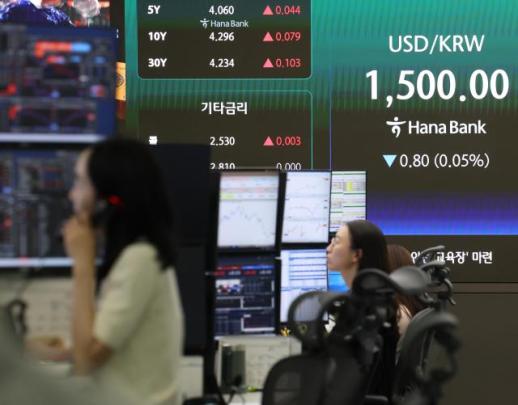 Korean Won Surpasses 1500 Mark Amid Strong Dollar and Foreign Investor Exodus The won-dollar exchange rate has surpassed the 1500 mark for the first time in a month, reflecting heightened volatility in the foreign exchange market. This surge is attributed to a combination of strong dollar pressures, significant foreign investor capital outflows, and rising international oil prices. On May 18, the weekly closing rate for the won against the U.S. dollar in the Seoul foreign exchange market was recorded at 1500.3 won, down 0.5 won from the previous trading day. Despite this slight decline, the rate remains firmly above the 1500 won level. Earlier this month, on May 6, the rate had dipped to 1439.6 won, suggesting a brief period of stability, but volatility has since intensified. The recent spike in the exchange rate is rooted in deteriorating global macroeconomic conditions. The sharp decline of the British pound has contributed to upward pressure on the dollar. Additionally, the recent U.S.-China summit ended without significant outcomes, increasing market uncertainty surrounding conflicts in the Middle East. Concerns over inflation in the U.S. have also heightened expectations of further tightening by the central bank. Furthermore, rising international oil prices due to escalating tensions in the Middle East have raised fears of worsening trade balances for South Korea, which is heavily reliant on energy imports, thereby exerting downward pressure on the won. From a supply and demand perspective, the outflow of foreign investment has been a primary driver of the rising exchange rate. Foreign investors have sold a net 23.55 trillion won in the stock market over the past seven trading days. Cumulatively, the net selling during the trading days of May 15 and 18 reached 9.23 trillion won. The rise in domestic bond yields, coupled with internal issues at major companies like Samsung Electronics, has significantly dampened investor sentiment toward South Korean assets. This has led to increased demand for currency exchange related to foreign stock sales, directly pushing up the exchange rate. Despite the won surpassing the 1500 mark, there has been no visible intervention from foreign exchange authorities. The Governor and Deputy Governor of the Bank of Korea have maintained a cautious stance, asserting that exchange rates should be determined by market forces and that artificial intervention is inappropriate. In fact, during the surge in March, any verbal or actual intervention by authorities was limited. However, the recent exchange rate decline has been interpreted as a response to growing expectations of intervention by foreign exchange authorities. Financial market experts believe that the current exchange rate level presents significant pressure, suggesting that the potential for further sharp increases is limited. Moon Da-un, a researcher at Korea Investment & Securities, stated, "Given the current level of 1500 won, which is a significant figure, and the previous peak of 1536 won after the war, this range carries a high likelihood of government intervention, indicating limited room for further increases."* This article has been translated by AI. 2026-05-18 20:30:00
 -
 Hana Card Begins Second Round of Applications for High Oil Price Relief Fund Hana Card announced on May 18 that it has begun accepting applications for the second round of the "2026 High Oil Price Relief Fund."This second round is aimed at approximately 32.56 million citizens in the bottom 70% income bracket, as well as vulnerable groups who missed the first application period. The application window is open from today until July 3.During the first week of applications, from May 18 to 22, a birth year-based system will be implemented to ensure smooth processing.The relief fund will be distributed based on the recipient's address and income level, with amounts ranging from a minimum of 100,000 won to a maximum of 600,000 won as of March 30, 2026. Recipients must use the funds by August 31, 2026, or any unused balance will automatically expire.The funds will be provided in the form of credit and debit card points, which can be used at offline merchants with annual sales of less than 3 billion won. Key spending locations include traditional markets, neighborhood marts, restaurants, beauty salons, and optical shops. However, usage is restricted at certain establishments, such as large supermarkets, department stores, and franchise outlets.Applicants using Hana Card can access their funds immediately without waiting, and the funds can be utilized across all Hana Card credit and debit cards. The amount spent from the relief fund will also count towards the card's usage record, allowing recipients to maintain existing card benefits and additional services.The Hana Pay app features a function to help users find merchants that accept the relief fund. Users can search by region and store name to locate eligible vendors.Applications can be submitted through the Hana Card website, mobile web, Hana Pay app, dedicated ARS, customer service center, and branches of Hana Bank nationwide. Customers without a Hana Card can obtain a debit card at Hana Bank branches to apply.* This article has been translated by AI. 2026-05-18 20:27:20
 -
 Bithumb Celebrates Bitcoin Pizza Day with Promotions for New Customers Bithumb announced on May 18 that it will hold an event in celebration of Bitcoin Pizza Day, offering Bitcoin and pizza sets to new customers making their first deposit. Any new customer without a deposit history at Bithumb can participate. After completing the application on the event page, customers who make a net deposit of 50,000 won or more during the event period will be automatically entered. The event runs until May 31. There are three main benefits. All participating customers will receive Bitcoin worth 10,000 won. Additional rewards will be given based on the amount of net deposits. The top 2,026 customers based on net deposit amounts will receive a gift card for a large Grilled Patty Cheeseburger Pizza and hot wings from Domino's Pizza, along with a cola. The top 10 customers will enjoy a fee waiver on trading amounts up to 100 million won. This benefit will be valid for 30 days from the date of issuance. Net deposits are calculated by subtracting withdrawal amounts from total deposits during the event period. The value of virtual asset deposits and withdrawals is based on the market price at the time of completion, and internal transfers between members are not counted. To receive the benefits, customers must maintain their balance and ranking until June 5, the date of issuance. Moon Sun-il, head of service management, stated, "Bitcoin Pizza Day is a symbolic day that proves the value of virtual assets in everyday life. We hope this event provides customers with a special opportunity to reflect on the significance of Pizza Day along with their first deposit experience at Bithumb." Bitcoin Pizza Day commemorates the day in 2010 when an investor in Florida purchased two pizzas for 10,000 Bitcoins.* This article has been translated by AI. 2026-05-18 20:25:17
 -
 Vietnam Expands Trade and Investment Cooperation with Busan A Vietnamese business delegation is visiting Busan to explore entry into the Korean market. The Busan Economic Promotion Agency (BEPA) hosted an export consultation meeting in Vietnam last October and reached an agreement with the Consul General of Vietnam in Busan in November on a joint business plan for 2026. This forum is expected to yield results from a year of collaborative groundwork. On May 17, the Overseas Market Development Bureau of Vietnam's Ministry of Industry and Trade announced that it will send a business delegation to Busan and southern Korea from May 19 to 22 to promote trade. This visit is part of the 2026 trade promotion program, aimed at identifying import demand and growth potential in Busan and southern Korea, understanding product quality standards, packaging, and distribution systems, and detailing strategies for promising export items such as agricultural products, processed foods, furniture, household goods, and OEM cooperation. Vietnamese companies plan to introduce their products and explore trading possibilities by meeting directly with local import partners at the 'Vietnam-Korea Business Networking Workshop' in Busan. ◆ Meeting Between Consul General and BEPA Director in November 2022: Agreement on Joint Business Plans for 2026 This forum is a continuation of the cooperation established over the past year. On November 17, 2022, Consul General Doan Phuong Lan met with BEPA Director Song Bok-cheol in Busan to discuss future cooperation directions. Lan highlighted Vietnam's economic development status, market potential, and prospects for collaboration between Vietnamese local governments and Busan, officially proposing the dispatch of reciprocal trade promotion delegations, investment attraction, technology cooperation, and expansion of startup collaboration. In response, Director Song praised Vietnam's development potential and the possibilities for Korea-Vietnam economic, trade, and investment cooperation, expressing BEPA's commitment to actively support trade and investment promotion events and assistance for small and medium-sized enterprises and startups. He also shared the results of BEPA's ongoing trade promotion programs in the Vietnamese market during the meeting. BEPA is a nonprofit organization jointly established by the city of Busan and the Ministry of SMEs and Startups of Korea. Additionally, in October 2022, BEPA dispatched a trade delegation consisting of 10 local SMEs to Vietnam using the Busan Economic Revitalization Support Fund (BEF). Vietnam is Busan's fourth-largest export destination, accounting for approximately 6.9% of the city's total exports. To support the somewhat sluggish recovery of exports to Vietnam, BEPA held export consultation meetings in Hanoi and Ho Chi Minh City, the economic centers of Vietnam. Through pre-matching, 60 local buyers were selected for consultations on various products, including cosmetics, health supplements, industrial welding machines, and dental implants, resulting in a total consultation performance of $12 million (approximately 18 billion won) and contract negotiations worth $8 million (approximately 12 billion won). The trade volume between the two countries is rapidly growing. As of last year, the trade volume exceeded $90 billion, and from January to April this year, trade reached $37.2 billion, continuing a strong growth trend. Exports to Korea amounted to $11.1 billion, a 22.9% increase compared to the same period last year, while imports rose to $26.1 billion, up 40.8%. As of the end of March this year, Korea's cumulative registered investment in Vietnam was approximately $99 billion, with 10,450 active projects, accounting for 23% of all projects and 18% of total foreign direct investment (FDI). * This article has been translated by AI. 2026-05-18 20:22:26
 -
 Global Executions Reach Record High in 2025, Driven by Iran and China The number of executions worldwide exceeded 2,700 last year, marking the highest level in 44 years. According to a report from Amnesty International cited by the German news agency dpa on May 18, 2025 saw 2,707 executions carried out across 17 countries. This figure represents a 78% increase from the previous year's total of 1,518 executions, the highest since Amnesty began tracking these statistics in 1981. The report attributes the significant rise in executions to an increase in punitive measures related to the war on drugs, with 1,257 drug-related executions recorded last year. Agnes Callamard, Secretary General of Amnesty International, stated that “a small number of repressive countries have significantly increased their use of the death penalty,” criticizing these nations for weaponizing capital punishment to instill fear and suppress dissent. Amnesty highlighted Iran as a key example, noting that at least 2,159 executions were carried out there last year, more than doubling the previous year's total. China is also mentioned as one of the countries with the highest number of executions, with thousands reportedly carried out last year. Some nations are even attempting to reinstate the death penalty; for instance, Burkina Faso has adopted a draft bill to revive capital punishment for crimes such as treason, terrorism, and espionage. Despite these alarming trends, Amnesty International acknowledged the progress made by human rights organizations advocating for the abolition of the death penalty, noting that more than half of the countries worldwide have abolished it.* This article has been translated by AI. 2026-05-18 20:19:51
 -
 Anthropic Shares AI-Detected Cyber Vulnerabilities with Global Financial Authorities U.S. artificial intelligence company Anthropic has decided to share cyber defense vulnerabilities identified by its latest AI model with major financial authorities and central banks worldwide. The Financial Times reported, citing two sources familiar with the matter, that Anthropic plans to brief member countries of the Financial Stability Board (FSB) on the capabilities of its latest AI model, Claude Mythos Preview. This briefing is reportedly in response to a request from Andrew Bailey, the Governor of the Bank of England and FSB Chair. The FSB is a global financial oversight body that includes finance officials, central bank representatives, and securities regulators from the Group of 20 (G20) nations. In South Korea, the Bank of Korea and the Financial Services Commission are active members of the FSB, raising the possibility that the country will assess the performance of Mythos during this opportunity. Last week, Michael S. Cellioto, Anthropic's Global Policy Lead, visited South Korea to discuss issues related to Mythos with domestic authorities. Many FSB member countries are concerned that Mythos and AI models from other U.S. tech firms may expose vulnerabilities in the cyber defenses of lending institutions, potentially creating new risks for the global financial system. Last month, Anthropic reported that Mythos had identified thousands of high-risk vulnerabilities across all major operating systems and web browsers, warning that exploitation of these vulnerabilities could have severe implications for the economy, public safety, and national security. Due to the risk of misuse, Mythos has primarily been disclosed only to select institutions within the United States. This has raised concerns among companies and regulators outside the U.S. about varying levels of cyber defense across regions, according to the Financial Times. In response, the FSB is preparing a report outlining 'sound practices' necessary for the integration of AI into the financial system. The FSB plans to release this report next month and seek public feedback. However, it remains uncertain whether international cooperation on AI threats will be effectively achieved amid geopolitical tensions. Earlier this month, the International Monetary Fund (IMF) urged policymakers to strengthen international collaboration to address the cybersecurity vulnerabilities revealed by the latest AI models. The IMF warned that new AI models could elevate cyber risks to potential macroeconomic shocks, emphasizing that cyber threats do not respect borders and that emerging and developing countries with limited resources may be more exposed to attackers targeting vulnerable regions.* This article has been translated by AI. 2026-05-18 20:18:00
 -
 KOSPI Recovers from Early 4% Drop to Close Slightly Higher at 7510 On May 18, the KOSPI index initially plunged more than 4% but managed to recover, closing slightly higher at 7510, bolstered by a rebound in semiconductor stocks. According to the Korea Exchange, the KOSPI finished up 22.86 points (0.31%) at 7516.04. The index opened at 7443.29, down 49.89 points (0.67%) from the previous session. During the early trading session, the KOSPI experienced a sharp drop of over 4%, triggering a sell-side circuit breaker around 9:19 a.m. The sell-side circuit breaker is activated when KOSPI 200 futures fall more than 5% compared to the previous trading day and remain at that level for one minute. This measure temporarily halts program trading for five minutes to ease market overheating. Lee Kyung-min, a researcher at Daishin Securities, noted, "The KOSPI fell to the 7140 level after the sell-side circuit breaker was triggered, but it turned bullish thanks to a rebound in Samsung Electronics. The semiconductor sector saw a surge in bargain buying, while other sectors generally remained weak." In the main stock market, individuals and institutions recorded net purchases of 22.087 billion won and 13.912 billion won, respectively, while foreign investors sold a net 36.492 billion won. Among the top market-cap stocks, Samsung Electronics rose by 3.88%, SK Hynix by 1.15%, Samsung Electro-Mechanics by 2.08%, and Doosan Enerbility by 1.17%. In contrast, SK Square fell by 0.46%, Hyundai Motor by 5.29%, and LG Energy Solution by 2.16%. The KOSDAQ index closed down 18.73 points (1.66%) at 1111.09, starting the day at 1122.57, down 7.25 points (0.64%) from the previous session. In the KOSDAQ market, foreign investors purchased a net 2.372 billion won, while individuals and institutions sold 750 million won and 2.55 billion won, respectively. Among the top stocks by market capitalization, Alteogen fell by 3.12%, EcoPro BM by 0.05%, EcoPro by 1.86%, Rainbow Robotics by 7.90%, Kolon TissueGene by 2.87%, and Samchundang Pharm by 3.74%. In contrast, JW Engineering surged by 29.96%.* This article has been translated by AI. 2026-05-18 20:15:26
 -
 President Lee Warns Samsung Union: Respect for Corporate Management is Essential President Lee Jae-myung on May 18 addressed the Samsung Electronics labor union, stating, "In South Korea, which adopts a free democratic order and a capitalist market economy, both labor and corporate management must be respected equally." This marks the first time President Lee has directly targeted the Samsung union ahead of its planned strike on May 21, raising questions about the potential impact of his remarks on labor-management negotiations.In a post on X (formerly Twitter), President Lee emphasized, "Workers should receive fair compensation for their labor, while shareholders who bear risks and losses deserve a share of corporate profits." He noted that at one time, the Constitution included provisions for workers' rights to share in corporate profits.The right to share in corporate profits was outlined in Article 18, Section 2 of the original Constitution, which stated that employees of profit-oriented private enterprises had the right to equitable distribution of profits as determined by law. This provision was removed during the 1962 constitutional amendment process.President Lee also suggested the possibility of invoking "emergency adjustment rights," stating, "While the current Constitution guarantees the basic rights of all citizens, these rights may be restricted for public welfare as long as the essential content is not violated." If invoked, emergency adjustment rights would prohibit strikes for 30 days.He remarked, "Where there is light, there is shadow; where there is a mountain, there is a valley. Excess can be as detrimental as deficiency, and extreme situations often lead to a backlash." His reference to excess is interpreted as a response to the Samsung union's demands for the elimination of the cap on performance bonuses, which they seek to set at 50% of annual salary, and for a formalization of a plan to allocate 15% of operating profit for bonuses.President Lee urged for dialogue between labor and management, stating, "Having more power does not equate to greater happiness; a future for a new South Korea lies in solidarity and shared responsibility for a better life for all."Labor Minister Kim Young-hoon responded to the President's message on social media, stating, "We will ensure that labor negotiations contribute to the healthy development of the national economy." He added, "The spirit of solidarity shown during the May 1980 Gwangju uprising is more relevant today than ever, and we will strive to ensure that labor negotiations lead to fair compensation and help alleviate polarization in the economy."On the same day, the business community issued a joint statement urging the Samsung union to withdraw its strike plans and calling for the immediate activation of emergency adjustment rights if a strike occurs. Six business organizations, including the Korea Employers Federation, the Korea Chamber of Commerce and Industry, and the Korea International Trade Association, expressed deep concern over the union's insistence on its existing position despite government and labor committee efforts, stating, "A strike by the Samsung union would undermine the foundation of a key national industry, and the union must withdraw its strike plans and seek resolution through dialogue."The business community emphasized that the issue of performance bonuses should be considered a management decision rather than a subject of collective bargaining, warning that excessive demands from some unions could exacerbate the dual structure of the labor market and increase social discord. 2026-05-18 20:13:00
 -
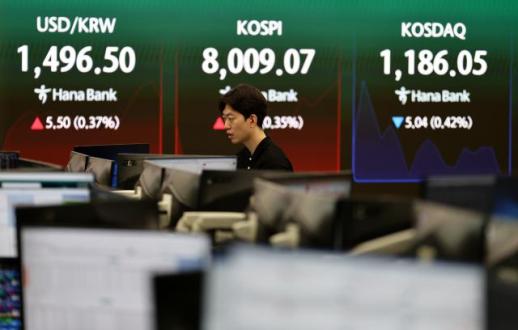 Short Selling Increases Despite Decrease in Short Positions Following the KOSPI's surge past the 8,000 mark, the volume of short selling transactions has risen to approximately 2.8 trillion won. However, during the same period, the balance of securities lending has significantly decreased, indicating a trend that diverges from simple bearish betting. According to the Korea Exchange, as of May 15, the total value of short selling transactions reached 28.558 trillion won, marking a consecutive two-day record above 28 trillion won, following 28.383 trillion won on May 14. The short selling volume had been around 24.597 trillion won on May 13 but showed an upward trend on the 14th and 15th. Foreign investors led the short selling activity, accounting for about 70% of the total with a transaction value of 19.298 trillion won on May 15. For four consecutive days from May 12 to 15, foreign short selling remained around 19 trillion won, indicating an increase in hedging transactions at high price levels. Institutional short selling also saw a resurgence. After a decline to 4.807 trillion won on May 13, institutional short selling values increased again to 8.240 trillion won on May 14 and 8.977 trillion won on May 15. Analysts suggest that this reflects adjustments in positions in anticipation of increased volatility following the KOSPI's rise above 8,000. However, the trend in securities lending appears different from typical early bearish market patterns. According to the Korea Financial Investment Association, the number of shares returned in securities lending on May 15 was 99.16 million, significantly exceeding the number of shares lent out, which was 39.51 million. Consequently, the balance of securities lending dropped from 182.4304 trillion won on May 14 to 170.2727 trillion won on May 15, a decrease of about 12 trillion won. Market analysts note that typically, when confidence in a market downturn strengthens, both short selling and securities lending balances increase. However, in this instance, while short selling has been active, the actual cumulative short positions have decreased, raising the possibility of profit-taking or short covering by existing short sellers. Looking ahead, market observers believe that the trends in foreign futures positions and securities lending balances will serve as additional variables. A securities industry official stated, "The current trend is more about responding to short-term volatility at high levels of the KOSPI rather than aggressive bearish betting. If the decline in securities lending continues, the possibility of a short covering rally cannot be ruled out."* This article has been translated by AI. 2026-05-18 20:10:23