
Journalist

AJP
-
 Actor Yoo Ho-jung Recalls Suspecting Yoon Yoo-sun Was Pregnant Before Wedding Actor Yoo Ho-jung recalled her memories of close friend Yoon Yoo-sun’s wedding. In Episode 427 of SBS’ “Same Bed, Different Dreams 2 — You Are My Destiny,” which aired on the 24th, Yoo appeared and shared stories about Yoon. Yoo said she had not done variety shows because she had not been acting in dramas, adding that she decided to appear after learning Yoon had become a regular on “Same Bed, Different Dreams 2.” Yoo said she had known Yoon for a long time and had hoped she would marry soon, but was stunned when Yoon announced her marriage just three months after meeting her future husband. “It was so sudden I even wondered, ‘Did she get pregnant before the wedding?’” Yoo said, adding she had expected Yoon to date for at least a year. Yoo said she married first, but Yoon had a child first. She added that Yoon was cautious about revealing her pregnancy.* This article has been translated by AI. 2026-02-25 08:30:16
 -
 Hyundai Mobis Spots Endangered Yellow-Throated Marten in Mir Forest in South Korea Hyundai Mobis said endangered wildlife has been repeatedly recorded near the Miho River inside Mir Forest in Jincheon County, North Chungcheong Province, where the company is running biodiversity conservation programs. The company said Feb. 25 that a research team led by Prof. Park Byeong-gwon of the Korea Institute of Urban Ecology recently confirmed the presence of a marten, a Class II endangered wild species in South Korea, in Mir Forest. The animal captured was a yellow-throated marten, a carnivorous mammal regarded as a top predator. Its presence indicates the lower food chain is also being maintained in a stable way, the company said. Hyundai Mobis said the finding also reflects progress in its biodiversity work around the Miho River in Jincheon, suggesting the local ecosystem is recovering. Last year, the company said it confirmed habitats for an otter, a natural monument and endangered species, and a leopard cat, a legally protected species. Mir Forest is a 108-hectare (about 267-acre) woodland created near Hyundai Mobis’ Jincheon plant, a production base dedicated to automotive electronic components. The company said it invested about 10 billion won over 10 years starting in 2012 to build the forest. After donating the forest to Jincheon County, Hyundai Mobis said it has been running a social contribution project since 2023 with the local government and the social cooperative Hangang to help create a biodiversity ecosystem in and around the forest and the Miho River. The company said it is also encouraging participation by employees and local residents, beyond providing funding for restoration efforts. Han Seong-hui, executive director and head of Hyundai Mobis’ sustainability management office, said the company will work to create social value by not only cutting carbon emissions across its production process and making eco-friendly products, but also by considering the environmental characteristics of communities where its major sites are located.* This article has been translated by AI. 2026-02-25 08:27:20
 -
 BTS’ Jung Kook Ranked Among World’s 25 Most Famous People, Website Says BTS member Jung Kook has been named to a list of the “Top 25 Most Famous Persons in the World.” According to a recent ranking released by the information website WorldFamousThings.com, Jung Kook placed 18th. The list includes major figures such as Cristiano Ronaldo, Lionel Messi, Elon Musk, Donald Trump and Taylor Swift. Jung Kook was the only K-pop singer included, the site said. The outlet described him as a “globally influential music star,” saying his “powerful voice and strong performances” have won fans worldwide and helped establish him as an international icon. It highlighted his solo work, including “Seven” and “3D,” pointing to his strong fan base and market power. His profile has also been reflected in fashion and luxury branding. Jung Kook was recently selected as an official global ambassador for Swiss luxury watchmaker Hublot, and was named the first male global ambassador for Chanel Beauty, the report said. The article also noted that he was included in AOL’s “Top 15 Most Famous Persons in the World,” and ranked 11th on Esquire’s list of the “50 Most Stylish Men in Music.” 2026-02-25 08:09:16
 -
 Park Yeon-su Shares Photos of Daughter Song Jia on Sedona Day Trip Actress Park Yeon-su shared an update on her daughter Song Jia’s daily life. On the 25th, Park posted photos on social media with the message, “A day trip to Sedona. I hope this year is full of good luck.” In the photos, Song poses in front of a rock formation in Sedona, a small city in Arizona. Song, born in 2006, began playing golf in her first year of middle school and became a full member of the Korea Ladies Professional Golf Association tour in August last year.* This article has been translated by AI. 2026-02-25 07:24:16
 -
 USMCA Review Puts Tighter Auto Rules of Origin Back in Focus The United States, Mexico and Canada are set to hold a joint review on July 1 to decide whether to extend the U.S.-Mexico-Canada Agreement, with the possibility of tighter rules of origin for autos and parts emerging as a key issue. An industry analysis report published Tuesday by the Korea Automotive Technology Institute, known as KATECH, said the review could raise the prospect of strengthening or revising rules of origin in ways that reflect the U.S. position. USMCA is a trade pact among the United States, Canada and Mexico that took effect in July 2020. It has a 16-year term and includes a sunset clause requiring a joint review every six years to determine whether to extend it. If the three countries submit recommendations to the Free Trade Commission by one month before the review, the meeting proceeds based on those proposals. The report said the talks are expected to focus on the 75% regional value-content requirement, labor value-content rules, and possible new requirements for the share of steel and aluminum sourced within the region. The report identified the main auto-sector issue as “strengthening or revising rules of origin reflecting the U.S. position,” warning that additional tightening would likely force significant changes in regional production and parts-sourcing structures. While the finished-vehicle and auto-parts industries support extending USMCA, they are calling for transition periods if standards are tightened and for improved consistency in documentation and requirements. The report stressed the need to assess scenarios tied to possible rule changes and to build and manage a supply-chain database. * This article has been translated by AI. 2026-02-25 06:03:36
 -
 South Korea’s Young Stars Lift Milan-Cortina Winter Games With Snowboard Breakthrough The 2026 Milan-Cortina d’Ampezzo Winter Olympics, which opened Feb. 7 (Korea time), ended with the closing ceremony Feb. 23 at the Verona Arena in Italy. South Korea sent a delegation of 130, including 71 athletes, and finished 13th with three gold, four silver and three bronze medals, driven by a surge in snow events and strong performances by younger athletes. The pre-Games goal of a top-10 finish fell short. Still, the team improved on the Beijing Games four years ago, when it placed 14th with two gold, five silver and two bronze medals, increasing both its gold-medal total and overall medal count. ◆Snowboarding delivers a breakthrough South Korea’s snowboarding team, long considered a weak point in winter sports, won one gold, one silver and one bronze — the country’s best-ever result in snow events since it first competed in the Winter Olympics in 1960 at Squaw Valley. It was also the first time South Korea won two or more medals in snow events at a single Olympics. In snowboarding, South Korea ranked third by medals behind Japan (4 gold, 2 silver, 3 bronze) and Austria (2 gold, 1 silver, 1 bronze). Kim Sang-gyeom opened South Korea’s medal account by taking silver in the men’s parallel giant slalom on Feb. 8, becoming the nation’s 400th Olympic medalist across the Summer and Winter Games. Yoo Seung-eun then won a surprise bronze in the women’s big air, becoming South Korea’s first female Olympic medalist in snowboarding. Choi Ga-on captured gold in the women’s halfpipe, delivering South Korea’s first-ever Olympic gold medal in a snow event. Short track speedskating produced seven medals — two gold, three silver and two bronze — improving on Beijing (2 gold, 3 silver). The women’s team returned to the top of the 3,000-meter relay for the first time in eight years, swept gold and silver in the 1,500, and added bronze in the 1,000. The men won two silver and one bronze but went without a gold for the first time in 12 years. Speedskating, once a reliable medal sport for South Korea, ended the Games without a podium finish. South Korea won four medals in speedskating at the 2022 Beijing Olympics, but none this time. It was the first time since the 2002 Salt Lake City Games — 24 years ago — that South Korea failed to win an Olympic speedskating medal. Curling and sliding sports (bobsleigh, skeleton and luge) also finished without medals. ◆Average age 24.1 highlights a new generation A major takeaway for South Korea was the rise of younger medalists. The average age of South Korean athletes who won individual medals at these Games was 24.1. Of the seven, three were teenagers. Short track standout Kim Gil-li, born in 2004, was named the Games’ most valuable athlete among South Korean competitors. She won her first Olympic gold in the women’s 1,500 meters and powered the team to victory in the 3,000-meter relay, becoming South Korea’s only double gold medalist. She also took bronze in the women’s 1,000, reaching the podium three times. Team youngest Lim Jong-eon, born in 2007, won bronze in the men’s 1,000 after running near the back for most of the race before surging on the final lap. In snow events, 2008-born Choi Ga-on and Yoo Seung-eun set new milestones. Choi won gold after falling and suffering a serious injury in her first final run, then delivering a decisive performance on her third attempt. NBC called it one of the best moments of the first half of the Games and named Choi among “13 rising stars” of the Winter Olympics. ◆Choi Min-jeong closes her Olympic career with a record Short track star Choi Min-jeong ended what she called her third and final Olympics by setting a South Korean record for most Olympic medals across the Summer and Winter Games. She won gold in the women’s 3,000-meter relay and silver in the 1,500, bringing her career total to seven medals (4 gold, 3 silver) from Pyeongchang 2018, Beijing 2022 and Milan-Cortina 2026. That moved her past Jin Jong-oh (shooting), Kim Soo-nyung (archery) and Lee Seung-hoon (speedskating), who each had six. She also tied short track skater Jeon I-kyung (4 gold) for the most Winter Olympic gold medals by a South Korean athlete. After the race, Choi announced her retirement from the Olympics. “This is my last Olympics. While preparing this season, my knee and ankle weren’t good, and mentally it was very hard,” she said. “From the start to the end of the competition, I kept thinking it was my last Olympics. Even after it ended, all I could think was, ‘This is really the last.’ I don’t think you’ll see me at the Olympics anymore.” She said she has not decided whether to retire from competition entirely. “Retiring from my athletic career isn’t something I can decide alone. It’s something I have to coordinate with my team,” she said. “I only thought about the Olympics. It’s something to think about while I rest for a while.” On why she chose to step away from the Olympics, she said, “It happened naturally. This season I had a lot of places that hurt, and it was difficult in many ways to raise my condition. I set a lot of records on the Olympic stage. I think I did everything I could.” ◆Sports diplomacy gains South Korea also recorded gains in sports diplomacy. Kim Jae-yeol, president of the International Skating Union and an International Olympic Committee member, was elected to the IOC Executive Board. He became the second South Korean to serve as an IOC Executive Board member after the late Kim Un-yong, a former IOC vice president. The Executive Board oversees the Olympic host-city selection process and decides major policies and issues. Bobsleigh figure Won Yoon-jong finished first in the IOC Athletes’ Commission election, which is decided by a vote of athletes. He became South Korea’s third IOC athlete member after Moon Dae-sung (taekwondo), elected at the 2008 Beijing Games, and Yoo Seung-min (table tennis), elected at the 2016 Rio de Janeiro Games and now president of the Korean Sport & Olympic Committee. Won is the first South Korean athlete member from a Winter Olympic sport. With Won’s election, South Korea now has two IOC members. Only 20 countries have two or more IOC members. * This article has been translated by AI. 2026-02-25 00:05:52
 -
 Jo In-sung says he’s no action natural, credits director for 'Humint' fight scenes Jo In-sung has reunited with director Ryoo Seung-wan for a third time, following “Escape from Mogadishu” and “Smugglers,” returning in the film “Humint.” He plays “Manager Jo,” a South Korean National Intelligence Service agent who carries out missions with sharp instincts and judgment even in the middle of dangerous operations. After losing an informant for the first time, the character wavers between a cold-blooded assignment and a more human choice. Jo anchors the film with restrained emotion and a steady presence. “I’ve heard people say the action was shot elegantly, but the director and I are the type who get shy and don’t really talk like that,” Jo said. “Honestly, I don’t know much about action. I don’t really have a desire to become an action actor. If it felt (elegant), I think there must have been some kind of magic. If I used my body well, I’d probably dance well, too, but I don’t have that ability.” Because his character is an NIS agent, Jo said he visited and researched real locations as part of his preparation, describing the atmosphere on site and the impression it left. “You leave all your phones behind when you go (to the NIS),” he said. “They tell you not to post anything related, and there’s a tense mood. I got curious and asked (NIS agents) if they have black agents like Kim Doo-sik in ‘Moving,’ but they said it’s a state secret and they can’t talk about it. Ha ha.” To better understand the role, he said he relied on research, drawing on news and documentaries as well as popular TV programs. “By watching variety shows with North Korean defectors, like ‘Now On My Way to Meet You,’ I could look for information such as what kinds of conversations defectors had with the NIS,” he said. “I also used those conversations as reference.” ㅍ Jo said the details of the action were refined on set, and that the movements of a real instructor offered key clues in shaping the character. “The (NIS) instructor was really impressive,” he said. “There are parts I borrowed for the action. It’s feedback from a professional. In action scenes, you can get scolded for ‘trying too hard to look cool,’ but if it’s actually used in the field, then it’s accurate. I thought if we worked those practical elements into the action, audiences might enjoy it.” The opening action sequence also paired him with overseas actors. Jo said the unfamiliar rhythm heightened the tension. “I did action with overseas actors, and they were filming in an unfamiliar place in an unfamiliar way,” he said. “Of course they’d be tense. The action style was different. Even the martial arts director said, ‘So that’s how they react.’ Because it didn’t click perfectly, it made me nervous — like the action coming in deeper than expected. My eyes got wider and they captured that anxious look, and I think it came across as more realistic.” Jo described Manager Jo as a guide who brings viewers into the story, saying he tried not to push emotions too hard. “You identify through Manager Jo’s eyes, and you open and close the film through his daily life,” he said. “As a guide, I thought I shouldn’t make the acting too intense. I didn’t think it was good for my emotions to demand something from the audience. Still, I had to run the character, so I thought a lot about how. I felt the action scenes were important because they show his physical power, and they let me build him in a more three-dimensional way.” He also spoke about working with Park Jung-min, who plays Park Geon, a section chief in North Korea’s State Security Department, and Shin Se-kyung, who plays Chae Sun-hwa, a North Korean restaurant worker and human intelligence source. Though they did not share many scenes, he said their on-set chemistry stood out. “When you say someone has good acting intelligence, it’s sensory but also calculated,” Jo said. “You have to act within a set time, and I think it matters how well you understand what the director is saying. Even though I didn’t have many scenes with Jung-min and Se-kyung, that fit was really good. Everyone did their part, and we often got chances to save time and try what we wanted one more time.” Asked about change and growth after years of work, Jo said he thinks less in terms of being “new” and more in terms of becoming “solid.” “Being active for a long time also means you’re not new,” he said. “People have seen a lot of you. The 고민 about what to do differently is the same. Rather than showing something new, you can show that you’ve become more solid — though you can also change into new clothes. In acting, even staying still can be evolution. You ask whether it came across or not. In the end, I want to get to the point of not acting, but I wonder if that’s realistically possible. These days people talk a lot about naturalistic acting — capturing something truly natural. It’s about setting a goal more than personal development: This time, let’s stay still. Let’s see how I’m captured.” On overseas projects, he mixed in a candid joke, saying distribution has changed but he still sees himself as a “local” actor. “If something comes in, I’ll do it,” he said. “With OTT, our work can go overseas, and overseas expansion can happen. Distribution has improved. But since there are no offers yet, I think, ‘Ah, I’m local.’ Ha ha ha. So far, it doesn’t seem like there’s any reaction from overseas or people recognizing me. I don’t think I have the talent or qualities for overseas projects.” Jo’s next project is director Lee Chang-dong’s “Possible Love,” about two couples living opposite lives whose worlds become entangled, sending cracks through the daily lives of all four. Jo will play a married couple with Cho Yeo-jeong. The film, from the director of “Secret Sunshine” and “Poetry,” drew attention from the casting stage. “I’m curious about how I’ll look in director Lee Chang-dong’s film,” Jo said. “He’s an auteur director, and it’s grounded in reality. I acted in it, and I’m curious how it was captured.”* This article has been translated by AI. 2026-02-25 00:04:35
 -
 Milan-Cortina 2026 ends as first wide-spread Winter Olympics; 2030 Alps may stage events abroad The Milan-Cortina 2026 Winter Olympics, staged across northern Italy in a widely dispersed format, ended after 17 days of competition. The next Winter Games, the France Alps 2030 Olympics, are expected to go further, with some events likely held outside the host country for the first time in Winter Olympic history. The Milan-Cortina Games, which closed Feb. 23 (Korea time), were held in four clusters: Milan; the Alpine resort of Cortina d’Ampezzo; Valtellina-Bormio; and Val di Fiemme. Organizers described it as the broadest geographic footprint of any Olympics. Olympic cauldrons were installed in both Milan and Cortina d’Ampezzo. The two cities are about 400 kilometers (250 miles) apart, roughly a five-hour drive. The approach was intended to align with the International Olympic Committee’s push for “sustainability,” aiming for a greener and more economical Games. The organizing committee focused on using existing venues rather than building new ones to limit the heavy costs of construction. The model also brought drawbacks: athlete villages were split among multiple sites, and travel between venues stretched to hundreds of kilometers, adding to fatigue for athletes and spectators. The dispersed setup also made it harder to create a single, unified Olympic atmosphere, leaving questions about overall buzz and turnout. The signal sent by Milan’s dispersed model is expected to evolve again at the France Alps 2030 Winter Olympics. The 2030 Games are set to be the first Olympics whose official name does not include a specific city, with events spread mainly across southeastern France, including Nice and Savoie. Organizers also plan to stage official events in another sovereign country. The France Alps 2030 organizing committee is reported to have decided that speedskating will be held not in France but in either Turin, Italy, or Heerenveen, Netherlands. The move appears driven by cost, as speedskating ovals are known to be among the most expensive Winter Olympic facilities to build and maintain. Some Olympic events have been held outside the host country before. At the 1920 Antwerp Games, some yachting events took place in the Netherlands. At the 1956 Melbourne Games, equestrian events were staged separately in Stockholm because of Australia’s strict animal quarantine rules. But for the Winter Olympics, the France Alps 2030 Games would be the first to hold a specific sport in another sovereign country. Edgar Grospiron, president of the 2030 organizing committee, said at a news conference in Milan that holding speedskating abroad “was already agreed with the IOC from the time of the bid.” Organizers said about 15% of venues for the 2030 Games have not yet been finalized, and they plan to complete the final plan by June. Figure skating is currently expected to be held in Nice, according to reports.* This article has been translated by AI. 2026-02-25 00:03:00
 -
 Short-track double gold medalist Kim Gil-li returns home, turns focus to worlds South Korea’s women’s national short-track team returned home from the 2026 Milan-Cortina d'Ampezzo Winter Olympics on Feb. 24 and said it will quickly shift back into training for the upcoming world championships. According to the sport’s officials, the women’s team arrived at Incheon International Airport’s Terminal 2 on Tuesday afternoon with the main national delegation, including Korean Sport & Olympic Committee President Yu Seung-min. The team reclaimed the women’s 3,000-meter relay gold for the first time in eight years, winning with a late comeback. Kim Gil-li of Seongnam City Hall, who added the 1,500-meter gold to her relay title to become a double champion, told the crowd at the airport, “It feels like I’m experiencing what it’s like to be a celebrity.” Nicknamed “LamborGil-li,” she was also selected as the Korean delegation’s most valuable player at the Games. Living up to the nickname, Kim received ceremonial service from Lamborghini Korea and left the airport in a sports car. “To finish perfectly through the world championships, I plan to start training again from Sunday,” she said. Choi Min-jeong of Seongnam City Hall, who set a new record for the most Olympic medals by a South Korean across the Winter and Summer Games with seven, said she had doubted she could reach the mark before leaving for Milan. “Thanks to the support from so many people, I was able to do it,” she said. Choi added that she is satisfied with her results after three Olympics and will “cheer a lot” for Kim going forward. Shim Suk-hee of Seoul City Hall, who helped the relay team win gold after what the article described as a difficult period, said the result was possible because the athletes endured. “Thanks to those who always believed in me and supported me more than I did, I’ve been able to come this far,” she said, adding she will continue to show strong performances. The men’s national short-track team, which also returned home Tuesday, said it will begin preparations for the world championships as well. Hwang Dae-heon of Gangwon Province, who won two silver medals including in the 5,000-meter relay, said he was honored to win an individual-event medal at a third straight Olympics. “With the world championships still ahead, we’ll take time to regroup so our national team can show a good performance,” he said.* This article has been translated by AI. 2026-02-24 20:09:00
 -
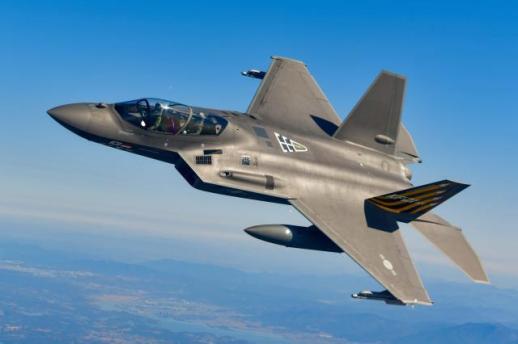 KAI Board to Review Kim Jong-chul as New CEO After 8-Month Vacancy Korea Aerospace Industries (KAI) will hold a board meeting on Feb. 25 to select a new CEO, a post that has been vacant for eight months. Kim Jong-chul, who previously led the Drone Program Division at South Korea’s Defense Acquisition Program Administration, is considered the leading candidate. Industry officials said Feb. 24 that KAI’s board will review an agenda item at its Feb. 25 morning meeting to appoint Kim as CEO. If approved, the company would fill the vacancy about eight months after former CEO Kang Goo-young resigned on July 1 last year. Kim could begin carrying out CEO duties as early as March. Kim is a graduate of the 31st class of the Korea Air Force Academy and joined the acquisition agency in 2006 through a special recruitment program at the Grade 4 level. This year, KAI has identified the rollout of its Light Armed Helicopter (LAH) and deliveries of the Korean supersonic fighter KF-21 to the Air Force as top priorities. 2026-02-24 18:13:30