
Journalist

AJP
-
 'The King's Warden' takes box office by storm with 6 million viewers SEOUL, February 24 (AJP) - Director Jang Hang-jun's "The King's Warden" has attracted over 600 million viewers since its release earlier this month. The period film surpassed 6 million in cumulative ticket sales as of Monday, three weeks after its release on Feb. 4, the film's distributor Showbox said on Tuesday. It reached the milestone faster than the 2005 hit period film "The King and the Clown," which took 29 days, raising expectations that "The King's Warden" could become this year's first film to draw over 10 million moviegoers. The 117-minute film starring Park Ji-hoon, Yoo Hae-jin and Yoo Ji-tae, tells the story of Danjong, the sixth king of the Joseon Dynasty, who was exiled to Yeongwol, Gangwon Province. 2026-02-24 10:21:47
 -
 Mercedes-Benz Korea Launches EQE 350+ SUV, Priced at 106 Million Won Mercedes-Benz Korea said Tuesday it has officially launched a new trim, the EQE 350+ SUV, for its electric SUV model, the Mercedes-Benz EQE SUV, in the South Korean market. The EQE SUV is built on Mercedes-Benz’s dedicated EV architecture, EVA2. The company said the model offers long driving range, a practical interior, stable and comfortable driving performance, and a range of convenience features. The EQE 350+ SUV is a rear-wheel-drive model that replaces the EQE 350 4MATIC SUV, which had been an all-wheel-drive option in the lineup. With the trim change, the 26-year-model EQE SUV lineup will be offered in two versions: the rear-wheel-drive EQE 350+ SUV and the higher-performance, all-wheel-drive EQE 500 4MATIC SUV. Under South Korea’s certification standards, the EQE 350+ SUV has a single-charge driving range of 467 kilometers, the longest in the EQE SUV lineup. Standard features include AIRMATIC suspension, which automatically adjusts based on driving conditions, speed and load; the Driving Assistance Package Plus, which uses sensors including cameras, radar and ultrasonic systems to analyze the surroundings; Digital Light, which adjusts headlamp brightness and beam pattern based on conditions such as road lighting, traffic, route and weather; and a parking package with a 360-degree camera. The exterior applies the Electric Art line, including a black-panel radiator grille with a star-logo pattern. Mercedes-Benz said dynamic proportions and 20-inch five-spoke lightweight alloy wheels add a sportier SUV look. Inside, the Electric Art line continues with a modern design. The vehicle includes a 12.3-inch widescreen cockpit and a 12.8-inch OLED central display. Active ambient lighting, linked to driver-assistance systems to provide visual feedback during operation, offers 64 color options. The trunk has a base capacity of 520 liters, expanding to up to 1,675 liters with the second row folded. The price is 106 million won. More information is available at Mercedes-Benz Korea’s 65 official showrooms nationwide and on its official website. * This article has been translated by AI. 2026-02-24 10:06:15
 -
 Kbank draws $7.3 bn in pre-IPO deposits ahead of planned KOSPI debut SEOUL, February 24 (AJP) - Kbank, South Korea’s first internet-only lender, has attracted more than $7 billion in pre-initial public offering deposits as it prepares to become the first major IPO of 2026 on the KOSPI, the world’s best-performing equity market this year. The bank wrapped up a three-day pre-IPO offering to retail investors on Monday, posting a subscription competition ratio of 136 to 1. About 9.85 trillion won ($7.3 billion) in deposits were raised, with 836,599 subscription accounts recorded. Kbank priced its shares at 8,300 won, the lower end of its indicative range of up to 9,500 won during institutional bookbuilding. The band was lowered by about 20 percent from the 12,000 won level set during its second failed IPO attempt in September last year. The listing is being led by NH Investment & Securities and Samsung Securities, with Shinhan Securities participating as a co-underwriter. Under agreements with its financial investors tied to a capital increase, Kbank is required to go public by July at the latest. Failure to do so would trigger put option clauses, exposing the bank to potential repurchase obligations. Kbank’s long-term performance remains uncertain despite the heated demand on the main bourse. Concerns center on potential share dilution by major shareholders and the bank’s heavy dependence on Korea’s largest cryptocurrency exchange, Upbit, whose exclusive partnership with Kbank expires in October. More than 90 percent of Kbank’s loan portfolio is concentrated in household lending, reinforcing criticism that the bank remains largely confined to a “non-face-to-face retail lender” model. Its earnings structure also remains vulnerable. About 84 percent of operating revenue in 2024 came from net interest income, reflecting heavy reliance on lending margins. Fee-based income — a key pillar of non-interest revenue — remains weak, with around 35 percent generated through its partnership with Upbit and its operator Dunamu. Investor sentiment has also been dampened by the weak performance of industry peer KakaoBank. Brokerage firms have recently lowered their target prices for KakaoBank. Daishin Securities, for instance, cut its target to 26,000 won, reflecting a more cautious outlook for the sector. Market analysts warn that the sluggish performance of the industry’s flagship player is undermining the broader appeal of internet-only banks. KakaoBank shares closed Monday at 28,250 won, up about 29 percent so far this year, underperforming gains of roughly 37 percent for banking heavyweight KB Financial Group and about 40 percent for the benchmark KOSPI over the same period. 2026-02-24 09:57:37
 -
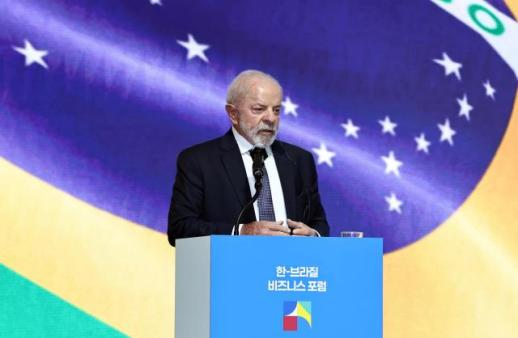 Brazilian president pitches supply chain ties to S. Korean conglomerate heads SEOUL, February 24 (AJP) - Anchoring his first state visit to South Korea in two decades, Brazilian President Luiz Inacio Lula da Silva met with the leaders of the country's largest conglomerates on Monday to secure supply chain partnerships in advanced industries like artificial intelligence and clean energy. The private gathering in Seoul followed a summit earlier in the day between Lula and South Korean President Lee Jae Myung at the presidential Blue House. During the morning summit, the two leaders agreed to elevate bilateral ties to a strategic partnership, signing 10 memorandums of understanding (MoUs) and adopting a four-year action plan. The diplomatic agreements are designed to move the countries beyond simple import-export transactions toward "productive integration," focusing on joint value creation and linked supply chains. To put that broader diplomatic strategy into practice, Lula sat down with Samsung Electronics Chairman Jay Y. Lee, Hyundai Motor Group Chairman Chung Eui-sun, LG Group Chairman Koo Kwang-mo and HD Hyundai Chairman Chung Ki-sun. The meeting was requested by the Brazilian Trade and Investment Promotion Agency, or ApexBrasil, as the Latin American nation seeks to leverage its massive consumer market and mineral wealth to attract high-tech manufacturing. All four South Korean conglomerates already operate major production bases in Brazil. Hyundai Motor Group is investing $1.1 billion to expand the capacity of its Sao Paulo plant by 2032. Samsung Electronics produces smartphones and home appliances in Sao Paulo and Manaus, while LG Electronics is building new facilities in Parana to complement its existing Manaus plant. HD Hyundai Construction Equipment runs a manufacturing facility in Rio de Janeiro. Following the closed-door talks, Lula delivered a keynote address to some 400 government and corporate officials at a bilateral business forum. The Brazilian leader arrived for his trip with a 300-member economic delegation, which is double the size of the group from his previous state visit in 2005. The delegation included top executives from aerospace manufacturer Embraer and state energy firm Petrobras. "South Korea, with its strong competitiveness in advanced technology and manufacturing, and Brazil, the largest economy in South America and home to 23 percent of the world's rare earth reserves, can have a complementary relationship," ApexBrasil President Jorge Viana said at the forum. "We can also contribute to building global value chains." Federation of Korean Industries Chairman Ryu Jin echoed the call for deeper integration. "Brazil is a resource powerhouse with competitiveness in food, energy and aviation, and a country of great strategic importance in the global supply chain," Ryu said. "The two countries must move beyond trade-centric cooperation and advance toward an era of co-prosperity centered on investment and industrial collaboration." Brazil represents Latin America's largest market, with a population exceeding 200 million. South Korean companies exported $5.3 billion in goods to Brazil last year, primarily electronics, automotive parts and pharmaceuticals. In return, South Korea imported $5.47 billion in Brazilian oil, iron ore, meat and coffee beans. Following the business forum, the corporate leaders joined a state dinner hosted by Lee at the Cheong Wa Dae guest house. The banquet drew a wide range of attendees, including government officials, conglomerate heads and prominent cultural figures such as Theborn Korea Chief Executive Officer Paik Jong-won. During the event, the two heads of state highlighted their shared working-class roots. Both leaders experienced poverty and sustained injuries as young factory workers before entering politics. Lee referred to his counterpart as an "amigo," while Lula noted their similar life trajectories made them feel like brothers. The two presidents also exchanged toasts using the Korean word "geonbae" and the Portuguese word "saude." The dinner featured cultural exchanges, with South Korean First Lady Kim Hye-kyung and Brazilian First Lady Rosangela da Silva wearing matching traditional hanbok garments. The dresses were crafted from fabric that the two first ladies purchased together at Seoul's Gwangjang Market earlier in the week. Lula is scheduled to conclude his three-day state visit to South Korea on Feb. 24. 2026-02-24 09:57:20
 -
 Hanwha’s Noh Si-hwan Signs 11-Year, 30.7 Billion Won Deal, Tops SSG’s Choi Jeong Total Hanwha Eagles infielder Noh Si-hwan has landed a record-setting payday. The question now is whether he can deliver the kind of long-term value associated with SSG Landers star Choi Jeong. Hanwha announced on the 23rd that it signed Noh to a multiyear contract before he reaches free agency. The deal runs 11 years and is worth 30.7 billion won ($30.7 billion won) including incentives, the longest and largest contract in KBO League history across both free-agent and non-free-agent agreements. The contract also includes a clause allowing Noh to move to Major League Baseball via posting after this season. The size and length of the agreement surprised many. A long-term deal had been widely discussed, but the 11-year term and a total in the 30 billion won range exceeded expectations. Noh’s single contract also surpasses the combined value of Choi’s three free-agent deals, which totaled 30.2 billion won (4 years, 8.6 billion won; 6 years, 10.6 billion won; 4 years, 11.0 billion won). A Hanwha official said the total carried symbolic meaning, reflecting the club’s hope that Noh will become a player who surpasses Choi. Noh’s average annual value is also higher: 2.79 billion won compared with Choi’s roughly 2.16 billion won. The two players share several traits: both are third basemen, right-handed power hitters, and players who reached the first-team roster quickly after receiving military-service benefits and later earned free-agent eligibility. One difference is age. Noh will be 26 for the 2027 season, while Choi was 28 in 2015, his first season after his initial free-agent deal. With age heavily weighed in the market and the value of money declining over time, Noh’s larger figure is easier to explain. Still, unlike Choi, who signed three separate free-agent contracts, Noh’s ultra-long deal could be more sensitive to injury risk. That is why Hanwha fans may measure the contract against Choi’s track record. Choi’s first free-agent deal was widely viewed as team-friendly, and he later signed his second and third deals with the same club. According to the statistics site STATIZ, Choi posted a combined WAR of 53.99 from the 2015 season through the 2025 season, an average of 4.91 per year. That works out to about 560 million won spent per 1 WAR. Noh recorded a WAR of 4.88 this season, and in his career-best 2023 season he posted a WAR of 6.74. Noh has effectively committed his prime years to Hanwha. The key question is whether, from the 2027 season through the 2037 season when the non-free-agent multiyear deal applies, he can exceed Choi’s level of production. If Noh produces consistently at a similar level, criticism that the deal is an overpay could shift to praise as one of the league’s best-value contracts. 2026-02-24 09:57:00
 -
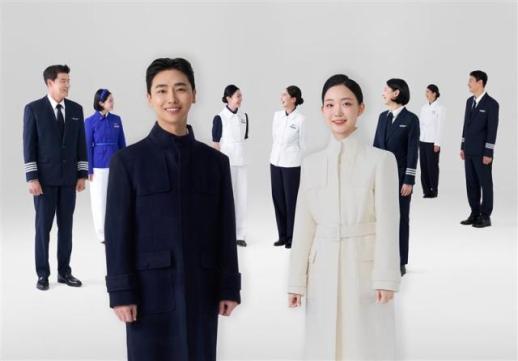 Parata Air to Hire Experienced Cabin Crew in First Half of 2026 Parata Air said Monday it will hold an open recruitment drive in the first half of 2026 to hire experienced cabin crew. Applicants must have at least two years of cabin crew experience at a domestic or overseas airline. The process includes document screening and a competency test, followed by a first-round practical and English interview, a second-round executive interview and a medical checkup before final selection. Foreign-language skills are preferred, and applications are due by 5 p.m. March 1. Parata Air operates domestic routes and key international routes including Japan and Vietnam. The airline said it is also working to build a stable operational foundation through ongoing hiring and structured training. “Cabin crew are on the front line of aviation safety and a core role that delivers our brand value closest to customers,” a Parata Air official said. “We will strengthen Parata Air’s differentiated service competitiveness with experienced professionals.” * This article has been translated by AI. 2026-02-24 09:54:42
 -
 Korea to Invest 19.8 Billion Won in 2026 AI Content Production Support The Ministry of Culture, Sports and Tourism and the Korea Creative Content Agency said Tuesday they will invest a total of 19.8 billion won in the 2026 “AI Content Production Support” program. The initiative will be offered in three tracks based on a company’s growth stage: entry, advanced and partnership. The entry track will help small and midsize companies with AI-based production capabilities enter the market and grow. It will select about 24 projects, with up to 200 million won per project. The advanced track aims to produce globally competitive content using more sophisticated AI technology, supporting about 10 projects with up to 700 million won each. The partnership track will back collaboration between large or mid-sized companies and small and midsize firms to boost commercialization and shared growth, selecting about 16 projects with up to 400 million won each. The entry track includes “genre convergence” to upgrade production processes in existing genres; “new-technology convergence” to create new consumer experiences through technology-driven formats such as extended reality (XR), interactive and immersive content; and development and pilot testing of AI-based solutions and platforms that can be used in production. The agency said it aims to expand services tailored to content production beyond general-purpose technology use. The partnership track will expand sharply from four projects last year to 16. It will also encourage cooperation not only between large and small companies but also between the content sector and other related industries to develop new commercialization models. The agency plans to hold a public briefing in March for small and midsize companies interested in joining the partnership track. More details are available on the agency’s website. * This article has been translated by AI. 2026-02-24 09:51:16
 -
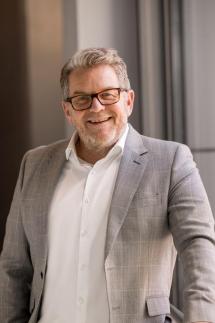 Volkswagen Group Names Andreas Mindt as Head of Group Design Andreas Mindt, head of design for the Volkswagen brand, will also take on the role of head of group design, succeeding Michael Mauer, who left the post as part of a generational change. Volkswagen Group said Monday that Mindt will oversee design across the group starting March 1. Mindt graduated from Pforzheim University of Design and began his career at Volkswagen Group in 1996. Through 2014, he worked at the Volkswagen brand, contributing to exterior design including the first-generation Tiguan and the Golf 7. Until 2021, he led a revamp of Audi exterior design, working on models ranging from the Audi A1 to the e-tron GT and from the Q3 to the Q8. Since February 2023, he has served as head of design for the Volkswagen passenger-car brand. Volkswagen Group CEO Oliver Blume said he looks forward to working even more closely with Mindt, adding that Mindt “made a significant impact in a short time” based on his achievements and expertise at the Volkswagen brand. Blume said Mindt played a key role in ensuring Volkswagen vehicles are once again clearly recognized as “true Volkswagens.” 2026-02-24 09:45:24
 -
 OPINION: With US tariff ruling, trade war enters new phase SEOUL, February 24 (AJP) - Two months into the new year, uncertainty continues to mount, unsettling businesses and consumers alike. What matters as much as what changes is what holds steady — yet unexpected shocks keep emerging and how governments and companies respond will determine what lies ahead. A new variable has hit global trade. The U.S. Supreme Court ruled that U.S. President Donald Trump's reciprocal tariffs and fentanyl-related tariffs imposed under the International Emergency Economic Powers Act (IEEPA) were illegal. The court said that while IEEPA grants a president the authority to "regulate" imports during a national emergency, it does not explicitly authorize "tariffs." The Trump administration wasted no time finding alternatives. Citing Section 122 of the Trade Act, it announced a global tariff of 15 percent for up to 150 days. It has also begun weighing "Super 301" as a tool to target specific countries with retaliatory tariffs. Attention is now turning to what comes next. With 64 percent of Americans opposing Trump's tariff policy, U.S. industry has welcomed the ruling as a positive sign for the economy. Financial markets, however, remain unsettled: the dollar fell 0.2 percent against major currencies, while U.S. stocks rose. Trump is expected to quickly work to keep tariff measures going. The tariff battle could also become a political setback for him in November's midterm elections, yet aggressive efforts to regain momentum are likely to continue, as voter sentiment may do little to constrain him. The next stage is how other countries respond and how carefully they tread. Rash moves could backfire, as Trump still has powerful options at his disposal. A sudden action could trigger Super 301 measures that even the Supreme Court might not be able to block. China appears quietly pleased, judging that Trump's bargaining power has weakened and that Beijing can hold out longer. The EU is observing cautiously, even as it maintains that conditions may not worsen. Canada remains broadly optimistic, while Mexico is wary that the U.S.-Mexico-Canada Agreement could face new fallout. Japan has avoided issuing a formal statement, reaffirming its commitment to promised U.S. investments and emphasizing that sector-specific tariffs such as those on autos or steel and aluminum are not affected by the ruling. South Korea has taken a stance similar to Japan's, signaling a cooperative approach toward Washington. Anxiety persists after Trump recently warned he could raise South Korea's reciprocal tariff from 15 percent to 25 percent over delays in fulfilling investment pledges. Concerns are heightened because Trump often relies on brinkmanship when cornered. Overall, the current mood in South Korea–U.S. relations leaves little room for complacency. The calculus is complicated by Japan's new government under Prime Minister Sanae Takaichi, which has moved closer to Washington while sharpening its confrontation with China. Given Northeast Asia's security environment, South Korea cannot easily ignore U.S. economic pressure amid China's growing influence, North Korea's nuclear threat and its deepening military ties with Russia. There have been signals that the role and function of U.S. forces stationed in the region could change. Japan is accelerating its efforts to become a country capable of waging war, while scenarios of a Chinese invasion of Taiwan persist, drawing Taiwan closer to the U.S. South Korea's stance remains uncertain. Within the government, a debate is growing between those who prioritize the U.S. alliance and those who favor greater strategic independence including closer ties with China. There is disagreement over South Korea's investment pledges to the U.S., following the ruling, but the two are separate issues. To protect its national interests, South Korea should first create conditions for profitable investment in the U.S. market, diversifying supply chains, shifting energy import sources, and helping South Korean companies capture new opportunities there. In areas Washington is rushing to rebuild, such as semiconductors and shipbuilding, South Korean firms are not the only capable players, with Taiwan and Japan possessing nearly comparable technology. Even if South Korea is excluded, U.S. rebuilding would not face major problems. If South Korea hesitates to cooperate with the U.S. or Japan due to concerns about North Korea or China, the fallout could spill over into the economic sphere as well. South Korea–U.S. relations remain on thin ice. * This article, published by Aju Business Daily, was translated by AI and edited by AJP. 2026-02-24 09:41:01
 -
 Retired Speedskater Kim Bo-reum Says She’s Weighing Her Next Chapter Retired South Korean speedskater Kim Bo-reum has shared an update on her life after leaving the sport. Kim appeared on the KBS Joy program “Ask Anything” that aired on the 23rd. Asked how she has been doing, Kim said, “I’m not doing anything.” When Seo Jang-hoon asked, “Unemployed?” she nodded. She said she is thinking about “how to live” her second chapter, adding that she retired about three weeks before the filming date. Explaining her decision, Kim said she considers her peak as an athlete to have been the 2018 Pyeongchang Olympics. “My original dream was to win a gold medal at the Olympics and retire in that moment, but there was a bit of a setback when I won silver,” she said. She added that she did not compete in the latest trials and that she has considered retiring every year since Pyeongchang. After Seo said she must have struggled when something she did not want happened at a young age, Kim said the experience made her feel she could handle whatever comes next. “I’ve become tougher than other people, and I’m confident I won’t break easily, so I want to try many different things,” she said.* This article has been translated by AI. 2026-02-24 09:34:42