

Politics has always been war by other means. Weapons have been replaced by language, battlefields by parliaments and social media. But the logic of victory has changed far less than we like to believe.
In this sense, the most enduring manual for understanding modern politics remains The Art of War. Sun Tzu located victory not in manpower or tactics, but in shi—the configuration of power, momentum, and terrain. The decisive battle, he argued, is often won before it is fought.
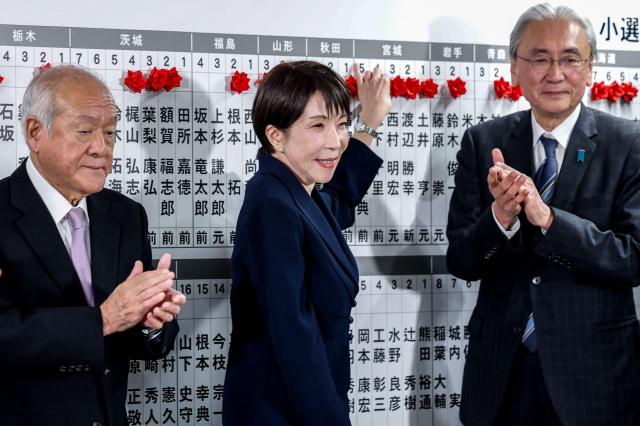
The landslide victory of Japanese Prime Minister Sanae Takaichi in the 2026 general election offers a textbook example of this ancient insight in the age of algorithms.
This was not an election about weighing competing policy platforms. It was framed as a single, binary question: Takaichi, or not Takaichi. Voters were not choosing a government. They were choosing a figure.
It was a high-ground strategy—rare in postwar Japanese politics.
Rather than expanding cautiously toward the center, Takaichi simplified the battlefield, accepted polarization, and forced a decision. In Sun Tzu’s terms, she did not refine her tactics. She changed the terrain.
Once the high ground is seized, every subsequent battle is fought on its terms.
Opposition parties offered rational arguments and moderate appeals. They were safe. They were also irrelevant. Politics that avoids being disliked preserves stability, but it rarely generates momentum. Politics that risks unpopularity is dangerous—but it can dominate the field.
This election did not judge moral virtue. It tested which strategies survive in today’s information environment.
“Sanakatsu”: Fandom Politics in the Algorithm Age
The key to understanding this election lies in a single word: sanakatsu.
Derived from oshikatsu—the culture of idol fandom—it describes the fervent, organized following around Takaichi. Campaign rallies became concerts. Badges and posters became merchandise. Online communities outperformed traditional party machinery.
Politicians became brands. Voters became fans. This was no accident.
Sun Tzu’s shi—momentum—now appears as “high-energy support” in digital form. Platforms do not reward moderation. They do not amplify compromise. They favor clarity, emotion, and repetition.
Average messages do not spread. Strong ones do.
Takaichi’s slogan, “A Strong and Prosperous Japanese Archipelago,” fit the logic perfectly. It was simple, repeatable, emotionally resonant.
It belongs to the same lineage as Donald Trump’s “Make America Great Again”: language that needs no explanation and leaves little room for ambiguity.
Personal narrative reinforced the message. In a political culture dominated by dynasties, Takaichi’s story—daughter of a factory worker and a police officer who rose through effort—created identification, especially among younger voters.
Their support was less about policy preference than identity choice. In military terms, she offered not wages, but meaning. An army that fights for meaning does not disperse easily.
“Strong Japan” and the Power of National Narrative
In war, legitimacy matters more than numbers. Soldiers who do not understand why they fight will not fight long.
Takaichi presented Japan with a powerful national story: Strong Japan. Between Xi Jinping’s China and Trump’s America, she argued, Japan should no longer be a cautious manager of decline. It should be an autonomous actor—choosing, deciding, and bearing responsibility. The message struck a nerve.
Decades of stagnation, demographic decline, and geopolitical uncertainty had left Japan suspended between past greatness and present anxiety. Takaichi did not offer comfort. She offered dignity.
In strategic terms, this is the most effective form of mobilization. Politics that explains failure attracts few followers. Politics that declares possibility attracts many. But legitimacy is always double-edged.
“Strong Japan” leads naturally to constitutional revision, military expansion, and renewed debates over historical memory. For South Korea and China, it raises concerns. Within Japan, weakened institutional restraints could accelerate ideological hardening.
Her shift toward a more assertive governing coalition has only intensified these anxieties.
High ground creates vision. It also creates exposure.
Sun Tzu warned that holding high ground is harder than capturing it. Support built on clarity and emotion must eventually be justified by results. Otherwise, it evaporates. “Strong Japan” works as a slogan. As policy, it faces the hard fronts of fiscal limits, demographic decline, and diplomatic constraints.
In East Asian terms, Takaichi’s victory may reshape regional dynamics—from Korea-Japan relations to trilateral coordination with the United States, to ties with China.
A clear Japan may be abrasive, but it is predictable. Diplomacy is management, not sentiment. Sometimes a firm counterpart is easier to deal with than an ambiguous one.
The real question is whether clarity becomes managed competition—or unmanaged confrontation.
At this point, the lens naturally turns to South Korea.
Fandom politics, weakened opposition, generational polarization, and emotion-driven voting are not uniquely Japanese phenomena. Algorithm-amplified outrage, loyalty over verification, and “vote first, think later” behavior erode democratic capital at speed.
Japan’s present may well resemble Korea’s future. Sun Tzu’s final warning is worth recalling: generals intoxicated by momentum prepare their own defeat.
When political victory is not followed by responsibility, high ground becomes a trap.
Takaichi’s landslide reflects an acute reading of her era. Whether it represents a victory for democracy remains undecided. Politics, unlike war, does not end with triumph. It must lead to governance. It must prove itself in outcomes.
History is now asking a single question: After capturing the high ground, how will it be defended?
That question confronts not only Japan, but South Korea and East Asia as a whole.
*The author is a columnist for AJP.
Copyright ⓒ Aju Press All rights reserved.
