
Journalist

AJP
-
 BTS to Open Ticket and Viewing Details for Gwanghwamun Square Comeback Show BTS’ Gwanghwamun Square concert is 27 days away. HYBE shared additional details on Weverse, raising anticipation among fans. Access to the designated viewing areas will be limited to winners selected from Weverse Global reservation purchasers and to holders of advance-sale tickets. Areas outside the viewing zones may face partial restrictions under on-site safety guidelines. The audience setup will include standing sections and reserved seating. Some reserved seats may have limited views because of stage production and safety structures, though large LED screens will be available on-site for viewing. The show will be available both in person and online. Offline ticket reservations will be offered for free through NOL Ticket at 8 p.m. tomorrow (23). Those unable to attend in person can watch on Netflix. “BTS Comeback Live: Arirang” will run for about an hour starting at 8 p.m. on March 21 in and around Seoul’s Gwanghwamun Square. Traffic in the area will be controlled to support operations and safety, and nearby subway stations may pass through without stopping depending on crowd levels. BTS will release its fifth full-length album, “Arirang,” at 1 p.m. on March 20. The 14-track album reflects the group’s identity and deep love, and uses the title of a well-known Korean folk song to express the team’s roots and the emotions felt by its members through music. * This article has been translated by AI. 2026-02-22 10:21:16
 -
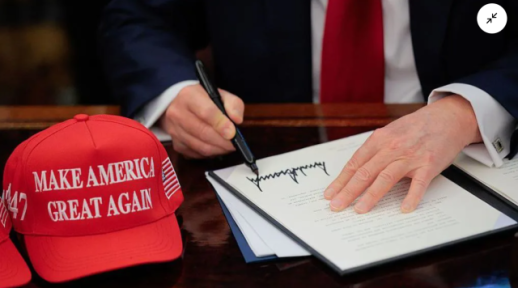 ANALYSIS: Trump raises global tariff to 15% and what it means for Korea SEOUL, February 22 (AJP) -President Donald Trump has moved to raise a blanket U.S. import tariff to 15 percent, up from 10 percent, after the Supreme Court of the United States on Friday struck down much of his second-term tariff regime, renewing trade pressure on surplus-running countries such as South Korea. The new rate, 10 to 15 percent, replaces many duties invalidated by the court and takes effect immediately. It is being imposed under Section 122 of the Trade Act of 1974, a rarely used provision that allows temporary tariffs of up to 15 percent for up to 150 days to address balance-of-payments problems. For Korea, which consistently runs large trade surpluses with the United States, the move signals that Washington’s tariff strategy is entering a new legal phase rather than winding down. On Friday, the Supreme Court ruled that Trump lacked authority to impose sweeping tariffs under the International Emergency Economic Powers Act (IEEPA), rejecting the administration’s argument that the 1977 law implicitly authorized such measures. The ruling dismantled a core pillar of Trump’s second-term trade policy. But the White House responded swiftly. Within hours, the administration reinstated a 10 percent global tariff under Section 122. A day later, Trump said on social media that he intended to raise the rate to the fully permitted 15 percent level. “During the next short number of months, the Trump Administration will determine and issue the new and legally permissible Tariffs,” he wrote, vowing to continue his “extraordinarily successful” trade policy. As of Sunday, the White House had yet to formally update its Friday announcement on the temporary 10 percent surcharge, which was introduced to “address fundamental international payments problems” while complying with the court ruling. Section 122 limits such tariffs to 150 days. Trump has said the administration will use that window to prepare longer-lasting measures under Section 301 of the 1974 Trade Act, which requires formal investigations into alleged unfair trade practices. The rapid shift underscores a clear strategy: rotate legal authorities to preserve tariff leverage despite judicial constraints. Why and where Korea is exposed Korea’s vulnerability lies in its persistent trade surplus with the United States, driven by strong exports of automobiles, electronics, machinery, batteries and industrial components. Under Section 122, tariffs must be applied universally and cannot target specific countries. But the provision is justified on balance-of-payments grounds, making surplus countries politically sensitive in Washington. From the U.S. perspective, Korea fits that profile. A uniform 15 percent surcharge weakens Korean exporters’ price competitiveness and reduces their ability to absorb costs in the U.S. market, especially as competition from Japan, Southeast Asia and Mexico intensifies. Korea’s exposure is underscored by the scale and persistence of its trade surplus with the United States. Korean exports to the U.S. totaled $127.8 billion in 2023 and rose to $138.1 billion in 2024 before easing to $122.9 billion in 2025, when shipments still grew 3.8 percent from a year earlier. Over the same period, Korea recorded trade surpluses of $44.4 billion in 2023, $55.6 billion in 2024 and $47.9 billion in 2025. Although the surplus narrowed last year from its 2024 peak, it remains historically high, reinforcing Washington’s perception of Korea as a structurally surplus-running trading partner and keeping bilateral imbalances firmly in the political spotlight. Short-term impact: manageable In the near term, the impact on Korean exporters may be manageable. Under trade arrangements reached in 2025, many Korean products were already operating under tariff ceilings close to 15 percent, linked to large-scale investment and procurement commitments to the United States. In that sense, the new surcharge partly restores a previous baseline. In addition, goods already covered by national-security tariffs under Section 232 — including steel, aluminum and automobiles — are exempt from stacking, limiting immediate damage in some core sectors. These factors reduce the risk of an abrupt export shock. The greater threat lies beyond the Section 122 window. Once the 150-day limit expires, the administration is expected to pivot to more durable tools, including Section 301 investigations into country- or product-specific practices, expanded use of Section 232 national-security tariffs, and sector probes in semiconductors, pharmaceuticals and advanced manufacturing. Unlike Section 122, these measures can be tailored to specific partners and industries. For Korea, whose export structure is concentrated in politically sensitive sectors, the risk of selective and longer-lasting barriers remains high. The current surcharge may therefore serve as a bridge to more targeted actions. For Korean companies, the main cost is not only the tariff rate, but instability. In less than a week, U.S. policy shifted from court invalidation to a 10 percent emergency tariff, then to a 15 percent surcharge under a different statute, with further changes promised. This volatility creates three immediate problems. First, contract risk rises as exporters are forced to renegotiate prices and delivery terms. Second, investment planning becomes more difficult as assumptions about market access continue to change. Third, compliance costs increase as firms repeatedly adjust to new customs rules and exemptions. In effect, uncertainty itself becomes a non-tariff barrier. The tariff shift also complicates Korea’s $350 billion U.S. investment commitment, negotiated partly in exchange for more stable trade conditions. With the original tariff framework weakened by the court ruling, questions have emerged over how binding the package remains in political and legal terms. Seoul is unlikely to reopen negotiations, given their links to defense, shipbuilding and energy cooperation. But companies may become more cautious in sequencing projects, using implementation speed as leverage in future talks. Washington, meanwhile, may continue to cite investment progress as a benchmark in trade negotiations. Another unresolved issue is whether companies will be able to recover tariffs paid under the invalidated IEEPA regime. The Supreme Court did not require automatic refunds, prompting firms to prepare legal claims. For Korean exporters operating under DDP (delivered duty paid) terms or paying duties through U.S. subsidiaries, prolonged refund procedures could strain cash flow, particularly for smaller firms. Government support for documentation and claims processing is likely to become increasingly important. For now, the Korean government is opting for restraint rather than retaliation. Policy priorities include monitoring exemptions and non-stacking rules under Section 122, quiet engagement with Washington on sector-specific risks, and strengthening support for exporters facing refund and compliance issues. Officials see limited scope for immediate countermeasures and are focusing instead on risk management. For Korea, the short-term impact may be contained. But with a large and persistent surplus and heavy exposure in strategic industries, the medium-term risks remain firmly in place. 2026-02-22 09:32:55
 -
 Norway Clinches Top Spot in Milan-Cortina Winter Olympics; South Korea 13th Norway locked up first place in the overall standings at the 2026 Milan-Cortina d’Ampezzo Winter Olympics with one day remaining. South Korea stayed 13th with 10 medals (three gold, four silver, three bronze). As of Feb. 21 local time, Norway led with 18 gold, 11 silver and 11 bronze medals. With only five gold medals left on the final day, the United States in second (11 gold, 12 silver, nine bronze) cannot catch Norway even if it wins all remaining events. The result gives Norway a fourth straight Winter Games overall title, after Sochi 2014, PyeongChang 2018 and Beijing 2022. Norway’s dominance was most evident in cross-country skiing. Johannes Klaebo swept all six men’s gold medals — the 10km+10km skiathlon, sprint classic, 10km interval start free, 4x7.5km relay, team sprint and 50km mass start — to set a new record for most golds by one athlete at a single Winter Olympics. He also raised his career Olympic gold total to 11, breaking the previous record held by American Eric Heiden, who won five golds at Lake Placid 1980. South Korea, which collected one gold and two silvers in short track the previous day, added no medals on Feb. 21 and remained 13th overall. Jeong Jae-won finished fifth in the men’s speedskating mass start, and Park Ji-woo (both Gangwon Provincial Government) placed 14th in the women’s mass start. South Korean speedskating ended the Olympics without a medal for the first time in 24 years.* This article has been translated by AI. 2026-02-22 07:36:00
 -
 Cha Jun-hwan, Lee Hae-in bring Korean music to Olympic figure skating gala in Milan Cha Jun-hwan of Seoul City Hall and Lee Hae-in of Korea University, two of South Korea’s top figure skaters, took the ice in the Olympic gala show with programs set to Korean music. They skated in the 2026 Milan-Cortina figure skating gala at Milan’s Ice Skating Arena. The gala is an exhibition in which selected Olympic skaters perform without required jumps and with freedom in costumes and music choices. It features medalists in men’s and women’s singles, pairs and ice dance, along with specially invited skaters chosen with competition results and fan requests in mind. South Korea did not have a skater in the gala at the 2022 Beijing Games, but Cha and Lee performed this time. The show opened with a performance by Italian women’s singles standout Carolina Kostner, who competed in the same era as South Korean star Kim Yuna. Skating fourth in the second half, Cha performed to musician Song So-hee’s “Not a Dream.” He mixed triple jumps, step sequences and spins, drawing applause from the crowd. “Falling in love with figure skating was about freedom, and when I heard this song I felt a lot of that freedom, so I chose it for the gala,” Cha said. “At the Olympics, a festival for people around the world, I wanted to perform to a song that could introduce Korea as a Korean representative, and I’m grateful I had the chance.” Cha said his 2018 Pyeongchang gala showed the bright, bold feel he could bring as a teenager, but that eight years later he has grown and took a bigger role in choreography. “I wanted to show my own story and message,” he said. Lee, who has often used K-pop in past gala appearances, skated this time to the theme song of the popular animated series “K-pop Demon Hunters.” Wearing a black gat hat and carrying a fan with a durumagi-style outfit, she delivered a lively performance that drew cheers. Lee said it was “special” to skate in the gala at her first Olympics. “It’s already disappointing that it’s over, and I’m excited to see what I’ll show at the next competition I enter,” she said. Also performing were the men’s and women’s singles champions, Mikhail Shaidorov of Kazakhstan and Alysa Liu of the United States. Spain’s ice dance team of Olivia Smart and Tim Dieck staged a penalty kick with a soccer ball, performing in support of Spain’s national team and its hopes of winning the 2026 World Cup in North America. Malinin, who had been viewed as a leading contender in men’s singles but missed the medals after repeated jump mistakes in competition, landed a high-difficulty quadruple toe loop and then a backflip, earning loud applause. 2026-02-22 07:27:00
 -
 K Bank IPO Draws Tepid Demand on First Day of Retail Subscription K Bank, seen as this year’s first major IPO, posted weaker-than-expected results on the first day of its retail share subscription. Even after setting its offering price at the bottom of the indicated range, investor interest was markedly cooler than during KakaoBank’s 2021 listing. According to the financial investment industry on the 22nd, subscription deposits collected by lead managers and underwriters NH Investment & Securities, Samsung Securities and Shinhan Investment Corp. totaled about 608.2 billion won as of the close on Feb. 20, the first day of retail subscriptions. By firm, subscription competition ratios were 7.88 to 1, 8.74 to 1 and 45.24 to 1. The number of subscription applications totaled about 320,000. The contrast with KakaoBank’s 2021 IPO was sharp. KakaoBank drew about 12.0522 trillion won in deposits on the first day and posted a combined competition ratio of 37.8 to 1, with about 960,000 subscription applications. K Bank set its offering price at 8,300 won, the low end of its indicated range of 8,300 to 9,500 won. The total offering size is 498 billion won, and its expected market capitalization after listing is about 3.3673 trillion won. That is a steep cut from the roughly 5 trillion won valuation discussed during its second attempt to go public. Analysts say valuation premiums for internet-only banks have been shrinking as the interest-rate environment shifts and household lending rules tighten. A stronger investor focus on profitability and asset quality has also weighed on demand. Ko Kyung-beom, an analyst at Yuanta Securities, said market expectations for internet banks have fallen during K Bank’s three IPO attempts. He added that a decline in net interest margin, compared with other internet banks, is a key burden. Attention now turns to the final subscription results on the 23rd. Based on first-day deposits alone, many observers say it will be difficult to expect a breakout hit. While IPO subscriptions often see a late surge on the final day, it remains unclear whether enough money will flow in to quickly change the tone. Cho A-hae, an analyst at Meritz Securities, said valuation premiums for internet banks are rooted in growth expectations, but recent return on equity has been lower than that of major commercial banks. With a household-loan-heavy portfolio and tighter lending regulations raising the risk of slower growth, Cho said how well the company proves its growth prospects will be a key driver of the stock price. 2026-02-22 07:03:00
 -
 Kim Yu-ran, Jeon Eun-ji Place 16th in Women’s Two-Woman Bobsled at Milan-Cortina Olympics Kim Yu-ran of Gangwon Provincial Office and Jeon Eun-ji of the Gyeonggi federation finished 16th in the women’s two-woman bobsled at the Milan-Cortina Winter Olympics. Racing at the Cortina Sliding Center in Cortina d’Ampezzo, Italy, the pair posted a four-heat total of 3 minutes, 52.04 seconds after completing heats three and four on Feb. 22 (Korea time). They were 15th among 25 teams after the first two heats in 1:55.79. In the third heat, they clocked 58.15 seconds to stay 15th at 2:53.94 overall and secure a spot in the fourth heat, reserved for the top 20 teams. They trimmed their time slightly to 58.10 in the final run but slipped one place to 16th in the final standings. South Korea last competed in the event at the 2018 Pyeongchang Games, when Kim teamed with Kim Min-seong and placed 15th. The country did not qualify for the 2022 Beijing Olympics, making this its first women’s two-woman entry in eight years. Germany’s Laura Nolte and Deborah Levi won gold in 3:48.46 to repeat as Olympic champions. Teammates Lisa Buckwitz and Nelle Schuten took silver in 3:48.99. The United States’ Kaillie Humphries and Jasmine Jones earned bronze in 3:49.21. Humphries added her second bronze medal of these Games after also taking bronze in monobob.* This article has been translated by AI. 2026-02-22 06:15:00
 -
 Choi Min-jeong, Hwang Dae-heon to carry South Korea flag at Milan Olympics closing ceremony Short track skaters Choi Min-jeong (Seongnam City Hall) and Hwang Dae-heon (Gangwon Provincial Office) will carry South Korea’s flag at the closing ceremony of the 2026 Milan-Cortina d’Ampezzo Winter Olympics. The International Olympic Committee said the Games will end with the closing ceremony at 4 a.m. on the 23rd (Korea time) at the Verona Arena in Italy. The Milan-Cortina d’Ampezzo Olympics featured competition for 116 gold medals across 16 events in eight sports. Choi was selected after a standout Olympics in which she won gold in the women’s 3,000-meter relay and added silver in the 1,500 meters. Those results gave her seven career Olympic medals, the most by any South Korean athlete across the Summer and Winter Games, surpassing Jin Jong-oh (shooting), Kim Soo-nyung (archery) and Lee Seung-hoon (speed skating), who each won six. Choi also moved into a tie with Jeon I-kyeong (four golds) for the most Winter Olympic gold medals by a South Korean athlete. Hwang also left his mark, winning silver in the men’s 1,500 meters after a persistent chase and helping South Korea reach the podium in the 5,000-meter relay as the anchor leg. He won medals in both individual and team events. At the opening ceremony, figure skater Cha Jun-hwan (Seoul City Hall) and speed skater Park Ji-woo (Gangwon Provincial Office) served as co-flag bearers.* This article has been translated by AI. 2026-02-22 05:15:00
 -
 Heavy Snow Delays Women’s Freeski Halfpipe Final at 2026 Milan Games Heavy snowfall in the Italian Alps has postponed the women’s freestyle ski halfpipe final. Organizers said the final, scheduled for 3:30 a.m. Korean time on Feb. 22 at Livigno Snow Park, was delayed because of severe weather. The start time was moved to 6:40 p.m. the same day. The International Ski and Snowboard Federation said, “Due to heavy snowfall in Livigno, we determined it was impossible to prepare the pipe in a way that ensures a safe and fair competition,” adding, “Today’s competition was canceled.” Livigno, which hosted snowboarding and freestyle skiing events at these Games, has already seen weather-related disruptions. The women’s snowboard slopestyle featuring South Korea’s Yoo Seung-eun (Seongbok High School) and the men’s freeski halfpipe qualifying with South Korea’s Lee Seung-hoon (Korea National Sport University) were postponed before eventually being held. South Korea’s Kim Da-eun (Kyung Hee University) and Lee So-young (Sangdong High School) competed in this event but failed to advance from qualifying, leaving no South Korean athletes in the final. With the final pushed back, the number of gold medals to be awarded on the last day of competition on local Feb. 22 increased to five from four. * This article has been translated by AI. 2026-02-22 05:12:00
 -
 Hungary’s Kim Min-seok says he changed citizenship to keep skating career alive Kim Min-seok, a South Korean middle- and long-distance speedskater who changed citizenship to Hungary, said he made the decision to keep his career going. Kim was eliminated after finishing 12th in the second semifinal heat of the men’s mass start at the 2026 Milan-Cortina d’Ampezzo Winter Olympics at the Milan speedskating stadium on Saturday (Korea time). Afterward, he told reporters, “Skating was my whole life,” adding, “I decided it would be hard to continue my career if I couldn’t train for two years. I thought about it a lot.” He said he “really loved” South Korea and agonized “day and night” because he had competed as a national team athlete, but added, “I loved skating more, so I looked for a way to keep competing.” Kim caused a drunk-driving accident in July 2022 at the national training center in Jincheon, North Chungcheong Province. In August, the Korea Skating Union’s Sports Fairness Committee suspended him for 18 months. In a May 2023 court ruling, he was fined 4 million won, and the Korean Sport & Olympic Committee imposed a two-year suspension of his national team eligibility. He could have entered the 2025-2026 national team trials and still competed at the 2026 Milan-Cortina d’Ampezzo Winter Olympics as a South Korean athlete, but chose to change citizenship. He said he believed that if he went two years without training while unemployed, he would not be able to compete with national team status. Lee Cheol-won, a South Korean coach with Hungary’s national skating team, proposed the switch, and Kim changed nationality along with short-track skater Moon Won-jun. Kim did not post strong results at these Games. He finished seventh in his main event, the men’s 1,500 meters, placed 11th in the 1,000, and was eliminated in the mass start semifinals. “I have no regrets because I gave everything I could,” he said. “I learned a lot through this competition, and I believe I can grow more.” He also said that, during preparations, he was able to train with the South Korean team thanks to consideration from South Korea head coach Baek Cheol-ki. Kim became one of South Korea’s top speedskaters after winning a silver medal in the men’s team pursuit with Lee Seung-hoon (retired) and Jeong Jae-won (Gangwon Provincial Office) at the 2018 PyeongChang Winter Olympics, and a bronze medal in the men’s 1,500. He called PyeongChang “an honorable stage” and said it would remain unforgettable. Looking ahead to the 2030 Alps Winter Olympics, he said, “Of course I’ll prepare,” adding, “I’ll work to stand on the podium again.” * This article has been translated by AI. 2026-02-22 04:06:00
 -
 Speedskater Park Ji-woo vows to keep chasing Olympic mass start medal after 14th-place finish South Korea’s long-distance speedskating standout Park Ji-woo of Gangwon Provincial Office missed a medal in the women’s mass start and said she plans to try again in four years. Park placed 14th in the final at the 2026 Milan-Cortina d’Ampezzo Winter Olympics at the Milan speedskating stadium on Feb. 22 (Korea time). It was her first time reaching the Olympic final, but she did not make the podium. After the race, Park told reporters in the mixed zone, “I’m sorry to deliver a disappointing result to speedskating fans in Korea who supported me,” bowing her head. Park failed to advance past the semifinals at both the 2018 PyeongChang Games and the 2022 Beijing Games. In Beijing, she collided with another skater with two laps remaining, ending her bid to reach the final. This time, she advanced comfortably through the semifinals to make her first final, but fell short of medal contention. “I was worried about fighting for position and where I’d be with one or two laps left,” Park said. “It’s disappointing I couldn’t fix that, but I showed what I could. I have fewer regrets than at PyeongChang and Beijing.” She said Kim Bo-reum contacted her from Korea earlier in the day and offered advice on positioning. “I really wanted to follow in Bo-reum’s footsteps, but it’s a shame I couldn’t show a great performance,” Park said. Kim, who announced her retirement from competition late last year, won silver in the mass start at the 2018 PyeongChang Olympics, becoming the first South Korean woman to medal in the event at the Games. Park said she intends to keep pursuing an Olympic medal. “The athletes who made the podium today are in their mid-30s, at least eight years older than me,” she said. “I have a real chance to keep challenging in four years and even eight years. I’ll work to reach a higher place at the next Olympics.”* This article has been translated by AI. 2026-02-22 03:12:00