
Journalist

AJP
-
 Snowboarder Kim Sang-gyeom, Milan 2026 silver medalist, sets sights on 2030 Olympic gold “I want to keep riding the snowboard I love and compete on the Olympic stage even in my 40s.” Kim Sang-gyeom, who won silver for High1 at the Milan-Cortina d’Ampezzo Winter Olympics, said his path has been driven by a love of “snow” and “board,” even when reality was far from romantic. In an interview with this newspaper on Feb. 14, Kim said the Olympics had been “so desperately important” to him. “I’ve never chased money while snowboarding. I got this far because I love snowboarding,” he said. “I may be slow, but I’m an athlete who doesn’t quit. I think the Olympic medal came because I kept going steadily.” ◆Years of hardship before the podium Kim won silver in the men’s parallel giant slalom final on Feb. 8, finishing 0.19 seconds behind the winner. It was the first medal for South Korea’s team at these Olympics. He wiped away tears during a TV interview after the race, overwhelmed by what he described as 12 years of pent-up emotion. “I’m not usually someone who cries, but I think that changed this time,” Kim said, adding with embarrassment that people now tease him for being more emotional. Before the success, he said, he struggled to make ends meet when there was no company team. During training periods, he worked part-time one day each weekend, and in the offseason he took day labor jobs at construction sites. Equipment costs were another burden. Kim said his 195-centimeter board costs several million won each, and because boards wear out, he replaces them regularly. “I ride five or six boards in a season, and the fixed cost alone is 25 million to 30 million won,” he said. Joining the High1 sports team in 2019 became a turning point, he said. “With financial breathing room, I became mentally stable, too,” Kim said. “I didn’t have to spend my salary on equipment, and I could get support for training camps, so I could focus only on training.” ◆“My wife is my strength” Even with better support, the Olympics remained a steep climb. Kim debuted at the 2014 Sochi Games, finishing 17th in qualifying. At the 2018 Pyeongchang Games, he failed to reach the round of 16. At the 2022 Beijing Games, he placed 24th in qualifying and was eliminated. Kim said family helped him endure the setbacks, especially his wife, Park Han-sol, whom he married in 2023. “Once I had a family and someone I had to take responsibility for, it was different,” he said. “It felt like I had someone completely on my side.” He added, “I had to raise my performance because I had to support my family. That urgency and responsibility overlapped, and after that my results started trending upward.” Kim said his wife was the first person who came to mind after he crossed the finish line in the final. “The moment I won silver, all I could think was that I wanted to go home and see my wife,” he said. “After the race we video-called, and we both just kept crying without saying anything.” Asked about being labeled a devoted husband after the Games, Kim said, “Not at all. I’m blunt and not good at expressing myself, but I think people saw it kindly.” ◆Next goal: 2030 Olympic gold At 37, Kim said he is already looking ahead four years. In men’s parallel giant slalom, he noted, athletes in their late 30s and early 40s often remain competitive. “This silver medal is incredibly valuable, but it’s also true that I feel some regret,” he said. “Every athlete wants to be first. I’m the same.” He said he plans to challenge the 2030 Alps Winter Olympics and aims to stand on the top step of the podium. “Next time, I want to put on a gold medal and really cry my eyes out,” he said with a laugh. Asked how he wants to be remembered, Kim said, “As an athlete who doesn’t give up even in hard moments, and someone who can be a good example for younger athletes. I hope I’m remembered as someone who proved that steady effort can bring good results.” ◆South Korean snowboarding posts best-ever Olympic result Kim’s silver helped spark what the article described as a renaissance for South Korean snowboarding at these Games. Yoo Seung-eun of Seongbok High School won a surprise bronze in women’s big air, becoming South Korea’s first female medalist in the sport at the Olympics. Choi Ga-on won gold in halfpipe, delivering South Korea’s first-ever gold medal in a snow event. The article said she fell in her first final run and suffered a serious injury, but did not quit and produced a dramatic performance on her third run to take the title. NBC, the U.S. Olympic broadcaster, named it one of the best moments of the first half of the Games, the article said. South Korea finished the Olympics with one gold, one silver and one bronze in snowboarding. It ranked third in the sport behind Japan (four gold, two silver, three bronze) and Austria (two gold, one silver, one bronze), the article said.* This article has been translated by AI. 2026-02-19 15:48:00
 -
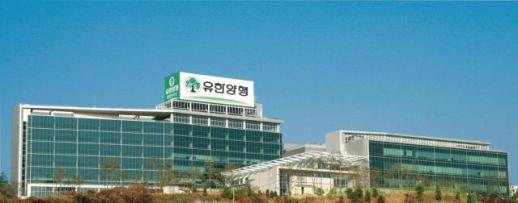 Korean Pharma-Bio Brief: Yuhan Phase 2 CSU Trial, Celltrion ECCO Data, JW Award, HLB MOU Yuhan begins Phase 2 trial of allergy drug Resigercept in CSU patients Yuhan said Feb. 19 it is moving forward with a multinational Phase 2 clinical trial of its allergy-disease treatment Resigercept in patients with chronic spontaneous urticaria (CSU). The company registered key details of the Phase 2 plan on ClinicalTrials.gov, the U.S. National Institutes of Health clinical trial database. The study is designed to evaluate safety and efficacy after 12 weeks of dosing with Resigercept or placebo in 150 CSU patients. The primary endpoint is the change from baseline to week 12 in UAS7, a seven-day urticaria activity score. Resigercept previously received Phase 2 IND approval from South Korea’s Ministry of Food and Drug Safety in October 2025, followed by IND approval from Chinese regulators in February this year. The trial is expected to run in South Korea as well as Japan, China, Bulgaria and Poland. The company expects the last patient to complete the study in July 2027 and aims to produce key results in the fourth quarter of that year. JW Lee Jong Ho Foundation seeks nominees for 2026 JW Seongcheon Award JW Lee Jong Ho Foundation said Feb. 19 it is accepting nominations for the 2026 JW Seongcheon Award. The award was established in 2012 by the late honorary chairman Lee Jong Ho to carry on the “respect for life” philosophy of Seongcheon Lee Gi-seok, the founder of JW Pharmaceutical. It honors medical professionals each year for notable social contributions and service. Nominations will be accepted through March 31. Applicants can download a recommendation form from the foundation’s website and submit it by email, or apply through an online link in the website notice. The foundation said it expanded nomination channels beyond institutional recommendations, allowing patients and fellow medical workers to apply as well. Eligible nominees include licensed medical professionals authorized by the health minister — including physicians, dentists, practitioners of traditional Korean medicine, nurses and midwives — as well as medical organizations. Selection includes document screening, on-site review and a final comprehensive review, with the board making the final decision. Celltrion says post-hoc analysis supports Remsima SC in IBD patients after treatment gaps Celltrion said Feb. 19 it will participate in the 2026 European Crohn’s and Colitis Organisation (ECCO) congress to showcase its clinical experience and portfolio in autoimmune diseases. Celltrion said it will be the only South Korean company operating a standalone promotional booth at ECCO and will hold academic activities including a symposium and poster presentations related to inflammatory bowel disease (IBD) treatments. On the first day of the congress, the company plans to present new results for the first time from a post-hoc analysis of a Phase 3 study of Remsima SC (infliximab; U.S. brand name Zymfentra) in patients with Crohn’s disease or ulcerative colitis. According to the data, most patients who had stopped infliximab intravenous (IV) treatment and then received placebo for at least 16 weeks showed a rapid recovery of clinical response after receiving 240 mg of infliximab subcutaneous (SC). Efficacy and safety remained stable through the 102-week follow-up period. The symposium will focus on “Improving patient care through infliximab SC: clinical review and discussion,” including treatment-optimization strategies based on real-world clinical data. Expert sessions at the booth will cover the clinical meaning of very long-term outcomes after switching from IV to SC, the need for combination therapy with TNF inhibitors in IBD treatment, and implications of switching to infliximab SC based on real-world data from Northern Europe. HLB Life Science signs MOU with Bellabel Bio to develop ingredients from native plants HLB Life Science said Feb. 19 it signed a memorandum of understanding with Bellabel Bio, a company specializing in functional-ingredient development, to strengthen R&D and commercialization competitiveness for functional ingredients based on native plants in South Korea. The companies said the agreement aims to build an end-to-end cooperation framework — from discovering native plant-based materials and verifying efficacy to product development and industrialization — by combining their research capabilities and technical infrastructure. They plan to cooperate on joint R&D projects, academic information sharing related to functional ingredients, technical consulting and personnel exchanges. Research into functional ingredients using native plants has drawn attention as part of efforts to foster a sustainable bio and health care industry. The companies said native plants can also support differentiation strategies in global markets because they are resources adapted to local environments.* This article has been translated by AI. 2026-02-19 15:42:00
 -
 Tens of thousands of liters of jet fuel spill at US bases in Gunsan, Osan SEOUL, February 19 (AJP) - More than 40,000 liters of fighter jet fuel spilled at a U.S. Air Force base in the southwestern city of Gunsan last month, while a similar spill occurred at Osan Air Base in Pyeongtaek, Gyeonggi Province earlier this month, U.S. Forces Korea said on Thursday. According to U.S. Forces Korea (USFK), the U.S. Air Force's 8th Fighter Wing detected a leak of about 41,600 liters of jet fuel from a fuel tank in an accident on Jan. 26 at Gunsan. There was reportedly no risk to the health or safety of nearby residents and communities, as the spill was cleaned up immediately. About 10 days later, a separate fuel spill was reported at Osan Air Base, home to the U.S. Air Force's 51st Fighter Wing. The spill occurred on Feb. 5 inside the base, and cleanup work is still ongoing, with about 870 liters recovered as of last week. Under the Status of Forces Agreement (SOFA), U.S. military bases in South Korea are provided by the South Korean government, which retains ownership of the land and facilities while granting the U.S. military the right to use them. 2026-02-19 15:26:02
 -
 SC First Bank Launches Smart Box Checking Account With Rates Up to 5% SC First Bank said Wednesday it is running a sign-up promotion for its “SC First Smart Box Account,” a demand deposit product offering rates of up to 5%. The account automatically splits the daily balance in half and applies different rates to the Smart Box portion and the Basic Box portion. On the Smart Box portion — half of the balance — customers can earn a preferential rate of 3.0% to 5.0% depending on conditions. The remaining half, the Basic Box portion, earns a base rate of 0.3%. The Smart Box portion starts with a 3.0% preferential rate, with additional boosts of 1.0 percentage point for first-time SC First Bank customers, 0.5 point for a Smart Box balance of at least 100 million won, 0.2 point for marketing consent and 0.3 point for payroll deposits. Interest on the Smart Box portion is compounded daily, with principal and accrued interest added each day and treated as the next day’s principal. To receive the Smart Box rate, the Smart Box portion must be at least 1 million won; there is no maximum limit. For example, a first-time customer who deposits 200 million won would be eligible for up to 5.0% on the Smart Box portion of 100 million won, depending on conditions, while the remaining 100 million won in the Basic Box portion would earn 0.3%. “Smart Box Account is a demand deposit product that automatically manages half of the daily balance at a higher rate,” said Jeong Jae-won, head of SC First Bank’s secured lending and deposit products division. He said it could be “a reasonable choice” for customers looking to manage spare cash in a volatile market. 2026-02-19 15:12:51
 -
 Business and Investing Books Lead Yes24 Bestsellers as KOSPI Rally Continues As the KOSPI surged past the 5,600 mark, business and economics titles continued to dominate bestseller lists. According to Yes24’s overall bestseller rankings for the third week of February, professor Lee Gwang-su’s “Stock Investing for Progressives” ranked No. 1. The comic “The Fragrant Flower Blooms With Dignity 18 (Double Special Edition),” which began preorders last week, placed No. 2. Cho Hyun-sun’s new novel “My Perfect Funeral,” published in January, was No. 3. The 2025 Akutagawa Prize winner “Goethe Said Everything” ranked No. 4, and “Sakamoto Days 25 (Double Special Edition)” was No. 5. Interest in investing stayed strong through the Lunar New Year holiday. Five business and economics books made the overall top 10, extending a trend seen since the start of the year. Sales of “Stock Investing for Progressives” rose 46.4% from the previous week during Feb. 12-18, the holiday period. “KOSPI 10,000: Next Level,” which reached No. 7 after preorders began, drew a majority of purchases from readers in their 50s, at 51.1%. The No. 8 title, “Create 3 Million Won in Monthly Dividends Within Three Years With 10 Million Won,” had a 40.1% purchase share among readers in their 40s. “Park Gomhui’s Pension Wealth Class” (No. 9) and “The Equation of Money” (No. 10) also made the top 10. Comics also saw a surge among younger readers. “The Fragrant Flower Blooms With Dignity 18 (Double Special Edition)” climbed to No. 2 in seven days after preorders opened on Feb. 12, with purchases led by men in their teens (31.1%) and 20s (25.3%). “Sakamoto Days 25 (Double Special Edition)” entered the overall top five in six days after preorders began Feb. 13; women in their 20s accounted for 28.7% of purchases. Long-form fiction maintained steady popularity. Along with “My Perfect Funeral” (No. 3) and “Goethe Said Everything” (No. 4), “Grapefruit Apricot Club” (No. 15), “Contradiction” (No. 17) and “I Said Goodbye” (No. 20) all ranked in the overall top 20. Sales of “My Perfect Funeral” rose 24.4% from the previous week during the holiday period. Women accounted for 73.3% of buyers, including women in their 30s (17.1%) and 40s (28.6%). * This article has been translated by AI. 2026-02-19 15:12:00
 -
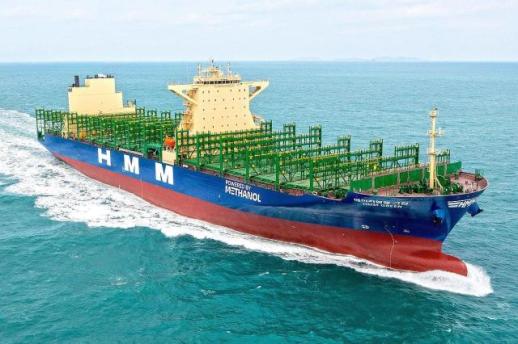 Lee Jae-myung Signals HMM HQ Move to Busan; Charter Change May Reach March Meeting Lee Jae-myung said on social media that South Korea’s largest shipping company, HMM, will move its headquarters to Busan soon, drawing attention to whether the company will put a charter amendment on the agenda for its March shareholders meeting. HMM’s union said it will respond with a hard-line fight if the company tries to amend the charter and push the move without labor-management talks. According to political circles on the 19th, Lee reposted a message on X (formerly Twitter) by Jeon Jae-su and wrote, “Following the relocation of the Ministry of Oceans and Fisheries and the establishment of a maritime court, we will also set up an investment corporation for the Southeast region, and we will soon relocate HMM as well.” Moving HMM’s headquarters from Seoul’s Yeouido district to Busan was one of Lee’s key presidential campaign pledges. HMM’s charter stipulates that its headquarters is in Seoul. To relocate to Busan, the company must first amend its charter through a shareholders meeting. A charter amendment requires a special resolution backed by at least two-thirds of the shareholders present. But government-affiliated institutions including the Korea Ocean Business Corp., Korea Development Bank and the National Pension Service hold about 70% of HMM shares, meaning the government could change the charter and move the headquarters if the item is put to a vote. Attention has now shifted to HMM’s board. The company’s inside and outside directors, including CEO Choi Won-hyuk, were all appointed before the Lee administration took office. Still, because they entered the board with recommendations from major shareholders, they are seen as not fully independent from the influence of the Korea Ocean Business Corp. and Korea Development Bank. Investment banking sources said there are no clear signs yet that HMM’s board plans to place a charter amendment on the agenda for the March meeting. However, the board could still convene in late February or early March and submit the item to align with the Lee administration’s pace. HMM’s onshore union, meanwhile, has signaled strong opposition to a move without its consent. It argues that rushing to relocate the headquarters of the country’s largest shipping company ahead of June local elections, without a thorough review of operational efficiency, makes little sense. About 800 people currently work at HMM’s Yeouido headquarters. With revisions to the Trade Union and Labor Relations Adjustment Act, known as the “Yellow Envelope Act,” set to take effect in March, the possibility of a general strike by HMM’s onshore union also remains open. An industry official said, “If the Lee administration wants to push ahead with relocating HMM’s headquarters to Busan without disruption, it first needs to persuade HMM employees,” adding, “If it tries to move a corporate headquarters without employees’ consent, as in the past attempt to relocate Korea Development Bank to Busan, it will face significant backlash.” 2026-02-19 15:06:00
 -
 South Korea mulls restoring no-fly zone along border SEOUL, February 19 (AJP) - South Korea is considering redesignating a no-fly zone along border areas while ensuring it does not affect military readiness, the Defense Ministry said on Thursday. In a regular media briefing, ministry spokesperson Jeong Bit-na said the ministry is consulting with relevant government agencies and the U.S. side to partially restore the inter-Korean military pact, which was signed in September 2018 to ease military tensions between the two Koreas but was scrapped in 2024 under the previous administration's hardline stance toward the North. The development comes after Unification Minister Chung Dong-young recently expressed regret over drones allegedly sent by civilians from South Korea to the North, while pledging to prevent a recurrence. Restoring such a zone would bar drones from flying within 15 kilometers of the Military Demarcation Line (MDL) in the eastern area and within 10 kilometers in the western area. When asked what types of aircraft or drones would be restricted, Jeong said military drones used for training would be exempt, but other unmanned aerial vehicles would be subject to the ban. But Some already raise concerns that restoring it solely on the South's side could weaken surveillance against the North. 2026-02-19 14:58:23
 -
 EU open to mediate if North Korean POWs in Ukraine seek defection SEOUL, February 19 (AJP) -The European Union expressed readiness to help facilitate the return of North Korean prisoners of war captured in Ukraine and called for closer cooperation with South Korea on security and sanctions, according to a senior EU diplomat Thursday. Olof Skoog, Deputy Secretary General for Political Affairs at the European External Action Service, said the EU was willing to assist if requested on the issue of North Korean soldiers captured by Ukrainian forces while fighting alongside Russia. “Of course, they should not have been there in the first place, because this is an illegal war,” he said, referring to North Korean troops deployed to support Russia. “But I understand the humanitarian concern.” "We'll see how we can be helpful," he said, during a press briefing at the EU delegation office in central Seoul, as he expects the issue to be raised during his meetings in Seoul. Two North Korean soldiers captured in the Kursk region have previously expressed their intention to defect to South Korea through handwritten letters delivered to civic groups. Skoog also criticized Russia’s continued attacks on civilian infrastructure in Ukraine, particularly energy facilities, saying Moscow was attempting to undermine public morale. “Unfortunately, Russia does not seem willing to seriously engage in peace efforts,” he said, adding that the EU, the United States and Ukraine had presented proposals aimed at ending the war. He stressed that the EU would continue pressing Russia through sanctions and diplomatic pressure while increasing support for Ukraine. “This is a peace effort, not a war effort,” he said. “We are asking partners to keep up the pressure on Russia and maintain support for Ukraine.” Skoog said Europe was being forced to take greater responsibility for its own security, partly due to what he described as reduced U.S. commitment to defending the continent. “We are stepping up the defense of our own countries and Europe,” he said, adding that this shift was reshaping EU foreign and security policy. He described the world as entering a period of “geopolitical disorder,” four years into Russia’s full-scale invasion of Ukraine, and said that strengthening partnerships with like-minded countries was now central to Europe’s strategy. Korea, he said, is among the EU’s closest strategic partners in this effort. “We consider Korea one of our most important partners in defending the multilateral system and the rules-based order,” Skoog said. He said discussions in Seoul would cover cooperation in cybersecurity, hybrid threats, maritime security, supply chain resilience and energy security. Europe, he added, is seeking to reduce dependence on external powers for critical resources and infrastructure. “We have seen how energy and raw materials can be weaponized,” he said, citing China and Russia. “We are trying to make ourselves less dependent on such practices.” Skoog also pointed to growing European interest in South Korean defense products as EU member states sharply expand military spending. “Many European countries believe Korea has very impressive capabilities,” he said. “There is strong interest in purchasing arms and defense systems from Korea.” He said the defense market in Europe was “huge” as governments raise budgets and seek advanced technologies not readily available within the continent. While emphasizing that the EU is not a military alliance like NATO, Skoog said Brussels is encouraging member states to “spend more and better” on security. He also rejected concerns that Europe is turning inward economically. “Europe is not protectionist,” he said. “We are negotiating free trade agreements like never before, and most products enter our market with no tariffs.” Skoog said Western sanctions were having a growing impact on Russia’s economy, noting that Moscow was depleting financial reserves. However, he acknowledged that the measures had not yet altered the Kremlin’s strategic calculations. “Sanctions are working, but they are still not enough,” he said. “We need to do more.” He called on partner countries, including South Korea, to help monitor and enforce sanctions more effectively, particularly against Russia’s so-called “shadow fleet” used to evade restrictions on oil and trade. He also urged closer cooperation on implementing United Nations sanctions against North Korea. “We have learned a lot about monitoring and stopping Russia’s shadow fleet,” he said. “There is more we can do together to ensure that North Korea is not helping to feed the Russian war machine.” During his visit, Skoog is scheduled to hold a Korea-EU high-level political dialogue with Vice Foreign Minister Chung Eui-hye and meet with Foreign Minister Cho Hyun and Unification Minister Chung Dong-young to discuss regional security and bilateral cooperation. 2026-02-19 14:44:47
 -
 CLOSE YOUR EYES’ Jang Yeo-jun Diagnosed With Rhabdomyolysis, to Pause Activities Jang Yeo-jun, a member of the group CLOSE YOUR EYES, will temporarily halt activities due to health issues. Agency Encore said in a statement on the 19th that Jang recently visited a hospital after feeling unwell and was diagnosed with rhabdomyolysis following detailed tests. Doctors said he needs inpatient treatment and monitoring. Jang is expected to be hospitalized for about a week and will be unable to attend scheduled activities this week. Encore said further details will be provided through each ticket seller, adding, “We will do our best so the artist can recover quickly with sufficient rest and treatment.” Rhabdomyolysis is a condition in which damaged muscle tissue releases substances into the bloodstream. It can be caused by overexertion, dehydration or excessive exercise, and early treatment and rest are important, according to the agency. 2026-02-19 14:39:30
 -
 South Korea Surveys Public on Raising Palace and Royal Tomb Admission Fees The government is moving to review raising admission fees for royal palaces and tombs, which have been frozen for 20 years. Before deciding whether to raise prices and by how much, it is seeking public input to reduce potential controversy. The Korea Heritage Service said Thursday it is conducting a public survey titled “Public Perception Survey on Realizing Palace and Royal Tomb Admission Fees.” The survey is being run through the Sotong24 website and closes Friday. The survey has six questions, including what respondents consider an appropriate fee level, whether they would still visit if prices rise, and views on the current system that applies the same admission fee to Koreans and foreigners. It also asks whether to keep a differentiated pricing system or adopt a single-fee structure. The questionnaire lays out specific price ranges. For Gyeongbokgung and Changdeokgung, which currently charge 3,000 won, it asks respondents to choose among: 3,000 won (no change); more than 3,000 won to less than 5,000 won; 5,000 won to less than 8,000 won; 8,000 won to less than 10,000 won; or 10,000 won or more. For Deoksugung, Changgyeonggung, Jongmyo Shrine and the Joseon royal tombs, which currently charge 1,000 won, the ranges are: 1,000 won (no change); more than 1,000 won to less than 3,000 won; 3,000 won to less than 5,000 won; 5,000 won to less than 8,000 won; or 8,000 won or more. The survey follows a view that current fees do not reflect inflation and rising maintenance costs. Admission is 3,000 won for Gyeongbokgung and Changdeokgung; 1,000 won each for Deoksugung, Changgyeonggung, Jongmyo and the Joseon royal tombs; and 500 won for Sejong relic sites. By comparison, Buckingham Palace charges 65.7 pounds (about 120,000 won) and the Palace of Versailles charges 25 to 35 euros (about 43,000 to 60,000 won). Calls to raise fees have circulated inside and outside the government. President Lee Jae-myung, in a December briefing on the Korea Heritage Service’s 2026 work plan, noted that taxpayer money is used to manage the sites and said, “It is not substantively fair for a small number of visitors to enjoy the benefits.” While repeatedly stressing the need to adjust fees, he added, “If you just (raise them), people feel upset and disappointed, so it needs to be adjusted after good explanations and a process of persuasion.” Based on the survey results, the government is expected to gauge social consensus on the need for changes and an appropriate level, then draft specific improvements. A recent study suggests some support for fees near 10,000 won. According to public hearing materials for a policy study titled “Policy Research on Measures to Realize Service Admission Fees for Palaces and Tombs,” published by the Korea Heritage Service’s Royal Palaces and Tombs Center and the CST-affiliated Cultural Administration Research Institute, a survey of 2,341 visitors found respondents said they could pay an average of 9,730 won for palaces and Jongmyo Shrine and 8,458 won for the Joseon royal tombs. Separately, as the National Museum of Modern and Contemporary Art has raised admission for some special exhibitions by 60%, the National Museum of Korea — facing a surge in visitors — is also reviewing charging for its permanent exhibition. The museum is developing online reservation and ticketing, on-site ticketing, contactless electronic ticket checks, and mobile tickets using QR codes.* This article has been translated by AI. 2026-02-19 14:21:27