
Journalist

AJP
-
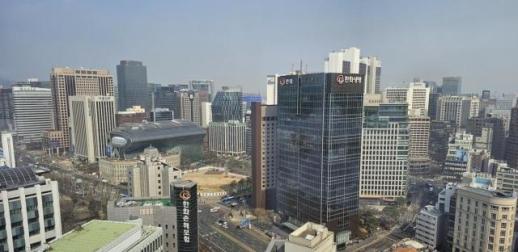 AI boom reshapes South Korea's top 500 companies by sales SEOUL, May 6 (AJP) - South Korea's top 500 companies by sales saw a major reshuffle, with 35 firms newly joining or dropping off the list amid the growing influence of artificial intelligence-related sectors including semiconductors, defense, and batteries. According to a report released Tuesday by corporate tracker CEO Score, electronics giant Samsung Electronics remained No. 1 with 333.61 trillion won (US$230 billion) in sales as of the end of last year, up 10.9 percent from a year earlier and the highest on record. Hyundai Motor ranked second with 186.25 trillion won, followed by its affiliate Kia with 114.14 trillion won. Together, the two surpassed 300 trillion won in combined sales for the first time. Korea Electric Power Corporation was fourth with 97.43 trillion won, leaving the top four unchanged from the previous year. SK hynix moved up two spots to No. 5 after posting 97.15 trillion won in sales, boosted by surging demand for high-bandwidth memory (HBM). CEO Score cited the jump as a clear example of how growth in the AI chip market is reshaping corporate rankings. Defense company Hanwha rose three spots to No. 7 on increased orders, while SK On jumped to No. 9 from No. 60 following mergers among its affiliates. SK Innovation made the biggest leap, climbing 190 places on a sharp increase in dividend income. Sales levels required to make the top 500 also rose, with the minimum threshold climbing by 733 billion won or 5.5 percent, to 1.40 trillion won, while total sales of all 500 companies grew 4.7 percent to 4,305 trillion won. Thirty-five companies newly joined the list, up two from a year earlier. They included firms that grew through mergers and acquisitions, such as Hanwha Hotels & Resorts and Sono International, as well as fast-growing players like Musinsa, a streetwear brand that has become one of South Korea's hottest fashion platforms. Meanwhile, companies in construction, shipping, and aviation sectors dropped off the list. By industry, auto and auto-parts companies made up the largest group with 49 firms, followed by IT and electronics with 39, retailers with 39, services with 38, and petrochemicals and refiners with 37. 2026-05-06 10:55:34
 -
 Trump Revives Tariff Push Using Trade Act Section 301 After Supreme Court Ruling President Donald Trump has revived his tariff drive by turning to Section 301 of U.S. trade law after the Supreme Court blocked his earlier approach. With broad tariffs facing legal limits, the administration is shifting its legal basis to keep up pressure. Inside the United States, industries are split over additional duties, while abroad the European Union has mounted open opposition. The Office of the U.S. Trade Representative said on May 5 (local time) it is holding Section 301 hearings through May 8 on what it calls structural overcapacity. The review covers 16 economies, including China, the EU, South Korea, Japan, Mexico and Vietnam. The process is meant to determine whether their policies and practices burden U.S. industry and could serve as grounds for future tariffs. In February, the U.S. Supreme Court ruled illegal global tariffs Trump imposed under the International Emergency Economic Powers Act. After that, the Trump administration imposed a temporary 10% tariff on imports worldwide and moved to rely on other trade laws, including Section 301. The current hearings are widely seen as a follow-up step. U.S. industry groups have taken opposing positions. The steel industry argued that excess capacity not only in China but also in the EU and South Korea is worsening global oversupply and that additional tariffs are needed. The American Soybean Association warned new tariffs could again disrupt U.S.-China negotiations. The footwear retail industry also opposed the move, saying it could raise consumer-goods prices. The EU responded most forcefully, urging the United States to honor existing trade agreements. After the United States warned it could raise tariffs on EU-made cars and trucks back to 25%, the EU said both sides should return to the 15% level they had agreed on. French President Emmanuel Macron said the bloc should consider, if necessary, its Anti-Coercion Instrument. South Korea, rather than escalating publicly as the EU has, emphasized market principles and restructuring efforts. In the hearing, the South Korean government said “Korea’s industrial structure is based on market-economy principles” and that “voluntary restructuring and institutional support are being carried out even for items with overproduction.” On its trade surplus with the United States, it also cited the complementarity of the two countries’ industries and cooperation on strategic investment.* This article has been translated by AI. 2026-05-06 10:55:14
 -
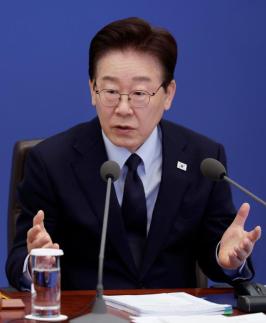 President Lee Calls for Step-by-Step Constitutional Amendments Ahead of Assembly Vote President Lee Jae-myung said Tuesday that pursuing constitutional change in stages, as agreement is reached, is the most realistic approach. Speaking at a Cabinet meeting and emergency economic review session at Cheong Wa Dae, Lee said a National Assembly vote on a constitutional amendment bill is expected to take place Wednesday. Lee said South Korea has undergone major political, economic and social changes since the current Constitution was adopted in 1987, but the Constitution has “stood still” for 40 years. He compared it to clothing that no longer fits a country that has changed and grown, arguing it needs to be altered. He added that under the current Constitution, it is difficult to fully safeguard the country’s present level, people’s living conditions and the nation’s future. At the same time, Lee said a full-scale revision would be burdensome and hard to achieve because of political interests. He urged a practical approach: do what is possible now rather than postponing everything. Lee said it should be self-evident to prevent any attempt to declare martial law illegally — when the country is not under martial law — to maintain power or pursue private interests, and to use the military to impose dictatorship. He questioned who could oppose writing “reasonable controls” on emergency martial law into the Constitution, adding that those who do oppose it are effectively defending illegal martial law. With the anniversary of the May 18 Democratic Uprising approaching, Lee said a tragedy like the Gwangju May 18 incident — in which weapons entrusted to protect the nation were used to kill citizens and destroy constitutional order — must never happen again. He said both ruling and opposition parties have publicly agreed to include the spirit of May 18 and the spirit of the Bu-Ma Democratic Protests in the Constitution’s preamble. He criticized opposition to doing so now, saying it makes no sense when there is a real opportunity to add it to the preamble. Lee also said strengthening local autonomy is something all citizens agree on, and urged political leaders to act on what they have long said in unison by putting it into practice in Wednesday’s vote. * This article has been translated by AI. 2026-05-06 10:54:21
 -
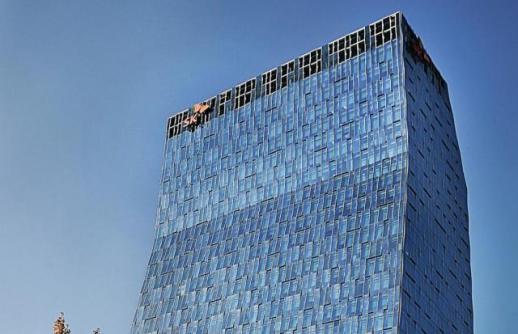 SK Telecom Added to 2026 Dow Jones Sustainability World Index as Korea’s Only Telecom SK Telecom (SKT) has been included in the 2026 Dow Jones Sustainability Index (DJ BIC) World Index, the company said Tuesday. SKT said in a statement on its newsroom site that the index is used by investors as a benchmark because it evaluates companies’ economic, environmental and social performance. The DJSI World, launched in 1999 as a global ESG index, later expanded into regional and thematic indices as the assessment framework evolved. DJ BIC is a revamped version of the former DJSI, reorganized in September 2025, and is published annually by S&P Global. SKT has been listed since its first inclusion in 2008, with the exception of 2020, the company said. The World Index is the top tier, selecting only the top 10% by industry from about 2,500 companies worldwide by market capitalization. Among global telecom companies, Deutsche Telekom, Telecom Italia and Telus have previously been included, SKT said. It added that SKT was the only South Korean telecom company included this year. SKT attributed the latest inclusion to companywide efforts including board-led accountability, ESG management across its supply chain, climate response measures and strengthened industrial safety and health. An SKT official called it the result of steadily advancing the company’s sustainability management system. SKT said it strengthened governance, including recording a 100% board attendance rate in 2024, and expanded ESG inspections, training and consulting for partner companies. It also said it is pursuing a “2050 net-zero” strategy through its ESG committee and has built a carbon management system that includes improving power efficiency and shifting to renewable energy. In safety and health, it said it was named an excellent company for three consecutive years in a shared-growth cooperation program, reinforcing ESG execution. Eom Jong-hwan, head of SK Telecom’s sustainability management office, said the company will continue to advance ESG management “to fulfill the responsibilities that come with being included in the DJ BIC World Index,” and will pursue sustainable growth with customers. * This article has been translated by AI. 2026-05-06 10:48:26
 -
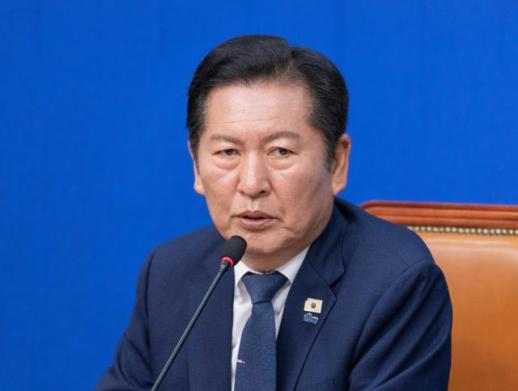 Jung Cheong-rae Says KOSPI 7,300 Reflects Lee Government’s Market, Housing Stability Jung Cheong-rae, leader of the Democratic Party, said Tuesday that the KOSPI’s first-ever move above 7,300 was an “astonishing figure,” attributing the rise to restored confidence in South Korea’s capital markets. Speaking at a party leadership meeting at the National Assembly, Jung said the price-to-book ratio, or PBR, was 0.8 under the Yoon Suk Yeol government but has now climbed above 2.0. He said the market’s rise could be read as a sign that state affairs are stable and “Korea risk” has faded, adding that trust in President Lee Jae-myung’s governance is driving the rally. Jung also pointed to Lee’s repeated Facebook posts expressing a strong commitment to stabilizing home prices, arguing that expectations of a steadier real estate market are lifting stocks. He criticized the People Power Party for what he called ideological attacks on the Lee government, saying it should “change its mind quickly” and join what he described as a period of rising national fortunes. On constitutional revision, Jung urged the party to cooperate with passage of a proposal ahead of a planned vote at the National Assembly plenary session on May 7. The People Power Party has labeled the effort a rushed revision aimed at elections. Jung said constitutional change should ultimately be decided by voters in a national referendum. With the party opposing the measure as an official position, the Democratic Party and National Assembly Speaker Woo Won-shik have called for a free vote. Jung also attacked the People Power Party’s nominations for the June 3 local elections and parliamentary by-elections, calling them “Yoon-again” nominations. He said the party nominated Choo Kyung-ho and Lee Jin-sook, and claimed it would nominate Chung Jin-suk, whom he described as the last chief of staff to Yoon Suk Yeol. “If so, then nominate Yoon Suk Yeol from prison, too,” Jung said. He added, “On Dec. 3, they staged an insurrection with guns and swords. On June 3, are they going to stage an insurrection through nominations?”* This article has been translated by AI. 2026-05-06 10:40:40
 -
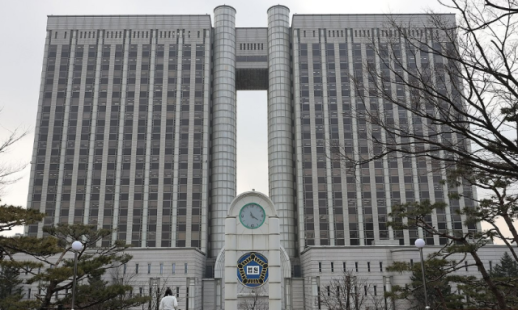 Judge in Kim Keon Hee Appeal Case Found Dead Near Seoul High Court Shin Jong-oh, a presiding judge at the Seoul High Court who oversaw the appeal trial in first lady Kim Keon Hee’s case involving alleged Deutsch Motors stock manipulation and other charges, was found dead early Tuesday. He was 55. According to legal circles, police were dispatched around midnight after Shin’s family reported they could not reach him. Officers found him about 1 a.m. near the court complex in Seocho-dong, Seocho District, Seoul. He was taken to a hospital, where he was pronounced dead. Police said they believe Shin jumped and are investigating the exact circumstances of his death. They said no signs of criminal activity have been found so far. A note was also found at the scene, according to reports. It was said to include an apology and a statement to the effect that he was leaving on his own. It reportedly did not mention Kim’s case or the trial. Shin’s panel, the Seoul High Court’s Criminal Division 15-2, on April 28 sentenced Kim to four years in prison and fined her 50 million won on appeal on charges including violations of the Capital Markets Act. The sentence was sharply increased from the first trial’s prison term of one year and eight months. The appeals court reversed part of the lower court’s not-guilty finding and convicted her on some allegations of involvement in the Deutsch Motors stock manipulation. It also found her guilty of receiving money and valuables from the Unification Church side in connection with alleged solicitation. Shin, who was from Seoul, graduated from Sangmoon High School and Seoul National University’s law department. He passed the 37th bar exam in 1995 and served at courts including the Uijeongbu branch of the Seoul District Court, the Ulsan District Court, the Seoul High Court and the Daegu High Court. ※ If you are struggling with depression or have concerns that are difficult to talk about, or if you know a family member or friend who is having a hard time, you can reach the suicide prevention hotline at 109 for 24-hour counseling by professionals.* This article has been translated by AI. 2026-05-06 10:35:52
 -
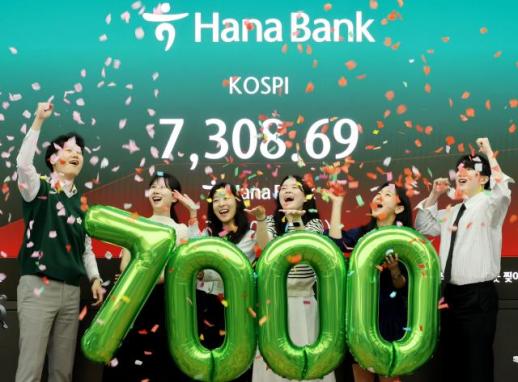 KOSPI rockets above 7,300 in record-breaking chip rally SEOUL, May 06 (AJP) - What once seemed improbable has rapidly become reality as South Korea’s benchmark KOSPI vaulted above the 7,300 mark on Wednesday, just three weeks after reclaiming the 6,000 level as feverish foreign buying turbocharged semiconductor and AI infrastructure stocks despite lingering uncertainty surrounding the Strait of Hormuz crisis. As of 10:09 a.m., the KOSPI stood at 7,325.31, up 5.60 percent from Monday’s close, after surging to an intraday high of 7,338.61 earlier in the session. Foreign buying total 1.25 trillion won, overwhelming local selling. The celebration however was heavily skewed with losers outnumbering gainers by 674 to 204. The move marked the index’s first break above the 7,300 threshold and underscored the extraordinary pace of the rally after the KOSPI first crossed the 6,000 mark on Feb. 25. The Korean won also recovered to near pre-war levels in the 1,450 range against the U.S. dollar. The dollar-won exchange rate fell to 1,457.70 won from 1,462.8 won in the previous session. The KOSPI has remained remarkably resilient despite the Middle East war and South Korea’s heavy dependence on Gulf energy imports for manufacturing and exports. The benchmark first broke above 4,000 in October last year, topped 5,000 in January and crossed 6,000 a month later, before storming into the 7,000 era within barely half a year. The latest leg higher followed another record-setting session on Wall Street overnight, where both the S&P 500 and the Nasdaq Composite closed at all-time highs as easing oil prices and optimism surrounding AI-driven semiconductor demand outweighed lingering geopolitical concerns in the Middle East. Investor sentiment improved after reports indicated that the fragile ceasefire between the United States and Iran was largely holding despite intermittent clashes, easing fears of supply disruptions and pushing oil prices lower. West Texas Intermediate crude futures fell 3.90 percent to settle at $102.27 a barrel. Technology shares led gains in the United States. Intel jumped nearly 13 percent on news of fresh semiconductor supply negotiations with Apple, while the Philadelphia Semiconductor Index soared 4.23 percent. Advanced Micro Devices surged another 15 percent in after-hours trading after posting strong first-quarter earnings. The global semiconductor rally spilled into Seoul, fueling aggressive buying in chip-related shares. Samsung Electronics surged 12.26 percent to 261,000 won, while SK hynix jumped 9.68 percent to 1,587,000 won, with both hitting fresh intraday record highs. SK Square, the largest shareholder of SK hynix, soared 10.80 percent to break above the 1 million won mark. Brokerage firms also rallied sharply on expectations that surging trading activity would boost commissions and earnings. Mirae Asset Securities jumped 15.22 percent to a fresh 52-week high, while Kiwoom Securities advanced 10.06 percent. Automakers and battery-related shares also traded higher, with Hyundai Motor gaining 3.34 percent, Kia rising 1.69 percent and LG Energy Solution adding 0.11 percent. Defense and shipbuilding-related shares, however, lagged behind the broader market rally. Hanwha Aerospace fell 1.30 percent, while HD Hyundai Heavy Industries slipped 4.26 percent. HMM also declined 1.65 percent after a fire broke out aboard one of its cargo vessels anchored near the Strait of Hormuz on Monday, adding another layer of uncertainty to already fragile global shipping routes. Meanwhile, the tech-heavy KOSDAQ bucked the broader rally, slipping 0.90 percent to 1,202.83. 2026-05-06 10:34:14
 -
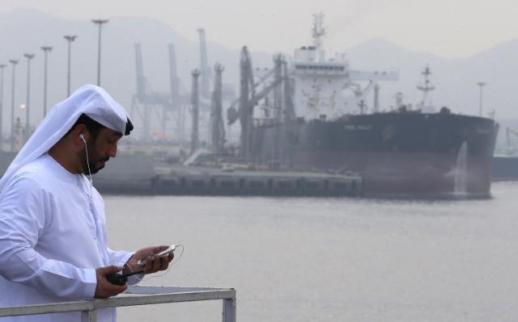 UAE’s Iran Calculus: Strategic Neighbor, Not Simple Enemy The biggest mistake in reading the Middle East is to label any country as simply “on one side.” On the surface, the region can look like a set of clear oppositions: Iran versus anti-Iran, Shiite versus Sunni, Persian versus Arab, revolutionary republic versus Gulf monarchies. But the reality is more complicated, and the United Arab Emirates is a leading example of how calculated today’s regional order has become. In recent days, Iran’s military denied a UAE statement that Iran had attacked the country, while warning it would carry out “destructive retaliation” if military action were launched from UAE territory targeting Iran’s islands, ports or coastline. The UAE said it intercepted Iranian missiles and drones and that a fire broke out at oil facilities at Fujairah port, but Iran denied that as well. The central point is not only the dispute over facts. Iran is signaling, “We didn’t do it,” while also pressing, in effect, that it will not tolerate the UAE becoming a U.S. and Israeli military foothold. Denial serves diplomacy; warning serves deterrence. The UAE’s position is also complex. Even as it says it was attacked, it has not moved toward direct military retaliation. That is not simply fear. The UAE is small but wealthy, and its survival depends on Dubai’s finance, Abu Dhabi’s energy, Fujairah’s port, advanced logistics and tourism, and the confidence of international capital. A full-scale clash with Iran could shake the country’s core. Iran is under economic strain and international sanctions, but it has missiles, drones, the Revolutionary Guard and asymmetric maritime capabilities. If the UAE retaliates once, Iran can respond more forcefully, and insurance premiums, shipping rates, port throughput, oil transport and foreign investment sentiment could all be hit at once. The UAE’s choice is to show anger without widening the conflict — a calculation, not capitulation. At the center of that calculation are the Strait of Hormuz and Fujairah. The strait is a choke point for global energy flows. Iran controls the northern coast, while the UAE operates ports and energy transport networks to the south. Fujairah is a strategic port that can help bypass Hormuz risk, but it is also within range of Iranian missiles and drones. Geography is destiny. From South Korea, the UAE may look like a hub for regional expansion and investment, but it also sits on the front line across from Iran. That is why the UAE can push back against Iran while avoiding crossing the threshold into war. The roots of Iran-UAE tensions include sectarian identity. Iran is a Shiite revolutionary state that, after the 1979 Islamic Revolution, defined itself as more than a conventional nation-state. The UAE and Saudi Arabia are Sunni Gulf monarchies. Iran presents itself as “the center of the axis of resistance” against the West and Zionism, while Gulf monarchies view Iran as a revolutionary exporter that could destabilize their systems. But religion is often the surface; the core is power and security. When Iran warns the UAE not to become a “nest” for the United States and “Zionists,” it may sound like religious denunciation, but it is a military warning. Iran most fears the UAE becoming a base for U.S. and Israeli intelligence, air defense and maritime operations. Historical Persian-Arab tensions also overlap. Iran carries the memory of ancient Persian empires and a long state tradition, while the UAE, independent since 1971, rapidly built global influence through finance, ports, energy, aviation, investment and high-tech city strategies. Facing each other across the Persian Gulf, neither can ignore the other — and neither can fully trust the other. A deeper flashpoint is the dispute over three islands — Abu Musa, Greater Tunb and Lesser Tunb. Iran took control of the islands in 1971 as Britain withdrew from the Gulf, and the UAE still views Iran’s presence as occupation of its territory. The islands are not only a sovereignty issue; they are strategic ground for monitoring the entrance to the Strait of Hormuz. For Iran, they are part of a Gulf defense line. For the UAE, they are a long-standing security thorn. The relationship is therefore a tangle of cooperation and hostility, trade and security, religion and territory, history and present-day interests. That complexity also appears in the UAE’s ties with Saudi Arabia. Both are Sunni Gulf monarchies wary of Iran, but it is a mistake to see the UAE as Saudi Arabia’s junior partner. The UAE’s recent exit from OPEC and OPEC+ underscored that point. The UAE announced on April 28, 2026, that it would withdraw from OPEC and OPEC+, and reports said the withdrawal took effect May 1. The move ended nearly 60 years of OPEC membership. The UAE cited its long-term economic strategy, production capacity and an independent output policy. The decision was not just a shift in oil policy. It was a declaration of independence from a Saudi-centered Gulf energy order. Saudi Arabia is OPEC’s de facto leader, and its oil policy has long set the regional benchmark. But the UAE has grown its capacity and has wanted to sell more oil, while chafing at OPEC production-cut quotas. From the UAE’s perspective, it needs to earn more while it can to fund investments in future cities, artificial intelligence, defense industry, finance, space and renewable energy. Saudi Arabia’s long-term price management and the UAE’s market-share strategy have collided. The withdrawal also came amid the Iran war and Gulf security instability. Reuters reported that the UAE is reviewing its broader multilateral relationships after leaving OPEC but drew a line by saying it does not plan additional withdrawals. That suggests the UAE is recalculating frameworks that do not fit its security and economic interests. If it judges that traditional multilateral bodies such as the Gulf Cooperation Council, the Arab League and OPEC are not sufficient shields against Iranian military pressure, it may be less willing to stake its future on formal solidarity. In that sense, the UAE’s OPEC exit carries three meanings: strategic divergence between Saudi Arabia and the UAE; weakening of an OPEC-centered oil order; and stronger UAE strategic autonomy. The UAE is seeking to build layered networks with the United States, Israel, South Korea, India, China and Europe, positioning itself as a logistics, finance, defense and technology hub. It aims to confront Iran without full-scale war, cooperate with Saudi Arabia without subordination, and work with the United States without total dependence. The UAE is not Iran’s ally, but it is not Iran’s absolute enemy. It is not Saudi Arabia’s subordinate, but it is not a breakaway adversary. It is a U.S. security partner, but not a state that follows U.S. orders alone. It normalized relations with Israel, but has not abandoned its Arab and Islamic identity. The UAE is among the region’s most pragmatic actors, managing principles, pursuing interests, spreading risk and moving early on opportunity. That is where the significance of South Korea-UAE ties grows. The relationship goes beyond trade, linking the Barakah nuclear power plant, energy cooperation, defense cooperation, construction, infrastructure, finance, digital industries, content, artificial intelligence, biotechnology and space. The South Korea-UAE Comprehensive Economic Partnership Agreement, or CEPA, is a mechanism to expand those ties. The agreement was signed May 29, 2024, and the UAE became South Korea’s first CEPA partner in the Arab world. It covers goods, services, investment, energy, supply chains and digital cooperation beyond tariff cuts. South Korea’s Customs Service has also described the UAE CEPA as a way to enter Middle East markets and expand cooperation with resource-rich states. For South Korea, the UAE has particular importance. First, it is an energy security partner. South Korea relies heavily on energy imports, and instability in the Middle East can pressure prices, industrial output, the trade balance and the exchange rate at the same time. Cooperation with the UAE can extend beyond stable oil and gas supplies to hydrogen, renewable energy, nuclear power and carbon reduction. Second, the UAE is a Middle East hub for South Korea’s defense industry. Regional states are focused on modernization amid missile and drone threats from Iran, maritime insecurity and demand for urban air defense. Third, the UAE is a platform for South Korean companies to reach the Middle East, Africa and South Asia through Dubai and Abu Dhabi. But South Korea should not view the UAE only as an attractive market. It is also a point where opportunity and risk meet. If Iran directly pressures the UAE, South Korean construction sites, logistics networks, oil transport, financial transactions and insurance costs could be affected. As South Korea deepens defense and energy cooperation with the UAE, Iran may also be more likely to see South Korea as part of a U.S.-Israel-Gulf camp. South Korea’s Middle East strategy, therefore, should avoid one-sided diplomacy: deepen strategic cooperation with the UAE while keeping diplomatic channels with Iran; recognize Saudi-UAE competition without being drawn into either side’s emotions; and pursue technology cooperation with Israel without ignoring Arab and Islamic public sentiment. The direction for South Korea is clear. It should expand energy security cooperation from oil imports to joint future-energy strategy, building on the Barakah experience to include operations, maintenance, workforce training, small modular reactors, hydrogen production, carbon capture and grid stability. Defense cooperation should move beyond sales toward a broader security ecosystem focused on drones, missiles, maritime unmanned systems, cyberattacks and threats to ports and refineries, while avoiding language that could look like an offensive military alliance. It should also design CEPA-based industrial cooperation as a practical export platform, not just a tariff-cut tool, using the UAE’s role in logistics, finance, exhibitions, certification and investment. And it should prepare for energy market volatility after the UAE’s OPEC exit, strengthening long-term supply contracts, strategic stockpiles, joint storage, oil and gas swaps and emergency logistics routes. Ultimately, the UAE’s approach points to the region’s direction: it clashes with Iran but does not sever ties; cooperates with Saudi Arabia but avoids dependence; leaves OPEC but remains a major energy player; works with the United States while building autonomy; and expands economic cooperation with South Korea while carrying the shadow of war risk. South Korea, the article argues, should read that calculation carefully and pursue a practical strategy that protects its interests in a more complex Middle East. 2026-05-06 10:33:31
 -
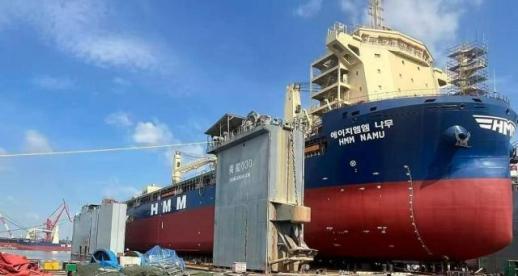 Trump Raises Pressure on Hormuz; Lee Jae-myung Government Urged to Set Clear National-Interest Line Donald Trump is again raising pressure in the Middle East. The United States, targeting Iran, has even raised the possibility of controlling the Strait of Hormuz, stepping up military and diplomatic pressure. The strait is a key route for global crude shipments and is vital for South Korea, since a large share of the Middle Eastern oil it imports passes through it. The situation is spreading beyond a regional dispute into a broader crisis tied to U.S. efforts to check China, a reshaping of global supply chains and energy security. The Lee Jae-myung government has faced a difficult foreign-policy test soon after taking office. Washington is pressing allies to expand their roles, and European countries are accelerating talks on international cooperation to secure maritime safety. Lee has recently been reported to be considering joining an international video conference led by Britain and France on the Strait of Hormuz issue. South Korea’s government, however, must guard against what it calls “pragmatic diplomacy” without clear principles. Pragmatism should mean flexibility anchored in national interests. Without a clear standard, pragmatism can look like indecision. Approaches that either strain ties with the Middle East to avoid displeasing the United States, or heighten concerns about cracks in the U.S.-South Korea alliance by focusing only on Middle East variables, both carry risks. South Korea relies on its alliance with the United States as the core of its security, while its energy structure remains heavily dependent on the Middle East. That makes the Hormuz issue more than a simple choice between sides. It can directly affect international oil prices, the exchange rate, inflation and industrial competitiveness. Markets are already voicing concern that a prolonged Middle East risk could weigh heavily on South Korea’s growth outlook and financial markets. The problem, the article argues, is that South Korea’s diplomacy still appears driven by short-term responses. Each time tensions rise, officials are seen adjusting positions and debating how far to go, without a clear sense of strategic priorities. Standards remain unclear on how much to cooperate if the United States demands support, where to draw the line between military involvement and maritime security assistance, and what role to play between economic sanctions and diplomatic mediation. Japan has long managed Middle East risks as part of its security and energy strategy. China, too, has focused its diplomatic capacity on stabilizing energy supply even under U.S. pressure. By contrast, South Korea is often criticized for seeing its foreign-policy direction shift with each change of government. Diplomacy, the article says, should be a national survival strategy, not an extension of domestic politics. For Lee’s stated goal of “pragmatic diplomacy centered on national interests” to have real meaning, the government must first define what those interests are. National interest is not the same as a government’s political calculations. Managing relations with the United States matters, but so do energy security and industrial stability. Once foreign policy is approached through domestic political camps, national strategy is bound to wobble. The Hormuz situation also highlights structural vulnerabilities in South Korea’s economy, the article says. Its crude import structure still depends heavily on the Middle East, and preparations for maritime logistics risks are not sufficient. That is why discussions on diversifying supply chains, expanding strategic stockpiles and redesigning energy security must move forward together. Diplomatic rhetoric alone cannot prevent a crisis. What is needed now is not a binary debate over whether to side with the United States or the Middle East, but a strategy that clearly defines South Korea’s national interests and follows that standard consistently. Alliances are important, but cannot come ahead of national interests. At the same time, national interest should not be used as a pretext to damage trust in an alliance. Diplomacy ultimately requires balance. Trump’s pressure is likely to intensify. The world is already moving toward a new order in which the economy and security are intertwined. South Korea, the article says, has reached a point where it can no longer hold out with an ambiguous stance. The Lee government must show not just the word “pragmatic,” but the standards by which it will steer the country. 2026-05-06 10:30:18
 -
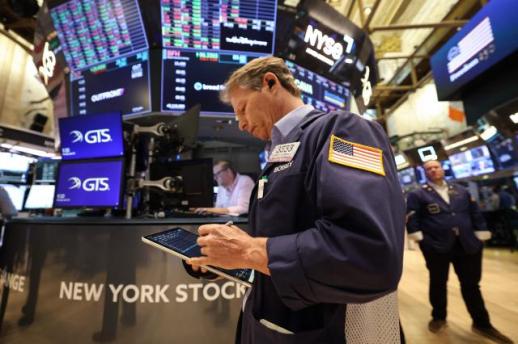 SEC Proposes Ending Quarterly Reporting Requirement, Allowing Semiannual Option U.S. securities regulators have unveiled a proposed rule change that would end the requirement for public companies to file quarterly earnings reports and allow them to opt for semiannual reporting instead. MarketWatch and other outlets reported that the Securities and Exchange Commission said in a statement on May 5 (local time) that it is proposing amendments to rules and forms so listed companies can choose semiannual reports in place of quarterly filings. Under current rules, U.S.-listed companies must file three quarterly reports and one annual report each fiscal year. If adopted, the proposal would let companies choose to file one semiannual report and one annual report instead of quarterly reports. Companies that choose semiannual reporting would file a new form, Form 10-S. The deadline would be set at 40 or 45 days after the end of the first half of the fiscal year, depending on the company’s filing status. The SEC said the changes are intended to give companies and investors flexibility to choose the reporting cycle that best fits their needs. It also said it plans to revise Regulation S-X, which sets financial statement requirements for periodic reports, registration statements and proxy disclosures, to reflect the new semiannual option and simplify existing requirements. SEC Chairman Paul Atkins said in the statement, “The rigidity of SEC rules has limited companies and investors from deciding for themselves which interim reporting cycle is most appropriate,” adding that if the proposal is finalized it would provide greater regulatory flexibility. The proposal will go through a 60-day public comment period after it is published in the Federal Register, and then be put to a vote by the SEC. President Donald Trump said in September last year that companies should not be forced to report quarterly and should report results semiannually. The Wall Street Journal reported in March that the SEC was preparing a related proposal. Some investors have raised concerns that fewer earnings reports could reduce corporate transparency and credibility. The Investment Company Institute said in a statement on May 5 that it is important to strike a balance between reducing unnecessary compliance burdens and maintaining the quality of the disclosure system that supports investor confidence.* This article has been translated by AI. 2026-05-06 10:24:15