
Journalist

AJP
-
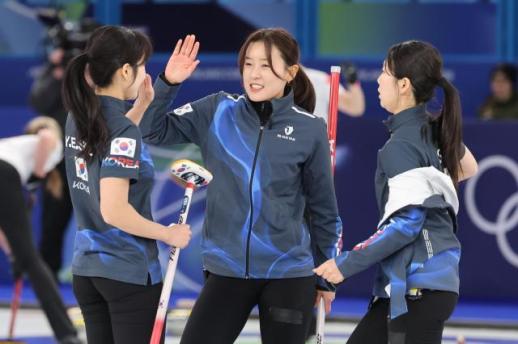 South Korea Women’s Curling Rallies Past China by 1, Moves Into Tie for Second South Korea’s women’s curling team pulled off a late comeback to beat China by one point in Olympic round-robin play, moving into a tie for second place. Gyeonggi Province Office, led by skip Kim Eun-ji with third Kim Min-ji, second Kim Su-ji, lead Seol Ye-eun and fifth Seol Ye-ji, defeated China 10-9 in its sixth round-robin game at the Cortina Curling Olympic Stadium in Cortina d’Ampezzo, Italy, on Tuesday (Korea time). After blanking the first two ends to keep last-stone advantage, South Korea scored three in the third. China answered with two in the fourth, but South Korea broke it open with four in the fifth to lead 7-2. China closed the gap with three in the fifth and a steal of one in the sixth. In the eighth, Kim Su-ji knocked three Chinese stones out of the house, and Kim Min-ji followed with a double takeout to escape trouble. South Korea took one in the eighth, but gave up three in the ninth to fall behind by one entering the 10th. In the final end, Kim Min-ji cleared Chinese stones late, and Kim Eun-ji’s last shot settled in the center of the house for two points and the win. South Korea is scheduled to play world No. 1 Switzerland at 10:05 p.m. Tuesday in its seventh round-robin game. In women’s curling, 10 teams play a round-robin, with the top four advancing to the semifinals. South Korea is tied for second with Switzerland and the United States, behind Sweden at 6-0.* This article has been translated by AI. 2026-02-17 09:15:00
 -
 Naver Pay, Kakao Pay waive fees for small merchants ahead of Lunar New Year Naver Pay and Kakao Pay are offering fee relief for micro and small merchants ahead of the Lunar New Year holiday, aiming to ease costs for small businesses and expand inclusive finance. Naver Pay said Tuesday it is covering 100% of payment fees for eligible micro and small in-store merchants through Feb. 22. The support is applied automatically with no separate application. Fees are refunded for transactions paid with points or money via QR payments or Samsung Pay. The company has previously supported smaller merchants by fully covering in-store payment fees during the COVID-19 period and waiving online payment fees for new merchants. Through its “Fast Settlement” service, it pays out as early as the day after shipping begins, or about three days after payment, to reduce cash-flow pressure. Cumulative early settlements have reached 60 trillion won. It also offers tools such as the merchant platform “N Pay Biz” and the offline terminal “N Pay Connect” to improve operations. Working with financial firms and guarantee institutions, Naver Pay also provides guaranteed loans for small businesses, including merchants using Smart Store or Smart Place or those that have installed N Pay Connect. It said preferential guarantee coverage ratios and interest support help lower financing burdens. Kakao Pay earlier waived 100% of payment fees for micro merchants, both online and offline, for one week from Feb. 9 to 15. It was the company’s fourth holiday-season fee support program for micro merchants. Beyond fee waivers, Kakao Pay said it is supporting offline stores’ digital transition by working with VAN and POS operators to build table QR ordering systems. It also provides store management and CRM solutions to help merchants retain repeat customers. A fintech industry official said, “We hope the fee support ahead of the Lunar New Year holiday will provide practical help to micro and small business owners,” adding, “We will continue to expand win-win financial services.”* This article has been translated by AI. 2026-02-17 09:04:18
 -
 T’way Air Offers 10% Off GetYourGuide Tours and Activities for Passengers T’way Air said Tuesday it is offering discounts to all passengers through Feb. 28 on GetYourGuide, a major platform for tours and activities in Europe. Passengers who book GetYourGuide products through a link on T’way Air’s event page will automatically receive a 10% discount on tours and activities. The page features winter experiences such as husky sledding across snowy mountain areas in Europe and snowmobile rides through snow-covered forests. The promotion also includes discounted admission tickets for attractions worldwide, including in major European cities served by T’way Air such as Paris, Rome, Barcelona and Frankfurt. A T’way Air official said the airline prepared “various benefits” for travelers planning trips with the carrier in the new year and pledged to continue promotions aimed at improving customer convenience while prioritizing safe operations.* This article has been translated by AI. 2026-02-17 09:03:00
 -
 Korea adds bronze, advances relay and curling amid gold drought in Milan SEOUL, February 17 (AJP) -South Korea picked up another bronze medal in short track speed skating, advanced to the men’s relay final and extended its winning streak in women’s curling as Olympic action aired Tuesday morning in Korean time at the Milan-Cortina Winter Olympics. Kim Gil-li won bronze in the women’s 1,000 meters at Milano Ice Skating Arena, earning South Korea’s sixth medal of the Games and her first career Olympic podium. The 21-year-old finished behind Dutch star Xandra Velzeboer and Canada’s Courtney Sarault after a dramatic nine-lap race. Kim stayed near the back early as Sarault set the pace, with Italy’s Arianna Fontana close behind. She surged into third place with four laps remaining and briefly took the lead with two laps left after a bold inside pass. Velzeboer and Sarault, however, regained control in the final stretch, pushing Kim to third. It marked South Korea’s third short track medal in Milan, following Rim Jong-un’s bronze in the men’s 1,000m and Hwang Dae-heon’s silver in the men’s 1,500m. South Korea has now collected 56 Olympic short track medals, the most by any country. Two-time Olympic champion Choi Min-jeong missed the final after placing fourth in her semifinal and finished third in Final B. Men’s relay books final berth South Korea advanced to the final of the men’s 5,000m relay for the first time in 20 years. The quartet of Lee June-seo, Rim, Lee Jeong-min, and Shin Dong-min won Heat 2 of the semifinals ahead of the Netherlands. Canada and Italy advanced from Heat 1, with the final scheduled for Friday. After staying near the back early in the 45-lap race, South Korea surged late. Lee Jeong-min’s decisive inside pass with six laps remaining set up the winning move, and Rim anchored the team by holding off Dutch star Jens van 't Wout. “We executed more than 90 percent of our race plan,” Lee June-seo said. “Everyone played their role.” Women’s curling beats China, improves semifinal hopes South Korea’s women’s curling team also boosted its medal prospects with a dramatic win over China. Led by skip Kim Eun-ji, with third Kim Min-ji, second Kim Su-ji, lead Seol Ye-eun, and fifth Seol Ye-ji, “Team 5G” edged China 10-9 in their sixth round-robin match Tuesday morning (Korean time) at the Cortina Curling Olympic Stadium. The victory extended South Korea’s winning streak to two matches and lifted the team to a 4-2 record, tied for second place with Switzerland and the United States. South Korea had revived its campaign two days earlier by beating longtime rival Japan 7-5 and followed up with another close win over China. Ten teams are competing in a round-robin format, with the top four advancing to the knockout stage. “Team 5G,” which went undefeated at the 2025 Harbin Asian Winter Games, is aiming for its first Olympic medal since “Team Kim” won silver at the 2018 PyeongChang Games. South Korea face Switzerland at 10:05 p.m. Tuesday (Korea time). Despite steady medal production, South Korea remains without a short track gold in Italy. With five medal events completed and four remaining, the country has earned one silver and two bronze medals in short track. No Korean skater remains in the men’s 500m after Rim and Hwang were eliminated. South Korea will next compete in the men’s 5,000m relay final, the women’s 3,000m relay final, and the women’s 1,500m, where Kim Gil-li and Choi Min-jeong are still in contention. South Korea has won at least two short track gold medals at every Olympics since 1992, when the sport became a medal event. That streak is now in jeopardy. At most Winter Games, short track has driven South Korea’s medal count. This year, however, half of the country’s six medals have come from snowboarding, including its lone gold so far by Choi Gaon in the women’s halfpipe. 2026-02-17 08:11:10
 -
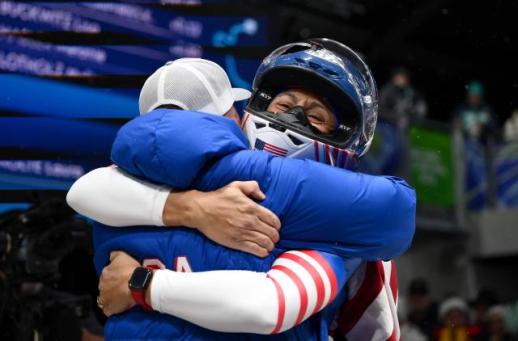 Elana Meyers Taylor Wins Olympic Women’s Monobob Gold at Milan-Cortina Elana Meyers Taylor, a 41-year-old mother raising two children with disabilities, won her first Olympic gold medal in her fifth Games appearance. Taylor posted 59.51 seconds in the fourth and final run of the women’s monobob on Feb. 17 (Korea time) at the Cortina Sliding Center in Cortina d’Ampezzo, Italy. Her four-run total of 3:57.93 edged Germany’s Laura Nolte (3:57.97) by 0.04 seconds for the title at the 2026 Milan-Cortina Winter Olympics. Born in October 1984, Taylor won three silver medals and two bronze medals from the 2010 Vancouver Winter Olympics through the 2022 Beijing Winter Olympics. This time, she finally stood atop the Olympic podium. Taylor has continued competing after giving birth to Nico, who is deaf, in 2020, and Noah, who has Down syndrome, in 2022. Ahead of the Games, she said, “There is light at the end of the tunnel,” adding, “I want to give hope to many parents raising children with disabilities.”* This article has been translated by AI. 2026-02-17 06:51:00
 -
 South Korea Women’s Curling Beats China for Second Straight Win at Milan-Cortina Games South Korea’s women’s curling team beat China 10-9 for its second straight win, improving its chances of reaching the semifinals at the 2026 Milan-Cortina Winter Olympics. The South Korean team — skip Kim Eun-ji, third Kim Min-ji, second Kim Su-ji, lead Seol Ye-eun and alternate Seol Ye-ji — defeated China in its sixth round-robin game at the Curling Olympic Stadium in Cortina, Italy, on Feb. 17 (Korea time). After edging rival Japan 7-5 two days earlier, South Korea moved to 4-2 and into a three-way tie for second with Switzerland and the United States. The women’s event features 10 teams playing a full round robin, with the top four advancing to the medal round. Known as “Team 5G,” the squad is chasing an Olympic medal for the first time since “Team Kim” won silver at the 2018 Pyeongchang Games. Team 5G also went 10-0 to win gold at the 2025 Harbin Asian Winter Games. South Korea controlled the early stages. After a scoreless first two ends, it scored three in the third. China answered with two in the fourth, but South Korea capitalized on a Chinese mistake in the fifth, when Kim Eun-ji’s final stone helped produce four points for a 7-2 lead. The match swung late. South Korea gave up three in the sixth and allowed a steal in the seventh to see its lead cut to 7-6. It managed only one point in the eighth, then surrendered three in the ninth to fall behind 9-8. In the 10th, Kim Eun-ji delivered a precise final shot to set up two scoring stones in the house, sealing a 10-9 comeback win. South Korea next plays Switzerland, also tied for second, at 10:05 p.m. on Feb. 17 (Korea time) in its seventh round-robin game.* This article has been translated by AI. 2026-02-17 06:21:00
 -
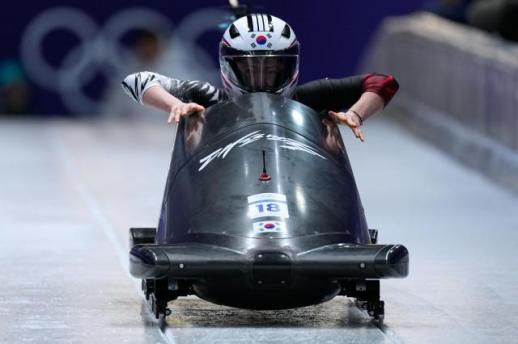 South Korea’s Kim Yuran finishes 22nd in Olympic women’s monobob, misses final run Kim Yuran finished 22nd in the women’s monobob at the Milan-Cortina d’Ampezzo Winter Olympics, failing to advance to the fourth and final run. Kim posted 1 minute 00.51 seconds in the third run on Feb. 16 (local time) at the Cortina Sliding Center in Cortina d’Ampezzo, Italy. Her combined time for runs 1-3 was 3:02.37, placing her 22nd among 24 athletes and outside the top 20 who qualified for run 4. She was 23rd after the first two runs with a combined 2:01.86 and moved up one spot in the third run, but did not break into the top 20. Kim placed 14th in the women’s two-woman bobsleigh at the 2018 PyeongChang Winter Olympics. At the 2022 Beijing Games, she became the first South Korean to compete in the newly added monobob and finished 18th.* This article has been translated by AI. 2026-02-17 05:30:00
 -
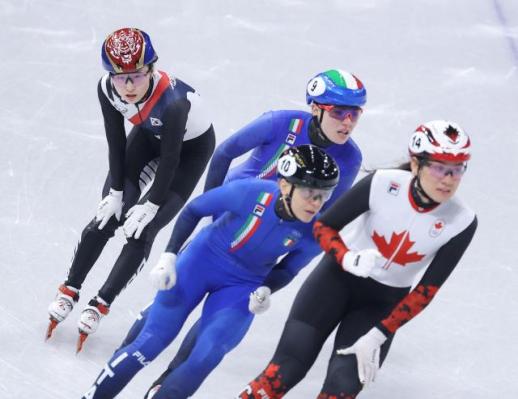 South Korea Faces Short Track Gold Drought at Milan-Cortina Olympics; Women’s 1,500 Last Individual Chance South Korea’s short track team, long a reliable source of Olympic gold, is facing growing concern that it could finish the Games without a top podium in the sport. Through Feb. 16 (Korea time), South Korea has won one silver and two bronze medals across six short track events at the 2026 Milan-Cortina d’Ampezzo Winter Olympics. Lim Jong-eon opened the medal count with bronze in the men’s 1,000 meters. Hwang Dae-heon added silver in the men’s 1,500, and Kim Gil-li took bronze in the women’s 1,000, giving South Korea three medals overall. But a gold medal has yet to come. With only three events remaining — the women’s 1,500-meter individual race and the men’s and women’s relay events — there is speculation South Korea may not surpass the two golds it won at the Beijing Games four years ago. The men’s team has already completed its individual events without winning a gold. It is the third time South Korea’s men have gone without an Olympic individual gold, after the 2002 Salt Lake City Games and the 2014 Sochi Games. The women’s team is also under pressure. After missing gold in the 500 and 1,000, only the 1,500 remains in the individual program. If South Korea fails to win that race as well, it would mark the first time in Olympic history that the country wins no gold medals in both men’s and women’s individual short track events. The absence of a dominant star has added to the challenge. Choi Min-jeong, the team’s ace who defended South Korea’s pride with back-to-back Olympic golds at Pyeongchang 2018 and Beijing 2022, has struggled in individual events at this Olympics. As South Korea has stumbled, rivals have surged. The Netherlands, once known mainly for speed skating, has made rapid gains in short track and has broken South Korea’s hold on the top step. The Dutch have swept up four gold medals at these Games, setting a new national record for most Olympic golds in the sport.* This article has been translated by AI. 2026-02-17 04:51:00
 -
 Milano 2026: Kim Gil-li Wins Bronze in Women’s 1,000 Meters; JTBC Apologizes for Flag Graphic JTBC issues official apology for airing Japanese flag graphic JTBC, which is exclusively broadcasting the 2026 Milano-Cortina Winter Olympics, issued an official apology after a Japanese flag graphic appeared during a South Korea-Japan women’s curling match. In a statement posted on its website on the 16th, JTBC said that at about 11:23 p.m. on the 15th, a Japanese national flag graphic was briefly shown on an advertising screen during the process of airing a mid-broadcast commercial break in the live curling telecast. The network said it was sorry for the inconvenience caused by a production error and pledged stricter checks and management to prevent a repeat. The incident occurred during live coverage of the women’s curling round-robin fifth match between South Korea and Japan at the Cortina curling stadium in Italy. After the fifth end ended, an unrelated Japanese flag graphic aired for about 10 seconds during the commercial break. Seoul Mayor Oh Se-hoon visits air defense unit ahead of Lunar New Year Seoul Mayor Oh Se-hoon visited an air defense position of the 1st Air Defense Brigade on the 16th, a day before Lunar New Year, to encourage service members defending the capital’s airspace. He received a briefing on the unit and had lunch with troops. “With you here, Seoul residents can go about their daily lives with peace of mind,” Oh said. “Because Seoul has many key national infrastructure facilities, maintain a constant state of readiness and serve with pride in the mission of protecting the capital.” Oh later boarded and inspected the surface-to-air guided weapon system known as the “Chunma,” then took commemorative photos with service members. Kyiv mayor warns Ukraine’s survival as an independent state is not guaranteed Kyiv Mayor Vitali Klitschko warned in an interview with the Financial Times that he cannot guarantee Ukraine will remain an independent state as Russia continues attacks on infrastructure. He said the capital is facing a near-collapse crisis and residents are under severe pressure to survive during a harsh winter. According to AFP, heating has been cut to about 1,600 buildings in the capital, and disruptions to electricity and heat are spreading amid cold below minus 20 degrees Celsius. Even when damaged energy facilities are repaired, additional airstrikes soon knock them out again, he said, adding that Europe’s support alone is not enough to respond. Klitschko said he has had disagreements with President Volodymyr Zelenskyy over crisis response, but stressed unity is needed against attacks aimed at fueling internal instability. Meanwhile, the U.S. administration led by Donald Trump is pressing for talks to end the war, including territorial compromise and early elections, as the conflict moves into a phase combining military operations and negotiations. * This article has been translated by AI. 2026-02-16 21:48:00
 -
 Kim Jin-su duo sits 12th after two runs in Olympic two-man bobsled; Seok Young-jin 19th South Korea’s men’s two-man bobsled teams led by Kim Jin-su and Seok Young-jin were outside the top 10 after the first two heats at the 2026 Milan-Cortina Winter Olympics. Kim, with brakeman Kim Hyeong-geun (both from Gangwon Provincial Office), was 12th among 26 teams with a combined time of 1 minute, 51.69 seconds in heats 1 and 2 on Feb. 16 at the Cortina Sliding Center in Cortina d’Ampezzo, Italy. The Kim team had raised expectations by finishing fourth in the season’s first World Cup in November on the same Cortina track that is hosting the Olympic races. They were fifth in the first heat in 55.53 seconds, but slipped to 15th in the second heat with 56.16, dropping in the overall standings. Seok, with brakeman Chae Byeong-do (Catholic Kwandong University), was 19th in 1:52.50. Germany swept the top three spots after the first two heats. Johannes Lochner and Georg Fleischhauer led in 1:49.90, followed by Francesco Friedrich and Alexander Schueller in 1:50.70, and Adam Ammour and Alexander Schaller in 1:51.14. Heats 3 and 4, which will decide the final standings, are scheduled for 3 a.m. on Feb. 18 (Korea time).* This article has been translated by AI. 2026-02-16 21:30:00