

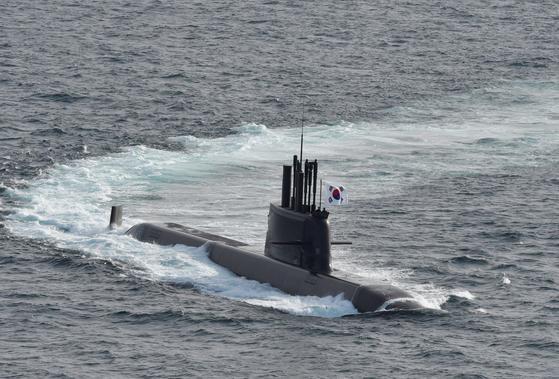
According to military sources on Tuesday, the deployment will mark the first time a South Korean submarine operates in Canadian waters. The vessel is scheduled to depart in March and cross the Pacific ahead of the drill.
The exercise comes as Canada advances its Canadian Patrol Submarine Project, a major procurement aimed at replacing its aging fleet. Ottawa is expected to choose between South Korea and Germany as early as the first half of the year.
Defense officials say the timing gives Seoul an opportunity to showcase the operational range and reliability of its domestically built submarines.
“Simply reaching Canadian waters requires long-distance deployment and sustained operations,” a South Korean naval official said. “This is what we call blue-water operational capability. The voyage itself demonstrates the vessel’s reliability.”
“The Canadian side will be able to verify firsthand that our submarines can operate globally,” the official added.
Canada is seeking to replace its current fleet and is expected to receive final bids by March, with a preferred bidder likely to be selected in the following months. Germany is widely regarded as South Korea’s main competitor.
Military officials view Canada’s agreement to conduct its first joint naval exercise with South Korea as a sign of growing interest in Korean platforms. Discussions began during an October visit to Seoul by Angus Topshee, commander of the Royal Canadian Navy.
“The exercise was discussed as part of broader efforts to strengthen naval cooperation,” a South Korean official said. “It is also true that the submarine being deployed, or its follow-on model, is one Canada has shown interest in.”
While officials stopped short of explicitly linking the drill to the procurement contest, they acknowledged that the timing was strategically favorable.
“Canada judged that this was a mutually beneficial moment, given South Korea’s operation of a proven 3,000-ton-class submarine fleet,” the official said.
Military-backed support for industry bid
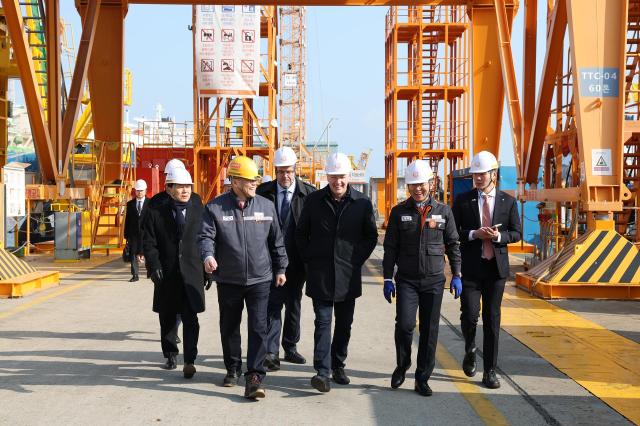
Officials said there have been no direct bid-related negotiations involving shipbuilders, including HD Hyundai Heavy Industries and Hanwha Ocean. However, the South Korean Navy is providing indirect support by highlighting its training, operations and maintenance systems to Canadian officials.
When senior Canadian decision-makers visit South Korea, the Navy demonstrates its training infrastructure and maintenance facilities built around its submarine fleet. Through briefings and site tours, officials aim to reassure Ottawa that Seoul can offer not only hardware, but also a comprehensive package of training, logistics and lifecycle support.
As Seoul and Ottawa prepare for their first joint submarine exercise in Canadian waters, attention is now focused on whether this high-profile operational “road test” will give South Korea the edge it needs to outmaneuver its German rival and secure one of the largest defense contracts in its history.

Copyright ⓒ Aju Press All rights reserved.
