
Journalist

AJP
-
 Samsung Heavy deepens Gulf ties with Qatar shipyard agreement SEOUL, February 04 (AJP) - Samsung Heavy Industries said Wednesday it has signed sign an agreement with Qatar Shipyard Technology Solutions (QSTS), a state-owned shipyard operator, to explore joint projects involving eco-friendly technologies. QSTS, located in eastern Qatar, is a subsidiary of Nakilat, the country’s state-owned shipping company and the world’s largest operator of liquefied natural gas (LNG) carriers. The yard has completed repair work on roughly 2,000 vessels, including LNG carriers, Samsung Heavy said. Under the agreement, the two companies will initially cooperate in ship retrofits and after-market services. They will also explore joint projects involving eco-friendly technologies, including decarbonization and energy-saving systems, onboard carbon-capture equipment, small offshore projects and newbuilds of specialized vessels. “Business cooperation with QSTS will be an important milestone in expanding our global operations,” Namgung Geumseong, vice president and head of Samsung Heavy’s shipyard business, said in a press release. “We aim to further strengthen our competitiveness through active global partnerships.” The MOU was signed on the sidelines of LNG 2026, an industry conference currently being held in Doha. Samsung Heavy Chief Executive Choi Seong-an and other executives attending the event also held discussions on potential cooperation with global energy companies, including Qatar LNG and ExxonMobil. * This article, published by Aju Business Daily, was translated by AI and edited by AJP. 2026-02-04 09:39:02
 -
 Singer Bada Offers Support to DJ Koo After Death of Actress Barbie Hsu Singer Bada shared a message of support for Koo Jun-yup. On Monday, the S.E.S member posted on social media, “I can’t begin to understand that pain, but I’ll pray with you in my heart,” and shared a video showing Koo mourning the late Seo Hee-won. Koo and Hsu, also known as Barbie Hsu, dated in the late 1990s, then reunited more than 20 years later and married in 2022. Hsu died Feb. 3 last year at age 48 after catching the flu during a trip to Japan and developing pneumonia complications. Taiwan’s Central News Agency and other local outlets, along with Yonhap News Agency, reported Monday that Koo attended an unveiling ceremony the previous day for a statue honoring Hsu at the Jinbaoshan cemetery in New Taipei City, along with her mother, younger sibling, relatives and friends. Kang Won-rae, who performed with Koo in the group Clon, attended in a wheelchair. Choi Si-won of Super Junior was also there.* This article has been translated by AI. 2026-02-04 09:39:00
 -
 Buddhist Temple-Style King Dumplings Go on Sale Online and at E-Mart DobanHC Co., the business holding company of South Korea’s Jogye Order of Korean Buddhism, has partnered with food maker CJ CheilJedang to release a limited run of “temple-style king dumplings.” DobanHC said on Feb. 4 that the dumplings are filled only with selected plant-based ingredients — including cabbage, Korean zucchini and mung bean sprouts — to boost texture and deliver a clean, nutty flavor from the ingredients themselves. The company said it strictly followed traditional Buddhist monastic dietary principles, using no meat and none of the “five pungent vegetables” — garlic, green onion, chives, wild chives and asafoetida. It said the product is aimed at consumers tired of strongly seasoned foods, offering what it described as a more comfortable dining option. The dumplings were released as part of a recent CJ CheilJedang chef collection collaboration. The product comes in a 1.05-kilogram large-size package for home use. It will be sold at all E-Mart stores and E-Mart Everyday locations, and will also be available nationwide through DobanHC’s online store, Seungso Mall, and CJ CheilJedang’s online store, CJ The Market. Temple-food specialist Park Seong Hui, a professor at Hyejeon College, will host a “temple-style king dumplings tasting demonstration” at 2 p.m. on Feb. 6 at Seungso on the first floor of the Jogye Order’s Dharma Propagation Hall in Jongno-gu, Seoul. Park will present cooking methods intended to bring out the dumplings’ mild flavor and lead a live cooking and tasting session so attendees can experience the appeal of “K-temple food” with all five senses. 2026-02-04 09:33:00
 -
 BYD Korea Opens Jeonju Service Center, Targets 26 Sites by Year-End 비야디(BYD)코리아는 4일 BYD 오토 전주 서비스센터를 열고 전북 지역 전기차 고객을 위한 전문 애프터세일즈 서비스를 강화한다고 밝혔다. BYD 승용 부문의 17번째 서비스 네트워크인 전주 서비스센터는 전주를 포함해 익산, 군산, 김제, 완주 등 전북 전역 고객이 보다 안정적이고 체계적인 전기차 정비 서비스를 받을 수 있도록 마련된 통합 거점이다. 전주 도심과 주요 간선도로에서 접근이 쉬운 점도 특징이라고 BYD코리아는 설명했다. 이 센터는 1월에 문을 연 전주 전시장과 함께 운영되는 통합형 시설로, 전시(Showroom)·서비스(Service)·부품(Spare parts)을 한 공간에서 제공하는 3S 체계로 운영된다. BYD코리아는 전시장과의 연계를 통해 이력 관리와 고객 응대의 연속성을 강화해 같은 공간에서 차량 관리 서비스를 받을 수 있다고 밝혔다. 운영은 BYD코리아 공식 딜러사 비전모빌리티가 맡는다. 전주 서비스센터는 대기 시간을 줄이기 위해 예약 기반으로 운영되며, BYD코리아의 정규 테크니컬 교육 과정을 이수한 전문 테크니션이 상주해 BYD 전기차에 맞춘 진단과 정비를 수행한다고 회사는 밝혔다. BYD코리아는 현재 17개인 서비스 네트워크를 연말까지 26개로 늘리는 것을 목표로 하고 있다. 회사는 양적 확대뿐 아니라 전국 어느 지점에서나 일관된 수준의 서비스를 제공할 수 있도록 테크니컬 인력 육성 교육 강화 등 품질 개선에도 나설 계획이라고 밝혔다.* This article has been translated by AI. 2026-02-04 09:30:18
 -
 Actor Kim Woo Bin Named Polestar Brand Ambassador Swedish electric-vehicle brand Polestar said Tuesday it has selected actor Kim Woo Bin as a brand ambassador. Under the partnership, Kim will experience Polestar products and the brand firsthand and take part in a range of online and in-person activities, including brand events and digital content, to broaden engagement with Polestar customers. Polestar Korea said it focused on Kim’s polished, trustworthy image, saying it aligns with Polestar’s core values of Scandinavian design, performance and sustainability. The company said his emphasis on restrained aesthetics and authenticity is expected to help deliver Polestar’s brand message. Ham Jong Sung, CEO of Polestar Korea, said, “Actor Kim Woo Bin has been loved for a long time based on his distinct style and trustworthy image,” adding that he is expected to convey Polestar’s values of design, performance and sustainability to customers “more sincerely.” Kim said, “I’m happy to be with Polestar. I want to share the brand’s appeal honestly and sincerely.” * This article has been translated by AI. 2026-02-04 09:30:00
 -
 National Library of Korea to Expand AI Training Data and Public Access The National Library of Korea said Tuesday it has released its “2026 key work plan” to modernize national knowledge and information services using artificial intelligence and to move toward a next-generation library model. A central task is building and opening high-quality training data that underpin the AI industry. The library said it will continue compiling AI training text data, focusing on materials whose copyright has expired or been cleared, and provide them to the Ministry of Science and ICT’s “independent AI foundation model project.” The project refers to a general-purpose AI model trained and operated directly using domestic technology and resources. The library also plans to open a “Shared Bookshelf” section on its website to make the data available to the public, aiming to support AI technology development and innovation in the K-content industry. To strengthen the foundation for South Korea’s knowledge growth, the library set a goal of comprehensively collecting about 330,000 print items, including books and nonbook materials, and about 400,000 digital items, including e-books and K-content. It said it will use tools such as crowdfunding platforms to survey independent publications and actively identify unstructured publications such as conference materials from international events. To expand overseas Korea-related holdings, the library said it will broaden the countries targeted for rare-book investigations to include the United Kingdom and Germany, and plans to secure about 88,000 pages of Korea-related records held by the U.S. National Archives and Records Administration. The library also said it will significantly expand AI literacy education so more people can benefit from AI. It plans to increase AI-related offerings from seven courses held 25 times to 10 courses held 32 times, and to subdivide programs into step-by-step tailored training and AI-based creative education. For children and teenagers, it plans hands-on programs that combine new technology and reading, including creative programs using AI platforms, an AI digital ethics experience center with interactive content to build digital ethics awareness, and expanded augmented reality musical content. For academic researchers, the library said it will run training programs on using AI models and data. It also said a research support program for K-content creators, piloted last year, will be launched in earnest this year, aiming to create a virtuous cycle in which the library’s knowledge resources and AI technology become sources for new creative works. The library said it will also host a “National Librarians Meeting” in connection with the “2026 World Library and Information Congress,” set to be held in Busan in August 2026. It said the international meeting, expected to bring together heads of national libraries from about 100 countries, will help lead global discussions on libraries’ roles and vision in the AI era and raise the profile of South Korean libraries. Kim Hee Seop, director of the National Library of Korea, said the library will “faithfully serve as a repository of national knowledge and information” while becoming “an innovative institution leading the era of AI transformation,” so that all people can fully enjoy knowledge and culture.* This article has been translated by AI. 2026-02-04 09:18:00
 -
 Seoul, Washington reaffirm alliance including cooperation on nuclear subs, shipbuilding SEOUL, February 4 (AJP) - South Korea and the U.S. agreed to continue close cooperation to strengthen the bilateral alliance, the U.S. Department of State said on Tuesday. In a press release, the department's principal deputy spokesperson Tommy Pigott said South Korean Foreign Minister Cho Hyun and U.S. Secretary of State Marco Rubio met in Washington, D.C., where they "discussed ways to advance" the bilateral alliance. Pigott added that the two "agreed to continue to work closely on civil nuclear power, nuclear-powered submarines, shipbuilding, and increasing investments to rebuild critical U.S. industries." Rubio, expressing his gratitude, was also quoted as saying that South Korea has played an important role in "building secure, resilient, and diversified critical minerals supply chains." Cho's talks with Rubio came after U.S. President Donald Trump warned last Monday that he would raise reciprocal tariffs on Seoul from 15 percent back to 25 percent, citing delays in implementing the broader deal, which includes Seoul's massive investment pledges to the U.S. Before returning home, Cho is set to attend a U.S.-led ministerial meeting on critical minerals on Wednesday, which brings together G7 countries and other mineral-rich nations to discuss ways to stabilize and diversify supply chains, as the U.S. ramps up efforts to reduce its reliance on Chinese critical minerals after China's restrictions on exports of rare earth materials. 2026-02-04 09:00:11
 -
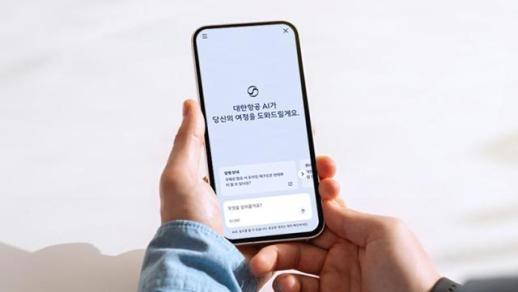 Korean Air Launches Generative AI Chatbot for Customer Service Korean Air said Tuesday it has launched the “Korean Air AI Chatbot,” adding generative artificial intelligence to its online customer-service chatbot. The chatbot is built on generative AI trained on a large volume of data, including airline rules, the company said. Customers can type questions in everyday language — for example, asking how many checked bags are allowed for an economy-class trip from Incheon to Paris — and receive an answer tailored to the request. To improve reliability, Korean Air said the chatbot provides the source of its answers along with links to related pages. The airline also said it has completed an AI-focused database designed to minimize “hallucinations” and deliver verified responses. The service is available on Korean Air’s official website and mobile app. Korean Air expanded language support from four — Korean, English, simplified Chinese and Japanese — to 13 by adding traditional Chinese, French, Russian, German, Portuguese, Spanish, Italian, Thai and Vietnamese. If users need more help beyond the chatbot’s response, they can type “connect to an agent” to move directly from the chatbot screen to a customer-service representative, the airline said. Agent support is available only in Korean and English. Korean Air said it plans to add features in stages based on customer experience, expanding beyond information such as airline policies to functions including ticket purchases and reservation lookups. “With the AI chatbot service, customers can experience more accurate and faster support, as well as convenient and smart service for global customers,” a Korean Air official said.* This article has been translated by AI. 2026-02-04 09:00:00
 -
 Hyundai, Kia Post Record January U.S. Sales on Hybrid and SUV Demand Hyundai Motor and Kia said they set new January sales records in the U.S. market. Hyundai Motor’s U.S. unit said Tuesday that it sold 55,624 vehicles in January, up 2% from 54,503 a year earlier, marking its best-ever January. The automaker said results were driven by surging demand for hybrid electric vehicles, growth in electrified models and continued strength in its core SUV lineup, which accounted for 77% of total sales. A Hyundai official said the Santa Fe and the all-new Palisade stood out, helping the company strengthen its lead in the family SUV segment. Randy Parker, CEO of Hyundai Motor North America, said the company and its dealers met customer demand despite challenging weather across the United States, delivering a 2% year-over-year increase in total sales. He said hybrid demand rose more than 60% and led January performance. Kia’s U.S. unit also reported a record January, saying it sold 64,502 vehicles, up 13% from 57,007 a year earlier. Kia said the Carnival (up 60%), Sportage (up 23%), K5 (up 8%), Telluride (up 7%), Seltos (up 6%) and K4 (up 2%) each posted best-ever sales for the month. It said sales of electrified models rose 45% and SUV sales increased 14%. Eric Watson, vice president of sales for Kia America, said the record January followed three straight years of annual sales records and showed the company’s growth is continuing. He said Kia is drawing attention this year with a new Telluride and is expanding customer choice by adding hybrid models.* This article has been translated by AI. 2026-02-04 08:57:00
 -
 Min Hee-jin Teases Feb. 5 Announcement as OK Records Launches Amid NewJeans Dispute Min Hee-jin, who was removed as CEO amid a management dispute with HYBE, has signaled an independent move tied to her recently established entertainment agency, OK. On Feb. 3, Min posted a photo on social media with the message, “20260205 10AM Coming soon.” The image shows a satin shirt bearing the OK Records logo. It also includes the label’s website and social media addresses. Visitors to the website see an animation in which images shaped like eyes, a nose and a mouth change as a whistling sound plays. Min-produced group NewJeans held an emergency news conference on Nov. 28, 2024, saying their demands for corrective action were not accepted and declaring they would leave ADOR. The members said their exclusive contracts would be terminated as of 12 a.m. on Nov. 29, 2024. They later prepared to promote independently under the new name “NJZ,” but the plan fell through. During the dispute, the members compared ADOR to “a dad who committed domestic violence” and HYBE to “a school bully,” underscoring the rift. A court later granted an injunction to preserve the agency’s status and bar advertising contracts, halting the group’s independent activities. Min established a new corporate entity, OK, on Oct. 16 last year and completed formal registration, making her independent path clear. OK Records later posted a nonpublic audition notice in December and began work on producing an idol group; Min has also said she plans to produce a boy band. Since then, members Haerin and Hyein returned to ADOR first, and Hanni also decided to work with ADOR. Minji is in talks with ADOR, but Danielle’s exclusive contract has been terminated. ADOR says Danielle’s mother is a key helper in suspected tampering involving Min. Earlier this month, ADOR filed a lawsuit seeking a total of 43.1 billion won in penalties and damages against Min, Danielle and Danielle’s family. Min has denied the “NewJeans tampering” allegations that sparked the legal fight. At a news conference on Jan. 28, Min’s side claimed a family member of one of the NewJeans members was involved in the suspected tampering and said Min bears no responsibility.* This article has been translated by AI. 2026-02-04 08:54:00