
Journalist

AJP
-
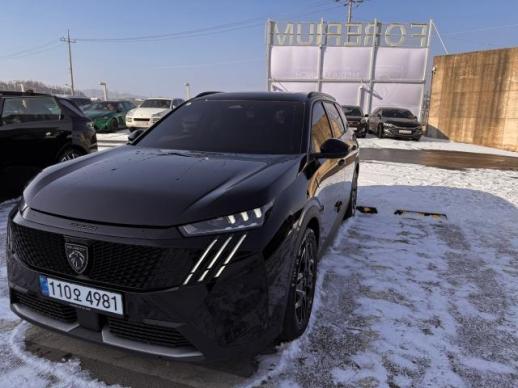 Peugeot’s All-New 5008 Smart Hybrid Targets South Korea’s Family SUV Market As SUVs continue to dominate South Korea’s auto market, Peugeot is seeking to expand sales with the “All-New 5008 Smart Hybrid,” a full redesign returning after 10 years. Planned and built in France, the third-generation 5008 combines Stellantis’ next-generation STLA electrified platform with a smart-hybrid powertrain. It is a family SUV that can seat up to seven. On Feb. 2 in Gimpo, the new 5008’s front end showcased Peugeot’s latest family design, including a floating-style emblem, a gradient front grille and pixel LED matrix headlamps, shifting the model’s look toward a more futuristic feel. From the side, a longer wheelbase and higher beltline added a planted stance. Black roof rails and matte gray DLO (day light opening) trim emphasized SUV toughness without looking overdone. At the rear, 3D LED taillamps and horizontal lettering added visual stability. Stellantis said the rear spoiler was designed with airflow in mind and helps improve high-speed stability and fuel efficiency. Inside, a 21-inch curved display stood out. Rather than two screens joined together, it is presented as a single large display. Compared with the previous generation, where the screen sat deeper in the dashboard, the new unit appears to float, reducing eye movement and helping the driver stay focused. The system supports wireless Apple CarPlay and Android Auto, but on a roughly 60-kilometer round trip from Gimpo’s Forellium to Ganghwa in Incheon, the built-in navigation was used. Peugeot has been adopting TomTom navigation since 2022. It does not reflect traffic and road conditions the way commonly used services such as Tmap do, but map updates have improved visibility compared with the previous generation. A key strength is quietness. Even above 100 kph on the highway, the vehicle accelerated smoothly with little noise. In the city, regenerative braking helped save fuel. The combined fuel economy is 13.3 kilometers per liter. The second row uses three individual seats, each supporting sliding, reclining and 40:20:40 folding, allowing three adults to adjust seating to fit their needs. It also includes heated seats, side-window sunshades and an air-quality monitoring function. The third row has two independent seats with 50:50 folding. With the third row up, cargo space is 348 liters. Folding the third row expands it to 916 liters, and folding the second row as well increases capacity to a maximum of 2,232 liters. Bang Sil, CEO of Stellantis Korea, said the company is preparing to compete in what he called South Korea’s most fiercely contested family SUV segment. “While preparing for competition in Korea’s most intense family SUV market, I want to ask whether people feel they must give up their own taste and sensibility for their family,” Bang said. “The All-New 5008 Smart Hybrid is a French family SUV that offers space and practicality for the family while letting the driver keep their sensibility and preferences.” He added that this year, 5008 sales will account for more than 30% of Peugeot’s total sales.* This article has been translated by AI. 2026-02-04 00:03:00
 -
 Hanmi Pharmaceutical ramps up R&D push with homegrown drugs and global expansion plans Hanmi Pharmaceutical said it has held the top spot in South Korea’s outpatient prescription sales for seven straight years, driven by drugs developed with its own technology. The company said more than 90% of its revenue comes from in-house products, and it is accelerating efforts to find new global growth engines through research and development. Industry officials said Hanmi’s R&D spending as a share of revenue rose from 13.4% in 2022 to 15.2% as of the third quarter of last year. Analysts said the company’s steady double-digit R&D investment underpins its growth strategy. Hanmi has set a 2030 target of 1.9 trillion won in domestic sales and 1 trillion won overseas, for total revenue of 2.9 trillion won. The company expects its obesity drug program to align with industry trends and help expand its global business. Hanmi recently signed an exclusive distribution deal with Mexican drugmaker Sanfer covering its GLP-1 obesity drug candidate efpeglenatide and its diabetes combination products sold under the Daparon family name (Daparon tablets and Daparon Duo extended-release tablets). A regulatory filing said the supply contract for the Daparon products totals about 65.8 billion won and runs through Jan. 26, 2036. Efpeglenatide, a key in-house candidate, is slated for launch in the second half of this year and is under review for approval by South Korea’s Ministry of Food and Drug Safety. If approved, it would become the first domestically developed GLP-1 obesity treatment. Kwon Hae Soon, an analyst at Eugene Investment & Securities, said the obesity treatment market is expected to expand in earnest around the time of efpeglenatide’s launch, adding that a locally made product could win meaningful share given price competitiveness and supply stability. A Hanmi official said the launch price has not been set, but the company expects to secure price competitiveness because it will produce efpeglenatide at its Pyeongtaek bioplant. The official said direct control over production and supply could be a differentiator in a market where existing products rely on imports. Hanmi is also moving ahead with clinical development of next-generation obesity candidates, including HM15275, a triple-acting drug aimed at obesity and muscle loss, and HM17321, designed to increase muscle. For HM15275, the company said the U.S. Food and Drug Administration approved its Phase 2 investigational new drug application in September, and the first patient was dosed about three months later. The Phase 2 study will evaluate weight-loss effects and improvements in lean body mass in obese and severely obese patients after 36 weeks of long-term dosing. The company expects Phase 2 to end in the first half of 2027. Hanmi said oncology remains central to its new-drug pipeline. BH3120, a bispecific antibody immuno-oncology drug being co-developed with Beijing Hanmi Pharmaceutical, recently presented Phase 1 progress at the ESMO Immuno-Oncology Congress 2025. The company said BH3120 uses its Pentambody bispecific antibody platform, which allows a single antibody to bind two different targets at the same time. A Hanmi official said the company is building capabilities across multiple modalities, including targeted protein degradation, messenger RNA, cell and gene therapies, antibody-drug conjugates and single-domain antibodies, and will continue to pursue development and commercialization of innovative medicines.* This article has been translated by AI. 2026-02-03 18:27:00
 -
 South Korea’s Smaller Shipbuilders Run Full Docks as Orders Lift Results South Korea’s shipbuilding boom is spreading beyond the biggest yards to smaller builders, with docks effectively running at full capacity as a wave of orders secures years of work. Industry data released Monday showed shipyard utilization at HJ Heavy Industries, Daehan Shipbuilding and K Shipbuilding topped 100% last year. Utilization above 100% indicates expanded working hours, including holiday and night shifts, as the companies ramp up production after recent contract wins. HJ Heavy Industries, which builds both naval and commercial vessels, has been building a steady order backlog. With wins in naval work, including U.S. Navy ship maintenance, repair and overhaul, its dock at the Yeongdo shipyard in Busan is already booked through 2028. Its shipbuilding order backlog rose to about 2.1026 trillion won as of the third quarter of last year, more than doubling from 915.1 billion won in 2021. Daehan Shipbuilding has accelerated construction on the back of orders since the start of the year. In early January, it secured four Suezmax crude oil tankers from new customers, then added two more of the same type from a European shipowner. The company plans to lift revenue quickly by increasing dock turnover. K Shipbuilding’s utilization also exceeded 110%, a sharp increase from 93.47% in 2024. The expanding backlogs have translated into stronger earnings. HJ Heavy Industries posted operating profit of 67 billion won last year, up 824.8% from a year earlier, as shipbuilding revenue rose and profitability improved. Daehan Shipbuilding maintained operating margins in the 20% range for five straight quarters. On a consolidated basis, its 2025 revenue was 1.2281 trillion won and operating profit was 294.1 billion won, up 14.2% and 86.1%, respectively, from the prior year. K Shipbuilding has not yet finalized last year’s full results, but analysts point to improving utilization as orders increase. Its cumulative operating profit through the third quarter of last year was 84.7 billion won, more than four times the 15.8 billion won recorded a year earlier. Early this year, it also signed new shipbuilding contracts for four 50,000-ton petrochemical product carriers. Some in the market say the gains at smaller shipbuilders reflect structural change rather than a temporary upswing, as they move away from low-priced volume orders and focus on selectively winning higher value-added vessel types. “Smaller shipbuilders used to mainly fill gaps left by larger yards, but they have moved into a phase of focusing on higher value-added ship types,” an industry official said. “The biggest change is that profitability is improving even as dock utilization rises.” 2026-02-03 18:03:00
 -
 Mizuno Korea Launches JPX ONE Driver With First-Ever Nanoalloy Face Mizuno Korea said Monday it has released the 2026 JPX ONE driver, the first driver to use a “nanoalloy face.” The JPX ONE driver is a new lineup aimed at delivering faster ball speed, high forgiveness and Mizuno’s distinctive impact feel. The “ONE” name replaces the previous JPX 923 and 925 naming, and is intended to signal a new start and an aim for No. 1, the company said. At the center of the club is the NANOALLOY™ FACE, which Mizuno Korea said is the first time the technology has been applied to a golf club head. Nanoalloy is a proprietary material technology developed by Japan’s Toray Industries Inc. that becomes momentarily softer when struck, the company said. Mizuno said it applied a 0.4 mm nanoalloy layer on top of a forged titanium face (6-4Ti). The company said the face deforms first at impact, limiting excessive deformation of the golf ball and improving energy transfer efficiency to achieve its highest ball speed to date. In its own robot testing, Mizuno said the nanoalloy face produced the fastest ball speed compared with nylon, urethane and titanium materials. Mizuno said the nanoalloy face also deforms more across the entire face at impact, helping reduce ball-speed loss on off-center hits and maintain distance. The company said its NEW CORTECH FACE design makes the forged face thinner, expanding the area with a coefficient of restitution (COR) of 0.8 or higher and maximizing the nanoalloy effect. The driver uses a Light Composite Carbon Crown to reduce weight in the upper part of the head, and a Ti811 body and weight-part design to help keep head balance stable at impact, Mizuno said. The face design was kept simple to avoid distracting players. The model targets golfers with average head speed, with a focus on high rebound and forgiveness, and is based on the stable forgiveness design of the ST-MAX line, the company said. Mizuno said the JPX ONE fairway woods are designed to combine high speed and forgiveness. They use a CORTECH CHAMBER in the sole, made by integrally molding TPU with a steel-core stainless component, which the company said improves rebound performance by combining TPU rebound with the stainless component’s inertia. For the new products, Mizuno said it widened the gap between the steel core and the body, allowing the face to flex more and helping prevent ball-speed drops on mishits. The company also applied its CORTECH FACE technology, with a thicker center and thinner perimeter to amplify face flex. Compared with the previous model, it said the center section was made thinner to increase deformation and pursue higher rebound performance. Mizuno said it also extended the carbon composite crown to the sole toe side to free up discretionary weight and enable a high moment of inertia (MOI) design. Mizuno said the JPX ONE utility clubs also use the improved CORTECH CHAMBER structure to enhance rebound and minimize ball-speed loss on off-center strikes by widening the gap between the steel core and the body. The face uses a high-strength maraging steel (MAS1C), which the company said allows a thinner face while maintaining high rebound performance. Mizuno said a waffle crown structure reduces weight while maintaining strength, freeing up discretionary weight and enabling a high-MOI design. A Mizuno Korea official said, “The JPX ONE driver is a symbolic model that applies the material technology Mizuno has built up as a total sports brand to golf,” adding, “For golfers with average head speed who want to gain distance more easily, it will set a new standard for JPX.” Mizuno Korea said the new JPX ONE driver and woods are available at its official dealers nationwide and its official online store. More details are available on the Mizuno Korea website.* This article has been translated by AI. 2026-02-03 18:00:00
 -
 SK Bioscience Sales Jump 143% on Strong Results From German Unit IDT SK Bioscience said strong results from its German subsidiary, acquired two years ago, helped more than double its annual revenue last year. In a regulatory filing on Monday, the company said 2025 revenue on a consolidated basis rose 143.5% from a year earlier to 651.4 billion won. Its operating loss narrowed to 123.5 billion won from 138.4 billion won in 2024. The improvement was driven largely by IDT, a Germany-based contract development and manufacturing organization acquired in 2024. IDT posted 465.7 billion won in 2025 revenue, up about 17% year over year, and recorded an operating profit of 9.9 billion won, marking a turnaround. The company attributed the gains to stronger partnerships with existing customers and higher productivity from process-efficiency efforts. SK Bioscience said growth in its core vaccine lineup also supported results. Influenza vaccine SkyCellflu maintained steady growth as export volumes to Central and South America and Southeast Asia increased, despite a price decline tied to a switch to a trivalent formulation. Chickenpox vaccine SkyVaricella increased its share of global exports on the back of stable supply through the Pan American Health Organization. Shingles vaccine SkyZoster raised its market share as more South Korean local governments expanded vaccination programs. Sales of Sanofi products distributed in South Korea also more than tripled from a year earlier, the company said. Beyfortus, an RSV preventive antibody injection launched last year, posted near sellout-level performance during the fall and winter RSV season. Hexaxim, the country’s first six-in-one vaccine covering diphtheria, tetanus, pertussis, polio, Hib and hepatitis B, and Tdap vaccine Adacel also supported higher sales on steady demand. SK Bioscience said it plans to sustain growth centered on its subsidiaries and its Songdo R&PD center. The company completed the relocation of its headquarters and research institute to Songdo, Incheon, last month and said it is accelerating efforts to secure key pipelines under an integrated system spanning R&D through commercialization preparation. A 21-valent pneumococcal protein conjugate vaccine being co-developed with Sanofi is in global Phase 3 trials in the United States, Europe and South Korea, the company said. Its L House production facility in Andong, North Gyeongsang Province, is being expanded while it pursues global approvals and prepares for commercial production. The company also highlighted RSM01, an RSV monoclonal antibody brought in from Gates MRI under the Gates Foundation, and an Ebola vaccine being developed with MSD. It said RSM01, backed by exclusive global supply rights, is expected to be a new growth driver targeting a related market valued at 6 trillion won. The Ebola vaccine is expected to move faster with support from the Coalition for Epidemic Preparedness Innovations. The company said it also expects clinical trials this year for a universal COVID-19 vaccine, a next-generation pneumococcal vaccine and an avian influenza vaccine. A company official said, “This year, we will further advance global CDMO growth centered on IDT, while accelerating development of core pipelines with the Songdo R&PD center as a hub to secure mid- to long-term growth engines.”* This article has been translated by AI. 2026-02-03 17:51:00
 -
 Celltrion, SK Chemicals, HLB Pharma and Myung In Pharma report Europe share, sales deal, revenue and governance moves Celltrion: Remsima autoimmune drugs held 68% share in Europe last year Celltrion said Monday that its treatments for autoimmune diseases and cancer continue to hold strong market share in Europe. Citing IQVIA, the company said its Remsima product family for autoimmune diseases (IV and SC) posted a combined market share of about 68% in Europe as of the third quarter of last year. Both the intravenous and subcutaneous formulations showed steady prescribing trends. Shares were 81% in France, 84% in the U.K. and 74% in Germany, among other European markets including the five major countries known as the EU5, the company said. Celltrion said its autoimmune drug Yuflyma recorded a 24% share in Europe over the same period, keeping the top spot in prescriptions. In oncology, it said Vegzelma, used to treat metastatic colorectal cancer and breast cancer, ranked No. 1 in prescriptions with a 26% share in Europe over the same period. SK Chemicals signs co-marketing deal with Kyungnam Pharm for allergic rhinitis drug SK Chemicals said Monday it signed a joint sales agreement with Kyungnam Pharm for Nozeal soft capsules, an over-the-counter treatment for allergic rhinitis. Under the deal, Kyungnam Pharm will handle sales and marketing to pharmacies for Nozeal, which SK Chemicals had been distributing through its pharmaceutical ordering platform. The product’s active ingredient is fexofenadine and is used to relieve allergic rhinitis symptoms caused by pollen and house dust, the company said. Kyungnam Pharm said it has an 11-branch nationwide sales organization and a broad pharmacy distribution network. Park Hyun Sun, head of SK Chemicals’ pharma business, said, “Building on the strengths of both companies, we will improve accessibility at pharmacies and expand our presence in the rhinitis treatment market.” HLB Pharma says annual revenue tops 200 billion won for first time HLB Pharma said Monday that, for the first time since its founding, its consolidated annual revenue exceeded 200 billion won. In a regulatory filing on a change of 30% or more in revenue or profit structure (15% for large companies), HLB Pharma reported consolidated revenue of 205.6 billion won last year, up 50% from a year earlier. On a separate basis, revenue rose 12.7% to 154.5 billion won. The company said the result doubles its 2022 revenue, when it first surpassed 100 billion won, in just three years. It added that it achieved double-digit growth even as contract manufacturing revenue was temporarily halted after it demolished its Hyangnam plant to build a new factory. HLB Pharma said the performance was driven by the consolidation of results from Shinhwa Advance, which it acquired in April last year. It also cited a turnaround in both revenue and profit at its consumer health care division within two years of its launch. Myung In Pharm approves 1,500 won cash dividend per share, pushes professional management structure Myung In Pharm said Monday it is pursuing a shift from founder-led management to a co-CEO structure led by professional managers. The company said it held a board meeting and disclosed that it decided to nominate Lee Kwan Soon, a vice chairman at Hanmi Pharmaceutical, and Cha Bong Kwon, president in charge of sales management at Myung In Pharm, as inside director candidates. The nominations will be submitted to the company’s 38th annual general meeting of shareholders on March 26, it said. Under the plan, founder and chairman Lee Haeng Myung will step down as CEO and focus on advising the board, while professional managers take charge of operations, the company said. The company said Lee Kwan Soon earned a bachelor’s degree in chemical education from Seoul National University and completed master’s and doctoral coursework in chemistry at KAIST. He has served as vice chairman, CEO and head of the research center at Hanmi Pharmaceutical, and later led the Korea Pharmaceutical and Bio-Pharma Manufacturers Association before becoming CEO of GID Partners. Cha Bong Kwon graduated from Kyonggi University with a degree in German language and literature and rose through the company as head of the sales management division before taking his current role, the company said. * This article has been translated by AI. 2026-02-03 17:42:00
 -
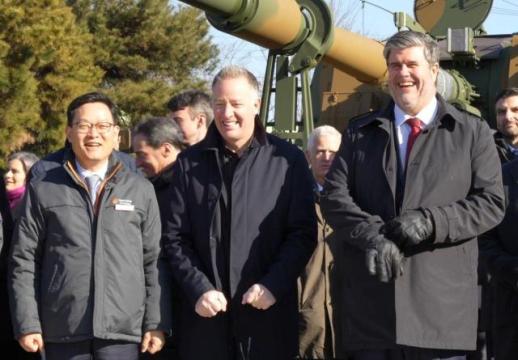 Canada’s defense procurement minister visits Hanwha Aerospace plant, cites potential for deeper cooperation Canadian Minister of State for Defense Procurement Stephen Fuhr visited Hanwha Aerospace’s Changwon site, a day after touring facilities run by Hanwha Ocean and Hyundai Rotem to review major South Korean defense systems. Hanwha Aerospace said Fuhr, a delegation of Canadian company representatives and others — about 30 people — visited its Plants 2 and 3 in Changwon, South Gyeongsang province, on Feb. 3. The group toured production lines for the K9 self-propelled howitzer, the K10 ammunition resupply vehicle and the Chunmoo multiple rocket launcher system. They also watched mobility demonstrations of the K9, the Redback infantry fighting vehicle and the K21 armored vehicle, and rode in key equipment to experience performance firsthand. Hanwha said the visit was aimed at assessing South Korea’s defense capabilities ahead of Canada’s large-scale military modernization effort, the Indirect Fire Modernization (IFM) program. Canada plans to introduce about 250 infantry fighting vehicles into its army by 2030, six years earlier than scheduled. Hanwha Aerospace said it proposed an integrated “firepower-and-mobility solution” linking the K9, Chunmoo and Redback — systems it said are operated in more than 10 countries, including six NATO members. The company also proposed a partnership to help build a local defense industrial ecosystem in Canada, beyond simply supplying equipment. The company said the approach is intended to meet Canada’s priorities for local production and supply-chain security, while expanding cooperation in North America and NATO markets with Canada as a hub. “We will be the best partner for Canada’s military modernization, based on Hanwha’s decades of accumulated technology and our ability to meet delivery schedules,” Hanwha Aerospace CEO Son Jae-il said. Fuhr said Hanwha’s modern production facilities and high level of technology were “very impressive and surprising,” adding that the visit would be an important opportunity to make bilateral defense cooperation more concrete. Fuhr visited Hanwha Ocean the previous day, where he looked at a model of the Jang Yeong-sil ship and requested cooperation in the automotive sector. At Hyundai Rotem, he reviewed production processes for major defense systems including the K2 tank.* This article has been translated by AI. 2026-02-03 17:27:00
 -
 Constitution Day to be national holiday again SEOUL, February 3 (AJP) - Constitution Day on July 17 will become a national holiday again this year, Cheong Wa Dae said on Tuesday. The Cabinet meeting chaired by President Lee Jae Myung decided to restore Constitution Day as a national holiday to raise public awareness of the spirit of the Constitution. The day, which commemorates July 17, 1948, when the Constitution was promulgated, had been observed as one of major national holidays along with March 1 Independence Movement Day, Liberation Day, and National Foundation Day, until it was struck from the list in 2008. Likewise, Hanguel Day was also reinstated in 2012 after being eliminated in 1991. 2026-02-03 17:23:07
 -
 Genesis AI Healthcare VP Kang Si Cheol Named AI Technology Adviser to Seoul Medical Center Genesis AI Healthcare said Tuesday that its vice chairman, Kang Si Cheol, was appointed an artificial intelligence technology adviser to Seoul Medical Center on Monday. The company said the move is aimed at accelerating AI-driven medical innovation and helping the public hospital lead digital transformation. Kang, an AI medicine scholar and practitioner, has written books spanning theory and practice, including "AI Big History: 10 Wins Out of 22," "Artificial Intelligence Networks and Super Business," "Disruption," "An Era Comes When Even Aging Is Designed," "Hippocrates Meets Turing: The Age of AI Medicine" and "AI MBA." His recent titles, "Universal Concierge Medicine for a National Primary Doctor," "AI Translates the Human Body" and "AI Medical Management," have been described as essential reading on the present and future of AI medicine. During his two-year term, Kang is expected to provide strategic advice on digital innovation projects, including adopting Seoul Medical Center’s AI medical management solutions, building a medical AI platform, and advancing AI-based diagnosis and treatment systems. Seoul Medical Center said it plans to use the appointment to develop a model case for AI innovation in public health care and to explore ways to improve service quality and operational efficiency. Kang said, "I will do my best so that AI technology can create real value in the public health care field together with Seoul Medical Center," adding that he will "build a virtuous cycle that strengthens medical staff capabilities and improves citizens’ health."* This article has been translated by AI. 2026-02-03 17:12:00
 -
 KOSPI, Nikkei rebound from 'Warsh Shock,' hit fresh record highs SEOUL, Feb 03 (AJP) - Asian equity markets staged a decisive rebound Tuesday, shaking off jitters dubbed the “Warsh Shock,” as South Korea’s benchmark KOSPI surged nearly 7 percent to a fresh all-time high and fueling a regionwide rally. The sharp recovery followed gains on Wall Street after U.S. purchasing managers’ index data returned to expansion for the first time in a year, easing concerns about an economic slowdown. Market sentiment also improved as investors reassessed initial fears that Federal Reserve chair nominee Kevin Warsh would take an aggressively hawkish stance, increasingly viewing them as overblown. The Korean won strengthened alongside equities, with the dollar falling as much as 10.5 won to 1,443 won from the previous close. Meanwhile, a rapid rotation into risk assets pushed the yield on the 10-year Korean government bond up 5.8 basis points to 3.661 percent. The KOSPI soared 6.84 percent to close at 5,228.08, recouping the previous session’s losses and setting a new intraday and closing record. Hopes that Warsh could emerge as a “hawkish dove” rather than a hardliner helped reignite appetite for equities. Institutional investors led the rally with a net purchase of 2.17 trillion won ($1.5 billion), while foreign investors added 705 billion won. Retail investors, who had fueled buying the previous day, took profits, unloading 2.94 trillion won. Chip behemoths roared on. Samsung Electronics jumped 11.37 percent to a record 167,500 won, while SK hynix climbed 9.28 percent to 907,000 won, both marking fresh 52-week highs. Hyundai Motor, the third-largest company by market capitalization, rose 2.82 percent to 491,500 won. LG Energy Solution, which has struggled with sluggish earnings, gained 2.9 percent to close at 391,000 won. Naver, however, lagged the broader rally, edging up just 0.37 percent to 269,000 won as investors stayed on the sidelines ahead of its earnings release expected around Feb. 5. The tech-heavy KOSDAQ advanced 4.19 percent to 1,144.33, erasing the previous session’s sharp losses, though it fell short of a new record. Mirae Asset Venture Investment was the day’s standout performer, hitting the daily 30 percent upper limit to close at 22,100 won. The surge followed news that Elon Musk’s SpaceX had acquired xAI, benefiting Mirae Asset Venture, a major investor in SpaceX. In Japan, the Nikkei 225 snapped its losing streak, jumping 3.92 percent to close at 54,720.66, also a new all-time high. A rebound in U.S. technology stocks lifted Japanese semiconductor shares. Advantest rose 7.1 percent, Disco gained 7.4 percent, Tokyo Electron climbed 4.8 percent, and Ibiden surged 8.6 percent, capping a strong day for the chip sector. Toyota Motor advanced a more modest 1.67 percent to 3,594 yen, as much of its strength as the world’s top auto seller in 2025 was already priced in. Elsewhere in the region, Taiwan’s TAIEX rose 1.81 percent to 32,195.36. MediaTek surged 5.28 percent after reporting better-than-expected earnings, while TSMC gained 2.0 percent. Chinese markets also rebounded broadly, with the Shanghai Composite up 1.3 percent and the Shenzhen Composite climbing 2.2 percent. Hong Kong’s Hang Seng Index, however, lagged peers, inching up just 0.13 percent to close at 26,810, weighed down by dollar strength and turbulence in cryptocurrency markets. 2026-02-03 17:07:55