
Journalist

AJP
-
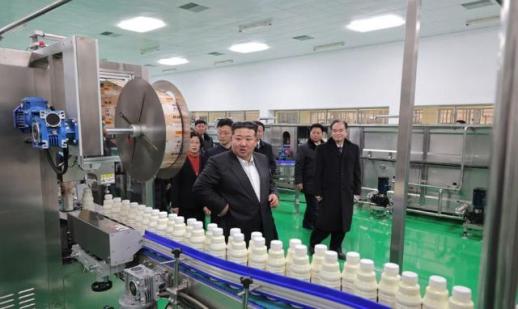 North Korean leader highlights 'rural revolution' during on-site inspection SEOUL, February 3 (AJP) - North Korean leader Kim Jong-un stressed the modernization of rural areas, state media reported on Tuesday. According to the state-run Korean Central News Agency (KCNA), Kim visited a dairy farm in North Pyongan Province for its grand opening the previous day and emphasized his development drive for the "rural revolution." He was quoted as saying that the country's rural areas are "undergoing changes one after another to present a new scenery of civilization all year round." "The eye-opening transformation in the Samgwang area, clearly showing the rapid development of the socialist countryside, is the proud fruition of the noble devotion of ," KCNA said, hailing it as a "model of socialist rural construction and development of livestock farming in the new era." "It is very great for the unknown farm to mass-produce 10-odd kinds of milk products such as butter, cheese, milk powder and yoghurt," Kim said, adding that he "feels great pride to think that such good milk products would be supplied to the children and people." Kim's frequent on-site inspections since late last year seem intended to highlight his achievements ahead of the country's key party congress expected later this month. 2026-02-03 10:40:45
 -
 BTS Comeback D-46: Gwanghwamun comeback show to be livestreamed on Netflix SEOUL, February 03 (AJP) - BTS' long-awaited full-member comeback stage at Seoul’s Gwanghwamun Square on March 21 will be livestreamed worldwide on Netflix, the platform's first live event broadcast globally from South Korea. Netflix and HYBE announced that “BTS Comeback Live: ARIRANG” will be streamed exclusively on Netflix at 8 p.m. on March 21. The concert will take place at Gwanghwamun Square, one of Seoul’s most iconic landmarks, in conjunction with the release of BTS’s new album “ARIRANG.” “BTS Comeback Live: ARIRANG” is a special event, celebrating the return of all seven members — RM, Jin, SUGA, j-hope, Jimin, V and Jungkook — on same stage for the first time in nearly four years after their rotational military conscription, unveiling live performances of new songs from the album to audiences in more than 190 countries. “ARIRANG,” BTS’s fifth full-length studio album to be released at 1 p.m. KST on March 20 featuring 14 tracks, reflects on the group’s origins and evolving identity. Following the album’s release, BTS plans to embark on a massive global tour titled “BTS World Tour ‘ARIRANG’ (2026–2027),” spanning 82 concerts across 34 regions in Asia, North America, Latin America, Europe and the Middle East. BigHit Music said the album “ARIRANG” reflects BTS’ starting point and identity, as well as what they want to convey now. “Given the symbolic meaning of the word ‘Arirang,’ we wanted to prepare the first stage in a place that represents Korea,” the agency said, explaining the choice of Gwanghwamun Square as the venue for the group's return. BTS previously staged performances at Geunjeongjeon Hall (The Throne Hall) and Gyeonghoeru Pavilion (Royal Banquet Hall) of Gyeongbokgung Palace in 2020, as part of “BTS Week,” a special programming event on "The Tonight Show Starring Jimmy Fallon". Netflix will also release a feature-length documentary, “BTS: The Return,” on March 27. Directed by Bao Nguyen — known for “The Stringer” and “The Greatest Night in Pop” — the film follows the group’s journey back to collective creation after a three-year-and-nine-month hiatus. Shot largely in Los Angeles, the documentary offers an intimate look at the members reuniting in the studio, confronting questions of how to move forward together while honoring their past without being constrained by it. The film traces the emotional and creative process behind BTS’s comeback, capturing moments of reflection, uncertainty and renewed purpose. 2026-02-03 10:27:55
 -
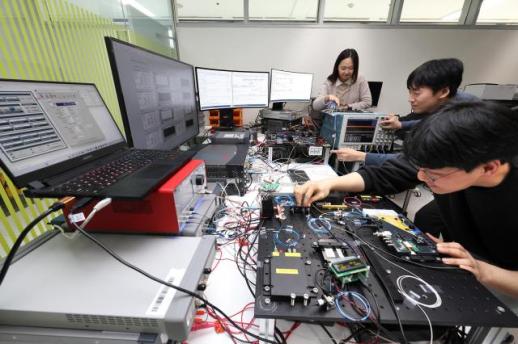 KT advances quantum internet push with enhanced encryption system SEOUL, February 03 (AJP) - South Korean telecom operator KT said Tuesday it has developed a quantum key distribution (QKD) device capable of generating 300,000 encryption keys per second, or 300 kilobits per second (kbps). The system is designed to prevent eavesdropping on physical communication lines by using quantum-mechanical properties that make encryption keys impossible to copy with current technology, the company said. KT previously developed a 150 kbps system in 2024 and has more than doubled the key-generation speed in about 18 months. "The new device represents the fastest QKD system built using domestic technology and delivers performance comparable to leading global manufacturers," the company said in a press release. "If deployed on commercial networks, the system could supply quantum keys to more than 70,000 encryption devices within a minute." Quantum key distribution systems operate using single photons, the smallest units of light energy. Because quantum states are highly sensitive and can collapse when light is dispersed or scattered, transmission errors can increase sharply. KT said it developed a proprietary filtering and system technology that reduces errors while boosting key-generation speed. The company said technical verification was completed late last year in collaboration with South Korean organizations involved in quantum cryptography development and certification, including the Telecommunications Technology Association, the Electronics and Telecommunications Research Institute, and the National Information Society Agency. KT also conducted joint verification with a research team led by Professor Heo Jun at Korea University’s Communications and Information Systems Laboratory. KT said it plans to further enhance system reliability by improving its ability to generate and detect quantum states at precise timing intervals, enabling more stable performance. The technology is expected to play a key role in the development of the future quantum internet, a next-generation communications network. “KT will help expand South Korea’s quantum industry ecosystem through continued development and technology transfer of our quantum communications technologies,” said Lee Jong-sik, head of KT’s Network Research Institute. * This article, published by Aju Business Daily, was translated by AI and edited by AJP. 2026-02-03 10:24:12
 -
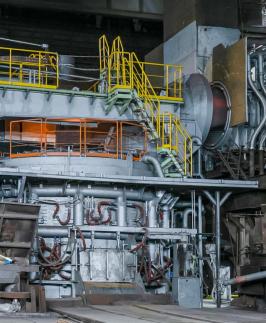 Hyundai Steel produces lower-carbon steel sheet for Hyundai Motor, Kia SEOUL, February 03 (AJP) - Hyundai Steel said Monday it has begun mass production of lower-carbon steel sheet that reduces carbon emissions by about 20 percent compared with conventional blast-furnace products, marking a key step in the company’s transition toward greener steelmaking. The company said it conducted extensive pre-verification work to stabilize operations and secure product quality ahead of launching its electric arc furnace–blast furnace hybrid production process. Since April 2023, Hyundai Steel has tested productivity for the lower-carbon steel sheet using an existing electric arc furnace at its Dangjin steelworks. Hyundai Steel has secured certification for 25 steel grades, including two grades of lower-carbon steel sheet now entering mass production. It plans to certify an additional 28 grades within the year, expanding the lineup to 53 grades. The rollout aligns with carbon-reduction roadmaps pursued by automakers within Hyundai Motor Group, the company said. Hyundai Motor and Kia plan to begin applying lower-carbon steel materials to selected models produced in South Korea and Europe starting this year. Hyundai Steel said it will supply key automotive steel sheet to those plants as lower-carbon products and gradually expand both product grades and supply volumes. The company is broadening the application of lower-carbon products beyond the auto sector. In automotive materials, Hyundai Steel is working with global carmakers and parts suppliers, while in energy steel it has completed fabrication and testing of lower-carbon heavy plate for offshore wind substructures, confirming material suitability with customers. A Hyundai Steel official said the company is leading the supply of lower-carbon products through its hybrid process combining electric arc furnace operations with blast-furnace technology. * This article, published by Aju Business Daily, was translated by AI and edited by AJP. 2026-02-03 09:47:46
 -
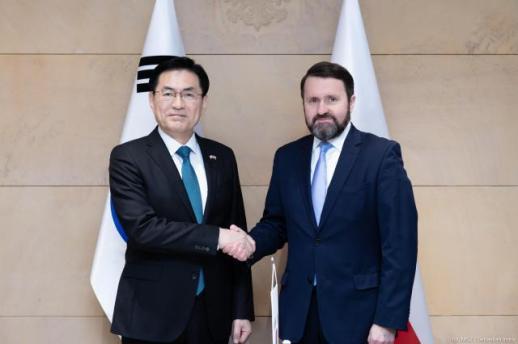 South Korea, Poland agree to bolster security-related cooperation SEOUL, February 3 (AJP) - South Korea and Poland have agreed to deepen security-related cooperation, the Ministry of Foreign Affairs here said on Tuesday. The inaugural dialogue between the two countries was held in Warsaw on Monday, as senior foreign ministry official Jeong Yeon-doo met with Robert Kupiecki, undersecretary of state at the Polish foreign ministry. According to the ministry, the two exchanged views on both bilateral matters and global security issues, while agreeing to share strategies and policies to expand their areas of cooperation. Jeong explained to Kupiecki South Korea's efforts to resume dialogue with North Korea. Kupiecki responded that he would support South Korea's pursuit of peace and security on the Korean Peninsula through a Polish mission in Pyongyang. They also agreed to hold follow-up talks in Seoul. 2026-02-03 09:42:46
 -
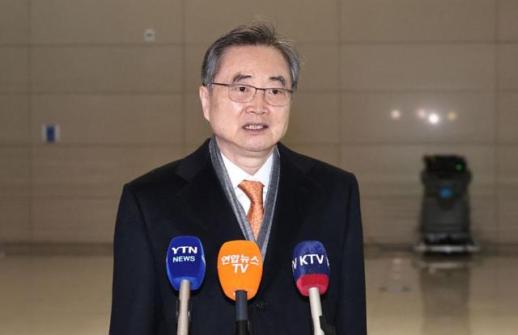 FM heads to Washington for talks after Trump's tariff threat SEOUL, February 3 (AJP) - South Korean and U.S. foreign ministers are set to sit down for talks in the U.S. this week after President Donald Trump abruptly threatened last week to raise tariffs. Foreign Minister Cho Hyun is visiting Washington, D.C. to attend a U.S.-led ministerial meeting on critical minerals scheduled for Wednesday. The meeting will bring together G7 countries and other mineral-rich nations to discuss ways to stabilize and diversify supply chains, as the U.S. ramps up efforts to reduce its reliance on Chinese critical minerals after China's restrictions on exports of rare earth materials. On the sidelines of the ministerial gathering, Cho is set to hold a one-on-one meeting with U.S. Secretary of State Marco Rubio. According to the Ministry of Foreign Affairs, the two are expected to discuss various issues including the implementation of a tariff-related bilateral agreement reached in October last year. Their upcoming meeting comes after Trump warned last Monday that he would raise reciprocal tariffs on Seoul from 15 percent back to 25 percent, citing delays in implementing the broader deal, which includes Seoul's massive investment pledges to the U.S. 2026-02-03 08:50:33
 -
 LG Chem moves to halt Chinese firm's operations in Korea over cathode patent dispute SEOUL, February 03 (AJP) - LG Chem has filed for a court injunction against JaeSe Energy, the South Korean subsidiary of Chinese cathode materials producer Ronbay, seeking to halt alleged patent infringement, industry sources said Monday. If granted, the injunction could effectively suspend JaeSe Energy’s domestic operations, which have annual production capacity of 70,000 tons. According to the sources, LG Chem submitted the injunction request on Jan. 16. JaeSe Energy was established as Ronbay’s Korean unit, with Ronbay widely regarded in the industry as the world’s largest producer of nickel-cobalt-manganese (NCM) cathode materials by output. The legal action follows a ruling by the Intellectual Property Trial and Appeal Board, which rejected petitions by JaeSe Energy seeking to invalidate three LG Chem patents. Two of the patents relate to cathode crystal-structure orientation, while the third covers relative composition ratios on the cathode surface. LG Chem and JaeSe Energy have been locked in legal disputes since 2024 over core cathode material technologies. LG Chem filed a lawsuit in August 2024, alleging that cathode products manufactured and sold by JaeSe Energy and Ronbay infringed multiple patents. JaeSe Energy has maintained that its technology was independently developed and countered by filing petitions to invalidate LG Chem’s patents. The appeals board upheld the validity of LG Chem’s patents and dismissed the challenges. If the court grants the injunction, production, sales and distribution of products found to infringe the patents would be immediately restricted. JaeSe Energy operates a manufacturing facility in Chungju, central South Korea, with annual capacity of 70,000 tons — enough to supply cathode materials for roughly 700,000 electric vehicles. A shutdown could disrupt cathode supply chains both domestically and overseas. An LG Chem official described the company’s patented technologies as foundational to maintaining South Korea’s competitiveness in high-performance battery markets. "LG Chem intends to protect its intellectual property while also pursuing licensing and other IP-based business models to promote broader industry growth," the official said. * This article, published by Aju Business Daily, was translated by AI and edited by AJP. 2026-02-03 08:39:54
 -
 UPDATE: Korea's inflation cools to 2% in January on soft fuel prices, weak demand *Updated with additional information SEOUL, February 03 (AJP) - South Korea’s inflation eased back to the central bank’s target level in January, as softer fuel prices and subdued domestic demand outweighed lingering pressures from a weak currency. According to the Ministry of Data and Statistics, the consumer price index (CPI) rose 2.0 percent in January from a year earlier, slowing from 2.3 percent in December and 2.4 percent in both October and November. The moderation partly reflected seasonal factors. The Lunar New Year holiday falls in February this year, unlike last year when it came in January and pushed up food prices due to family gatherings and ceremonial demand. Energy prices also helped contain inflation despite the won’s prolonged weakness against the U.S. dollar. Gasoline and diesel prices fell 2.4 percent and 3.5 percent, respectively, easing pressure on utility costs during the winter peak season. The data suggest that sluggish domestic demand has so far offset inflationary pass-through effects from currency depreciation and global price volatility. The exchange rate remained a key inflationary factor, though pressures softened slightly. The won averaged 1,458.19 per dollar in January, strengthening modestly from 1,467.35 in December. The stabilization was supported by government intervention in the foreign exchange market and a broader softening of the U.S. dollar through January, allowing the won to recover part of its recent losses. The easing helped reduce energy import costs. Dubai crude oil traded in a narrow range of $58 to $62 per barrel in January, broadly unchanged from December. Fuel prices, however, reversed the sharp increases seen late last year, when gasoline and diesel surged 5.7 percent and 10.8 percent, respectively. Reflecting the fuel decline, transportation costs fell 0.9 percent month-on-month. Month-on-month price movements underscore restrained consumption behavior amid still-elevated price levels. Food and beverages rose 0.6 percent from December, household goods increased 0.5 percent, and recreation and culture climbed 0.6 percent. Prices for “miscellaneous goods and services” rose 2.8 percent on the month and 5.0 percent year-on-year, largely due to annual price adjustments at the start of the year. Insurance service fees surged 15.3 percent from a year earlier, the steepest increase among all CPI items. Household goods and domestic services also rose 2.9 percent year-on-year, outpacing most other categories. A breakdown by item type confirms the subdued demand trend. Dining-out prices rose just 0.3 percent, while non-dining personal services increased 1.0 percent. In contrast, price growth for agricultural and industrial products either slowed or shifted toward contraction. Prices of agricultural, livestock and fishery products rose 0.7 percent year-on-year, easing from 1.0 percent in December. Overall goods inflation narrowed sharply from 0.4 percent to 0.1 percent. Notably, manufactured goods prices fell 0.1 percent month-on-month, helped by the won’s relative stabilization. The Ministry of Economy and Finance assessed in a press release that inflation remained relatively stable in January but warned of potential upward pressure during the Lunar New Year holiday in mid-February. “Given lingering uncertainties such as international oil price volatility and winter weather conditions, the government plans to devote all its resources to stabilizing perceived inflation for the public,” the ministry said. 2026-02-03 08:29:52
 -
 From BTS to kimchi, Korea publishes first English Encyclopedia on Hallyu SEOUL, February 03 (AJP) -South Korea has released the world’s first English-language encyclopedia devoted entirely to Hallyu, offering global readers a systematic and in-depth guide to Korean popular culture and everyday life, the National Folk Museum of Korea said Monday. The Encyclopedia of Hallyu is the English edition of a Korean-language reference work first published in 2024. Compiled to help international audiences better understand the cultural context behind the global rise of Korean culture, the volume brings together 347 key entries spanning K-content, lifestyle and traditional culture. The encyclopedia features 347 entries that trace the evolution and breadth of Hallyu, from globally influential K-pop artists such as BTS, BLACKPINK and BoA to landmark works including Squid Game and Parasite. Beyond pop culture exports, it also documents everyday Korean life — spanning food, fashion, housing, leisure and social practices — to help readers understand how contemporary Korean culture is formed and experienced. More than 600 photographs are included to aid understanding, and 129 Korean and international scholars participated in the project to ensure academic rigor. To improve accessibility, each entry is presented in English alongside its Korean name. Rather than translating terms into approximate English equivalents, the editors adopted Romanized Korean spellings — such as gimbap, tteokbokki and ramyeon — to preserve original meanings. Brief explanations are also provided to help readers grasp unfamiliar concepts at a glance. Special care was taken to adapt culturally specific expressions for foreign readers. Concepts that are difficult to translate directly, such as jeong (a form of emotional bond), oppa and unni, are explained with cultural context rather than literal definitions. All translations underwent cross-review by native English-speaking editors and Korean specialists to minimize cultural misunderstanding. The encyclopedia is also designed as a companion guide for global fans of Korean content. Entries range from folklore figures like the dokkaebi (goblin) and jeoseung saja (grim reaper) to contemporary cultural markers such as mukbang, idol fandoms and official light sticks, which are explained not merely as merchandise but as symbols of Korea’s participatory fan culture. Both English and Korean tables of contents are provided, and an expanded visual index combining original terms, Romanization, definitions and representative images allows users to browse the book intuitively. The English edition is available online for free download via the National Folk Museum of Korea website and the Korean Folk Encyclopedia portal, and is also sold at the museum’s gift shop for visitors interested in Hallyu and Korean culture. Cultural officials said the publication is intended to go beyond explaining trends, serving instead as a bridge for global readers to understand Korean culture within the broader context of world heritage and shared human values. 2026-02-03 07:53:49
 -
 Celltrion seeks nod from Europe and Korea for Herceptin biosimilar SC formulation SEOUL, February 03 (AJP) -South Korea's biosimilar giant Celltrion said it has successfully completed the pivotal regulatory clinical trial for Herzuma SC (CT-P6 SC), a subcutaneous formulation of its breast cancer biosimilar trastuzumab, and plans to submit marketing authorization applications in Europe and South Korea within the next three months. In a press release on Monday, the company said the trial met its primary endpoint, demonstrating pharmacokinetic equivalence to the reference product’s SC formulation, with comparable safety and immunogenicity. Herzuma SC is expected to reduce administration time to about five minutes, compared with roughly 90 minutes for the intravenous version, including post-infusion monitoring. Following prior consultations with regulators, Celltrion plans to proceed with filings without additional clinical trials. Europe and Korea are currently the company’s largest markets for SC formulation products. Herzuma SC was developed using Celltrion’s in-house hyaluronidase-based SC formulation platform, which temporarily breaks down hyaluronic acid in subcutaneous tissue to allow high-concentration, high-dose drugs to be administered safely and at scale. The company said the technology will be applied to future pipeline candidates and novel drug programs. With Herzuma SC, Celltrion said it has established a fully integrated SC value chain spanning development, regulatory approval, manufacturing and commercialization — a structure it says offers a competitive edge over technology out-licensing models by retaining control across the entire lifecycle. The company also plans to expand into formulation-change contract manufacturing services, offering its SC expertise to external clients. The launch would complement Celltrion’s existing portfolio, which includes Remsima SC (sold in the United States as Zymfentra), the world’s first commercialized infliximab SC. According to IQVIA, the global trastuzumab market was valued at about $3.56 billion in 2024. The regulatory milestone comes as Celltrion posts its strongest financial performance on record. The company in late December projected a consolidated fourth-quarter revenue of 1.28 trillion won ($960 million) and operating profit of 472.2 billion won, up 20.7 percent and 140.4 percent year on year, respectively. The implied operating margin was 36.8 percent. On a full-year basis, Celltrion forecasts 2025 revenue of 4.12 trillion won ($3.1 billion), a 15.7 percent increase from a year earlier, while operating profit is projected to surge 136.9 percent to 1.17 trillion won ($880 million) — the first time the company has surpassed 3 trillion won in annual revenue and 800 billion won in operating profit. The company attributed the gains to steady growth in established products and rapid global expansion of newly launched, higher-margin biosimilars. “Following the world’s first commercialization of infliximab SC, we have now secured hyaluronidase-based SC formulation technology and completed global-level SC capabilities,” a Celltrion official said. “We will accelerate global market share expansion and new growth engines, including CDMO services, by internalizing the full SC development cycle from productization to manufacturing and supply.” 2026-02-03 07:32:10