
Journalist

AJP
-
 Seoul confident but cautious as Canada submarine bid turns into Korea–Germany contest SEOUL, February 01 (AJP) -South Korea has mounted a full-court, government-led push to win Canada’s next-generation submarine program, but Germany’s entrenched role within NATO and its long-standing engineering ties with Ottawa remain formidable obstacles, said a senior presidential official. Presidential chief of staff Kang Hoon-sik said Saturday that Seoul remains confident in its technological edge, even as it competes against Germany for what is widely regarded as one of the world’s largest defense procurement projects. “Our submarine technology is significantly better, and we believe any remaining issues can be addressed through long-term industrial cooperation with Canada,” Kang told reporters at Incheon International Airport upon returning from back-to-back visits to Canada and Norway, where he led a senior “Team Korea” delegation. The delegation included officials and executives from a South Korean consortium led by Hanwha Ocean and HD Hyundai Heavy Industries, alongside representatives from Hyundai Motor and Korean Air. Seoul is pitching the bid as a broad industrial package rather than a stand-alone weapons sale. Canada’s Canadian Patrol Submarine Project (CPSP) is estimated at up to 60 trillion won ($41.4 billion), including decades of maintenance, repair and overhaul. The Korean consortium was recently shortlisted as one of two final contenders, alongside Germany’s ThyssenKrupp Marine Systems. While South Korea has emphasized its shipbuilding capacity, missile integration and faster delivery timelines, Kang acknowledged that Germany enjoys structural advantages. Canada and Germany maintain close security cooperation under the North Atlantic Treaty Organization, and German technology underpins parts of South Korea’s own submarine development. Competing against Germany — which provided original technology for Korea’s submarine capabilities and shares NATO membership with Canada — "will not be easy to crack,” Kang said. The stakes are high because Canada has made clear that submarine performance alone will not decide the winner. According to bidding instructions issued late last year, only 20 percent of the evaluation is based on platform capability. Half of the score is tied to long-term sustainment, with the remainder split between financial capacity and economic benefits to Canada. That weighting has transformed the competition into what officials describe as a de facto industrial partnership contest. Seoul has positioned the submarine bid as a national strategic export project, promising investment across defense manufacturing, shipbuilding, automotive supply chains, energy and critical minerals — sectors that could generate tens of thousands of Canadian jobs over several decades. Kang said Canadian Prime Minister Mark Carney expressed strong interest in South Korea during meetings that included corporate leaders, though he cautioned against reading too much into diplomatic signals at this stage. Asked about the timeline, Kang said a final decision could come “as soon as six months” or take “up to a year,” adding that Canadian officials are expected to visit South Korea as part of the evaluation process. Kang’s trip yielded more tangible results in Norway, where South Korea signed a 1.3 trillion won contract to export its Chunmoo multiple rocket launcher system. He said Norway’s decision could encourage neighboring countries such as Sweden and Denmark to consider South Korean defense systems, potentially expanding Seoul’s footprint in Northern Europe. 2026-02-01 09:11:43
 -
 Foreign workers missing after deadly factory fire in South Korea SEOUL, January 31 (AJP) - A massive fire at a household goods factory in South Korea left at least one foreign worker dead and another missing, authorities said on Saturday, highlighting ongoing safety concerns involving migrant labor in the country’s manufacturing sector. The blaze broke out at around 2:55 p.m. on Friday at a factory in Eumseong County, North Chungcheong Province, which produces sanitary products such as wet wipes and diapers. Firefighters declared the fire fully extinguished after more than 21 hours of operation, battling structural collapses and intense heat fueled by highly flammable materials inside the facility. Of the 83 workers on site at the time, 81 managed to evacuate. However, two foreign nationals — a Nepali man in his 20s and a Kazakh man in his 50s — were initially unaccounted for. One body, believed to be one of the missing workers, was discovered early Friday near a stairwell on the second floor of the building. Authorities have transferred the remains to a local funeral home and requested forensic identification. The second worker remained missing as of Friday afternoon, with rescue teams continuing searches using heavy equipment and urban detection devices amid unstable debris. Investigators said both missing workers were subcontracted employees responsible for waste processing inside the production building, working on the ground floor where the fire is believed to have originated. Fire officials said the factory’s sandwich-panel structure and large volumes of combustible pulp materials caused the flames to spread rapidly, complicating rescue efforts and forcing overnight suspensions due to collapse risks. Police have launched a serious industrial accident investigation and plan to examine whether safety management protocols were properly followed once on-site recovery is completed. The incident has renewed scrutiny over working conditions faced by foreign laborers in South Korea’s industrial sector, where migrant workers are often employed through subcontractors in high-risk environments. 2026-01-31 17:44:31
 -
 Korean political leaders pay final respects to former Prime Minister Lee Hae-chan SEOUL, January 31 (AJP) - A funeral service for former Prime Minister Lee Hae-chan was held on Saturday morning at the National Assembly Members’ Office Building in Seoul, drawing senior political figures from across the political spectrum. President Lee Jae-myung and first lady Kim Hye-kyung attended the service alongside National Assembly Speaker Woo Won-shik, Prime Minister Kim Min-seok and Lee’s family. Leaders and lawmakers from the ruling Democratic Party as well as opposition parties were also present to pay their respects. During the service, presidential political affairs secretary Cho Jung-sik, who served as chief executive of the funeral committee, read Lee’s biography, describing him as a lifelong public servant who carried out his duties with sincerity and responsibility. Prime Minister Kim delivered a eulogy, saying South Korea’s democracy “owes a debt” to Lee for his role in defending democratic values despite imprisonment and political persecution. Speaker Woo recalled Lee’s commitment to democracy during their time in prison in the early 1980s, quoting Lee as saying that “you can imprison the body, but you cannot imprison democracy.” Tributes were also delivered by Democratic Party leader Jung Cheong-rae, Seoul National University professor emeritus Baek Nak-chung and former Prime Minister Han Myung-sook. The ceremony concluded with a memorial video and a flower offering. Earlier in the day, a departure ceremony was held at Seoul National University Hospital’s funeral hall, followed by separate rites at the Democratic Party headquarters and the National Unification Advisory Council office. Lee will be cremated at the Seoul Memorial Park and laid to rest at the Milky Way Park in Sejong City. * This article, published by Aju Business Daily, was translated by AI and edited by AJP. 2026-01-31 16:14:00
 -
 Korea signs $1bn-plus Chunmoo rocket deal with Norway SEOUL, January 31 (AJP) - South Korea has secured a major defense export deal with Norway, with presidential chief of staff Kang Hoon-sik saying in a Facebook post on Saturday that the Norwegian government had signed a contract to purchase the Chunmoo multiple rocket launcher system. The contract is worth about 1.3 trillion won ($970 million). Kang Hoon-sik, chief of staff to President Lee Jae-myung, said the agreement was finalized following approval by the Norwegian government and parliament, marking South Korea’s largest-ever arms export to a Nordic country. The deal comes after Norway selected Hanwha Aerospace as the preferred bidder for its long-range precision fire system (LRPFS) program, estimated at 19 billion Norwegian kroner ($1.8 billion), with the Chunmoo system forming the core of the package. Kang, who is visiting Norway as a special presidential envoy for strategic economic cooperation, said the contract follows months of high-level discussions with Norwegian defense and foreign affairs officials. 2026-01-31 14:36:57
 -
 Korea, U.S. fail to reach deal in tariff talks as discussions set to continue SEOUL, January 31 (AJP) - South Korea and the United States failed to reach a conclusion in tariff negotiations this week, as talks over Washington’s potential reimposition of higher duties on Korean goods ended without agreement. South Korea’s Industry Minister Kim Jung-kwan said Saturday that discussions with U.S. Commerce Secretary Howard Lutnick had deepened mutual understanding but fell short of producing a concrete outcome. “Both sides were able to better understand each other’s positions, but further dialogue will be needed,” Kim told reporters after meeting Lutnick for more than two hours at the U.S. Commerce Department in Washington. Kim said no final decision had been made on whether the United States would proceed with raising tariffs on South Korean exports, adding that negotiations remain ongoing. The talks followed renewed pressure from U.S. President Donald Trump, who last week warned that tariffs on Korean products — including automobiles, timber and pharmaceuticals — could be raised back to 25 percent if South Korea fails to pass legislation supporting pledged U.S. investment. Kim visited Washington earlier this week to urge the United States not to reinstate higher tariffs, emphasizing Seoul’s commitment to implementing bilateral trade agreements and advancing a proposed special law aimed at facilitating Korean investment in the United States. South Korea’s industry ministry said the two sides agreed that investment projects under the proposed legislation should be mutually beneficial to both economies, though it acknowledged that additional discussions would be required. Kim said further consultations will continue via video conference after his return to Seoul, marking the end of his U.S. visit. 2026-01-31 11:28:51
 -
 BTS comeback D-49: Fans map out Gwanghwamun sites linked to the group SEOUL, January 31 (AJP) - With BTS set to return as a full group on March 21, attention is building not only around the stage at Seoul’s Gwanghwamun Square, but also across nearby districts closely associated with the group’s past global performances. As the countdown enters its final stretch, fans are increasingly extending their itineraries beyond the concert itself, mapping out locations around central Seoul that have become informal pilgrimage sites within the global BTS fandom. Here are several routes frequently mentioned by fans ahead of the performance. Gyeongbokgung’s Geunjeongjeon and Gyeonghoeru, featured on “The Tonight Show Starring Jimmy Fallon Located directly behind Gwanghwamun Square, Gyeongbokgung Palace holds one of BTS’ most widely recognized performance moments. In 2020, the group filmed its “IDOL” stage for NBC’s The Tonight Show Starring Jimmy Fallon in the courtyard in front of Geunjeongjeon Hall, the palace’s main ceremonial structure once used for royal inaugurations and state events. Wearing modernized hanbok, the members performed on the palace’s traditional stone pavement, creating a striking visual contrast between historical architecture and contemporary K-pop choreography that drew global attention. Nearby Gyeonghoeru Pavilion also appeared in the same broadcast as the backdrop for BTS’ “Mikrokosmos” performance. The pavilion, historically used for royal banquets, was illuminated by drone lighting during the nighttime stage. Visitors arriving during the first-half-of-the-year evening opening period can view Gyeonghoeru reflected across the surrounding pond under soft lighting. Entry is free for visitors wearing hanbok, a detail often noted by overseas fans planning palace visits. RM’s art walk: MMCA Seoul and Samcheong-dong Following the eastern palace wall leads to the National Museum of Modern and Contemporary Art (MMCA) Seoul, an area frequently linked to BTS leader RM, who is widely known for his interest in visual art. RM has publicly shared multiple museum visits over the years, leading fans to refer to the route as part of “Namjooning,” a term used to describe slow-paced cultural walks centered on art and reflection. The museum is scheduled to open a large-scale solo exhibition by contemporary artist Damien Hirst in March, coinciding with the period surrounding BTS’ comeback. Hirst is regarded as one of the most influential figures in the global contemporary art market, and the exhibition is expected to showcase major works rarely seen together in South Korea. From the museum, the route naturally extends into Samcheong-dong’s gallery district. PKM Gallery and nearby Kukje Gallery are among the best-known spaces in the area, long associated with Korean Dansaekhwa and contemporary art exhibitions. Past shows featuring painter Yun Hyong-keun — an artist RM has previously cited with admiration — have also contributed to the area’s prominence among fans seeking cultural stops beyond the concert venue. Dining before or after the show: Seochon’s Sejong Village food street West of Gwanghwamun lies Seochon, an older residential district where narrow alleys house both long-running eateries and newer restaurants. The Sejong Village food street is a common stop for concertgoers looking for meals before or after the show, offering options ranging from charcoal-grilled pork ribs to traditional buckwheat noodles. Farther inside the neighborhood is Tongin Market, known for its “yeopjeon lunchbox” experience. Visitors exchange cash for brass tokens at the entrance before selecting side dishes from market stalls to assemble their own meal. The market’s signature gireum tteokbokki — rice cakes stir-fried in oil with a savory, spicy seasoning — is frequently mentioned by fans as part of a Gwanghwamun-to-Seochon walking route. With BTS’ return expected to draw global attention in March, the surrounding streets, galleries and markets are once again becoming part of the broader concert experience — extending well beyond the two hours spent in front of the stage. * This article, published by Aju Business Daily, was translated by AI and edited by AJP. 2026-01-31 10:05:58
 -
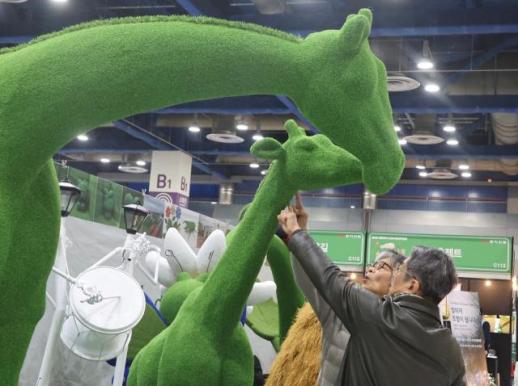 Expo in southern Seoul showcases latest gardening trends SEOUL, January 30 (AJP) -A gardening expo is underway in southern Seoul this week, giving visitors a chance to explore the latest trends in landscaping and gardening. The four-day expo, which runs until Feb. 1, features exhibitions related to landscaping and gardening along with various programs including special lectures, forums, and expert consultation booths in an effort to revitalize relevant industries. 2026-01-30 17:47:59
 -
 South Korea, Japan agree to resume naval search and rescue drills after nine-year hiatus SEOUL, January 30 (AJP) - South Korea and Japan agreed on Friday to resume bilateral naval search and rescue exercises for the first time in nine years and to institutionalize annual defense ministers’ talks, as the two countries seek to restore military cooperation based on mutual trust. South Korean Defense Minister Ahn Gyu-back and Japanese Defense Minister Shinjiro Koizumi agreed on the importance of advancing defense cooperation following their meeting at the headquarters of the Japan Maritime Self-Defense Force in Yokosuka, Kanagawa. “The two sides agreed to resume a humanitarian search and rescue exercise between the Republic of Korea Navy and the Japan Maritime Self-Defense Force,” according to a joint statement released after their talks. The Korea–Japan SAREX program began in 1999 and had been held biennially until it was suspended after the 10th exercise in 2017. Bilateral defense cooperation stalled amid diplomatic and military tensions in 2018, including a controversy over the use of Japan’s Rising Sun flag, the naval ensign of its Maritime Self-Defense Force during an international fleet review held in Jeju, and a separate dispute involving alleged radar targeting and low-altitude flight between a South Korean naval vessel and a Japanese patrol aircraft. The two sides had initially sought to resume the drills in November last year, but the plan fell through after Japan declined to provide aerial refueling support for South Korea’s Air Force aerobatic team, the Black Eagles, citing the team’s training flights near the Dokdo islets. The decision led to a broader suspension of defense exchanges at the time. Following a phone call between Ahn and Koizumi on Dec. 26 last year, Japan agreed to provide refueling support for the Black Eagles, helping pave the way for the resumption of bilateral defense engagement. The ministers also shared the view that closer cooperation is necessary to maintain peace and stability in the region amid a deteriorating security environment. They reaffirmed their commitment to the complete denuclearization of the Korean Peninsula and to continuing trilateral cooperation among South Korea, the U.S. and Japan. 2026-01-30 17:45:56
 -
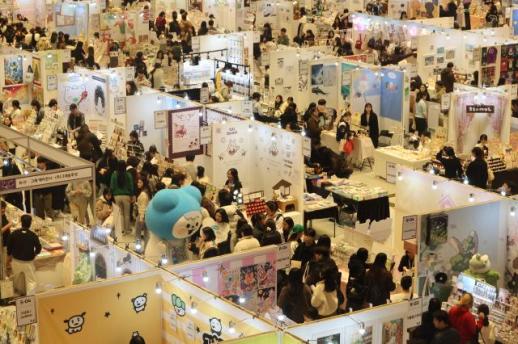 K-goods at Illustration Fair Seoul 2026 SEOUL, January 30 (AJP) - K-illustration Fair Seoul 2026 is taking place at COEX Hall D in Gangnam, Seoul. The fair opened on the 29th and runs through Feb. 1 for four days. Approximately 600 booths are showcasing a variety of domestic and international illustrations, independent publications, and merchandise. The event operates from 11 a.m. to 6 p.m. daily. The fair is scheduled to be held at BEXCO in Busan in July and at COEX Magok in August. 2026-01-30 17:40:07
 -
 LG Elec profit slumps in 2025 on restructuring costs, media business losses SEOUL, January 30 (AJP) - LG Electronics reported a sharp decline in operating profit in 2025, as hefty one-off restructuring costs and persistent weakness in its media and entertainment business weighed heavily on earnings, overshadowing steady growth in its core home appliance and vehicle component units. The South Korean electronics maker said its annual operating profit fell 27.5 percent from a year earlier to 2.48 trillion won ($1.8 billion), after slipping into an operating loss in the fourth quarter amid rising cost burdens. LG posted an operating loss of 109 billion won in the October–December period, marking its first quarterly loss in nine years, as delayed demand recovery for display-based products, intensifying competition in the global TV market and increased marketing expenses eroded profitability. Earnings were further pressured by several trillion won in non-recurring costs related to a company-wide voluntary retirement program implemented in the second half of the year, the company said. While revenue growth continued, profitability deteriorated as cost pressures outpaced sales expansion. The company’s media and entertainment division swung to an operating loss of 751 billion won for the year, reversing a profit recorded a year earlier, as sluggish global TV demand and price competition from Chinese rivals weighed on margins. By contrast, LG’s core businesses delivered relatively resilient performance. The home appliance division posted operating profit of 1.28 trillion won, supported by production optimization, price adjustments and cost controls aimed at mitigating tariff-related risks. The vehicle solutions unit also delivered its strongest performance on record, with operating profit rising to 559 billion won, driven by smoother conversion of order backlogs into sales. Business-to-business revenue, including vehicle components, heating, ventilation and air conditioning, and component solutions, rose 3 percent year on year to 24.1 trillion won, reflecting the company’s ongoing shift toward so-called “quality growth” areas. Subscription-based appliance services and direct-to-consumer sales channels continued to expand, with subscription revenue jumping 29 percent to nearly 2.5 trillion won. LG said the restructuring measures are expected to help ease fixed-cost burdens over the medium to long term, while efforts are under way to strengthen competitiveness in its media business. Looking ahead, the company said it plans to reinforce its OLED and LCD product lineup and expand its webOS-based advertising and content ecosystem. LG also highlighted growing opportunities in cooling solutions for artificial intelligence data centers, including plans to commercialize liquid-cooling technologies and deepen related partnerships. Shares of LG Electronics closed down 1.8 percent at 99,100 won on Friday. 2026-01-30 17:38:35