
Journalist

AJP
-
 Semiconductor rally lifts KOSPI to fresh record as SK hynix tops 900,000 won SEOUL, January 30 (AJP) – Asian equities opened higher on Friday, with South Korean stocks leading the way. The KOSPI extended its rally to another intraday record, with SK hynix breaking above a new milestone. SK hynix shares climbed for a fourth straight session on Friday, breaking above the 900,000-won mark for the first time on record. As of 9:58 a.m. Seoul time, the stock was trading up 6.85 percent at 920,000 won. Improved investor sentiment followed its record earnings announced on Jan. 28, along with solid results from major U.S. technology companies overnight in New York and expectations of a red-hot earnings streak by the two memory behemoths as they report record results for 2025. The KOSPI was trading at 5,260.32 as of 10:48 a.m. local time, up 0.75 percent, while the tech-heavy KOSDAQ rose 0.11 percent to 1,165.74. Individual investors snapped up a net 312.5 billion won ($235 million), while foreign investors and institutions offloaded a net 102.2 billion won and 240.4 billion won, respectively. Among heavyweight stocks, Samsung Electronics rose 2.43 percent to 164,600 won, while LG Energy Solution fell 1.20 percent to 415,000 won. Samsung Life Insurance dropped 0.89 percent to 190,300 won, and Samsung Biologics slipped 0.73 percent to 1,763,000 won. Automakers traded lower, with Hyundai Motor falling 3.60 percent to 509,000 won and Kia sliding 0.97 percent to 153,400 won, as tariff-related cost pressures continued to weigh on the sector. Amid ongoing tariff headwinds, Hyundai Motor is accelerating efforts to expand production in the United States. The automaker plans to raise U.S. output to more than 1.2 million vehicles this year and increase the share of locally produced vehicles to 80 percent by 2030. The group sold 1.84 million vehicles in the U.S. last year, capturing an 11.3 percent market share, but produced only about 700,000 units locally, leaving around 60 percent of U.S. sales dependent on imports. As a result, Hyundai Motor’s tariff burden reached about 7.2 trillion won last year, contributing to a 24.2 percent drop in operating profit despite strong U.S. sales. Expanding U.S. production is widely seen as necessary to restore price competitiveness by reducing tariff, currency and logistics costs. Defense and aerospace shares declined, with Hanwha Aerospace down 0.62 percent at 1,292,000 won. Shipbuilders also traded lower. HD Hyundai Heavy Industries dropped 1.53 percent to 579,000 won, while Hanwha Ocean fell 2.04 percent to 139,000 won. Risk-off sentiment intensified after U.S. stocks fell sharply overnight on technology-led losses and renewed concerns over a potential artificial intelligence bubble. Adding to caution, the Trump administration again named South Korea a currency monitoring country in the U.S. Treasury Department’s latest semiannual report, pushing the dollar higher in early trading. The dollar was trading at 1,425.90 won, up 0.90 won from the previous day. Elsewhere in Asia, Japanese shares were higher, with the Nikkei 225 gaining 0.31 percent to 53,538.44. 2026-01-30 11:13:49
 -
 Former justice minister named special ambassador for climate SEOUL, January 30 (AJP) - Former Justice Minister Kang Kum-sil has been named South Korea's special ambassador for climate and environment, the Foreign Ministry said on Friday. She will take up the one-year ambassadorial role to tackle climate and environmental issues while promoting the government's efforts. Having served as the country's first female justice minister under the late Roh Moo-hyun administration, Kang also led the Democratic Party's (DP) election campaign for last year's presidential election. According to the ministry, Kang, in her new role, will promote the country's climate and environment-related policies at various domestic and international events and conferences. 2026-01-30 10:57:00
 -
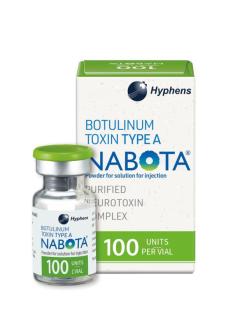 Daewoong Pharma inks $20.5 million Nabota supply contract for Mexico SEOUL, January 30 (AJP) - South Korea's Daewoong Pharmaceutical has signed a 29.5 billion won ($20.5 million) export contract to supply its botulinum toxin product Nabota to Mexico. With the agreement, Nabota has entered Mexico as well as Brazil, Argentina, Colombia and Chile — the five largest aesthetic and plastic-surgery markets in Latin America, according to the International Society of Aesthetic Plastic Surgery. Daewoong said it has expanded Nabota’s presence in the region in stages since first entering Panama in 2015, followed by launches in Brazil, Argentina, Colombia, Peru and Chile. The company has signed export contracts in 17 of the region’s 20 countries, with commercial launches completed in 13 markets. M8, which was selected as Daewoong’s distribution partner for Mexico, has worked with the company since 2018 and previously led Nabota’s launch in Brazil. Daewoong said M8 adopted a differentiated distribution strategy by targeting aesthetic and dental clinics, while also competing in the dermatology and plastic-surgery segment. The company said the contract size has increased roughly 10-fold in five years since Nabota’s Brazil launch, adding that the two partners recently strengthened their cooperation with a Nabota supply agreement valued at about 180 billion won. “Mexico is the second-largest aesthetic and plastic-surgery market in Latin America after Brazil, making it a key strategic country in terms of market size,” said Yoon Jun-soo, head of Daewoong’s Nabota business division. “While the frequency of aesthetic procedures per capita remains lower than in South Korea, this points to significant growth potential, particularly in the premium toxin segment.” * This article, published by Aju Business Daily, was translated by AI and edited by AJP. 2026-01-30 10:45:31
 -
 HD Korea Shipbuilding wins order for liquefied CO2 carriers SEOUL, January 30 (AJP) - HD Korea Shipbuilding & Offshore Engineering said on Friday it has secured an order to build two liquefied carbon dioxide carriers. The company said it recently signed a contract with Japanese shipping company Mitsui O.S.K. Lines, Ltd. to construct two LCO₂ carriers with a cargo capacity of 12,000 cubic meters each. The vessels will be built at HD Hyundai Heavy Industries’ shipyard in Ulsan and delivered to the shipowner in stages by the second half of 2029. Each ship measures 150 meters in length, 28 meters in width and 15 meters in height. The ships will be equipped with a cargo-handling system capable of safely transporting not only liquefied CO₂ but also liquefied petroleum gas, allowing for multipurpose cargo operations. The company said the ships will also feature liquefied natural gas dual-fuel propulsion engines to reduce pollutant emissions during operation. In addition, the vessels will incorporate ice-class design technology to ensure stable operations in polar regions such as the North Sea, and will be fitted with bow and stern thrusters to improve maneuverability during docking and undocking. A company official said HD Korea Shipbuilding has secured both low- and medium-pressure storage technologies in the LCO₂ carrier segment, which is expected to grow as global decarbonization efforts accelerate. * This article, published by Aju Business Daily, was translated by AI and edited by AJP. 2026-01-30 09:58:46
 -
 UPDATE: Korea's factory output strongest in four months in December, slows for full 2025 *Updated with additional information and market response SEOUL, January 30 (AJP) - South Korea’s factory output grew at its fastest pace in four months in December, driven by chip-led exports and a sharp rebound in construction, though growth slowed for full-year 2025 amid prolonged weakness in building activity. Mining and manufacturing production rose 1.7 percent from the previous month, rebounding from two consecutive contractions and accelerating from a 0.8 percent gain in November, according to data released Friday by the Ministry of Data and Statistics. Services output increased 1.1 percent on month, with retail sales rising 0.9 percent. Capital investment fell 3.6 percent, while construction investment surged 12.1 percent. Gains in manufacturing were primarily driven by semiconductors, where production rose 2.9 percent on month, marking a second straight month of expansion. The pace moderated from November’s 8.8 percent surge as the base effect from October’s slump began to fade. The most significant sector-specific rebound occurred in pharmaceuticals. After a 10.5 percent decline in November, output jumped 10.2 percent in December. Conversely, automobile production — a major pillar of the manufacturing base — fell 2.8 percent, marking its second consecutive monthly decrease. On a year-on-year basis, production of “other transport equipment,” including ships, surged 26.4 percent, driven by strong orders for specialized vessels such as LNG carriers. However, facility investment in this segment plunged 16.1 percent from the previous month, contributing to an overall 3.6 percent decline in total capital expenditure. Overall manufacturing shipments rose 2.5 percent. While shipments of automobiles and pharmaceuticals declined, semiconductors and electrical equipment anchored the aggregate gain. Both domestic and export demand showed strength, with domestic shipments rising 1.2 percent and export shipments climbing 4.0 percent. Korean markets were mixed. The KOSPI was trading at 5,273, up 1.0 percent, while the KOSDAQ remained virtually flat at 1,165. The dollar added 3.8 won to 1,438.8 won. Domestic front improves The retail sales index edged up 0.5 percent year on year, driven by a 4.5 percent increase in durable goods, particularly passenger cars. Still, sticky inflation weighed on spending. Semi-durable goods, such as clothing, fell 2.2 percent, while non-durable goods, including cosmetics, decreased 0.3 percent. Retail patterns also showed a stark divergence. Year-on-year sales at supermarkets and general stores fell 4.3 percent, department stores dropped 4.4 percent, and convenience stores declined 2.6 percent. In contrast, the retail index for passenger cars and fuel stations rose 5.3 percent. This suggests that while households are tightening their belts on food and daily necessities, spending on automotive-related items has remained elevated. A standout figure in the latest report was the performance of the construction sector. Construction output surged 12.1 percent from the previous month, reversing a downturn that had persisted for 19 months. The recovery was led by a 13.7 percent increase in building construction and a 7.4 percent rise in civil engineering. Construction orders also climbed 18.7 percent on month. Building orders, particularly in the residential segment, rose 21.2 percent, while civil engineering orders increased 13.0 percent. The surge in orders, however, was heavily concentrated in the public sector, which recorded a 65.2 percent jump in contracts. In contrast, private-sector orders — a key gauge of organic market demand — fell 1.3 percent. Analysts say that while output figures point to a short-term rebound, the divergence between public and private orders suggests the sector has yet to achieve a structural recovery. Five-year streak continues, but momentum falters For the full year of 2025, South Korea’s total industrial production edged up 0.5 percent, supported by synchronized gains in manufacturing and services. This marked the fifth consecutive year of expansion since 2021. Mining and manufacturing output rose 1.6 percent for the year, with semiconductors again leading the gains and other transport equipment providing a notable tailwind. Momentum, however, weakened toward year-end, with fourth-quarter production falling 3.2 percent from the previous quarter, signaling a cooling trend in late 2025. The service sector grew 1.9 percent for the year, supported by increased activity in health and social welfare as well as wholesale and retail trade. By contrast, the education sector contracted, weighing on overall service-sector growth. Despite the continued expansion, the pace of growth has slowed markedly. After surging 5.5 percent in 2021 on post-pandemic base effects, growth decelerated to 4.8 percent in 2022, 1.2 percent in 2023 and 1.5 percent in 2024. Last year’s 0.5 percent gain marked the first time since the recovery began that growth slipped below the 1 percent threshold. 2026-01-30 09:21:59
 -
 South Korea's ambassador to China wealthiest among senior officials SEOUL, January 30 (AJP) - Ambassador to China Roh Jae-heon declared assets worth 53 billion won (US$38 million), making him the wealthiest among high-ranking officials, according to figures released by the Government Ethics Committee on Friday. Most of the assets held by the eldest son of former President Roh Tae-woo are in real estate, including land, buildings and residential properties registered under his or his spouse's name, along with savings and other holdings. His mother, the widow of the late president, owns a building valued at some 13 billion won. Meanwhile, Foreign Minister Cho Hyun reported 2.19 billion won in assets, including his home in Seoul's tony district of Yongsan valued at 698 million won. Ambassador to the United Nations Hwang Joon-kook declared assets worth 5.22 billion won, consisting of an apartment in Yongsan and holdings in stocks and bonds. Ambassador to the United States Kang Kyung-wha disclosed 5.58 billion won in assets including a building worth roughly 3 billion won. About 23 secretaries at Cheong Wa Dae own an average of 2.7 billion won in assets. In South Korea, public officials and ambassadors are required to disclose their assets as part of transparency and anti-corruption measures. 2026-01-30 09:13:44
 -
 'Buldak' boom powers Samyang to record revenue, profit SEOUL, January 30 (AJP) - South Korean noodle company Samyang Foods said it surpassed 2 trillion won in annual revenue for the first time since its founding, doubling sales in just two years on the back of strong overseas demand for its "Buldak" brand. In a regulatory filing on Friday, the company reported preliminary consolidated revenue of 2.35 trillion won for last year, up 36 percent from a year earlier, while operating profit jumped 52 percent to a record 523.9 billion won. The company attributed the results primarily to the rapid global expansion of Buldak, which it described as having evolved into a “global mega brand,” as well as to increased production capacity. Operating profit has risen more than threefold over the past two years, climbing from the 140 billion won range to above 500 billion won, it said. Samyang Foods expanded its export footprint last year, pushing Buldak products deeper into mainstream retail and distribution channels in the United States and Europe. The company also said the launch of operations at its Miryang Plant No. 2 significantly boosted production capacity, helping stabilize supply amid ongoing external uncertainties. As overseas expansion gained momentum, about 1 billion Buldak products were sold in the second half of last year alone, underscoring the brand’s competitiveness in global markets, the company said. A more robust supply system supported surging international demand. “Buldak has become a product that is consumed routinely in global markets, and demand continues to expand,” a Samyang Foods spokesperson said. “We will continue to strengthen our production and distribution infrastructure to sustain growth.” * This article, published by Aju Business Daily, was translated by AI and edited by AJP. 2026-01-30 08:49:07
 -
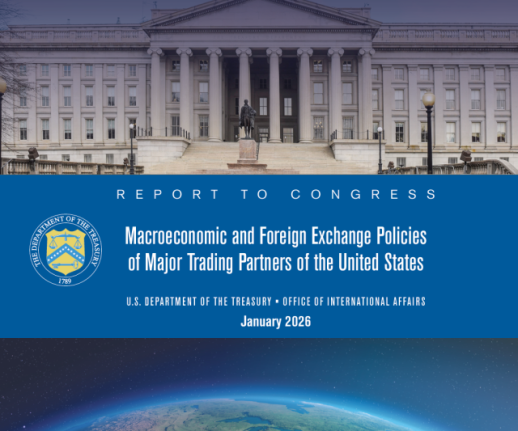 Seoul stays on U.S. currency monitoring list, FX intervention "broadly symmetrical" SEOUL, January 30 (AJP) -South Korea remained on the U.S. Treasury Department’s currency Monitoring List in its latest semiannual report, on widened external surpluses and sizeable bilateral trade imbalance with the United States, while finding the Korean won's weakness "not in line with" the country's "strong fundamentals. In its January 2026 Report to Congress on the Macroeconomic and Foreign Exchange Policies of Major Trading Partners of the United States released on Thursday, the U.S. Department of the Treasury said no major trading partner met all three statutory criteria for designation as a currency manipulator during the review period, covering the four quarters through June 2025. “Treasury concludes that no major trading partner of the United States engaged in conduct of the kind described in Section 3004 of the 1988 Act,” the report said, referring to the law governing findings of currency manipulation for competitive advantage. Still, South Korea was kept on the Monitoring List because it met two of the three thresholds set out under the 2015 Trade Facilitation and Trade Enforcement Act: a material current account surplus and a significant bilateral trade surplus with the United States. Countries meeting two criteria are subject to enhanced scrutiny for at least two consecutive reports to ensure improvements are durable rather than temporary. Along with South Korea, the Monitoring List includes China, Japan, Taiwan, Thailand, Singapore, Vietnam, Germany, Ireland and Switzerland. South Korea returned to the list in November 2024 after a brief leave in 2023 for the first time in seven years. According to the report, Korea’s current account surplus rose to 5.9 percent of GDP over the review period, up from 4.3 percent a year earlier, driven almost entirely by goods trade — particularly semiconductors and other technology exports. Korea’s goods and services surplus with the United States also expanded sharply, reaching $52 billion, more than double its pre-pandemic high of $18 billion in 2016. Despite these strong external positions, the Korean won came under sustained depreciation pressure in late 2024 and 2025. Treasury noted that the won’s weakness was “not in line with Korea’s strong economic fundamentals,” attributing much of the pressure to private-sector capital outflows rather than policy actions. Retail investors and institutional funds accelerated overseas equity purchases, while the National Pension Service (NPS) continued large-scale foreign investment as part of its diversification strategy. Treasury described these outflows as a key factor behind won depreciation. The report said Korean authorities sold $7.3 billion in foreign exchange reserves on a net basis during the review period — about 0.4 percent of GDP — primarily to smooth excess volatility rather than to push the currency in a particular direction. Treasury assessed Korea’s foreign-exchange intervention since 2016 as “broadly symmetrical,” marking a departure from earlier practices aimed at resisting appreciation. The Bank of Korea has reported net sales in most quarters since it began regular disclosure in 2019, largely during periods of dollar strength. The report also highlighted expanded transparency commitments made in a September 2025 joint statement between Seoul and Washington, including monthly disclosure of intervention data and more detailed reporting of foreign-exchange reserves and forward positions in line with International Monetary Fund standards. Treasury pointed to demographics and savings behavior as structural drivers of Korea’s persistent surplus. Rapid population aging has raised precautionary savings, while households and institutions channel funds overseas in search of higher returns, reflecting limited dividend payouts and low valuations in domestic equity markets. In its most recent assessment, the IMF judged Korea’s external position to be broadly in line with medium-term fundamentals, estimating the won to be undervalued by about 2.4 percent on a real effective basis in 2024. An updated IMF assessment for 2025 has yet to be released. While Korea avoided any escalation toward enhanced enforcement, Treasury said it would continue to closely monitor the country’s exchange-rate practices and macroeconomic policies, particularly as large trade surpluses persist alongside currency weakness. 2026-01-30 07:36:15
 -
 After conquering beauty front, Olive Young expands to wellness with Gwanghwamun opening SEOUL, January 29 (AJP) - Best known as South Korea’s dominant K-beauty retailer, Olive Young is opening a new chapter — one that extends beyond cosmetics and into everyday wellness. The company on Thursday unveiled to the media the first flagship store of its new wellness platform, Olive Better, in Gwanghwamun, one of Seoul’s busiest and most symbolic district name recently gaining renewed global fame. The area sits at the heart of the capital, home to government offices, multinational corporations and major cultural events. In March, it is set to lend its open space for the much-awaited comeback performance by global K-pop group BTS — a reminder of how the district routinely draws massive crowds of both locals and foreign visitors. The location itself carries commercial weight. The site previously housed one of Seoul’s most heavily trafficked two-story Starbucks stores, long known as a landmark meeting point for office workers and tourists alike. From beauty to daily wellness At a media briefing held earlier in the day, Olive Young framed Olive Better as its attempt to redefine wellness not as a niche category, but as part of daily life. An Olive Young official described the concept through a “six-well” philosophy: Eat well, nourish well, fit well, glow well, relax well and care well. The shift comes as interest in wellness has accelerated in South Korea since the pandemic, expanding from fitness and dieting toward sleep quality, stress management and functional nutrition. Some visitors said the space felt reminiscent of U.S. wellness-focused retailers, drawing parallels to Trader Joe’s for its accessibility and to Erewhon for its curated, premium aesthetic. Why create a separate brand? Given Olive Young’s dominance in the health-and-beauty retail market, the decision to launch a separate wellness platform raises an obvious question. Company officials said wellness demands a fundamentally different retail structure. “Beauty focuses on visible results, but wellness is about habits,” an Olive Young representative said. “We needed a space that helps consumers practice small routines consistently, rather than simply buy products.” Defining K-wellness Asked how Olive Young defines K-wellness (Korean wellness), particularly for global consumers with different cultural standards, the company emphasized a domestic-first strategy. “Olive Better is designed primarily for Korean customers,” an official told AJP. “The core of K-wellness lies in how people maintain their health within extremely busy daily schedules.” “If that culture naturally takes root here, foreign visitors may eventually become interested in how Koreans manage wellness in everyday life — much like how K-beauty spread globally,” the official added. A store shaped by urban routines That philosophy becomes clear inside the Gwanghwamun store. The merchandise targets time-constrained urban consumers. Near the entrance, shelves are lined with ginger shots, portable protein drinks and functional beverages designed for quick consumption between work schedules. Unlike traditional beauty retail, Olive Better allows visitors to sample food and drinks on-site — replacing cosmetic testers with tasting stations. Further inside, entire sections are dedicated to rest and recovery. Sleep-related products occupy prominent space, including loungewear, pajamas and melatonin-infused products — a category that has grown rapidly in Korea in recent years. “Interest in sleep hygiene among young adults has increased noticeably,” said Dr. Lee, a neurologist specializing in sleep patterns. “Many people now receive sleep education or try behavioral and lifestyle adjustments first, and if those don’t work, they proceed to medical treatment,” he said. The rise in sleep-focused consumption reflects a broader shift in how Koreans perceive wellness — not as luxury, but as survival in high-pressure urban life. Wellness as culture, not category Rather than presenting wellness as aspiration or transformation, Olive Better frames health as something practical — routines that can be executed between commutes, meetings and late nights. In the middle of Seoul’s political, corporate and cultural crossroads, the store positions wellness not as escape, but as part of daily motion. For Olive Young, the bet is clear: if wellness becomes an everyday practice for Koreans, it may eventually travel abroad not as a product export, but as culture. Olive Better officially launches Friday. 2026-01-29 19:19:40
 -
 BTS Comeback D-51: Solo hits resurface as fans turn the wait into a global replay SEOUL, Jan. 29 (AJP) — As the countdown to BTS’s long-awaited full-group comeback hits D-51, fans have found a familiar way to pass the time: by sending the group’s solo catalog back up the charts. Across streaming platforms and social media, past releases by BTS members are enjoying a renewed surge, turning the pause before reunion into a rolling retrospective of individual careers that never truly went quiet. For V (Kim Taehyung), the moment has arrived in gold. Music Canada recently awarded Gold Single certifications to four of his solo tracks — “Christmas Tree,” “Slow Dancing,” “Love Me Again,” and “FRI(END)S” — underscoring his sustained pull in the Canadian market. Music Canada, formerly the Canadian Recording Industry Association, bases its certifications on combined digital downloads, streams and physical sales. Released on Christmas Eve in 2021, “Christmas Tree” made history as the first Korean original soundtrack to enter the U.S. Billboard Hot 100, debuting at No. 55. It also charted on Billboard’s Holiday Hot 100 and topped the Digital Song Sales chart, becoming an enduring seasonal staple rather than a one-off hit. Tracks from V’s first solo album Layover followed a similar path. “Slow Dancing,” built on a jazz-pop sensibility, and “Love Me Again,” a soul-tinged dance-pop track, both earned Gold certification. “Love Me Again” has since crossed the 1-billion-stream mark on Spotify, making it V’s first solo entry into the platform’s Billions Club — a milestone fans continue to celebrate online well after the number itself has passed. “FRI(END)S,” meanwhile, debuted on Billboard’s Hot 100 and entered the U.K.’s Official Singles Chart at No. 13, later gaining new exposure as background music for Amazon Prime Video’s hit series The Summer I Turned Pretty Season 3. If V’s catalog is being rediscovered, Jung Kook’s never left rotation. His solo debut single “Seven” continues its remarkable longevity, ranking No. 77 on Spotify’s Weekly Top Songs Global chart for the Jan. 16–22 tracking period with more than 12 million weekly streams. Since its release in November 2023, the song has remained on the global chart for more than two years, logging 132 consecutive weeks — the longest run ever for a song by an Asian solo artist. With cumulative streams approaching 2.8 billion, “Seven” is now Spotify’s most-streamed song released in 2023. Jung Kook’s first full-length album, GOLDEN, is charting with similar persistence. The album ranked No. 81 on Spotify’s Weekly Top Albums Global chart during the same period, extending its streak to 116 consecutive weeks — also a first and longest for an Asian solo artist. Its cumulative streams have surpassed 6.6 billion, the highest total for a full-length album by an Asian artist on the platform. Across all credits, Jung Kook’s Spotify streams have now exceeded 10.3 billion, making him the fastest Asian artist — and the first K-pop soloist — to reach the milestone. “Seven” has also maintained long-running positions on Billboard’s Global 200 and Global Excl. U.S. charts, setting record-length runs on both. Beyond charts, the song’s afterlife continues to play out in fan spaces. On YouTube, a recent comment under the official “Seven” music video — “2026 anyone?” — drew thousands of likes, capturing how listeners continue to revisit the track years after release. Short-form platforms tell a similar story. Fan-made dance covers and clips using tracks from GOLDEN, including “Standing Next to You” and “Seven,” have remained in steady circulation on Instagram Reels and TikTok well into January 2026. One widely shared meme thread — “I have never listened to Jung Kook” followed by “Yes, you have” — humorously captures how often his music surfaces across viral content. That visibility spiked again in late 2025, when Jung Kook posted a surprise TikTok dance to “FaSHioN” by boy group CORTIS. The clip exploded, passing 30 million views and 7.6 million likes in a single day and triggering a wave of reposts, reaction videos and dance challenges. Official accounts joined in. TikTok Korea welcomed him back with a playful comment, while CORTIS’s own account called the moment “like a dream.” The clip eventually surpassed 100 million views, joining several other Jung Kook TikToks to cross the same threshold. Together, these moments show how the BTS countdown has become something more than a wait. As D-51 ticks down, solo songs once released as individual statements are being pulled back into the spotlight — not as placeholders, but as proof that even in pause, the group’s cultural gravity continues to expand. 2026-01-29 17:43:16