
Journalist

AJP
-
 Hanwha Systems’ AI Smart Warship Design Wins Lloyd’s Register Approval in South Korea First Hanwha Systems said Wednesday it became the first company in South Korea to receive an approval in principle for a “smart multipurpose combat ship” concept design from Lloyd’s Register (LR), one of the world’s three major classification societies. Lloyd’s Register is considered one of the top three classification societies, along with the American Bureau of Shipping (ABS) and DNV of Norway. It operates naval shipbuilding rules aligned with NATO standards and is widely trusted by naval customers, the company said. Classification certification is a third-party verification that a vessel is designed and built safely under international regulations and naval construction standards, and is viewed as a key requirement for entering export markets. Hanwha Systems has promoted its “smart battleship” as a next-generation concept for crewed naval vessels. The company said the approval formally recognizes the design’s safety and reliability under international naval standards. The smart multipurpose combat ship, which the company describes as a realization of its smart battleship concept, is a 2,000-ton-class vessel built around artificial intelligence-based software and designed for future maritime combat environments. Hanwha Systems said it integrated more than 40 years of maritime systems expertise and smart maritime solutions into the model, including an AI-based combat system; an intelligent integrated machinery control system that monitors propulsion components and predicts failures; a cockpit-style integrated bridge that can be operated by as few as two crew members; a four-face fixed multifunction radar using active electronically scanned array technology; unmanned systems solutions; and stealth design. The company said the stealth-shaped hull is intended to reduce detection and improve survivability, while cutting required crew to about half compared with conventional crewed ships. It said that could lower labor and long-term operating and maintenance costs and help address manpower shortages faced by navies worldwide. Hanwha Systems said it plans to expand its export-oriented portfolio by developing additional ship models of 2,000 tons or less, applying Lloyd’s Register standards from the design stage to secure safety and design credibility and to meet certification requirements of potential customer navies. Yoo Moon-ki, head of Hanwha Systems’ maritime business division, said the smart multipurpose combat ship is “a next-generation maritime platform that raises both efficiency and sustainability in naval operations through AI and automation.” He added, “With this AIP, we will proactively respond to future needs of global navies and set a new standard for K-maritime defense.”* This article has been translated by AI. 2026-01-29 08:51:19
 -
 Hyundai Motor Breaks Ground on Immersive Safety Experience Center at Ulsan Plant Hyundai Motor has broken ground on an immersive safety experience center to be built at its Ulsan plant. The automaker said Wednesday it held a groundbreaking ceremony Tuesday at the Ulsan plant with about 200 labor and management representatives in attendance, including Choi Young Il, head of domestic production and chief safety and health officer; Jung Won Dae, vice president in charge of production support; and union leaders Lee Jong Cheol and Lee Chang Min. Set to open in the second half of this year, the H-Safety Experience Center will be a safety media facility covering 280 pyeong on the Ulsan plant site. It will be open to employees, partner-company workers and members of the public. Hyundai Motor said the center will offer training content using augmented reality, holograms and special effects. It also plans, for the first time among safety experience centers in South Korea, to recreate the Ulsan plant’s real production sites and hazardous situations using projection-mapping technology. Visitors will move through six zones — a welcome zone, safety zone, traffic safety zone, accident experience zone, risk assessment zone and emotional safety zone — to take part in training built around real-world accident cases. In the safety zone, visitors will be able to experience a smoke-filled fire scene using special effects. In the accident experience zone, they can watch a life-size forklift collision simulation. After it opens, Hyundai Motor plans to provide immersive safety training to about 20,000 people a year. “The H-Safety Experience Center is a symbolic place that shows Hyundai Motor’s commitment to top-level safety,” a company official said. “We expect it to help everyone build lasting safety awareness by using a range of new technologies.” 2026-01-29 08:51:00
 -
 LS Electric Deploys Smart Outage Management System for Distributed Power Grids LS Electric said it has commercialized a smart distribution solution designed to help manage distributed power grids more reliably, stepping up its push into the fast-growing market. The company said on Jan. 29 that it recently completed installation of its self-developed Outage Management System (OMS) at a district electricity business office in the Hakha district of Yuseong-gu, Daejeon, operated by CNCITY Energy. The OMS digitizes the status and condition of power equipment to support distribution operations. LS Electric said it is the first case in which a privately developed distribution-operations solution has been commercialized at a district electricity business site. The company described OMS as an intelligent system that helps operators quickly identify affected areas and equipment during outages. Beyond outage response, LS Electric said it is expected to enable integrated, digital management of equipment status and history across the distribution network, supporting equipment life prediction and maintenance optimization. LS Electric said it plans to work with CNCITY Energy to accelerate technology development for next-generation distributed distribution networks, citing the reliability demonstrated through the OMS project. An LS Electric official said OMS is drawing attention as an essential solution not only for district electricity business offices but also for large factories and industrial infrastructure. The official said the system has already received positive reviews at multiple industrial sites and will serve as a core solution for AI-driven transformation of power systems while helping improve distributed-grid stability.* This article has been translated by AI. 2026-01-29 08:48:19
 -
 Heungkuk Securities Raises Hyundai Mobis Target on Electronics, Robotics Shift Heungkuk Securities said Wednesday that Hyundai Mobis’ fourth-quarter results met market expectations and that recovering tariff-related costs has reduced uncertainty, while its business shift toward automotive electronics and robotics continues. The brokerage raised its target price to 540,000 won from 500,000 won and kept its “buy” rating. Hyundai Mobis posted fourth-quarter revenue of 15.4 trillion won and operating profit of 930.5 billion won. Revenue rose 4.7% from a year earlier, while operating profit fell 5.6%. Heungkuk Securities said output from automaker customers slipped 1.4%, but a favorable exchange-rate environment, a higher share of high value-added automotive electronics parts in manufacturing, and price increases in the after-sales service business lifted sales. On profitability, the firm recovered about 2 trillion won of roughly 2.5 trillion won in parts-tariff costs incurred last year, sharply reducing the tariff impact. However, the after-sales service unit reflected about 870 billion won in tariff costs and about 600 billion won in one-time quality costs, pushing its operating margin down to 22.7% from the prior quarter. Heungkuk Securities said tariff-related pressure should ease gradually starting this year as after-sales prices rise and tariff recoveries accelerate. Ma Geon Woo, an analyst at Heungkuk Securities, said Hyundai Mobis’ actuator business for Boston Dynamics is being developed using the company’s existing core technologies, limiting the burden of research and development and capital spending. He said the company could expand supply beyond actuators to additional parts for humanoid robots, creating business opportunities as physical AI develops.* This article has been translated by AI. 2026-01-29 08:48:00
 -
 Samsung defends record results for 2025, but falls behind local rival in chip profitability *Updated with additional earnings details and stock quote SEOUL, January 29 (AJP)-Samsung Electronics, South Korea's No. 1 tech behemoth, raked in strong operating income and record sales in the final quarter and full year of 2025, but fell short of expectations and in the memory race versus local rival SK hynix, which shifted faster toward an AI-centric architecture and client base. According to its finalized results disclosed Thursday, for the quarter ended December the company reported 16.4 trillion won ($1.14 billion) in chip (DS) operating profit, up as much as 9.4 trillion won from the previous quarter and 13.5 trillion won from the same period a year ago. Its staggering performance however has been paled by its rival. On the previous day, rival local pure-play memory maker SK hynix delivered 19.17 trillion won in operating profit on sales of 80.8 trillion won during the same period, flashing an operating margin of 58 percent — the industry's highest — due to the company’s fab concentration on high-bandwidth memory (HBM) that powers multi-functional AI accelerators and hyperscale data centers. Chip sales reached 44 trillion won in the fourth quarter, up 33 percent on year and 46 percent on quarter, and 130 trillion won for full-year 2025, up 17 percent. Of that, memory sales totaled 37 trillion won for the fourth quarter and 104.1 trillion won for full-year 2025. Mindful of its lateness in the HBM race, Samsung Electronics said in its earnings statement that it will address “customers' demand by timely shipment of competitive HBM4” and continue expanding AI-related product sales while “proactively addressing AI-related NAND demand.” For full-year 2025, the company generated 24.9 trillion won in chip operating profit, up 9.8 percent on year. SK hynix reported operating profit of 47.2 trillion won on sales of 97.15 trillion won for full-year 2025, underscoring the gap in profitability driven by its focus on AI-related and other high-margin chips. Beyond chip sector, Samsung’s smartphone operation - Device eXperience (DX) division - posted an operating profit of 1.3 trillion won ($963 million) for the fourth quarter, nearly halved from 3.5 trillion won recorded in the previous quarter as new model launch effects fizzed out. The figure also fell significantly from the 2.3 trillion won earned in the same period of 2024, highlighting a year-on-year drop of over 40 percent. The display panel business maintained its earnings stability, reporting an operating profit of 2.0 trillion won. This remained flat compared to the 2.0 trillion won posted a year earlier, as robust demand for high-end smartphone panels and automotive applications offset broader market volatility. Samsung’s audio-and-automotive unit Harman recorded 0.3 trillion won in operating profit, due to increased in-vehicle product supply in Europe and seasonal strength in audio products. Looking ahead, Samsung said global tariff risks and geopolitical uncertainty are expected to persist in 2026. It said the DS division plans to leverage its strength as an integrated “one-stop solution” provider spanning logic, memory, foundry and packaging to secure leadership in AI semiconductors, while DX will respond by diversifying its supply chain and optimizing operations, expanding AI-enabled products and delivering more seamlessly integrated AI experiences. Net cash amounted to 100.61 trillion won at the end of December, compared with 93.32 trillion won a year-ago period. Shares were down 0.7 percent at 161,300 won as of 10:30 a.m. 2026-01-29 08:47:17
 -
 Hanwha Investment Keeps Hold on LG H&H, Cuts Target Price to 230,000 Won Hanwha Investment & Securities on Wednesday advised a cautious approach to LG Household & Health Care until its sales decline reverses, keeping its “hold” rating. It cut its target price to 230,000 won from 300,000 won. Analyst Han Yu Jeong said the company’s consolidated operating profit for the fourth quarter of 2025 was minus 72.7 billion won, far below the consensus estimate of 4.2 billion won, citing weakness across its Beauty, HDB and Refreshment divisions. On news of LG H&H’s acquisition of Torriden, Han said buying a Korean indie brand could be aimed at rebuilding the Beauty business, but added that further deals are not a priority given weak results from past M&A, including Boinca, The Crème Shop and AVON. “Reorganizing the current brand portfolio, channels, SKUs and fixed-cost structure to normalize profitability should come first,” he said. Han said labor and marketing costs reflected in 2025 are unlikely to be one-off items, and that restructuring-related expenses are likely to continue at least through the end of 2026. He added that Hanwha does not expect a return to normal profit levels through 2026 and therefore shifted the target-price valuation base to 2027 results.* This article has been translated by AI. 2026-01-29 08:45:00
 -
 KAIST researchers develop high-efficiency red micro-LED for realistic virtual reality displays SEOUL, January 29 (AJP) - Researchers have overcome a major technical hurdle in micro-LED technology by developing a high-efficiency red micro-LED that enables ultra-high-resolution imagery for virtual and augmented reality devices. The new technology significantly improves power efficiency and achieves a pixel density of 1,700 pixels per inch, bringing wearable displays closer to mimicking real-world visual clarity. The Korea Advanced Institute of Science and Technology (KAIST) announced on January 28 that a research team led by Professor Kim Sang-hyun from the School of Electrical Engineering developed the display. The project was a collaborative effort with Professor Keum Dae-myeong of Inha University and industry partners QSI and Raontech. The resulting display offers a resolution three to four times higher than current smartphone screens, reaching a level described as near-realistic for virtual reality (VR) and augmented reality (AR) applications. Micro-LEDs are next-generation displays where individual sub-millimeter LEDs emit their own light, offering superior brightness and lifespan compared to Organic Light Emitting Diodes (OLEDs). However, the technology has faced two primary challenges: the rapid loss of efficiency in red pixels as they shrink in size, and the difficulty of transferring millions of tiny LEDs onto a circuit board without defects. To address the efficiency issue, the team utilized a quantum well structure using aluminum indium phosphide and gallium indium phosphide (AlInP/GaInP). This structure acts as an energy barrier that prevents electrons from leaking out, trapping them in the light-emitting space. This allows the red pixels to remain bright and efficient even at extremely small scales. For the manufacturing process, the researchers moved away from the traditional pick-and-place method, which involves moving LEDs individually and often results in alignment errors. Instead, they employed monolithic 3-D integration, a technique where the LED layers are stacked directly onto the driving circuit. This method reduces alignment errors to the nanometer level and allows for a more stable production of ultra-high-resolution screens. The team also established low-temperature processing techniques to ensure the underlying silicon circuits were not damaged by heat during the LED integration. The successful demonstration of a functional display using these high-resolution red micro-LEDs is considered a significant milestone. The technology is expected to be used in AR and VR smart glasses, automotive head-up displays, and various wearable devices where high pixel density is required to eliminate the visible graininess of digital images. "This research has solved the long-standing problems of red pixel efficiency and driving circuit integration in the micro-LED field," Professor Kim Sang-hyun said. "We will continue to develop this into a next-generation display technology that is ready for commercialization." The study, led by Dr. Park Ju-hyeok from the KAIST Institute for Information Technology Convergence, was supported by the National Research Foundation of Korea. 2026-01-29 08:44:40
 -
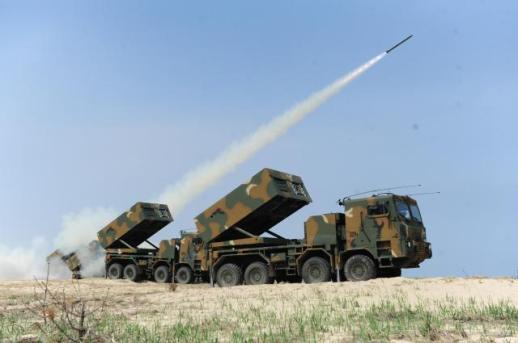 Hanwha Aerospace seeks Chunmoo rocket launcher deal in Norway SEOUL, January 29 (AJP) - Hanwha Aerospace is emerging as a key contender to supply multiple rocket launchers to Norway, as the Nordic country moves ahead with a roughly $2 billion long-range artillery procurement. Norway’s parliament has given final approval to a plan to acquire a long-range artillery system, local media reported on Wednesday. The proposed deal is estimated to include 16 Chunmoo multiple rocket launchers along with related equipment. Industry officials said Norway is likely to favor Hanwha Aerospace as the development of new multiple rocket systems in Europe could take years, while Hanwha is seen as capable of delivering the systems more quickly. Hanwha recently established a local production facility in Poland for Chunmoo guided missiles and plans to begin deliveries as early as 2030. The Chunmoo system can be equipped with missiles with a range of up to 500 kilometers and is regarded as faster to deploy than competing systems. A win in Norway would mark Hanwha’s further expansion in Europe, following its entry into the Polish market late last year. * This article, published by Aju Business Daily, was translated by AI and edited by AJP. 2026-01-29 08:40:28
 -
 Riboncar Says Certified Used-Car Sales Rose 41% in 2025, Led by Hyundai Grandeur Riboncar said Thursday that its sales last year rose 41% from the previous year. As sales expanded for key segments such as sport utility vehicles and mini cars, the company said buyers increasingly weighed overall value and practicality for the vehicle class, not just price, when purchasing used cars. The most-selected company-run certified used car among Riboncar customers was Hyundai Motor Co.’s Grandeur. The Grandeur, a leading large sedan in South Korea, is seen as offering proven quality, a nationwide parts and service network, and stable resale value, the company said. Next were the Kia Carnival, Genesis G80, Kia K5 and Kia Sorento. The shift toward value-focused buying also showed up in sales by vehicle type and fuel, Riboncar said. It cited strong growth for SUVs and multipurpose vehicles for space, mini cars for tax benefits and lower upkeep costs, and electric and hydrogen vehicles for lower fuel expenses. SUV and MPV sales rose 36% from a year earlier and accounted for 29% of total sales. By model, the top sellers were the Kia Carnival, Kia Sorento, Hyundai Santa Fe, Genesis GV70 and Hyundai Palisade. The top five models made up about half of SUV and MPV sales. Mini-car sales rose 34% from the previous year. Riboncar said the segment drew value-focused buyers because of relatively low vehicle prices and lower ongoing costs such as insurance and taxes. Sales of electric and hydrogen vehicles rose 2.7 times from a year earlier. Riboncar said used electric vehicles can see larger price drops than new cars, while offering lower operating costs, making them an option for buyers weighing both cost and practicality. A Riboncar official said more customers are closely comparing value by vehicle class rather than focusing only on price, and that quality control through its direct-run system and transparent information helped build trust and drive sales growth. The official said the company will keep working to reduce customers’ burden and uncertainty in the used-car buying process and improve services that support daily life and lifestyles.* This article has been translated by AI. 2026-01-29 08:39:00
 -
 Nexon to Refund All Purchases for MapleStory Idle After Ability Odds Error Nexon has decided to refund in full all money users spent in the idle game “MapleStory Idle” following a dispute over ability-related probability settings. The company said it is the first time in Nexon’s game-service history that it has moved from a CEO apology to compensation and a full refund over an operations controversy. In a notice posted Tuesday, Nexon said it committed a “serious mistake” by fixing an error that had a “critical impact” on gameplay without notifying users. “Taking full responsibility, we will provide a full refund to any user who wants one,” the company said. The refund covers all paid items purchased from the service launch on Nov. 6, 2025, through the time of the refund notice. It includes not only products tied to the disputed features — ability resets, attack speed and “Quick Hunt” tickets — but all purchase history during the period. Nexon said it will announce the refund process and application period later. After a refund is completed, gameplay will be restricted under existing service policies, it said, and purchases made after the notice will not be eligible. Previously promised individual compensation will be provided separately. The decision followed a late discovery of an error in the game’s core ability-option system that prevented the maximum value from appearing as intended. Nexon said the problem occurred during coding, and that its initial response was delayed because its internal probability-monitoring system was not applied due to collaboration with an outside developer. The Korea Game Users Association had filed a complaint with the Fair Trade Commission, alleging Nexon Korea violated South Korea’s e-commerce law, after receiving authorization from 1,507 users. The group withdrew the complaint after Nexon decided on full refunds. Nexon said that if an issue arises that damages user trust, it will offer the highest level of compensation, beyond the costs users incurred.* This article has been translated by AI. 2026-01-29 08:36:25