
Journalist

AJP
-
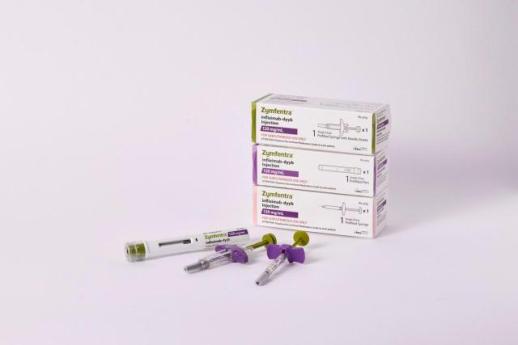 Celltrion, Hanmi, Dong-A ST, HLB and Jaseng report U.S. growth, deals and approvals Celltrion’s Zymfentra posts record weekly prescriptions, ramps up U.S. marketing Celltrion said Wednesday that prescriptions for its subcutaneous infliximab treatment Zymfentra rose about 27% from the same period a month earlier and about 352% from a year earlier, based on the second week of January. The company said the figure was the highest weekly total prescriptions (TRx) recorded since the drug’s U.S. launch in March 2024, according to IQVIA. Celltrion said its ongoing online and offline advertising in the United States helped drive the increase in prescriptions. It also cited the rapid buildout of a reimbursement base for patients as a key factor. Celltrion said it expects Zymfentra’s growth to accelerate starting this year and plans to step up efforts to promote the product’s competitiveness. Hanmi Pharmaceutical signs Mexico export deal with Sanfer for GLP-1 obesity drug and diabetes products Hanmi Pharmaceutical said Wednesday it signed an exclusive distribution agreement with Mexican drugmaker Sanfer covering the GLP-1 obesity drug efpeglenatide and its diabetes combination products sold under the Daparone family brand. Under the deal, Hanmi will supply finished products of efpeglenatide and the Daparone family — Daparone tablets and Daparone Duo extended-release tablets — while Sanfer will handle regulatory approval, marketing, distribution and sales in Mexico. Hanmi said Mexico has an obesity prevalence of 36.86% and a diabetes prevalence of 16.4%. The companies said they plan to expand cooperation step by step, including on efpeglenatide and broader metabolic-disease treatments. Dong-A ST wins Canadian approval for Stelara biosimilar Imuldosa Dong-A ST said Wednesday it received approval from Health Canada for Imuldosa, a biosimilar to the autoimmune disease treatment Stelara (ustekinumab). Stelara posted 2024 sales of US$21.552 billion (about 29.9357 trillion won), the company said. Imuldosa was co-developed by Dong-A Socio Holdings and Meiji Seika Pharma starting in 2013 and is used to treat inflammatory conditions including plaque psoriasis, psoriatic arthritis, Crohn’s disease and ulcerative colitis. The product has been launched in 19 countries, including the United States, Germany and the United Kingdom, and has received approvals in Middle Eastern markets including Saudi Arabia, Qatar and the United Arab Emirates. HLB says it completed FDA filing for bile duct cancer indication for lirafugratinib HLB said Wednesday that its U.S. subsidiary, Elevar Therapeutics, completed a new drug application to the Food and Drug Administration for lirafugratinib, an FGFR2 fusion/rearrangement-targeted cancer drug, as a second-line treatment for bile duct cancer. HLB said Elevar completed the filing after submitting an application on Jan. 23 for a first-line liver cancer indication, starting the FDA review process aimed at both indications. Lirafugratinib received FDA orphan-drug designation in 2022 and breakthrough therapy designation in 2023 for the bile duct cancer indication, HLB said. The company said it reached agreement with the FDA, after a formal meeting last year, to file for accelerated approval based on Phase 2 results without an additional confirmatory Phase 3 trial. HLB said the drug is likely to be considered for priority review, with the FDA to decide whether to grant it when the agency begins its full review. Jaseng Korean Medicine Hospital study finds benefits of integrative treatment for older traffic-accident patients A research team led by Shin Ju Yeon, a Korean medicine doctor at Jaseng Korean Medicine Hospital’s Spine and Joint Research Institute, said Wednesday it published results in the SCI(E)-indexed international journal Medicine on the effectiveness of integrative Korean medicine treatment for older traffic-accident patients. The team retrospectively analyzed electronic medical records of 1,788 patients ages 65 and older who were hospitalized from 2021 to 2023 at four facilities: Gangnam Jaseng Korean Medicine Hospital, Bucheon Jaseng Korean Medicine Hospital, Daejeon Jaseng Korean Medicine Hospital and Haeundae Jaseng Korean Medicine Hospital. The study assessed effectiveness and safety. During hospitalization, patients received integrative treatment including acupuncture, pharmacopuncture, herbal medicine and Chuna manual therapy. Acupuncture was administered twice a day. Treatments included Shinbaro pharmacopuncture and herbal medicines such as Anshinjitongtang and Hwanghyeoljitongtang. Average length of stay was about 10 days. The team reported significant improvements in pain and functional recovery at discharge, around 10 days after admission, across four areas: neck, lower back, shoulder and knee. The EQ-5D quality-of-life measure improved by an average of 0.12 points, with gains across all indicators.* This article has been translated by AI. 2026-01-28 17:34:19
 -
 South Korea’s Black Eagles Get First-Ever Refueling Support at Japan Air Base South Korea’s Air Force aerobatic team, the Black Eagles, received refueling support at a Japan Air Self-Defense Force base. The Yomiuri Shimbun and other outlets reported that the team refueled Tuesday at the JASDF base in Naha, Okinawa. It was the first time the JASDF has provided refueling support to a South Korean Air Force aircraft. The aircraft departed from Wonju Air Base in Gangwon Province and arrived at Naha around 10 a.m., one after another. Pilots also met with JASDF personnel at the base. Masahisa Miyazaki, Japan’s vice defense minister, said, “As the security environment surrounding our country grows more severe, Japan-South Korea defense cooperation is very important,” adding that the Black Eagles’ first stopover carried “great symbolic significance.” The Black Eagles were to depart Okinawa and travel via the Philippines, Vietnam, Thailand, India and Oman, arriving in Saudi Arabia on Feb. 2 to take part in the International Defense Industry Exhibition 2026. Japan had previously agreed to provide refueling support for the Black Eagles as they traveled to the Dubai Airshow in the United Arab Emirates in November, but later refused after raising an issue over the T-50B aircraft conducting routine training near Dokdo. After South Korean Defense Minister Ahn Gyu-back and Japanese Defense Minister Shinjiro Koizumi discussed defense coordination in a phone call on Dec. 26, talks resumed on a Japan stopover. A military attache message was sent Jan. 5 seeking approval for the stopover and airspace transit. The Yomiuri described the refueling in Japan as part of Japan-South Korea defense cooperation and said the Japanese government wants to link cooperation with South Korea to a mutual logistics support agreement, known as an ACSA. It said an ACSA between the Self-Defense Forces and the South Korean military would allow smoother, broader mutual provision of fuel and food and improve operational flexibility. Ahn is scheduled to visit Japan on Wednesday and meet Koizumi on Thursday in Yokosuka, Kanagawa Prefecture.* This article has been translated by AI. 2026-01-28 17:33:54
 -
 South Korea’s Kospi Closes at Record 5,170.81; Kosdaq Jumps 4.7% South Korea’s Kospi, which has held above the 5,000 mark, set another record high on Tuesday, extending gains from the previous session. The Kosdaq surged more than 4% to finish above 1,130. According to the Korea Exchange, the Kospi rose 85.96 points, or 1.69%, to close at 5,170.81. It opened up 60.54 points, or 1.19%, at 5,145.39 and climbed further on buying by foreign and institutional investors. In the main market, foreigners bought a net 574.2 billion won and institutions bought a net 1.1534 trillion won. Retail investors bought a net 1.7229 trillion won. Most heavyweight stocks ended higher, including Samsung Electronics (up 1.82%), SK hynix (up 5.13%), LG Energy Solution (up 5.51%), Hyundai Motor (up 0.82%), Samsung Biologics (up 0.06%) and SK Square (up 6.55%). Samsung Electronics gained 2,900 won to close at 162,400 won, while SK hynix jumped 41,000 won to 841,000 won. Both set record closing highs. By sector, electronics rose 3.18%, financials gained 0.25% and pharmaceuticals added 1.43%. IT services fell 0.79% and machinery and equipment slipped 0.36%. The Kosdaq also rallied. The index rose 50.93 points, or 4.70%, to close at 1,133.52. It opened up 10.88 points, or 1.00%, at 1,093.47 and accelerated on net buying by institutions. Individuals sold a net 2.5981 trillion won, while foreigners bought a net 453.5 billion won and institutions bought a net 2.3268 trillion won. Institutions have been net buyers for three straight sessions in the Kosdaq market. Among top Kosdaq stocks, Alteogen rose 6.62%, EcoPro surged 21.82%, EcoPro BM gained 7.26%, Rainbow Robotics added 6.92%, Samchundang Pharm rose 5.52% and HLB gained 1.36%. ABL Bio fell 0.82% and Kolon TissueGene slipped 1.12%. By sector, electronics rose 6.07%, pharmaceuticals gained 2.90%, machinery and equipment climbed 6.69% and general services added 3.87%. Telecommunications fell 1.57%.* This article has been translated by AI. 2026-01-28 17:33:30
 -
 Why SK Group Is Channeling More Capital to SK hynix: HBM4 Supply and Long-Term Lead SK hynix has cemented its role as a core profit engine for SK Group after posting record results again in the fourth quarter of 2025. As demand tied to artificial intelligence accelerates, industry watchers say the group’s growth strategy is increasingly being reshaped around SK hynix, not just short-term earnings. According to the industry on Tuesday, SK Group has secured about 80 trillion won through asset sales and business restructuring and is focusing that money on future growth areas such as AI and semiconductors. A large share is being spent on SK hynix, linking the group’s divestments directly to the chipmaker’s capital spending and efforts to strengthen its technology edge. The funding push tracks SK hynix’s recent performance. From the first through third quarters of 2025, the company set new quarterly records for revenue and operating profit each quarter. Preliminary fourth-quarter results announced Tuesday also marked all-time quarterly highs for both revenue and operating profit, and full-year 2025 revenue and operating profit hit record levels as well. The steady rise has fueled views that the company has moved beyond a cyclical rebound into a more structural growth phase. SK hynix is widely said to account for about 80% of SK Group’s operating profit. The group’s earnings base, once led by telecom and energy, is now increasingly anchored by semiconductors, pushing investment priorities toward SK hynix. That shift is reflected in capital spending. SK hynix is expected to expand this year’s capital investment to the 30 trillion won range, aiming to get ahead of surging demand for high-value memory used in AI servers. The approach contrasts with past, more cautious moves tied to swings in the memory market, as the company prioritizes long-term market leadership over near-term profitability. A key focus is high-bandwidth memory, or HBM. SK hynix is seeking to extend its lead from HBM3E into next-generation HBM4. It is widely reported to have signed supply deals with major big tech customers, including Nvidia, securing a significant share of HBM4 volumes. Some in the industry estimate it has more than half, with others putting the figure at about 70%. Industry assessments attribute the momentum not only to pricing but also to mass-production yields, stable quality and supply reliability. SK hynix is also investing in early development for post-HBM4 products and strengthening joint validation and customized development with customers, aiming to position itself as a key partner in AI infrastructure rather than a simple supplier. “SK Group’s money is flowing to hynix not because of short-term results, but because it has the clearest growth engine for the next 10 years,” an industry official said. “As long as it maintains leadership in HBM4 and the AI memory market, the group’s investment strategy is likely to keep revolving around hynix.”* This article has been translated by AI. 2026-01-28 17:30:15
 -
 Kim Sei Young, Kim A Lim and Choi Hye Jin named among 15 LPGA players to watch in 2026 Kim Sei Young, Kim A Lim and Choi Hye Jin were named among 15 players to watch for the LPGA Tour’s upcoming 2026 season. Golf Digest announced its list on Tuesday (Korea time) ahead of the season opener. The three were the only South Korean players included. Kim Sei Young, ranked No. 9 in the world, is a 13-time LPGA winner. She won the BMW Ladies Championship in October last year to add her first title since November 2020. Golf Digest said Kim had one win and 10 top-10 finishes last season, and led the tour in par-5 scoring average at 4.55. Kim A Lim won last season’s LPGA opener, the Hilton Grand Vacations Champions Tournament. The magazine noted she did not win again after the opener but posted nine top-10 finishes. It also cited her major record, saying she won the 2020 U.S. Women’s Open and later tied for fourth at the AIG Women’s British Open, coming close to another major title. Choi, who has not won on tour, has created plenty of chances, the magazine said. She finished in the top 10 nine times, the most among players without a win, and has 29 career top-10 finishes. “This year,” it said, “will be worth watching to see if she can lift a trophy.” The list also included world No. 1 Jeeno Thitikul of Thailand, No. 2 Nelly Korda of the United States, No. 3 Minjee Lee of Australia and No. 4 Miyu Yamashita of Japan, along with Lottie Woad of England; Yana Wilson of the United States; Japan’s Chisato Iwai, Akie Iwai, Yamashita and Mao Saigo; Lindy Duncan of the United States; Charley Hull of England; and Gaby Lopez of Mexico. * This article has been translated by AI. 2026-01-28 17:30:00
 -
 South Korea, U.S. Hold Third Visa Working Group Talks; B-1 Adds 'Specialized Trainers' Category South Korean and U.S. government delegations held a third round of consultations under the “South Korea-U.S. Business Travel and Visa Working Group.” South Korea’s Foreign Ministry said the meeting was held in Seoul on Jan. 28. The South Korean delegation was led by Kim Seon Young, director general for bilateral economic diplomacy, and the U.S. side included Jonathan Fritz, senior deputy assistant secretary for East Asian and Pacific affairs. The U.S. side said a “Specialized Trainers” item has been added to the State Department’s Foreign Affairs Manual for B-1 (temporary business visitor) visas. It also said the U.S. Embassy in Seoul updated a new Korean- and English-language fact sheet on its website to clarify what activities B-1 visa and ESTA holders may conduct in the United States, reflecting the manual revision. The ministry said the specialized-trainer purpose includes providing training to U.S. workers and transferring specialized or proprietary techniques, skills or know-how. Requirements include having unique and scarce expertise not widely available in the United States; supporting a specific project related to industrial equipment, machinery or processes obtained or procured by a company outside the United States; and not receiving compensation in the United States. The two sides also reviewed the results of the working group and the operation of the KIT Desk, a dedicated channel at the U.S. Embassy in Seoul for companies investing in the United States. They discussed ways to create an opportunity in the first half of this year to explain visa-related issues to South Korean companies. They exchanged views on ensuring South Korean investment in the United States proceeds smoothly in strategic industries such as shipbuilding and held in-depth talks on mid- to long-term improvements. South Korea and the United States agreed to continue consultations at the next meeting to improve visa issues affecting personnel at South Korean companies investing in the United States and to keep monitoring progress, the ministry said.* This article has been translated by AI. 2026-01-28 17:27:19
 -
 President Lee Calls for Broad Review of Capital Markets, Orders Exchange Reform President Lee Jae Myung said South Korea should take a broad look at its capital markets and also ordered reforms at the exchange.* This article has been translated by AI. 2026-01-28 17:27:15
 -
South Korea’s presidential office says it is seeking calm tariff solution, cites Kim-Lutnick channel Breaking: Cheong Wa Dae says it is calmly seeking solutions on tariffs; Kim Jeonggwan-Lutnick channel is important* This article has been translated by AI. 2026-01-28 17:27:00
-
 South Korea Expands Youth Internships, but Participants Say Impact Is Limited South Korea’s “youth intern” program at public institutions, introduced to give young people work experience and serve as a bridge to full-time jobs, is drawing criticism that it is not delivering meaningful employment benefits in practice. The Ministry of Finance and Economy said Wednesday the government plans to expand youth intern hiring this year to 24,000, up 3,000 from last year. Deputy Prime Minister and Finance Minister Koo Yun-cheol said the government will “actively support” young people so they can build job skills through public-sector experience and enter the labor market more smoothly. The program was designed to strengthen job readiness through public-institution experience and shorten job searches. But as the program grows, complaints are rising that the internship often amounts to little more than “one line on a resume.” Critics point to short terms and uneven job quality. Many internships last about four months, which participants say is too brief to learn professional skills. Pay and duties vary by institution, and work is often described as routine administrative support or basic upkeep rather than specialized tasks. At the Ministry of Finance and Economy, the internship term is four months. Typical duties include drafting policy reports, analyzing materials and assisting with the ministry’s social media content. The program is structured as a short-term experience and does not lead to full-time conversion after the term ends. By contrast, the Korea Statistics Information Service offers a 10-month term and includes a review for possible conversion to full-time employment. It is seen as more skills-focused in statistics and data and as helpful for moves to private-sector big tech and consulting. Because of these differences, internships at public institutions often do not translate into private-sector jobs, analysts say. The value of an internship certificate in the broader labor market is unclear, fueling concerns the program is becoming a closed track mainly for those already preparing for public-sector employment. That, in turn, can push interns to focus even more narrowly on landing public-institution jobs. Experts say improving effectiveness will require more than expanding headcount. They call for a system that allows internship experience to be recognized as formal career experience in private-sector hiring and for institutionalized ways to reflect young people’s input from the program-design stage. Lee Yoon-ju, a senior research fellow at the Korea Youth Policy Institute, said membership in a work-experience policy council should be broadened and that deeper policy alternatives should be developed through the Youth Policy Coordination Committee. She also said the duties of hired youth interns should be clearly defined by each central government agency.* This article has been translated by AI. 2026-01-28 17:25:19
 -
South Korea’s Blue House Says U.S. Frustrated by Delay in Korea-U.S. Special Law Breaking: The Blue House said the United States appears frustrated that investment projects have been delayed due to a holdup in a special law related to the United States.* This article has been translated by AI. 2026-01-28 17:25:13