
Journalist

AJP
-
 Korea's two largest chipmakers to report earnings and HBM plans on same day this week SEOUL, January 26 (AJP) - Samsung Electronics and SK hynix, the world's two largest memory makers based in South Korea, are set to report record earnings on the same day - Thursday - this week in full display of the strength of the current semiconductor upcycle. Instead of numbers, the market would be watching what the leading chipmakers would reveal about their high-bandwidth memory (HBM) strategies and capacity plans during conference calls. It will be the first time the two companies announce earnings on the same day. Industry watchers suspect SK hynix, which has traditionally reported after Samsung, adjusted its schedule to limit advance disclosure of sensitive information, including HBM supply plans. Samsung on Jan. 8 released preliminary fourth-quarter results showing revenue of 93 trillion won and operating profit of 20 trillion won, both quarterly records. The figures marked year-on-year increases of 22.7 percent and 208.2 percent, respectively. The strong performance was driven by Samsung’s Device Solutions (DS) division, centered on memory chips. Securities analysts estimate DS operating profit exceeded 16 trillion won, with the memory business alone generating more than 17 trillion won in operating profit. In contrast, Samsung’s Device eXperience (DX) division, which includes consumer electronics, underperformed amid sluggish demand and cost pressures linked to memory chips. Operating profit at the Mobile eXperience (MX) unit is estimated to have fallen to around 1.5 trillion won, down from 3.6 trillion won in the previous quarter. SK hynix is also expected to renew quarterly record, just one quarter after joining the “10 trillion won club” for the first time in its history. According to financial data firm FnGuide, SK hynix’s fourth-quarter consensus forecast calls for revenue of 30.519 trillion won and operating profit of 16.062 trillion won, up 54.39 percent and 98.72 percent from a year earlier. The estimate would mark its first quarter surpassing 30 trillion won in revenue, with some brokerages expecting operating profit to exceed current projections. Consensus estimates for full-year operating profit in 2025 stand at 43.53 trillion won for Samsung and 44.4 trillion won for SK hynix. As semiconductors enter what the market describes as a “super cycle,” some analysts project the two companies’ combined operating profit could reach 200 trillion won this year, with Samsung alone estimated to post 120 trillion won. Investors are closely watching commentary on next-generation HBM, including supply plans for HBM4 and mass production timelines for HBM4E, a seventh-generation product. SK hynix will begin its conference call at 9 a.m., followed by Samsung at 10 a.m. During third-quarter earnings calls in October, both companies said all HBM production capacity for 2026 had already been sold out. Competition is expected to intensify this year after Samsung — previously seen as trailing SK hynix in HBM — confirmed shipments of its 12-layer HBM3E products to Nvidia. “Their HBM guidance will offer important clues about the future direction of their semiconductor strategies,” a semiconductor industry official said. 2026-01-26 07:19:18
 -
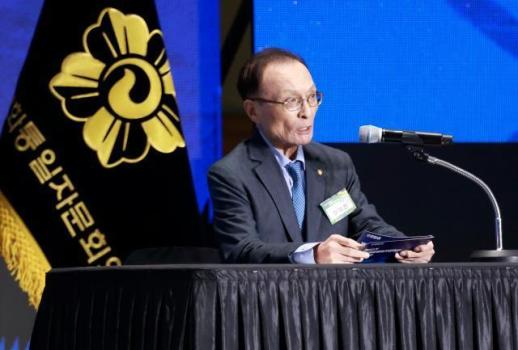 Former prime minister Lee Hae-chan dies in Viet Nam SEOUL, January 25 (AJP) - Former South Korean Prime Minister Lee Hae-chan died at a hospital in Viet Nam on Sunday after suffering a heart attack the previous day. He was 74 years old. The Peaceful Unification Advisory Council (PUAC), a presidential consultative body, said, "The senior vice chairperson died at 2:48 p.m. local time," adding it is currently discussing arrangements for transporting his body to Seoul and funeral services with his family and relevant authorities. Just a day after arriving in Ho Chi Minh City to attend a PUAC meeting, Lee was rushed to a hospital after collapsing around noon on Saturday. He had reportedly complained of flu-like symptoms before his departure from Seoul. As his condition suddenly worsened, he planned to cut his trip short and return home, but collapsed before he could do so. He underwent a stent insertion procedure and remained unconscious in the intensive care unit (ICU). Senior presidential aide Cho Jung-sik and several ruling party lawmakers hurriedly flew to the Southeast Asian country shortly after his collapse to support Lee and arrange his return to Seoul, but he succumbed to his illness after a daylong battle. Born in 1952 in Cheongyang, South Chungcheong Province, Lee joined South Korea's democratic movement in the 1970s while studying at Seoul National University, opposing strongman Park Chung-hee's "Yushin" or "revitalizing" reform, which undermined democratic checks and balances and would have allowed Park to maintain an authoritarian grip on power indefinitely. Since beginning his political career at the age 36 in 1988, the seven-term lawmaker held several key ministerial positions including education minister in 1998 under the late President Kim Dae-jung and prime minister in 2004 under the late President Roh Moo-hyun, overseeing the relocation of the administrative capital to Sejong to promote balanced regional development. Throughout his career, the seasoned lawmaker held numerous roles in liberal parties and served as leader of the ruling Democratic Party (DP) from 2018 to 2020 during the Moon Jae-in administration. Having retired from politics in 2020, Lee, widely regarded as an expert in political strategies, remained a steady and influential hand within the liberal camp throughout his final years. 2026-01-25 17:33:30
 -
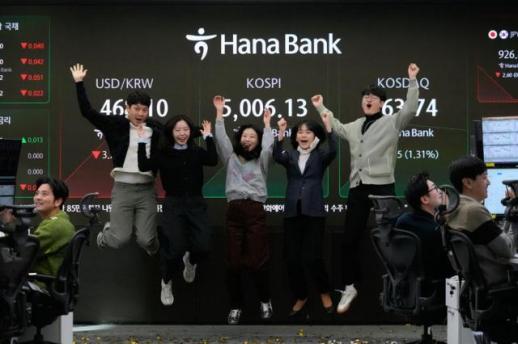 Foreign investors' holdings of South Korean stocks hit highest level in nearly six years SEOUL, January 25 (AJP) - Foreign investors' share of stocks on South Korea’s benchmark KOSPI climbed to its highest level in five years and nine months in January, according to figures released by the Korea Exchange on Sunday. The total market capitalization of KOSPI‑listed companies stood at 3,759.72 trillion Korean won (roughly US$2.55 trillion) as of early this month, with foreign holdings valued at 1,398.03 trillion won, accounting for about 37.18 percent, the highest since April 2020. The surge was driven by strong buying in sectors such as shipbuilding, defense, and nuclear energy, following heavy purchases of chip-related stocks in the second half of last year. Foreign investors' buying spree, which began in September last year, pushed their share of KOSPI stocks to 35 percent by late October and 37 percent on Jan. 7, before dipping slightly to 36.85 percent a few weeks later. The KOSPI's strong rally at the start of the new year drove overall market capitalization sharply higher, with the index surpassing the historic 5,000-point milestone for the first time since the country's stock market began trading nearly 70 years ago. Market analysts attribute the foreign buying to expectations of large shipbuilding orders, while the surge in defense and nuclear energy stocks has to do with heightened geopolitical tensions surrounding Greenland following U.S. President Donald Trump's repeated threats to secure the Danish territory. South Korean stocks with the highest net buying by foreign investors during the first 23 days of this year were Hanwha Ocean, with 942.6 billion won, followed by Doosan Enerbility at 829.3 billion won. They also snapped up shares of Naver worth 529.8 billion won, HD Hyundai Heavy Industries worth 519.7 billion won, Celltrion worth 513.9 billion won, and Hanwha Aerospace worth 385.1 billion won. 2026-01-25 16:58:05
 -
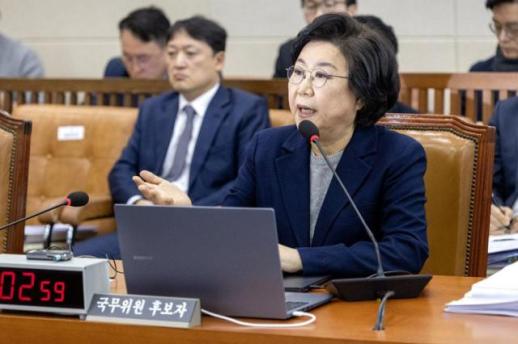 Lee withdraws nomination of budget minister as controversy mounts SEOUL, January 25 (AJP) - President Lee Jae Myung on Sunday withdrew the nomination of Lee Hye-hoon, a nominee to head the newly established Ministry of Planning and Budget amid mounting criticism over a series of allegations. Senior presidential secretary for political affairs Hong Ik-pyo said at a briefing that Lee made the decision after carefully considering a wide range of views and public assessments. Hong said she "regrettably" did not meet public expectations for the post, despite being a three-term conservative lawmaker. She had been under pressure to step down after a string of allegations surfaced shortly after Lee tapped her late last month. They include tantrums against subordinates, exposing her anger management problems, as well as suspicious real estate dealings and alleged special treatment of her son during his mandatory military service. At her confirmation hearing last Friday, after a delay caused by a boycott from the main opposition People Power Party (PPP) over her failure to submit all requested documents, the ministerial nominee sought to defend herself but failed to convince. Despite Sunday's withdrawal, Hong stressed that the president would continue to appoint officials based on merit rather than political affiliation in future recruitment and personnel reshuffles as part of efforts to achieve national unity and integration. 2026-01-25 15:11:51
 -
 Mom-and-pop businesses suffer brunt of economic slowdown SEOUL, January 25 (AJP) - The number of self-employed businesses stood at 5.62 million last year, down 38,000 from a year earlier, the National Data Agency said on Sunday. The figure fell for a second straight year and was also the largest decline since 2020 when the coronavirus pandemic hit the country. Mom-and-pop businesses declined by 75,000 in 2020 and 18,000 in 2021, then saw a gradual post-pandemic recovery of 119,000 in 2022 and 57,000 in 2023, only to fall again by 32,000 in 2024 and 38,000 last year. The agency attributed the decline to consistently high interest rates, rising labor costs, and weak domestic demand, pushing more small businesses to close. In particular, business owners in their 20s and 30s were hit hardest as those in their 20s stood at 154,000 last year, down 33,000 from a year earlier, and those in their 30s fell by 36,000 to stand at 636,000 during the same period. The agency explained that they were mostly engaged in eateries, lodging, and delivery services, which struggled to attract customers, making it difficult for them to survive. Despite the government's efforts last year to support them with cash vouchers to boost private consumption, these measures apparently failed to reverse the prolonged slowdown. Reflecting this trend, the number of young entrepreneurs and startup founders also declined from 350,000 in 2021 to 296,000 in 2024. Most young entrepreneurs these days tend to turn to online and high-tech services, which are characterized by rapidly changing trends and intense competition. However, limited resources and inexperience often make it difficult for them to respond to unpredictable economic shifts or market trends, increasing the likelihood of business closures, according to the agency. 2026-01-25 13:33:42
 -
 Enhypen's Sunghoon to serve as torchbearer for Winter Olympics next month SEOUL, January 25 (AJP) - Sunghoon, a member of boy band Enhypen, will participate in a torch relay for the upcoming Winter Olympics in Cortina d'Ampezzo and Milan, scheduled to kick off early next month. The relay began its journey of carrying the flame across over 100 Italian provinces early last month, but details about which stretch Sunghoon will cover have not been disclosed. The former figure skater-turned-singer is expected to deliver a "message of peace and friendship" as one of some 10,000 torchbearers including Swedish football legend and former AC Milan striker Zlatan Ibrahimović. Sunghoon, who has been serving as a promotional ambassador for the country's sporting governing body, the Korean Sport & Olympic Committee, since last year, was selected on the recommendation of Samsung Electronics, an official sponsor of the quadrennial sporting event on ice and snow. "I know how much passion and effort athletes have poured into preparing for the Olympics, so what I want most is to cheer them on," he said in a press release from his management agency Belief Lab. "Personally, competing at the Olympics was my dream when I was training as an athlete, so I'm very happy and honored that it feels like I've achieved it," he added. Meanwhile, this year's Winter Olympics will kick off on Feb. 6 and run for about two weeks, bringing together around 3,500 athletes from more than 90 countries to compete for 116 medals across 16 disciplines. South Korea will field 71 athletes in snowboarding, bobsleigh, speed skating, short-track skating, and figure skating. 2026-01-25 12:19:59
 -
 Coupang reasserts itself as US tech company amid claims of unfair treatment SEOUL, January 25 (AJP) - E-commerce giant Coupang stressed once again that it is a U.S. company. The top of its browser tab briefly displayed "Coupang: US Tech Company Redefining Global Commerce" on Saturday before returning to the previous version, though some web browsers were still displaying it. The tab now again displays its previous promotional message in Korean, highlighting its fast "rocket" delivery service as well as membership benefits and discounts. The move came just a day after Prime Minister Kim Min-seok, who is currently visiting the U.S., met with U.S. Vice President JD Vance at the White House in Washington. During the meeting, Vance reportedly asked about details of the difficulties Coupang faces that may be caused by regulatory differences. Kim tried to clarify the misunderstanding, saying there was no discrimination against Coupang in the investigation into its massive data breach, dismissing allegations of "unfair treatment" raised by two American investors. Greenoaks and Altimeter Capital, the two largest U.S. shareholders of the New York-listed company, requested earlier in the week that the Office of the U.S. Trade Representative (USTR) launch an investigation into the South Korean government's handling of Coupang. Coupang's emphasis on being a "U.S. tech company" is widely interpreted as a strategic move to distance itself from regulatory obligations and other legal responsibilities in South Korea. But criticism may still be hard to avoid because Coupang has previously emphasized that it is a "South Korean company." In July 2019, Coupang said it was founded and grew in South Korea, runs most of its business here, and pays annual labor costs totaling 1 trillion won (about US$850 million) to South Koreans. 2026-01-25 10:38:36
 -
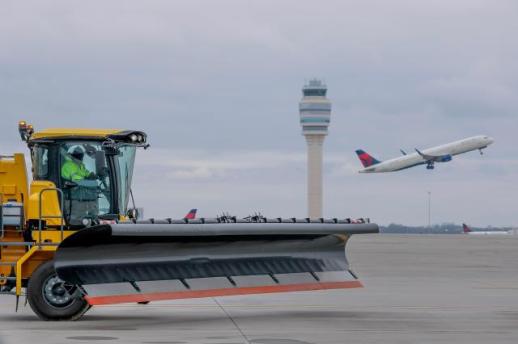 Korean airlines cancel 18 U.S. flights as powerful winter storm batters America SEOUL, January 24 (AJP) - Korean airlines have grounded 18 flights to the United States as a powerful winter storm sweeps across the central and eastern regions of the country, disrupting travel plans for thousands of passengers ahead of the weekend. Korean Air, Asiana Airlines and Air Premia announced the cancellations as of 2:30 p.m. Saturday, with disruptions expected to continue through Jan. 27 as the storm system intensifies. Korean Air bore the brunt of the disruptions, scrapping 14 flights through Monday. The carrier canceled Saturday's round-trip service between Incheon and Dallas, followed by 11 flights on Sunday serving Atlanta, Washington, New York, Boston and Dallas. A New York-to-Incheon flight scheduled for Jan. 26 was also axed. Asiana Airlines suspended two flights on the New York route, while budget carrier Air Premia canceled its round-trip Newark service, bringing the combined toll to 18 grounded flights. The airlines said they are contacting affected passengers and offering schedule changes or full refunds without penalties. However, carriers noted that no additional compensation would be provided as the cancellations stem from a natural disaster with advance notification. The storm's impact extends far beyond Korean carriers. Flight-tracking service FlightAware reported about 3,148 U.S. domestic and international flights were canceled on Saturday, with another 5,068 cancellations already confirmed for Sunday. 2026-01-24 18:24:30
 -
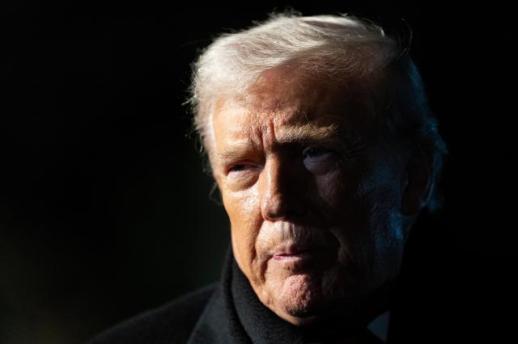 Washington wants South Korea to take primary responsibility in defense vs North Korea -NDS SEOUL, January 24 (AJP) -The Trump administration has formally signaled a shift in security responsibilities on the Korean Peninsula, stating that South Korea is capable of taking “primary responsibility” for deterring North Korea with more limited U.S. military support. The assessment appears in the unclassified version of the U.S. National Defense Strategy (NDS) released Saturday by the Pentagon, a foundational policy document outlining Washington’s global defense priorities. “With its powerful military, supported by high defense spending, a robust defense industry, and mandatory conscription, South Korea is capable of taking primary responsibility for deterring North Korea with critical but more limited U.S. support,” the document said. “South Korea also has the will to do so, given that it faces a direct and clear threat from North Korea.” The strategy marks one of the clearest official acknowledgments to date that Washington expects Seoul to shoulder a larger share of deterrence on the peninsula, aligning with President Donald Trump’s long-standing call for greater burden-sharing among U.S. allies. The Pentagon said the shift is “consistent with America’s interest in updating U.S. force posture on the Korean Peninsula,” language that analysts say may foreshadow a reassessment of the scale and role of U.S. Forces Korea, though the document stops short of specifying troop reductions. At the same time, the NDS underscores the continued severity of the North Korean threat. The Pentagon assessed that Pyongyang retains the ability to strike targets in South Korea and Japan with nuclear weapons and other weapons of mass destruction, while also posing “a clear and present danger of nuclear attack on the American homeland.” Although much of North Korea’s conventional military equipment is described as aging or poorly maintained, the report warns Seoul must remain vigilant against the risk of invasion, particularly as Pyongyang’s nuclear forces grow in size and sophistication. The Korean Peninsula is explicitly cited as a case where Washington expects an ally to assume “primary responsibility” for regional defense, enabling the United States to reallocate military resources elsewhere. Similar language appears regarding Europe, where the Pentagon argues NATO allies are well positioned to take the lead in conventional defense with reduced U.S. involvement. The new strategy places homeland defense as the Pentagon’s top priority, followed by deterring China in the Indo-Pacific, increasing burden-sharing with allies, and strengthening the U.S. defense industrial base. While the document denies any move toward isolationism, it reflects a sharper focus on U.S. domestic security and the Western Hemisphere than in previous editions. Notably, the NDS provides few operational details — typical for an unclassified version — but sends clear signals to allies about Washington’s expectations under the Trump administration. Compared with the 2022 strategy issued under President Joe Biden, the new document places heavier political emphasis on allied responsibility and explicitly references President Trump throughout. The strategy follows the White House’s release of a new National Security Strategy in December, which also emphasized homeland defense and reduced reliance on forward-deployed forces. 2026-01-24 13:26:01
 -
 OPINION: Gold, silver and the quiet stress test of the FX system The scenery of global financial markets is changing. More striking than the daily swings of stock indices is the sight of gold and silver repeatedly hitting record highs. This is not a fleeting investment fad. It is a signal — one that reveals where global capital feels unease. Markets often exaggerate, but they rarely lie about direction. The current surge in precious metals reflects a collective instinct for risk aversion, rooted in subtle but growing cracks in confidence in fiat currencies. Major central banks are walking a tightrope between inflation control and economic slowdown. Lower interest rates would ease growth pressures, but premature easing risks undermining currency credibility. In this gray zone, investors gravitate away from paper assets toward tangible ones. Gold pays no interest, yet it does not default on trust. Silver, with its added industrial demand, offers even greater price elasticity. This rally looks less like speculation and more like an insurance premium — the price markets are willing to pay for protection against uncertainty. Geopolitical tensions are accelerating this shift. The shadows of protectionism, political fragmentation and supply-chain fragility have made global capital more defensive. The U.S. dollar remains the world’s reserve currency, but questions surrounding America’s fiscal trajectory and monetary policy are growing louder. When “Sell America” sentiment gains traction, gold begins to function as an alternative currency. This does not signal the collapse of the dollar, but rather the erosion of unquestioned faith in it. Korea is not insulated from these tremors. The foreign exchange market reacts first. Heightened risk aversion boosts dollar demand and puts downward pressure on the won. A weaker won may help exporters’ margins, but it also raises import prices and squeezes households. For an economy heavily dependent on imported energy and raw materials, sharp currency moves feed directly into inflation. Direction matters, but speed matters more. Gradual adjustment can be absorbed; abrupt swings become shocks. Equity markets are no exception. As uncertainty rises, global funds tend to reduce exposure to emerging markets. Korea’s stock market, highly sensitive to foreign capital flows, faces heightened volatility. Growth-oriented stocks are particularly vulnerable to interest-rate shifts, while firms with stable cash flows and low leverage tend to show greater resilience. In the end, markets assess not just profitability, but survivability. For corporations, the response is clear. First, foreign exchange risk management must be tightened. Second, liquidity should take priority — cash is not a cost in uncertain times, but a shield. Third, debt maturity structures need review to reduce reliance on short-term borrowing. Fourth, internal controls and risk management must be strengthened to preserve trust. In an era like this, a single misstep can erode corporate value overnight. Households, too, must prepare. Reducing exposure to variable-rate loans and clarifying repayment plans are essential. In investing, balance matters more than chasing returns. A headlong rush into gold or silver simply because prices are soaring risks inviting a different kind of loss. Markets inevitably correct after overheating. Long-term stability is built on diversification and restraint. Policymakers bear a heavy responsibility. Central banks must maintain balance between price stability and financial stability. Policy consistency and predictability are the foundation of market trust. In an age of uncertainty, the most powerful stabilizer is a clear and transparent policy signal. Ultimately, the surge in gold and silver is both an expression of fear and a warning. The world is prioritizing loss avoidance over profit maximization. That may signal vulnerability — but for those prepared, it can also mark the beginning of opportunity. Volatility is not a crisis; it is an environment. Survival in that environment depends not on dazzling returns, but on fundamentals, principles and discipline. Financial markets move not by numbers alone, but by trust. And when trust wavers, what truly shines is not metal, but principle. Those who hold to it will shape the next upswing. *The author is a columnist of AJP. 2026-01-24 12:02:14