
Journalist

AJP
-
 Simple structural change in drug molecules offers new path for Alzheimer's treatment SEOUL, January 22 (AJP) - Researchers in South Korea have discovered that simply rearranging the structure of a potential drug molecule without changing its ingredients can significantly alter its effectiveness against Alzheimer's disease. A team led by the Korea Advanced Institute of Science and Technology (KAIST) announced on Wednesday that this strategy allows a single compound to simultaneously tackle multiple causes of dementia, offering a potential breakthrough for a disease that has proven difficult to treat with conventional methods. Alzheimer's disease is a complex condition driven by several interacting factors rather than a single cause. These factors include the accumulation of amyloid beta plaques in the brain, metal ions, and reactive oxygen species. When metal ions interact with amyloid beta, they can increase toxicity and accelerate brain cell damage. Conventional treatment approaches have typically focused on targeting just one of these elements, which limits their overall effectiveness in stopping the disease's progression. To overcome this limitation, the research team focused on a chemical concept known as "positional isomerism." This involves taking a molecule and, instead of adding new chemical ingredients, simply moving its existing components to different positions on the molecular structure. The researchers synthesized three variants of a molecule with the exact same chemical composition but slightly different structural arrangements. They found that even these minute changes drastically affected how the molecule interacted with the harmful elements associated with Alzheimer's. One specific structural arrangement demonstrated the ability to control reactive oxygen species, amyloid beta, and metal-amyloid complexes all at once. By modifying the "placement" of the molecule's components, the team successfully altered its chemical reactivity. In tests involving mouse models bred with Alzheimer's genes, this optimized compound effectively reduced nerve cell damage in the hippocampus, the region of the brain responsible for memory. It also decreased the accumulation of amyloid plaques. Consequently, the treated mice showed significant improvements in memory and cognitive function that had previously been impaired. "This study demonstrates that simply adjusting the structural arrangement without changing the molecular composition allows us to simultaneously target multiple causes of Alzheimer's disease," said Professor Lim Mi-hee of the Department of Chemistry at KAIST. "It presents the possibility of a new treatment strategy that can more precisely control diseases with complex, intertwined causes." The research was conducted in collaboration with Professor Kim Min-keun of Chonnam National University and Dr. Lee Cheol-ho and Dr. Kim Kyung-sim from the Korea Research Institute of Bioscience and Biotechnology (KRIBB). Na Chan-ju and Lee Ji-min, integrated master's and doctoral students at KAIST, served as co-first authors. The study was supported by the National Research Foundation of South Korea and KRIBB. The findings were published in the January 14 issue of the Journal of the American Chemical Society. (Paper information) Journal: Journal of the American Chemical Society (Impact Factor: 15.7) Title: Positional Isomerism Tunes Molecular Reactivities and Mechanisms toward Pathological Targets in Dementia DOI: 10.1021/jacs.5c14323 2026-01-22 16:14:34
 -
 Giants' outfielder Lee Jung-hoo briefly held at LAX over paperwork issue SEOUL, January 22 (AJP) - Outfielder Lee Jung-hoo of the San Francisco Giants was briefly detained by U.S. Customs officials after arriving at Los Angeles International Airport (LAX) on Wednesday. According to the Giants, Lee "experienced a brief travel issue at LAX" due to paperwork problems, as he had apparently left some immigration-related documents in South Korea. He was momentarily held at the airport but released about an hour later with help from the team and others, including Democratic politician Nancy Pelosi, whose district includes San Francisco. Lee had been in Seoul since returning home in September last year to spend the offseason carrying out personal training and other commitments. He will undergo personal workouts in Los Angeles before heading to the Giants' spring training camp in Scottsdale, Arizona. 2026-01-22 15:56:03
 -
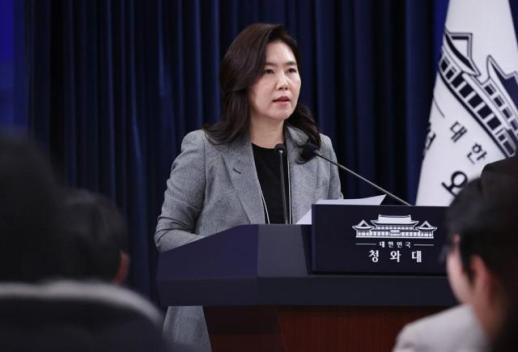 Over 70 South Koreans to be deported from Cambodia over scam allegations SEOUL, January 22 (AJP) - Some 73 South Koreans detained in Cambodia over alleged involvement in online scams and other crimes are set to be deported from the Southeast Asian country, Cheong Wa Dae said on Thursday. In a press briefing, presidential spokesperson Kang Yu-jung said a chartered flight is set to be dispatched to Phnom Penh later in the day to bring them back, with arrival expected around 9 a.m. on Friday. They are accused of swindling a total of 486.7 billion won (US$331.5 million) from 869 South Korean victims and were nabbed by South Korea's task force in collaboration with Cambodian authorities, after the brutal torture and killing of a South Korean college student in Cambodia was belatedly reveled last summer. Investigators reportedly targeted several organized scam rings to arrest a score of suspects, including a couple who used deepfake technology to swindle about 12 billion won from 104 South Koreans and tried to evade arrest by altering their appearance through plastic surgery. Kang said arrest warrants have already been issued for all of them and they will be handed over to investigators for questioning, immediately upon arrival. 2026-01-22 15:29:25
 -
 Coupang union warns of job risks amid sweeping data breach probes SEOUL, January 22 (AJP) - A labor union representing delivery drivers at South Korean e-commerce firm Coupang on Thursday urged the government to conduct what it called a reasonable and fair investigation into the company’s recent personal data breach, warning that an excessive probe could harm workers and small merchants. In a statement, the union said data breaches have affected many companies, including large corporations, but that it was difficult to find comparable cases in which investigations were as "wide-ranging" and "overlapping" as those currently facing Coupang. “The company’s wrongdoing must be clearly corrected,” the union said. “But in the process, many workers and small business owners who make a living through Coupang must not be sacrificed.” The union said a thorough investigation and follow-through on improvements were responsibilities shared by both government authorities and the company. However, it described it as unusual that more than 10 government bodies were simultaneously examining not only the data breach itself but also Coupang’s broader business operations. While stressing that it had no intention of defending the breach or downplaying responsibility, the union cautioned against sanctions that extend beyond accountability for personal data protection. It said excessive penalties could disrupt operations, lead to job losses among delivery drivers and logistics center workers, and cut off sales channels for small merchants, threatening the livelihoods of tens of thousands of families. The union added that workers are already experiencing a decline in delivery volumes and said any investigation or policy discussion should also consider workers’ right to earn a living. Calling for a careful and balanced approach, the union said the outcome of the probe would affect not only Coupang but also large numbers of frontline workers who depend on the platform. * This article, published by Aju Business Daily, was translated by AI and edited by AJP. 2026-01-22 15:25:22
 -
 PM departs for Washington for possible meeting with US vice president SEOUL, January 22 (AJP) - Prime Minister Kim Min-seok left for the U.S. on Thursday. According to his office, Kim boarded a flight to Washington, D.C., accompanied by a small group of aides. During his five-day U.S. itinerary, which marks his first overseas trip since assuming his post in July last year, he is scheduled for talks with senior U.S. government officials and may meet with U.S. Vice President J.D. Vance. He will also meet with South Korean nationals living there He will then travel to New York before returning home early next week. His office expects the trip will contribute to further strengthening the country's relations with its closest ally. 2026-01-22 14:53:39
 -
 Rice consumption falls further in South Korea as dietary shift continues SEOUL, January 22 (AJP) - South Korea’s per-capita rice consumption declined again last year, extending a decades-long slide as household eating habits continue to shift, government data showed on Thursday. According to the National Data Center’s survey results, annual per-capita grain consumption in the household sector fell 3 percent from a year earlier to 62.5 kilograms. Rice consumption accounted for 53.9 kilograms, down 3.4 percent, or 1.9 kilograms, from the previous year. Annual per-capita rice consumption is now about half of the 106.5 kilograms recorded in 1995 and has been on a steady downward trend since 1981. Average daily rice consumption also declined, falling 5.2 grams from a year earlier to 147.7 grams. In contrast, rice use in the business sector rose, driven by demand from food manufacturers. Rice used as an ingredient in food and beverage production increased 6.7 percent to 932,102 tons. Within that total, rice consumption by food manufacturers climbed 12.6 percent, while usage in beverage manufacturing declined 5.2 percent. By industry, rice cake manufacturers accounted for the largest share of business-sector rice consumption at 28.3 percent, followed by distilled alcohol producers at 23.2 percent and makers of other processed and ready-to-eat foods at 16.6 percent. * This article, published by Aju Business Daily, was translated by AI and edited by AJP. 2026-01-22 14:33:28
 -
 PPP leader ends weeklong hunger strike after ex-President Park Geun-hye's visit SEOUL, January 22 (AJP) - Jang Dong-hyeok, the leader of the main opposition People Power Party (PPP), ended his weeklong hunger strike on Thursday as his health condition worsened. Jang, who began the strike last Thursday, calling for independent investigations into allegations involving the Unification Church and other bribery cases, was taken to the hospital at around noon. Jang said, "I'm ending mu hunger strike for a longer and bigger fight," adding that public anger over what he called the "tyranny of the corrupt Lee Jae Myung administration" and the ruling Democratic Party (DP) would "blaze like wildfire." He decided to end the strike shortly after former President Park Geun-hye visited him at the National Assembly and urged him to stop, saying the public would recognize his sincerity. Park said, "While people may differ in their views, the public will recognize the sincerity of his fight as a politician for what he believes is right." Adding that they could meet again, she asked him to regain his health soon, saying "more difficulties could lie ahead." Several lawmakers including his fellow party members along with Lee Jun-seok, the leader of the minor centrist Reform Party, earlier visited him, urging him to end his fasting. 2026-01-22 14:29:47
 -
 Samsung SDS earnings lifted by AI, cloud demand SEOUL, January 22 (AJP) - Samsung SDS said on Thursday it posted annual revenue of 13.93 trillion won ($10.4 billion) last year, up 0.7 percent from a year earlier, while operating profit rose 5 percent to 957.1 billion won, as growth in cloud and artificial intelligence services offset weakness in logistics. Fourth-quarter revenue fell 2.9 percent from a year earlier to 3.54 trillion won, the company said, while operating profit rose 6.9 percent to 226.1 billion won. By segment, revenue from IT services increased 2.2 percent to 6.54 trillion won. Cloud revenue climbed 15.4 percent to 2.68 trillion won, leading growth in the IT services business. Samsung SDS said its cloud service provider business expanded on higher use of the Samsung Cloud Platform as generative AI services gained traction, alongside broader growth in high-performance computing and cloud network services. In AI platforms, Samsung SDS said it will support broader adoption of generative AI across industries through a ChatGPT Enterprise reseller partnership agreement signed with OpenAI in December, which it said was the first such deal by a South Korean company. In AI solutions, the company plans to expand its collaboration tool Brity Works and its generative AI service Brity Copilot — currently being piloted at three government agencies — to all 57 central government ministries. * This article, published by Aju Business Daily, was translated by AI and edited by AJP. 2026-01-22 13:48:54
 -
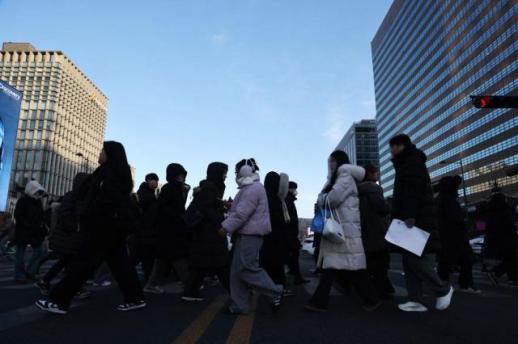 More young people move to Seoul SEOUL, January 22 (AJP) - More young people have moved to Seoul from other cities and provinces, an analysis of census data released by the Seoul Metropolitan Government on Thursday reveals. Since 2019, the number of people in their 20s and 30s moving into Seoul has exceeded those moving out, except in 2021. Following this trend, the number of people leaving Seoul fell to 473,000 in 2024, down from 751,000 in 2001. Among Seoulites, those relocating within the city declined, while those relocating to the capital from other cities and provinces rose to 35.1 percent in 2024, up from 27.8 percent in 2001. As of 2024, the majority of people who changed their residence to Seoul came from nearby metropolitan areas, with over half or 53 percent moving from Gyeonggi Province and 7.7 percent from Incheon. The main reasons for moving to Seoul were jobs, education, and residential environment including convenient access to schools and other living conditions. Kang Ok-hyun, a city official, said, "Based on the findings, we will develop the city's policies to address changing demographics." 2026-01-22 13:45:27
 -
 South Korea enforces world's first comprehensive AI law as industry braces for compliance SEOUL, January 22 (AJP) - South Korea on Thursday became the first country to enforce a comprehensive artificial intelligence law, a landmark move that establishes sweeping transparency and safety obligations while industry players scramble to navigate its sprawling requirements. The Basic Act on the Development of Artificial Intelligence and the Establishment of a Foundation for Trustworthiness, or the AI Basic Act, which took effect a year after its promulgation, governs everything from deepfake labeling to high-impact AI oversight. South Korea is the second jurisdiction after the European Union to enact a comprehensive AI statute, but its approach diverges sharply from Brussels. South Korea's AI Basic Act takes a hybrid approach—more autonomous than the EU but stricter than the U.S. federal government. While all three have mandated identification watermarks for AI-generated content, the U.S. runs on dual tracks—the federal government emphasizing self-regulation while state governments pursuing detailed regulations. On the contrary, the EU categorized AI into four risk levels and banned high-threat AI usages, including those applying to social scoring systems and real-time biometric surveillance in public spaces. The Ministry of Science and ICT said the legislation fills regulatory gaps left by existing telecommunications and information network laws, which were not designed to address AI-generated content or algorithmic discrimination. The ministry pledged a "soft landing" for businesses by deferring its investigative powers and penalty enforcement for at least one year. Under the law, operators of high-impact AI systems in sectors such as healthcare, energy, hiring and loan assessments must implement human oversight and safety measures. The government said only fully autonomous vehicles at Level 4 or above currently meet the high-impact threshold, though industry observers expect the category to expand rapidly as AI capabilities advance. The law also enshrines a right to explanation, requiring AI operators to provide clear and meaningful information about the criteria and principles behind algorithmic decisions. Industry groups have characterized the provision as largely symbolic, noting that only a handful of companies worldwide possess the technical capability to interpret complex AI reasoning processes. Enforcement mechanisms include on-site inspections and fines of up to 30 million won ($20,459) for violations such as failing to notify users of AI deployment or neglecting to appoint a domestic representative for foreign operators. The ministry has pledged to hold off on exercising these powers during the grace period. The creative sector has mounted broader resistance. Sixteen organizations representing writers, artists and other content creators issued a joint statement on Jan. 13 demanding the government withdraw and overhaul its national AI action plan. "The government's AI action plan is an attempt to fundamentally violate copyright as private property rights, and amounts to a declaration that it will abandon the sustainability of Korea's cultural industries," the groups said. They added that the government is "taking the lead in removing legal barriers so AI companies can use copyrighted works without permission and at virtually no cost." The gaming industry has raised similar complaints, citing ambiguity over how AI disclosure rules apply to interactive entertainment classified as artistic expression. Regulators have said games may use labeling methods that do not disrupt the viewing experience, but have not specified concrete standards. 2026-01-22 13:38:09