
Journalist

AJP
-
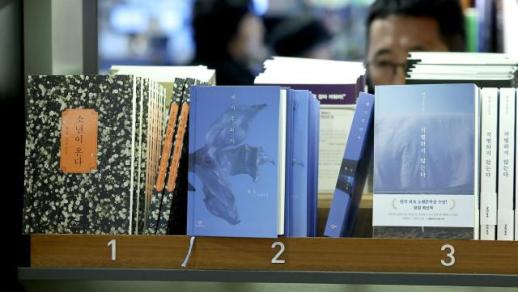 Han Kang’s ‘The Vegetarian’ Voted Top International Booker Winner in Reader Poll The International Booker Prize marked its 10th anniversary by naming Han Kang’s “The Vegetarian” the top winner in a reader vote. Yonhap reported on the 4th that the Booker Prize ran the poll on its official website from February to April, asking readers to choose among 10 winning titles from 2016 to 2025. About 10,000 people took part, and roughly one-third selected “The Vegetarian.” The prize’s international category began in 2005 as the Man Booker International Prize and changed its format and character starting in 2016. Han won in 2016 for “The Vegetarian” with translator Deborah Smith. Since then, Korean works reaching the final shortlist have included Han’s “The White Book” (2018), Bora Chung’s “Cursed Bunny” (2022), Myeongkwan Cheon’s “Whale” (2023) and Hwang Sok-yong’s “철도원 삼대” (2024). As it announced the vote results, the Booker Prize also republished an interview with Han that it posted in July 2023. “The time I was writing it, between 2003 and 2005, was a difficult time for me. I didn’t know if I could finish the novel, or even survive as a writer,” she said, adding, “I’m grateful to the International Booker Prize for letting my work meet a wider readership in another culture.” On controversy over alleged mistranslations after the award, Han said, “I don’t think the translator intentionally damaged the original, nor do I think she created a completely different new work.” Han said she wished she had reviewed the translation process for “The Vegetarian” as closely as she later did for “Human Acts,” and noted that in 2017 Smith made 67 revisions based on various criticisms. “Usually, the questions left after writing a novel lead me to the next work,” Han said. “This summer I’m starting a new novel, and I’m waiting to see what I’ll find at the end.” Han has not published a new book since “We Do Not Part” (2021).* This article has been translated by AI. 2026-05-04 21:33:17
 -
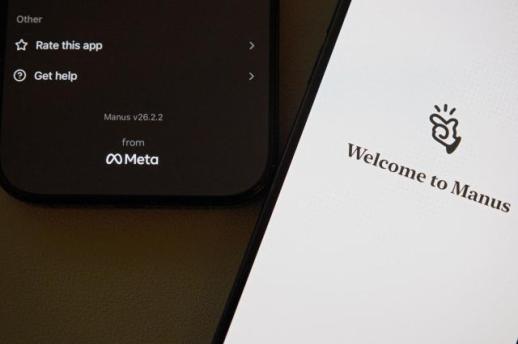 Meta Wins South Korea Corporate Tax Suit, Renewing Debate Over Big Tech Tax Avoidance Global big tech companies are notching a string of courtroom wins against South Korea’s tax authorities, highlighting limits in taxing overseas platforms that earn substantial revenue in the country. Yonhap reported May 4 that the Seoul Administrative Court’s Administrative Division 5 ruled April 23 that Meta’s Ireland entity partly won its lawsuit seeking to cancel a corporate tax assessment imposed by the head of the Yeoksam tax office and others. The amounts assessed, challenged and canceled were not disclosed. Meta’s Ireland entity, part of Meta Group, sells platform advertising space to advertisers worldwide outside North America. In South Korea, a Meta affiliate has operated by buying ad space from the Ireland entity and reselling it to local customers. The dispute began after the Seoul Regional Tax Office issued a corporate tax assessment against Meta’s Ireland entity in 2021. Tax authorities argued the Korean affiliate effectively constituted a domestic permanent establishment for the Ireland entity and was used to sell ad space to Korean advertisers, making the related income taxable in South Korea. Meta countered that the Korean office was simply a place where the Korean affiliate conducted its own business, and that work performed in South Korea amounted only to preliminary and auxiliary activities such as promotion and information gathering. The court sided with Meta, saying the Ireland entity did not have the right to dispose of or use the Korean business site and that it was difficult to conclude the Ireland entity actually carried out business there. “The fact that the service activities provided by the Korean corporation to the Ireland corporation offer economic benefits to the Ireland corporation does not, by itself, provide grounds to evaluate them as part of the plaintiff’s own business activities,” the court said. The court also said it was hard to view the Korean affiliate as performing essential business activities because Meta owns and manages the key intellectual property and servers needed to establish and operate the platform. “The platform’s appeal — the development and operation that draws users — is important, but the Korean corporation was not involved at all in such development and operation,” the court said, adding that promotion and marketing are generally auxiliary rather than essential business activities absent special circumstances. The ruling follows a similar case involving Netflix. In a lawsuit seeking to cancel corporate tax and other assessments, a court ruled that 68.7 billion won of 76.2 billion won should be canceled, effectively handing Netflix a win. Industry officials said the Meta decision underscores how the digital economy can clash with existing tax systems, as global big tech companies use structures that shift costs overseas — such as technology royalties or service fees — to minimize profits booked in South Korea. Domestic platform companies such as Naver, which paid 601.4 billion won, and Kakao, which paid 94.7 billion won, pay corporate taxes in the hundreds of billions of won in line with sales and profits. Critics say the sharply different tax burdens in the same market amount to reverse discrimination.* This article has been translated by AI. 2026-05-04 21:00:15
 -
 Iran Claims U.S. Warship Hit by Missiles in Strait of Hormuz; U.S. Denies Iranian media reported Monday that a U.S. warship trying to transit the Strait of Hormuz was hit and forced to turn back. Yonhap News Agency said Iran’s Fars News Agency reported that a U.S. Navy frigate in the Gulf of Oman was struck by two Iranian missiles and withdrew as it attempted to pass through the strait. Citing a local source in southern Iran, Fars said the frigate tried to transit near waters off Jask in southeastern Iran after violating navigation and vessel-traffic rules. Jask is a port city on the Gulf of Oman, east of the Strait of Hormuz. Fars quoted the source as saying the ship became a target “immediately after” it ignored warnings from Iran’s navy and continued maneuvering. It said the vessel was hit by two missiles and could not continue, turning around to retreat. The U.S. military quickly denied the report. U.S. Central Command, which oversees operations in the Middle East, said on X: “Fact check. A U.S. Navy warship was not hit.” It added that U.S. forces are supporting “Project Freedom” and strengthening a maritime blockade of Iranian ports. The U.S. military said it launched “Project Freedom” earlier Monday to escort civilian ships trapped in Gulf waters through the Strait of Hormuz using aircraft and warships.* This article has been translated by AI. 2026-05-04 20:48:16
 -
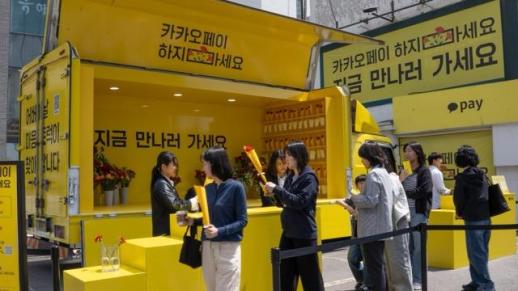 Kakao Pay Launches Parents Day Campaign, Gives Carnations and Message Cards Kakao Pay is rolling out a special campaign and promotions for May, widely observed in South Korea as Family Month. A survey published Monday by Pay Attention, Kakao Pay’s official finance journal, found that 89% of 27,095 respondents chose cash as their preferred Parents Day gift. Kakao Pay said its user data showed a similar pattern. The busiest day for Kakao Pay remittances in May last year was Parents Day, when more than 3.03 million transfers were made in a single day, the highest daily total of the year. Reflecting that demand while encouraging in-person family connections, the company is hosting a series of events. For Parents Day, Kakao Pay is running a campaign titled, “Don’t use Kakao Pay. Go see them now,” urging users to visit their parents rather than relying only on convenient money transfers. Kakao Pay said that when the campaign debuted last year, it delivered its message to about 400,000 people. Kakao Pay, which has promoted a “conversation-like” remittance culture, said the campaign is meant to encourage people to share their gratitude face to face, especially around Parents Day. The company has also held various remittance-related events around holidays such as Lunar New Year. Kakao Pay also took the campaign offline with a “Heart Truck.” The truck toured major Seoul areas including Gangnam, Jamsil and Seongsu from May 2 to 3 to share the campaign message. From May 4 to 5, Kakao Pay is holding an on-site event at the intersection near Ttukseom Station in Seongsu-dong, using the “Heart Truck” concept. The company plans to give the first about 1,000 visitors message cards featuring family-themed phrases by author Lee Seul-a, along with carnations and “heart envelopes,” to help them share their feelings directly with family members. A Kakao Pay official said, “We hope that through the online and offline events Kakao Pay has prepared for Family Month, people will have time to meet face to face and share deeper warmth.” * This article has been translated by AI. 2026-05-04 20:18:18
 -
 Iran’s IRGC Expands Strait of Hormuz Control Zone After U.S. ‘Project Freedom’ Announcement Iran’s Islamic Revolutionary Guard Corps has sharply expanded the area it says it controls in the Strait of Hormuz, pushing tensions in the Middle East to a peak. According to Yonhap on Monday, the IRGC set a new western control line running straight from the western tip of Iran’s Qeshm Island to Umm Al Quwain in the United Arab Emirates. On the southeastern side, at the strait’s entrance, it drew a control line from Mount Mobarak in southeastern Iran to a point south of Fujairah in the UAE. Previously, the IRGC designated waters near Qeshm and the nearby Larak Island as a safe route, while labeling the waters that curve around Oman’s Musandam Peninsula as a “danger zone” and restricting ship movements there. Under the newly disclosed lines carried by Iranian media, the IRGC’s control zone now extends across both sides of the strait, covering not only Omani waters but also parts of UAE territorial waters. The UAE’s port of Fujairah, outside the strait and previously a potential way to bypass a blockade, is also included in the declared control area. The move came after U.S. President Donald Trump said he would launch “Project Freedom” starting Monday morning to support passage through the Strait of Hormuz. The IRGC responded by declaring broader and tougher control, signaling it could treat any attempt to pass under U.S. naval escort as an “intrusion” into its control zone and use force. Shipping industry officials said that if the restrictions are enforced in earnest, freight rates tied to a “Hormuz premium” could surge again. The term refers to additional price increases as geopolitical risk in the strait is directly reflected in global oil prices. Amid the recent rise in regional tensions, war-risk insurance premiums for ships transiting the strait have jumped to as much as more than 10 times normal levels, rising from about 0.25% of a vessel’s value to as high as 1% to 3%. * This article has been translated by AI. 2026-05-04 19:27:22
 -
 Hanwha Aerospace Raises KAI Stake Above 5%, Shifts to Active Management Role Hanwha Aerospace said in a regulatory filing on the 4th that it bought additional shares of Korea Aerospace Industries, or KAI, and changed its stated purpose for holding the stake from a “simple investment” to “participation in management.” According to the filing, Hanwha Aerospace acquired an additional 100,000 KAI shares, or 0.1%, raising its combined stake including affiliates to 5.09%. With its ownership now above 5%, the company revised its holding purpose to management participation. It said specific plans are under review. Hanwha Aerospace said it plans to invest a total of 500 billion won by the end of this year to buy more KAI shares. Based on KAI’s April 30 closing price of 169,000 won, the purchases would lift Hanwha Aerospace’s stake in KAI to 6.4%. Hanwha Aerospace said the stake increase is aimed at strengthening cooperation in defense and aerospace and improving global export competitiveness. A company official said the firm is expanding its stake after weighing both business synergies and investment value, adding that if a government-led privatization of KAI becomes a public issue, it will review whether to pursue an acquisition, integration or other steps in line with government policy. The two companies have worked together on KF-21 export cooperation, air-to-air missile development and performance upgrades for special operations helicopters. In February, they signed a memorandum of understanding to cooperate on domestic production of advanced aircraft engines, joint development of unmanned aircraft and a joint push into the global commercial space market. Hanwha Aerospace said the companies aim to expand orders under a “one-team” strategy and grow into a leading national defense firm. It also said the partnership could support the creation of an aerospace and defense cluster centered on Changwon and Sacheon in South Gyeongsang Province and help create jobs.* This article has been translated by AI. 2026-05-04 19:09:17
 -
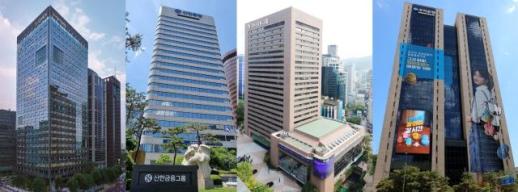 KB, Shinhan and Woori Tell SEC Inclusive Finance Push Could Strain Asset Quality South Korea’s major financial holding companies have warned that the government’s expanding “shared growth” and inclusive finance policies could weigh on asset quality. According to the financial sector on the 4th, KB Financial Group and Shinhan and Woori Financial Group recently filed earnings-related reports with the U.S. Securities and Exchange Commission. Korean financial holding companies regularly submit reports to the SEC as they diversify funding channels. The filings shared a common concern about soundness. KB said that aligning with the government’s “productive finance” policy could lead to losses, adding that increased exposure to small and midsize enterprises this year could push delinquency rates higher. Shinhan also said delinquency rates are likely to rise as it advances programs such as the Sae Do-yak Fund. Woori said measures such as adjusting interest rates for middle- and low-income borrowers could add pressure to its net interest margin, and it may need to take steps to reduce SME exposure. Delinquency indicators have already worsened as banks expand lending to SMEs under the productive finance drive. The average corporate delinquency rate at the five major banks — KB, Shinhan, Hana, Woori and NH NongHyup — rose to 0.46% in the first quarter from 0.37% the previous quarter. The SME delinquency rate increased to 0.57% from 0.49%. Delinquencies in real estate-related industries have hit the highest level in 13 years as the Middle East war has delayed a recovery in the property market. The burden from estimated losses and other asset-quality pressures is likely to grow, as high inflation and an economic slowdown further weaken conditions for SMEs. The Ministry of SMEs and Startups said the Small Business Health Index (SBHI) for May fell 3.2 points from the previous month to 77.6. A reading below 100 means more firms expect conditions to worsen than to improve.* This article has been translated by AI. 2026-05-04 18:42:18
 -
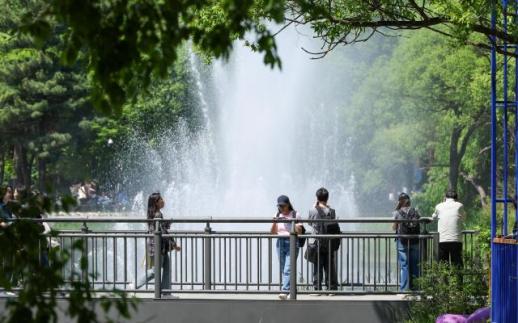 Seoul converts downtown into massive garden for international exhibition SEOUL, May 04 (AJP) - Seoul transformed into a massive public garden as the 2026 Seoul International Garden Show opened Friday in the Seoul Forest and Seongsu, the western district of hipsters and foreign tourists. The exhibition is scheduled to run through October 27. The event spans approximately 90,000 square meters and features 167 distinct gardens, making it the largest horticultural show in the history of the capital. According to the Seoul Metropolitan Government, the project serves as a centerpiece for the "Garden City Seoul" initiative. The show includes "Garden Under the Flowing Forest" by French landscape architect Henri Bava, located on the eastern side of the Seoul Forest lawn. South Korean designer Lee Nam-jin contributed "Garden of Waiting," which was installed in the Seongsu Handmade Shoe Park. Major South Korean construction firms and public agencies participated in the development of the site. Gardens sponsored by Daewoo Engineering and Construction, GS Engineering and Construction, HDC, Hoban Construction, Kyeryong Construction, and SH Corporation are featured throughout the Seoul Forest lawn area. The exhibition also includes a collaborative installation by Pokémon Korea titled "Pokémon Secret Forest." This experience-based exhibition will operate until June 21 with no admission fee. Opening day drew over 40,000 visitors to Seoul Forest and the Seongsu station area, forcing officials to temporarily suspend operations in certain sections to manage the flow of people. By 3:00 p.m. on Friday, the population in the Seongsu-dong area reached approximately 50,000 people, reaching the "crowded" alert level. 2026-05-04 18:31:04
 -
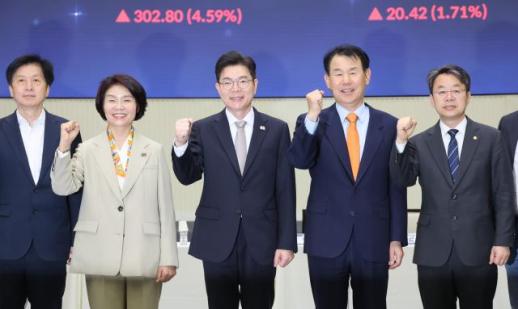 Seoul mayoral candidate Jeong Won-oh visits Korea Exchange, urges support for market shift Jeong Won-oh, the Democratic Party’s candidate for Seoul mayor, visited the Korea Exchange on May 4, as the benchmark KOSPI index topped 6,900, and said Seoul must raise its growth rate to sustain the “money move” into stocks and the market rally. Speaking at an event titled “Jeong Won-oh’s On-the-Ground Visit: Finance Edition” at the exchange in Seoul’s Yeouido district, Jeong said that as of 2024 the national economic growth rate was 2.0% while Seoul’s was 1.0%. He said Seoul should help ensure the KOSPI’s upward momentum continues. According to the Korea Exchange, the KOSPI closed at 6,936.99, a record high. Jeong said the Lee Jae-myung government and the Democratic Party were turning what critics said was impossible into reality, and urged the Seoul city government to keep supporting the market mood through measures such as regulatory reform and improved administrative services. Rep. Oh Ki-hyoung, who attended the meeting, also called for shifting the focus from real estate to capital markets. “Economic growth centered on real estate is no longer feasible,” Oh said, adding that resources should move toward innovative companies and capital markets. Rep. Kim Nam-geun said he joined the event to discuss investment opportunities across Seoul so money tied up in real estate can move into more productive sectors. Participants also raised concerns about a lack of startup space. Kim said the city would use idle spaces across Seoul to create places where venture and startup firms can operate without the burden of rent. Oh said that despite existing startup support spaces in Seoul, many companies start up elsewhere due to rent costs or to receive support from other local governments. He said there is a mismatch between demand and available space.* This article has been translated by AI. 2026-05-04 17:52:41
 -
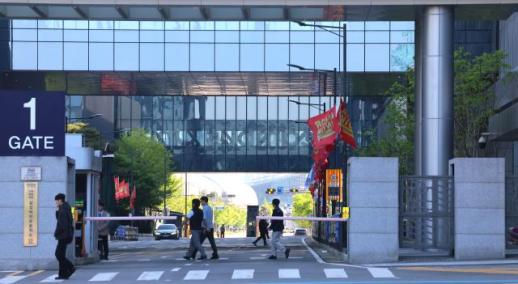 Samsung Biologics Labor Talks Resume With No Deal as Strike Enters Fourth Day Samsung Biologics and its union resumed talks as the full-scale strike entered its fourth day, but failed to narrow differences. The two sides plan additional meetings on May 6 and May 8 to continue negotiations. The Samsung Biologics Sangsaeng branch of the Samsung Group Inter-Company Labor Union said the sides again found no common ground in a meeting mediated by the Jungbu Regional Office of Employment and Labor on May 4. A first session ran for about two hours from 10:15 a.m. and ended without progress. Talks continued from 1:30 p.m. to 4:10 p.m., with labor and management meeting separately with the Labor Ministry. The union said, "There was no meaningful agenda or direction presented, and only the next meeting was set." The sides will hold a one-on-one meeting between chief negotiators on May 6, and a tripartite meeting involving the Labor Ministry on May 8, the union said. Union branch chief Park Jae-seong attended the May 4 meeting. He did not attend a labor-management-government meeting on April 30 due to an overseas schedule. The company was represented by working-level officials at the executive director level and department heads, according to the union. The dispute centers on wages, bonuses and personnel systems. The union is seeking an average 14% wage increase, a 30 million won incentive per employee, and distribution of 20% of operating profit as performance pay. The company has proposed a 6.2% wage increase and a one-time payment of 6 million won. Negotiations have also been complicated by provisions requiring the union's prior consent on major management issues such as new hiring, performance evaluations and mergers and acquisitions. Ahead of the meeting, the union said the situation cannot be resolved unless the company presents a substantive revised proposal and a responsible official with decision-making authority. The sides held 13 rounds of talks from December last year through March but failed to reach an agreement. Strikes in some processes from April 28 to 30 reportedly disrupted production of anticancer drugs and HIV treatments. The company estimates losses of about 150 billion won during that period. The current strike has been carried out through use of weekday leave and refusal to work on holidays, with about 2,800 of the union's 4,000 members participating. The union plans to continue the full-scale strike through May 5, then shift on May 6 to a work-to-rule campaign by refusing overtime and holiday work.* This article has been translated by AI. 2026-05-04 17:51:18