
Journalist

AJP
-
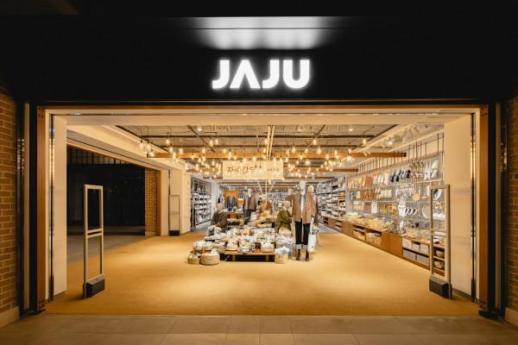 Shinsegae Casa completes acquisition of Jaju, targets 500 bln won in revenue this year SEOUL, January 08 (AJP) - Shinsegae Casa said on Wednesday it has completed the acquisition of the operating business of lifestyle brand Jaju, finalizing the transaction on Dec. 31 as it moves to broaden its portfolio beyond furniture. The company said the deal will help expand its business scope from home interiors to everyday lifestyle categories such as household goods and fashion, reducing earnings volatility tied to housing cycles and construction market conditions. Shinsegae Casa, which posted revenue of 270 billion won ($200 million) last year on the back of its flagship furniture brand Casamia, said it now aims to lift sales to 500 billion won this year as Jaju and its newly launched fashion label Jaa are added to the group. The company said it will operate six lifestyle brands and platforms — Casamia, Materasso, Cucine Lella, Good.com, Jaju and Jaa — while stepping up efforts to generate synergies across product planning, distribution, marketing and sourcing. In a statement, a Shinsegae Casa official said, “This acquisition provides a solid foundation for us to scale up our business and emerge as a leading player in South Korea’s home-furnishing market. Going forward, we will redefine the industry landscape by delivering a differentiated value proposition centered on premium lifestyle sensibilities.” 2026-01-08 14:49:46
 -
 PHOTOS:Evergreen in Seoul, even in icy winter SEOUL, January 8 (AJP) - While Arctic-level cold grips Seoul, the greenhouse at Seoul Botanic Park in Magok remains lush, green and humidly warm. Beneath the glass dome, temperatures stay steady, and dense foliage retains its vivid color, offering a striking contrast to the wintry landscape outside. Located in Gangseo-gu, Seoul Botanic Park stands next to Magoknaru Station, where Subway Line 9 and the Airport Railroad intersect. The surrounding Magok district, once known as one of Seoul’s last agricultural areas, has been redeveloped into a large-scale botanic park combining gardens and open green space. During winter, visitor movement concentrates around the themed greenhouse, as activity in outdoor areas naturally declines. The exhibition greenhouse introduces plants and plant cultures from 12 cities worldwide, arranged by climate zone. Designed in a concave, dish-like form, the structure allows open sightlines and filtered light, creating a space that feels both enclosed and expansive. The facility also serves as a base for plant conservation, species preservation and research, while supporting public programs related to urban gardening and education. Seasonal displays shift with the colder months. Orchids and poinsettias form the core of the winter exhibition, presented under the theme Winter Garden. Around 40 orchid species and nine poinsettia varieties developed in Korea are on view through Jan. 25. Tropical orchids rarely seen domestically are shown alongside locally bred cultivars, highlighting both diversity and ongoing research. Seoul Botanic Park in Gangseo District, Seoul. AJP Yoo Na-hyun Even in midwinter, the greenhouse continues to draw a steady stream of visitors. Residents pause to observe and record, families move unhurriedly through the space, and professionals in garden culture study the displays. Within the city, the greenhouse serves not only as a refuge from the cold, but as a place where nature is observed, documented and sustained throughout the winter season. 2026-01-08 14:44:04
 -
 Samsung Electronics record Q4 may be just the start of red-hot streak SEOUL, January 08 (AJP) - Samsung Electronics’ record fourth-quarter results may mark the start of a two-digit, billion-dollar earnings run, as AI infrastructure — from data centers to humanoid robots — drives memory prices into uncharted territory. In preliminary earnings guidance released Thursday, the South Korean tech giant said operating profit for the October–December period reached 20 trillion won ($14 billion), more than tripling from a year earlier and surpassing the market consensus of 19.6 trillion won compiled by FnGuide. Revenue rose 22.7 percent to 93 trillion won, also an all-time quarterly high. For the full year, Samsung posted 43.53 trillion won in operating profit and 332.8 trillion won in revenue, up 33 percent and 10.6 percent, respectively. Samsung will release final figures with divisional breakdowns on Jan. 29, but based on headline numbers and prevailing market conditions, analysts estimate that semiconductors accounted for more than 70 percent of fourth-quarter earnings. Investment banks put operating profit at Samsung’s chip division at roughly 17 trillion won, reflecting sharp gains in average selling prices — about 36 percent quarter-on-quarter for DRAM and 15 percent for NAND. Memory prices enter a “hyper-bull” phase The earnings surge coincides with a rapid acceleration in memory prices toward year-end. Market tracker TrendForce said mass-market DRAM prices jumped 45–50 percent in the fourth quarter, while overall DRAM prices — including high-bandwidth memory (HBM) — rose 50–55 percent. NAND flash prices climbed 33–38 percent over the same period. Research firm Counterpoint described the market as entering a “hyper-bull” phase, forecasting that memory prices, after rising 40–50 percent in the fourth quarter of 2025, are likely to increase another 40–50 percent in the first quarter of 2026 and around 20 percent in the second quarter. “The current memory rally is eclipsing the 2018 peak,” Counterpoint said in a recent report. “Demand for AI infrastructure is fundamentally reshaping supply dynamics, giving suppliers unprecedented pricing power.” The rally reflects a strategic shift by major chipmakers toward products servicing AI accelerators and data centers, tightening supply across the board — from legacy DRAM to NAND flash — amid aggressive stockpiling by customers. A late start in HBM turns strategic Samsung, which initially lagged behind rivals such as SK hynix and Micron in the HBM race, is now finding that late start strategically opportune. Unlike SK hynix, whose HBM output is heavily committed to Nvidia, Samsung can serve a broader client pool — including Broadcom for Google’s tensor processing units used in AI inference, AMD, and other challengers to Nvidia’s dominance in AI accelerators. Losses in Samsung’s foundry business are also narrowing, helped by rising demand for customized AI chips and advanced packaging solutions. CES spotlight: memory as the “robot brain” The importance of memory was underscored this week at the Consumer Electronics Show in Las Vegas, where “physical AI” — robots and humanoids capable of perceiving, reasoning and acting in the real world — took center stage. “We finally have the core ingredient to build the missing piece of robots, which was the robot brain,” said Rev Lebaredian, vice president of Omniverse and simulation technology at Nvidia. “Once we had that, it started making sense to build the robot bodies.” Robotics producers put 2028 to 2030 as the window for mass commercialization. “We think you need to start on industry first,” said Robert Playter, CEO of Boston Dynamics, robotics arm of Hyundai Motor. “We think it’s going to be 2028 or 2030 when robots are deployed in factories, and probably another five years before they’re really affordable in the home.” Humanoid robots are semiconductor systems in disguise What often looks like an AI miracle is, at its core, a semiconductor system packaged in humanoid form. Each robot requires multitude packages of HBM, DRAM and NAND chips to support human-like sensors and motor movements. As mass production approaches, demand is converging on just three global suppliers — Samsung, SK hynix and Micron — making it increasingly unlikely that supply can keep pace in the near term. That imbalance helps explain the surge of investor enthusiasm for Korean chipmakers during CES week, which pushed the KOSPI to record highs. Chae Min-sook, an analyst at Korea Investment & Securities, said the earnings boom reflects a structural shift in the memory market. “Conventional DRAM is entering a phase where profitability could exceed that of high-bandwidth memory from early 2026,” Chae wrote in a report on SK hynix. “Tight memory supply will be difficult to resolve in the short term.” She forecast that SK hynix’s operating profit this year could reach 128 trillion won, up 58 percent from her previous estimate, citing accelerating price gains across both DRAM and NAND. Analysts say the same dynamics underpin Samsung’s outlook. FnGuide projects Samsung’s full-year operating profit at around 106.7 trillion won, while Citi has put the figure as high as 155 trillion won, citing accelerating HBM shipments, expanding foundry capacity and a pipeline of new flagship products including the Galaxy S26 and next-generation foldables. 2026-01-08 14:24:19
 -
 Alleged ringleader behind South Korean Student's brutal death nabbed in Thailand SEOUL, January 8 (AJP) - A key suspect in the brutal torture and killing of a South Korean college student in Cambodia last summer has been nabbed in Thailand, government authorities here said on Thursday. The Justice Ministry said a 42-year-old Chinese, the alleged mastermind of a Cambodia-based scam ring, was arrested in Pattaya, Thailand, the previous day, following a joint investigation with the National Police Agency and the National Intelligence Service. Between May and July last year, the crime ring allegedly lured South Koreans to Cambodia with offers of high-paying part-time work and then threatened them with guns and other weapons to force them to reveal bank account details including passwords and other sensitive personal information. Several months into the investigation of a case involving a South Korean college student, who traveled to the Southeast Asian country after being lured by an online employment scam in August and was later found to have been tortured to death, the ministry learned in November that the suspect had entered Thailand and promptly requested his arrest from Thai authorities. But the ministry said South Korea should seek a formal extradition and obtain approval from a Thai court to bring him back, as he is a Chinese national. The ministry vowed it will continue working hard to track down and arrest all suspects in collaboration with domestic and foreign authorities. 2026-01-08 14:17:25
 -
 South Korea's K Bank targets 85 trillion won assets by 2030 SEOUL, January 08 (AJP) - Choi Woo-hyung, CEO of South Korea's digital lender K Bank, said on Thursday the bank aims to become a “comprehensive digital finance platform” by 2030, targeting 26 million customers and 85 trillion won ($59 billion) in assets. Choi unveiled the mid- to long-term growth strategy at the bank’s 10th anniversary event. For this year, K Bank set a goal of reaching 18 million customers, supported by three growth pillars: platform-based services, small and medium-sized enterprise (SME) finance, and the expanded use of artificial intelligence and digital assets. The bank plans to deploy AI more widely across its operations and enhance its ability to respond to developments in digital assets, including stablecoins, Choi said. Founded in January 2016, K Bank began operations in April 2017 and has positioned itself as a pioneer in digital-only banking in South Korea. Its products include the country’s first non-face-to-face apartment mortgage loan, launched in 2020, a remote guaranteed loan for sole proprietors introduced in 2022, and a non-face-to-face real estate collateral loan rolled out in 2024. The bank’s customer base has surpassed 15 million, while assets and annual profits have continued to grow. Reflecting on the past decade, Choi said the bank had weathered repeated challenges but built a foundation for sustained growth. He added that K Bank would continue to focus on differentiated products and services driven by innovation. 2026-01-08 14:13:21
 -
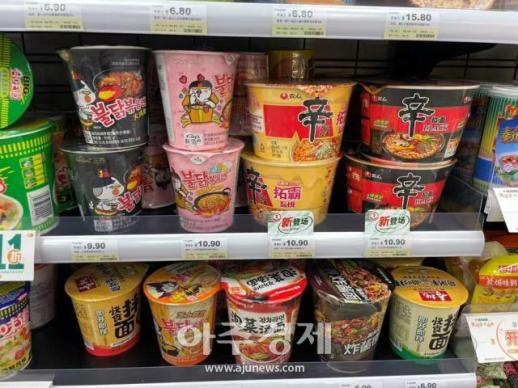 K-food finds lasting appeal in China through social media, localization SEOUL, January 08 (AJP) - Walking through university districts and busy shopping streets in major Chinese cities, signs for Korean-style food are increasingly hard to miss. Advertisements for “Korean-style lunch boxes,” “Korean fried chicken” and rabokki — ramyeon cooked with tteokbokki rice cakes — line storefronts catering to young consumers. Convenience stores prominently stock Shin Ramyun and Buldak Bokkeum Myun with Chinese-language labels, while dormitory shops sell Choco Pie and Pepero as everyday snacks. On Xiaohongshu, a popular Chinese social media platform, thousands of videos recreating Korean foods are uploaded daily. The content has helped introduce K-food even to consumers who have never visited South Korea, making its flavors and dishes widely recognizable. Unlike in the past, when Korean cuisine spread mainly through restaurants, K-food is now expanding rapidly via social media, television dramas, variety shows and food delivery platforms. Li Mingzi, a 23-year-old university student, said her interest began with street-food scenes in Korean dramas. “After that, I came across many kinds of Korean food through recommended videos on Bilibili and Xiaohongshu,” she said. Industry observers say a key factor behind K-food’s success in China is localisation tailored to local tastes. Chen, a chef at a Korean-style restaurant, said dishes are often adapted by toning down the heat of traditional gochujang and adding flavors familiar to young Chinese diners, such as mala-style spice or sweet soy-based sauces. At the same time, restaurants try to preserve defining elements of the cuisine, he said, such as mixing bibimbap before eating and maintaining the fermented kimchi flavor in kimchi stew. A survey of 100 Chinese respondents showed broad awareness of Korean food, with 93 percent saying they had at least some familiarity. Of those, 45 percent said they knew “basic information,” suggesting a sizable potential consumer base. Social media emerged as the main point of contact, cited by 78 percent of respondents, followed by Korean dramas, variety shows and films at 65 percent, and food delivery apps at 55 percent. Some 88 percent said they believe K-food is likely to move beyond a short-lived trend and become a lasting part of China’s food culture. As Korean food becomes part of everyday life in China, it is increasingly seen as a starting point for deeper interaction between Chinese and South Korean culinary traditions, reflecting a broader, two-way cultural exchange. 2026-01-08 14:00:31
 -
 KOSPI continues to test new heights SEOUL, January 08 (AJP) - South Korea’s benchmark KOSPI touched fresh milestone of 4,600 won to gallop toward much-anticipated 5,000 on Wednesday. The KOSPI opened 19.60 points, or 0.43 percent, lower at 4,531.46. The buying spree sent the Korean won higher at 1,449.40 versus the U.S dollar. Retailers joined in full force to pick up foreign selling. 2026-01-08 12:48:27
 -
 PHOTOS: South Korea greets 2026 with the first sunrise SEOUL, January 1 (AJP) — The Year of Byeongo (the Year of the Red Horse) has begun, marking the start of 2026. On the first day of the new year, most regions across the country are expecting clear skies and weather, which makes watching the sunrise more enjoyable. However, the morning temperature in Seoul is forecast to plunge to minus 11 degrees Celsius, bringing frigid weather. 2026-01-08 11:58:36
 -
 KOSPI opens higher, briefly surpasses 4,600 mark SEOUL, January 8 (AJP) – The South Korean stock market opened higher on Thursday, with the benchmark KOSPI surpassing the 4,600 mark for the first time, as major chipmakers extended gains and retail investors poured into large-cap shares. About an hour after the market opened, the KOSPI soared 1.4 percent from the previous session to 4,615.70, while the tech-heavy KOSDAQ slipped 0.1 percent to 946.46. Investors showed a clear divergence in early trade as retail investors bought a net 2.23 trillion won ($1.65 billion), while foreign and institutional investors sold roughly 0.15 trillion won and 2.71 trillion won. Among blue-chip stocks, Samsung Electronics slipped 0.7 percent to 140,000 won ($105) after hitting a fresh 52-week high of 144,400 won the previous day. However, it remains in a strong upward trend, rising roughly 176 percent from its previous low of 50,800 won in February last year and more than doubling over the past year. SK hynix rose 0.5 percent to 746,000 won ($561), recovering from early losses and hovering near its recent record high, as strong demand for high-bandwidth memory continued to support the stock. The outlook was further bolstered by comments from Nvidia CEO Jensen Huang, who said demand for advanced memory remains overwhelming and highlighted close cooperation with suppliers on next-generation HBM4. Hana Securities said semiconductors are expected to account for roughly 47 percent of KOSPI's net profit over the next 12 months, led by strong earnings growth at Samsung Electronics and SK hynix, while the sector’s forward valuation remains relatively low despite the recent rally. Hyundai Motor fell 1.6 percent to 345,000 won ($259), giving back part of the previous session’s sharp gains, which had been driven by optimism over its AI and robotics strategy unveiled at this year's CES currently underway in Las Vegas. The drop was widely seen as profit-taking following the recent surge, rather than a change in the underlying outlook. Meanwhile, Japan's Nikkei 225 fell 0.7 percent to 51,577.20, while China's Shanghai Composite edged up 0.1 percent to 4,085.77. In Hong Kong, the Hang Seng Index was largely flat in Hong Kong, with Hang Seng Bank steady at 153.80 HKD ($19.7), as investors took a cautious stance ahead of upcoming policy and earnings announcements. 2026-01-08 11:44:12
 -
 Countdown begins ahead of BTS' full-group comeback SEOUL, January 8 (AJP) - Since earlier this week, promotional displays for BTS' full-group comeback in late March have adorned the staircases of the Sejong Center for the Performing Arts near Gwanghwamun in central Seoul. As one of the country's major cultural venues, hosting a wide range of performances and exhibitions, the center was an ideal place to promote the septet's return with a new album set for release on March 20, according to their management agency. The agency also plans to set up similar outdoor promotional installations and activities in major cities around the world including London, New York, and Tokyo. After completing their mandatory military service, the seven members of BTS will return after nearly four years of hiatus and embark on a large-scale world tour to promote their new album, which contains 14 tracks. 2026-01-08 11:07:33