
Journalist

AJP
-
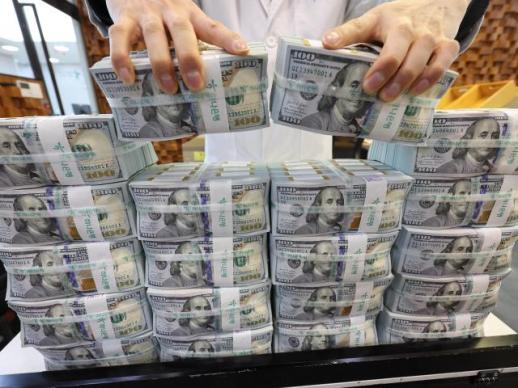 Seoul's all-out defense of the won takes heavy toll on FX reserves Dec SEOUL, January 06 (AJP) - South Korea’s foreign-exchange reserves fell by nearly $3 billion in December, marking the largest monthly decline among major reserve-holding economies and underscoring the cost of aggressive market intervention to defend the won. According to data released Tuesday by the Bank of Korea, the country’s FX reserves stood at $428.05 billion at end-December 2025, down $2.6 billion from the previous month. While the headline figure remains substantial, the contraction represents the second-steepest December decline on record, surpassed only by the nearly $4 billion plunge during the 1997 Asian financial crisis, when South Korea sought an IMF bailout. The drawdown is notable not only for its size but also for its timing. December is typically a month when global financial institutions build up foreign-currency buffers to meet capital-adequacy requirements under Bank for International Settlements Basel III rules, which recommend a common equity Tier 1 ratio of at least 10.5 percent, including a 2.5-percentage-point capital conservation buffer introduced after the 2008 global financial crisis. In recent years, South Korea followed that seasonal pattern. FX reserves increased in December 2023 and 2024, and even during periods of acute stress the year-end drawdowns were modest. During the 2022 “Legoland” municipal debt default, which rattled domestic credit markets, December reserves fell by just $140 million. At the height of the 2008 global financial crisis, the December decline was limited to about $600 million. An outlier among major reserve holders The divergence between Seoul and its peers was stark. China, the world’s largest reserve holder, added roughly $30 billion to its reserves in December. Japan, ranked second, increased its holdings by around $120 billion, while India added $45 billion, the second-largest increase after Japan. Even Russia, in war-related hemorrhage and sweeping sanctions, recorded a net increase of about $1.5 billion in reserves. The comparison suggests that Korea drew down reserves more aggressively than economies grappling with far more severe external shocks. Other countries did post declines, but for fundamentally different reasons. Switzerland saw a roughly $5 billion drop, largely reflecting valuation effects from a stronger Swiss franc and a weaker U.S. dollar, rather than active intervention. Saudi Arabia’s estimated $15 billion decline reflects deliberate spending to finance large-scale projects such as the Neom giga-city. Korea’s case stands apart. The reserve loss was driven primarily by direct and sustained intervention in the currency market to curb the won’s slide amid renewed dollar strength following the U.S. military operation in Venezuela. Market stability remains a key concern for regulators. As of September, South Korean banks posted a total capital ratio of 15.87 percent, according to the Financial Supervisory Service, a level that appears comfortable on paper. However, during its annual consultation in November, the International Monetary Fund urged Seoul to maintain even higher buffers, citing rapidly rising household debt—now estimated at 2,000 trillion won (about $1.4 trillion)—which is growing faster than in most advanced economies. If government intervention continues, analysts warn that FX reserves could remain under pressure through the end of January. The broader impact on the private financial system may become clearer in March, when the FSS releases updated capital-adequacy data for banks. “Measures to address exchange-rate volatility led to the decrease in reserves,” the Bank of Korea said in its statement. A central-bank official, speaking on condition of anonymity, said the private and institutional sectors are expected to maintain precautionary measures until the exchange rate stabilizes, but declined to comment on how deeply the interventions may be affecting banks’ capital positions. 2026-01-06 17:32:29
 -
 KOSPI blasts through 4,500, stealing the spotlight in a solid Asian session SEOUL, Jan. 6 (AJP) — Asian markets were broadly in the green on Tuesday, but one market didn’t just rise — it showed off. South Korea’s benchmark KOSPI smashed through the long-watched 4,500 level, capping a blistering start to the year that has already rewritten the index’s record book. The rally has been fast, loud and unapologetic: more than 13 percent in under two weeks, with 4,300 and 4,400 barely registering as speed bumps. Retail investors, who sat out much of last year’s grind, are back with conviction. They snapped up a net 597.6 billion won worth of shares, emboldened by a growing chorus of forecasts calling for a run toward 5,000. Heavyweights did the heavy lifting. Samsung Electronics climbed to 138,900 won, while SK hynix surged to 726,000 won, extending the AI-driven chip rally. Hyundai Motor advanced to 308,000 won, and Celltrion rose to 213,000 won. Not everything joined the party. LG Energy Solution traded lower, while NAVER edged higher in subdued fashion. The tech-heavy KOSDAQ lagged behind the headline-grabbing rally, slipping 0.16 percent to 955.97, as institutions and foreign investors locked in profits after recent gains. The tone there was cautious rather than euphoric — a reminder that this rally has been selective. In currency markets, the dollar strengthened slightly, rising 1.7 won to 1,445.5, but the move failed to dent equity momentum. Across the region, markets were steady rather than spectacular. Japan’s Nikkei hovered near record territory above 52,500, while China’s Shanghai Composite and Hong Kong’s Hang Seng traded higher in afternoon sessions. For now, investors appear willing to look past valuation worries, betting that earnings momentum — especially tied to AI and large-cap exporters — can keep the rally alive. Attention is shifting toward upcoming U.S. economic data and policy signals, but until those turn hostile, Korea’s market looks intent on enjoying its moment above 4,500. 2026-01-06 17:31:12
 -
 Lee heads to Shanghai after meeting with Chinese Premier SEOUL, January 6 (AJP) - President Lee Jae Myung, on a state visit to China, on Tuesday met with Chinese Premier Li Qiang and expressed hope that the talks would mark a turning point for a "breakthrough" in bilateral relations. During his meeting with Zhao Leji, China's top legislator, Lee shared that he and Chinese President Xi Jinping had agreed the previous day to develop a "strategic cooperative partnership" that contributes to people's livelihoods and peace. Lee expressed expectations for Li's role in enhancing bilateral relations, saying that Li oversees China's economic affairs and is responsible for stabilizing livelihoods, and has contributed to "laying the foundation for peace and cooperation in the region." Lee also hoped the two countries would expand "mutually beneficial" cooperation and promote peace and stability on the Korean Peninsula for shared prosperity. Citing the Korean saying "Friends are better the longer you know them, and clothes are best when they're new," Lee said he was able to exchange views candidly with him like "old friends" as it was his third meeting with Li. Lee then added China probably has a similar expression. Li responded by praising Lee for boosting the economy and improving livelihoods as his top priorities since taking office in June last year. As he wraps up his itinerary in Beijing with the meeting with Li, Lee is now traveling to Shanghai. 2026-01-06 17:10:09
 -
 K-content gets a permanent address in Incheon — now comes the harder part: keeping it interesting SEOUL, January 06 (AJP) - Imagine never having to fight ticket scalpers again for a G-Dragon concert. No frantic refreshing. No VIP seats resold at 6.8 million won. Just… a year-round GD performance you can drop in on, any weekend you like. That, at least, is the fantasy behind Incheon's ambitious bet on what officials are calling "K-Con Land" — a sprawling cultural complex designed to give K-pop, K-drama and digital content something they've never really had before: a permanent home. At the heart of the plan is a concert hall where holograms of past and present stars perform on a rotating basis. Die-hard fans won't have to wait for comeback tours or overseas dates. The show, in theory, is always on. But K-Con Land is not just about concerts. The larger vision, unfolding across the Cheongna and Yeongjong districts, is to stitch together production studios, performance venues, hotels and tourism infrastructure into a single ecosystem — one that turns K-content from a series of one-off events into something closer to a standing attraction. Think less "festival weekend," more "content district." From airport stopover to content destination Incheon's pitch starts with geography. The city sits next to Korea's main international gateway, and with the opening of the Third Sea Bridge this week, Cheongna and Yeongjong are now directly linked. The goal is to turn airport proximity — long a logistics advantage — into a cultural one. At the center of the plan is I-Con City, a massive complex slated for Cheongna International City, just west of Yeongjong Island. The project covers 260,000 square meters — roughly the size of Yeouido Park — with total floor space exceeding that of COEX. Rising up to 49 floors, the complex will house an arena, VFX studios, a content tower, museums, hotels and resort facilities, all wrapped around a central public space dubbed "Durumi Park." The idea is frictionless circulation: artists arrive, shoot, perform and stay in one place; visitors watch, tour, sleep and move on — or stick around longer. Transportation is meant to do the rest. Subway Line 7's extension to Cheongna, scheduled for 2027, will cut travel time to Gangnam to about 68 minutes without transfers. A KTX connection from Incheon via Songdo would link the area to Busan in just over two hours. For a city long seen as peripheral to Seoul’s cultural core, those minutes matter. Competing with Seoul — by not being Seoul Cheongna's biggest selling point may be what it lacks: density. Unlike Seoul's Sangam Digital Media City, where land is tight and costs are high, Cheongna offers room to build large-scale studios and move bulky equipment — and to house international crews without scattering them across the capital. Production, performance and accommodation in one zone is not just convenient; developers argue it cuts costs and time. "With the Third Land Bridge, Cheongna is now directly connected to Yeouido in 30 minutes and to Yeongjong," said Eum Jae-sang, CIO at DAOL Asset Management. "With Starfield Cheongna and a university hospital also coming in, this won't be a bedroom town. It's becoming a district with its own purpose." The lineup of partners reflects that long-game thinking. U.S.-based boutique hotel franchise The Kessler Collection will oversee overall development and hospitality operations. DAOL manages the funds. POSCO E&C is handling construction. Galaxy Corporation — which represents G-Dragon — is in charge of content operations. Financial structuring is being led by SK Securities. Hotel Shilla will operate serviced residences, while a U.S. senior-living operator is joining the residential side. "This isn't a build-and-sell project," Eum said. "We're talking about operating this for 20 to 30 years after completion." The real test: content, not concrete Construction is slated to begin in the second half of 2027, with completion targeted for 2031. By then, the buildings will likely be impressive. What's less guaranteed is what happens inside them. Industry officials say tax incentives for foreign content producers could make or break the project's appeal. Incheon's Free Economic Zone authority has been calling for stronger breaks, arguing that global competition for film and content production is intensifying. "If production costs one unit, the regional economic impact can be seven to ten times that," said Commissioner Yun Won-sok early last year, noting that many advanced economies now offer aggressive incentives to attract studios. For a project estimated at 1.9 trillion won, the stakes are high. K-content has proven it can draw global attention — but turning that attention into a permanent tourist habit is another matter entirely. A hologram concert may draw crowds once. The challenge will be making them come back. 2026-01-06 17:05:20
 -
 Safe-haven demand keeps gold in focus as market volatility grows SEOUL, January 06 (AJP) - Investor interest in gold has carried into the new year after international prices nearly doubled last year, with securities firms expecting the uptrend to extend through 2026 as geopolitical risks and demand for safe-haven assets support prices. According to the Korea Exchange on Tuesday, gold prices, after retreating late last year, have risen for three consecutive sessions since the start of the year. International prices also moved toward record territory. Gold futures on the New York Mercantile Exchange closed on Monday at $4,436.90 per troy ounce. Rising political and military uncertainty abroad has helped boost gold’s appeal relative to other commodities such as oil, analysts said. Choi Ye-chan, a researcher at SangSangIn Securities, said major supply disruptions in the oil market appear unlikely, while expanding military activity and heightened geopolitical tensions could continue to underpin demand for gold. He said a strategy of being “long gold and short oil” could remain effective in 2026. Some global investment banks have issued more bullish forecasts, predicting that gold prices could exceed $5,000 an ounce this year. Gold prices climbed from around $2,300 an ounce in early 2024 to about $4,300 by the end of 2025, a gain of roughly 87 percent, making it the best-performing asset among major asset classes during that period. The rally has also lifted returns for South Korea-listed gold exchange-traded funds. Gold ETFs posted an average annual return of 48 percent last year, according to market data. Korea Investment Management’s ACE Gold Futures Leverage led the group with a 132 percent gain. NH Investment & Securities, in its report released on Monday, named gold a core theme in alternative investment portfolios. Ha Jae-seok, a researcher at NH Investment & Securities, said volatility in financial markets is rising amid tariff-related risks and expectations that government bond yields will remain under upward pressure as major economies pursue expansionary fiscal policies. “In that macro environment, gold’s attractiveness as a safe-haven asset is likely to strengthen,” he said. 2026-01-06 16:35:26
 -
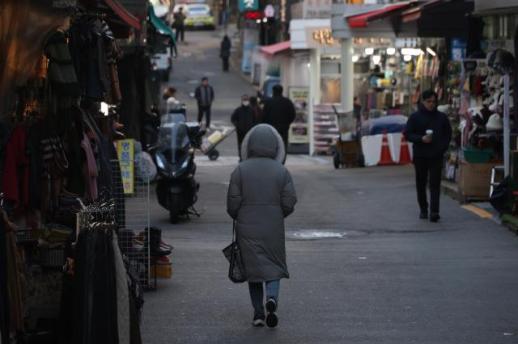 Fresh cold spell grips Seoul SEOUL, January 6 (AJP) - A fresh cold spell returned to Seoul on Tuesday, with a morning low of -6 degrees Celsius, much colder than the previous day's -1 degrees. The mercury barely rose, with daytime temperatures climbing to just 4 degrees as frigid conditions persisted throughout the day. Other cities across the country also faced frigid temperatures, with Chuncheon at -10 degrees, Cheongju at -8 degrees, Daejeon at -7 degrees, and the southern port city of Busan at -2 degrees. 2026-01-06 16:29:00
 -
 Lee shares selfie with Xi SEOUL, January 6 (AJP) - President Lee Jae-myung shared a selfie with Chinese President Xi Jinping on social media on Mondy night, suggesting their talks were held in a friendly atmosphere. In a post on X, formerly known as Twitter, shortly after their 90-minute summit, Lee said he took the selfie using a Xiaomi smartphone that Xi had given him, when the two leaders met on the sidelines of the Asia-Pacific Economic Cooperation (APEC) summit in the southeastern city of Gyeongju in November last year. Lee said the summit would serve as an important momentum in efforts to improve relations between the two countries while expanding economic cooperation and collaboration in various sectors. In response, Xi stressed the importance of maintaining firm friendly bilateral cooperation. 2026-01-06 16:12:27
 -
 AI chip demand to lift Korea's exports in 2026, but autos face headwinds SEOUL, January 06 (AJP) - Semiconductors, which powered South Korea’s exports last year amid expanding artificial intelligence demand, are expected to remain the main growth driver in 2026 as the chip upcycle continues, while auto exports could lose momentum, according to the Ministry of Trade, Industry and Energy on Tuesday. South Korea’s annual exports totaled $709.7 billion last year, surpassing $700 billion for the first time. The milestone came seven years after exports first exceeded $600 billion in 2018. The government is targeting exports of $700 billion again this year, with semiconductors at the core of its strategy. Chip exports rose 22.2 percent from a year earlier to $173.4 billion in 2025, supported by steady demand for AI chips and a sharp increase in fixed prices for memory semiconductors. "Semiconductors are likely to continue lifting overall exports as the AI-driven chip upcycle persists," a ministry official said. "With South Korean companies maintaining a technological edge, the structure of global demand points to further growth in chip shipments." Exports could gain additional support if shortages of commodity memory chips persist. As chipmakers shift production capacity toward high-bandwidth memory, prices for older, general-purpose memory products are expected to remain elevated for the time being. Wireless communications devices and display exports are also expected to stay in positive territory, the ministry said, citing continued growth in the foldable smartphone market. Consumer goods exports, including food and beauty products, are also forecast to expand, supported by the global popularity of South Korean culture and rising trust in Korean brands. The ministry said fast-growing consumption among younger buyers, particularly in emerging markets, is increasing the share of consumer goods in total exports. By contrast, auto exports may slow this year. Auto shipments rose 1.7 percent from a year earlier to $72.0 billion in 2025, as strong demand from the European Union offset weaker exports to the United States. This year, risks related to U.S. tariffs are expected to become more pronounced. With a 15 percent item-specific tariff confirmed in the world’s largest auto market, South Korean automakers would face the same conditions as competitors, though analysts warn profitability could deteriorate over the medium to long term. Additional uncertainties include the European Union’s introduction of a life-cycle greenhouse gas assessment system for vehicles and China’s expanding electric vehicle exports. The outlook for oil products and petrochemical exports is also uncertain. Oil product export prices are falling as demand weakens amid a global economic slowdown and declining crude prices. Petrochemicals, which are undergoing restructuring due to oversupply, may struggle to expand exports as operating rates fall despite rising capacity. Steel exports could face further pressure from stagnant demand and the spread of protectionist measures. 2026-01-06 15:52:32
 -
 Chinese president calls upon Seoul to jointly uphold postwar peace order and stability BEIJING, January 05 (CGTN) - Chinese President Xi Jinping on Monday called on China and South Korea to work together to safeguard the post–World War II international order and maintain peace and stability in Northeast Asia during talks with South Korean President Lee Jae Myung. Speaking during the meeting with Lee on a state visit to China, Xi highlighted the shared historical legacy of the two countries, noting their respective sacrifices and resistance against Japanese militarism around 80 years ago, according to China’s state-run broadcaster China Global Television Network (CGTN). Xi said China and South Korea shoulder important responsibilities in maintaining regional peace and promoting global development, adding that the two neighbors share broad common interests. He urged both sides to “stand firmly on the right side of history” and make what he described as correct strategic choices. The Chinese leader also extended New Year greetings to the South Korean people, noting that he and President Lee have met twice and conducted reciprocal visits, which he said reflected the high priority both governments place on bilateral relations. As close neighbors, China and South Korea should maintain frequent communication and engagement, Xi said, stressing that Beijing has consistently placed relations with Seoul high on its neighborhood diplomacy agenda. He called for continued friendly cooperation based on mutual benefit and win-win outcomes, pledging to advance the China–South Korea strategic cooperative partnership in a stable and constructive direction. Xi further said the two countries have long upheld principles emphasizing peace and harmony despite differences in political systems and ideology. He called for enhanced mutual trust, respect for each other’s development paths, and proper management of differences through dialogue and consultation. Turning to economic cooperation, Xi noted that China’s leadership has adopted recommendations for the country’s 15th Five-Year Plan (2026–2030), outlining development priorities that could create new opportunities for foreign partners. He said China and South Korea’s industrial and supply chains are deeply intertwined and urged closer coordination in emerging areas such as artificial intelligence, green industries, and the so-called silver economy. Xi also emphasized expanding people-to-people exchanges, including among youth, media, sports organizations, think tanks, and local governments, arguing that positive narratives should become the mainstream in bilateral relations. As beneficiaries of economic globalization, Xi said the two countries should jointly oppose protectionism, support multilateralism, and contribute to a more inclusive global economic order. President Lee echoed the emphasis on historical ties, recalling that the two nations once fought side by side against Japanese militarism. He expressed appreciation for China’s preservation of historical sites related to South Korea’s independence movement during Japan’s colonial rule. Lee said Seoul places great importance on its relationship with Beijing and views the visit as an opportunity to consolidate the momentum of fully restoring and advancing bilateral ties. He reaffirmed South Korea’s respect for China’s core interests, including its “one China” position, and highlighted the positive role of bilateral trade and economic cooperation in both countries’ development. The South Korean president said he hopes to seize opportunities linked to China’s upcoming five-year plan to expand practical cooperation and called for deeper people-to-people exchanges to build mutual trust. He also expressed Seoul’s willingness to strengthen multilateral coordination with China and wished Beijing success in hosting this year’s APEC Economic Leaders' Meeting. Following the talks, the two leaders jointly witnessed the signing of 15 cooperation agreements covering areas including science and technology innovation, environmental protection, transportation, and economic and trade cooperation. * The article was contributed by CGTN 2026-01-06 15:44:20
 -
 Why is Kim Jong-un's daughter making frequent public appearances? SEOUL, January 6 (AJP) - Frequent public appearances of North Korean leader Kim Jong-un's daughter Ju-ae are believed to be intended to project a "prominent family" image rather than groom her as the next leader for a hereditary transfer of power, the Unification Ministry here speculated on Tuesday. As many pundits closely watch Kim's activities for clues in the reclusive country, where even small details can matter, a ministry official said, "We cannot single out her succession plans, but Ju-ae often appears with her mother Ri Sol-ju, suggesting efforts to project a strong family image." Earlier in the day, the state-run Korean Central News Agency (KCNA) reported that Kim, accompanied by his wife and daughter, visited a construction site the previous day with senior party and military officials and encouraged soldiers and workers there. In related photos released by KCNA, Kim is shown planting trees with Ju-ae, who holds a shovel alongside her father, in what appears to be a display of family unity. The latest family outing came just several days after KCNA reported Kim's visit to the mausoleum where the embalmed bodies of his grandfather and regime founder Kim Il-sung, and his father Kim Jong-il lie in state to usher in the new year last week. His customary visit drew particular attention after photos released later showed Ju-ae in attendance along with her mother. Some speculate that if North Korea intended to more clearly show Ju-ae as the successor, she would have been placed directly behind her father. Instead, the move appears aimed at strengthening internal unity ahead of the country's key party congress scheduled for early this year. 2026-01-06 15:36:11