
Journalist

AJP
-
 Lights-out warfare and why it should worry South Korea SEOUL, January 05 (AJP) - The capture of Venezuelan President Nicolás Maduro in a lightning U.S. raid last weekend was not merely a dramatic geopolitical shock. It marked a decisive shift in how modern wars are fought — quietly, surgically and increasingly in the dark. The operation, carried out by U.S. Delta Force commandos, removed a sitting head of state from his bedroom in just five minutes, completing an end-to-end mission in under five hours. Yet the most striking element was not speed or firepower, but how little the world saw while it was happening. There were no mass airstrikes. No prolonged fighting. No advance warning. Instead, the lights went out. The New Battlefield: Cyber Before Kinetic According to military analysts, the operation followed a now-emerging template of "dark warfare" — a fusion of cyber disruption, drone dominance and precision special operations. U.S. forces temporarily cut power and communications in parts of Caracas, reportedly through a coordinated cyberattack and drone strikes on key substations and communication towers. The objective was not destruction, but paralysis — delaying response, blinding defenses and sowing confusion. "This is modern warfare," said retired South Korean Army Lieutenant General Chun In-bum. "Drones didn't just support the operation — they reshaped the battlefield itself." Chun cautioned that many tactical details remain classified, but emphasized that drones have become central, not auxiliary, to contemporary military strategy. Drones That See What Satellites Cannot The groundwork for the raid was laid months earlier. Beginning last August, U.S. intelligence agencies deployed teams into Venezuela, combining human intelligence with persistent drone surveillance. Unlike satellites, which offer intermittent snapshots, drones hovered continuously — mapping Maduro's movements, routines and living quarters in granular detail. They tracked not only where he slept, but how he moved, what he wore, even the layout of his residence. Using this data, Delta Force built a full-scale replica of the hideout and rehearsed the assault repeatedly — a level of precision impossible without drone-collected intelligence. In early December, drones struck a remote coastal dock — a move widely seen as both a disruption of cartel logistics and a deliberate probe of Venezuelan air defenses. The strike drew radar responses without risking pilots, allowing U.S. planners to map threats in advance. Five Minutes in the Dark When the final order came from U.S. President Donald Trump late on Jan. 2, roughly 150 aircraft launched simultaneously from some 20 land and naval bases across the Western Hemisphere. As drones neutralized surveillance and cleared flight paths, helicopters carrying Delta Force operatives flew at just 30 meters above sea level toward Maduro's residence. Despite brief resistance, U.S. forces overwhelmed Venezuelan defenders under constant drone overwatch. Within three minutes of entry, commandos reached Maduro's location. Two minutes later, he and his wife were in custody as they attempted to flee to a reinforced panic room. By 4:30 a.m., the team had withdrawn safely to the USS Iwo Jima, stationed about 100 miles offshore. From authorization to extraction: four hours and 43 minutes. A Blueprint That Raises Alarms in Asia The operation has sent shockwaves far beyond Latin America — particularly in Northeast Asia. Just hours later, North Korea launched its first ballistic missile of the year, a move widely interpreted as signaling vigilance amid shifting global deterrence norms. Its foreign ministry was also among the first to respond to the U.S. operation, releasing a statement on Sunday to condemn "the most serious form of encroachment of sovereignty." Still experts caution against simplistic parallels. "Venezuela and North Korea are fundamentally different cases," said Jung Kyeong-woon, a researcher at the Korea Institute for Military Studies. Pyongyang's nuclear arsenal, he said, fundamentally alters the calculus. "The likelihood of a Venezuela-style operation on the Korean Peninsula remains low." Choi Seung-woo, a director of the Seoul Defense Forum Center for Nuclear Strategy, echoed that assessment, noting that Pyongyang emerged from the failed 2019 Hanoi summit convinced that Washington understands its nuclear capabilities, making so-called 'bloody nose' strikes unlikely. Why South Korea Still Cannot Ignore the Lesson Still, the Venezuelan raid underscores vulnerabilities that resonate uncomfortably in South Korea. South Korea is among the world's most digitized societies — its power grids, financial systems, transportation networks and military command structures deeply interconnected. That connectivity is a strength — and a potential weakness. In a crisis, a short-lived blackout, GPS disruption or cyberattack on civilian infrastructure could delay response just long enough for drones and special forces to act. North Korea, meanwhile, has invested heavily in asymmetric capabilities — cyber warfare units, GPS jamming, electronic warfare and special-operations forces trained not for invasion, but infiltration. Pyongyang is also accelerating drone development with reported Russian technology transfers, including AI-enabled reconnaissance and suicide drones. "The lesson is not that this will happen in South Korea," Chun said. "The lesson is that warfare has already changed — and anyone who ignores that reality is unprepared." War Without Sirens Perhaps the most unsettling takeaway is strategic ambiguity. Cyberattacks and drone strikes often fall below the legal threshold of war. They are deniable, reversible and difficult to attribute in real time. Mutual defense treaties were written for missiles and armies — not malware and micro-drones. When the lights go out, policymakers may still be debating whether an attack has even occurred. In the age of dark operations, wars may no longer begin with explosions — but with silence. And by the time certainty returns, the mission may already be over. 2026-01-05 16:54:33
 -
![[CES 2026] Samsung sets AI-led daily-use theme at CES 2026](https://image.ajunews.com//content/image/2026/01/05/20260105163129652710_518_323.jpg) [[CES 2026]] Samsung sets AI-led daily-use theme at CES 2026 SEOUL, January 05 (AJP) - Samsung Electronics will showcase its vision for integrating artificial intelligence into everyday life at 2026 Consumer Electronics Show (CES 2026), opening a standalone exhibition space and hosting a series of events during the annual technology trade show in Las Vegas. The South Korean tech giant said it will operate a dedicated exhibition hall at the Wynn and Encore Las Vegas from Jan. 4 to 7 (local time), alongside its annual “First Look” event, which combines product exhibitions, press briefings and forums. This year’s theme, “Your Companion to AI Living,” highlights Samsung’s push to embed AI across consumer electronics, home appliances and healthcare-related services. At the entrance of the exhibition, Samsung has installed an immersive “AI Gallery,” featuring large-scale displays and audiovisual presentations outlining its AI strategy and product ecosystem. The exhibition space is divided into three zones — entertainment, home and care — reflecting Samsung’s focus on AI-driven use cases across different aspects of daily life. The entertainment zone features large-format televisions, including a 130-inch Micro RGB TV, along with audio and gaming devices. Samsung is also demonstrating its integrated AI platform for TVs, Vision AI Companion. In the home zone, the company is showcasing AI-enabled appliances such as refrigerators, washers and robotic vacuum cleaners, including models equipped with camera, screen and voice-recognition functions. Some appliances incorporate Google’s Gemini AI assistant. The care zone focuses on health and safety solutions built around Samsung Health, Galaxy wearable devices and its SmartThings platform. Demonstrations include pet-monitoring services and home safety features. Samsung said the exhibition reflects its broader strategy to position AI not as a standalone feature, but as a core layer across its consumer electronics portfolio. CES 2026 runs from Jan. 7 to 10 in Las Vegas, with major technology companies using the event to outline product roadmaps and strategic priorities for the year ahead. 2026-01-05 16:37:46
[[CES 2026]] Samsung sets AI-led daily-use theme at CES 2026 SEOUL, January 05 (AJP) - Samsung Electronics will showcase its vision for integrating artificial intelligence into everyday life at 2026 Consumer Electronics Show (CES 2026), opening a standalone exhibition space and hosting a series of events during the annual technology trade show in Las Vegas. The South Korean tech giant said it will operate a dedicated exhibition hall at the Wynn and Encore Las Vegas from Jan. 4 to 7 (local time), alongside its annual “First Look” event, which combines product exhibitions, press briefings and forums. This year’s theme, “Your Companion to AI Living,” highlights Samsung’s push to embed AI across consumer electronics, home appliances and healthcare-related services. At the entrance of the exhibition, Samsung has installed an immersive “AI Gallery,” featuring large-scale displays and audiovisual presentations outlining its AI strategy and product ecosystem. The exhibition space is divided into three zones — entertainment, home and care — reflecting Samsung’s focus on AI-driven use cases across different aspects of daily life. The entertainment zone features large-format televisions, including a 130-inch Micro RGB TV, along with audio and gaming devices. Samsung is also demonstrating its integrated AI platform for TVs, Vision AI Companion. In the home zone, the company is showcasing AI-enabled appliances such as refrigerators, washers and robotic vacuum cleaners, including models equipped with camera, screen and voice-recognition functions. Some appliances incorporate Google’s Gemini AI assistant. The care zone focuses on health and safety solutions built around Samsung Health, Galaxy wearable devices and its SmartThings platform. Demonstrations include pet-monitoring services and home safety features. Samsung said the exhibition reflects its broader strategy to position AI not as a standalone feature, but as a core layer across its consumer electronics portfolio. CES 2026 runs from Jan. 7 to 10 in Las Vegas, with major technology companies using the event to outline product roadmaps and strategic priorities for the year ahead. 2026-01-05 16:37:46 -
 US surprise armed intervention in Venezuela renews flight to safe-haven assets SEOUL, January 05 (AJP) - The United States’ surprise armed intervention in Venezuela is sending shockwaves through global markets, rekindling demand for traditional safe-haven assets as investors reassess geopolitical risk. The overnight operation targeting Venezuela’s leadership — followed by U.S. President Donald Trump publicly touting it as an “incredible thing” that could be repeated because “nobody can stop us” — has raised fears that Washington’s actions may send the wrong signal to other expansion-minded powers, notably China and Russia. As of 1:50 p.m. Monday, gold surged 2 percent to $4,416 per troy ounce, nearing last year’s record high of $4,565. Silver jumped 5.9 percent to $75. The U.S. Dollar Index edged up 0.3 percent to 98.71, underscoring renewed demand for dollar-denominated safe assets. Asian Currencies Buckle Under Dollar Strength The rush into safe havens weighed on Asian currencies, traditionally vulnerable during periods of heightened geopolitical stress. The Korean won slipped 0.3 percent to 1,447 per dollar, while the Japanese yen weakened 0.1 percent to 157 per dollar by 2 p.m., both struggling against the greenback despite verbal interventions and hints of additional rate hikes from their respective monetary authorities. Precious Metals Take Center Stage Gold and silver remain at the heart of the current market rally. In 2025, gold prices climbed 65 percent, while silver soared an extraordinary 160 percent, driven by its dual role as both a safe-haven asset and a critical industrial input. Persistent supply deficits in silver have amplified its price swings during periods of stress. Earlier warnings that the rally had become overstretched briefly materialized in a correction, with gold falling 4 percent and silver dropping 10 percent. The Venezuelan operation, however, has abruptly reversed expectations of a cooling market. Geopolitical Shock Overrides Prior Forecasts Before the strikes, several analysts — including Avi Gilburt of ElliottWaveTrader — had expected safe-haven gains to be capped this year, projecting gold to peak near $5,000 and silver to face resistance in the $75–$80 range. Those projections were upended as U.S. military action injected fresh geopolitical uncertainty into markets. Historically, bullion has served as a frontline hedge during global shocks. Gold and silver jumped 5.7 percent and 5.2 percent, respectively, on the day of the September 11 attacks, and rose 3.2 percent and 4.5 percent following Russia’s invasion of Ukraine. “Geopolitical uncertainty directly translates into increased demand for gold, silver and other safe-haven assets,” said Kim Doo-eun, senior research fellow at Hana Securities. Citing precedents such as the Iraq War and 9/11, Kim said prices could climb an additional 10 to 20 percent, warning that markets are particularly sensitive to actions perceived as setting dangerous precedents. ‘Wrong Signal’ Risk Looms Large Concerns are mounting that Washington’s logic in Venezuela could be mirrored elsewhere. “The logic used by the U.S. could be co-opted by China to justify a crackdown on so-called separatist forces in Taiwan, or by Russia to rationalize further military action in Ukraine,” said Lee Jun-seok, leader of the Reform Party, in a Facebook post Sunday. Lee also warned that North Korea — long accused of cyberattacks and illicit activities — could respond with provocation amid heightened global tensions. Similar concerns were echoed by Kenneth Rogoff, Maurits C. Boas Professor at Harvard University, who said at the American Economic Association meeting that the Venezuelan operation could serve as a future military pretext for China over Taiwan. Rally Faces Structural Limits Despite the sharp move, analysts are doubtful of a prolonged surge. “Safe-haven assets typically require a broader economic slowdown to sustain a long-term rally,” Kim of Hana Securities said. “From that perspective, it is unlikely that gold and silver can maintain this pace indefinitely.” Choi Jin-young, a commodity analyst at Daishin Securities, projected that while precious metals may continue to rise through the first half of the year, demand could soften in the second half as capital rotates toward energy markets. Rising oil and gas prices often divert investment away from bullion. Venezuela’s oil production — accounting for less than 1 percent of global output — is unlikely to trigger a supply shock large enough to stabilize energy markets in the near term, Choi added. 2026-01-05 16:32:52
 -
 The Korean won wobbles after Venezuela turmoil SEOUL, January 05 (AJP) -Strenuous efforts to shore up the Korean won were undermined Monday on escalating tensions between between Venezuela and the United States after a surprise armed intervention. The dollar shot near to 1,450 won Monday on deepened bias towards safe-haven assets at times of geopolitical risks. The volatility may continue depending on developments related to energy and oil markets. 2026-01-05 16:29:23
 -
 Lee calls for stronger economic cooperation at Beijing forum SEOUL, January 5 (AJP) - President Lee Jae-myung called for stronger "economic cooperation" between South Korea and China during a business forum in Beijing on Monday, where he met with a slew of corporate leaders and executives from both countries as part of his state visit. In his opening remarks, Lee said the two countries were "like ships sailing on the same sea in the same direction," adding, "The two countries have worked together while also competing with each other on this great journey." Lee further explained that the two countries have achieved economic growth and technological advances at the forefront of the global economy, but the current global trade environment no longer allows them to "easily follow the same set route as in the past." "A rapidly changing technology and unpredictable supply chains require us to chart a new path," he stressed. Pointing out that bilateral trade has stalled at around US$300 billion, he emphasized the need to open new routes and new markets. Lee said a "new level of cooperation" would be enabled as the two countries share similar historical and cultural values due to geographic proximity, highlighting that artificial intelligence (AI) could further accelerate it across various sectors including manufacturing and service industries. Citing Chinese President Xi Jinping's reference to South Korea as an "inseparable neighbor," Lee expressed hope that the forum would help participants make a fresh start toward a "mutually beneficial, friendly relationship in economic sectors" through candid talks and discussions. After wrapping up the forum, Lee is set to hold talks with Xi later in the day. 2026-01-05 16:28:53
 -
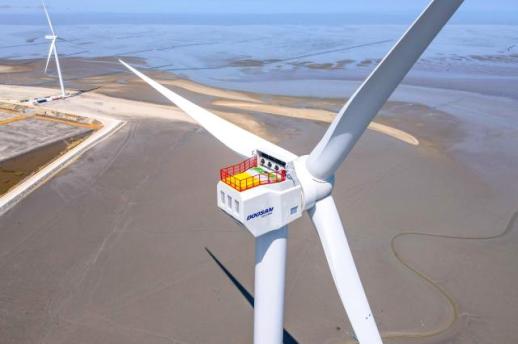 HOT STOCK: Doosan Enerbility jumps over 10% on AI-driven power demand SEOUL, January 05 (AJP) - Shares of Doosan Enerbility surged more than 10 percent on Monday, buoyed by a string of major orders spanning offshore wind and nuclear power, as rising electricity demand in the AI era fuels investor optimism toward power infrastructure plays. The stock ended at 83,200 won, up 10.64 percent. Trading volume topped 12 million shares, well above recent averages, reflecting heightened investor interest. The shares have risen more than fourfold from their closing level of 18,190 won a year earlier. The rally followed news that the company last week secured a 575 billion won ($430 million) engineering, procurement and construction (EPC) contract with Yawol Offshore Wind Power for the 104-megawatt Yeonggwang Yawol Offshore Wind Farm in South Jeolla Province. Under the deal, Doosan Enerbility will supply and install 13 units of its 8-megawatt offshore wind turbines and oversee the entire EPC process, with completion slated for March 2029. The project marks the first commercial deployment of the company’s domestically developed 8-megawatt-class offshore wind turbines, which have received UL certification. Analysts said the contract signals a shift from development to full-scale commercialization, improving earnings visibility through EPC revenue and planned long-term maintenance services. Investor sentiment was further supported by the company’s expanding nuclear power business. Doosan Enerbility recently won a 5.64 trillion won order to supply key equipment for the expansion of the Dukovany nuclear power plant in the Czech Republic, reinforcing its position in the global nuclear supply chain. Expectations of accelerating global investment in nuclear power and small modular reactors, driven by surging electricity demand from AI data centers — particularly in the United States — also boosted foreign investor appetite for the stock, analysts said. 2026-01-05 16:21:05
 -
 China travel surge lifts Incheon airport to record passenger traffic SEOUL, January 05 (AJP) - Incheon International Airport handled a record 239,530 passengers on Jan. 4, the highest daily total since the airport opened in 2001, its operator said on Monday. The figure surpassed the previous record of 234,171 passengers set on Aug. 4, 2019, by nearly 5,000, and was up 13.7 percent from the same day a year earlier, when 210,891 passengers used the airport. By destination, travel to and from China accounted for 49.2 percent of total passenger traffic and recorded the largest year-on-year increase, which the airport operator attributed to visa-free entry policies and a recovery in outbound and inbound tourism. Passenger traffic involving Hong Kong and Taiwan rose 24 percent. Travel demand to Southeast Asia, however, showed relatively modest growth of 1.7 percent despite the winter peak season, partly due to recent developments in Cambodia, the operator said. Despite the surge in traffic, airport congestion remained close to normal levels. As of Jan. 4, the average wait time at departure security checkpoints in Terminal 1 was 7.9 minutes, with a peak of 42 minutes at around 6 a.m. Incheon International Airport Corp. said it is expanding the use of automated systems such as Smart Pass, enhancing training for security screening staff, hiring additional personnel and widening operations at Gate 1 in both Terminal 1 and Terminal 2. 2026-01-05 16:00:44
 -
 Final season of 'Squid Game' wins Critics Choice award again SEOUL, January 5 (AJP) - Netflix's hit South Korean series "Squid Game" won an award for the Best Foreign Language Series at the annual Critics Choice Awards in Santa Monica, California on Sunday. The third and final season of the dystopian thriller beat Apple TV's comedy "Acapulco" and Netflix's Japanese series "Last Samurai Standing" to claim its third Critics Choice honor, having previously won for its first season in 2022 and its second season in 2025. The latest series with six episodes continues the deadly, high-stakes saga that began with its first season in September 2021, once again revolving around hundreds of cash-strapped players who "accept a strange invitation to compete in children's games" for a tempting prize. Earlier in the day, Netflix's hit South Korean anime "KPop Demon Hunters" also won two prizes at the 31st prestigious awards which "honor the finest in cinematic and television achievement." 2026-01-05 15:37:19
 -
 Packaging becomes the real bottleneck in AI race — opening a window for Samsung SEOUL, January 05 (AJP) - In the premium AI chip race, supremacy is increasingly defined not by transistor density but by advanced packaging — the ability to assemble multiple high-performance chips into a single accelerator capable of handling massive workloads efficiently. Packaging was once regarded as a back-end step, sealing finished chips into protective casings and mounting them onto boards, work largely handled by outsourced assembly and test firms. In the era of AI accelerators, however, “advanced packaging” has emerged as a decisive stage of chipmaking, bringing graphics processing units (GPUs) and high-bandwidth memory (HBM) into ultra-close proximity to boost performance, reduce power consumption and shorten time to market. This shift is blurring traditional boundaries between foundries and packaging specialists — and turning packaging capacity into the tightest choke point in the AI supply chain. “Advanced packaging has become essential — not optional — in the AI era. Without it, AI semiconductors simply cannot be built,” said Ahn Ki-hyun, secretary general of the Korea Semiconductor Industry Association. “Globally, only two companies — TSMC and Samsung — currently possess truly advanced AI packaging capabilities.” The most sought-after advanced packaging technology today is CoWoS, short for Chips-on-Wafer-on-Substrate, developed by TSMC. The technology allows logic chips and memory stacks to be integrated on a shared substrate, a configuration essential for high-end AI accelerators. TSMC is struggling to keep up with surging demand from customers such as Nvidia, AMD and major cloud service providers. Google has reportedly scaled back its tensor processing unit (TPU) output target this year despite strong demand, as a significant portion of Taiwan’s CoWoS capacity through 2027 has been reserved for Nvidia — underscoring how critical access to packaging has become. According to TrendForce, TSMC’s monthly CoWoS capacity grew from roughly 13,000–15,000 wafers at the end of 2023 to 35,000–40,000 wafers by late 2024 that doubled to 75,000–80,000 wafers by the end of 2025. The capacity is expected to expand to 120,000 wafers or more in 2026. Even so, demand continues to outstrip supply. The imbalance has made advanced packaging the most acute bottleneck in AI chipmaking. A single 12-inch wafer typically yields only nine to 10 Nvidia H100-class chips even under near-perfect packaging yields, sharply limiting how quickly AI accelerators can reach the market. Nvidia is estimated to account for nearly half of TSMC’s CoWoS output, followed by AMD and Broadcom — which manufactures Google’s TPUs. Remaining capacity is shared among customers including Amazon Web Services, Meta and Marvell. Global shipments of high-end AI accelerators rose sharply in 2024 and are expected to climb further in 2025, intensifying competition for limited packaging slots. Supply constraints have already forced adjustments across the industry, with Google carrying over part of its planned TPU output and server makers such as Dell and Supermicro facing delivery delays that at times stretched beyond 50 weeks. The ripple effects extend beyond AI chips themselves. Prices for legacy memory such as DDR4 have jumped as manufacturers prioritize high-end AI memory, highlighting the strategic value of tightly integrated memory and packaging capabilities. Samsung’s opening The persistent bottleneck is prompting major customers to seek alternatives to TSMC’s near-dominance in advanced packaging — a shift that is bringing Samsung Electronics back into focus. Unlike most competitors, Samsung can offer a turnkey solution that combines foundry manufacturing, HBM supply and advanced packaging under one roof. “Samsung holds an integrated edge,” Ahn said. “It has HBM technology, advanced manufacturing capabilities, fabs, and the ability to package HBM together with CPUs or GPUs. If customers bring a design, Samsung can deliver a fully packaged chip.” The company’s I-Cube (2.5D) and H-Cube (3D) platforms are designed to integrate logic chips with next-generation HBM, a capability expected to grow more important as the industry moves toward custom memory designs and the HBM4 era. Samsung’s share of the combined foundry and advanced packaging market remains modest compared with TSMC, but analysts note that the gap itself underscores Samsung’s potential upside as customers pursue multi-vendor strategies to reduce supply-chain risk. “TSMC, by contrast, does not produce HBM, making it difficult to describe its offering as a full turnkey solution,” Ahn added. That strategy has begun to yield results. Samsung’s recent win to manufacture Tesla’s AI6 chip, valued at an estimated $16.5 billion, is widely seen in the industry as validation of its integrated approach. Packaging sets the pace The growing focus on packaging reflects a broader shift in how AI hardware competitiveness is measured. Even with sufficient GPU designs and memory supply, AI accelerators cannot be shipped without access to advanced packaging lines — making CoWoS and its alternatives the final gatekeeper of AI infrastructure expansion. As AI workloads scale and next-generation chips such as Nvidia’s Blackwell platform enter the market, the industry’s center of gravity is moving from transistor scaling to assembly capacity. For Samsung, the persistent packaging crunch represents less a threat than a strategic opening — one that could reshape competitive dynamics as customers increasingly prioritize supply-chain resilience over single-vendor dependence. “From the perspective of Big Tech firms, receiving a completed AI chip from a single provider is highly attractive,” Ahn said. “Given that TSMC cannot absorb all demand on its own, it is increasingly likely that orders will flow toward Samsung.” 2026-01-05 15:36:51
 -
Incheon Airport sets daily passenger record with nearly 240,000 travelers SEOUL, January 5 (AJP) - A record 239,530 passengers passed through Incheon International Airport last Sunday, the most in a single day since it opened in 2001, operators said on Monday. The figure was nearly 5,000 higher than the previous record of 234,171 set on Aug. 4, 2019, and was also up about 13.7 percent from a year earlier, when 210,891 passengers used the airport. Chinese passengers accounted for the most at 49.2 percent of all travelers, seeing the biggest increase, likely due to a temporary year-long visa-free entry program between South Korea and China that runs until the end of this year. Passenger traffic from Chinese-speaking countries such as Hong Kong and Taiwan also rose by 24 percent. However, the number of travelers to and from Southeast Asia remained relatively low, rising by just 1.7 percent despite the winter peak season, which was attributed to recent revelations of online phishing scams and other crimes, mostly in Cambodia. Despite the record passenger numbers, the airport appears to be handling the surge smoothly, with an average processing time of just 7.9 minutes and a peak wait of 42 minutes at around 6 a.m. The airport said it is expanding automated immigration clearance systems and adding additional security and screening staff. Lee Hak-jae, the airport's president, said, "We will continue to improve convenience for foreign travelers and other visitors by revamping multilingual signage and increasing more personnel." 2026-01-05 14:55:34