
Journalist

AJP
-
 Seoul to Recruit Teens for 2026 Youth Orchestra Tour and Performances in Three European Countries Seoul is recruiting participants for the “Seoul Youth Orchestra Performance Tour of Three European Countries,” a 7-night, 9-day program running from July 27 to Aug. 4, 2026, with conductor Baek Yun-hak. The city said the program is designed to help Seoul teenagers gain performance experience on an international stage and broaden their musical skills. Participants will join a youth orchestra festival in the Aix-en-Provence area of France, where they will perform and exchange with young musicians from other countries through music. Seoul said the tour is intended to offer practical arts experience through performances and cultural exchange, not just overseas travel. With Baek taking part, participants are expected to build ensemble and stage experience through orchestra rehearsals and concerts. “This performance tour will be an opportunity for Seoul youth to gain experience on the international stage and assess their own capabilities,” said Joo Ho-don, head of the Youth Policy Division at Seoul’s Lifelong Education Bureau. The program will be held in three European countries and aims to expand cultural and arts opportunities for teenagers.* This article has been translated by AI. 2026-03-10 13:48:00
 -
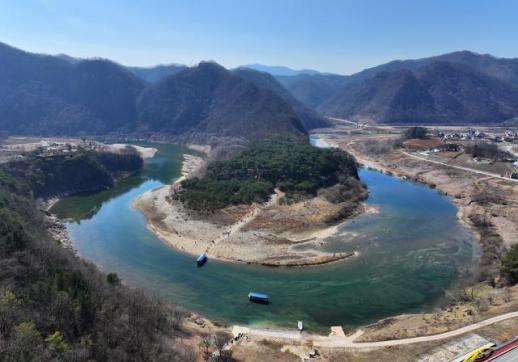 A film, a fallen monarch, and a nation looking back SEOUL, March 10 (AJP) -Thirty-one days after its release, The King’s Warden crossed the ten-million admissions mark, becoming the 34th South Korean film to reach that milestone — and still counting as the crowds kept on growing. The numbers came quickly. One million in five days. Two million by day twelve. Three million on Lunar New Year. Four million the next day. By March 10, cumulative admissions reached approximately 11.7 million. But the film's impact has not been restricted to theaters. Cheongnyeongpo in Yeongwol, Gangwon Province—where King Danjong, the sixth monarch of Joseon, was exiled—has seen a steady stream of visitors. Over one weekend, thousands arrived. On March 8 alone, Cheongnyeongpo and Jangneung received 4,622 visitors by 2:10 p.m. The day before, 7,047 people came. In just two days, more than 10,000 visitors walked through the site. By March 8 afternoon, the year's cumulative visitor count reached approximately 109,112. Last year, it took until June to surpass 100,000. This year, that number was reached in just two months. The film's influence also spread to bookstores. According to YES24, sales of books with the keyword "Danjong" surged 2,565.4% in the month following the film's February 4 release compared to the same period the previous year. From the classic novel The Tragedy of Danjong to children's history books and the Annals of the Joseon Dynasty, diverse genres saw rising sales together. Annals of the Joseon Dynasty 3: Sejong, Munjong, Danjong recorded an approximately 800% (9-fold) increase, while Danjong's Sorrow, Sejong's Tears rose about 2,700% (28-fold) during the same period. A single film led people beyond the theater. To an exile site. To books. Into history. A story that began on screen is coming alive again in real places and historical records. The film ends in two hours, but the questions it leaves continue. Who was Danjong? What was his era like? And why do we now seek to remember him? The King’s Warden became a ten-million-viewer blockbuster. Yet perhaps its deeper significance lies elsewhere — in how a single film led a nation to look back, and rediscover a chapter of its own history. 2026-03-10 13:47:16
 -
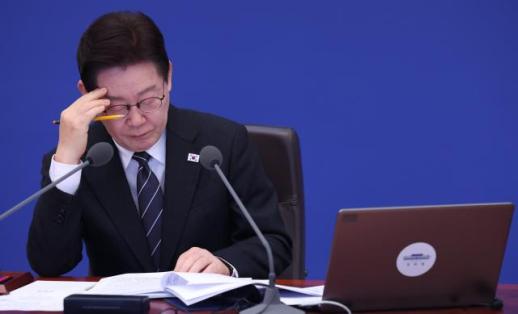 Seoul mulling supplementary budget, fuel price cap and tax cut amid oil concerns SEOUL, March 10 (AJP) -South Korean President Lee Jae Myung on Tuesday ordered a string of emergency actions — including a cap on gasoline prices, fuel tax cuts and direct consumer support — through a supplementary budget if deemed necessary to relieve household burdens from import inflation triggered by widening Middle East conflicts. “National capabilities must concentrate on minimizing the impact of external shocks on household and corporate economies,” Lee said during a cabinet meeting on Tuesday. “The most urgent matter is price stability.” Chairing the meeting at the presidential office, Lee instructed ministries to prepare measures including the enforcement of a gasoline price cap, adjustments to energy taxes and direct consumer assistance, while keeping additional fiscal and financial support ready if market conditions worsen. Lee warned that the steep rise in fuel prices is already straining sectors closely tied to daily livelihoods such as freight transport, parcel delivery and greenhouse farming. “As fuel costs rise sharply, the burden is increasing for industries directly connected to people’s everyday lives,” he said, calling for policies that can quickly and tangibly ease pressure on households and small businesses. Describing the situation as extraordinary, Lee urged officials to move beyond existing policy manuals and respond with greater speed to stabilize market sentiment. “In an emergency situation like this, we must go beyond existing manuals and act with the speed required to calm market anxiety,” he said, stressing that the government must act preemptively so that “people’s lives are not shaken under any circumstances.” Lee also addressed the safety of South Korean nationals remaining in the Middle East, instructing authorities to consider additional chartered evacuation flights and even the use of military aircraft if necessary. He also called for faster arrangements to move citizens by land to safer neighboring countries. Lee signaled that a supplementary budget may become unavoidable, if additional support is required for small businesses and financially vulnerable companies affected by rising energy costs. “If we are to provide fiscal support for small merchants, small businesses and struggling firms to overcome the crisis stemming from the Middle East situation, additional financial resources will be needed,” he said. “It appears we may have to proceed with an early supplementary budget.” Lee also noted that government tax revenues could exceed earlier forecasts this year thanks to record earnings from chipmaking and robust stock income, suggesting fiscal conditions may allow room for emergency spending. Separately, Lee welcomed the National Assembly’s bipartisan approval of a bill designed to manage strategic investment ties between South Korea and the United States, thanking opposition lawmakers for their cooperation. “Even if political issues require competition and debate, cooperation on national matters sets a good example,” he said. The emergency measures come as South Korea’s economy has been among the most sensitive to the Middle East conflict that erupted on Feb. 28, when U.S.-Israeli strikes against Iran sent global energy markets into turmoil. International oil prices have surged above $100 per barrel on Monday, raising inflation concerns for South Korea, which imports nearly all of its energy and relies heavily on crude shipments from the Gulf. The benchmark KOSPI has swung violently, around 16 percent from late February when the war began, while the Korean won has lost 3.9 percent, revisiting the lows of the wake of global financial crisis 17 years ago. Foreign investors have pulled funds from equities while bond markets also showed volatility, reflecting broader concern that a prolonged disruption to oil flows through the Strait of Hormuz — a route carrying roughly one-fifth of global oil shipments — could hit Asia’s energy-dependent economies hardest. 2026-03-10 13:32:08
 -
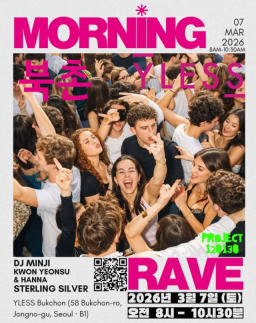 Dancing the morning away in Seoul — alcohol-free SEOUL, March 10 (AJP) — On a quiet Saturday morning in Seoul’s Bukchon hanok village, house music pulses through the narrow alleys long before most cafés open their doors. Instead of the thump of late-night clubbing, the crowd gathers just after sunrise. Some arrive fresh from a weekend run. Others come with coffee in hand. Within minutes, strangers begin dancing together in the crisp morning air. Welcome to Seoul’s newest social ritual: the morning rave. The alcohol-free gatherings reflect how South Korea’s younger generation is reshaping the country’s famously nightlife-heavy social culture. Rather than late-night drinking sessions, a growing number of young people are starting their day with music, coffee and community. “I was wondering how people could wake up so early,” said Antonio Garcia, a 30-year-old resident of Sinchon who discovered the event through social media. “This is my first time joining something like this,” she said. “I’d also like to try other activities, like coffee meetup groups.” The rise of morning raves mirrors a broader shift across Seoul, where interest-based communities — from running crews and book clubs to casual coffee gatherings — are expanding as new ways for strangers to connect through shared hobbies. It also comes as drinking culture begins to soften. According to Samsung Securities, South Korea’s liquor market contracted by more than 5 percent last year, reflecting a growing “healthy pleasure” trend and rising interest in alcohol-free lifestyles. Major beverage companies are already feeling the impact. Lotte Chilsung Beverage’s liquor division posted 28.2 billion won ($21 million) in operating profit last year, down 18.8 percent from a year earlier, while HiteJinro has also reported weaker profitability amid sluggish beer sales. The morning rave has also begun attracting curious visitors from overseas. Geo Martiniano, a San Francisco resident in his 30s, attended the Bukchon event during a brief stopover in Seoul. “I’m actually here for only about 12 hours before flying back to the United States tonight,” he said. “A lot of my friends don’t stay out late for parties anymore. So having a concert like this in the morning is really new.” Despite describing himself as relatively introverted, Martiniano said the format made it easier to meet people. “I usually don’t talk to strangers much,” he said. “But here it feels natural.” Similar social concepts are emerging abroad. In the United States, gatherings known as “Admin Nights” — where people meet in cafés or homes to complete small personal tasks together — have spread widely on social media, often described as a “study hall for adults.” Back in Bukchon, the morning rave taps into a comparable desire for shared experiences without nightlife pressures. “Many running crews stop by to shake off the stress from the workweek,” said Kim Euna, director at Mot Company, which collaborated on organizing the event. “By around 9:30 a.m., you’ll be surprised how hard people are dancing.” The event, held every other week, is jointly organized by K-beauty brand KAHI and global beauty platform YLESS. Each session attracts around 200 participants, with cumulative attendance surpassing 1,000 as of March 7. Inside the venue, the program blends music with lifestyle experiences. Alongside the DJ set and dance floor, visitors can try personal color consultations, quick makeup styling and Korean food tastings. The space is divided into a speaker zone, where music fills the room, and a silent disco area where participants listen through wireless headsets. Kim said the headset format also helps people who arrive alone feel more comfortable. “It makes it easier for people to enjoy themselves even if they come by themselves,” she said. At one point during the event, organizers circulate trays of rice balls topped with beluga caviar and desserts — a nod to KAHI’s premium skincare line Cavi Blue, which features caviar extract. “Like champagne being served in a nightclub, we share caviar around 10 a.m.,” Kim said. “People can dance, taste the caviar and experience the products at the same time.” While traditional raves focus on burning energy late into the night, Kim said the morning version emphasizes starting the day with fresh energy — reflecting a growing focus on wellness among younger consumers. “Alcohol is one of the biggest enemies of healthy skin,” she said. “Replacing alcohol with music and wellness programs fits the lifestyle many young people want now.” The free-entry format also serves as a marketing strategy. The Bukchon venue doubles as a retail space where visitors can explore K-beauty products while enjoying the event. “It allows people to experience the products while they’re already feeling energized,” Kim said. “That kind of experience can create lasting impressions.” The venue has experimented with various cultural programs, including K-pop demonstrations featuring the Saja Boys from the animated series K-pop Demon Hunters and even a kimchi festival. “But the morning rave has received the strongest response so far,” Kim said. “So we’re continuing it more regularly.” Food stalls on the first floor offer simple K-food favorites such as tteokbokki and fish cakes, allowing visitors to experience both K-beauty and Korean street food within Bukchon’s traditional setting. The event draws a notably international crowd. Foreign visitors accounted for 30 to 40 percent of participants at one session two weeks ago, Kim said, although more Korean attendees appeared this time. “We see nearby Bukchon residents coming by,” she said. “Some even show up casually in slippers.” Families visiting Korea have also joined the morning dance floor before sampling Korean snacks together. Another popular attraction is the free personal color analysis and on-site makeup styling, services that remain relatively uncommon outside Korea. Personal color consultations — which analyze skin tone, hair and eye color to identify the most flattering palette — typically cost 100,000 to 300,000 won ($75–$220) in Seoul, with comprehensive sessions sometimes exceeding 500,000 won. The service has become part of the country’s growing beauty tourism industry. According to the Seoul Tourism Organization, overseas visitors spent about 36.4 billion won on beauty services last year, a 231 percent increase from 2019. Anna Fisher, a 24-year-old living in Pyeongtaek, was among those waiting in line. “I woke up at 5 a.m.,” she said with a laugh. “Seoul has things like this that I haven’t seen anywhere else in the world. I love that you can start the day dancing.” She added that Korea’s global beauty reputation also draws visitors. “K-beauty is so big,” she said. “A lot of foreigners come because of that too. It’s pretty neat.” 2026-03-10 11:48:44
 -
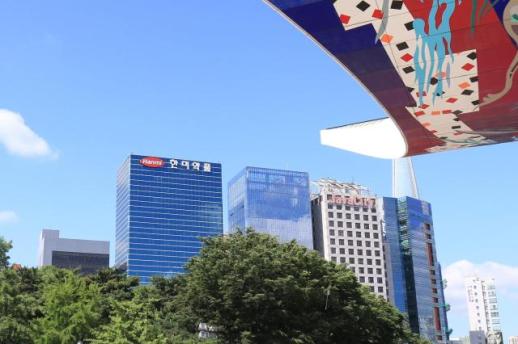 Korean Drugmakers Face Key Votes, Board Picks and New Business Plans at Annual Meetings South Korea’s pharmaceutical industry is heading into annual shareholders meeting season later this month, with votes expected to go beyond routine reporting of last year’s results and focus on management stability and business direction. Industry officials said major drugmakers will begin meetings on March 20, including Yuhan Corp. and Dongkook Pharmaceutical, with sessions continuing through the end of the month. March 26 is set to be a “super meeting day” for several companies, including GC Green Cross, Daewoong Pharmaceutical and Dong-A Socio Holdings. Boryung is scheduled to hold its meeting on March 31. Hanmi Pharmaceutical is drawing particular attention, with the key issue being whether CEO Park Jae-hyun will be reappointed. With a conflict structure continuing among Chairwoman Song Young-sook, the wife of late founder Lim Seong-gi, CEO Park and major shareholder Shin Dong-kook, chairman of Hanyang Precision, a proxy fight at the meeting is seen as likely. The outcome is expected to help determine effective control of management, while votes from minority shareholders and third parties such as the National Pension Service are also viewed as variables. The industry is also watching Dongwha Pharmaceutical, where an agenda item has been submitted to appoint Woo Byung-woo as an audit committee member. Market views are mixed because he lacks experience in pharmaceutical management and research and development, though some analysts describe the move as a strategic choice to strengthen legal risk management and internal controls in a heavily regulated industry. Daewoong Pharmaceutical nominated Choi In-hyuk, head of tech business at Naver, as an outside director candidate. He is an IT specialist who has worked at Samsung SDS and Naver Financial, and the nomination is seen as aligned with Daewoong’s push to expand digital health care. Companies are also lining up to amend their articles of incorporation to broaden business purposes. Daewoong Pharmaceutical plans to add “solar power generation,” Dong-A ST will add “car wash operations,” and JW Pharmaceutical will add “investment and management advisory and consulting.” The moves are being read as efforts to secure steadier revenue sources beyond new drug development. “With pressure to cut drug prices and rising R&D costs, these shareholders meetings will be a place to gauge each company’s mid- to long-term strategy,” an industry official said. “There is a clear push to pursue management stability, strengthen core competitiveness and expand new businesses at the same time.”* This article has been translated by AI. 2026-03-10 11:24:00
 -
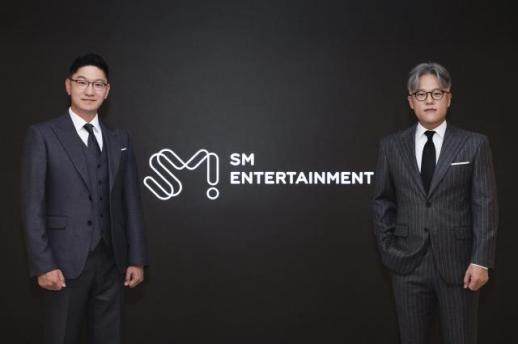 SM executives make Billboard's 2026 Global Power Players list SEOUL, March 10 (AJP) - Three executives from SM Entertainment have been named to "Billboard’s 2026 Global Power Players list," which recognizes influential leaders in the global music industry outside the United States, the company said Tuesday. Included on the list were SM Co-CEOs Jang Cheol-hyuk and Tak Young-jun, along with Choi Jung-min, the company’s chief global officer. Billboard’s Global Power Players list highlights executives who have driven the international music industry outside the United States. Tak has appeared on the list for five consecutive years since 2022, while Jang was selected for the third straight year since 2024, according to the company. Choi was included for the first time, reflecting her role overseeing the company’s global branding and business operations. The recognition comes as SM continues to expand its global presence. In 2025, the company marked its 30th anniversary with projects including concerts, album releases, orchestral performances and pop-up events across Asia, the Americas and Europe. Over the past few years, SM’s operating profit has more than doubled, rising from 74.1 billion won ($50.3 million) in 2021 to 183 billion won in 2025, up 147 percent. In January of 2026, SM also announced its "SM NEXT 3.0" strategy, which focuses on sustainable growth through the development of new intellectual property and expanded global business initiatives. Executives from other major K-pop industries were also included on this year’s list, including HYBE chairman Bang Si-hyuk and JYP Entertainment founder Park Jin-young, along with other senior executives from the companies. 2026-03-10 11:19:47
 -
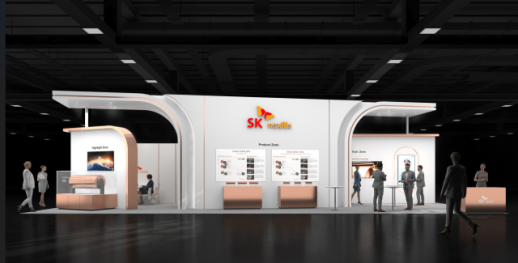 SK Nexilis to Showcase Next-Generation Copper Foil Solutions at InterBattery 2026 SK Nexilis, SKC’s investment vehicle for battery copper foil, said March 10 it will take part in InterBattery 2026, running for three days starting March 11 at COEX in Seoul, to showcase its copper foil technology and product lineup. Under the theme “SK Nexilis bridges the future,” the company said it designed its exhibit to show, at a glance, how copper foil has evolved alongside changes in downstream industries. In the first “Highlight Zone,” SK Nexilis will display a roll of wide copper foil measuring 4 micrometers thick — about one-thirtieth the thickness of a human hair — with a width of 1,400 mm and a length of 5 km. In the “Tech Zone,” it will present key products including standard copper foil for rechargeable batteries, high-strength products and high-elongation foil described as essential for next-generation cylindrical batteries. The company said the manufacturing process will also be shown in video for visitors. The exhibit will also feature products tied to emerging technologies, including “high-adhesion copper foil” for next-generation battery manufacturing such as dry processes, a corrosion-resistant current collector for all-solid-state batteries cited for strong fire safety, and current collectors for lithium metal batteries. SK Nexilis said it plans to highlight expansion beyond electric-vehicle battery materials into applications such as energy storage systems, drones, defense, robotics and aerospace. “Through this exhibition, we will strengthen our image as a leading future infrastructure materials company that goes beyond simple battery materials and leads mobility innovation,” a SK Nexilis official said. The official said the company will actively promote its lineup and technology to global customers and partners and expand opportunities for technical cooperation through tailored solution proposals.* This article has been translated by AI. 2026-03-10 11:13:13
 -
 KOSPI recovers to 5,500 as Asian stocks rebound on easing oil fears SEOUL, March 10 (AJP) - Asian stock markets rebounded on Tuesday as oil prices retreated after U.S. President Donald Trump said the conflict in the Middle East is "going to be ended soon," while G7 ministers hinted at a possible release of strategic oil reserves to ease surging prices. South Korea's benchmark KOSPI rebounded to the 5,500 level just a day after a sharp selloff, as investor sentiment improved following Trump's remarks as well as a drop in global oil prices from over US$100 per barrel to around $80. Even a buy-side sidecar kicked in during the early trading session, as the KOSPI rose 6.13 percent to 5,573.55 and the tech-heavy KOSDAQ gained 4.11 percent to 1,147.63 just a few hours after the day's trading began. Foreign and institutional investors led the buying, with net purchases of 1.07 trillion won and 510 billion won, respectively, while individual investors sold a net 1.47 trillion won. Japanese shares also rebounded after a steep selloff the previous day, when the Nikkei 225 recorded its third-largest intraday drop on record. Tokyo's index rose 2.95 percent to 54,287.95 by 10:00 a.m., recovering some of the prior session's losses as falling oil prices and optimism over a possible settlement in the Middle East boosted investor sentiment. Chip-related stocks drove the gains, with Tokyo Electron rising 3.49 percent to 40,280 yen ($268) and Advantest climbing 5.51 percent to 24,135 yen. Taiwanese shares also moved higher, with the TAIEX rising 3.14 percent to 33,118.03 shortly after trading began in Taipei. In Hong Kong, the Hang Seng Index advanced 1.31 percent to 25,740.29. Meanwhile, overnight gains in memory chip stocks on Wall Street lifted Korean semiconductor shares. SanDisk surged 11.64 percent, while Lam Research and Micron Technology rose 5.93 percent and 5.14 percent, respectively. In Seoul, Samsung Electronics gained 9.68 percent to 190,300 won, and SK hynix jumped 11.36 percent to 931,000 won. However, defense and refinery stocks, which had jumped amid geopolitical tensions, retreated after Trump's comments. S-Oil fell 7.51 percent to 118,900 won, and Hanwha Systems dropped 3.63 percent to 156,800 won. Other defense-related stocks also declined, with LIG Nex1 falling 2.51 percent to 776,000 won and Hyundai Rotem slipping 1.16 percent to 213,000 won. Hanwha Aerospace rebounded 2.86 percent to 1,476,000 won after early losses, reflecting a growing divergence among defense stocks as investors increasingly differentiate based on company fundamentals and order momentum. Shares of automakers climbed, as Hyundai Motor added 5.72 percent to 536,000 won and Kia rose 4.76 percent to 160,700 won. Among other heavyweights, Samsung Biologics rose 2.09 percent to 1,612,000 won, LG Energy Solution added 2.78 percent to 369,500 won, and Samsung C&T climbed 3.51 percent to 280,000 won. The won strengthened sharply amid easing oil prices and expectations of an early end to the Middle East conflict, trading around 1,472.70 against the greenback, compared with about 1,494.7 won the previous day. 2026-03-10 11:12:54
 -
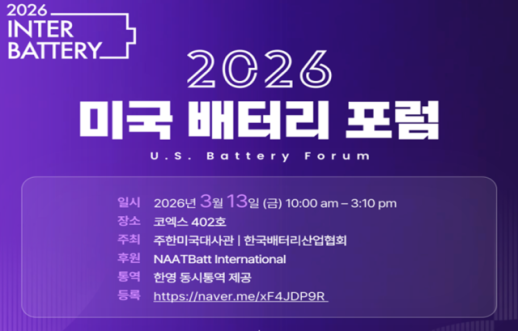 Korea Battery Industry Association to Host First U.S.-Korea Defense Battery Cooperation Seminar The Korea Battery Industry Association said Tuesday it will hold a “U.S.-Korea Defense Battery Cooperation Seminar” with the U.S. Embassy in Seoul at 10 a.m. March 13 at COEX Conference Room 402 in Seoul. The association said the event was organized to strengthen bilateral cooperation on policy, technology and industry in defense batteries as the United States tightens its supply chain security posture and South Korea emerges as a key partner in the sector. Participants will include officials from the U.S. Department of Defense, the BEACONS Center at the University of Texas at Dallas, and RIB Manufacturing, along with specialized defense-battery companies from both countries. The association described it as the first seminar focused on U.S.-Korea cooperation in defense batteries. Eric Shields, a senior adviser at the Pentagon’s Office of Industrial Base Policy, is set to present U.S. defense-battery supply chain policy and industrial strategy based on the “U.S. Department of Defense Lithium Battery Strategy 2023–2030.” The presentation will cover the Pentagon’s military supply chain decoupling strategy, the growing importance of military batteries as future weapons systems proliferate, and policies to foster the battery industry through defense procurement. Cho Kyung-jae, a professor who leads the BEACONS Center at UT Dallas, will introduce the center, which was established with Pentagon support, and outline directions for cooperation with South Korean defense companies. RIB Manufacturing co-founder John Stivale and Lisa King, director for advanced battery strategy, will present on research and development cooperation based on the Dallas industrial cluster and on battery technology and standardization trends for Pentagon unmanned systems (UAV·UAS·UUV). On the South Korean side, defense-battery companies Vitzrocell, JR Energy Solution, U-BAT, LiBEST and BEI will introduce their businesses and brief current U.S.-Korea cooperation and areas where they hope to expand ties, the association said. “Batteries are growing into a core strategic asset for economic security,” Park Tae-sung, the association’s executive vice chairman, said. “Korean battery companies, with world-class manufacturing capabilities, will be the United States’ most reliable partner for supply chain security,” he said, adding that he hopes the seminar will expand battery technology and security cooperation within the U.S.-Korea alliance.* This article has been translated by AI. 2026-03-10 11:12:09
 -
 Hyundai Mobis Starts Up New Hungary Plant, Expands Chassis Module Supply to Mercedes-Benz Hyundai Mobis said Tuesday it has begun full operations at its first production base in Hungary as it moves to expand business with European automakers. The company recently won a contract to supply chassis modules to Mercedes-Benz in Europe, following a deal in North America in 2022. Under industry practice, Hyundai Mobis did not disclose the contract value or specific vehicle models. However, the industry expects the order to be sizable given Mercedes-Benz’s sales in Europe and the large-volume nature of chassis module procurement. A company official said the deal was backed by Hyundai Mobis’ track record of stable supply to Mercedes-Benz over several years, along with its manufacturing know-how and quality competitiveness. The new plant is in Kecskemet in central Hungary, located near the customer to speed deliveries and improve logistics efficiency. Hyundai Mobis said it is operating a just-in-sequence system that receives production plans in real time and builds modules immediately. The site covers about 50,000 square meters, roughly the size of seven soccer fields. The Hungary plant will produce chassis modules for electric and hybrid vehicles. Hyundai Mobis said it also plans to install equipment capable of mixed production with internal combustion models to respond quickly to changing customer schedules. Hungary is emerging as an auto and battery manufacturing hub in Eastern Europe, with annual new-vehicle output exceeding 500,000 units. German automakers have production bases there, and Chinese automakers and battery makers have also made large investments. Hyundai Mobis said its Hungary plant will be its fourth production base in Europe after the Czech Republic, Slovakia and Turkey, and its first site dedicated to global customers. Hyundai Mobis is also building a plant in Spain to supply battery systems to global customers. Once the Spain plant begins operations, the company said it will have five production bases covering Europe and expects stronger manufacturing competitiveness on the back of a more stable parts supply chain. The company aims to raise the share of revenue from global customers to 40% by 2033. A Hyundai Mobis official said chassis modules are large assemblies that integrate braking, steering and suspension components under a vehicle, requiring major investment in production sites and logistics systems. The official said the Hungary plant will help sustain long-term partnerships with customers, given the typically lengthy cooperation between automakers and suppliers.* This article has been translated by AI. 2026-03-10 11:05:00