
Journalist

AJP
-
 Actor Baek Il-seop Says He Hasn’t Heard From Choi Bul-am, Voices Concern Actor Baek Il-seop said he is worried about the health of senior actor Choi Bul-am. Baek appeared on the MBN entertainment program “Altoran,” which aired on the 8th. “I keep feeling an emptiness in my stomach,” Baek said, adding that senior colleagues have been “leaving one by one.” He said he has not been able to reach Choi. “Bul-am hyung hasn’t been in touch. He doesn’t answer the phone,” Baek said. “I can’t press him with questions, but I’m worried.” Baek added, “I hope Bul-am hyung shakes it off and gets back on his feet soon.” Choi was born in 1940 and Baek in 1944. * This article has been translated by AI. 2026-03-09 08:52:06
 -
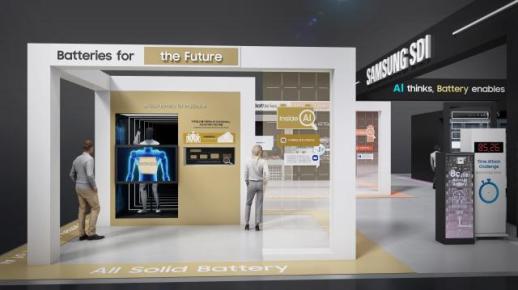 Samsung SDI to Debut All-Solid-State Battery Sample for Physical AI at InterBattery 2026 Samsung SDI will unveil, for the first time in South Korea, an all-solid-state battery technology it is developing for the era of physical artificial intelligence, including humanoid robots. According to industry sources on the 9th, Samsung SDI will publicly display a sample of a pouch-type all-solid-state battery under development for physical AI applications at InterBattery 2026, which opens March 11 at COEX in Seoul for a three-day run. The company also plans to highlight its competitiveness in core AI infrastructure by showcasing battery solutions for energy storage systems, along with ultra-high-output batteries used in uninterruptible power supplies and battery backup units that are essential for AI data centers. At the exhibition, Samsung SDI will use the slogan, “AI’s imagination, made real by batteries,” and plans to present a wide range of technologies and products in what it said will be the largest exhibition space among participating companies. Samsung SDI said it is expanding its form factors from prismatic all-solid-state batteries developed for electric vehicles to pouch-type designs, aiming to broaden applications to humanoid robots, aviation systems and next-generation wearables. The company noted that robots, with limited space for onboard components, require compact batteries that deliver both high energy density and strong output. Samsung SDI will also introduce battery solutions for AI data centers, including its UPS battery “U8A1” and a high-output battery for BBUs installed inside servers. The BBU battery is designed to quickly supply power to servers during outages to prevent data loss and to support stable power delivery even when demand surges. In addition, Samsung SDI will debut its integrated ESS solution, Samsung Battery Box (SBB), and its AI-based battery health diagnostic software, Samsung Battery Intelligence (SBI). The company said SBI analyzes battery condition, lifespan and abnormal signs to predict risks such as fires in advance. It will also display differentiated battery technologies, including a next-generation prismatic battery with an energy density of 700Wh/L. A Samsung SDI official said the company aims to show how its battery technology can “complete all possibilities in the AI era,” adding that it will present high-quality battery solutions suited to the AI era based on capabilities built up over many years.* This article has been translated by AI. 2026-03-09 08:51:19
 -
 Kim Seong-hyeon Ties for 42nd at Puerto Rico Open; Ricky Castillo Wins First PGA Tour Title Kim Seong-hyeon finished in the middle of the standings at the PGA Tour’s Puerto Rico Open, which had a $4 million purse. Kim shot a 1-under 71 in the final round at Grand Reserve Golf Club (par 72) in Rio Grande, Puerto Rico, with five birdies and four bogeys. He finished at 6-under 282 and tied for 42nd. Kim was the only South Korean in the field. Ricky Castillo of the United States won with a 17-under 271 total, edging Chandler Blanchet of the United States by one shot (16-under 272). Castillo, born in 2001 and a PGA Tour rookie in the 2004-2005 season, earned his first victory. He took home $720,000 in prize money (about 1.07 billion won). With the win, Castillo also secured spots in next week’s Players Championship and the PGA Championship in May.* This article has been translated by AI. 2026-03-09 08:36:00
 -
 Netflix Releases Official Teaser for BTS 'Comeback Live: Arirang' Netflix has released an official teaser for “BTS Comeback Live: Arirang,” kicking off a global countdown to BTS’ return. The teaser, unveiled on the streamer’s official social media accounts and YouTube on the 21st, compresses Korean aesthetics and the group’s artistic narrative into a short clip. Jimin appears briefly in the video, drawing attention and prompting a strong fan response as the teaser highlights his dreamy, elegant style. Netflix said the event is expected to be its first live broadcast of an event held in South Korea, streamed in real time to more than 190 countries. BTS will release its fifth full-length album, “Arirang,” worldwide at 1 p.m. on March 20, a day before the performance. On March 21, the group will debut stages for 14 new songs in Gwanghwamun. On the 27th, Netflix will release the documentary “BTS: The Return,” which follows the album’s production, before the group begins an 82-show world tour starting in April in Goyang.* This article has been translated by AI. 2026-03-09 08:33:42
 -
 Actor Lee Min-woo Says He Has a Girlfriend, Sparking On-Air Backlash Actor Lee Min-woo has revealed he is dating someone. On the March 8 episode of SBS’ “My Little Old Boy” (“Miu Sae”), Lee and Kim Seung-su visited Go Joo-won’s home. Asked about marriage, Lee said his thinking has shifted. “Until last year, I strongly felt I didn’t need to get married, but these days I’m keeping an open mind because I could,” he said. When Go asked what prompted the change, Lee replied, “Even if I get hit a few times, I’ll be honest. I have a girlfriend right now.” In the studio, Seo Jang-hoon reacted by asking why Lee was “acting pitiful” on the show. Kim also challenged him, saying Lee had claimed he did not have a girlfriend when they met in August. Lee responded that he never said he did not. “I should have asked for your understanding in advance, but I fell short,” he said. Kim shot back, “Then why are you here? Are you here to officially announce you have a girlfriend?” drawing laughter.* This article has been translated by AI. 2026-03-09 08:33:04
 -
 Seoul tells Koreans to leave seven Middle East countries "immediately" SEOUL, March 09 (AJP) - South Korea has raised its travel alert for parts of the Middle East to Level 3 — “leave immediately” — as the U.S.–Israel war with Iran widens across the Gulf region and threatens key energy infrastructure. The Foreign Ministry said Sunday it upgraded a special travel advisory for Bahrain, the United Arab Emirates, Oman, Qatar, Kuwait, Saudi Arabia and Jordan, urging South Korean citizens to leave areas where the new alert applies. Under the revision, Level 3 warnings now cover the entirety of Bahrain, the UAE, Oman, Qatar and Kuwait, replacing the previous special travel advisory. In Saudi Arabia, the warning applies to the Ras Tanura area, home to major Saudi Aramco refining facilities, as well as a 20-kilometer radius around the Shaybah oil field and Prince Sultan Air Base. In Jordan, the Level 3 alert was adjusted to cover the eastern region along the boundary of Zarqa city. The ministry urged South Koreans planning to travel to the affected areas to cancel or postpone visits, while those already there were advised to leave unless their stay is essential. The warning reflects rapidly escalating regional tensions nine days after U.S. and Israeli airstrikes killed Iran’s Supreme Leader Ali Khamenei and other senior figures, triggering a widening military confrontation across the Middle East. The war’s targets have increasingly expanded beyond military facilities. Israeli strikes hit fuel storage depots near Tehran, sending large fires across the skyline, while Bahrain reported damage to a desalination plant following a drone strike blamed on Iran. Desalination facilities are critical infrastructure for Gulf states, which rely heavily on processed seawater for drinking supplies. Iran has also launched missiles and drones toward Kuwait, Qatar, Saudi Arabia and the United Arab Emirates, though several attacks were intercepted by regional air defenses. Saudi Arabia reported its first civilian deaths, saying a projectile struck a residential area and killed two foreign workers while injuring several others. Traffic through the Strait of Hormuz — the key shipping lane carrying roughly one-fifth of global oil supplies — has effectively halted, with shipping companies avoiding the route amid military threats. Iraq said its crude production has plunged to about 1.3 million barrels per day, less than one-third of its normal output, after Baghdad cut production amid storage constraints following the disruption of tanker traffic. Oil prices have surged sharply, with Brent crude jumping about 27 percent in the first week of the war, marking the fastest weekly gain since the pandemic shock in 2020. State media reported that Mojtaba Khamenei, son of the slain leader, has been selected as the country’s next supreme leader — a move that appears to contradict U.S. President Donald Trump’s public insistence that Washington should have a say in Iran’s postwar leadership. Trump has vowed to continue the military campaign, describing it as going “unbelievably good,” while warning that Iran’s new leadership “is not going to last long” without U.S. approval. The White House has indicated the war could last four to six weeks, while U.S. Defense Secretary Pete Hegseth warned Tehran that attacks on Americans would trigger direct retaliation. The conflict has already expanded beyond Iran. In Lebanon, Israeli airstrikes on Beirut targeted commanders linked to Iran’s Quds Force while fighting resumed with Hezbollah in the south. In Israel, air raid sirens sounded across southern regions after new Iranian missile launches, while the Israeli military reported its first combat deaths since the war began. The conflict has so far killed more than 1,300 people in Iran, nearly 400 in Lebanon and at least 11 in Israel, according to official tallies. U.S. casualties have also risen, with the Pentagon confirming seven American service members killed in attacks on U.S. forces in the region. The widening war has also triggered diplomatic backlash across the Arab world. The Arab League condemned Iran’s strikes on neighboring countries as “reckless,” while the Gulf Cooperation Council warned that attacks on member states threaten regional stability. Iranian President Masoud Pezeshkian apologized for some cross-border attacks but other senior officials signaled the strikes could continue as long as Gulf countries host U.S. military bases. With missiles and drones already striking across the Gulf, Seoul’s decision to raise its travel warning underscores concerns that the conflict — now entering its second week — could spill further across the region. 2026-03-09 08:32:40
 -
 Actor Lee Jae-ryong’s Wife Yoo Ho-jung Previously Spoke About His Drinking Actor Lee Jae-ryong was questioned by police after an alleged drunk-driving crash in Seoul’s Gangnam district, drawing renewed attention to past comments by his wife, actor Yoo Ho-jung, about his drinking. Yoo spoke about Lee’s drinking in a 2015 appearance on SBS’ “Healing Camp.” “We fought a lot because of drinking when we were dating. There were times he drank until dawn without telling me,” Yoo said. She said he broke promises to her for several days in a row and then came home at dawn “dead drunk.” Yoo added that Lee wrote pledges — even stamping them with a fingerprint — promising to limit how many times a week he would drink and what time he would come home, but “he kept repeating the same mistakes and never changed.” Police said Lee is suspected of driving while intoxicated and crashing into a median near Samseong Jungang Station on Seoul Subway Line 9 at about 2 a.m. on March 7, then fleeing the scene. Lee allegedly left after the crash, parked at his home, then went to an acquaintance’s house before police detained him. His blood alcohol level was reported to be high enough to warrant a license suspension. Police said they plan to investigate the circumstances, including reviewing dashcam footage.* This article has been translated by AI. 2026-03-09 08:27:21
 -
 World AI Film Festival Holds First Asia Edition in Seoul, Honors AI Shorts The World AI Film Festival’s Seoul awards ceremony drew about 1,500 guests on March 6 at Lotte Concert Hall in Seoul, organizers said, as filmmakers and officials highlighted how artificial intelligence is reshaping production and storytelling. WAIFF (World AI Film Festival), co-founded by Institut EuropIA and Marco Landi, is described by organizers as the first and largest international network focused on the convergence of film and AI. With its main event based in France and editions expanding to Brazil, Japan and China, Seoul was selected as the first host city in Asia, the festival said. Aju Media Group participated as a media partner, covering changes in storytelling and the creative ecosystem in the AI era, according to the organizers. Opening the ceremony, Landi said one of the festival’s main goals is “discovering talent, protecting their rights and compensation.” He added that the five finalists from the Seoul edition are scheduled to be screened at a festival in Cannes, France. Ha Jung-woo, senior secretary for AI Future Planning at the presidential office, called it meaningful that the “experimental venue” where AI and creativity meet opened in Seoul as the first Asian edition. He said AI is rapidly expanding beyond industry and society into culture and the arts, and in film and content it is becoming “a completely new driving force” that broadens how creators work and how stories are told. Ha stressed that the value of the technology lies in human imagination and creativity. “AI is not something that replaces creation, and it should not become that,” he said, calling it a collaborator that expands creators’ possibilities and a partner for exploring new forms of expression. He added that it can help people with ideas create new forms of content media and broaden access to diverse content. The festival also drew attention for its international jury. Animator and producer Nelson Shin (Shin Neung-gyun), a juror, presented an excellence award and spoke about the pace of change. “I was very scared while doing this event,” Shin said. He recalled that after about 100 years of making films with cameras and projectors, Steve Jobs made “Toy Story” digitally, and “suddenly the workforce making films was reduced to one-twentieth.” “And now, in less than 20 years, AI has come,” he said, adding he worried there might be a way to stop it. During judging, he said, he could not tell what was shot with a camera and was surprised that “AI did everything.” “Now, in this era when anyone can make a work, everyone here is a writer,” he said. Jury chair Son Seung-hyun, CEO of Westworld, said WAIFF tours globally from Sao Paulo to Seoul, Kyoto and Cannes to explore new relationships among film, AI and human creativity. He said the Seoul participants were not only using new technology but also pioneering a new visual language. Son said the jury sought to avoid entries centered on technical spectacle or fully automated results. “What we focus on is not the amount or flashiness of AI, but the creator’s intent, meaningful energy, and reflection and originality embedded in the technology,” he said. He outlined four criteria: vision over perfect execution; guided intent over automation, including whether at least three AI tools were combined with clear purpose; meaning over short-term trends, seeking messages with long-term cultural impact; and the creator’s agency, judging how clearly the human voice came through. The grand prize went to director Kim Won-kyung’s “Could Know, Could Not Know.” “I came up from Seogwipo in Jeju,” Kim said after the win. “I never expected this, and I’m truly grateful. While working as a marketer, I used AI only as a work tool, but I was able to make the content I had really dreamed of and even receive an award, and my mind went blank. I will accept this with gratitude, thinking of it as the start of the second act of my life.” Other winners included the excellence award for “LOSING, About the Time Remaining” (directed by Lim Da-young and Lee Sang-hoon); an encouragement award for “The Dog, the Octopus and Me” (directed by AI Revolution); the AI advertising award for “Magic Mirror” (directed by Ji Seong-min); the AI shorts series award for “The More You Swallow” (directed by Lee Eun-young and Son Hee-song); the AI screenplay award for “Ticket to Neverland” (directed by Heo Min, Son Min-ho and Kim Han-in); the AI soundtrack award for “Arca” (directed by Lee Su-yeol); the AI Film Youth Award for “Manin” (directed by A-Frame); and the AI jury award for “Gum” (directed by Hwang Ha-min). On March 7, a day after the awards, the “WAIFF Seoul 2026 Creative Intelligence Forum” at Lotte Cinema World Tower addressed issues including production innovation using generative AI, next strategies for K-content, copyright protection and ethical guidelines. Organizers said WAIFF Seoul 2026 concluded successfully, positioning AI-driven creation as a step toward a sustainable industry ecosystem rather than a one-off event.* This article has been translated by AI. 2026-03-09 00:04:48
 -
 Actor Park Shin-yang Brings ‘Fourth Wall’ Solo Exhibition to Seoul “When I looked closely, and for a long time, it was far from something round and red. I kept thinking about whether an apple has to be round and red,” actor Park Shin-yang said. Park said he began painting after two apples given to him by the late Bishop René Dupont started to rot and he could not bring himself to throw them away. As he painted, he moved from asking how to draw an apple to asking what painting itself is. He has since painted about 40 apples, he said, and over time the apples in his work became neither red nor round. Through that process, he said, he found his own sense of movement: an apple does not have to be round and red. Park is holding his second solo exhibition at the Sejong Center for the Performing Arts’ museum. At a March 6 news conference at the venue, he said, “Everything is expression,” adding, “The word ‘expression’ doesn’t hold unless you talk about ‘me.’” He also stressed the need to understand one’s feelings before trying to talk about them. “To speak about my emotions and express them, I first have to know what kind of emotion it is,” he said, underscoring the importance of knowing oneself. As he painted and examined his emotions, Park said he traced the roots of his longing to a friend named Kirill, whom he studied with while in Russia. “Kirill is the person I know who looks at people with the most generosity,” he said. “He’s a friend with a gaze that opens up the possibilities of existence, a friend who puts you at ease.” Like the apples, Park said he painted Kirill in different ways. He said people told him, “If you miss your friend, you can just go see him,” but that was not the point. He said he asked himself when and where the longing began, when it grew strongest, how it eased, how it guided him, and whether longing is a common or even necessary human emotion. He said he tried to place on the canvas not only feelings toward the person he missed, but also his attitude toward those feelings. Interpreting his emotions and trying to understand himself, he said, naturally led to painting. The exhibition is closely tied to that self-exploration. Calling theater the background of his life, Park said he designed the show as what he described as Korea’s first theatrical exhibition. In the exhibition, which he calls a “studio,” 15 actors perform like spirits between the paintings and visitors. The staging is meant to let the “fourth wall” — the invisible boundary between stage and audience — shift freely between reality and imagination. Park has described himself as having lived as a clown. In his book <Discovery of Emotions>, he mentions the fourth wall and recalls, “The distance I tried to forget keeps catching my eye now.” In the exhibition, the spirit-like figures in clown form cross that unseen boundary. Asked near the end of the news conference why he pursued theatrical elements even if some visitors might feel uncomfortable, Park replied: “I don’t know why I shouldn’t try. No one knows whether it will be uncomfortable or enjoyable,” he said. The exhibition runs from March 6 to May 10. 2026-03-09 00:03:23
 -
 Mi Hyang Lee Wins Blue Bay LPGA for First Tour Title in 8 Years, 8 Months Mi Hyang Lee won on the LPGA Tour for the first time in 8 years and 8 months, capturing the Blue Bay LPGA in China on Saturday. Lee shot a 1-over 73 in the final round at Jian Lake Blue Bay Golf Course (par 72) in Hainan province, mixing five birdies with two bogeys and two double bogeys in the $2.6 million event. She finished at 11-under 277, edging Zhang Weiwei of China (10-under 278) by one shot. Lee earned $390,000 (about 580 million won). Lee, who debuted on the LPGA Tour in 2012, won her first title at the 2014 Mizuno Classic and last won in July 2017 at the Scotland Open. Saturday’s victory was her third career LPGA title. She also became the first South Korean winner of the 2026 LPGA season, which opened in late January. “I had forgotten what it feels like to win, so I wanted to feel it again,” Lee said in a postround interview with a local broadcaster. “I stayed patient with my caddie. I really wanted to win.” “I’ve had a lot of difficulties over the past few years,” she said, thanking her father, caddie, coach, friends and family. She added that fellow players on tour had consistently encouraged her, saying, “This win is something they made possible.” Hyejin Choi finished tied for fifth at 7-under 281 alongside A Lim Kim, Yu Liu of China and Rio Takeda of Japan. Rookie Yu-min Hwang tied for 18th at 1-under 287 with Ji-eun Shin among others. Rookie Dong-eun Lee, making her LPGA Tour debut, tied for 39th at 4-over 292.* This article has been translated by AI. 2026-03-08 23:36:00