
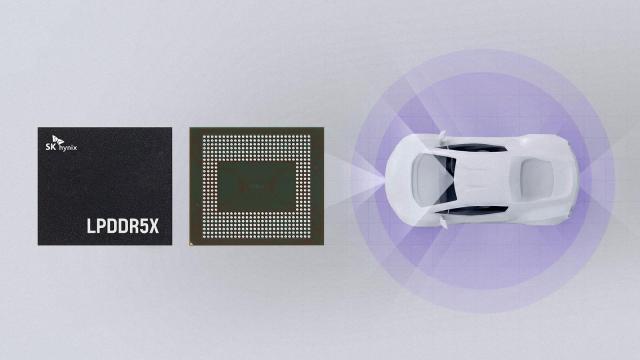
SEOUL, January 19 (AJP) - SK hynix said Monday it has obtained the highest functional safety certification for its LPDDR5X automotive memory, as demand grows for reliable semiconductors used in advanced driver-assistance and autonomous-driving systems.
The South Korean chipmaker said its LPDDR5X DRAM has been certified at ASIL-D, the highest safety level under the ISO 26262 international automotive functional safety standard.
ASIL-D applies to systems directly linked to passenger safety, including autonomous-driving control and advanced driver-assistance systems (ADAS). Certification was conducted by global safety testing body TÜV SÜD, which assessed the company’s development, design, verification and quality-management processes.
SK hynix said the certified memory is designed for use in ADAS, autonomous driving and in-vehicle infotainment systems, where stable processing of large volumes of data is required.
As vehicles increasingly rely on software-based architectures, known as software-defined vehicles (SDVs), functional safety has become a key requirement for automotive semiconductors, alongside performance and power efficiency.
Under ISO 26262, automotive components are evaluated based on severity, exposure and controllability of potential failures, with ASIL-D representing the strictest criteria.
SK hynix said its LPDDR5X automotive memory incorporates safety mechanisms including error detection and correction, fault-diagnosis functions and redundancy designs to reduce the risk of random hardware failures.
The company said the certification supports its strategy to expand its presence in the automotive memory market, where safety validation is becoming a prerequisite for supplier selection by global automakers.
SK hynix did not disclose shipment volumes or customer details.

Candice Kim
Candice Kim is a dedicated business and technology reporter specializing in the intersection of high-tech innovation and fast-paced consumer trends. Her core beats span the semiconductor, IT, cosmetics, and retail sectors, where she provides in-depth coverage of industry titans including Samsung Electronics, SK hynix, and LG Electronics, alongside leading consumer brands like Olive Young and Musinsa. Whether analyzing complex silicon supply chains or tracking the latest shifts in beauty and fashion retail, Candice is committed to delivering sharp, accurate reporting that keeps readers informed on the forces shaping today's most dynamic markets.
Copyright ⓒ Aju Press All rights reserved.
Related News
-
 Korean memory makers share boom year with employees in cash and stock rewards
Graphics by Song Ji-yoon SEOUL, January 16 (AJP) -South Korea’s two largest memory chipmakers, Samsung Electronics and SK hynix are rolling out handsome cash and stock rewards for their employees amid red-hot earnings and extended stock rally. Samsung Electronics said its Device Solutions (DS) division, which oversees the company’s semiconductor operations, has set its excess profit incentive (OPI) at 47 percent of annual salary, according to an internal notice circulated this week. The rate applies across memory, System LSI and foundry businesses. Based on Samsung’s average employee compensation of 130 million won as of March last year, the average bonus payout is projected at roughly 61 million won per employee. OPI is paid once a year when a business unit exceeds performance targets set at the beginning of the year. The incentive can reach up to 50 percent of annual salary, within a cap of 20 percent of excess profit, and together with the target achievement incentive (TAI) forms the backbone of Samsung’s performance-based compensation system. The DS division’s payout reflects a sharp turnaround in semiconductor profitability. After entering recovery in the second half of last year, shipments rose rapidly across memory products, including high-bandwidth memory (HBM) and commodity DRAM. In the fourth quarter, Samsung Electronics posted best-ever three-month operating profit of 20 trillion won. The chip division is projected to have contributed 80 percent of the profit. The contrast with recent years is pronounced. The DS division’s OPI was set at 14 percent last year amid weak chip conditions and zero in 2023. Within Samsung’s Device Experience (DX) division, the Mobile Experience (MX) business set its OPI rate at 50 percent, translating into an average payout of about 65 million won per employee. The higher rate reflects strong sales of the Galaxy S25 series and Galaxy Z Fold/Flip7, up from 44 percent in 2024. OPI rates for the Visual Display (VD), Digital Appliances (DA), network and medical device businesses were set at 12 percent. Management support, Harman, the win-win cooperation center and the global CS center received 39 percent, while the production technology research institute was assigned 36 percent. SK hynix will again operate a “shareholder participation program” this year, allowing employees to receive part of their annual profit-sharing (PS) bonus in company shares, following the program’s initial rollout last year. According to industry officials on Thursday, the company announced the plan in an internal notice the previous day, with applications open through Jan. 22. Under the program, employees can elect to receive between 10 percent and 50 percent of their PS in SK hynix shares, in 10-percentage-point increments. PS is paid once a year based on annual performance, with a ceiling of 50 percent of annual salary, equivalent to 1,000 percent of base pay. For example, an employee earning 100 million won who opts to receive 50 percent of PS in shares would receive stock worth 50 million won. If the shares are held for one year, the employee receives an additional cash payment equal to 15 percent of the stock value, or 7.5 million won. Unlike last year — when shares could be distributed in four installments in the fourth quarter based on prevailing stock prices — participants this year must receive all elected shares at once at the start of the year. PS payments are expected as early as late January or early February. Under a revised labor-management framework, SK hynix scrapped its previous PS cap and now funds bonuses using the full 10 percent of the prior year’s operating profit. Of the calculated PS, 80 percent is paid in the current year, with the remaining 20 percent deferred over two years in 10-percent installments. Future operation of the stock-based program could be influenced by a proposed third revision of the Commercial Act, which would require companies to retire treasury shares. The bill is scheduled for review at a National Assembly subcommittee meeting on Jan. 21, raising the possibility of legislative action later this month or in March. Industry estimates widely put SK hynix’s operating profit for last year at nearly 45 trillion won. On a simple calculation, that level of profitability would translate into profit-sharing bonuses of roughly 136 million won per employee. SK hynix releases fourth-quarter and 2025 results on Jan. 29. Samsung Electronics shares closed Friday 3.5 percent up at fresh record high of 148,900 won and SK hynix also revisited the peak of 756,000 won.
-
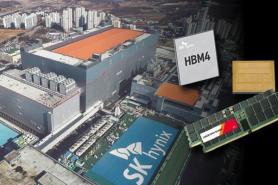 SK hynix determined to defend lead through talent and HBM investment
Graphics by AJP Song Ji-yoon SEOUL, January 14 (AJP) - Over the past year, South Korea’s memory chipmaker SK hynix has nearly quadrupled its market value and overtaken Intel in sales to become the world’s third-largest semiconductor company after behind Nvidia and Samsung Electronics. The turning point came in 2025, a decisive year for the AI-driven chip upcycle. Global semiconductor sales jumped 21 percent to $793 billion, led by AI processors, high-bandwidth memory (HBM) and networking chips, according to preliminary data released by Gartner on Tuesday. “AI semiconductors — including processors, high-bandwidth memory and networking components — continued to drive unprecedented growth in the semiconductor market, accounting for nearly one-third of total sales in 2025,” said Rajeev Rajput, senior principal analyst at Gartner. The momentum is set to intensify. “AI infrastructure spending is forecast to surpass $1.3 trillion in 2026,” he added. Courtesy of Gartner HBM propels SK hynix past Intel SK hynix climbed to third place as its global revenue surged 37 percent on year to about $61 billion in 2025, powered by explosive demand for HBM used in Nvidia’s AI accelerators. Intel slipped to fourth, with its market share falling to around 6 percent — roughly half the level it commanded in 2021. Kim Duk-ki, a professor of semiconductor systems engineering at Sejong University, said Intel’s long-standing dominance has steadily eroded. “Intel once sat firmly on the throne, but its competitiveness has weakened in recent years,” Kim said. “Even with strong backing from the U.S. government and renewed efforts to rebuild its foundry business, its long-term direction remains uncertain.” By contrast, he said, SK hynix’s rise reflects more than a cyclical rebound. “Given the structural shift driven by AI, this should not be viewed as a temporary phenomenon,” Kim said. “The gap between SK hynix and Intel could persist for some time.” From memory supplier to “full-stack AI” player To cement its lead, SK hynix has decided to invest 19 trillion won ($14 billion) to build an advanced AI memory packaging plant in Cheongju, North Chungcheong Province. HBM lies at the heart of the strategy. The technology stacks multiple DRAM layers and integrates them with graphics processing units (GPUs) into a single package. Taiwan Semiconductor Manufacturing Co. (TSMC) currently leads advanced packaging, combining SK hynix’s HBM with Nvidia GPUs using its proprietary Chip-on-Wafer-on-Substrate (CoWoS) process — now a standard for high-end AI chips. SK hynix’s decision to build large-scale packaging facilities is widely seen as an attempt to move beyond the role of a component supplier and realize its vision of becoming a “full-stack AI memory creator.” Its local competitor Samsung Electronics has been pitching its turnkey solution that combines foundry manufacturing, HBM supply and advanced packaging under one roof. The investment is also set to elevate the strategic value of SK hynix’s Cheongju campus as an AI semiconductor production hub. The site already hosts NAND fabs M11, M12 and M15, as well as the P&T3 facility handling back-end processes. To secure next-generation DRAM capacity, SK hynix has committed nearly 20 trillion won to its M15X fab. Originally scheduled for later completion, the facility opened its cleanroom last October and is now installing equipment, with mass production expected to begin as early as the second half of this year. Talent war intensifies As SK hynix climbs the global rankings, it is also investing heavily to secure future growth by retaining and attracting talent. The AI-driven memory supercycle has translated into record performance bonuses, intensifying competition across South Korea’s semiconductor industry. SK hynix recently revamped its profit-sharing system, linking employee bonuses more directly to operating profit and removing caps that previously limited payouts. Industry estimates suggest that if current earnings momentum holds, average bonuses could exceed 100 million won ($75,000) per employee this year, with some projections pointing even higher next year if profits continue to surge. The widening compensation gap is already being felt at rival Samsung Electronics, where employees in the memory division have raised concerns over disparities in rewards despite sharing in the same industry upcycle. The issue has added to labor tensions and renewed calls for changes to performance-based pay structures. The effects are visible upstream as well. Competition ratios for semiconductor majors at universities with recruitment agreements with SK hynix — including Hanyang, Chung-Ang, Sogang and Korea University — have climbed to between 9:1 and 11.8:1, sharply above the average 5.31:1 ratio across 11 elite Seoul-based universities. With AI processors generating more than $200 billion in sales last year and HBM accounting for nearly a quarter of the global DRAM market, Gartner forecasts that AI-related chips could represent more than half of total semiconductor revenue by 2029. SK hynix’s HBM3E high-bandwidth memory is displayed at CES 2026, Las Vegas/ Yonhap
-
 With tariffs looming, Korea chipmakers run out of room to maneuver in the U.S.
TSMC’s Arizona plant/ Courtesy of TSMC SEOUL, January 19 (AJP) - To match the tariff concessions Taiwan has secured in the United States, South Korean chipmakers may be pressed to outline additional U.S. capacity expansion plans. Their options are however constrained as the foundry market faces oversupply risks while large-scale memory fabs pose significant economic and strategic hurdles. U.S. officials have adopted a more hardline tone in recent weeks, openly tying tariff relief to domestic semiconductor investment. Yet experts and chipmakers caution that further U.S. manufacturing commitments are far more difficult for Korean firms than for their Taiwanese counterparts. Following a groundbreaking ceremony for a new Micron Technology plant near Syracuse, New York, U.S. Commerce Secretary Howard Lutnick warned that tariff measures outlined in Washington’s recent trade accord with Taiwan could also affect chipmakers from South Korea. “Everyone who wants to build memory has two choices: They can pay a 100% tariff, or they can build in America,” Lutnick said Friday. US Commerce Secretary Howard Lutnick speaks during a signing ceremony in the Oval Office at the White House in Washington, DC, USA, Jan, 14. 2026. EPA-Yonhap Under the Taiwan deal unveiled Thursday, companies expanding U.S. operations will be allowed to import semiconductors tariff-free up to 2.5 times their existing capacity during construction, with reduced tariffs applied above that threshold. Once new facilities are completed, the cap will be lowered to 1.5 times current capacity. The agreement also sets a 15 percent tariff on goods from Taiwan and commits the island’s technology sector to at least $250 billion in direct investment in the U.S. Taiwan Semiconductor Manufacturing Co. (TSMC) is expected to build at least four additional chipmaking plants on top of six already planned, requiring roughly $100 billion in new capital. The Taiwanese government has said it will provide $250 billion in credit guarantees to support the investment. South Korea’s accord with the United States revealed last October, sets a 15 percent tariff on most goods while exempting semiconductor imports for now. The agreement includes a $350 billion South Korean fund for U.S. investments, but $150 billion of that is earmarked for shipbuilding, and the remaining $200 billion is government-led and not limited to semiconductors. Private-sector commitments are far smaller. Samsung Electronics has expanded its planned investment in Taylor, Texas, to $37 billion through 2030, up from an initial $17 billion. SK hynix has announced a $3.87 billion investment in Indiana to build an advanced packaging facility for artificial intelligence memory. How much tariff relief Washington will grant in exchange for those investments is emerging as a central negotiating issue. While tariffs will be imposed only after country-by-country talks are completed, pressure is already building. Washington has increasingly blurred the line between trade and industrial policy, explicitly using tariffs to steer semiconductor supply chains toward domestic production. “In practice, the two are closely intertwined,” said Ahn Ki-hyun, secretary general of the Korea Semiconductor Industry Association. “When the U.S. talks about tariffs, what it really wants is investment. And investment naturally connects to supply chains.” The fundamental difference, industry officials say, lies in industrial structure. “Korea and Taiwan are different in what they make,” Ahn said. “Taiwan is centered on system semiconductors and foundries, while Korea is focused on memory. From the U.S. perspective, the logic is simple — if chips are made in America, the problem is solved.” TSMC has already begun production at its first U.S. fab and is preparing additional facilities. Korea, however, currently has no memory wafer production operating in the United States, a gap that analysts say lies at the core of the challenge. Building memory fabs overseas is technically feasible but significantly more complex. DRAM and high-bandwidth memory production requires large-scale infrastructure, long stabilization periods and extremely high yield control. “Memory fabs are not fundamentally different from system semiconductor plants in terms of construction,” Ahn said. “But unlike foundries, there is currently no memory production running in the U.S., which means the timeline is much longer.” Analysts warn that if Washington benchmarks Korea against Taiwan’s investment framework, Korean chipmakers would face a wide gap between existing commitments and the level of spending needed to secure comparable tariff treatment. New memory fabs would require tens of billions of dollars and several years before meaningful output could be achieved. Samsung Electronics said it is closely monitoring developments. “We are reviewing all news and policy changes related to tariffs,” the company said. “Internal discussions are ongoing, but at this stage, there is no official comment we can provide.” Kim Yang-paeng, a senior research fellow at the Korea Institute for Industrial Economics and Trade (KIET), said that estimating the scale of additional investment required under a Taiwan-style framework would be extremely difficult. “If the United States were to demand a similar investment model from Korea, it is not a matter of tens or even hundreds of trillions of won,” Kim said. “The scale would be virtually impossible to quantify in meaningful terms.” Samsung Electronics’ Taylor plant under construction in Taylor, Texas/ Courtesy of Samsung Electronics