
Journalist

AJP
-
 Dubai-to-Incheon Airfares Surge as Middle East War Cuts Flights, Stranding Travelers Airfares out of Dubai briefly jumped more than ninefold as the Middle East war sharply reduced flights, raising anxiety among South Koreans trying to return home. Even Korean Air, the only South Korean carrier with a direct Middle East route, extended its suspension, and switching to partner airlines in the same alliance has proved difficult as other carriers also cut service. Industry officials said March 8 that ticket prices for Dubai-to-Incheon flights have surged. Emirates flight EK0322, departing Dubai at 3:30 a.m. local time and arriving at Incheon at 4:50 p.m. Korea time, had a lowest fare of 5.63 million won as of March 6. That was about 910% higher than the average daily lowest fare over the past two weeks. Direct Dubai-to-Incheon tickets were generally in the 6 million won range. The spike followed the war in the region. On Feb. 28, the United States and Israel carried out airstrikes on Iran, and Iran has been retaliating. With airspace closed over major Middle Eastern countries, demand surged when some airlines resumed operations, sending prices soaring. Fares later eased as more flights operated during a lull. As of March 8, the lowest fare for an Emirates flight departing Dubai early March 9 and arriving in Incheon in the afternoon was 1.21 million won, still about 59% above the two-week average. South Korea’s government-chartered flight also helped cool prices. The government secured an Etihad Airways flight departing Abu Dhabi at 5 p.m. Korea time on March 8 as its first charter since the war began. The flight carried 290 people, prioritizing seriously ill passengers. About 3,500 South Koreans are believed to be staying in 14 Middle Eastern countries after flight cancellations, according to reports. Uncertainty remains over whether air routes could close again. An Emirates flight departing Dubai was abruptly canceled on March 5. Korean Air has suspended its Dubai route through March 15. Passengers booked on Korean Air’s Dubai service must find other flights on their own. In many cancellations, travelers can be rebooked on another airline in the same alliance through an endorsement, but that has been difficult because SkyTeam’s Middle East carriers have also sharply reduced operations. The government is discussing additional charter flights with Korean Air, but officials said it will not be easy. Korean Air extended its suspension after receiving a notice from local airport authorities barring operations. A Foreign Ministry official said, “We are in contact with various countries, and even if it is not an existing route, charter flights can be requested as needed.”* This article has been translated by AI. 2026-03-08 18:04:35
 -
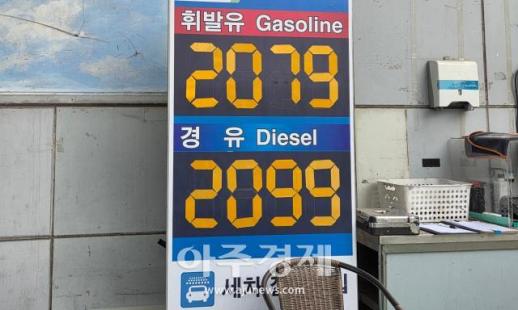 South Korea Gasoline Prices Near 2,000 Won as Middle East Tensions Lift Oil The war involving the United States, Israel and Iran is showing signs of dragging on, sending international oil prices sharply higher. South Korea’s pump prices are also climbing, raising fears of a repeat of 2022, when gasoline rose above 2,000 won per liter amid fallout from the Russia-Ukraine war. According to the Korea National Oil Corp.’s Opinet price information system, the nationwide average gasoline price stood at 1,894.86 won per liter as of 1 p.m. on March 8, up 5.46 won from the previous day. Diesel averaged 1,917.34 won per liter, up 6.79 won. Consumers say the increase feels steeper on the ground. While the government has signaled a willingness to intervene strongly — including mentioning a review of setting a maximum price — price gains have only slowed somewhat, and some stations across the country are already posting gasoline and diesel prices in the 2,000-won range. Seoul recorded the highest averages nationwide, with gasoline at 1,945 won per liter and diesel at 1,968 won. Markets are also bracing for further increases in global crude prices. Goldman Sachs said international oil could top $100 a barrel if tensions in the Middle East do not ease. If disruptions to traffic through the Strait of Hormuz persist, it warned, supply concerns could intensify and add to upward pressure on prices. Goldman Sachs said that if a blockade of the strait continues, it cannot rule out Brent crude rising above $147 a barrel, as in past spikes in 2008 and 2022. Analysts say if oil moves above $100, South Korea’s gasoline prices would likely break through the 2,000-won threshold. As cost pressures mount, the industry says it is preparing a response. Three petroleum groups — the Korea Petroleum Association, the Korea Petroleum Distribution Association and the Korea Gas Station Association — said they would actively cooperate so that international oil price increases are not reflected too abruptly at domestic gas stations. Still, the government and consumers appear skeptical of the pledge. A delivery driver said, “If I make about 30 deliveries a day, I earn around 25,000 won, but after various costs I actually take home only about 10,000 won,” adding, “With fuel prices rising too, it feels like my insides burn every time I fill up.” Lee Eun-hee, a professor of consumer science at Inha University, said South Korea has sizable crude stockpiles, meaning there is no need to raise domestic fuel prices sharply right away even if global prices rise. “But recently the pace of increases has been excessively fast,” she said, adding that commercial drivers such as delivery workers face an unavoidable burden and that policy support such as energy vouchers should be considered.* This article has been translated by AI. 2026-03-08 18:03:38
 -
 Korea's WBC hopes hang on Australia after Taipei loss SEOUL, March 08 (AJP) -South Korea’s hopes of advancing at the 2026 World Baseball Classic were left hanging by a thread Sunday after a 5–4 extra-innings loss to Chinese Taipei at Tokyo Dome, requiring the team a convincing final-game victory to stay alive. The defeat dropped South Korea to 1–2 in Pool C, while Chinese Taipei finished its schedule at 2–2. South Korea will close the opening round against Australia at 7 p.m. Monday, but its path to the quarterfinals depends first on Japan defeating Australia in Sunday night’s game. If Japan wins, South Korea could still force a three-way tie at 2–2 by beating Australia. The final standings would then be determined by tournament tiebreaker rules, beginning with fewest runs allowed, followed by earned runs allowed, batting average and drawing lots. That scenario leaves South Korea with the steepest task among the tied teams. To realistically advance, Korea would likely need a decisive victory over Australia while keeping its runs allowed low, making Monday’s game effectively a must-win by a wide margin. Sunday’s loss came despite a standout performance from Kim Do-yeong, who nearly carried South Korea to victory with a two-run homer in the sixth inning and an eighth-inning RBI double that tied the game at 4–4. Chinese Taipei broke the tie in the 10th inning under the WBC’s tiebreak rule that begins with a runner on second base. Chiang Kun-Yu’s bunt drove in the go-ahead run, and South Korea failed to capitalize on its own scoring chance in the bottom half. The loss also extended a troubling trend for South Korea, which is still trying to reach the knockout stage for the first time since 2009, when it finished runner-up. The defeat followed another narrow loss a day earlier against defending champion Japan. South Korea stunned the Tokyo Dome crowd by jumping to a 3–0 lead in the first inning and later clawed back from a 5–3 deficit, but ultimately fell short 8–6 on Saturday night. 2026-03-08 17:00:14
 -
 South Korea falls to Taiwan in 10 innings, WBC quarterfinal hopes in jeopardy South Korea’s national baseball team suffered a costly loss to Taiwan, putting its bid for the quarterfinals of the 2026 World Baseball Classic in serious doubt. South Korea, managed by Ryu Ji-hyeon, lost 5-4 to Taiwan in 10 innings on March 8 at the Tokyo Dome in Tokyo, falling in the tiebreaker format that begins with a runner on second base. After beating the Czech Republic 11-4 on March 5, South Korea then lost 8-6 to Japan on March 7 and dropped another game against Taiwan to fall to 1-2. It slipped to fourth in Pool C behind Japan and Australia (both 2-0) and Taiwan (2-2). To reach the quarterfinals in Miami, teams must finish in the top two of the pool. South Korea will be eliminated regardless of its remaining result if Australia beats Japan in their game scheduled for 7 p.m. on March 8. If Australia loses to Japan, South Korea must beat Australia at 7 p.m. on March 9 at the same venue. That outcome would create a three-way tie at 2-2 among South Korea, Australia and Taiwan. In that case, second place would be decided by a tiebreaker comparing the ratio of runs allowed to defensive outs recorded in head-to-head games among the tied teams. South Korea’s pitchers allowed three home runs. Starter Ryu Hyun-jin of the Hanwha Eagles, making his first WBC appearance in 17 years, gave up one run on three hits, including a homer, over three innings. He threw 50 pitches and struck out three. Kwak Bin of the Doosan Bears allowed a solo homer and gave up one run over 3 1/3 innings on two hits. Dane Dunning of the Seattle Mariners, pitching for the first time in the tournament, surrendered a homer and was charged with two runs over 1 2/3 innings on two hits. The offense struggled, managing four hits through 10 innings. Kim Do-yeong had two hits and drove in three runs, but it was not enough. The game turned in the 10th. Taiwan opened the inning with a runner on second and attempted a sacrifice bunt, but South Korea first baseman Shay Whitcomb of the Houston Astros made an errant throw to third, putting runners on first and third with no outs. Taiwan then scored on a bunt toward first base to take a 5-4 lead. South Korea failed to score in the bottom of the 10th and lost the game. 2026-03-08 15:54:00
 -
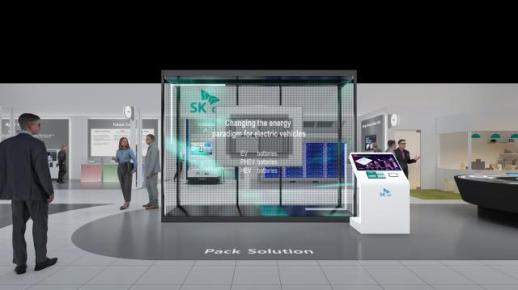 SK On to Unveil CTP Integrated Pack Solutions With SK Enmove Immersion Cooling at InterBattery 2026 SK On said Sunday it will showcase a range of “CTP integrated package solutions” at InterBattery 2026, which runs for three days starting March 11, combining its cell-to-pack (CTP) technology with immersion-cooling fluid technology from SK Enmove, an in-house independent company. The move reflects SK On’s plan to expand its product portfolio from supplying cells and modules to offering battery packs. Under the theme “Unlock the Next Energy,” SK On will operate an exhibition booth featuring future technologies across three zones: Leading Tech, Core Tech and Future Tech. In the Core Tech zone, which integrates the company’s key technologies, SK On will present three CTP package types — pouch CTP, a pouch-integrated prismatic pack, and large-area cooling CTP — along with one CMP (cell-module-pack) package solution. The “pouch CTP,” targeted for commercial production in 2027, removes modules and integrates cells directly into the pack. SK On said it increases energy density while lowering manufacturing costs compared with existing systems. It also applies heat-transfer blocking technology to help prevent a problem in one cell from spreading to adjacent cells, improving safety. The “pouch-integrated prismatic pack,” planned for commercial production in 2028, directly encloses mid-nickel pouch cells in a rigid aluminum prismatic case. By eliminating modules, it reduces parts and processes while improving protection against external impacts, the company said. The “large-area cooling CTP” directly bonds an aluminum cooling plate across the broad surfaces where pouch cells contact each other, reducing the need for insulation while maximizing thermal management efficiency. SK On said it boosts cooling performance by up to three times compared with existing designs. Product verification at the battery-module level was completed last year, and commercial production is being pursued for 2028. SK On is also introducing its CMP package solution, a cell-module-pack structure widely used in applications including electric vehicles and energy storage systems. In the Future Tech zone, SK On displayed a model of an immersion-cooled battery pack that incorporates immersion-cooling fluid technology being jointly developed with SK Enmove. Two versions were shown, based on pouch CTP and CMP. SK On applied the “immersion-cooled pack” to a vehicle underbody model and visually demonstrated a small immersion-cooling module submerged in cooling fluid to make the concept easier to understand. Immersion cooling circulates an insulating fluid directly inside the pack to keep battery temperatures stable. SK On said the approach can help maintain cell performance and lifespan even in extremely cold or hot external conditions. “Through this exhibition, we are unveiling SK On’s own CTP integrated package solutions for the first time,” an SK On official said. The official added that the company plans to continue expanding its battery product portfolio by building technology synergies with SK Enmove, including immersion cooling.* This article has been translated by AI. 2026-03-08 15:33:20
 -
 NCT’s Yuta Releases ‘Play Back’ as Theme Song for Japan’s ‘Kamen Rider Zets’ NCT’s Yuta has joined the Japanese TV drama series ‘Kamen Rider Zets’ as the singer of its theme song, drawing attention from viewers. The track, titled ‘Play Back (PLAY BACK),’ was released at midnight March 8 on major global music platforms and has been met with a strong response. ‘Play Back’ is a rock song driven by aggressive guitar and a beat reminiscent of 2000s punk. The lyrics portray a mind wavering between reality and dreams, along with a firm resolve to defy fate and make one’s own choices. Yuta’s intense vocal delivery amplifies the song’s energy. ‘Kamen Rider Zets’ is a new season in Japan’s long-running ‘Kamen Rider’ franchise, which first aired in 1971 and marks its 55th year this year. Yuta, who watched the series as a child, said participating as the theme singer adds special meaning and underscores his influence in Japan. In January, Yuta headlined Japan’s Budokan arena to close out his first solo concert tour. He has also strengthened his local standing with his first full-length album, ‘PERSONA,’ released in October last year, which topped Oricon’s weekly rock album chart. Meanwhile, the film ‘Specials,’ starring Yuta, is set for release in South Korea on March 13. * This article has been translated by AI. 2026-03-08 14:36:16
 -
 Samsung union vote on strike to add memory supply concerns SEOUL, March 08 (AJP) - Unionized workers at Samsung Electronics on Monday begin a 10-day vote on whether to launch a strike, raising fresh concerns over chip supply at a time of surging demand for artificial-intelligence memory. The ballot, which runs from March 9 to 18, could pave the way for a joint protest next month and a full-scale strike from May 21 to June 7 if a majority of union members approve the action. The vote follows a breakdown in wage negotiations after the National Labor Relations Commission suspended mediation between Samsung and its three major labor unions — the Samsung Electronics Labor Union (SELU), the National Samsung Electronics Union and Samsung Electronics Co. Union. Together the unions represent more than 90,000 employees, roughly 70 percent of Samsung Electronics’ 129,000 workforce, making the vote one of the most consequential labor actions in the company’s history. Union leaders say the strike authorization vote is necessary to secure legal rights for industrial action. “We aim to secure the legal right to strike by mid-March,” said Choi Seung-ho, chairman of SELU and head of the unions’ joint negotiation committee, during a livestream last week. “We expect the vote to pass and plan to take a long-term approach to negotiations.” The dispute centers on the company’s excess profit incentive (OPI) scheme, which the unions want to reform. Labor groups are demanding the removal of the current ceiling on OPI payouts — capped at 50 percent of annual salary — arguing the limit prevents workers from benefiting fully during strong profit cycles. Samsung rejected the proposal, saying removing the cap could create compensation disparities between divisions. The company instead offered to maintain the existing limit while allowing employees to choose between operating profit or economic value added as the basis for calculating incentives. Management also proposed special payouts if certain targets are met, including an additional 100 percent OPI bonus for memory-chip employees if operating profit surpasses 100 trillion won ($75 billion). Union members say the plan still falls short, pointing to rival SK hynix’s performance bonuses — reportedly reaching 2,964 percent of base salary in some cases — as evidence Samsung employees are being under-rewarded. Union leaders have also stirred controversy after warning that employees who refuse to participate in strike actions could face consequences. During a livestream announcement, union officials said they would monitor offices and keep records of workers who continue working during a strike, suggesting such employees could face disadvantages in future negotiations. If approved, the strike would mark Samsung Electronics’ second major labor stoppage, following the company’s first strike in July 2024 that lasted about a month. While production disruption during the earlier strike proved limited, analysts say the stakes may be higher this time. Union membership has expanded significantly since 2024, particularly within the semiconductor division that generates the bulk of Samsung’s profits. Industry observers warn that labor disruptions could affect the production ramp of next-generation HBM chips, a critical component for AI accelerators produced by Nvidia. Samsung recently began mass production of HBM4, intended for Nvidia’s next-generation AI platform known as Vera Rubin. The chips typically require four to five months of wafer processing followed by up to two months of packaging, meaning production will be in full swing during the proposed May strike window. “Semiconductor manufacturing is highly automated, so a strike may not immediately halt production,” an industry official said. “But even the perception of instability can worry customers and investors.” The labor dispute comes at a sensitive time for Samsung’s semiconductor business. The company has been trying to regain ground in the fast-growing HBM market after losing early momentum to SK hynix, which has secured key supply contracts with Nvidia. SK hynix controlled roughly 53 percent of the HBM market in the third quarter of 2025, compared with about 35 percent for Samsung. Any disruption to Samsung’s memory production schedule could strengthen SK hynix’s advantage in the AI chip supply chain. The possibility of a strike also adds to broader uncertainty facing Samsung Electronics as geopolitical tensions rise. The company has significant exposure to global consumer markets, including the Middle East, where escalating conflict between the United States, Israel and Iran threatens to dampen economic sentiment. Samsung remains the leading smartphone vendor in the region, with roughly 34 percent market share as of the third quarter of 2025, while the Middle East also represents a major market for its home appliance business. 2026-03-08 14:11:59
 -
 Korean Banks See Rush Into ETFs as Market Volatility Spurs Dip Buying Geopolitical tensions in the Middle East have fueled volatility in South Korea’s stock market, prompting even typically conservative bank customers to look at investment products. As more investors try to buy after sharp declines in hopes of a rebound, bank counters and private-banking centers have seen a rise in inquiries about funds and exchange-traded funds, or ETFs. On March 8, the financial industry said demand for investment consultations and product sign-ups has noticeably increased at banks as swings in the Kospi have grown. Customers who had focused on safer assets such as savings deposits are increasingly viewing market sell-offs as a chance to buy at lower prices, banks said. Branch visits have climbed particularly among older customers who are less comfortable using mobile apps. Some branches have seen customers arrive with cash ranging from tens of millions of won to, in some cases, hundreds of millions of won to ask about signing up for products, reflecting demand for in-person advice during a steep downturn. At the four major banks — KB Kookmin, Shinhan, Hana and Woori — ETFs sold in trust form totaled 7.3351 trillion won in January and 8.2819 trillion won in February, for a combined 16.8450 trillion won, according to the industry. The figures marked record highs for two straight months. Sales in January and February last year were under 1.5 trillion won, meaning the total rose more than tenfold in a year. This month, the Kospi fell sharply for two consecutive days on March 3 and 4 amid the Middle East situation, but banks still sold 1.2279 trillion won of ETFs over that period. Banks attribute much of the increase to a surge in demand from middle-aged and older customers. Younger investors who are used to trading stocks tend to buy and sell ETFs through brokerage apps, while older, wealthier clients often prefer to select products with help from private bankers and purchase them through banks, industry officials said. The rush has also created bottlenecks online. For some fund products and ETF-linked trust products, non-face-to-face sign-ups require a video call to explain investment risks, and heavy demand has led to waits of 30 minutes to more than an hour in many cases. A private-banking official at one bank said, “High-net-worth clients at banks used to focus on tax strategies or stable asset allocation, but recently there has been a clear move to look for investment opportunities that take advantage of market volatility.” The official added, “Some customers often move funds in the hundreds of millions of won to sign up for investment products.” Banks cautioned, however, that investors should avoid overextending themselves while uncertainty remains high. A banking industry official said inquiries have surged, but “given concerns about short-term volatility, decisions should fully consider investment goals and risk tolerance.”* This article has been translated by AI. 2026-03-08 14:03:49
 -
 Korean Bank Overdraft Loans Jump 1.3 Trillion Won in Five Days as Demand Deposits Fall 8.6 Trillion Volatility tied to the Iran situation has prompted some South Korean retail investors to treat the market swings as a buying opportunity, tapping bank credit lines to invest in stocks. Overdraft-style personal credit balances at major banks have surged in a short period while deposits have fallen, suggesting money is moving quickly into the market. As of March 5, personal overdraft loan balances at the five major banks — KB, Shinhan, Hana, Woori and NH NongHyup — totaled 40.7227 trillion won, according to the financial industry on Saturday. That figure reflects outstanding amounts actually used and rose 1.2979 trillion won in five days from the end of February (39.4249 trillion won). Adjusted for business days (March 3-5), the increase was effectively nearly 1.3 trillion won in three days. The balance is the largest for an end-of-month level since December 2022 (42.0546 trillion won). While the data cover only five days, the increase of 1.2979 trillion won is the biggest monthly-scale jump since November 2020 (+2.1263 trillion won). In the second half of 2020, ultra-low interest rates aimed at cushioning the COVID-19 shock fueled heavy borrowing for home purchases and stock investing. In the second half of last year, overdraft balances also climbed into the 40 trillion won range, reaching 40.0837 trillion won at the end of November, amid strong markets and spillover effects from tighter mortgage rules. After year-end and early-year bonuses helped bring balances back into the 39 trillion won range, overdraft borrowing has risen again following two days of sharp stock declines on March 3-4 linked to the Iran situation. At some banks, overdraft balances jumped by nearly 200 billion won in five days, an unusual move. Most of the funds are believed to have moved to brokerage firms. The surge in overdraft-led credit lending contrasts with mortgages, which have been flat or declining amid regulations and weak housing transactions. As of March 5, mortgage balances at the five banks stood at 610.1417 trillion won, down 579.4 billion won from the end of February (610.7211 trillion won). By contrast, total credit loans — general unsecured loans plus overdraft lines — rose 1.3945 trillion won in five days to 105.0765 trillion won. If that pace holds through month-end, it would be the largest increase since July 2021 (+1.8637 trillion won). Deposits have also seen sizable outflows. Time deposits at the five banks totaled 944.1025 trillion won as of March 5, down 2.7872 trillion won from the end of last month. Demand deposits, often viewed as idle cash awaiting investment, fell 8.5993 trillion won over the same period, to 676.2610 trillion won from 684.8604 trillion won. A commercial bank official said deposit rates have generally been rising along with market rates, yet deposits are still shrinking. The official said it is too early to draw firm conclusions but added that credit lending could increase further and more funds could continue flowing into stocks depending on developments in the Middle East and market conditions at home and abroad.* This article has been translated by AI. 2026-03-08 14:03:18
 -
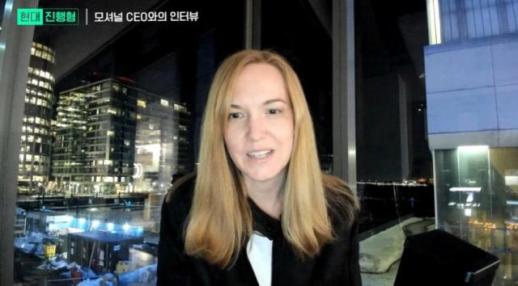 Hyundai JV Motional remains on track to put driverless taxi on roads this year SEOUL, March 08 (AJP) -Motional, the autonomous driving joint venture of Hyundai Motor Group, said it remains on track to launch its fully driverless robotaxi service in Las Vegas in the second half of 2026, reaffirming the commercialization timeline it first outlined in January. Laura Major, chief executive of Motional, reiterated the plan during an appearance on Hyundai Motor Group’s official podcast channel, Hyundai Now, where she outlined the company’s technological direction and commercialization strategy for autonomous mobility. Major said the company recently redesigned its autonomous driving system architecture around a generative artificial intelligence-based large driving model (LDM), describing the shift as a key milestone in the development of autonomous driving technology. “The decision to redesign Motional’s autonomous driving system architecture around AI and transition to a large driving model marked an important turning point,” Major said, adding that the move has helped improve driving quality, responsiveness, scalability and operating efficiency despite the technical risks associated with overhauling an existing system. Motional is focusing on building a fully driverless Level 4 robotaxi service, with safety remaining the company’s top priority. Major said the firm applies an end-to-end (E2E) AI approach to general driving scenarios that account for more than 90 percent of real-world road situations, while employing a separate “guardrail” safety framework to handle rare edge cases such as emergencies. “These exceptional scenarios become critical training data that help improve the overall performance of the autonomous driving system,” she said. Motional currently operates research and development hubs across the United States and is conducting intensive testing in Las Vegas and Pittsburgh. Major said the two cities offer contrasting urban environments that help refine the system’s adaptability. Las Vegas features a modern grid-based layout with wide roads, while Pittsburgh presents more complex driving conditions with narrow streets, older infrastructure and intricate intersections. “Testing across these different environments helps us build a general-purpose autonomous driving system that can operate in virtually any city,” she said. The company also highlighted the role of real-world data accumulated through pilot programs with ride-hailing platforms such as Uber and Lyft. Through those trials, Motional has gathered more than 130,000 autonomous ride experiences, generating insights into passenger behavior and in-vehicle interaction — including how riders access trip information, whether they prefer onboard displays or smartphones, and how features such as route changes or mid-ride stops should be integrated into driverless services. Major said improving the passenger experience will be just as critical as advancing the underlying driving technology as the company approaches commercialization. “Our goal is not only to develop autonomous driving technology but also to deliver a seamless and intuitive passenger experience,” she said. Hyundai Motor Group’s Hyundai Now series explores mobility technologies and industry trends, and Major’s appearance marked the first time a senior executive from the group participated directly in the program. Major recently received the SDV Innovator Award from North American automotive magazine MotorTrend for her contributions to software-defined vehicle innovation. 2026-03-08 13:53:05